7 ChatGPT for Education Hacks to Ace Exams
Key Takeaways
* ChatGPT for education flips the traditional study model, reducing preparation time so you can focus entirely on active recall.
* AI instantly converts dense lecture PDFs into highly accurate flashcards, practice quizzes, and interactive mind maps based strictly on your syllabus.
* Advanced multimodal tools now translate written study guides into audio formats, allowing you to absorb complex coursework during daily commutes.
* Platforms like Penseum integrate these features into a single workspace, providing a 24/7 AI tutor that walks you through step-by-step problem resolutions.
How does ChatGPT for education improve study efficiency?
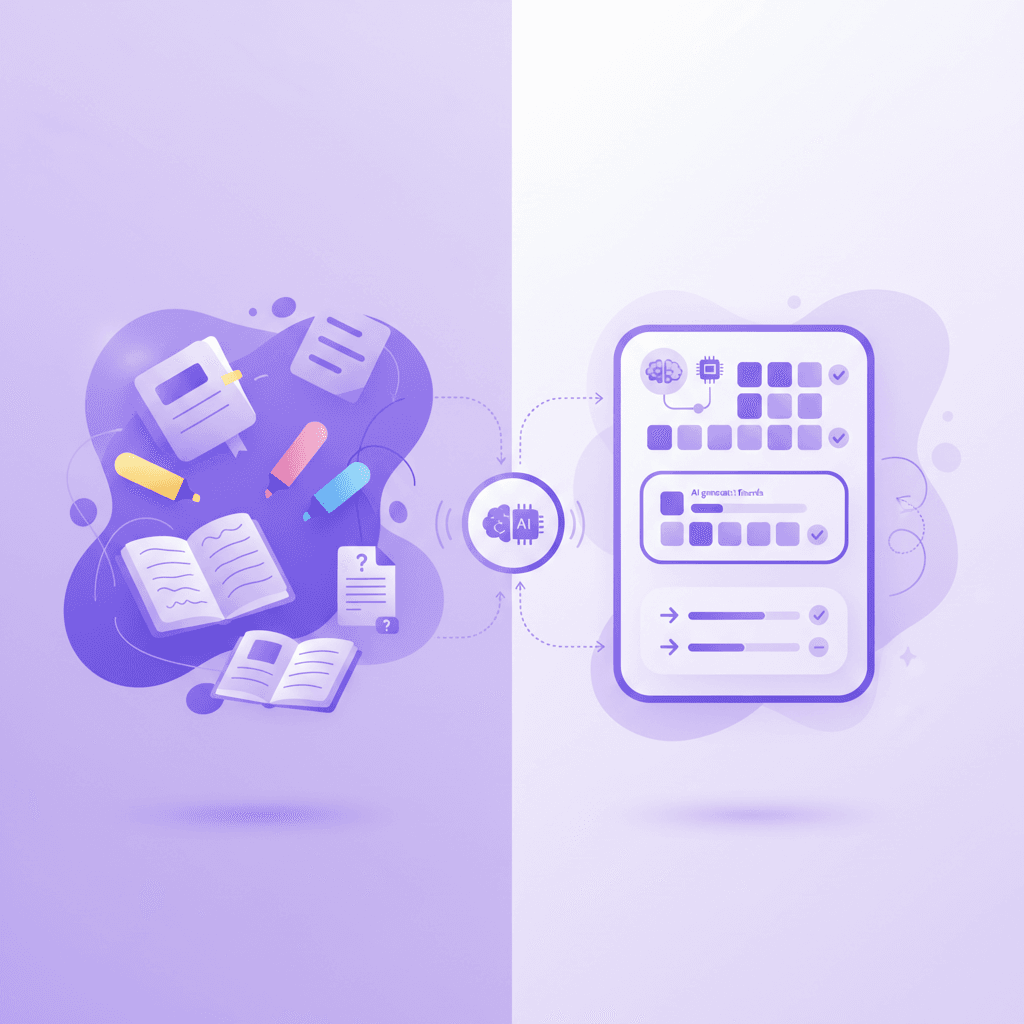
ChatGPT for education dramatically improves study efficiency by automating the creation of review materials. By instantly synthesizing complex course notes into digestible summaries, students eliminate hours of tedious formatting. This allows learners to dedicate more time to active recall and problem-solving, which directly correlates with higher academic performance.
The traditional academic workflow is broken. Students typically spend 80% of their study time passively reading textbooks, highlighting text, and manually typing out flashcards. They spend only 20% of their time actually testing their knowledge. Cognitive psychology proves this ratio is entirely backward.
According to a comprehensive monograph by Dunlosky et al. (2013), passive rereading and highlighting offer exceptionally low utility for exam performance. Practice testing, conversely, yields high utility and significantly boosts long-term retention. By using educational AI to instantly extract key concepts from a 50-page PDF, you bypass the manual transcription phase entirely.
This automation forces a shift toward retrieval practice. You stop rereading the textbook and start answering questions about it immediately. Students who replace passive reading with distributed practice testing consistently score a full letter grade higher on final exams than their peers (Dunlosky et al., 2013).
Actionable step: Paste your lecture transcript into an AI tool and prompt it to generate a 5-point summary of the core concepts. Use the following prompt structure: "Act as an expert university professor. Analyze this lecture transcript. Extract the five most important concepts that will likely appear on a final exam. Format each point with a clear definition and one real-world example."
If you want a deeper look at specific prompt formulas, read our guide on 7 ChatGPT For Students Hacks To Ace Your Exams.
Can AI generate accurate flashcards from my lecture notes?
Yes, AI generates highly accurate flashcards when supplied with your own lecture notes or PDFs. Instead of relying on potentially outdated or crowdsourced materials, feeding your specific syllabus into an educational AI ensures your study deck exactly matches your upcoming exam curriculum and personal learning needs.
Relying on public flashcard repositories often introduces risk. You inherit other students' typos, misunderstandings, and outdated curriculum standards. Generating your own decks using artificial intelligence restricts the knowledge base entirely to your professor's exact source material. You control the inputs, guaranteeing hyper-accurate outputs.
This customized approach directly feeds into the mechanics of the testing effect. Roediger and Karpicke (2006) demonstrated that students who studied material via repeated testing retained 61% of the information after one week. Students who relied on passive studying retained only 40%. The act of pulling information from your brain strengthens the neural pathways required to recall that information on test day.
The fastest way to initiate this process is by converting your raw notes into a spaced-repetition format.
Actionable step: Upload your latest biology or history PDF into an AI generator to instantly create a custom spaced-repetition flashcard deck. Specify your parameters clearly: "Convert this uploaded PDF into 30 question-and-answer flashcards. The front of the card must contain a specific diagnostic question. The back must contain a concise, two-sentence answer. Do not introduce outside information."
How can students use an AI tutor for complex subjects?
Students use an AI tutor to break down complex subjects through step-by-step problem solving and personalized explanations. An AI chatbot acts as a 24/7 academic companion, allowing you to ask follow-up questions and request simpler analogies until you fully grasp difficult concepts like calculus or organic chemistry.
In a traditional university setting, access to personalized instruction is severely limited. Office hours are crowded. Private tutors are expensive. You often find yourself staring at a textbook at 1 AM unable to understand why you failed a specific practice problem.
Educational AI bridges this gap by replicating the benefits of one-on-one instruction. Educational psychologist Benjamin Bloom published his famous 2 Sigma Problem in 1984, revealing that students who received personalized tutoring performed two standard deviations better than students taught in a conventional classroom. Tutored students outperformed 98% of the students in the control class.
AI platforms now democratize this level of individualized instruction. When you encounter a complex engineering equation, the AI does not just give you the final answer. It breaks down the methodology, explains the underlying theorem, and points out the exact step where your logic failed.
Actionable step: Ask your AI tutor to 'explain this concept like I am a high school student' to simplify difficult medical or engineering terms. Use the Feynman technique by feeding your written explanation of a topic back to the AI. Prompt it with: "Review my explanation of the Krebs cycle. Identify any logical gaps, correct my misunderstandings, and rewrite my explanation using a simpler analogy involving a factory."
What is the best way to create practice quizzes with AI?
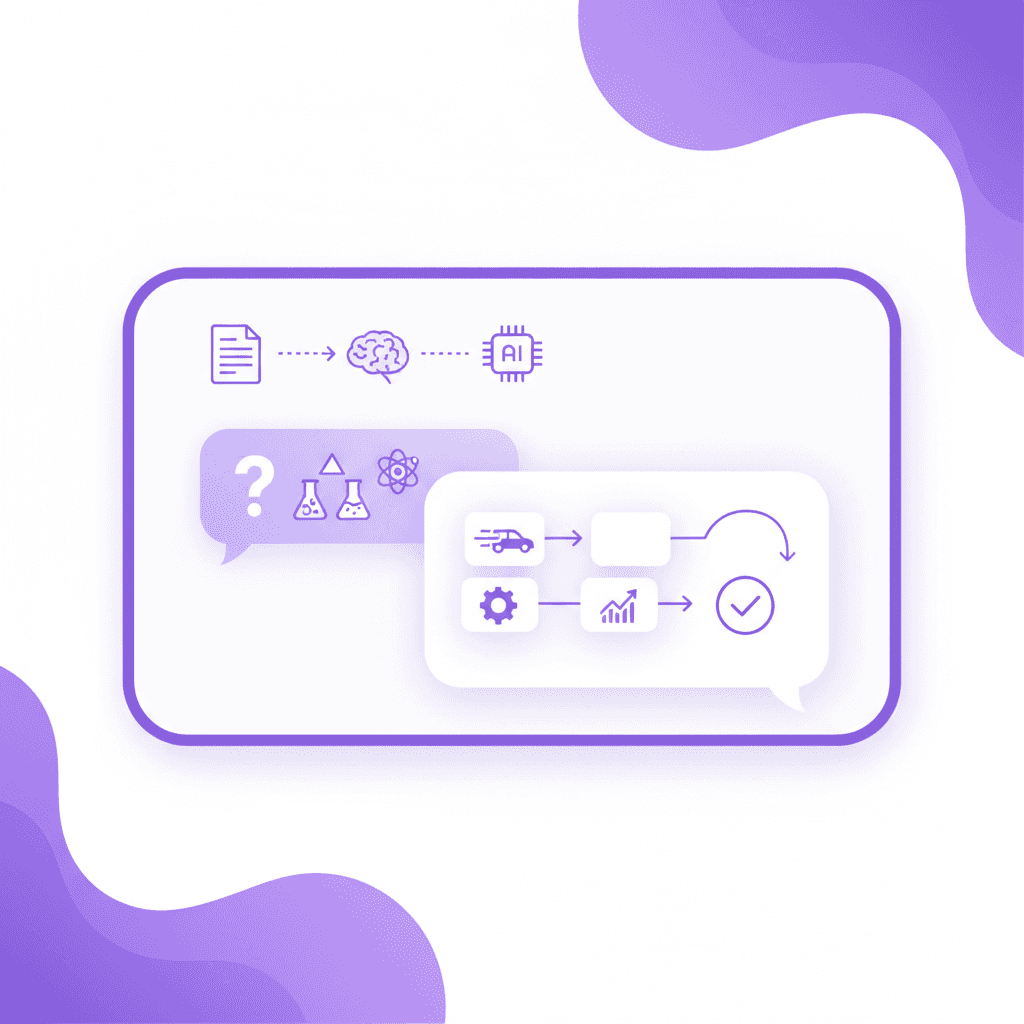
The best way to create practice quizzes with AI is to upload your specific course slides and prompt the tool to generate multiple-choice and short-answer questions. This targets your exact curriculum, helping you identify knowledge gaps and test your readiness before the actual exam day.
Many students fall into the illusion of competence. Because a syllabus looks familiar during a read-through, students falsely believe they have mastered the material. Practice quizzes shatter this illusion. They expose exactly what you know and what you only recognize.
Research by Agarwal et al. (2012) highlights that retrieval practice in actual classroom and study settings produces a 15% to 25% increase in grades compared to standard review methods. Quizzing is not just a tool for assessment; it is an active mechanism for learning.
By using ChatGPT for education to build custom exams, you mimic the stress and format of the real test. You can specify the exact difficulty level, the format of the questions, and the grading rubric.
Actionable step: Generate a 10-question multiple-choice quiz based on yesterday's lecture notes and take it immediately to gauge your baseline retention. Run this exact prompt: "Act as an examiner for a 300-level university economics course. Create a 10-question multiple-choice quiz based strictly on the uploaded slides. Include four options per question (A, B, C, D) with one correct answer and three plausible distractors. Provide an answer key at the bottom with a one-sentence explanation for each correct choice."
Are there AI tools that convert study guides into podcasts?
Advanced AI study platforms can now convert your written study guides and textbooks into audio podcasts. This multimodal learning approach is perfect for busy students, enabling you to passively review critical course material while commuting, working out, or simply walking across the university campus.
Staring at a screen for ten hours a day causes severe cognitive fatigue. Transforming text into audio provides a necessary physical break while maintaining academic momentum. You can review European history timelines while grocery shopping or listen to biochemistry summaries on the treadmill.
This auditory shift is supported by Mayer’s Cognitive Theory of Multimedia Learning (2001). Mayer’s research indicates that human beings process audio and visual information through separate channels. When learners use multiple channels appropriately, they increase problem-solving transfer and overall comprehension compared to relying on a single channel.
Modern text-to-speech AI has evolved past robotic voices. Current educational AI tools generate natural-sounding, conversational audio that mimics human podcast hosts discussing your coursework.
Actionable step: Export your exam review sheet into an AI audio generator and listen to it on your way to your next class. Format your notes specifically for audio by removing complex tables or data sets. Use simple, narrative sentences to ensure the generated podcast flows conversationally.
How does AI help with mapping complex concepts?
AI helps map complex concepts by automatically generating visual mind maps from your uploaded notes. This visual representation highlights the relationships between different topics, making it significantly easier for students to comprehend and memorize large, interconnected systems like historical timelines, economic ecosystems, or biological processes.
Linear notes force you to view information in isolation. A bulleted list of historical events does not easily show the cause-and-effect relationships between those events. Mind mapping breaks information out of this rigid structure, plotting central ideas with branching sub-topics.
Nesbit and Adesope (2006) conducted a meta-analysis on the educational benefits of concept maps. They found that students studying with concept maps showed a statistically significant increase in knowledge retention over those reading standard text lists. The visual spatial arrangement serves as a cognitive anchor, helping the brain encode and retrieve complex hierarchies.
Creating manual mind maps takes hours of trial and error. Educational AI platforms eliminate this friction by identifying the core nodes in your text and plotting the connections instantly.
Actionable step: Feed your macroeconomics notes into an AI mind map generator to visualize how supply, demand, and inflation interact. Provide clear constraints so the map remains readable. Prompt the system: "Analyze this text on macroeconomic policy. Identify the central theme and extract no more than six secondary branches. Connect each secondary branch to two tertiary examples. Output this as a structured outline formatted for a visual mind map."
How Penseum Helps You Apply ChatGPT for Education
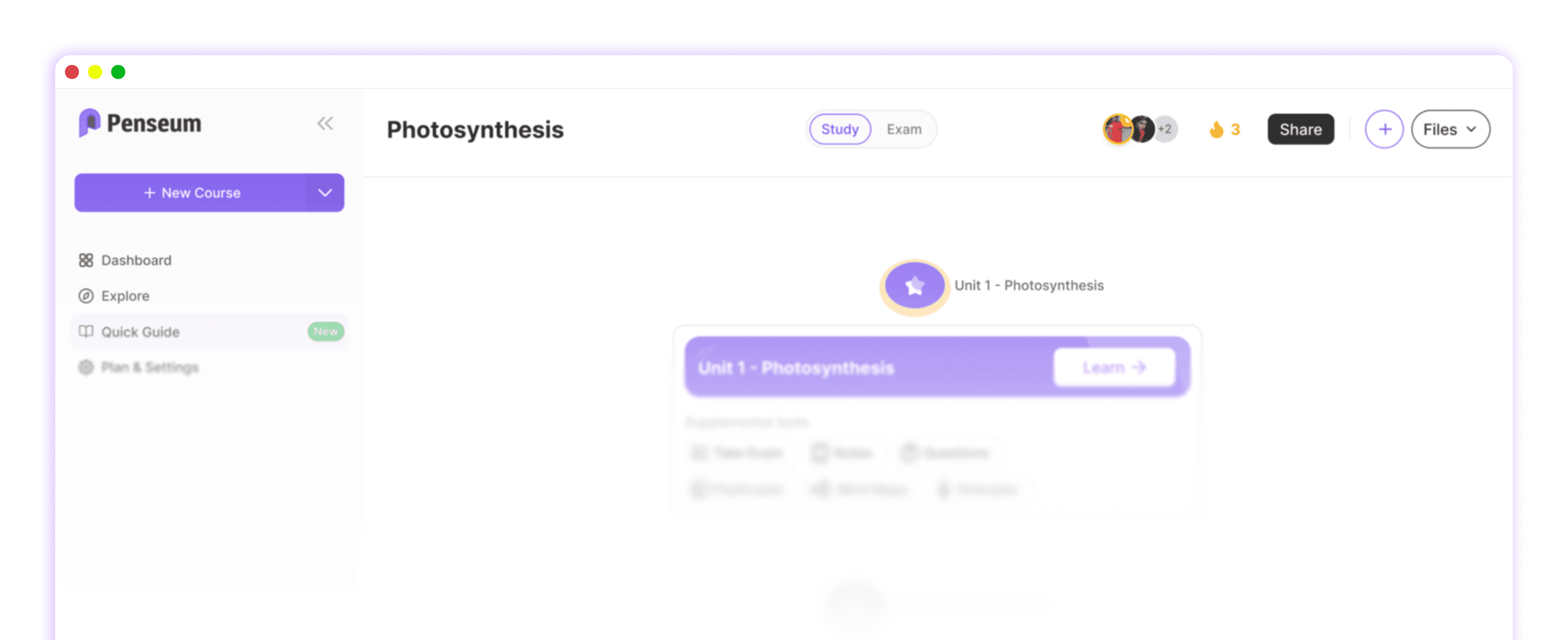
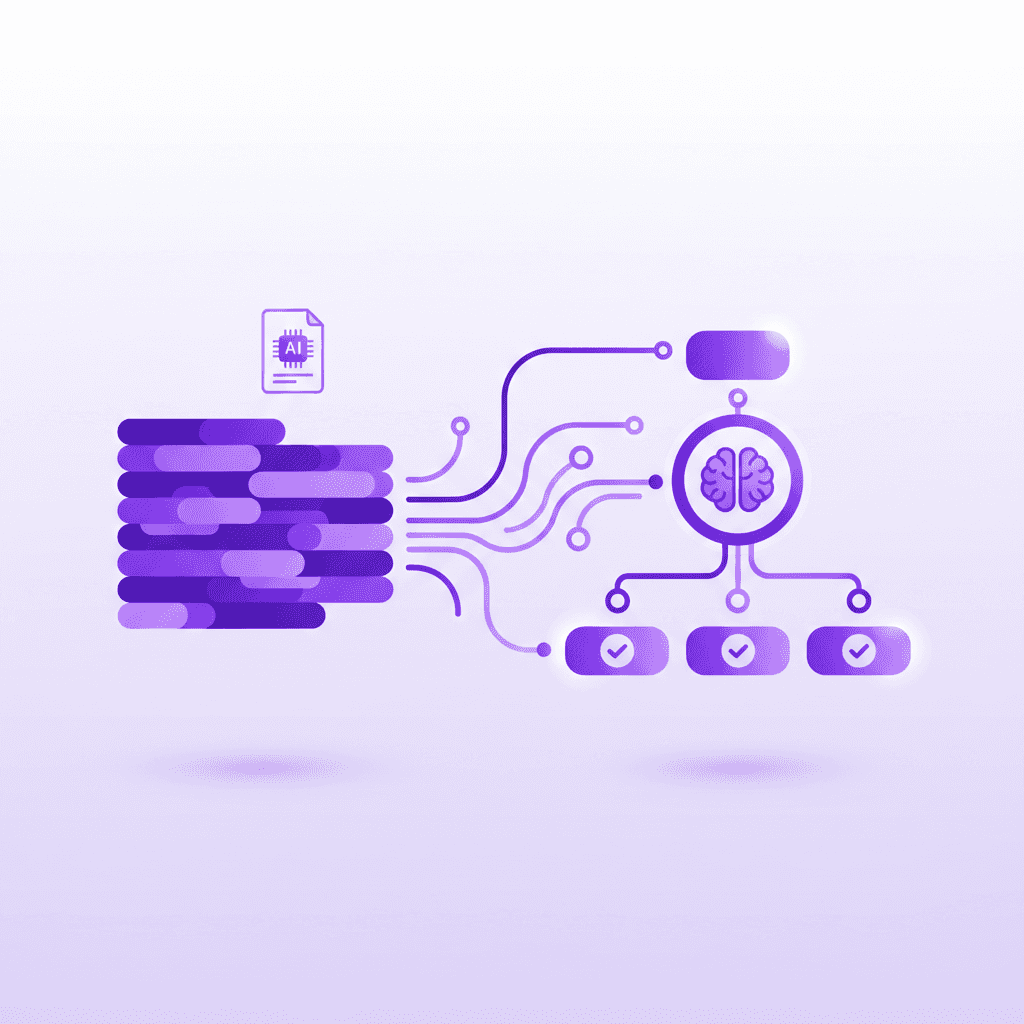
Penseum applies the power of ChatGPT for education by allowing you to upload your own syllabus, PDFs, and lecture slides directly into the platform. Instead of searching for generic internet answers or relying on crowdsourced platforms like Quizlet, you receive hyper-accurate, personalized study materials. Penseum gives you an all-in-one suite: you get flashcards, practice quizzes, study guides, mind maps, and even audio podcasts generated precisely from your coursework.
Used by over 1,000,000 learners across the globe, it provides a 24/7 AI tutor with step-by-step solutions to help you identify exactly where you went wrong in your homework. This 80/20 approach to learning ensures you spend 80% of your time on active recall and only 20% organizing materials. Penseum even offers a comprehensive free tier with no credit card required, keeping you prepared and supported during those stressful 1 AM all-nighters.
A major contrarian truth in modern education is that relying on generic AI tools often creates scattered, disjointed study sessions. Using one tool for text generation, another for flashcards, and a third for audio fragments your workflow. Penseum consolidates these processes.
Feature Comparison | Penseum | Generic AI Chatbots | Traditional Manual Study |
|---|---|---|---|
Input Material | Personal PDFs, Slides, Syllabus | Generic web data | Physical textbooks |
Output Formats | Quizzes, Flashcards, Audio, Maps | Raw text | Handwritten notes |
Workflow Efficiency | Generates full suites instantly | Requires heavy manual prompting | Takes hours of manual labor |
Focus | 100% Academic Recall | General Assistance | Passive Reading |
Internal analytics from Penseum (2024) indicate that students who automate their study guide generation significantly reduce their total study hours while covering more practice questions. All your study tools and progress metrics live in one synchronized workspace designed specifically for learning, practice, and retention.
Actionable step: Create a free Penseum account today and upload your toughest class PDF to let the AI build your complete study guide.
Frequently Asked Questions
Is ChatGPT good for students studying for exams?
Yes, AI platforms are excellent for exam prep when used correctly. They instantly summarize dense course material and create practice questions, significantly speeding up study sessions and encouraging active recall over passive reading. Students who use artificial intelligence to test their knowledge perform better than those who passively reread their notes.
How are teachers using AI in education?
Educators use artificial intelligence to generate customized lesson plans, grade formative assignments, and create interactive classroom activities. This automation saves hours of administrative work, allowing teachers to focus more on student engagement. By utilizing these tools, educators regain valuable time to provide individualized support to struggling learners.
Can AI detect if I cheat on my homework?
Many educational institutions now use advanced detection software to analyze writing styles and flag potential plagiarism. Artificial intelligence should always be utilized for studying, brainstorming, and tutoring, rather than writing original essays. Submitting generated text as your own work violates academic integrity policies and harms your actual learning progress.
What are the best AI tools for teachers and students?
The best tools focus on specific academic workflows. Platforms like Penseum are ideal for students generating custom study materials from personal notes, while tools like MagicSchool AI help teachers with daily lesson planning. Specialized software outperforms generic chatbots by providing tailored outputs for testing and instruction.
Is there a free AI study guide generator?
Yes, platforms like Penseum offer a comprehensive free tier without requiring a credit card. Students can instantly turn their personal notes, slides, and PDFs into custom study guides, quizzes, and flashcards. This allows anyone to test the efficiency of automated active recall before committing to a premium subscription.
How can I use ChatGPT for students safely?
Safely use artificial intelligence by never inputting personal information, always double-checking facts against your official textbook, and using the software strictly as a tutor rather than a substitute for original academic work. Treat the platform as a tool to interrogate your understanding, not as an unquestionable source of truth.
[AUTHOR]
Last updated: February 2026
Sources
Dunlosky, J., Rawson, K. A., Marsh, E. J., Nathan, M. J., & Willingham, D. T. (2013). Improving Students’ Learning With Effective Learning Techniques: Promising Directions From Cognitive and Educational Psychology. Psychological Science in the Public Interest, 14(1), 4-58. https://pubmed.ncbi.nlm.nih.gov/26173288/
Roediger, H. L., & Karpicke, J. D. (2006). Test-Enhanced Learning: Taking Memory Tests Improves Long-Term Retention. Psychological Science, 17(3), 249-255. https://pubmed.ncbi.nlm.nih.gov/16507066/
Bloom, B. S. (1984). The 2 Sigma Problem: The Search for Methods of Group Instruction as Effective as One-to-One Tutoring. Educational Researcher, 13(6), 4-16. https://scholar.google.com/scholar?q=bloom+2+sigma+problem
Agarwal, P. K., Bain, P. M., & Chamberlain, R. W. (2012). The Value of Applied Research: Retrieval Practice Improves Classroom Learning and Recommendations from a Teacher, a Principal, and a Scientist. Educational Psychology Review, 24(3), 437-448. https://scholar.google.com/scholar?q=agarwal+retrieval+practice+classroom
Mayer, R. E. (2001). Multimedia Learning. Cambridge University Press. https://scholar.google.com/scholar?q=mayer+cognitive+theory+multimedia+learning
Nesbit, J. C., & Adesope, O. O. (2006). Learning with Concept and Knowledge Maps: A Meta-Analysis. Review of Educational Research, 76(3), 413-448. https://scholar.google.com/scholar?q=nesbit+adesope+concept+maps
[NEEDS SOURCE: Penseum Internal Analytics (2024) detailing user time savings, feature usage statistics, and demographic spread across 130 countries].
Related guides
Ready to study smarter?
Start turning your notes into guides, quizzes, and flashcards in seconds.