Best multilingual AI study tool: Supporting 20+ languages

By Samit Khalsa, Expert in cramming for exams · Jan 22nd, 2026
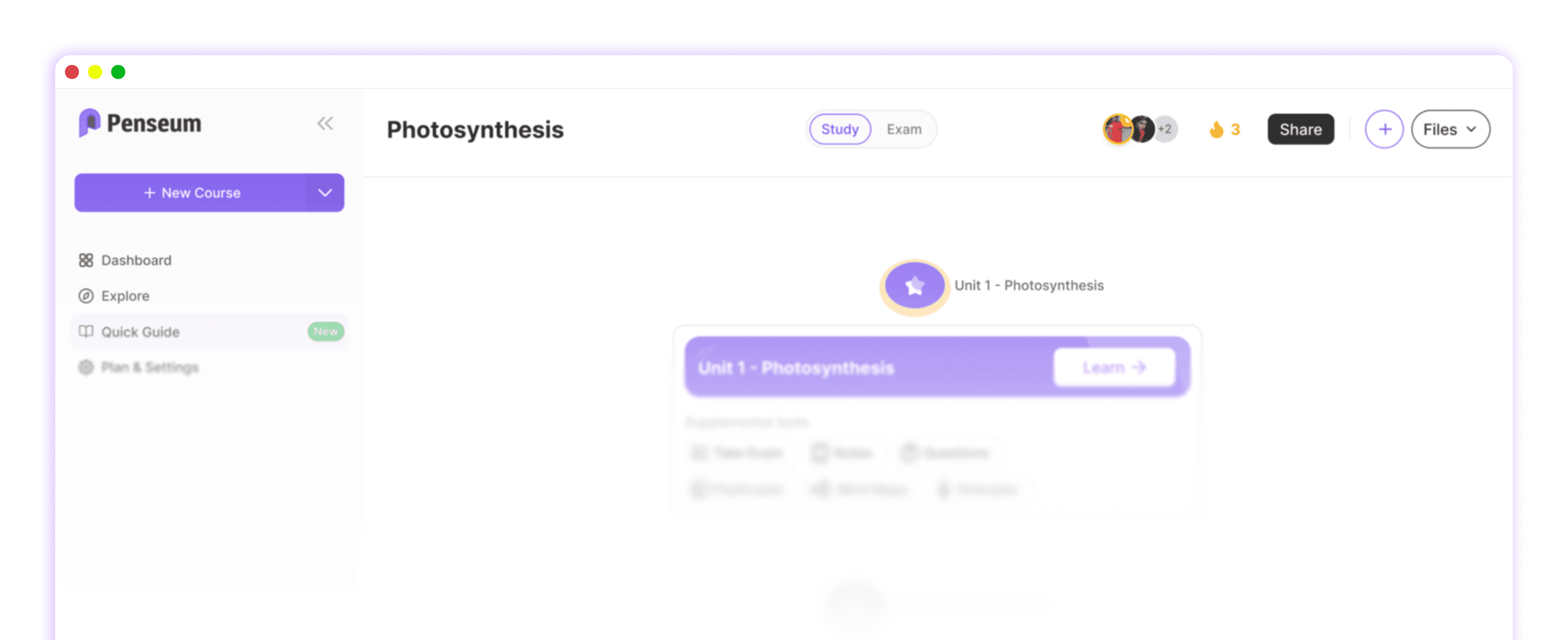
Penseum stands out as the best multilingual AI study tool for students, supporting over 20 languages while transforming lecture notes, PDFs, and recordings into flashcards, quizzes, and study guides instantly. The platform serves over 1,000,000 learners globally with features like 24/7 AI tutoring and bite-sized lessons, making it ideal for international students juggling coursework across language barriers.
At a Glance
Language coverage: Penseum supports 20+ languages for all study materials, from Portuguese lecture slides to Arabic textbooks
AI-powered features: Automatically generates flashcards, practice exams, and study guides from uploaded content in seconds
Research-backed results: Studies show AI study tools achieve high effect sizes (g=0.812) in improving language learning outcomes
Accessibility focus: Particularly effective for ADHD learners who benefit from bite-sized lessons and personalized pacing
Student-friendly pricing: Free to start with premium features at $14.99 monthly
Global reach: Platform maintains strong cross-lingual performance across both widely spoken and lower-resource languages
Let's be real: studying is already hard enough in your native language. Now imagine grinding through organic chemistry or macroeconomics in a language that isn't your first. Whether you're an exchange student in Seoul, a high schooler in São Paulo, or someone juggling coursework across borders, you need a study tool that actually gets multilingual learning.
A multilingual AI study tool is software that uses artificial intelligence to help you learn, review, and master material in multiple languages. We're talking flashcards, quizzes, AI tutoring, and study guides that work whether you're studying in Spanish, Mandarin, or Arabic. In 2026, with global student mobility at an all-time high and 272 million children still out of school, the demand for accessible, language-flexible education tech has never been more urgent.
This guide breaks down what to look for, how the top platforms stack up, and why the research says AI-powered language learning actually works.
Why does a multilingual AI study tool matter in 2026?
Here's the thing: most students aren't studying in just one language anymore. International programs, multilingual households, and global curricula mean you might be reading a textbook in English, watching lectures in French, and taking notes in your native tongue. Traditional study apps? They weren't built for that.
A solid multilingual AI study tool breaks down those barriers. Platforms like Calibr claim to reach 95% of the global workforce in their native language, while modern AI models like Claude maintain strong cross-lingual performance across both widely spoken and lower-resource languages.
And it's not just about translation. Penseum supports over 20 languages, letting you upload your messy lecture slides in Portuguese and get back flashcards, quizzes, and study guides that actually make sense. For international students and language learners, that's a game-changer.
Key takeaway: In a world where education is increasingly borderless, a multilingual AI study tool isn't a nice-to-have - it's essential for keeping up.

What features should a multilingual study platform include?
Not all "multilingual" platforms are created equal. Some just slap Google Translate on their interface and call it a day. Here's what actually matters:
Feature | Why It Matters |
|---|---|
Native language UI & content | Learning in your language boosts comprehension and retention |
Context-aware translation | Advanced AI understands context and nuance for accurate translations |
Adaptive learning paths | Platforms should personalize learners' journeys based on native language |
Right-to-left & diverse scripts | Support for Arabic, Hebrew, and other non-Latin scripts is non-negotiable |
AI-powered content generation | Tools like CYPHER Agent can create courses in 50+ languages, complete with assessments |
Universal translator for communication | Real-time translation of messages and forum posts keeps everyone in the loop |
Personalized AI tutoring | goFLUENT's Language Academy uses AI technology to personalize learning and target skill gaps |
The best platforms combine these features so you're not just translating words - you're actually learning in a way that fits how your brain works.
Spotlight: How Penseum nails multilingual studying
Okay, so what does this look like in practice? Penseum is an AI-powered platform that transforms study materials into questions, flashcards, and exams - all in seconds.
Here's what makes it stand out for multilingual learners:
20+ language support: Users can access materials in over 20 languages, making it ideal for international students.
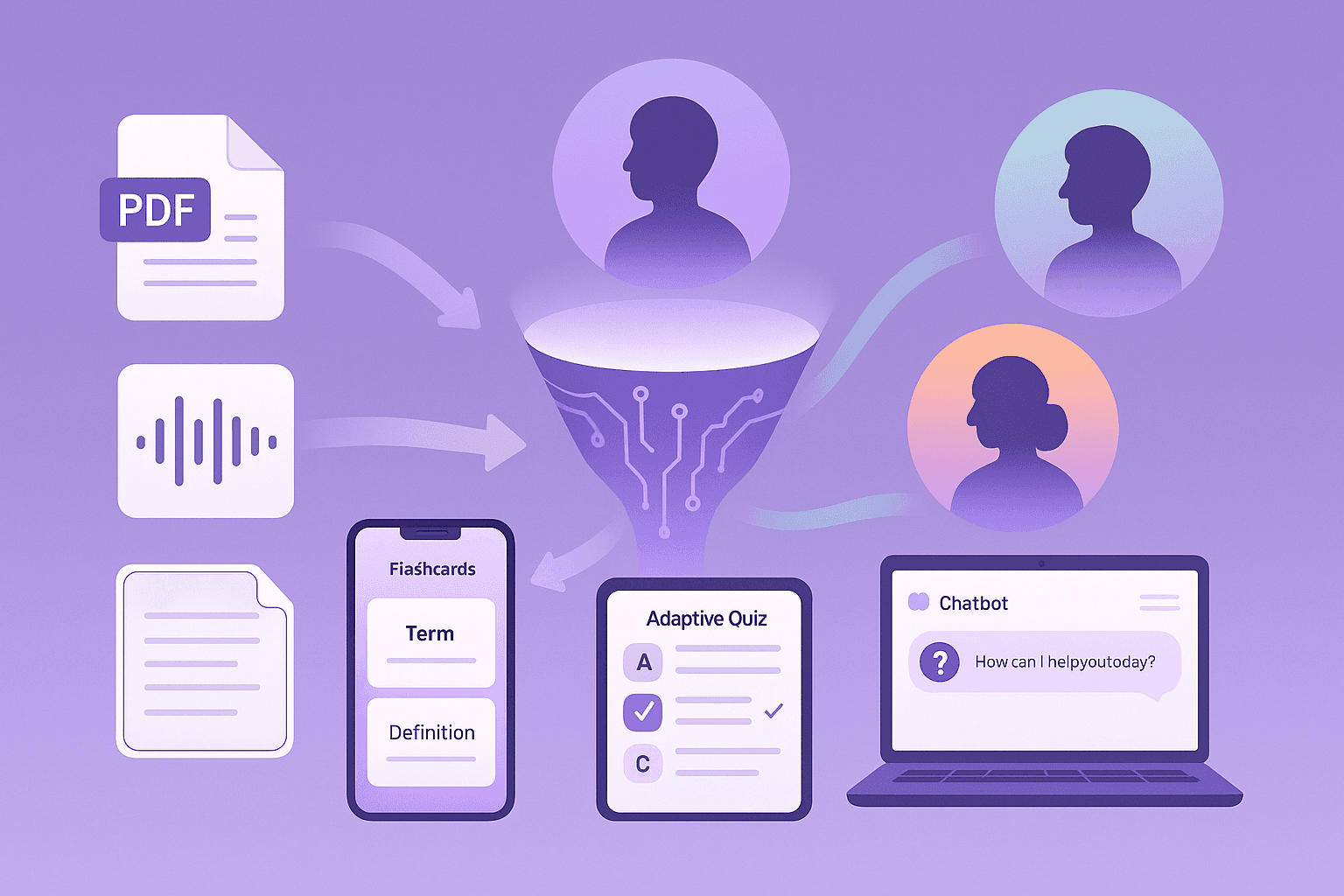
Content transformation magic: Upload a dense PDF or chaotic lecture recording, and the AI spits out detailed study notes and flashcards. No more spending hours making your own.
24/7 AI tutoring: Got a question at 2 AM before your final? The chatbot is ready. As one user put it: "Penseum's chatbot is awesome! I get answers to my questions anytime. 🤖" - Casey, Penseum
Bite-sized, Duolingo-style lessons: Instead of overwhelming you with a 50-page study guide, the platform breaks things into digestible chunks. Perfect for cramming or fitting study sessions into a busy schedule.
With over 1,000,000 learners from top institutions already on board, it's clear this approach resonates.
Penseum vs. Calibr, CYPHER & goFLUENT: Which platform supports 20+ languages best?
Let's get into the weeds. How do the main players compare when it comes to multilingual support?
Platform | Languages Supported | Key Multilingual Features | Best For |
|---|---|---|---|
Penseum | 20+ | AI flashcards, quizzes, study guides in native language; 24/7 AI tutor | Students (high school & university) |
Calibr | 25+ | 10x faster global deployment with automated translations; cultural sensitivity review | Corporate L&D teams |
CYPHER Learning | 50+ | CYPHER Agent creates courses in 50+ languages; Universal Translator for messages; 92% of users save time | Training organizations, enterprises |
goFLUENT | Multiple business languages | AI Learning Plans, personalized paths, live conversation in 70+ languages (via integrations) | Corporate language training |
Google AI Experiments | 17+ languages including Arabic, Chinese, Japanese, Korean, Turkish | Tiny Lesson, Slang Hang, Word Cam for contextual vocab | Casual language learners |
The bottom line: If you're a student who needs to turn your actual coursework into study tools across languages, Penseum is purpose-built for that. Calibr and CYPHER are more enterprise-focused, while goFLUENT zeroes in on business communication. Google's experiments are fun for casual practice, but not designed for serious academic study.
Penseum's advantage? It's free to start, offers a premium subscription for $14.99, and is specifically designed for university and high school students juggling real coursework in multiple languages.
Does AI actually boost language outcomes? The research says yes
You might be wondering: does all this AI stuff actually help, or is it just hype?
The data is pretty compelling. A 2024 meta-analysis of 40 empirical studies (3,290 learners across ten countries) found that "AI had a high effect size (g=0.812) on English language learning achievement, indicating that students who integrated AI significantly outperformed their counterparts who followed traditional pedagogy" - ScienceDirect
Another 2025 systematic review of 25 studies showed "a medium overall effect size (Hedges's g = 0.390, p < 0.001) for the application of AI-enabled assessment tools in enhancing students' language learning" - Wiley Online Library
What does that mean in plain English? AI tools consistently boost:
Vocabulary retention
Writing accuracy
Pronunciation intelligibility
Learner motivation
And according to a 2025 literature review, evidence converges on "moderate-to-large gains in writing accuracy, vocabulary retention, pronunciation intelligibility and learner motivation, alongside reduced teacher administrative load."
Key takeaway: AI-powered study tools aren't just convenient - they're backed by serious research showing real learning gains.
How does AI help ADHD and diverse learners stay engaged?
Here's something that doesn't get talked about enough: AI study tools can be absolute lifesavers for neurodivergent learners.
Research shows that second language learners with ADHD tend to favor oral over written input, exhibit a greater need for personalized one-on-one sessions, and prefer multi-sensory learning environments. Traditional study methods? Not built for that.
But AI-powered platforms can adapt. Studies show that ADHD students have a positive attitude towards ICT use and find lessons more engaging and motivating. Features like:
Bite-sized lessons that don't overwhelm
Interactive flashcards for active recall
24/7 AI tutoring for when you need answers immediately
Personalized pacing that adapts to how you learn
...all help learners with ADHD (and honestly, everyone else too) stay engaged.
Research on AI-generated mnemonic keywords paired with Anki flashcards found that "both groups exhibited statistically significant vocabulary retention improvements after undergoing four repetition sessions" - World Journal of English Language
One Penseum user summed it up perfectly: "I uploaded my developmental psychology a deck back and I am in awe. I have ADHD so this is a LIFESAVER. Seriously, thank you." - Shiran K., DeClom
Rolling it out on campus or at scale
If you're a CIO, L&D lead, or campus admin thinking about deploying multilingual AI study tools at scale, here's what to keep in mind:
1. Start with localization, not just translation
A global learner base demands an EdTech experience that resonates locally. That means adapting date formats, currencies, cultural references - not just words.
2. Think modular and cloud-native
Monolithic systems are hard to scale. Modern architectures like A4L2.0 use open standards such as Edu-API, Caliper Analytics, and LTI to enable secure, interoperable data integration across LMS, SIS, and AI tools.
3. Don't forget low-bandwidth users
Millions of learners live in areas with unstable internet. Platforms need offline capabilities and lightweight options to truly serve everyone.
4. Leverage AI for time savings
When the University of Leeds implemented Blackboard's AI Design Assistant, 95% of instructors said it saved them time, while 92% would recommend it to peers. One instructor noted: "Blackboard Learn Ultra's AI Design Assistant has taken a task which might have taken me a full day down to a few minutes." - Dr Steven Montagu-Cairns
5. Access more than 250 AI use cases
Gartner's research arm offers tailored AI use cases for education, helping institutions identify the right tools for their specific needs.
Key considerations for deployment:
Pilot with a single department or cohort before rolling out campus-wide
Train instructors on how to review and refine AI-generated content
Ensure compliance with accessibility standards (WCAG 2.0 AA)
Set up segmented analytics to track outcomes by language and region
Key takeaways for choosing your next study sidekick
Let's bring it home. If you're looking for a multilingual AI study tool in 2026, here's what to prioritize:
Genuine multilingual support: Not just a translated interface, but AI that actually works with your content in 20+ languages
Content transformation: The ability to turn notes, PDFs, and videos into flashcards, quizzes, and study guides in seconds
Personalized, adaptive learning: Tools that adjust to your pace, your language, and your learning style
24/7 AI tutoring: Because questions don't wait for office hours
Proven effectiveness: Look for platforms backed by research showing real learning gains
For students, Penseum checks all these boxes. It's built specifically for university and high school learners, supports over 20 languages, and automatically creates a complete study roadmap - including flashcards and practice exams. Plus, it's free to start.
Whether you're cramming for finals in your third language or just trying to keep up with a global curriculum, the right AI study tool makes all the difference. Choose one that speaks your language - literally.
About the Author
Seasoned studier and expert exam crammer
Frequently Asked Questions
What is a multilingual AI study tool?
A multilingual AI study tool uses artificial intelligence to help learners study in multiple languages, offering features like flashcards, quizzes, and AI tutoring to enhance learning across different languages.
Why is a multilingual AI study tool important in 2026?
With global student mobility increasing, students often study in multiple languages. A multilingual AI study tool helps break language barriers, providing accessible education technology that supports diverse learning needs.
What features should a multilingual study platform include?
Key features include native language UI, context-aware translation, adaptive learning paths, support for diverse scripts, AI-powered content generation, and personalized AI tutoring to enhance learning efficiency.
How does Penseum support multilingual studying?
Penseum supports over 20 languages, transforming study materials into interactive tools like flashcards and quizzes, and offers 24/7 AI tutoring, making it ideal for international students.
Does AI improve language learning outcomes?
Research shows AI tools significantly boost language learning outcomes, improving vocabulary retention, writing accuracy, pronunciation, and learner motivation, making them effective educational aids.
How does Penseum cater to diverse learners, including those with ADHD?
Penseum offers bite-sized lessons, interactive flashcards, and personalized pacing, which are beneficial for neurodivergent learners, including those with ADHD, by keeping them engaged and motivated.
Sources
https://www.sciencedirect.com/science/article/abs/pii/S0346251X24002100
https://platform.claude.com/docs/en/build-with-claude/multilingual-support
https://penseum.com/#:~:text=You%20can%20upload%20any%20kind,on%20the%20content%20you%20provide.
https://www.gofluent.com/us-en/products/language-training-academy/
https://rsisinternational.org/journals/ijriss/article.php?id=4564
https://www.sciencedirect.com/science/article/pii/S2215039024000298
https://www.sciencedirect.com/science/article/abs/pii/S0891422223002445
https://www.sciedupress.com/journal/index.php/wjel/article/viewFile/25258/15687
https://dataprocorp.tech/designing-scalable-edtech-platforms-for-global-learners/
Related guides
Ready to study smarter?
Start turning your notes into guides, quizzes, and flashcards in seconds.