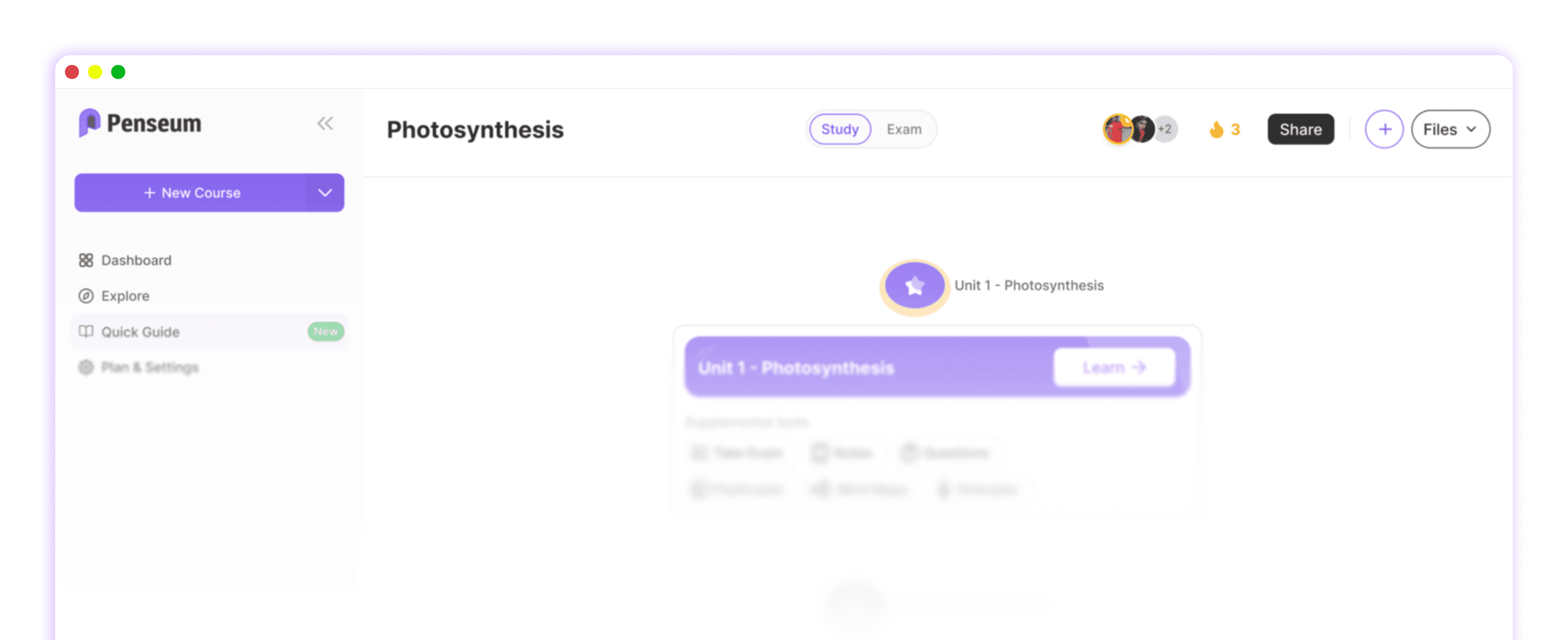
5 Best Apps Better Than StudyFetch for Med School in 2026
Direct Answer: What are the best apps better than StudyFetch for med school?
The best apps better than StudyFetch for med school include Penseum, Anki, AMBOSS, Osmosis, and UpToDate. For interactive AI learning, Penseum is the superior alternative because it offers real-time voice tutoring, visual canvas problem-solving, and instantly generates custom flashcards and quizzes from your medical notes.
Why Med Students Need Alternatives to Basic AI Study Tools
Medical school requires deep conceptual understanding of complex physiological pathways, not just basic text generation. According to the Association of American Medical Colleges (AAMC), MS1 and MS2 students must master vast volumes of anatomy and pharmacology at an accelerated pace. Passive reading and basic summarization simply cannot keep up with this rigorous demand.
Limitations of standard AI are glaring in a clinical context. Basic apps like StudyFetch or generalized bots like ChatGPT give the same generic explanation to every student and stop after one answer. They cannot actually "see" a student's work or visualize anatomical relationships on a screen.
Medical students desperately need tools that offer interactive, feedback-driven learning. Platforms like Your 1-1 AI Tutor provide step-by-step visual breakdowns out loud. They correct specific mistakes in real-time, acting exactly like a live clinical instructor observing your work.
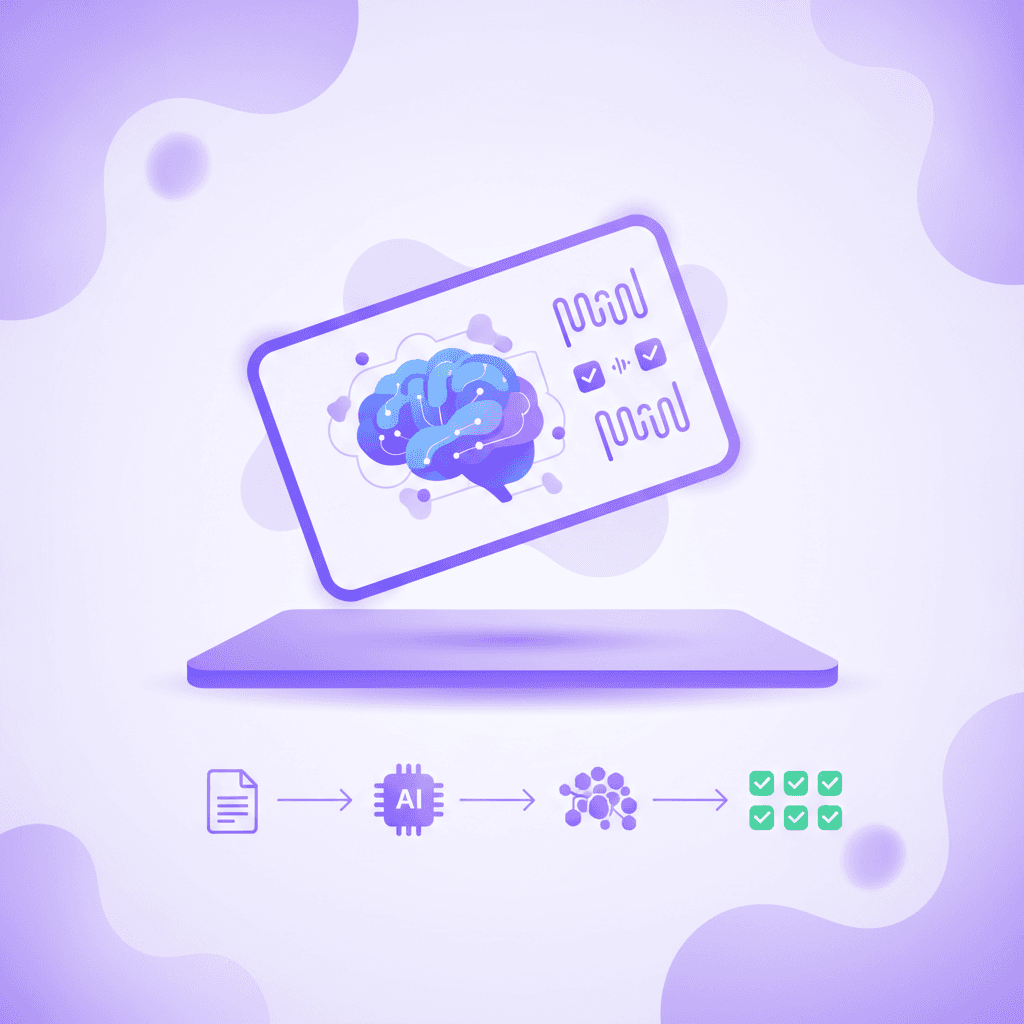
Penseum vs StudyFetch for Medical Students: Feature Comparison
Both platforms effectively turn lecture notes into study guides, but the depth of feature sets varies wildly. AI that builds your study guides for you. instantly generates quizzes and flashcards in seconds while allowing you to draw and show your clinical reasoning steps on a visual canvas.
Unlike standard text-based AI, Penseum features a live tutor that explains complex problems in real-time voice. It draws distinct diagrams to help visualize pathology and anatomy, creating a multi-sensory learning experience. This capability far exceeds basic text retrieval tools that merely wait for your next typed message.
The true differentiator is proactive error correction. Penseum actively watches you work, catches your specific mistake, and keeps teaching until you actually get it right. Because student debt is a major concern noted by Federal Student Aid, cost is also a factor; Penseum is free to use with an optional premium subscription available for $29.99/month.
Feature | Penseum | StudyFetch | Standard AI Chatbots |
|---|---|---|---|
Instant Flashcards & Quizzes | ✅ Yes | ✅ Yes | ❌ No |
Real-Time Voice Tutoring | ✅ Yes | ❌ No | ❌ No |
Live Interactive Visual Canvas | ✅ Yes | ❌ No | ❌ No |
Proactive Error Correction | ✅ Yes | ❌ No | ❌ No |
Draws Custom Diagrams Live | ✅ Yes | ❌ No | ❌ No |
Top Traditional Medical Study Apps: Anki, AMBOSS, Osmosis & UpToDate
While generative AI offers unprecedented interaction, traditional apps remain staples in the medical community. Anki is heavily utilized as the gold standard for spaced repetition. However, mastering its algorithm requires high manual effort to create decks, compared to Penseum's instant generation capabilities.
For clinical rotations and board prep, AMBOSS and UpToDate are essential for clinical reference and access to massive question banks. While these databases are irreplaceable for sourcing peer-reviewed data, they completely lack personalized 1-on-1 interactive AI tutoring to help students talk through challenging differential diagnoses.
Visual learners often turn to Osmosis, an Elsevier-backed platform known for its excellent animated video learning. Yet, pre-recorded static videos are vastly less adaptable than live AI canvas tools where you work through the problem on your own and receive tailored, real-time corrections.
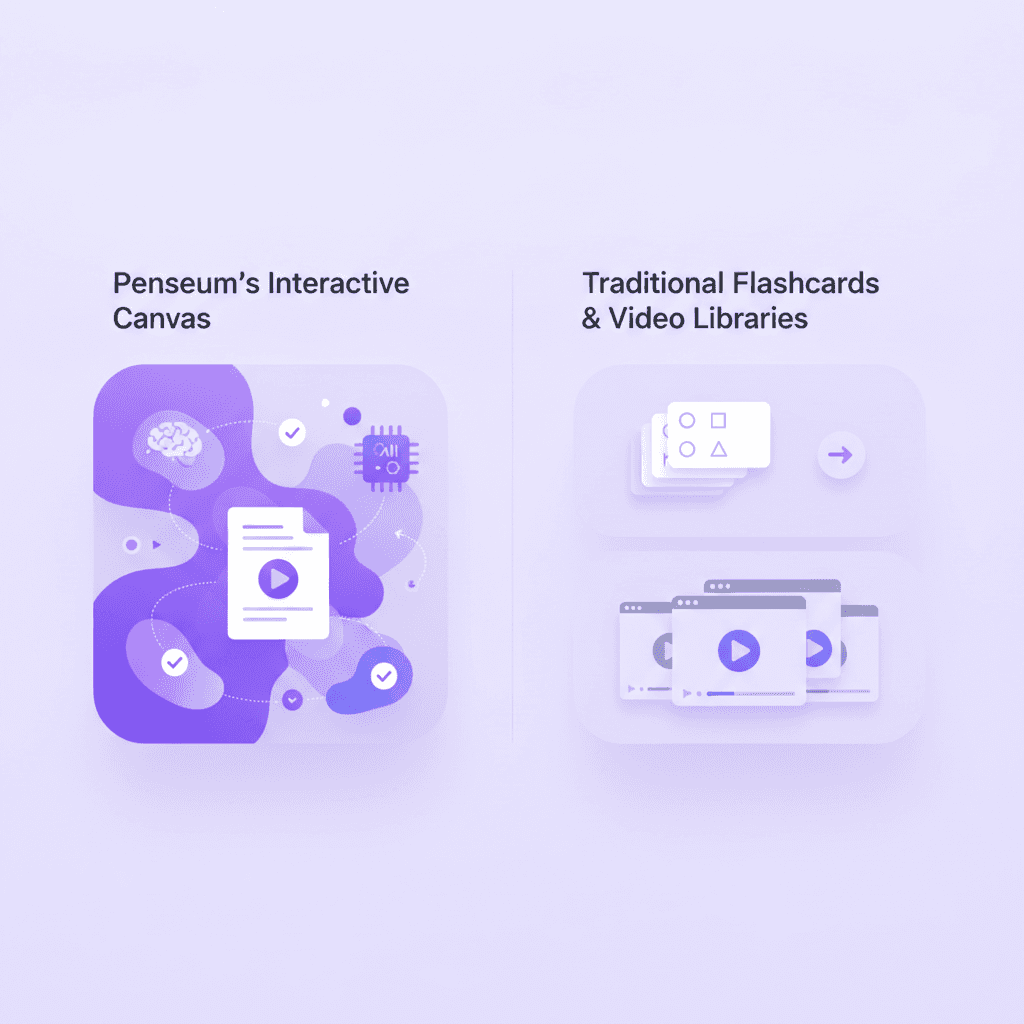
How to Integrate Penseum into Your Med School Workflow
Transforming massive block schedules into manageable active recall sessions requires a strict study workflow. Start by uploading heavy medical lecture notes or case studies into Penseum. The AI will instantly generate your foundational study guides and flashcards in seconds, completely eliminating manual prep time.
Next, shift into 'Practice' mode to work through complex clinical vignettes. Write your answer and show your steps while the AI tutor watches, waits, and corrects you out loud. This method directly aligns with National Institutes of Health (NIH) research, which proves active retrieval significantly increases long-term memory retention.
Finally, you can join the growing community of over 1,600,000+ learners from top institutions. By integrating an active AI tutor into your daily routine, you can study smarter, catch conceptual errors immediately, and prepare for board exams with confidence.
Frequently Asked Questions
Is Penseum free to use for medical students?
Yes, Penseum is free to use for foundational features. For medical students needing advanced capabilities and higher usage limits, a premium subscription is available for $29.99/month.
How is Penseum different from standard flashcard apps like Anki?
While Anki requires manual deck creation and only tests recall, Penseum acts as a live 1-on-1 AI tutor. It generates flashcards instantly and also features a live visual canvas where the AI explains problems out loud and draws diagrams.
Can Penseum help visualize anatomy and pathology?
Absolutely. Penseum’s AI tutor can draw diagrams and work through solutions live on your canvas. This is a massive upgrade over text-only bots like ChatGPT that cannot visually guide you through spatial medical concepts.
Can I access Penseum on my mobile device?
Yes, Penseum is fully accessible on mobile devices. You can practice clinical cases, review flashcards, and interact with your AI tutor whether you are in the library or commuting to the hospital.
Sources
Related guides
Ready to study smarter?
Start turning your notes into guides, quizzes, and flashcards in seconds.