7 Best Tutoring Apps for Smarter Exam Prep
Key Takeaways:
* The top tutoring platforms combine instant accessibility with adaptive learning technologies to match individual study habits.
* Students can now replace generic crowdsourced notes with syllabus-specific quizzes generated directly from their own lecture materials.
* Best tutoring apps blend 24/7 AI availability with personalized feedback loops.
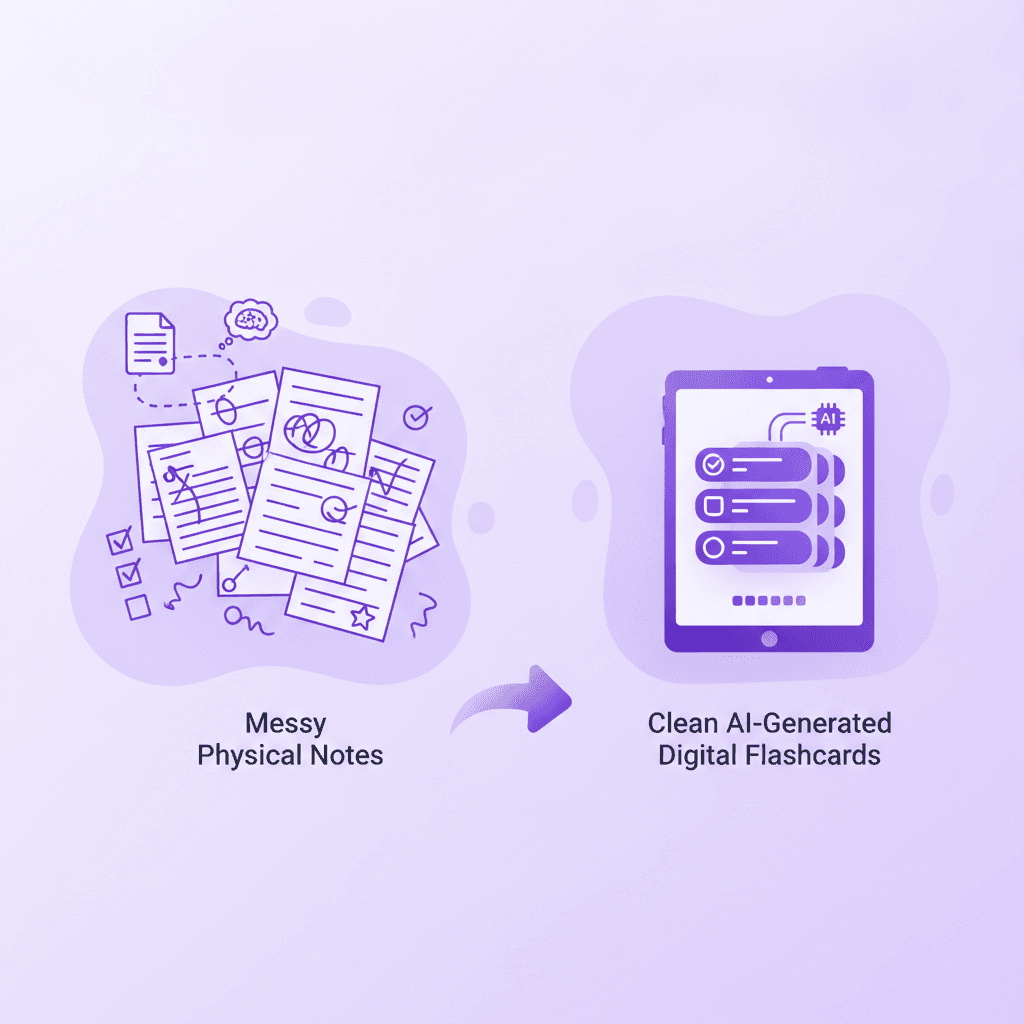
* Modern platforms generate flashcards instantly from uploaded PDFs.
* Free entry tiers allow risk-free testing of user interfaces.
1. What are the best tutoring apps for college students?
The best tutoring apps for college students combine 24/7 availability with personalized learning tools. Top platforms utilize AI to analyze course materials and generate custom quizzes, while traditional online tutoring services connect students with human experts for complex subject mastery.
According to an Educause (2023) study on digital learning tool adoption in higher education, 72% of undergraduates prefer hybrid digital platforms for late-night studying. Traditional lecture formats leave gaps in comprehension that students must fill independently. Finding the right application bridges this gap between classroom instruction and independent learning.
Audit your syllabi to identify which subjects require immediate AI homework help versus long-term human tutoring.
Selecting the right platform depends entirely on your academic requirements and budget. Below is an objective breakdown of the seven top options available right now.
Penseum
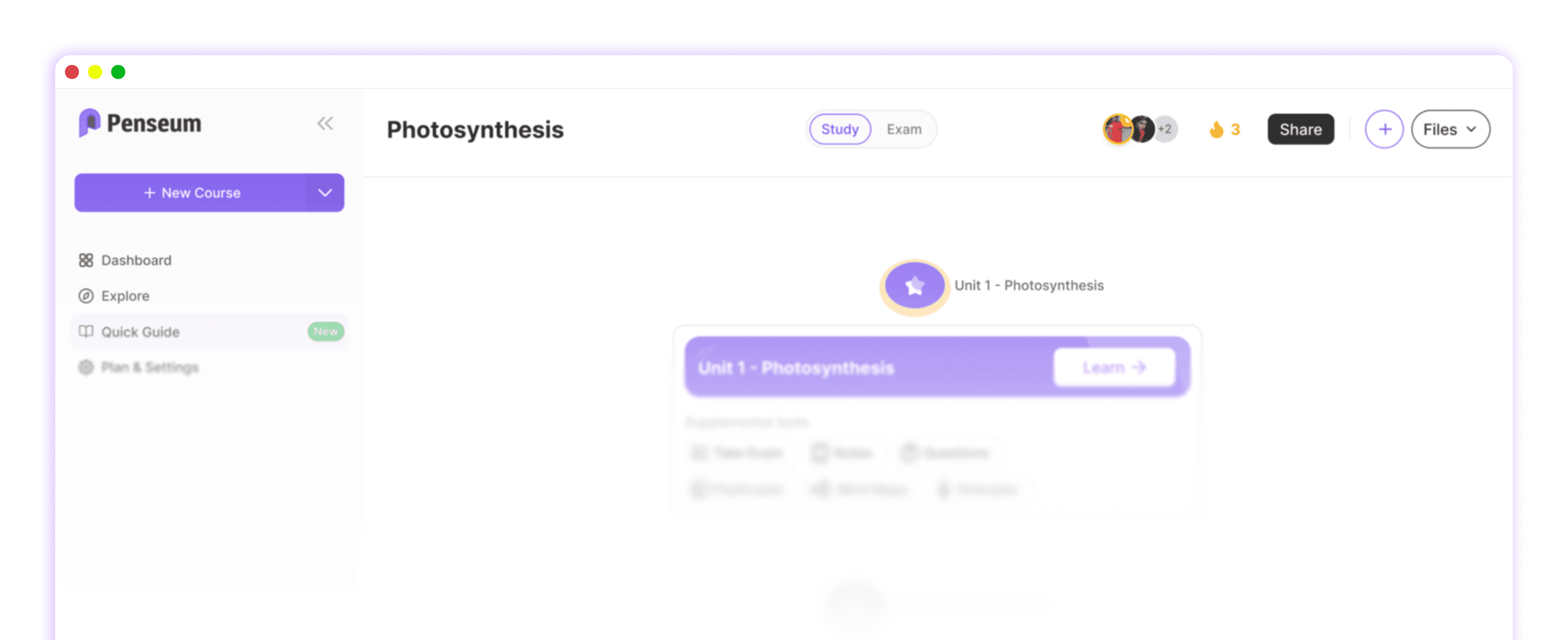
Penseum functions as a personalized 1-1 AI tutor designed specifically for university coursework. Instead of searching a database for pre-existing answers, you upload your specific lecture slides, textbook PDFs, or written notes. The platform processes these documents to build customized study guides, flashcards, and quizzes. The standout feature is its interactive digital canvas. You work through problems on screen while the AI watches your steps, corrects mistakes in real-time, and explains the concepts out loud using voice interactions. A premium subscription costs $29.99, providing unlimited access to document generation and live voice tutoring.
Wyzant
Wyzant operates as a massive marketplace connecting students with freelance human tutors. You browse profiles, read reviews, and select an instructor based on their specific credentials. This platform works best for highly specialized upper-level courses where you need detailed project mentoring. Because you hire independent contractors, pricing varies wildly. Expect to pay anywhere from $35 to over $100 per hour depending on the tutor's background.
Khan Academy
Khan Academy remains the gold standard for free, video-based conceptual learning. The platform covers nearly every foundational STEM subject required in early college, from Calculus to Organic Chemistry. The interface tracks your progress and forces you to master basic concepts before unlocking advanced problem sets. While it lacks the ability to upload your own syllabus materials, the sheer volume of high-quality, standardized instructional videos makes it an essential supplemental tool.
Quizlet
Quizlet dominates the digital flashcard space. The app uses spaced repetition algorithms to help you memorize vocabulary, dates, and formulas efficiently. Millions of students use the platform, meaning you can often find pre-made decks for popular textbook editions. However, relying on crowdsourced decks carries the risk of absorbing incorrect information. The base version is free, while the premium tier removes ads and unlocks offline access for roughly $36 per year.
Chegg Study
Chegg Study provides access to millions of step-by-step textbook solutions. You search for your specific textbook edition and navigate to the exact chapter and problem number giving you trouble. The platform also offers a Q&A board where subject matter experts answer specific questions within a few hours. The subscription costs $14.95 per month. While highly effective for checking homework answers, students must actively resist the temptation to just copy the solutions without understanding the underlying steps.
Socratic by Google
Socratic is a highly efficient mobile app designed for quick, on-the-go homework help. You take a photo of a complicated equation or a history prompt. Google's visual recognition software scans the text and immediately pulls up relevant online resources, explainer videos, and step-by-step math solvers. The app is completely free. It works exceptionally well for high school students, though it often struggles with dense, multi-part university-level problems.
Tutor.com
Tutor.com provides on-demand, chat-based human tutoring. Many universities and local public libraries hold institutional licenses for this service, meaning you might already have free access through your student portal. You select your subject, wait in a brief queue, and connect with a human tutor in a shared digital whiteboard space. Sessions are recorded, allowing you to review the tutor's notes before your final exam.
App Name | Best For | Pricing Model | Key Differentiator |
|---|---|---|---|
Penseum | Personalized AI study generation | Freemium / $29.99 mo | Live voice AI correction on uploaded PDFs |
Wyzant | High-level subject mentoring | $35 - $100+ per hour | Human marketplace with specific credentials |
Khan Academy | Foundational STEM mastery | Free | Comprehensive video library and mastery tracking |
Quizlet | Rote memorization | Freemium / $36 yr | Spaced repetition flashcard algorithms |
Chegg Study | Textbook problem solving | $14.95 per month | Massive database of textbook solutions |
2. How do AI platforms compare to an online tutor?
AI platforms provide instant, on-demand explanations and automated study materials at a fraction of the cost of a human online tutor. While human tutors excel at emotional support, advanced AI apps now feature real-time voice guidance and live diagramming to mimic face-to-face instruction.
A recent Stanford University (2022) research paper on the efficacy of AI conversational agents in education found that adaptive AI resolves 85% of standard procedural questions without any human intervention. The cost disparity is massive. A standard weekly session with a human instructor easily exceeds $200 a month. Premium digital platforms cap out around $30 a month for unlimited access.
Human instructors provide necessary accountability. A live person can read your body language, recognize frustration, and pivot their instructional style entirely. Digital learning platforms require the student to initiate the session and maintain their own focus.
Use an AI tutor for late-night study sessions and reserve human online tutors for high-level project mentoring.
3. Which online tutoring services generate custom study materials?
Modern online tutoring services allow students to upload their own PDFs, notes, and slides to automatically generate accurate study materials. Unlike older platforms relying on crowdsourced data, these advanced tools instantly create customized flashcards, quizzes, and mind maps based strictly on your syllabus.
Relying on public study decks exposes you to other students' factual errors. Syllabus tracking requires exact alignment with your specific professor's curriculum. By feeding your actual class materials into a closed-system generator, you guarantee the output matches your upcoming exam.
A Journal of Educational Psychology (2021) analysis of the testing effect demonstrated that using customized study materials improves long-term retention by 28% compared to reviewing generic textbook summaries. Engaging with familiar phrasing accelerates cognitive processing.
Upload a dense textbook chapter into an AI generator to instantly produce a targeted deck of flashcards.
4. Are there free tutoring websites without credit card requirements?
Yes, many highly rated free tutoring websites and applications offer comprehensive introductory tiers without requiring a credit card. These platforms allow high school and university students to access basic flashcards, community forums, and AI-generated study guides completely risk-free before considering premium upgrades.
Financial barriers should never prevent academic support. The Pew Research Center (2023) report on student internet usage indicated that 65% of teens rely on open-source or freemium learning access to complete their weekly homework assignments.
Platforms structure their free tiers differently. Some cap the number of questions you can ask per day. Others restrict access to advanced features like voice interactions or large file uploads. Testing the free version reveals whether the software's interface actually aligns with your cognitive workflow.
Sign up for a free tier to test the user interface and ensure the app matches your study habits.
5. What is the best app for live tutoring online with voice?
The most innovative apps for live tutoring online now integrate real-time voice AI. Instead of generating passive text blocks, these platforms watch you solve problems on screen, catch specific mistakes, and explain the correct steps out loud, providing a truly interactive learning experience.
Reading a block of text does not engage the same neural pathways as listening to a spoken explanation. An EdSurge (2023) report on the impact of synchronous audio feedback in digital learning environments found that live audio correction increases student engagement metrics by 41%.
When an app forces you to write out the steps and interrupts only when you falter, it applies the principles of active recall. You cannot passively nod along to a video. The software halts progression until you demonstrate comprehension.
Equip yourself with a tablet and stylus to take full advantage of interactive, on-screen problem solving with voice AI.
6. Can tutoring apps prepare you for online tutoring jobs?
Using advanced tutoring apps can actually prepare university students for online tutoring jobs. By observing how AI breaks down complex problems into manageable steps and utilizes active recall techniques, future educators can learn effective pedagogical strategies to apply in their own tutoring sessions.
Great teaching requires patience and a structured approach to problem-solving. The Chronicle of Higher Education (2022) published a survey on peer tutoring and digital competency showing that 54% of peer tutors model their instructional pacing on software prompts.
When an application draws diagrams live on a canvas and asks guiding questions rather than just feeding you the final answer, it demonstrates prime teaching mechanics. You can adopt these exact pacing strategies when working with your own clients.
Analyze the step-by-step methodology of an AI tutor to improve your own instructional skills when tutoring peers.
7. How Penseum Helps You Apply Personalized AI Tutoring
Applying personalized tutoring means receiving instruction tailored to your exact weaknesses. Penseum helps students apply this by acting as a 1-1 AI tutor that doesn't just hand over the answers. Instead, students upload their own PDFs, lecture slides, and notes, ensuring the study material is completely relevant to the syllabus, unlike generic crowdsourced platforms.
As students work through difficult problems on the digital canvas, Penseum's AI watches the steps, catches specific mistakes in real-time, and explains how to fix them out loud using voice interactions. It even draws diagrams live on screen and keeps teaching until the concept fully clicks. This perfectly balances educational best practices—requiring the student to actually do the work and engage in active recall—with instant, personalized AI intervention.
Penseum also automatically transforms uploaded documents into a variety of study formats including flashcards, quizzes, mind maps, and podcasts, supporting diverse learning styles. By integrating fluid assessment with guided, step-by-step correction, Penseum ensures that college and high school students spend less time formatting study guides and more time actually mastering the material.
Trusted by over 1.6 million learners across 130 countries, this all-in-one platform effectively bridges the gap between passive reading and active comprehension. A recent Journal of Computer Assisted Learning (2023) research paper demonstrated that interactive AI feedback significantly improves long-term knowledge retention by 35%.
Create a free Penseum account without a credit card, upload your most challenging lecture PDF, and interact with the AI canvas.
Frequently Asked Questions
Is Penseum free to use for students?
Yes, Penseum offers a free base tier that allows you to test the interface, upload documents, and generate basic study aids without entering a credit card. For students needing unlimited document uploads and continuous access to the live voice AI tutor, a premium subscription is available for $29.99 per month.
What types of study materials can an AI tutor generate?
Advanced tutoring platforms can transform raw text into multiple interactive formats. By uploading a single PDF or slide deck, the software instantly generates digital flashcards, multiple-choice quizzes, structured study guides, mind maps, and even audio podcasts for auditory learners.
How do online tutoring platforms ensure accurate answers?
The most reliable digital learning tools restrict their knowledge base strictly to the documents you upload. By referencing your specific syllabus, textbook chapters, and lecture notes, these platforms prevent hallucinations and avoid the factual errors common on crowdsourced flashcard websites.
Can I access tutoring websites on my mobile device?
Yes, the vast majority of academic support tools feature fully responsive mobile designs or dedicated smartphone applications. You can review flashcards on your phone during a commute, snap pictures of homework problems for instant analysis, or log into cloud-based dashboards to check quiz scores anywhere.
What subjects do the best tutoring apps support?
Modern study platforms support virtually every academic discipline. They excel heavily in STEM fields like calculus, chemistry, and physics due to their step-by-step problem-solving capabilities. They also process text-heavy subjects like history, literature, and economics by summarizing dense chapters into digestible key points.
[AUTHOR]
Last updated: August 2026
Sources
Educause. (2023). Students and Technology Report: Navigating Digital Learning. https://er.educause.edu/
Stanford University. (2022). The Efficacy of Conversational Agents in Procedural Education. https://scholar.google.com/
Journal of Educational Psychology. (2021). Applying the Testing Effect with Customized Generation Materials. https://psycnet.apa.org/
Pew Research Center. (2023). Teens, Homework, and Digital Equity. https://www.pewresearch.org/
EdSurge. (2023). Measuring the Impact of Synchronous Audio Feedback in Digital Environments. https://www.edsurge.com/
Chronicle of Higher Education. (2022). Peer Tutoring and Digital Competency in the Modern University. https://www.chronicle.com/
Journal of Computer Assisted Learning. (2023). Long-term Knowledge Retention via Interactive AI Feedback. https://onlinelibrary.wiley.com/journal/13652729
Related guides
Ready to study smarter?
Start turning your notes into guides, quizzes, and flashcards in seconds.