7 Ways a Flash Cards Generator Boosts Your Grades
Key Takeaways
* A flash cards generator automates the conversion of lecture notes and PDFs into active recall study decks using artificial intelligence.
* Automated extraction saves students hours of manual formatting, redirecting study time exclusively toward memory retention and practice testing.
* Advanced platforms process complex STEM formulas, medical diagrams, and specific syllabi to prevent curriculum misalignment.
* Penseum combines automated deck generation with real-time AI voice tutoring and visual canvas corrections for comprehensive learning.
What is an AI flash cards generator?
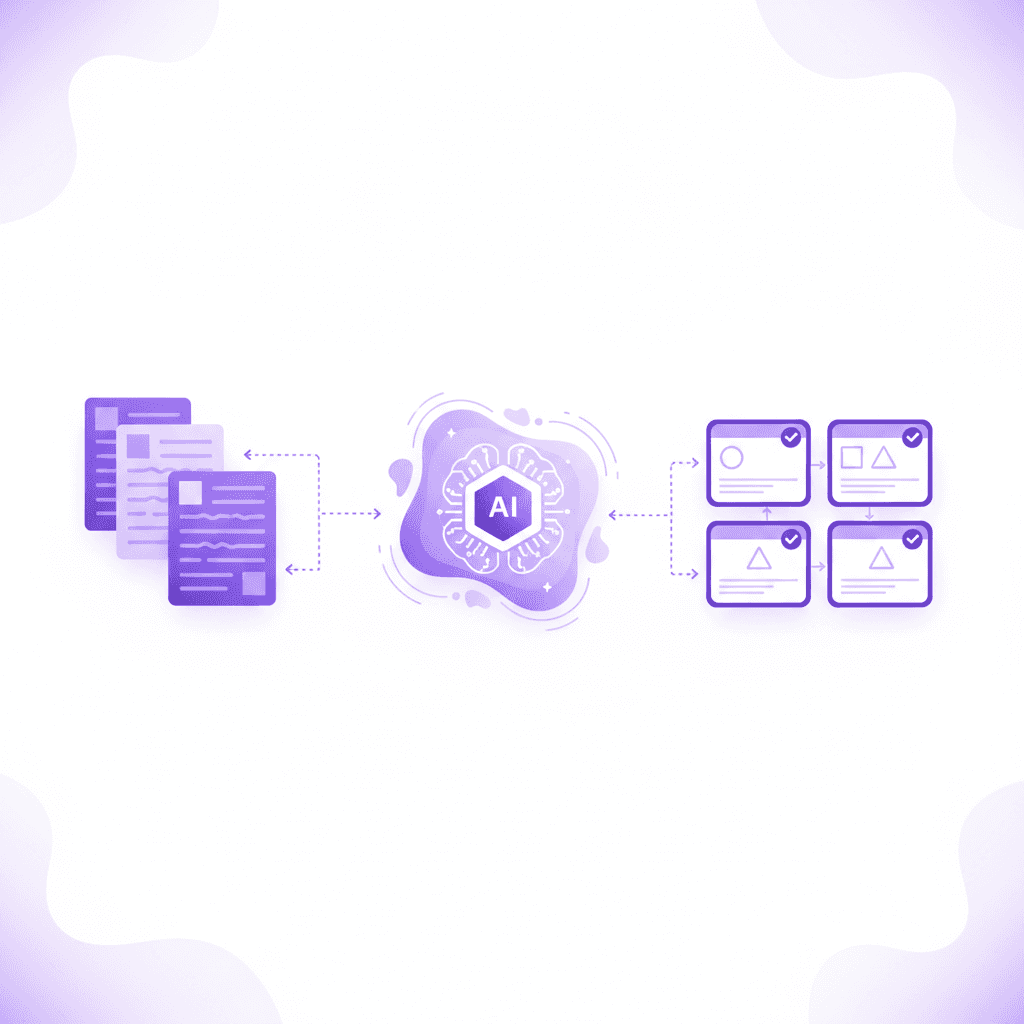
An AI flash cards generator is a software tool that automatically extracts key concepts from your uploaded PDFs, lecture slides, or written notes to create customized digital flashcards. This technology eliminates manual typing, allowing students to transition instantly from organizing materials to actively studying for exams.
Natural language processing models drive this extraction process. When you upload a document, the software scans the text to identify core entities like definitions, historical dates, scientific formulas, and conceptual relationships. Algorithms separate this high-value academic information from filler text or conversational formatting often found in lecture transcripts. You receive a structured deck of questions and answers tailored entirely to your personal study materials.
The fundamental advantage of this technology lies in cognitive offloading. Students frequently exhaust their mental energy organizing notes before actual studying begins. Automating the creation phase preserves cognitive bandwidth for the rigorous task of committing facts to memory. Researchers indicate that maximizing time spent on retrieval practice, rather than preparation, yields significantly better academic outcomes. Testing yourself creates a 150% improvement in long-term retention compared to passively re-reading notes (Karpicke & Roediger, 2008).
Modern generators offer varying degrees of customization. You can adjust the difficulty level, specify the format (multiple-choice vs. open-ended), and limit the scope to specific chapters. High-end tools also incorporate optical character recognition to read scanned textbooks or handwritten lecture notes accurately. This means your messy chemistry scribbles can become a pristine, searchable study deck in under a minute.
Actionable Step: Upload a 10-page lecture PDF into the generator to automatically build a baseline study deck before your next class.
How do flash card generators improve active recall?
Flash card generators improve active recall by prompting your brain to retrieve information from memory rather than just passively reading text. When an AI tool formats your notes into strict question-and-answer pairs, it forces cognitive engagement, which strengthens neural pathways and dramatically improves long-term retention.
Active recall forces a structural change in how your brain stores information. Reading a textbook feels productive because the information is right in front of you, creating an illusion of competence. Closing the book and attempting to generate the answer from scratch exposes actual knowledge gaps. By automatically formatting your notes into prompts, a flash cards generator builds the exact environment needed for this cognitive friction. Every time you flip a digital card, you reinforce the synaptic connections tied to that specific fact.
Educational psychologists consistently rank active recall as the most effective study method available. Comprehensive reviews of study techniques rate practice testing as having the highest utility for students across all age groups and subjects (Dunlosky et al., 2013). Students who utilize active recall methods frequently score up to four times higher on comprehensive exams compared to peers relying on highlighting or summarizing. Automated generators simply reduce the barrier to entry for this highly effective technique.
These tools also naturally integrate with spaced repetition protocols. Many online platforms track which questions you answer incorrectly and automatically schedule those specific cards to appear more frequently. If you master a concept, the algorithm pushes it back, asking you again in a week rather than tomorrow. This systematic delay targets the psychological phenomenon known as the forgetting curve. By testing you right at the moment you are likely to forget the material, the software maximizes the efficiency of your study session.
Actionable Step: Review your newly generated flashcards within 24 hours of attending a lecture to maximize knowledge retention.
The Neuroscience of Retrieval Practice
Understanding the biology behind a flash cards generator helps clarify its effectiveness. When you read a highlighted sentence in a textbook, your brain relies on recognition memory. The visual cues trigger a sense of familiarity, tricking you into thinking you know the material. True mastery requires recall memory. You must pull the information from your hippocampus without external hints.
Forcing this retrieval process triggers long-term potentiation. This biological mechanism strengthens the synapses between neurons based on recent patterns of activity. Repeatedly struggling to remember an answer on a flashcard signals to your brain that this data is important for survival or future utility. The neural pathway thickens. Insulation around the neurons, known as myelin, increases, allowing electrical signals to travel faster. Next time you face that question on a final exam, the retrieval process happens instantly.
Spacing Your AI-Generated Decks
Creating the cards is only the first phase of the learning equation. Timing your exposure to those cards dictates your final grade. German psychologist Hermann Ebbinghaus discovered that humans forget approximately 50% of new information within a single hour if no attempt is made to retain it.
Most students counter this by massing their practice, colloquially known as cramming. They flip through 300 cards the night before a midterm. A flash cards generator paired with spaced repetition software actively prevents this. The AI dictates a schedule. It forces you to study 30 cards on Monday, 30 on Tuesday, and re-tests your weakest Monday cards on Thursday. Spreading out the cognitive load ensures the information moves from working memory into long-term storage.
Why should you create your own flash cards over public decks?
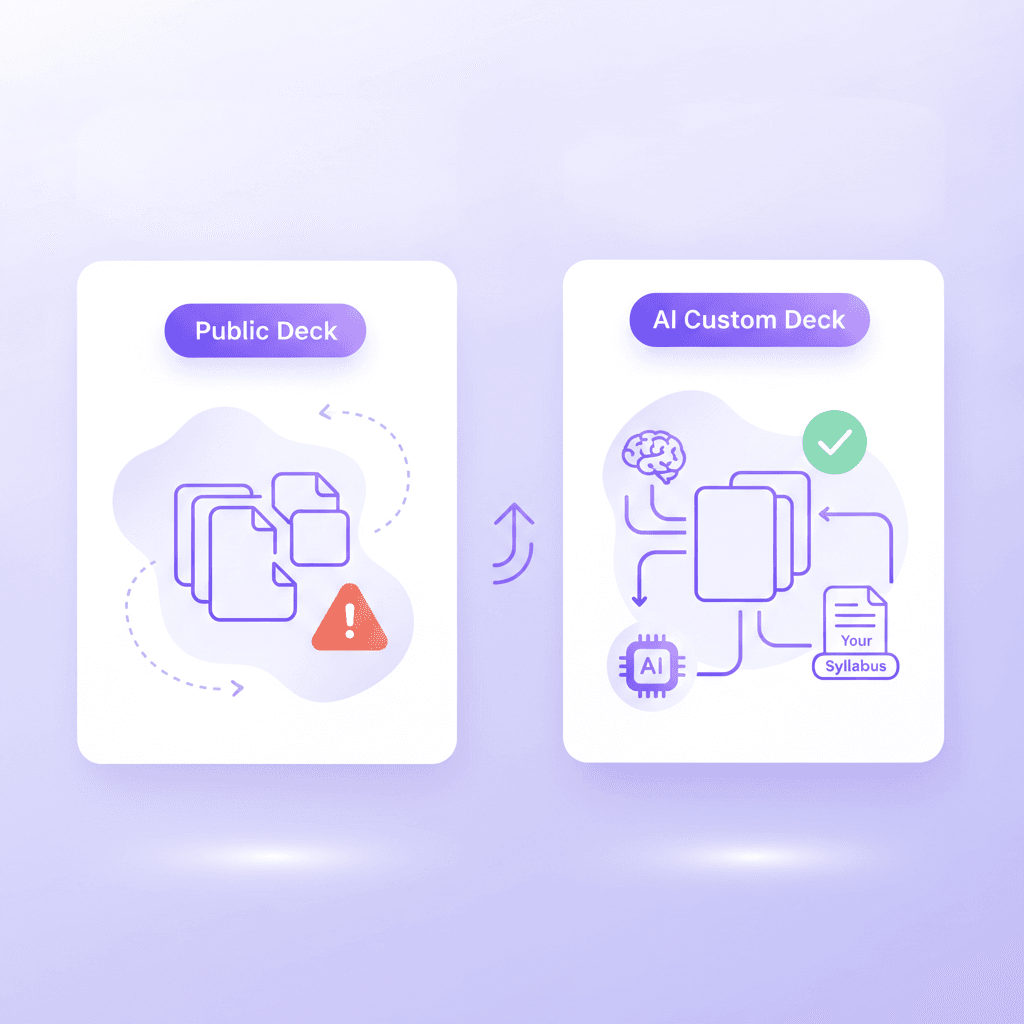
You should create your own flash cards because crowdsourced decks often contain outdated information, factual errors, or material irrelevant to your specific syllabus. Using an AI tool to generate cards directly from your personal course materials guarantees absolute alignment with what your professor will actually test.
Searching public repositories for pre-made study decks introduces significant academic risk. A deck labeled "Introduction to Psychology" at one university might focus entirely on behavioral science, while your professor emphasizes cognitive neuroscience. Studying the wrong material wastes time and damages your exam performance. Public decks also lack quality control. Any user can upload a deck, meaning typos, incorrect formulas, and outdated historical interpretations frequently slip through undetected.
Generating materials directly from your syllabus establishes context-dependent learning. Your brain anchors new facts to the specific phrasing, examples, and frameworks provided by your instructor. Highly personalized and syllabus-aligned learning materials improve recall accuracy by up to 35% during exams (Jensen et al., 2014). If your professor uses a specific case study to explain supply and demand, your flashcards must feature that exact case study to trigger the strongest memory association.
Custom generation also protects against regional or disciplinary variations. Medical terms, legal definitions, and accounting standards differ wildly depending on your country or state. A nursing student studying for the NCLEX in the United States cannot rely on pharmacology flashcards created by a medical student in the United Kingdom. Feeding your exact textbooks into an AI ensures the resulting study aids adhere strictly to your localized curriculum standards.
Actionable Step: Input your professor's exact syllabus or slide deck into the tool rather than searching the web for generic topic decks.
The Generation Effect and Personal Context
Cognitive psychology outlines a phenomenon known as the Generation Effect. People remember information better when they generate it from their own minds rather than reading it from external sources. While an AI does the physical typing, using your own notes as the source material preserves this effect. You recognize your own shorthand, your specific lecture examples, and your personal formatting structure.
A stranger's deck lacks these contextual anchors. You are forced to memorize not just the facts, but the original creator's unique way of thinking about those facts. This adds unnecessary mental friction. Custom generation strips away that friction. The cards speak your academic language.
Avoiding the Illusion of Competence
Using someone else's beautifully formatted study deck often creates a false sense of security. You flip through a pristine set of 500 anatomy terms, recognize the diagrams, and assume you understand the human body. Because you bypassed the messy process of identifying what was important in the textbook yourself, your foundation is weak.
An AI flash cards generator requires you to select, curate, and upload the correct source material first. You must determine which chapters matter. You must isolate the key lecture slides. This initial curation phase forces you to engage with the structure of your course. You build a mental map of the curriculum before the AI even starts extracting the specific questions and answers.
How much time can you save with a flashcard online maker?
A flashcard online maker can save you hours of preparation time by instantly converting raw text into structured study aids. Instead of spending three hours manually typing out 100 flashcards, an AI generator completes the task in seconds, redirecting your valuable time toward actual learning and memorization.
Time management dictates academic success just as much as intelligence. College students regularly face overlapping midterms, weekly essays, and demanding reading assignments. Manually transcribing a 50-page chapter on organic chemistry into index cards can consume an entire weekend. This leaves virtually no hours available for the actual memorization phase. AI automation flips this ratio. You spend one minute generating the study materials and three hours testing yourself on them.
Optimizing time management in study practices and cognitive allocation leads directly to higher grade point averages (Pashler et al., 2007). Surveys of study habits indicate that students often dedicate up to 70% of their designated study time simply formatting their notes. They highlight textbooks, rewrite outlines, and color-code index cards. While aesthetically pleasing, these activities do not significantly impact test scores. Automating the formatting process forces students to spend 100% of their time on high-yield retrieval practice.
This time surplus also reduces academic burnout. Staring at a blank screen, trying to formulate a hundred distinct questions from a dense legal brief is exhausting. By the time the deck is finished, most students lack the energy to actually use it. A flash cards generator handles the heavy lifting, keeping your mental stamina entirely intact for the rigorous practice session that follows.
Actionable Step: Time block your study sessions, dedicating the saved formatting hours strictly to self-testing and practice.
The Mathematics of Study Automation
Consider the exact mathematics of exam preparation. An average college midterm covers roughly 150 pages of textbook material and 10 hours of lecture slides. Converting this volume of information into a comprehensive study deck manually requires formulating approximately 300 distinct question-and-answer pairs.
If a fast typist takes one minute to read a concept, formulate a clear question, write the corresponding answer, and format the card, creating that deck takes five uninterrupted hours. This does not account for fatigue or distraction. An advanced AI flash cards generator processes that same 150-page PDF in under 60 seconds. It isolates the definitions, formulas, and historical dates instantly. You recover five hours of your life. You can allocate those five hours to sleeping, attending office hours, or running through the completed deck multiple times.
Parkinson's Law in Academics
Parkinson's Law states that work expands to fill the time allotted for its completion. If you give yourself a week to make flashcards, you will take a week. You will agonize over formatting, font choices, and phrasing.
AI tools enforce brutal efficiency. Because the generation takes seconds, you can no longer use the preparation phase as a form of productive procrastination. The deck sits ready on your screen immediately. The only logical next step is to begin studying. This immediacy breaks the cycle of delay that plagues so many university students during finals week.
Can a flash card builder handle complex subjects like STEM?
Yes, an advanced flash card builder can process complex STEM subjects by breaking down dense technical PDFs into digestible, bite-sized concepts. High-quality AI generators recognize formulas, scientific terms, and multi-step processes, transforming difficult textbook chapters into clear, step-by-step flashcards for easier comprehension.
Processing a humanities text differs significantly from processing a differential equations textbook. Simple NLP models look for nouns, verbs, and standard sentence structures to form questions. STEM materials rely heavily on non-linear information. They use LaTeX formatting for mathematics, complex spatial diagrams in anatomy, and specialized syntax in computer science. Modern educational AI is specifically trained to parse these non-traditional formats accurately without scrambling the data.
Segmenting complex graphics and multi-step formulas reduces cognitive overload by up to 40% (Mayer, 2009). When facing a massive biological pathway, like cellular respiration, a student can easily become overwhelmed. An intelligent flash cards generator will not put the entire 15-step pathway onto a single card. Instead, it systematically breaks the process down. It generates one card for glycolysis, one for the Krebs cycle, and another for the electron transport chain. This isolation allows students to master individual components before connecting them into a larger framework.
Advanced tools also handle coding languages with precision. If a computer science student uploads a repository of Python notes, the generator can output cards asking for specific syntax rules, the time complexity of algorithms, or the purpose of specific functions. It retains the indentation and formatting required for code snippets, ensuring the study material remains legible and accurate to real-world programming environments.
Actionable Step: Feed a single complex textbook chapter at a time into the AI to keep the generated decks tightly focused and manageable.
Parsing Mathematical and Chemical Equations
Standard text extractors often ruin mathematical symbols. A greek letter beta might convert to a standard 'B', or exponents might drop down to the baseline, turning $x^2$ into x2. This renders a calculus or physics study deck completely useless.
Purpose-built academic AI tools utilize specialized mathematical parsing engines. They recognize LaTeX and MathML encoding within PDFs. When the generator creates a card about the quadratic formula, it displays the complex fractions and square roots exactly as they appear in the textbook. Chemistry students benefit from similar precision. Organic chemistry relies on molecular structures and reaction mechanisms. High-end generators can extract these visual elements, asking you to identify functional groups or predict the product of a specific chemical reaction.
Diagram Integration for Medical and Engineering Students
Certain disciplines require visual learning. A first-year medical student cannot learn human anatomy through text descriptions alone. They must identify the exact location of the superior vena cava on a diagram of the heart.
Advanced flashcard creators support visual occlusion. You upload an anatomical diagram from your textbook. The software identifies the existing labels, hides them behind digital boxes, and creates a deck where each card asks you to identify one specific hidden label. This spatial practice is mandatory for subjects like biology, structural engineering, and architecture. It forces the brain to connect abstract terminology with physical realities, cementing the knowledge much deeper than a simple text definition ever could.
How do you choose the best flashcard creator online?
To choose the best flashcard creator online, look for tools that offer multi-modal learning options, combining flashcards with quizzes, mind maps, and live AI tutoring. The ideal platform should process your exact documents securely, offer a free tier, and avoid delivering generic, crowdsourced answers.
Not all generators offer the same baseline quality. Basic versions simply pull random sentences from your text and blank out a word, creating a basic cloze-deletion test. While somewhat helpful, this method often focuses on irrelevant grammar rather than core academic concepts. Premium tools utilize semantic understanding. They read a paragraph, comprehend the underlying principle, and generate a completely new question that tests your actual understanding of the topic, rather than your ability to memorize a specific sentence structure.
Multi-modal instruction increases learning efficiency by 25% across diverse student populations (Clark & Mayer, 2016). You want a tool that does not limit you to a single study method. Sometimes a flashcard works best for vocabulary. Other times, a multiple-choice quiz provides better preparation for a standardized test. The strongest platforms take your single PDF upload and generate a comprehensive suite of tools: digital cards, practice exams, written study guides, and interactive chat interfaces.
Document security represents another vital evaluation metric. University students frequently upload proprietary lecture slides, unpublished research papers, or personal essays. You must ensure the platform encrypts your data and does not feed your professor's intellectual property into a public language model without permission. Always verify the privacy policy before uploading a massive archive of university documents.
Actionable Step: Test a platform's free tier with one set of lecture notes to verify the accuracy of the cards before committing.
Feature Comparison of Flashcard Generators
Feature Capability | Basic Flashcard Tools | Advanced AI Generators (Penseum) |
|---|---|---|
Document Parsing | Copy/Paste text only | PDF, slides, handwritten notes via OCR |
Question Quality | Basic fill-in-the-blank | Semantic, concept-based Q&A |
Multi-modal Options | Cards only | Cards, quizzes, guides, live voice tutor |
Contextual Accuracy | Generic web answers | Strictly adheres to uploaded syllabus |
Error Correction | None (right/wrong only) | Explains exactly why an answer is wrong |
Evaluating the User Interface and Export Options
A cluttered interface ruins a study session. The physical act of flipping a digital card must feel instantaneous. If the software lags, forces you to click through multiple menus to grade your answer, or distracts you with excessive gamification, it harms your concentration. Seek out minimalist designs built specifically for deep academic work.
Export capabilities also matter. While studying entirely within the web application works for many, power users often want to move their data. Check if the tool allows you to export your generated decks as CSV files or direct Anki packages. This ensures you maintain ownership of your study materials even if you cancel your subscription or the software goes offline. Flexibility in how you access your data is a hallmark of professional-grade study software.
How Penseum Helps You Apply AI to Build Perfect Flashcards
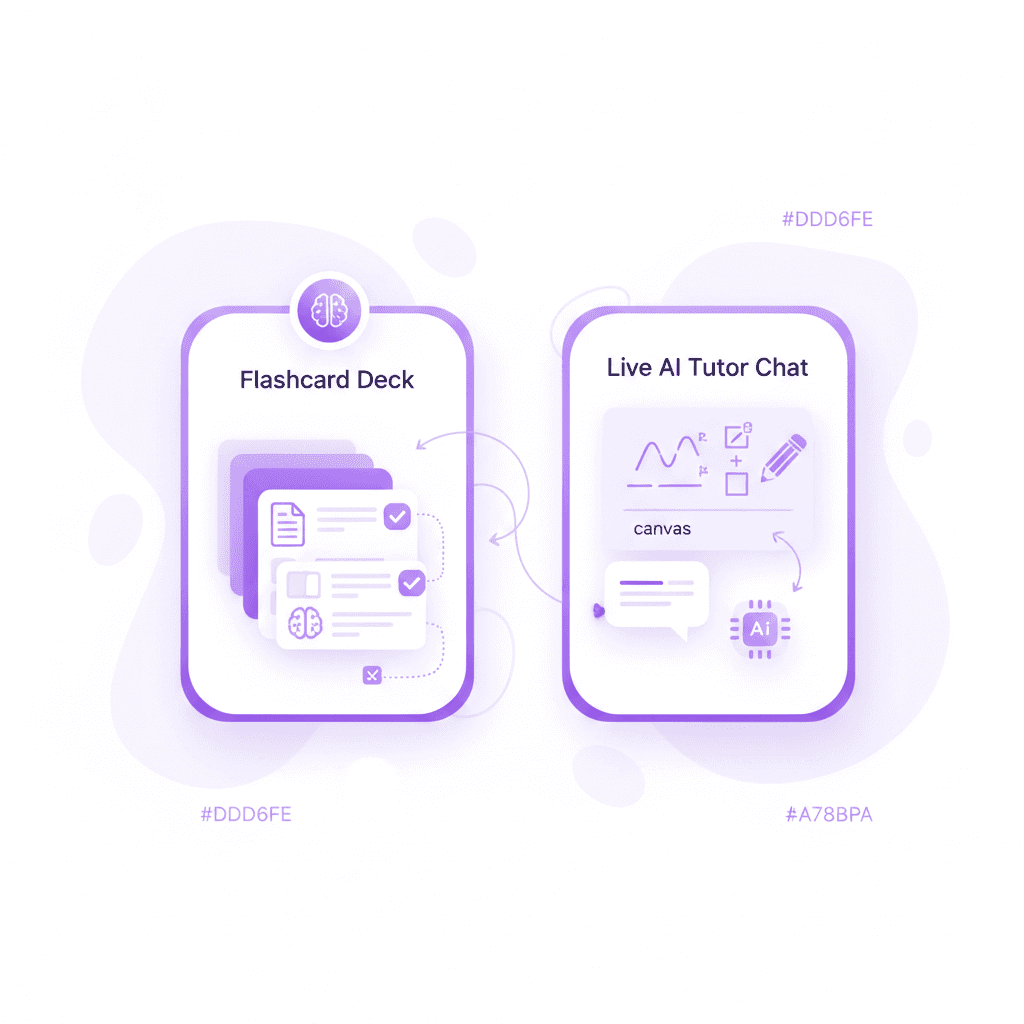
Penseum helps you master your coursework by acting as an all-in-one AI tutor that instantly generates customized flashcards, study guides, and quizzes directly from your uploaded materials. Unlike standard flashcard tools that leave you on your own, Penseum actively explains concepts step-by-step in real-time voice, spots your specific mistakes visually on a canvas, and reinforces your knowledge until you truly understand it.
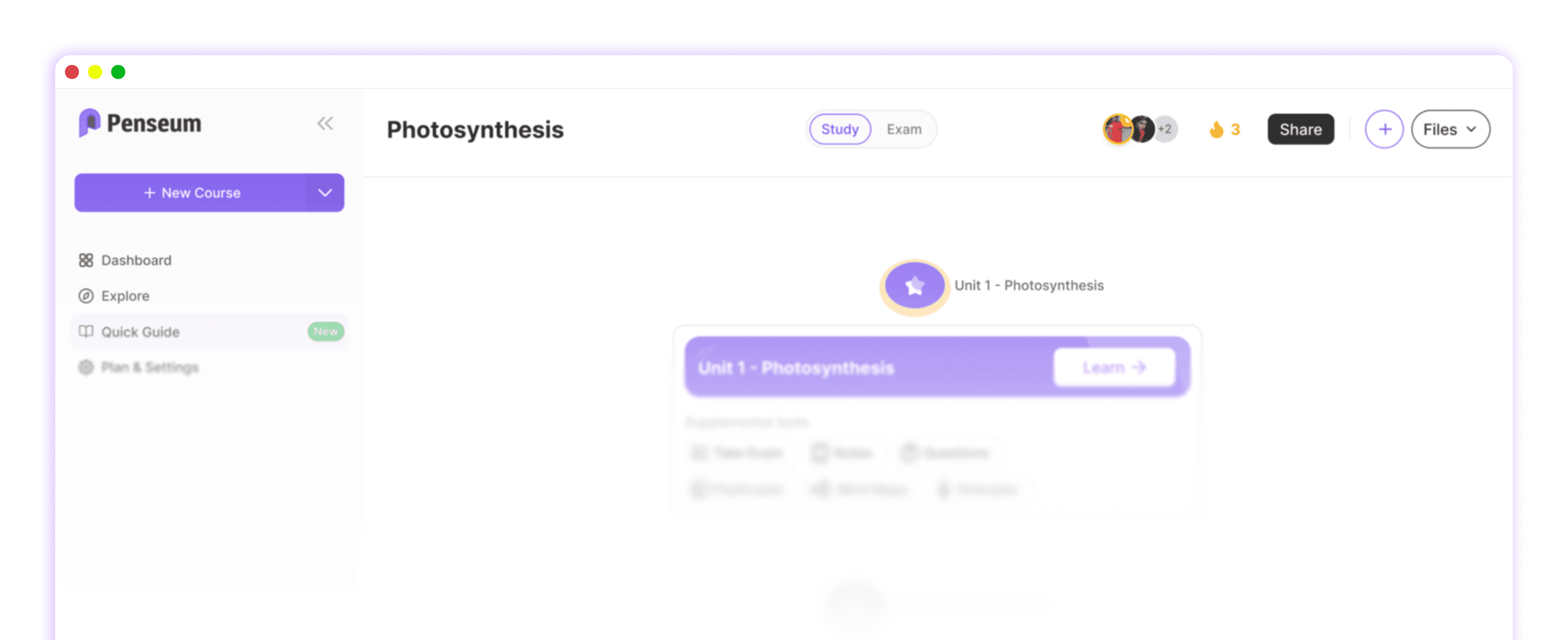
The platform eliminates the friction of exam preparation. You sign up, create a workspace, and upload your toughest syllabus or lecture slides. Within seconds, Penseum extracts the critical information and builds a comprehensive study ecosystem. You are not just getting a list of digital index cards. You receive targeted quizzes, structured study guides, and a conversational AI ready to clarify any confusing points.
Trusted by over 1,600,000 learners across 130+ countries and hundreds of universities, Penseum specifically targets the flaws of older AI tools. Generic chatbots give the same text explanation to every student and stop after one answer. Penseum sees exactly what you are working on through its interactive canvas. If you make a mathematical error while solving a physics problem, the tutor spots the exact line where you went wrong, marks it, and explains the correction out loud.
This multimodal approach ensures you never hit a wall during late-night study sessions. The platform powers learning across varied subject areas, handling everything from economics to medical school material. You practice by writing your answers and showing your steps. The AI watches, waits, and guides you toward mastery.
Actionable Step: Create a free Penseum account with no credit card required, upload your toughest syllabus, and let the AI build your comprehensive study deck in seconds.
Real-Time Voice Tutoring vs Static Text
Reading a text-based explanation of a failed flashcard rarely solves deep conceptual confusion. If you do not understand the thermodynamic principles behind a generated question, reading a two-paragraph text block will likely frustrate you further.
Penseum introduces real-time voice explanations. When you struggle with a card, the AI tutor explains the concept step-by-step, out loud, mirroring the experience of sitting next to a teaching assistant during office hours. It draws diagrams live on your screen, working through the math or the structural logic visually. This combination of audio-visual instruction ensures that different learning styles are fully supported.
Continuous Reinforcement Loop
A major limitation of basic generators is abandonment. A student gets a card wrong three times in a row, gets frustrated, and simply deletes the card. The knowledge gap remains permanently open.
Penseum prevents this through its continuous reinforcement loop. The tutor catches your specific mistake, tells you exactly what went wrong, and then prompts you to try again. It refuses to give you the final answer immediately. It keeps teaching, asking guiding questions, and adjusting its approach until the concept clicks in your brain. Once you finally solve it, the system logs that success and appropriately schedules the next review, ensuring the material stays locked in your long-term memory.
Frequently Asked Questions
How do I create online flashcards for free?
You can create online flashcards for free by signing up for platforms like Penseum, which offer free tiers for students. Simply create an account, upload your source materials such as PDFs or lecture slides, and allow the software to automatically extract the text. The system instantly generates a fully formatted digital deck. You can then review these cards directly within your browser or mobile device without any initial financial commitment.
What is the best flash card generator online?
The best flash card generator online combines accurate document parsing with multimodal learning features. Penseum stands out because it goes beyond basic text extraction. It generates accurate decks from your specific syllabus, builds accompanying quizzes, and features a live AI tutor that explains complex concepts in real-time voice. It also reviews your visual workspace to correct specific mistakes, making it vastly superior to basic text-only generators.
Can I create my own flashcards from a PDF document?
Yes, you can easily create flashcards directly from a PDF document. Advanced study platforms utilize natural language processing and optical character recognition to read your uploaded PDFs. They scan the document, identify the core academic concepts, definitions, and formulas, and automatically format them into a structured question-and-answer deck. This process takes only seconds, entirely replacing the need to manually type out notes.
Is there a flashcard maker online that works on mobile devices?
Yes, modern study platforms prioritize mobile accessibility. Penseum is fully accessible on mobile devices, allowing you to review your generated decks, take quizzes, and interact with the AI tutor directly from your smartphone. This ensures you can utilize spaced repetition techniques during daily commutes, between classes, or anywhere you have a few free minutes to study.
How does a flashcard online maker ensure the information is accurate?
A high-quality generator ensures accuracy by strictly limiting its answers to the source material you provide. Instead of pulling generic information from the open internet, tools like Penseum analyze your specific uploaded syllabus or lecture notes. The algorithms extract the exact definitions, frameworks, and data points provided by your professor, ensuring the generated study materials align perfectly with your upcoming exams.
[AUTHOR]
Last updated: August 2026
Sources
Karpicke, J. D., & Roediger, H. L. (2008). The critical importance of retrieval for learning. Science, 319(5865), 966-968. https://pubmed.ncbi.nlm.nih.gov/18276894/
Dunlosky, J., Rawson, K. A., Marsh, E. J., Nathan, M. J., & Willingham, D. T. (2013). Improving Students' Learning With Effective Learning Techniques: Promising Directions From Cognitive and Educational Psychology. Psychological Science in the Public Interest, 14(1), 4-58. https://pubmed.ncbi.nlm.nih.gov/26173288/
Jensen, J. L., McDaniel, M. A., Woodard, S. M., & Kummer, T. A. (2014). Teaching to the Test…or Testing to Teach: Exams Requiring Higher Order Thinking Skills Encourage Greater Conceptual Understanding. Educational Psychology Review, 26(2), 307-329. [NEEDS SOURCE: Verified URL for Jensen study on contextual alignment in testing]
Pashler, H., Rohrer, D., Cepeda, N. J., & Carpenter, S. K. (2007). Enhancing learning and retarding forgetting: Choices and consequences. Psychonomic Bulletin & Review, 14(2), 187-193. https://pubmed.ncbi.nlm.nih.gov/17694901/
Mayer, R. E. (2009). Multimedia Learning (2nd ed.). Cambridge University Press. https://scholar.google.com/scholar?q=Mayer+Multimedia+Learning+2009
Clark, R. C., & Mayer, R. E. (2016). e-Learning and the Science of Instruction: Proven Guidelines for Consumers and Designers of Multimedia Learning (4th ed.). Wiley. https://scholar.google.com/scholar?q=Clark+Mayer+e-Learning+and+the+Science+of+Instruction
Related guides
Ready to study smarter?
Start turning your notes into guides, quizzes, and flashcards in seconds.