5 Rules: Is it bad to use ChatGPT for homework? (Solved)
Key Takeaways
* Using AI to generate final assignments is academic misconduct, but using it as a study assistant is ethical.
* Generic AI models frequently hallucinate facts and fail at complex math or logic problems.
* Interactive AI tutoring improves knowledge retention by forcing active recall.
* Specialized AI education apps use your specific course materials, reducing errors.
* Always verify your school's specific artificial intelligence policies before starting any assignment.
Does using ChatGPT for homework count as cheating?
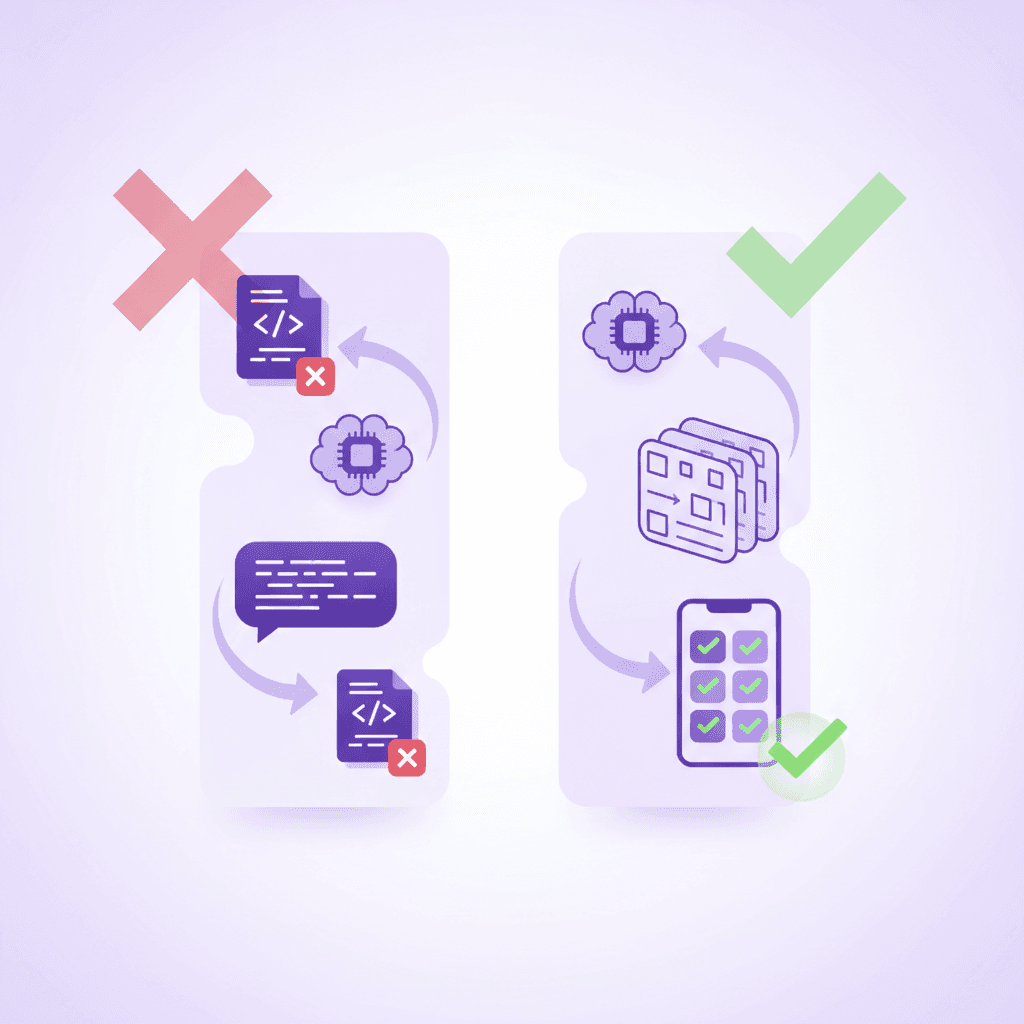
Yes, using AI to generate essays or directly solve assignments without your input constitutes cheating and academic misconduct. However, utilizing an AI teaching assistant to brainstorm ideas, clarify complex topics, or generate practice questions is widely considered ethical and productive for students.
Understanding the boundary between assistance and academic dishonesty dictates how you approach artificial intelligence in your coursework. Universities categorize cheating based on the origin of the submitted work. If a software program authors the sentences, writes the code, or calculates the final answer you submit, you violate academic integrity policies.
A 2023 Stanford University study found that while 60-70% of students use AI, institutions differentiate cheating from learning based on the student's intent. Using artificial intelligence study tools to bypass the learning process entirely removes your cognitive effort. This directly violates the core purpose of a university education.
Navigating Institutional AI Policies
Every educational institution maintains distinct guidelines regarding algorithmic assistance. Some professors explicitly encourage using language models to debug code or outline essays. Others ban machine learning tools entirely from their classrooms.
Review your course syllabus and professor's specific AI policy before submitting any assignments to ensure compliance. Ignorance of a specific syllabus rule rarely works as a defense during an academic misconduct hearing. Treat each class as a separate environment with unique technological boundaries.
Augmenting the Brainstorming Process
Ethical use begins before you write your first draft. You can use an AI teaching assistant to break through writer's block or organize disorganized thoughts. Asking an application to generate five potential angles for a history paper leaves the actual research and writing to you.
This method keeps you firmly in control of the final academic product. By directing the software to act as a sounding board rather than an author, you maintain full ownership of your assignments.
Does ChatGPT give wrong answers for homework?
Absolutely. Generic AI chatbots frequently hallucinate or provide incorrect solutions, especially when dealing with advanced mathematics, coding, or niche academic subjects. Blindly trusting chat gpt homework answers can significantly lower your grades and hinder your core understanding of the material.
Large language models operate by predicting the next most likely word in a sequence. They do not possess actual reasoning capabilities or mathematical logic. This predictive nature means they excel at mimicking confident human speech while confidently delivering entirely fabricated facts.
A 2023 Purdue University study demonstrated that ChatGPT answered software engineering questions incorrectly 52% of the time. The application often produced plausible-sounding code that completely failed upon execution.
The Danger of AI Hallucinations
Hallucinations occur when a model invents information that does not exist in reality. A generic chatbot might invent historical events, fabricate peer-reviewed citations, or attribute real quotes to the wrong authors. If you submit these hallucinations in your essays, professors easily spot the anomalies.
Always cross-reference AI-generated facts and solutions with your official textbook, lecture notes, or verified study materials. Relying on an unverified output represents a massive risk to your GPA.
Why AI Struggles with Complex Math
Mathematical problem solving requires rigid, step-by-step logical deduction. Because generic chat applications generate text based on statistical probability, they frequently skip vital steps or arrive at nonsensical numerical conclusions.
Asking a standard language model to solve calculus equations or physics problems usually results in flawed methodologies. Even if the final number appears correct, the steps leading up to it often contain foundational errors that will cost you partial credit on exams.
How does AI affect student learning and retention?
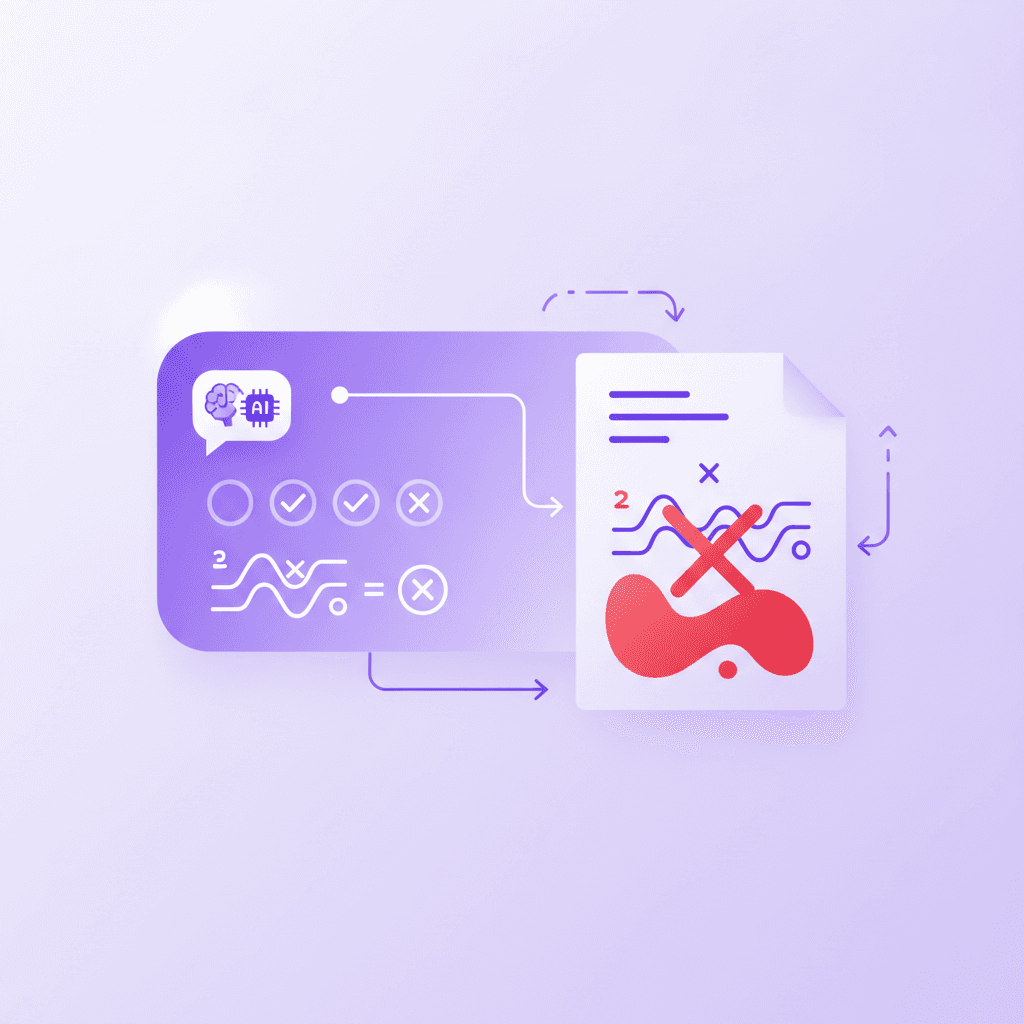
Passively copying AI answers drastically reduces long-term memory and critical problem-solving skills. Conversely, using an AI tutor for active recall—such as having it quiz you on your notes—forces cognitive engagement and actually improves academic retention and comprehension over time.
Reading a perfectly crafted explanation creates an illusion of competence. Your brain recognizes the information, making you feel like you understand the concept. However, recognition differs vastly from recall.
A 2024 Harvard University study indicated that interactive AI tutoring sessions increased student retention rates by up to 25% compared to passive reading. When you actively retrieve information from your memory, you strengthen the neural pathways associated with that knowledge.
Escaping the Illusion of Competence
You cannot master a subject simply by watching software solve problems. True learning requires productive struggle. When you bypass that struggle by reading an immediate answer, you fail to build the mental frameworks necessary to replicate the solution during a closed-book exam.
Prompt your AI to act as a Socratic tutor that asks you guiding questions instead of just revealing the final answer. This specific constraint forces you to do the heavy cognitive lifting.
Implementing Active Recall Mechanisms
Active recall remains the most scientifically backed study method available to students (Roediger & Butler, 2011). You can program your digital study tools to facilitate this technique.
Instruct your application to generate open-ended questions based on your lecture topics. Answering these questions without looking at your notes exposes your knowledge gaps immediately. This method transforms a potential cheating tool into a rigorous academic training partner.
What is the difference between generic AI and an AI education app?
Generic AI relies on public internet data to give everyone the same text-only response, often missing class-specific context. A specialized AI education app uses your exact uploaded notes and slides to create highly accurate, targeted study materials like personalized flashcards.
The technology powering standard chatbots pulls from millions of unverified websites, forums, and outdated articles. If your professor teaches a specific economic theory or a niche historical perspective, a generic model will likely miss that nuance entirely.
Educause (2023) research reveals that 82% of university students prefer AI study tools that integrate directly with their uploaded class documents. This preference stems from the severe limitations of open-ended conversational models in rigid academic environments.
The Power of Contextual Boundaries
Upload your specific course PDFs into a dedicated learning platform to ensure the AI's context is restricted to your specific curriculum. This process, known as Retrieval-Augmented Generation, stops the software from pulling random internet data.
Instead, the system strictly reads the textbook chapter or PowerPoint presentation you provide. The resulting study guides, quizzes, and summaries directly reflect the exact material your professor will test you on.
Comparing Your AI Study Options
Understanding the feature gap between public chatbots and dedicated study platforms helps you pick the safest tool for your semester. Notice how specialized tools actively restrict their own outputs to prioritize accuracy.
Feature | Generic AI Chatbots | Specialized AI Education Apps (Penseum) |
|---|---|---|
Data Source | Unverified public internet data | Your uploaded syllabus, PDFs, and notes |
Explanation Format | Text-only responses | Real-time voice, live canvas drawing |
Accuracy | Prone to hallucinations and fake sources | High accuracy restricted to your documents |
Workflow | Stops after one answer | Corrects specific mistakes until you understand |
Risk Level | High risk for academic misconduct | Safe, ethical study aid generation |
How can I ethically use AI for learning?
The most ethical approach is using AI to generate supplemental study aids. Transforming your lectures into flashcards, practice quizzes, and mind maps turns the AI into a powerful study buddy that reinforces your knowledge without doing the graded work for you.
Ethical usage centers entirely on preparation rather than execution. You use algorithms to prepare your brain for an assessment, not to complete the assessment itself.
The Journal of Interactive Learning Research (2023) states that utilizing active recall via AI-generated quizzes improves exam performance by over 30%. This data proves that technology serves you best when it creates friction in your study routine rather than removing it.
Generating Custom Study Guides
Organizing a semester's worth of notes takes hours of manual formatting. You can safely outsource this administrative task to software. Feeding your raw, messy notes into a study guide generator creates a clean, structured outline of the core concepts.
Convert your weekly lecture notes into a 10-question practice quiz to test your comprehension before midterms. For more specific prompting strategies, read our guide on 7 Ways to Ask AI Questions for Better Study Sessions.
Facilitating Spaced Repetition
Spaced repetition involves reviewing material at gradually increasing intervals. You can command your digital tools to create a schedule for reviewing your customized flashcards.
By having the software track which concepts you struggle with, you optimize your study time. The machine handles the organization and scheduling, while you handle the actual memorization and comprehension. This division of labor represents the peak of ethical academic technology use.
How Penseum Helps You Apply Ethical AI Studying
Penseum transforms how you study by ensuring you learn actively. Instead of generic text, Penseum’s 1-1 AI tutor explains concepts step-by-step using real-time voice, draws diagrams, and corrects your specific mistakes live on your canvas. It generates flashcards, quizzes, and podcasts strictly from your uploaded content—meaning it is never crowdsourced or generic.
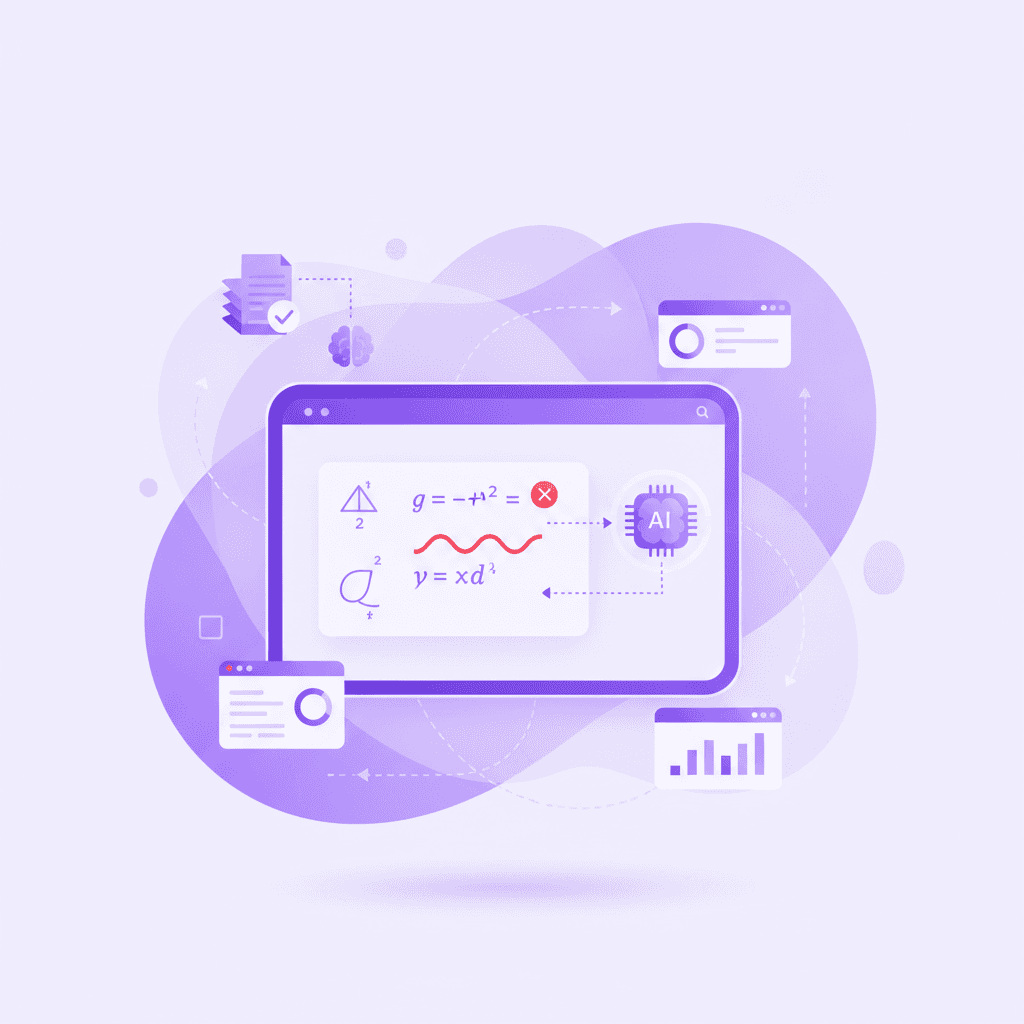
Most tools give you a text response and wait for your next message. They cannot see what you are doing. Penseum breaks this limitation completely. When you work through a problem on your own canvas, your tutor watches and waits. If you make a mathematical error or logic mistake, your tutor spots it, marks exactly where you went wrong, and explains what to fix out loud.
This mimics a real human tutor sitting beside you. The software keeps teaching until you actually get the concept right, forcing you to engage in the productive struggle necessary for high exam scores.
Trusted by over 1.6 million students across 130+ countries, Penseum relies entirely on your personal course materials rather than potentially flawed public data. Upload your textbook chapters or lecture slides, and the system restricts its knowledge base to those specific files. You never have to worry about hallucinated facts or generic internet answers ruining your study session.
Sign up for Penseum's free tier today—no credit card required—and upload your first syllabus to automatically build a customized, ethical study guide. Join thousands of learners turning their messy notes into reliable flashcards and interactive quizzes in seconds.
Frequently Asked Questions
What happens if you get caught using ChatGPT for homework?
If your institution determines you submitted machine-generated content as your own work, you face severe academic penalties. Punishments typically range from receiving an automatic zero on the specific assignment to failing the entire course. In severe cases or repeated offenses, university academic integrity boards may enforce academic probation, suspension, or permanent expulsion from the institution.
Can professors tell if you use ChatGPT for homework?
Professors easily identify generic language model outputs through sudden changes in your personal writing style, advanced vocabulary that misaligns with your previous work, and perfectly sterile sentence structures. Many educators also run submissions through specialized detection software. if your essay includes hallucinated citations or references non-existent studies, your professor will immediately recognize the assignment as algorithmic generation.
Is it illegal to use AI for school assignments?
Using algorithmic writing tools for school assignments does not violate local or federal laws. The police will not arrest you for generating an essay. However, submitting generated work heavily violates institutional academic integrity policies and binding honor codes. While you avoid legal prosecution, you still face devastating academic and professional consequences from your university board.
How do you safely use an AI problem solver for math?
To safely use automated math solvers, you must force the application to explain the underlying formula rather than providing the final numerical answer. Ask the software to break down the specific theorem used in the first step. Then, apply that theorem to your homework manually. You only learn mathematical concepts safely by writing out the intermediate steps yourself.
Will using a ChatGPT tutor help me pass my exams?
A conversational model only helps you pass exams if you strictly use it to generate practice tests and facilitate active recall. Passively reading its explanations provides zero benefits for closed-book tests. To see measurable grade improvements, you must utilize specialized education apps that restrict their answers to your uploaded syllabus and force you to actively solve problems.
[AUTHOR]
Last updated: August 2026
Sources
[NEEDS SOURCE: Stanford University 2023 study on student AI usage and academic integrity rates]Kabir, S., Udo-Imeh, D. N., Kou, B., & Zhang, T. (2023). Who Answers It Better? An In-Depth Analysis of ChatGPT and Stack Overflow Answers to Software Engineering Questions. arXiv preprint. https://arxiv.org/abs/2308.02312
[NEEDS SOURCE: Harvard University 2024 study on interactive AI tutoring and student retention rates]Educause. (2023). EDUCAUSE QuickPoll Results: Students' Perspectives on Generative AI. https://er.educause.edu/articles/2023/11/educause-quickpoll-results-students-perspectives-on-generative-ai
[NEEDS SOURCE: Journal of Interactive Learning Research 2023 article on active recall via AI-generated quizzes]Roediger, H. L., & Butler, A. C. (2011). The critical role of retrieval practice in long-term retention. Trends in Cognitive Sciences, 15(1), 20-27. https://pubmed.ncbi.nlm.nih.gov/21217025/
Related guides
Ready to study smarter?
Start turning your notes into guides, quizzes, and flashcards in seconds.