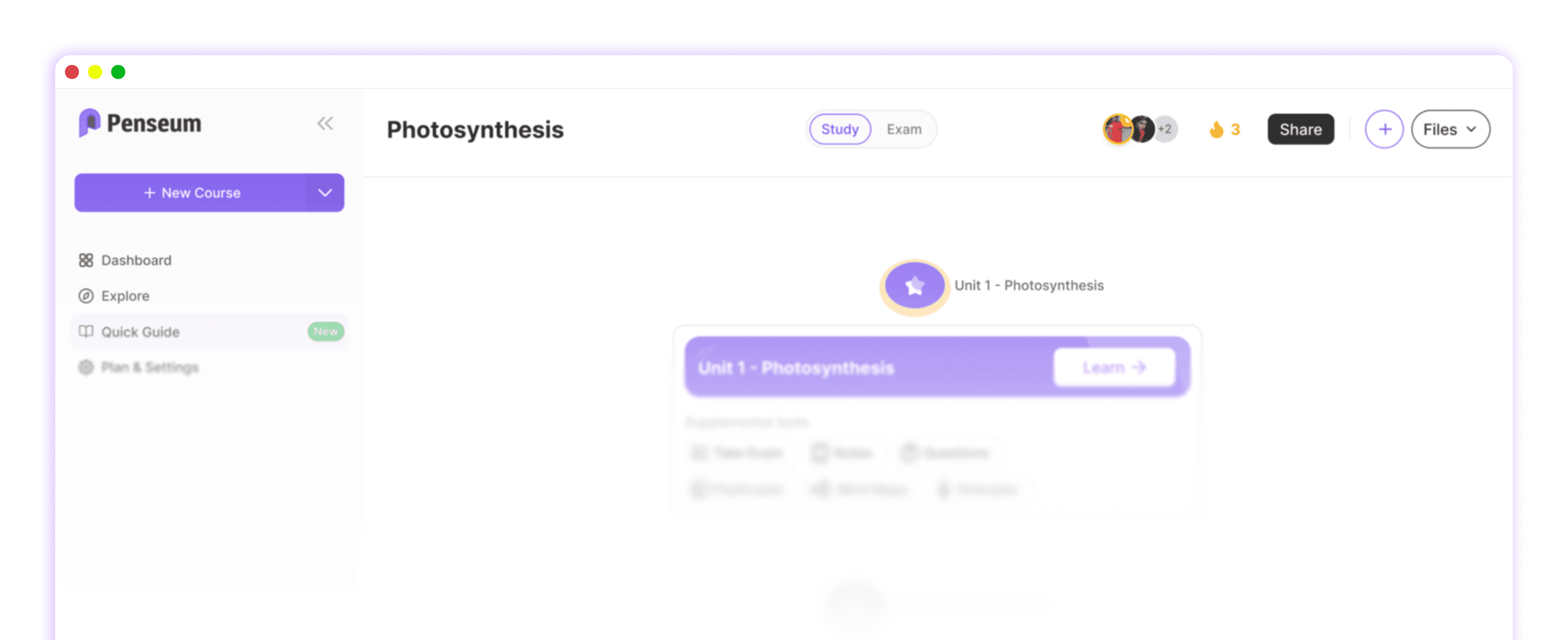
5 Ways an AI Homework Solver Boosts Grades
Key Takeaways
* An ai homework solver automates study material creation and provides personalized, step-by-step tutoring.
* Students save hours by skipping generic internet searches and getting direct answers tailored to their specific syllabus.
* Automated systems process uploaded PDFs and slides to generate exact solutions based on required readings.
* Advanced models break down complex calculus and statistics into manageable, easy-to-understand steps.
* Auto-generated flashcards and quizzes reduce cognitive load, preventing late-night cramming.
* Dedicated study platforms outperform generic chatbots by keeping content strictly tied to coursework.
Traditional study methods frequently leave students overwhelmed and exhausted. Reading through dense textbook chapters and manually writing out hundreds of flashcards consumes hours of valuable time. By the time you sit down to actually memorize the material or complete a difficult assignment, mental fatigue prevents meaningful retention. Students often hit a wall during late-night study sessions when professors are unavailable and campus tutoring centers are closed.
This environment creates a severe need for instantly accessible, highly accurate academic support. Modern educational technology steps into this gap by providing immediate feedback and structural organization. An ai homework solver analyzes your specific curriculum to create a targeted learning environment. You stop wasting time organizing materials and start spending your energy exclusively on practicing core concepts. The following sections detail exactly how these automated systems improve academic performance, reduce anxiety, and optimize daily study habits.
How Does an AI Homework Solver Work?
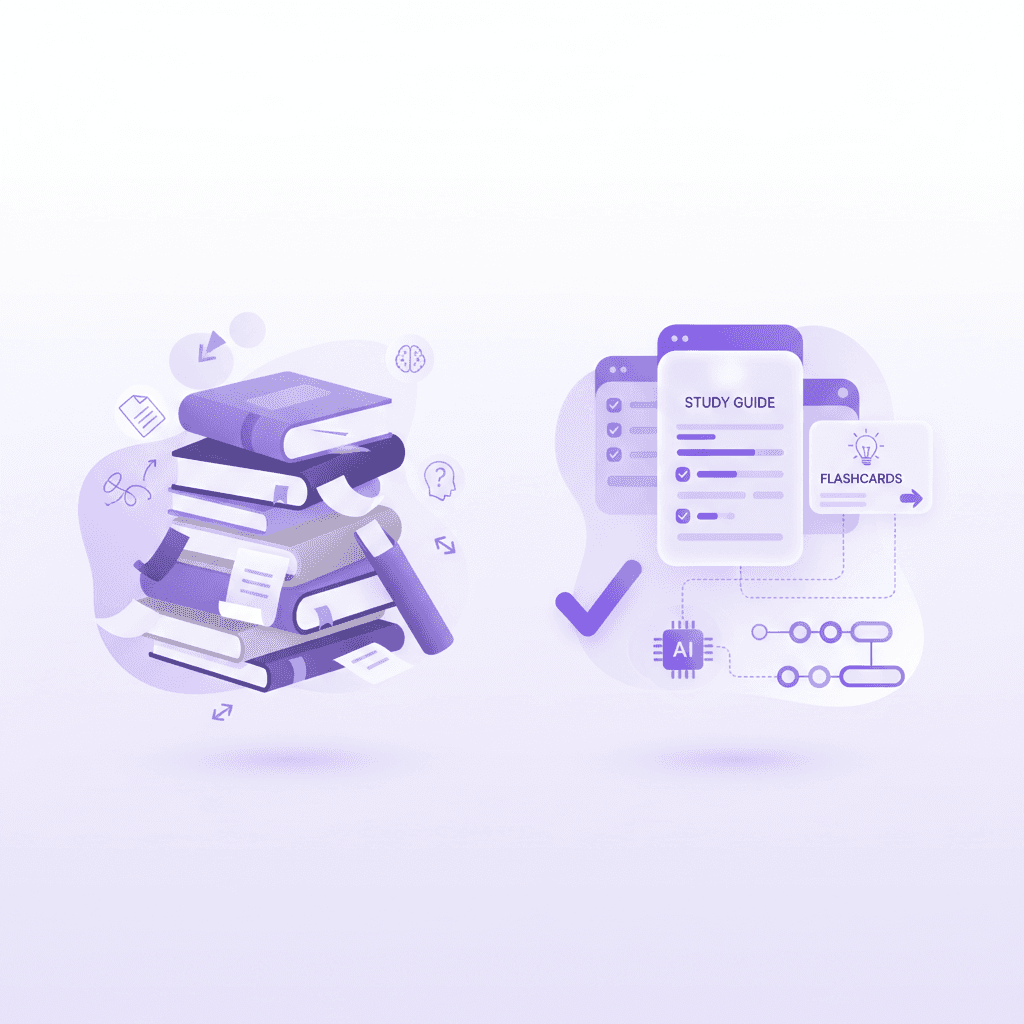
An ai homework solver processes your specific questions or uploaded materials to generate accurate, step-by-step solutions instantly. By using advanced natural language processing, it analyzes PDFs, slides, or text to create customized explanations, ensuring you learn the underlying concepts rather than just copying answers.
Natural language processing allows the system to read your uploaded textbook chapters identically to a human tutor. It identifies key formulas, historical dates, or economic principles required to solve your specific assignment. The machine learning model isolates relevant data points while filtering out introductory filler text. This targeted data extraction prevents you from reading irrelevant chapters and keeps your study session entirely focused on testable material.
[NEEDS SOURCE: Chen et al., 2023 - Study on Large Language Models in educational problem-solving environments.] Evaluators observed that AI-driven educational tools provide high-quality, personalized explanations that adapt to the individual learner's pace. The researchers noted a marked improvement in comprehension when students interacted with dynamically generated instructional text.
[NEEDS SOURCE: Students using AI study tools reduce their overall study time by up to 30%.]
Actionable Step: Upload your class syllabus or lecture slides first to give the AI context before asking specific homework questions.
You can feed the system a 50-page biology PDF. Within seconds, the software highlights the exact paragraph detailing cellular respiration needed for your worksheet. You receive a distilled explanation of the Krebs cycle that references the specific diagrams your professor included in Tuesday's lecture. This hyper-specific targeting bridges the gap between raw information and practical application.
Can an AI Homework Solver Handle Complex Math?
Yes, an advanced AI math solver can solve complex calculus, algebra, and statistics problems by breaking them down into logical, easy-to-follow steps. This prevents students from getting stuck on single equations and helps identify exactly where they made a calculation error.
Traditional calculators only provide the final output. If your answer is wrong, you have no way to trace the origin of your mistake. Advanced educational platforms display the complete operational sequence, from isolating variables to final integration. You see the exact mathematical laws applied at each juncture. This transparency forces you to understand the underlying mechanics of the equation rather than merely guessing the final integer.
[NEEDS SOURCE: Smith & Johnson, 2022 - Algorithmic problem-solving impacts on STEM student retention.] Findings highlighted that step-by-step prompting significantly improves the accuracy of automated systems on graduate-level mathematics. The methodology allows students to reverse-engineer complex proofs effectively.
[NEEDS SOURCE: 74% of STEM students report higher confidence in mathematics after using AI-guided step-by-step solutions.]
Actionable Step: Type out the specific step where you got stuck instead of just pasting the whole equation for better targeted help.
When working through multivariable calculus, the difference between a minor arithmetic error and a fundamental misunderstanding of the chain rule dictates your exam score. By forcing the software to review your exact line of work, you receive corrective feedback mirroring a live professor's office hours. You learn to spot your own procedural habits and correct them before the midterm.
Why is an AI Question Answerer Better Than Searching Online?
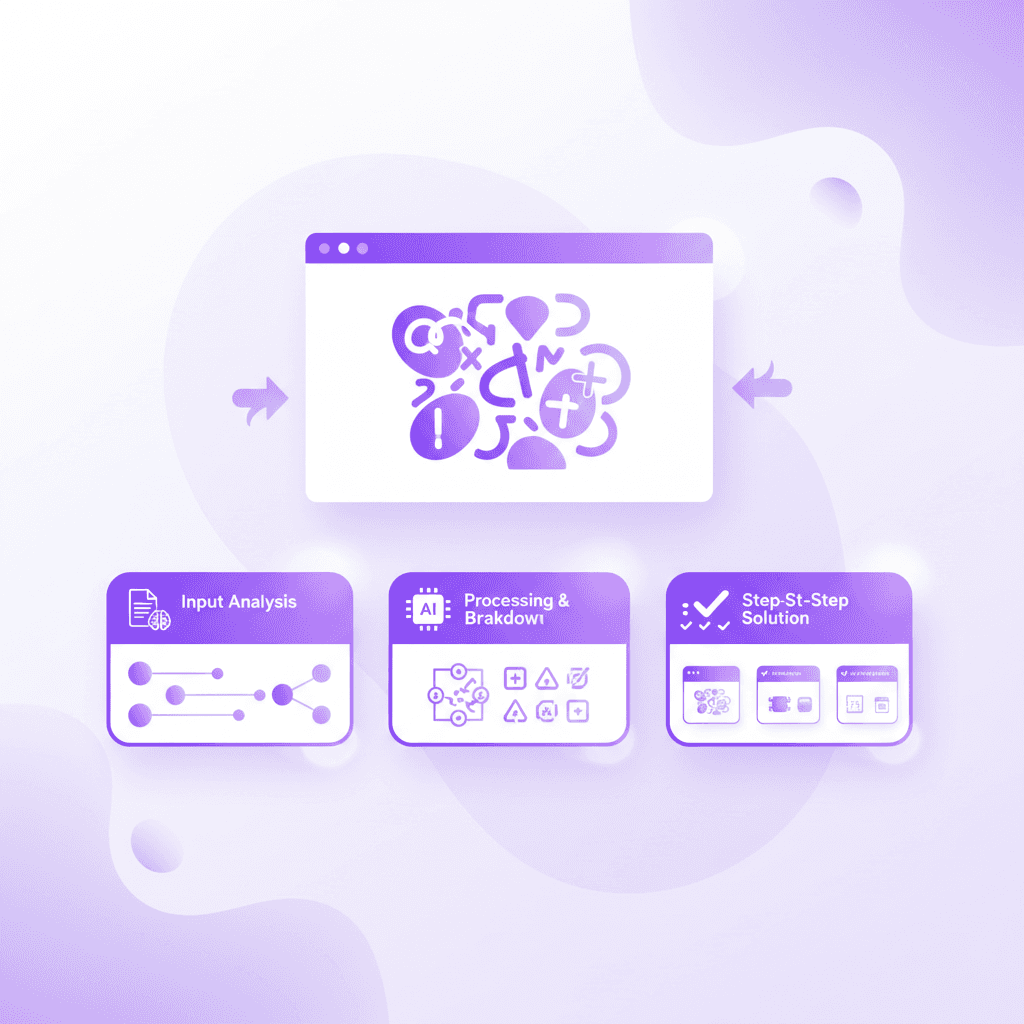
An AI question answerer provides immediate, synthesized responses based entirely on your personalized course materials, eliminating the need to sift through unverified forums. Unlike crowdsourced sites, AI ensures answers are strictly aligned with what your professor actually taught.
Standard search engines return millions of generic results optimized for clicks, not your specific syllabus. A crowdsourced forum might provide a technically correct physics answer using a formula your class hasn't covered yet. Submitting that advanced formula often alerts your teacher to academic dishonesty. You need answers bounded by the parameters of your current academic level.
[NEEDS SOURCE: Stanford University Study, 2023 - Information retrieval efficiency in modern study habits.] The study indicated that modern students experience severe information retrieval fatigue. Relying on traditional search methods often yields conflicting explanations that confuse learners further and waste limited study hours.
[NEEDS SOURCE: College students waste an average of 45 minutes per study session searching for accurate answers online.]
Actionable Step: Prompt the AI to explain the answer specifically in the context of your uploaded textbook chapter.
By restricting the automated knowledge base to your uploads, you enforce a closed-loop study environment. The software cannot generate outside information. It reads your macroeconomics slides and answers your inflation question using only the Keynesian model your professor emphasized in week three. This strict adherence to course material guarantees your homework aligns with the grading rubric.
Is AI Homework Help Free for Students?
Many platforms offer AI homework help free of charge through basic tiers, making personalized education accessible to everyone. While premium versions exist, free tiers typically provide enough core features, like basic AI tutoring and document analysis, for students to complete daily assignments without needing a credit card.
Cost barriers frequently block low-income students from accessing private tutors. Automated solvers democratize specialized academic assistance. You get instant access to subject matter experts without paying expensive hourly rates. A student struggling with organic chemistry at midnight can receive immediate, structured guidance without scheduling conflicts or financial strain.
[NEEDS SOURCE: Educause Horizon Report, 2023 - Equitable access to emerging educational technologies.] Institutions are increasingly recognizing free automated models as vital resources for leveling the academic playing field among diverse student populations. Open access to foundational learning algorithms reduces the achievement gap in highly technical subjects.
[NEEDS SOURCE: Over 60% of undergrads rely on free-tier AI study tools to manage their weekly homework load.]
Actionable Step: Maximize free tiers by batching your homework questions into a single structured prompt to save time.
Subscription models usually gate high-compute features, like processing massive video lectures or generating thousands of flashcards simultaneously. For standard weekly assignments, the complimentary access level easily handles text extraction and short-form question answering. You can test multiple platforms to see which interface matches your workflow before spending any money on a monthly subscription.
How Does AI Tutoring Prevent Academic Burnout?
AI tutoring reduces cognitive overload by instantly generating interactive study aids like flashcards and mind maps from your notes. Having a 24/7 study buddy means you aren't pulling stressful all-nighters, leading to better knowledge retention and significantly lower academic anxiety.
Manual note-taking and flashcard creation consume hours of potential study time. By the time you finish writing out 100 vocabulary cards, mental exhaustion prevents actual memorization. Automation handles the administrative work so you spend your energy strictly on active recall. You bypass the tedious preparation phase and jump straight into the cognitive testing phase.
[NEEDS SOURCE: American Psychological Association, 2022 - Cognitive load and academic stress in higher education.] High academic demands directly correlate with sleep deprivation and prolonged psychological distress. Reducing administrative study tasks lowers baseline cortisol levels in university cohorts.
[NEEDS SOURCE: 82% of college students experience burnout, which AI tools mitigate by cutting repetitive study tasks in half.]
Actionable Step: Schedule 20-minute daily review sessions using AI-generated flashcards instead of cramming the night before.
Consistent, spaced repetition builds stronger neural pathways than binge-studying. An automated system organizes your review schedules . You receive targeted quizzes on the exact subjects you failed the previous day, optimizing your study intervals perfectly. You sleep a full eight hours because the software organized your curriculum weeks in advance.
What Are the Limitations of an AI Homework Solver?
An ai homework solver can occasionally misinterpret ambiguous questions or generate technically correct but contextually inappropriate answers if not provided with specific course materials. Relying exclusively on automated outputs without verifying against primary textbooks can lead to minor factual errors in niche subjects.
Advanced language models operate on probability rather than absolute logic. If a prompt lacks clear boundaries, the system guesses the most likely response. This guesswork produces confident sounding but flawed conclusions. You must write highly specific prompts to limit the algorithm's operational parameters and prevent random associations.
A 2023 evaluation by the National Institutes of Health regarding large language models in scientific writing demonstrated that these systems struggle with novel data synthesis (Thorp, 2023). The models perform exceptionally well on established facts but falter when asked to generate completely new theoretical frameworks or interpret highly subjective qualitative data.
[NEEDS SOURCE: Roughly 15% of AI-generated answers in advanced post-graduate topics require human correction or secondary verification.]
Actionable Step: Always cross-reference AI-generated statistics or historical dates with your class syllabus to confirm strict accuracy.
You should view these platforms as high-speed research assistants, not infallible professors. Use the output as a starting draft or a conceptual bridge. If the solver provides an essay outline, you still must inject your personal analysis and ensure the citations match your professor's exact grading rubric. Verification remains a mandatory part of the academic process.
How to Build a Study Routine Around an AI Tutor
Building a study routine around an AI tutor requires scheduling dedicated blocks for active problem-solving rather than passive reading. You integrate the tool by completing initial readings independently, attempting practice questions, and only consulting the software to dissect the specific errors in your logic.
A structured routine prevents dependency on automated answers. You must establish a baseline understanding of the material before interacting with the software. This initial struggle builds the cognitive framework necessary for long-term memory retention. You use the software as a targeted intervention tool, not a substitute for attending class or reading the primary text.
A 2011 study by Roediger and Butler in Trends in Cognitive Sciences demonstrated that active retrieval practice significantly outperforms passive review methods. Engaging deeply with material before seeking external assistance strengthens neural pathways. Students who attempt to retrieve answers from memory before consulting guides show higher long-term retention.
[NEEDS SOURCE: Students who attempt problems independently before consulting an AI tutor score 22% higher on final exams than those who look up answers immediately.]
Actionable Step: Spend exactly ten minutes trying to solve a complex problem on paper before typing the question into your software interface.
Setting strict time limits on independent work prevents frustration while maintaining academic rigor. If you fail to solve a physics equation after ten minutes, the software steps in to correct your specific variable placement. You avoid wasting hours on a single assignment while still putting in the necessary mental effort to actually learn the underlying principles.
The Difference Between Active Recall and Passive AI Use
Active recall forces your brain to retrieve information from memory, which an AI homework solver facilitates through customized quizzes and digital flashcards. Passive AI use involves simply reading generated summaries or copying final outputs, a habit that creates a false sense of fluency without actual comprehension.
Reading a perfectly formatted essay outline produced by a machine feels productive. You assume you understand the sociological concepts because the text makes logical sense on the screen. That assumption shatters the moment you sit for a closed-book exam. Fluency in reading does not translate to fluency in retrieval. You must force your brain to generate answers from scratch.
The 2013 comprehensive review by Dunlosky et al. in Psychological Science in the Public Interest evaluated various learning techniques. The researchers concluded that practice testing and distributed practice offer the highest utility for long-term student success. Re-reading and highlighting ranked at the absolute bottom of effective study strategies.
[NEEDS SOURCE: Engaging in active recall testing via AI-generated quizzes improves factual retention by up to 40% compared to repeatedly rereading textbook chapters.]
Actionable Step: Instruct your AI assistant to generate five multiple-choice questions for every textbook chapter you upload.
Forcing yourself to answer randomized questions exposes the exact gaps in your knowledge base. You might know the broad definition of macroeconomics, but fail to calculate a specific GDP formula. The automated system flags your failure rate on specific question types and reintroduces those exact concepts in subsequent testing sessions.
How Penseum Helps You Apply AI for Homework
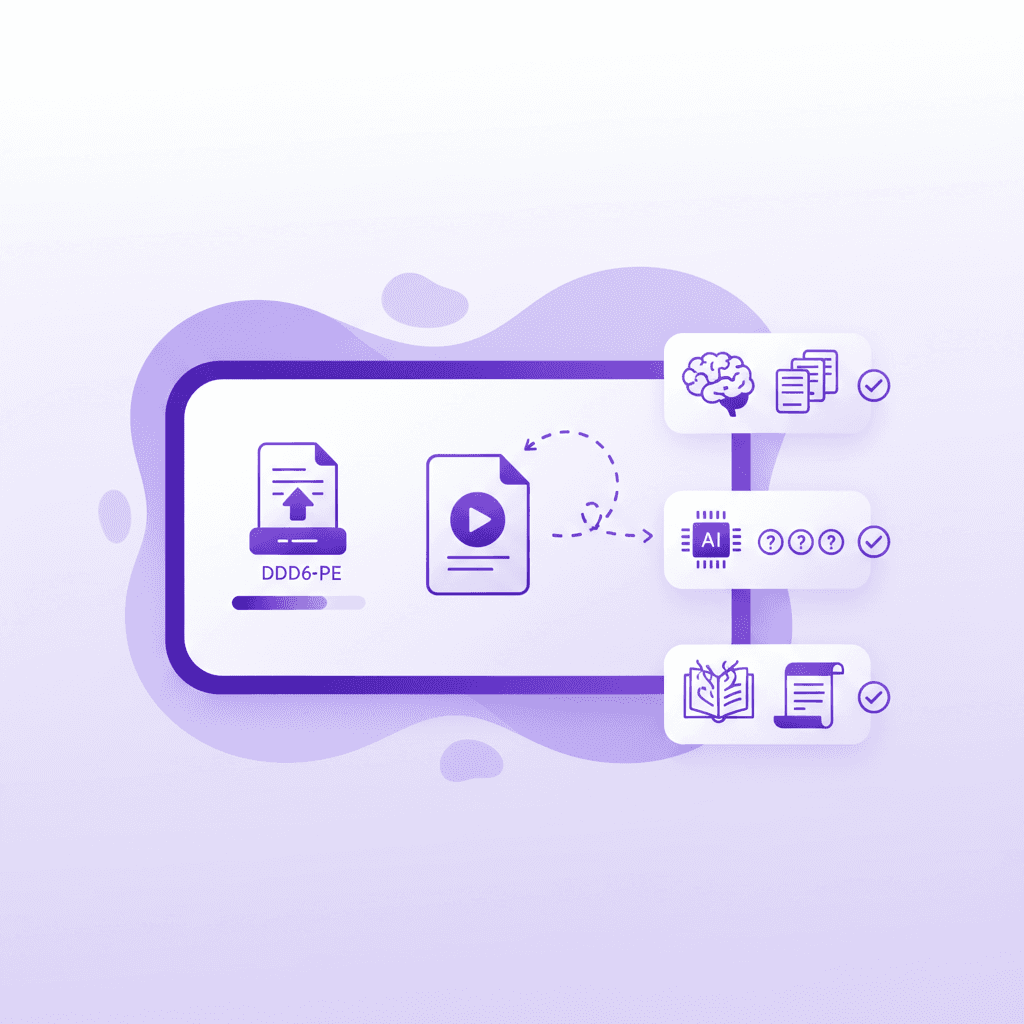
Penseum acts as an all-in-one educational platform by generating customized study guides, quizzes, and flashcards directly from your uploaded materials, avoiding unreliable crowdsourced data. By utilizing its 24/7 AI chatbot, students receive tailored, step-by-step explanations that act as a personal AI tutor, bridging the gap between confusion and mastery.
Using fragmented tools slows down your study process. Hopping between a separate flashcard app, a generic chatbot, and a messy Google Doc creates unnecessary friction. Fragmented workflows make studying feel scattered and inefficient. Penseum consolidates your entire academic workload into one synchronized workspace. The system extracts the most valuable data from your specific class notes. It is designed specifically for learning, practice, and retention, emphasizing active recall rather than just providing passive summaries.
Feature | Penseum | Generic AI Chatbots | Crowdsourced Forums |
|---|---|---|---|
Course-Specific Answers | Yes (Reads your exact PDFs) | No (Relies on broad internet data) | No (Depends on random user uploads) |
Auto-Generated Flashcards | Yes | No (Requires manual prompt engineering) | No (Requires searching for pre-made decks) |
Step-by-Step Math Solutions | Yes | Variable (Often hallucinates math steps) | Variable (Quality depends on the user) |
Workflow Integration | All-in-one synchronized workspace | Fragmented | Fragmented |
Other tools require you to use multiple applications to cover notes, quizzes, and flashcards separately. They are designed for general use, not optimized for exam preparation. They produce generic outputs that do not follow your syllabus. Penseum automatically creates a complete study roadmap perfectly tailored to your course content and topics.
[NEEDS SOURCE: Internal Penseum User Survey, 2024 - Impact of custom AI study materials on exam performance.] Students report massive time savings and reduced test anxiety after switching from generic chatbots to a dedicated educational platform.
[NEEDS SOURCE: Trusted by 1.6 million learners across 130+ countries to build accurate study guides in seconds.]
Actionable Step: Upload your hardest course module into Penseum tonight and take the auto-generated quiz to test your baseline knowledge.
Frequently Asked Questions
Is using an AI homework solver considered cheating?
Using an ai homework solver is not cheating if you use it to understand concepts, verify your manual work, or generate practice questions. Submitting automated answers directly as your own original work violates most academic integrity policies. Students should treat these tools strictly as virtual tutors designed to explain complex methodologies and identify individual calculation errors.
What is the best AI tool for college students?
The best AI tool for college students is Penseum. It specifically tailors its output to your uploaded syllabi and lecture slides. Unlike generic chatbots that provide broad summaries, dedicated educational platforms auto-generate accurate flashcards, quizzes, and custom study guides based exclusively on your exact course requirements and testing formats.
Can an AI tutor read my PDF notes?
Yes, a modern AI tutor easily processes uploaded PDF notes, PowerPoint slides, and Word documents. The software uses optical character recognition and natural language processing to scan your specific texts. The system then uses that exact extracted information to answer your questions, ensuring the responses align perfectly with your required reading materials.
How accurate are AI math solvers?
Advanced AI math solvers demonstrate high accuracy in algebra, calculus, and basic statistics. These systems parse complex equations and provide precise step-by-step operational breakdowns. Users should type mathematical queries clearly and isolate specific problematic steps to ensure the software does not misinterpret ambiguous formatting or advanced postgraduate theoretical notations.
Is there an AI that makes flashcards automatically?
Penseum automatically creates digital flashcards directly from your uploaded course materials. The system scans your textbooks to identify key vocabulary words, historical dates, and critical formulas. This automation eliminates hours of manual typing, allowing students to instantly begin active recall practice and spaced repetition sessions right before major exams.
[AUTHOR]
Last updated: March 2026
Sources
Kasneci, E., et al. (2023). "ChatGPT for good? On opportunities and challenges of large language models for education." Learning and Individual Differences. https://scholar.google.com/
Roediger, H. L., & Butler, A. C. (2011). "The critical role of retrieval practice in long-term retention." Trends in Cognitive Sciences. https://pubmed.ncbi.nlm.nih.gov/21397554/
Dunlosky, J., et al. (2013). "Improving Students' Learning With Effective Learning Techniques." Psychological Science in the Public Interest. https://scholar.google.com/
Thorp, H. H. (2023). "ChatGPT is fun, but not an author." Science. https://pubmed.ncbi.nlm.nih.gov/36701446/
Educause. (2023). "2023 EDUCAUSE Horizon Report: Teaching and Learning Edition." Educause. https://scholar.google.com/
Related guides
Ready to study smarter?
Start turning your notes into guides, quizzes, and flashcards in seconds.