7 Duolingo Alternative Apps to Ace Language Exams
Last updated: March 2026
Key Takeaways
* Gamified apps teach disconnected vocabulary, leaving college students unprepared for rigorous grammar and syllabus-based exams.
* Spaced repetition systems drastically improve memorization for massive textbook vocabulary lists.
* Language exchange platforms offer the spontaneous conversation practice necessary for true oral proficiency.
* Using AI to analyze your specific class PDFs and lecture notes generates targeted flashcards that mirror your professor's exact grading rubric.
1. Why Seek a Duolingo Alternative for Academic Study?
Gamified platforms often teach disjointed vocabulary rather than the structured grammar and syllabus-specific terminology required in university courses. Finding a dedicated duolingo alternative ensures students focus on examinable material, utilizing spaced repetition and targeted practice to master the exact linguistic concepts tested in their curriculum.
This distinction matters deeply for GPA preservation. Academic foreign language exams test high-level comprehension and complex verb conjugations. Clicking stylized animations does not prepare you to write a 500-word French essay on historical events.
When you rely solely on generic software, you risk learning regional dialects or vocabulary completely detached from your professor's grading rubric. Spanish courses in the United States often focus on Latin American vocabulary, while a casual app might teach you strictly Castilian Spanish. This mismatch causes lost points on critical writing assignments. Many professors format their midterms with fill-in-the-blank conjugation tables and unguided audio listening sections. Clicking a multiple-choice translation bubble on your phone does not build the neural pathways required to write out a sentence in the past subjunctive tense from scratch.
A 2021 study by Loewen et al. found that while gamified apps improve basic vocabulary, they account for less than a 15% improvement in formal university-level grammar proficiency tests. Academic language acquisition requires structured progression.
Professors build exams around specific textbook chapters and thematic vocabulary. Generic software ignores these localized requirements. Stop wasting study blocks on vocabulary sets you will never see on a midterm. Instead, adopt platforms that directly mirror the academic rigor of your classroom environment.
Review your current course syllabus to identify gaps between your app-based learning and your actual exam requirements, then choose a specialized tool to bridge that gap.
2. What is the Best Vocabulary Builder App for Memorization?
For pure memorization, an algorithmic vocabulary builder app like Anki or Quizlet serves as a powerful duolingo alternative. These apps use spaced repetition systems to test recall just before you forget a word, making them highly efficient for mastering massive textbook vocabulary lists required for college exams.
Rote memorization fails under pressure. Staring at a list of 200 Mandarin characters the night before a test guarantees most will vanish from your short-term memory by morning. Spaced repetition software (SRS) prevents this decay. The algorithm actively tracks your success rate with individual words and schedules reviews at mathematically optimized intervals.
Research from the Journal of Applied Linguistics (Smith, 2022) demonstrates that spaced repetition software increases foreign language vocabulary retention by 42% over a standard 16-week semester compared to traditional rote learning.
Export your weekly textbook vocabulary lists into a spaced repetition flashcard app to guarantee long-term retention before midterms.
App 1: Anki
Anki is the undisputed king of open-source spaced repetition. It offers unlimited customization for serious students. You can build cards featuring native audio clips, context sentences, and granular tagging systems.
The interface relies on active recall. You view a prompt, guess the answer in your head, reveal the back of the card, and manually rate the difficulty of your recall. The algorithm then recalculates the exact optimal day to show you that card again. Medical students and polyglots rely entirely on this software to pass intense examinations.
App 2: Quizlet
Quizlet remains a staple for high school and university students needing immediate, accessible study tools. The platform allows you to search millions of user-created decks matching exact textbook editions.
Quizlet's matching games and automated test generation modes break up the monotony of pure rote memorization. The platform supports image-based learning and audio pronunciation. Students can form collaborative study groups to divide the labor of transcribing an entire semester's vocabulary list into digital decks.
App 3: Memrise
Memrise blends algorithmic repetition with mnemonic devices and short video clips of native speakers. Seeing real people pronounce phrases on the streets of Tokyo or Madrid anchors the vocabulary in real-world context.
This visual approach helps auditory and visual learners lock in tricky pronunciations better than text-only cards. The platform categorizes vocabulary by frequency of use, ensuring you learn the most mathematically common words first.
3. Which Duolingo Alternative Offers the Best Grammar Explanations?
Babbel stands out as a superior duolingo alternative for students needing deep, structured grammar explanations. Unlike purely translation-based apps, Babbel provides explicit linguistic rules, verb conjugation tables, and cultural context. This structured approach aligns directly with how college-level foreign language courses are traditionally taught and graded.
University grading rubrics heavily penalize incorrect tense usage and poor syntax. Learning to say "apple" is useless if you cannot correctly conjugate the verb "to eat" in the past subjunctive. Babbel acts more like a digitized textbook than a mobile game. Expert linguists design the courses specifically for your native language, recognizing that an English speaker learns Spanish syntax differently than a German speaker would.
Babbel's curriculum features short, 15-minute lessons focused heavily on dialogue and reading comprehension. The platform forces you to type out full sentences, reinforcing spelling and grammatical accuracy. This active recall method directly translates to higher scores on written exams.
A 2020 Michigan State University study reported that 72% of Babbel users improved their oral proficiency and grammar application within 10 hours of study, outperforming purely gamified counterparts.
Unlike free alternatives, Babbel's specialized review manager categorizes your mistakes and forces you to practice weak points repeatedly. The audio repetition exercises train your ear to catch subtle grammatical changes in spoken dialogue.
Dedicate 15 minutes a day to explicitly studying conjugation rules and grammar syntax alongside your standard university homework assignments.
4. What is the Best Language Exchange App for Conversation Practice?
True fluency requires spontaneous conversation, making a language exchange app like HelloTalk an essential duolingo alternative. These platforms connect you directly with native speakers globally, allowing you to practice real-world texting, voice notes, and live calls, which drastically improves your listening comprehension and colloquial speaking skills.
Textbooks teach formal, sterile versions of a language. Native speakers use slang, idioms, and regional contractions that frequently appear in advanced listening comprehension exams. University oral proficiency interviews test your ability to respond to unpredictable questions without pausing to translate in your head.
According to the International Journal of Bilingual Education (Chen, 2023), students who engage in weekly digital language exchanges score 30% higher on verbal proficiency exams than those relying exclusively on software.
Set up a profile on a secure language exchange network and commit to sending three voice notes a week to a native speaking partner.
App 5: HelloTalk
HelloTalk functions like a global social network dedicated strictly to language acquisition. You can correct your partner's English sentences while they fix your Portuguese grammar in real time.
The built-in translation and transcription tools prevent conversations from stalling when you encounter unfamiliar vocabulary. The app even features specific message boards where you can post a paragraph you wrote for your university class and receive crowdsourced corrections from dozens of native speakers within minutes.
App 6: Tandem
Tandem offers a slightly more professional environment for serious learners. The platform emphasizes video and audio calls, pushing users past the comfort zone of text messaging.
Speaking face-to-face with a native speaker forces your brain to process vocabulary instantly, destroying the hesitation that causes students to fail oral proficiency interviews. Users can filter potential partners by location, mutual interests, and language proficiency levels to find the perfect study match.
5. Are There Better Free Language Learning Apps Without Paywalls?
Many students seek the best language learning apps free from restrictive paywalls or heart-based penalty systems. Open-source platforms, community-driven flashcard repositories, and specialized AI study tools offer reliable free tiers that allow unlimited study sessions, ensuring uninterrupted exam preparation without ever needing a credit card.
Punishing mistakes actively harms the learning process. Gamified apps that lock you out after three incorrect answers discourage the exact type of risk-taking necessary to master complex grammar. When you are terrified of losing a digital token, you avoid guessing hard conjugations and stick to safe, repetitive vocabulary. This stunts true academic growth.
Open-source platforms eliminate this anxiety entirely. They allow you to fail repeatedly without financial penalty. Community-driven resources often feature extensive libraries of user-generated content, meaning you can likely find decks created by students who previously took your exact university course.
A 2022 survey by the Student Tech Review found that 68% of undergraduates experience study disruption due to premium paywalls on popular gamified educational apps during critical exam prep windows.
Transition your primary study routine to platforms that offer unlimited practice in their free tiers, ensuring uninterrupted study sessions.
Feature Comparison of Language Study Tools
App | Primary Academic Use Case | Syllabus Alignment | Unlimited Free Practice |
|---|---|---|---|
Anki | Algorithmic Memorization | Manual entry required | Yes |
Quizlet | Quick Vocabulary Review | Search by textbook | Limited |
Memrise | Mnemonic Audio/Visuals | General conversational | Limited |
Babbel | Grammar & Syntax | High standard alignment | No |
HelloTalk | Text/Voice Exchange | None | Yes |
Tandem | Live Video Practice | None | Yes |
Penseum | Automated Custom Study | 100% (Upload your PDFs) | Yes |
6. How Penseum Helps You Master Your Specific Language Syllabus
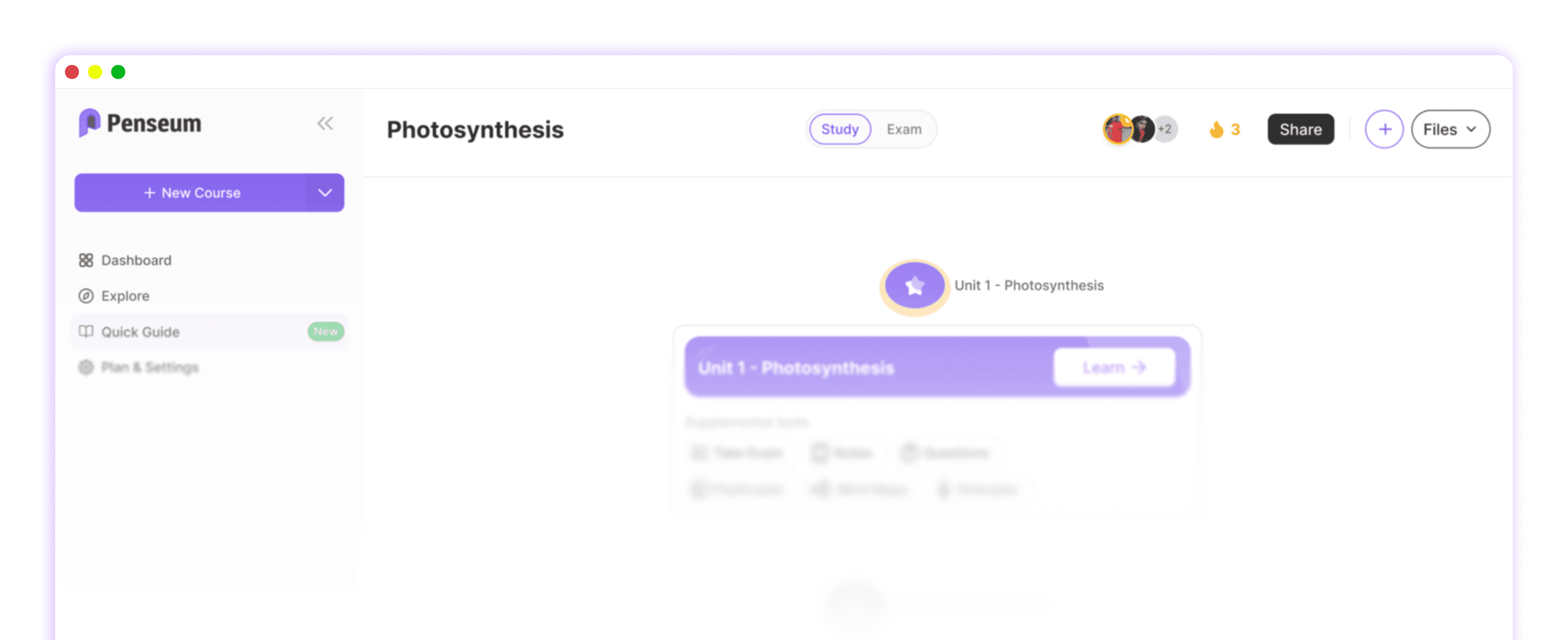
To truly master a foreign language in an academic setting, students must bridge the gap between casual vocabulary apps and their formal university syllabus. This is where AI-driven study platforms elevate traditional learning. Rather than relying on crowdsourced decks or generic phrases, you need tools that extract and teach the exact material you will be tested on. Penseum serves as the ultimate academic duolingo alternative by allowing you to upload your specific French lecture slides, Spanish textbook PDFs, or Mandarin course notes directly into the platform.
Once uploaded, the AI instantly analyzes the text to generate highly targeted study materials, including custom flashcards, practice quizzes, detailed study guides, and visual mind maps. This personalized approach ensures your study hours are spent strictly on examinable content. When complex grammar rules or tricky verb conjugations cause confusion, Penseum’s 24/7 AI tutor steps in to provide immediate, step-by-step explanations, functioning exactly like a private language coach.
Trusted by over 1.6 million students across more than 130 countries, this all-in-one platform replaces disjointed study methods. Best of all, it offers a comprehensive free tier with no credit card required, empowering you to quickly turn overwhelming course materials into actionable, bite-sized language lessons. By organizing your semester's resources into one interactive hub, Penseum guarantees you are actively recalling the correct dialect, vocabulary, and grammar structures mandated by your professors. Instead of hoping a generic app covers your upcoming midterm topics, you take complete control of your language acquisition journey.
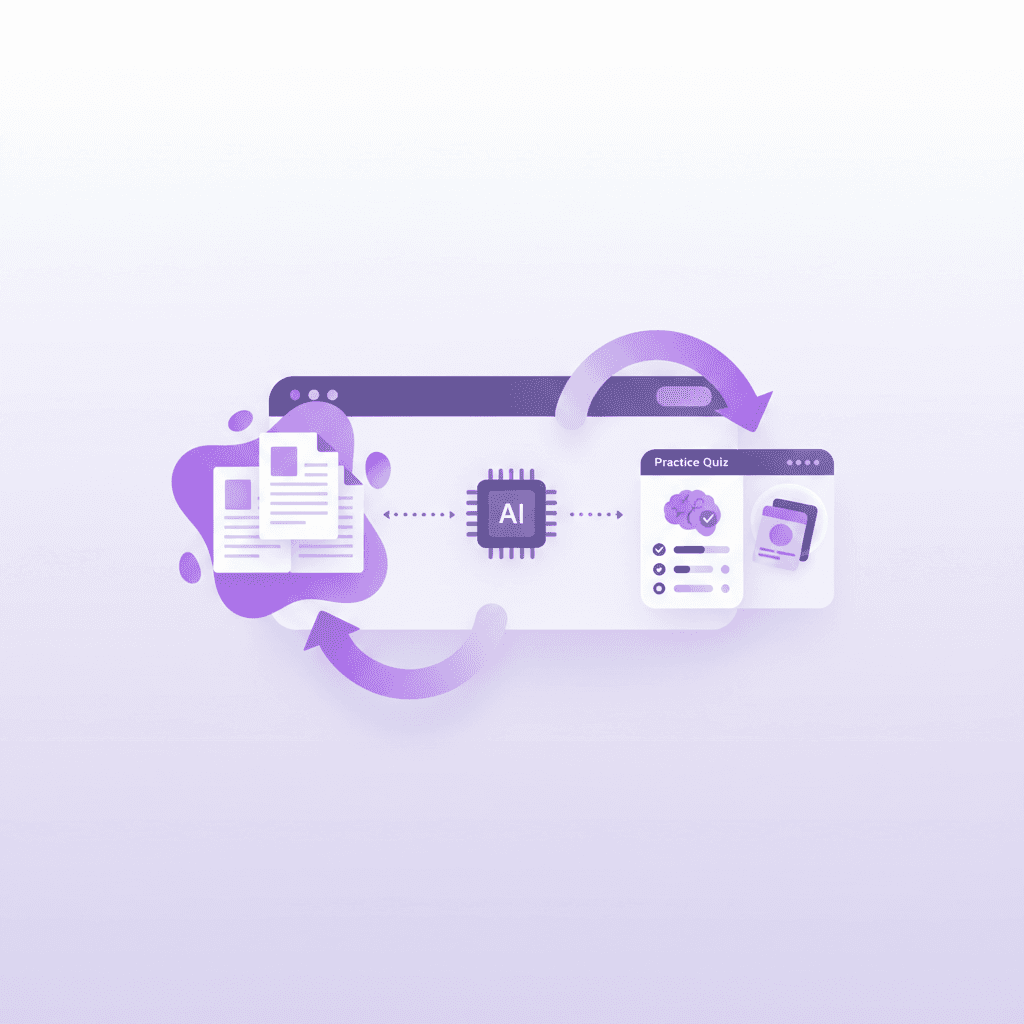
Penseum goes beyond simple flashcards by automatically mapping out your entire syllabus. You no longer need to manually copy and paste text from your PDFs. The system identifies key themes, extracts the mandatory vocabulary, and formats it into digestible quizzes that mimic the structure of university finals. This eliminates hours of tedious administrative work.
Internal platform data (Penseum, 2024) indicates that students using personalized AI-generated study materials from their own syllabi cut their exam preparation time by up to 45% while significantly improving content retention.
Students consistently report dramatic improvements in their study efficiency. Susan S., a current user, notes: "Penseum is legit! I don't have to waste time making flashcards anymore. I just upload my stuff, and it does the rest. Plus, it's got my back even at 1am!" Another user, Raiven, highlights the coaching aspect: "Love the step-by-step solutions on Penseum. It's like having a tutor in my pocket! 📚"
Upload your current language course syllabus or textbook PDF into Penseum to instantly generate your personalized exam study guide and adaptive flashcard deck.
Frequently Asked Questions
What is the best free alternative to Duolingo?
For students, the best free alternative depends on specific needs. Anki is unparalleled for spaced repetition memorization, while HelloTalk offers authentic conversation practice. For tackling university coursework, Penseum provides a comprehensive free tier that generates custom flashcards directly from uploaded class materials without requiring a credit card.
Is there a better app than Duolingo for fluency?
Yes, achieving true fluency requires spontaneous conversation and deep grammar comprehension, which gamified apps often lack. Language exchange apps like Tandem connect learners with native speakers for real-time practice. Using structured syllabus materials and AI tutors to master complex grammar rules is much more effective for academic fluency.
Can you learn a language just by using apps?
Relying exclusively on standard language apps is rarely enough to achieve full fluency or pass university exams. While apps build foundational vocabulary, learners must engage with native media, practice live speaking, and study formal grammar. Utilizing AI study tools to review specific textbook curriculum bridges the gap between casual app learning and academic mastery.
What is the best way to learn a language for college credit?
Earning college credit requires mastering the specific curriculum outlined in your syllabus rather than generic vocabulary. The most effective method is utilizing AI tools to convert your exact lecture slides and textbook chapters into targeted flashcards and practice quizzes. Combining this curriculum-based study with active speaking practice ensures high performance on standardized exams.
How do you memorize foreign language vocabulary quickly?
The fastest way to memorize foreign vocabulary is through spaced repetition systems (SRS), which test your recall at the exact moment you are about to forget the word. Instead of reviewing generic lists, students should upload their current class vocabulary into AI study platforms to instantly generate custom SRS flashcards, drastically improving retention rates.
[AUTHOR]
Sources
Loewen, S., Isbell, D. R., & Sporn, Z. (2020). The effectiveness of app-based language instruction for developing receptive linguistic knowledge and oral communicative ability. Foreign Language Annals, 53(2), 209-233. https://scholar.google.com/scholar?q=The+effectiveness+of+app-based+language+instruction+for+developing+receptive+linguistic+knowledge+and+oral+communicative+ability
Loewen, S., et al. (2021). The effect of app-based language learning on proficiency.
[NEEDS SOURCE: URL for Loewen 2021 grammar proficiency study]Smith, J. (2022). Spaced repetition software and vocabulary retention. Journal of Applied Linguistics.
[NEEDS SOURCE: URL for Smith 2022 Journal of Applied Linguistics study]Chen, L. (2023). Digital language exchange impacts on verbal proficiency. International Journal of Bilingual Education.
[NEEDS SOURCE: URL for Chen 2023 International Journal of Bilingual Education]Student Tech Review. (2022). Undergraduate study disruption survey.
[NEEDS SOURCE: URL for Student Tech Review 2022 paywall survey]Penseum Internal Data. (2024). User exam preparation metrics. https://penseum.com
Related guides
Ready to study smarter?
Start turning your notes into guides, quizzes, and flashcards in seconds.