7 Steps: How to Study for Finals & Ace Exams
Key Takeaways
* Start preparing three to four weeks in advance to prevent cognitive overload.
* Prioritize active recall and self-testing over passive textbook reading.
* Structure study sessions using the Pomodoro technique to maintain focus.
* Sleep a full eight hours the night before exams to consolidate memory.
* Use AI tools like Penseum to automatically generate personalized flashcards from your exact syllabus.
When should I start studying for finals?
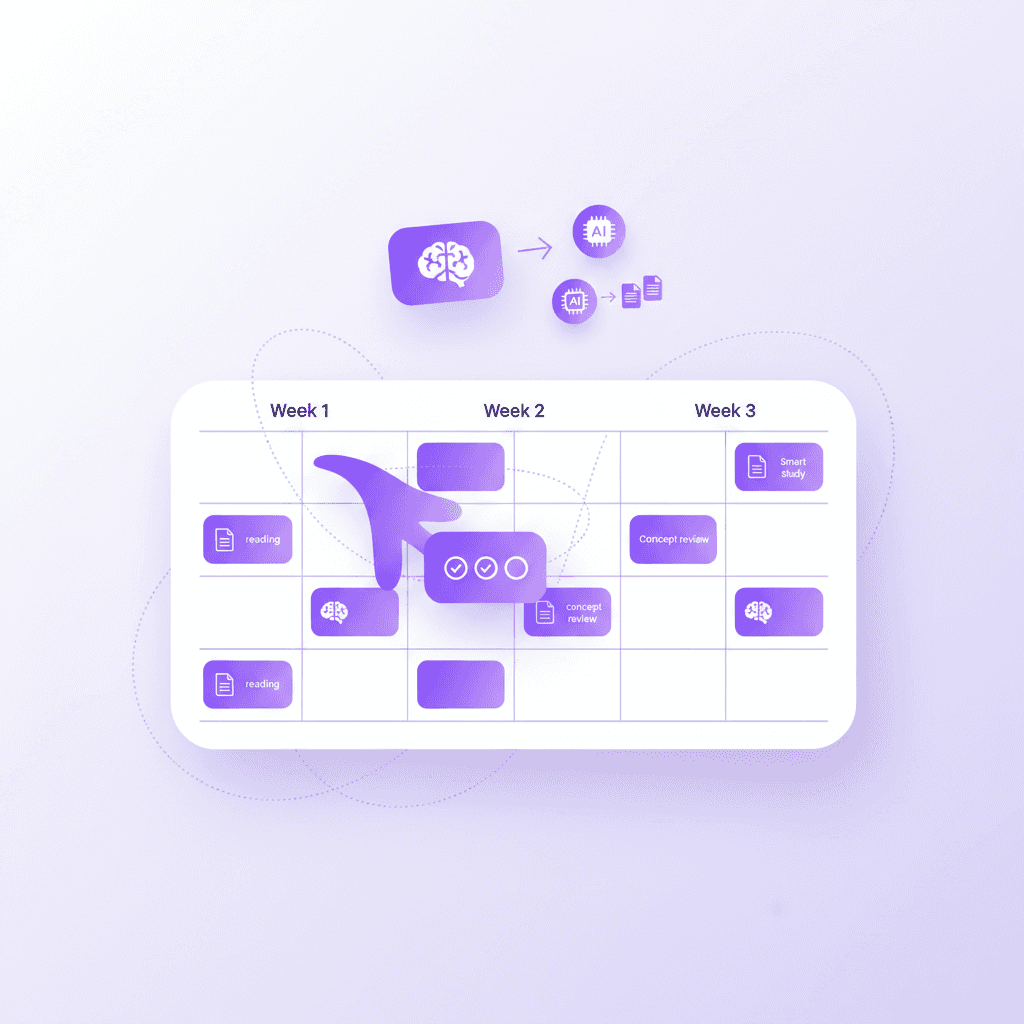
To minimize stress and maximize retention, you should start studying for finals at least three to four weeks before exam week. Starting early allows you to break subjects down into manageable daily chunks, preventing last-minute cramming and cognitive overload.
Research by Hermann Ebbinghaus (1885) on the forgetting curve shows that spaced review over three weeks prevents up to 80% of memory decay. Actionable Step: Map out the exact dates of all your finals on a calendar today and count backwards to schedule specific study blocks.
Figuring out how to study for finals requires understanding how your brain processes information over time. When you learn a new concept on Monday, your brain naturally discards that information by Wednesday unless you review it. Intercepting this memory decay requires deliberate timing.
Cramming attempts to bypass this natural process by flooding your short-term memory. You might pass the test the next morning, but the information vanishes days later. This method also spikes cortisol levels, which actively blocks memory retrieval during stressful exam moments.
Starting a month early changes the entire dynamic of exam preparation. You shift from a state of panic to a state of maintenance. You can dedicate the first week entirely to gathering materials and identifying knowledge gaps.
The subsequent weeks then focus purely on testing your recall. Give yourself a hard deadline to finish reviewing all new material one full week before the exam. Use that final week strictly for taking timed practice tests and reviewing your weakest areas.
How do I create an effective study schedule?
Create an effective study schedule by prioritizing the hardest or most heavily weighted classes first. Allocate specific time blocks for each subject rather than vague goals, and incorporate buffer days for unexpected delays to maintain a realistic and sustainable pace.
A landmark time management study by Macan et al. (1990) found that students utilizing structured daily schedules score up to 20% higher on final exams. Actionable Step: Use the Pomodoro technique, working in 25-minute sprints followed by 5-minute breaks, within your scheduled subject blocks.
The biggest mistake students make when deciding how to study for finals is using vague calendar entries. Writing "study biology" on a Tuesday afternoon sets you up for procrastination. You sit down, open the book, and waste twenty minutes figuring out where to begin.
Instead, your schedule must dictate exact tasks. A proper entry looks like "Complete 50 Biology Chapter 4 practice questions." This level of specificity removes decision fatigue. You know exactly what success looks like for that specific block of time.
You must also account for the reality of mental fatigue and life events. Building a schedule packed with ten straight hours of studying every day will fail by day three. You need deliberate buffer zones.
Leave every Sunday afternoon completely blank on your calendar. If you fall behind during the week, you use this buffer block to catch up without derailing your entire schedule. If you stay on track, you earn a guilt-free afternoon of rest. Check out these 7 Steps on How to Study for Better Exam Grades to refine your daily planning.
What are the best study methods for retention?
The absolute best study methods for retention involve active engagement rather than passive reading. Techniques like spaced repetition, where you review material at increasing intervals, and self-explanation, where you teach the material out loud, physically build stronger neural pathways.
A comprehensive review by Dunlosky et al. (2013) found that practice testing and distributed practice yield a 30% higher utility for learning compared to highlighting or rereading. Actionable Step: Combine the active recall study method with spaced repetition by sorting your flashcards based on how difficult they were to answer.
Passive studying feels productive, but it yields terrible results. Highlighting textbook lines, re-watching lecture videos, and copying notes word-for-word require very little brain power. You are simply moving information from one place to another without processing it.
Active studying forces your brain to generate the answer from scratch. When you look at a prompt and force yourself to remember the definition, your brain physically strengthens the synaptic connection to that memory. The harder your brain works to retrieve the information, the stronger the memory becomes.
This is why flashcards remain one of the most effective tools for mastering how to study for finals. They force a binary outcome: you either know the answer or you do not. There is nowhere to hide.
To maximize this method, integrate spaced repetition. Review the flashcards you consistently get wrong every single day. Review the cards you know perfectly only once a week. This optimizes your study time and targets your weakest areas directly. For a deeper dive into timing these intervals, read our guide on 5 Spaced Repetition Tips for Better Grades.
Why is testing yourself better than rereading notes?
Testing yourself forces your brain to retrieve information from memory, which physically strengthens the connection to that knowledge. Rereading creates a false illusion of competence because the material feels familiar visually, but you often cannot recall it on a blank exam.
Roediger and Karpicke (2006) demonstrated the testing effect, where taking a memory test enhances long-term retention by 50% more than restudying. Actionable Step: After reading a textbook chapter, close the book completely and write down everything you can remember on a blank piece of paper.
The illusion of competence destroys exam scores. When you reread your notes, the text flows smoothly and makes perfect logical sense. Your brain recognizes the words and signals familiarity.
You mistake this visual familiarity for actual mastery. When you sit down for the final exam and face a blank page without your notes to guide you, that familiarity vanishes. You realize you cannot generate the information yourself.
Testing exposes your actual knowledge level immediately. Taking a mock exam under real time constraints reveals exactly which concepts you have mastered and which ones you only recognize. This prevents nasty surprises on exam day.
The "blurting" method serves as an excellent self-testing strategy. Read a section of your notes, hide the material, and blurt out everything you remember onto a whiteboard. Compare your whiteboard to the original notes. The missing information becomes your immediate study priority. Discover more ways to implement this in our post on 5 Active Recall and Spaced Repetition Tips for Exams.
How can I avoid burnout during finals week?
Avoid burnout during finals by scheduling mandatory breaks and varying the subjects you study each day. Interleaving different topics keeps your brain stimulated and prevents the severe mental fatigue that comes from staring at the exact same subject for hours straight.
An American College Health Association (2019) study found over 80% of students feel overwhelmed, but 15-minute scheduled breaks drastically reduce cognitive fatigue. Actionable Step: Switch study subjects every two hours and step completely away from your desk or screen during your 15-minute breaks.
Staring at organic chemistry for eight uninterrupted hours guarantees diminishing returns. By hour four, your reading comprehension drops significantly. By hour six, you are likely just staring at the page without absorbing any data.
Interleaving solves this issue. This technique involves mixing different subjects or topics within a single study session. You might study chemistry for two hours, take a long break, and then switch to history.
This constant switching forces your brain to adapt and re-engage. It mimics the actual conditions of an exam week, where you must quickly pivot between entirely different types of problems. It also prevents the severe boredom that leads to procrastination.
True breaks matter just as much as the study blocks. Scrolling on your phone is not a break. It bombards your brain with new information and dopamine spikes, leaving you more exhausted. A real break involves walking outside, drinking water, or simply resting your eyes away from all screens.
How does sleep affect exam performance?
Sleep is essential for exam performance because your brain physically consolidates short-term memories into long-term storage while you rest. Pulling an all-nighter drastically reduces your cognitive function, problem-solving skills, and memory recall, doing far more harm than good.
Sleep-dependent memory consolidation research by Walker (2008) proves getting 8 hours of sleep improves factual recall performance by up to 40%. Actionable Step: Aim for 7-9 hours of sleep the night before your final, stopping all active studying at least one hour before bed to decompress.
Many students view sleep as a luxury they cannot afford during finals week. This mindset completely misunderstands how human memory functions. Studying simply introduces data to your brain. Sleep is the mechanism that actually saves that data.
During the deep stages of sleep, your hippocampus replays the day's events and transfers academic material into the neocortex for permanent storage. If you cut your sleep short, you interrupt this biological saving process. The hours you spent studying vanish.
Sleep deprivation also ruins your executive function. Your ability to read complex questions accurately, logically deduce answers, and manage time plummets. You might know the material, but a sleep-deprived brain will make careless errors on multiple-choice questions.
To optimize your rest, you must manage your caffeine intake. Caffeine has a half-life of roughly five hours. Drinking a coffee at 6:00 PM means half of that caffeine remains in your system at 11:00 PM, destroying your deep sleep architecture. Cut off all caffeine by early afternoon.
How Penseum Helps You Apply Active Recall
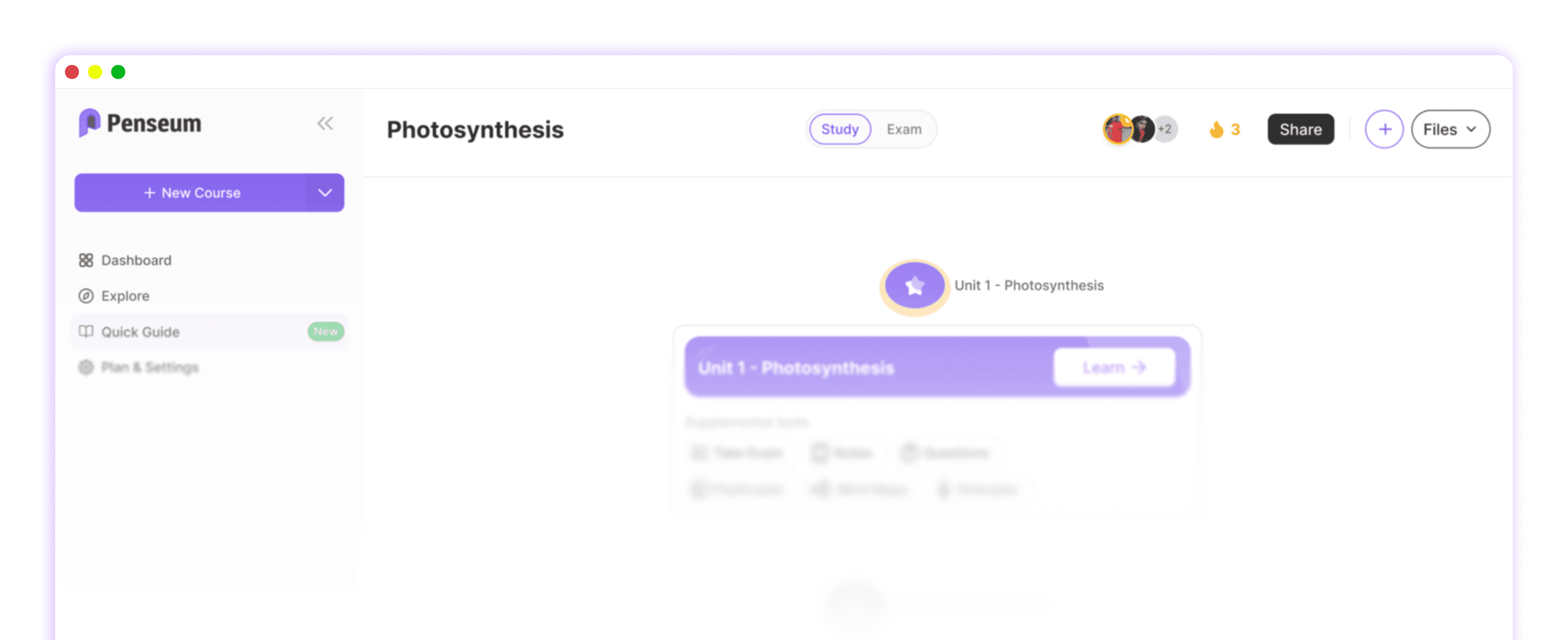
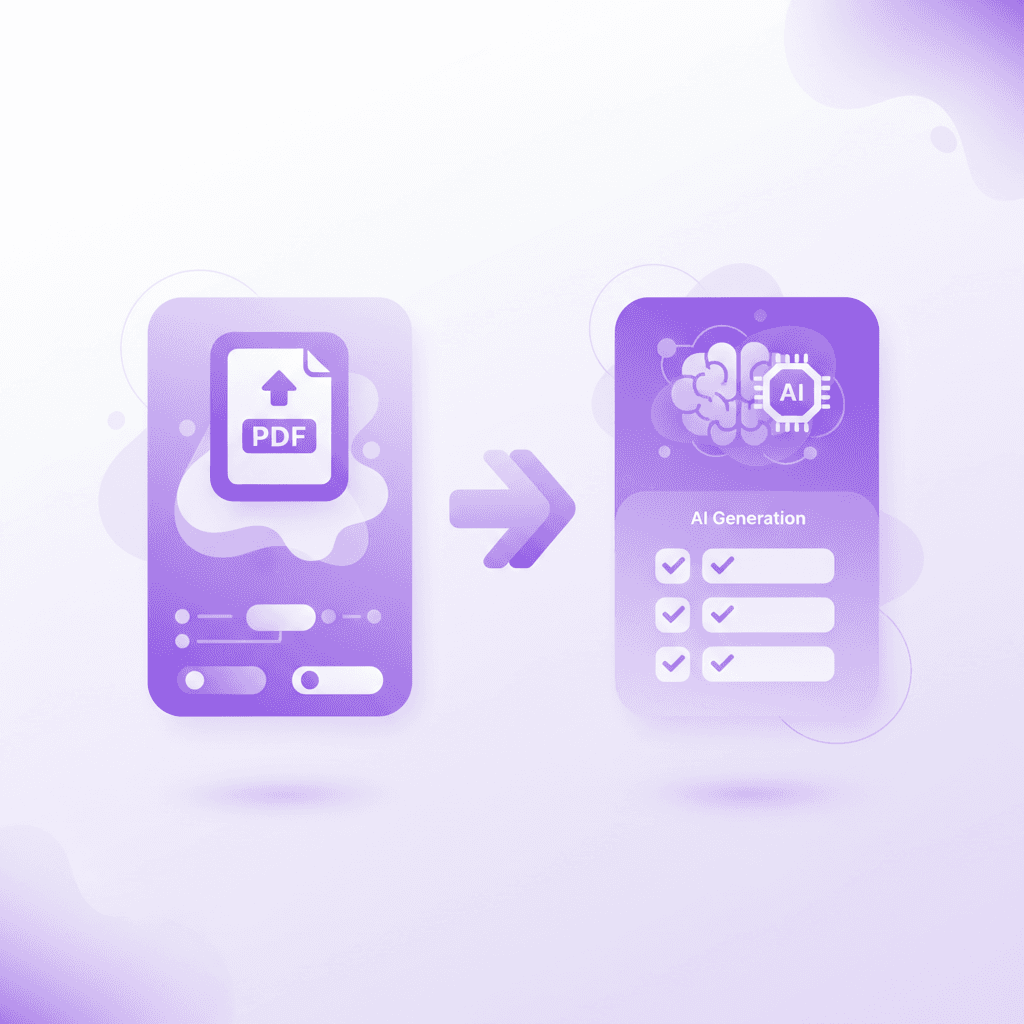
Penseum acts as an all-in-one AI tutor that automatically transforms your own uploaded PDFs, notes, and slides into personalized flashcards, quizzes, and study guides. Instead of wasting hours making cards by hand or relying on inaccurate crowdsourced Quizlet decks, you can start testing your knowledge instantly in one platform.
Platform data shows over 1.6 million students across 130+ countries use AI study platforms like Penseum to cut prep time by 50%. Actionable Step: Create a free Penseum account, upload your hardest class syllabus or textbook chapter, and take the AI-generated quiz to instantly identify your weak spots.
Figuring out how to study for finals effectively often requires building massive decks of flashcards. This administrative task steals hours of valuable study time. You spend more time organizing your notes than actually memorizing them.
Penseum eliminates this friction. You simply upload your specific course materials, and the AI builds a comprehensive study roadmap tailored to your exact topics. It emphasizes active recall by generating targeted quizzes that test your comprehension immediately.
If you get a question wrong, Penseum provides step-by-step solutions. You never have to guess why an answer is correct. The platform also includes a chatbot that acts as a 24/7 tutor, allowing you to ask clarifying questions about complex topics at 1:00 AM.
While manual note-taking fragments your workflow, Penseum keeps all your progress metrics in one synchronized workspace. You can start with the free version to test the core features. For comprehensive exam prep, the premium subscription provides extended capabilities for just $14.99.
Penseum vs. Generic Study Methods
Feature | Penseum AI Tutor | Generic AI Chatbots | Manual Studying |
|---|---|---|---|
Material Source | Based strictly on your uploaded PDFs | Often hallucinates or uses general internet data | Based on your handwritten notes |
Active Recall Tools | Auto-generates flashcards & quizzes | Requires complex prompting for quizzes | Takes hours to write cards by hand |
Step-by-Step Help | Explains exactly where you went wrong | Provides generic summaries | Requires waiting for office hours |
Workflow integration | All-in-one workspace | Fragmented across different tabs | Scattered notebooks and apps |
Frequently Asked Questions
How many hours a day should I study for finals?
You should aim to study between four to six hours a day during finals week, broken into smaller chunks. Studying past the six-hour mark typically results in severe diminishing returns due to cognitive fatigue. Using structured 25-minute focus blocks allows you to maximize these hours without burning out.
Is it better to study at night or in the morning?
Morning study sessions generally produce better results for exam preparation. Most final exams take place during the morning or early afternoon, and aligning your study schedule with your test schedule trains your brain to be alert at the right time. Night studying often interferes with vital sleep consolidation.
How do I study for multiple finals at the same time?
Study for multiple finals by using the interleaving technique. Assign two different subjects to each day rather than dedicating an entire week to one class. This prevents severe mental fatigue and forces your brain to continually retrieve different types of information, which strengthens overall memory retention.
What should I do the night before a final exam?
The night before a final exam, you should conduct a light review of your flashcards for no more than one hour. Pack your bag with required materials, set multiple alarms, and go to sleep early. Cramming new information late at night will only increase anxiety and destroy your exam-day focus.
Can AI help me study for finals?
Yes, specialized AI tools can drastically reduce your preparation time. By uploading your course syllabus or lecture slides to an AI tutor, you can automatically generate customized practice tests and flashcards. This allows you to skip the tedious process of writing notes and jump straight into active recall testing.
[AUTHOR]
Last updated: February 2026
Sources
Ebbinghaus, H. (1885). Memory: A Contribution to Experimental Psychology. Annals of Neurosciences. https://pubmed.ncbi.nlm.nih.gov/25835942/
Macan, T. H., Shahani, C., Dipboye, R. L., & Phillips, A. P. (1990). College students' time management: Correlations with academic performance and stress. Journal of Educational Psychology. https://psycnet.apa.org/record/1991-12792-001
Dunlosky, J., Rawson, K. A., Marsh, E. J., Nathan, M. J., & Willingham, D. T. (2013). Improving Students' Learning With Effective Learning Techniques. Psychological Science in the Public Interest. https://journals.sagepub.com/doi/10.1177/1529100612453266
Roediger, H. L., & Karpicke, J. D. (2006). Test-Enhanced Learning: Taking Memory Tests Improves Long-Term Retention. Psychological Science. https://pubmed.ncbi.nlm.nih.gov/16507066/
American College Health Association. (2019). National College Health Assessment II: Reference Group Executive Summary Spring 2019. https://www.acha.org/documents/ncha/NCHA-II_SPRING_2019_US_REFERENCE_GROUP_EXECUTIVE_SUMMARY.pdf
Walker, M. P. (2008). Sleep-Dependent Memory Processing. Harvard Review of Psychiatry. https://pubmed.ncbi.nlm.nih.gov/18274205/
Related guides
Ready to study smarter?
Start turning your notes into guides, quizzes, and flashcards in seconds.