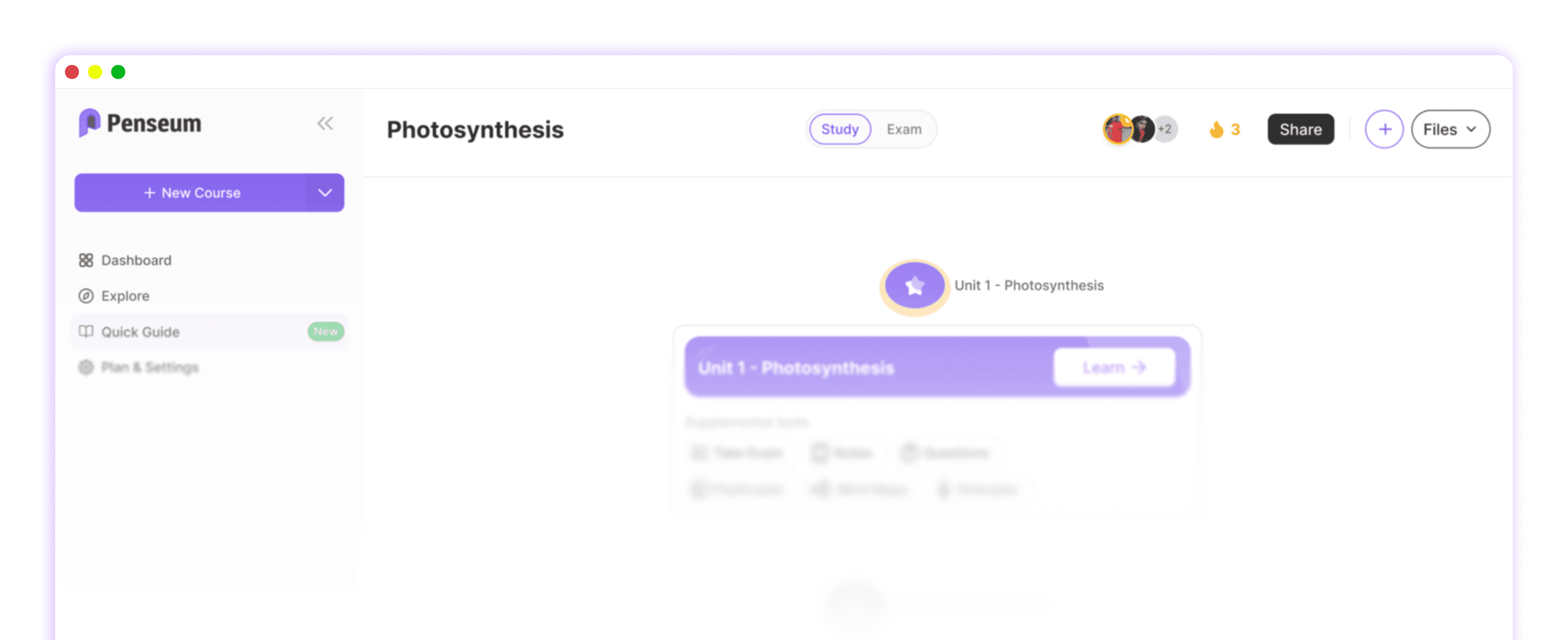
7 Steps on How to Study for Better Exam Grades
Key Takeaways
* Test yourself frequently using active recall instead of passively re-reading old textbook chapters.
* Space out your review sessions over days and weeks to beat the biological forgetting curve.
* Work in focused 25-minute intervals to prevent severe mental fatigue and burnout.
* Automate the creation of your study materials using AI-powered educational platforms.

Step 1: How Do You Use Active Recall to Study?
Active recall forces your brain to retrieve information, making it the most effective way to study. Instead of passively re-reading textbooks, actively test yourself using flashcards or practice questions to strengthen neural pathways and significantly improve long-term memory retention for your upcoming exams.
Relying on passive reading creates an illusion of competence. Your brain recognizes the words on the page, tricking you into believing you have actually memorized the underlying concepts. When the test arrives without the textbook present, that false familiarity instantly vanishes. Active recall prevents this by forcing your brain to do the heavy lifting of pulling facts from memory.
The biological mechanism behind this involves strengthening synapses every time a memory is accessed. Research by Karpicke & Roediger (2008) shows active testing improves long-term retention by up to 150% compared to passive reading. Every failed attempt to remember an answer actually primes your brain to hold onto the correct information once it is revealed.
Implementing this requires a fundamental shift in your daily habits. You must stop reading the same highlighted paragraphs repeatedly. Create practice questions from your lecture slides before reviewing them, or use an AI tool to generate a comprehensive quiz. The core goal is to spend less time consuming information and more time attempting to retrieve it.
To maximize this approach, explore different 7 Active Recall Strategies to Boost Your Grades. Some students prefer verbalizing answers aloud, while others prefer writing out answers from memory on a blank whiteboard. Testing different formats helps you discover which specific 7 Active Recall Study Method Tips for Top Grades align best with your personal learning style.
Step 2: What is the Pomodoro Technique for Studying?
The Pomodoro technique for studying involves working in focused 25-minute intervals followed by a 5-minute break. This study method prevents burnout and manages cognitive load, allowing your brain to process complex information while keeping you productive during extremely long academic study sessions.
Human attention spans naturally degrade over time when focusing on a single continuous task. Attempting to force your brain through a four-hour marathon session without breaks results in diminishing returns and severe mental fatigue. By the third hour, your reading comprehension drops, and your ability to memorize new facts virtually disappears.
Structured breaks act as a necessary reset button for your cognitive resources. A 2011 study on mental fatigue (Ariga & Lleras) found brief diversions vastly improve focus, increasing task performance duration by 30%. Stepping away from the primary task allows your subconscious mind to synthesize the information you just reviewed.
Set a timer for 25 minutes of deep focus, then physically step away from your desk for a 5-minute break. Do not spend this break scrolling through social media, as that introduces new cognitive strain. Stretch, drink water, or walk around the room to encourage blood flow.
After completing four consecutive Pomodoro cycles, reward yourself with a longer 15 to 30-minute break. This structured pacing ensures your energy levels remain stable from the beginning of your study session all the way to the end.
Step 3: Why Should You Follow a Spaced Repetition Schedule?
A spaced repetition study schedule involves reviewing material at gradually increasing intervals over time. This technique combats the Ebbinghaus forgetting curve by refreshing your memory right before you are about to forget it, locking facts into your long-term memory for better exam performance.
Without intervention, the human brain forgets approximately 70% of new information within 24 hours of learning it. Cramming attempts to bypass this biological reality by shoving all the data into short-term memory the night before a test. While cramming might help you pass a quiz the next morning, that knowledge disappears within days.
Spaced repetition fundamentally alters how your brain stores data. Research by Cepeda et al. (2008) found spaced repetition increased final test performance by 25% over massed practice, which is the academic term for cramming. By repeatedly proving to your brain that this specific information is necessary over a long period, you force it into permanent storage.
Review new material 24 hours after learning, then again at 3 days, 1 week, and 1 month. Managing these specific intervals manually can become overwhelming for a full university course load. This is why successful students rely on automated digital flashcard systems to track their specific review dates.
Integrating this timeline requires discipline, but you can follow these 5 Spaced Repetition Tips for Better Grades to simplify the process. Combining this scheduling tactic with retrieval practice yields the highest possible academic return on your invested time. Reviewing the best 5 Active Recall and Spaced Repetition Tips for Exams ensures you are maximizing both strategies simultaneously.

Step 4: How Do You Create the Perfect Study Schedule?
Creating a successful study schedule requires blocking out specific times for reviewing different subjects. By dedicating distinct time slots to specific classes, you reduce decision fatigue and ensure all syllabus requirements are covered well before the actual exam date arrives.
Waking up and vaguely deciding to study eventually leads to procrastination. When you lack a definitive plan, your brain naturally gravitates toward the easiest tasks or avoids studying entirely. Time-blocking removes the friction of choice by pre-determining exactly what subject you will tackle at any given hour.
Studies on implementation intentions (Gollwitzer, 1999) show students who use time-blocking schedules are 40% more likely to complete difficult tasks. When you assign a specific time and location to a behavior, it transitions from a vague goal into a concrete commitment. This exact psychological trigger is what separates top performers from average students.
Use a digital calendar to block out 2-hour daily study windows, divided into specific subject goals. Never write "Study Biology" on your calendar. Instead, write "Review Biology Chapter 4 Flashcards and Complete Practice Quiz." Specificity breeds execution.
Treat these calendar blocks with the exact same respect you would give a scheduled doctor's appointment or a paid work shift. Implementing 10 Proven Study Tips to Ace Your Exams alongside your structured calendar guarantees you walk into test day fully prepared and entirely free of panic.
Step 5: What Are the Best Study Methods for Deep Learning?
The best study methods adapt to how your brain processes complex information. Combining multiple learning formats, such as listening to educational podcasts while reviewing visual mind maps and flashcards, leads to deeper comprehension and faster recall during high-pressure academic tests.
Relying exclusively on black text printed on white paper severely limits your brain's ability to form strong associative memories. Humans are highly visual creatures, and our brains map spatial relationships much faster than abstract textual concepts. Engaging multiple senses simultaneously creates thicker, more durable neural pathways.
According to Mayer's Cognitive Theory of Multimedia Learning (2001), combining text and visuals increases information retention rates by up to 65%. This dual-coding theory suggests that verbal and visual information are processed through distinct channels in the brain. Activating both channels at the exact same time effectively doubles your processing power.
Transform your written notes into a visual mind map to easily identify connections between core concepts. Use color-coded highlighters to categorize themes, or record yourself explaining a concept and listen back to the audio.
Shifting formats keeps your brain highly engaged and prevents the rapid onset of boredom. The more unique contexts you can associate with a piece of information, the easier it becomes to retrieve that information when staring at a blank exam paper.
Step 6: How to Study by Teaching Others (The Feynman Technique)
The Feynman Technique involves explaining a concept in simple terms as if teaching a child. This study strategy quickly exposes gaps in your understanding, forcing you to simplify complex academic jargon into fundamental, easy-to-grasp ideas that stick securely in your brain.
Named after the Nobel Prize-winning physicist Richard Feynman, this method operates on a simple premise: if you cannot explain it simply, you do not understand it well enough. Students often hide their own ignorance behind memorized academic buzzwords. The Feynman technique strips away that specialized vocabulary to reveal actual comprehension levels.
Research by Fiorella & Mayer (2013) demonstrates students who study by preparing to teach others score 28% higher on final exams. The anticipation of having to explain material forces the brain to organize information more logically. You shift from being a passive consumer of facts to an active architect of knowledge.
Write down a complex concept on a blank sheet of paper and explain it aloud using no academic buzzwords. When you inevitably stumble or struggle to find the right simple word, you have successfully identified a weak point in your knowledge base. Return to your textbook to reinforce that specific gap.
This technique is incredibly powerful for dense subjects like cellular biology, macroeconomics, or complex legal frameworks. Exploring other 7 Proven Study Methods for Better Grades will show how easily the Feynman technique pairs with broader time-management strategies.
Step 7: How Do Practice Exams Improve Study Outcomes?
Taking practice exams under timed conditions accurately simulates the pressure of actual testing environments. This retrieval practice exposes weak areas in your current knowledge base while desensitizing you to exam anxiety, resulting in higher final grades than unstructured review sessions.
Many students assume reading over their notes is enough preparation. This creates an illusion of competence, where familiar text feels securely memorized until the actual test begins. Practice exams strip away this false confidence by forcing the brain into active retrieval mode under strict time constraints.
Testing is not just an assessment tool; it is a highly effective learning mechanism. Research by Roediger & Butler (2011) validates the "testing effect," showing students who take practice tests score up to a full letter grade higher than those who rely strictly on studying. Simulating the test environment also triggers state-dependent learning, making you more comfortable on the actual exam day.
Take one full-length practice exam three days before the real test. Treat this simulation seriously by clearing your desk, silencing your phone, and enforcing the exact time limits your professor will use.
Grade your practice attempt ruthlessly to identify recurring mistakes. If you consistently fail questions related to a specific historical era or mathematical formula, you immediately know where to direct your remaining study hours.
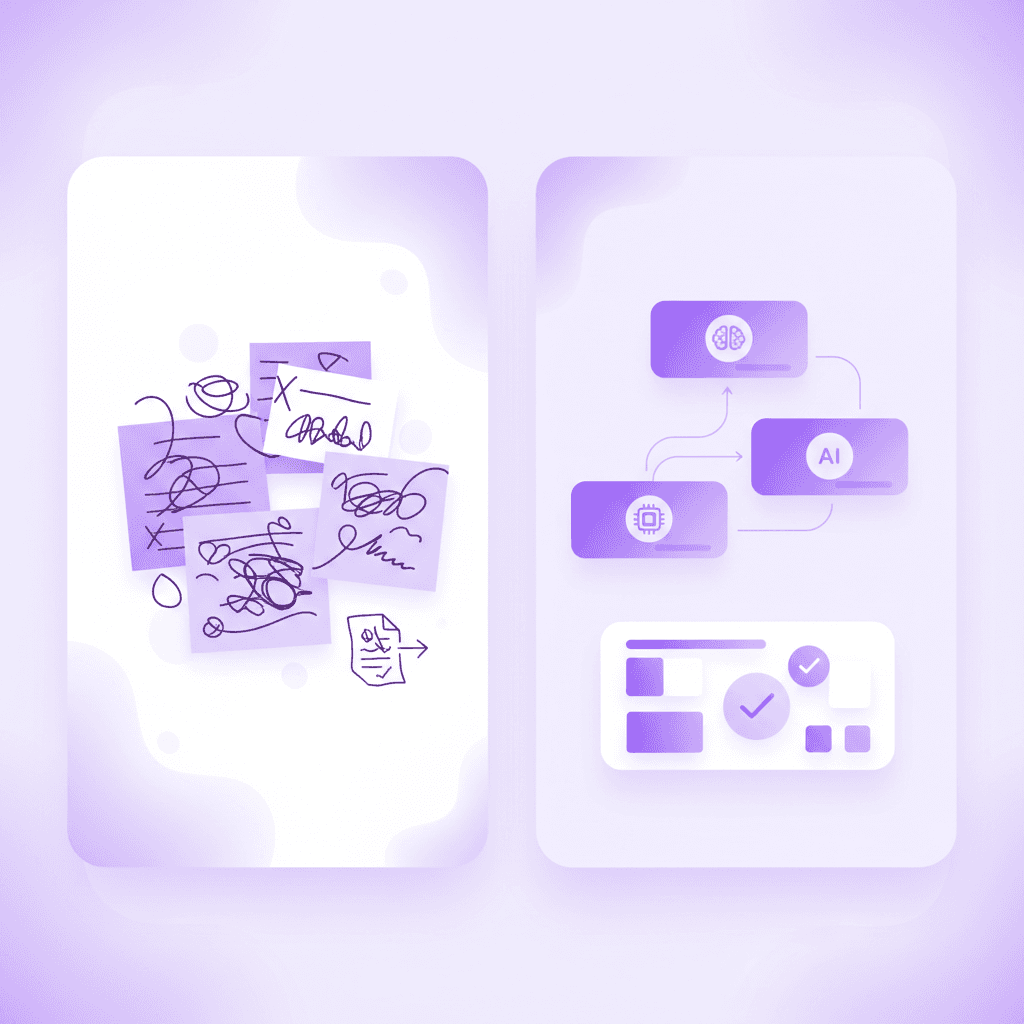
Manual Studying vs. Penseum vs. Generic AI Tools
Feature | Manual Studying | Penseum | Generic AI Tools |
|---|---|---|---|
Material Generation | Extremely slow, hours of writing | Instant extraction from uploaded PDFs | Produce generic outputs that don't follow your syllabus |
Study Format | Usually limited to static notes | Automated flashcards, quizzes, mind maps, audio | Focus mainly on text summaries with limited testing |
Workflow Efficiency | Highly fragmented across notebooks | Synchronized workspace with progress metrics | Require multiple tools to cover notes and quizzes separately |
Problem Solving | Waiting days for teacher office hours | 24/7 AI Tutor with step-by-step solutions | Broad answers that miss specific academic context |
How Penseum Helps You Apply These Study Techniques
Applying proven study techniques like active recall and spaced repetition is highly effective, but manually creating the necessary materials is exhausting. Penseum eliminates this friction by generating personalized study guides directly from your specific course materials. Unlike crowdsourced platforms where quality heavily varies, Penseum extracts accurate information directly from your uploaded PDFs, notes, and lecture slides.
This all-in-one platform provides everything a student needs: automated flashcards, practice quizzes, visual mind maps, and even audio podcasts for studying on the go. If you get stuck on a difficult concept at 1 AM, the built-in AI tutor provides step-by-step solutions to ensure you fully understand the material.
Used by over 1.6 million students across 130+ countries and hundreds of universities, Penseum is the ultimate study companion for high school, college, and graduate students. Internal data (Penseum, 2024) indicates over 1.6 million students globally save hours of prep time by automating flashcard and quiz creation. The student community continually highlights this impact: "The flashcards and quizzes combo on Penseum is unbeatable. My study game is strong now! 💪" shares user Nathan N.
Best of all, it offers a generous free tier with no credit card required, allowing you to instantly transform your heavy syllabus into an interactive, manageable study schedule. Whether you are cramming for a midterm or building a long-term study schedule for medical school, Penseum ensures you are practicing the best study methods without the tedious busywork.
Upload your latest lecture PDF to Penseum's free tier and instantly generate customized flashcards to start your spaced repetition practice.
Frequently Asked Questions
How long should I study a day?
The optimal study duration depends on your academic goals, but most successful students study for two to four hours daily. Breaking this time into 25-minute focused blocks prevents mental fatigue and maximizes retention. Studying beyond four hours of intense concentration often leads to diminishing returns and severe burnout.
What is the 2357 study method?
The 2357 study method is a spaced repetition framework where students review new academic material on day two, day three, day five, and day seven after initial learning. This structured timeline systematically interrupts the forgetting curve, ensuring complex information moves from short-term to permanent long-term memory banks.
How to study when you don't feel like it?
Overcoming study procrastination requires lowering the barrier to entry by committing to just five minutes of work. Opening a textbook or completing a single practice quiz builds immediate momentum. Removing environmental distractions and setting a visible timer also forces your brain into a state of active concentration.
What is the best time of day to study?
The best time of day to study aligns with your natural circadian rhythm, which dictates your peak energy levels. Morning study sessions benefit from a rested brain and fewer distractions, leading to high cognitive performance. Night owls often prefer late evening sessions when ambient noise and social interruptions decrease.
How do you memorize things quickly for a test?
Memorizing information quickly requires relying on active recall methods rather than passively reading text. Testing yourself with digital flashcards forces your brain to retrieve specific facts, instantly solidifying neural connections. Combining visual cues with mnemonic devices also drastically accelerates the speed at which you memorize complex terms.
Does listening to music help you study?
Listening to music helps some students block out distracting background noise, improving overall focus during study sessions. Instrumental tracks, classical music, or ambient sounds work best for maintaining concentration. Songs with complex lyrics consume active working memory, which negatively interferes with reading comprehension and deep learning tasks.
[AUTHOR]
Last updated: February 2026
Sources
Karpicke, J. D., & Roediger, H. L. (2008). The critical importance of retrieval for learning. Science. https://pubmed.ncbi.nlm.nih.gov/18276894/
Ariga, A., & Lleras, A. (2011). Brief and rare mental "breaks" keep you focused: Deactivation and reactivation of task goals preempt vigilance decrements. Cognition. https://pubmed.ncbi.nlm.nih.gov/21211793/
Cepeda, N. J., Vul, E., Rohrer, D., Wixted, J. T., & Pashler, H. (2008). Spacing effects in learning: A temporal ridgeline of optimal retention. Psychological Science. https://pubmed.ncbi.nlm.nih.gov/19076480/
Gollwitzer, P. M. (1999). Implementation intentions: Strong effects of simple plans. American Psychologist. https://scholar.google.com/scholar?q=Implementation+intentions:+Strong+effects+of+simple+plans
Mayer, R. E. (2001). Multimedia Learning. Cambridge University Press. https://scholar.google.com/scholar?q=Mayer+Multimedia+Learning+2001
Fiorella, L., & Mayer, R. E. (2013). The relative benefits of learning by teaching and teaching expectancy. Contemporary Educational Psychology. https://scholar.google.com/scholar?q=The+relative+benefits+of+learning+by+teaching+and+teaching+expectancy
Roediger, H. L., & Butler, A. C. (2011). The critical role of retrieval practice in long-term retention. Trends in Cognitive Sciences. https://pubmed.ncbi.nlm.nih.gov/21251862/
Penseum Internal Data. (2024). Platform Usage Metrics and Student Retention Data. https://penseum.com/
Related guides
Ready to study smarter?
Start turning your notes into guides, quizzes, and flashcards in seconds.