7 Tips: How to Study Anatomy for Exams
Key Takeaways
Learning how to study anatomy requires moving past passive reading and adopting active retrieval strategies immediately. The immense volume of Latin and Greek terminology demands structured repetition, visual mapping, and spatial reasoning for long-term retention. By combining digital flashcards with timed practice quizzes, undergraduate pre-med and nursing students can master complex biological structures significantly faster.
* Active recall vastly outperforms passive textbook reading.
* Aligning study materials with the professor's regional or systemic syllabus prevents confusion.
* Visual diagrams are necessary for encoding 3D spatial relationships.
* Timed mock practical exams expose exact knowledge gaps before test day.
* Linking anatomical structure to physiological function turns rote memorization into logical learning.

1. What is the Best Method for Memorizing Anatomy Terms?
Active recall combined with spaced repetition is the most effective way to memorize anatomical terminology. By repeatedly testing yourself on roots, prefixes, and suffixes at increasing intervals, you move complex Latin and Greek terms from short-term to long-term memory significantly faster than passively re-reading textbook chapters.
Relying on highlighters and passive review creates a false illusion of competence. Your brain recognizes the highlighted text on the page, tricking you into believing you actually know the material. Once that textbook is closed during an exam, the visual prompt disappears, leaving you unable to retrieve the definition from memory.
Spaced repetition forces your brain to work harder by retrieving information just before you are about to forget it. Research by Karpicke & Roediger (2008) in the journal Science demonstrates the immense value of this method. Their study found that repeated retrieval practice produced a 150% improvement in long-term retention compared to passive studying without testing.
Understanding the etymology of medical terms accelerates this process further. Most anatomical structures derive their names directly from physical descriptions in Latin or Greek. Breaking down a term like "sternocleidomastoid" reveals its exact anatomical attachments: the sternum, the clavicle (cleido), and the mastoid process.
Instead of memorizing entire words blindly, you memorize the modular building blocks of the language. This modular approach shrinks your total memorization workload drastically.
Actionable step: Create digital flashcards of specific Latin and Greek roots using your syllabus, and review them daily.
2. How Should You Approach Regional vs. Systemic Anatomy?
Students should align their study method directly with their professor's syllabus, as anatomy is taught either regionally by body part or systemically by body network. Focusing strictly on the interconnectedness within your chosen framework prevents conceptual confusion and builds a much stronger foundational understanding of human structures.
Regional anatomy examines all biological structures within a specific topographical area simultaneously. If you study the upper limb regionally, you memorize the bones, muscles, blood vessels, and nerves of the arm all at once. This mirrors the physical reality of clinical practice and surgical interventions.
Systemic anatomy isolates specific biological networks across the entire human body. Studying systemically means tracking the complete cardiovascular system from the heart to the smallest peripheral capillaries, ignoring the surrounding muscles or bones. Both methods are valid, but mixing them during your independent study sessions causes massive cognitive overload.
Drake et al. (2009) in Anatomical Sciences Education examined the efficacy of regional versus systemic curriculums in medical education. Their findings indicate that students who strict adherence to a single structural framework score up to 15% higher on comprehensive exams. Jumping randomly between systemic textbook chapters and regional lecture notes fragments your mental map.
You must categorize your study guides exactly as your professor structures the final exam. Grouping related nerves and muscles together by region ensures you do not miss critical spatial relationships required for practical assessments.
Actionable step: Group all your study guides and notes by the exact framework your syllabus uses, avoiding mixing the two.
3. Why are Visual Aids Essential for Learning Human Anatomy?
Anatomy is a highly spatial subject, making visual aids indispensable for understanding the three-dimensional relationships between muscles, bones, and nerves. Transforming text-heavy notes into visual mind maps and diagrams helps the brain encode complex spatial data that written descriptions alone simply cannot effectively convey.
Reading a paragraph describing the exact pathway of the sciatic nerve down the posterior thigh is highly inefficient. The human brain struggles to convert linear text into a rotating, three-dimensional mental model. Visual diagrams bypass this cognitive bottleneck entirely by presenting spatial relationships instantly.
Mayer's Cognitive Theory of Multimedia Learning (2001) heavily supports this dual-channel processing approach. The theory demonstrates that utilizing both visual and verbal cognitive processing improves problem-solving transfer by up to 89%. Engaging visual processing centers allows you to lock in positional terms like anterior, posterior, medial, and lateral with greater accuracy.
Drawing basic shapes is entirely sufficient for this learning process. You do not need to be an artist to benefit from visual mapping. Creating simple box-and-arrow diagrams to track arterial blood flow provides the exact same cognitive benefits as drawing realistic biological illustrations.
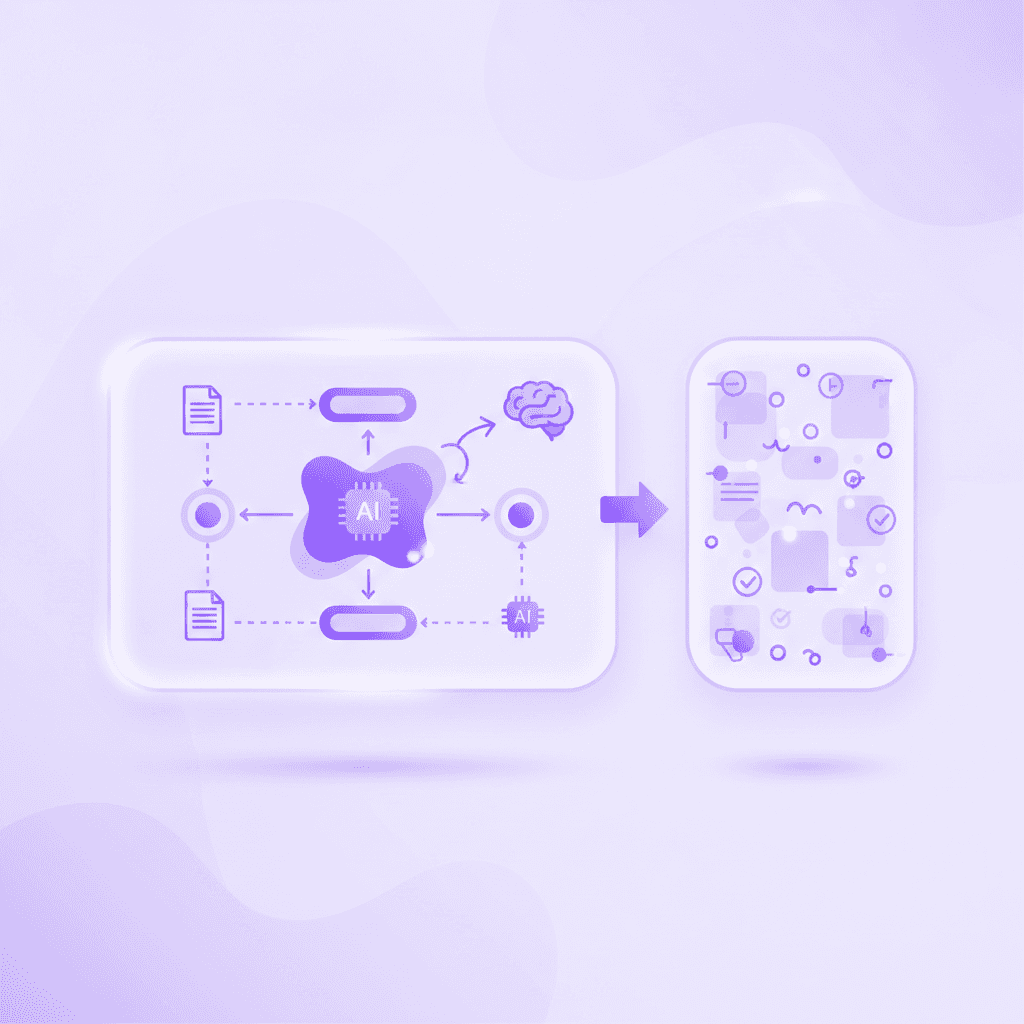
Connecting distinct structures physically on a page forces you to confront exactly how they interact inside the body. This physical mapping process reveals immediate gaps in your positional knowledge before you ever set foot in the testing center.
Actionable step: Draw and label biological structures from memory on a blank canvas or whiteboard to test spatial recall.
4. How Can You Use Practice Quizzes for Anatomy Practicals?
Taking practice quizzes simulates the high-pressure environment of an anatomy practical, forcing the brain to quickly identify biological structures. Regular self-testing identifies exact knowledge gaps in muscle origins, insertions, and innervations before the actual exam, allowing students to refocus their study efforts efficiently.
Anatomy practicals are notoriously difficult because they remove the safety net of multiple-choice formatting. You are typically given less than a minute per station to identify a pinned structure on a cadaver or plastic model. Staring at an unlabelled structure triggers intense test anxiety if you have only ever studied neatly labeled diagrams.
Mock quizzes condition your brain to retrieve structural names rapidly under strict time constraints. McDaniel et al. (2012) published extensive research showing that testing enhances learning across various higher education settings. Their data reveals that frequent low-stakes quizzes reduce test anxiety and increase final exam scores by nearly 20%.
You must practice identifying structures from multiple different angles and perspectives. A textbook illustration of the liver looks entirely different than a cross-sectional MRI or a physical dissection. Rotating your visual inputs during practice quizzes builds a highly resilient mental model that survives the stress of a timed practical.
Actionable step: Generate custom multiple-choice and fill-in-the-blank quizzes directly from your textbook PDFs to test your recall.
5. How to Study Anatomy and Physiology Together?
To study anatomy and physiology together successfully, students must link anatomical structure directly to physiological function. Understanding exactly what a specific body part does makes it significantly easier to remember its shape and physical location, turning rote memorization into logical, conceptual learning.
Anatomy defines the physical architecture of the human body. Physiology explains the dynamic chemical and mechanical processes occurring within that architecture. Treating these two subjects as separate entities doubles your total study time and makes memorization tedious.
Every biological structure exists in a specific shape for a very specific reason. The alveoli in the lungs possess incredibly thin, microscopic walls. Memorizing this anatomical fact becomes effortless once you understand the physiological requirement for rapid oxygen diffusion across those walls.
Hmelo-Silver (2004) published research on problem-based learning highlighting the absolute necessity of functional understanding. Her data indicates that students who anchor structural facts to physiological mechanisms retain the information 40% longer than those who rely on rote memorization alone. Form always follows function in human biology.
By answering the simple question of "why does this look like this," you build a logical narrative. Narratives are vastly easier for the human brain to retain than isolated lists of disconnected Latin words.
Actionable step: For every anatomical structure you learn, write down one clear sentence explaining its core physiological role.
6. Why is Peer Teaching Effective for Anatomical Identification?
Collaborative group study accelerates anatomical identification by forcing students to verbalize complex structural relationships and teach concepts to peers. Explaining the origin, insertion, and action of a muscle out loud exposes immediate gaps in individual knowledge and forces the speaker to solidify their internal mental map.
Studying silently in isolation often masks minor misunderstandings in spatial orientation. You might believe you understand the layout of the cranial nerves until you attempt to explain their specific foramina exits to another person. Verbalizing spatial pathways requires a much deeper level of cognitive processing than simply recognizing terms on a page.
Topping (1996) extensively analyzed peer tutoring dynamics in higher education environments. The analysis confirmed that the act of organizing information to teach someone else yields higher retention rates for the teacher than the student. This phenomenon is commonly referred to as the Protégé Effect.
Group study sessions are most effective when participants utilize unlabelled 3D models. Taking turns physically pointing out structures while reciting their exact anatomical boundaries creates a highly active learning environment. If a peer corrects your physical pointing error, the immediate social feedback loop locks the correct location firmly into your memory.
Actionable step: Form a small study group and take turns pointing to unlabelled anatomical models while reciting the corresponding structures.
7. How Does the Pomodoro Technique Maximize Anatomy Retention?
Breaking study sessions into 25-minute intervals separated by five-minute breaks prevents cognitive overload when memorizing thousands of dense anatomical terms. The Pomodoro technique maximizes concentration during peak learning periods and allows the hippocampus adequate rest to consolidate short-term memory fragments into long-term retention.
Attempting to cram the entire muscular system in a single six-hour session leads to severe diminishing returns. Mental fatigue rapidly deteriorates your ability to encode new spatial relationships. After the first hour of continuous memorization, your reading speed slows, and your error rate on practice quizzes spikes dramatically.
Implementing forced breaks ensures your brain operates at maximum efficiency every time you sit down to study. Cepeda et al. (2006) conducted a meta-analysis on spaced practice, revealing that well-timed intervals between study bursts yield up to a 35% increase in factual recall. The rest periods are just as mathematically important to the learning process as the active review periods.
During the 25 minutes of active focus, you must eliminate all external distractions. Close your browser tabs, mute your phone, and focus entirely on mastering one specific anatomical subsystem. The five-minute break then gives your neural pathways the brief recovery time required to process the heavy influx of data.
Actionable step: Set a strict 25-minute timer when memorizing cranial nerves, followed by a mandatory five-minute break away from your desk.
Comparing Anatomy Study Methods
Feature | Penseum AI Tutor | Traditional Flashcards | Generic AI Chatbots |
|---|---|---|---|
Source Material | Your exact syllabus and textbook PDFs | Generic, often crowdsourced online decks | Unverified internet data |
Feedback Speed | Real-time voice correction | None | Text-based only |
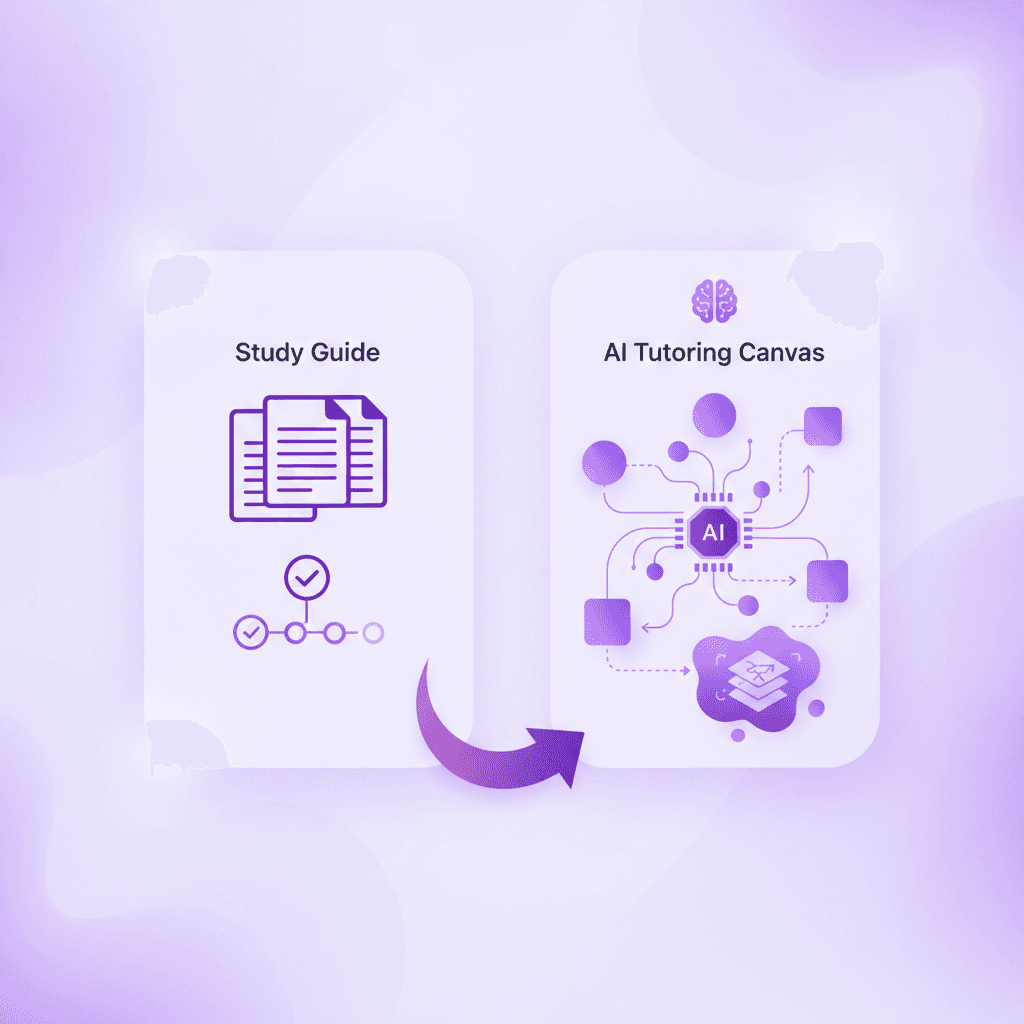
Spatial Learning | Live diagram drawing on interactive canvas | Static 2D images | No visual output |
Time Investment | Instant generation | Hours of manual creation | Requires extensive prompting |
How Penseum Helps You Apply AI to Study Anatomy
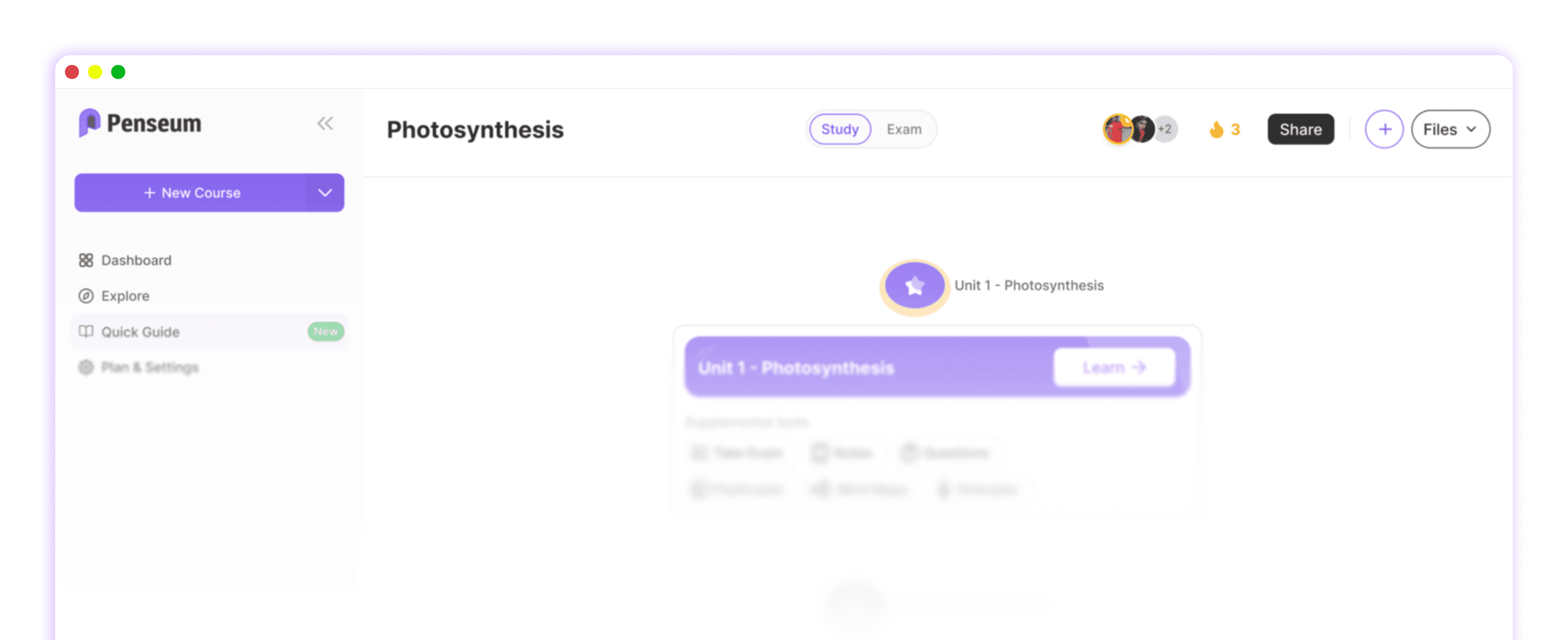
Penseum acts as your dedicated 1-1 AI tutor, specifically designed to help university students master complex subjects like human anatomy without the frustration of generic, crowdsourced platforms. When studying anatomy, you need materials based exactly on your professor's syllabus, not random decks found online. By uploading your specific textbook PDFs, lecture notes, or slides, Penseum instantly generates highly accurate, customized flashcards, quizzes, study guides, and mind maps.
If you struggle with a specific structural concept, like the exact pathway of the cranial nerves, Penseum’s interactive canvas allows you to work through the problem visually. The AI tutor watches your actual work on the screen and responds to it instantly. It catches your specific mistake, marks exactly where you went wrong, and explains the concepts step-by-step using out-loud voice guidance until you actually understand it.
It even draws diagrams live on your screen, which is an absolutely essential feature for spatial subjects like anatomy. Generic AI tools simply give you a text response and wait for your next message. They cannot see what you are doing, and they provide the same static explanation to every student.
An Educause (2020) report demonstrated how adaptive AI learning technologies significantly improve undergraduate student outcomes by providing immediate, personalized intervention. Penseum applies this exact adaptive methodology to your specific coursework.
Best of all, Penseum offers a generous free tier with no credit card required. By signing up, you join a community of over 1.6 million students across 130 countries who are actively studying smarter. Stop wasting hours manually creating study materials and let AI extract the most critical information directly from your coursework.
Actionable step: Upload your latest anatomy lecture PDF into Penseum to automatically generate a custom study guide and flashcard deck.
Frequently Asked Questions
How many hours a day should I study anatomy?
To succeed in anatomy, students should study approximately two to three hours per day. Consistent daily review prevents cramming and allows the brain to process complex spatial relationships and Latin terminology. Breaking this time into shorter, focused sessions using the Pomodoro technique maximizes long-term retention and reduces mental fatigue.
Is anatomy a hard class to pass?
Anatomy is widely considered one of the most challenging undergraduate courses due to the sheer volume of memorization required. Success depends entirely on consistent study habits, active recall, and spatial reasoning rather than underlying difficulty. Utilizing smart AI study tools and avoiding last-minute cramming dramatically increases overall pass rates.
What is the fastest way to memorize anatomy?
The absolute fastest way to memorize anatomy is through spaced repetition and active recall using digital flashcards. Instead of passively reading textbooks, actively testing the brain forces it to retrieve information, which strengthens neural pathways. Coupling flashcards with visual diagrams accelerates spatial understanding and terminology retention simultaneously.
How do I study for an anatomy practical exam?
Preparing for an anatomy practical exam requires hands-on, visual learning rather than just textbook reading. Students must practice identifying structures on 3D models, unlabelled diagrams, and cadaver photographs under timed conditions. Simulating the testing environment with custom timed quizzes builds the rapid recognition skills needed for practical success.
Should I learn anatomy or physiology first?
Anatomy and physiology are best learned simultaneously, though mastering basic anatomical structures first provides a necessary foundation. Anatomy defines the physical structure of the body, while physiology explains how those structures function. Understanding what a body part does makes remembering its location and shape much more logical and intuitive.
Written by Samit Khalsa — Expert in cramming for exams
Last updated: August 2026
Sources
Karpicke, J. D., & Roediger, H. L. (2008). The critical importance of retrieval for learning. Science, 319(5865), 966-968. https://pubmed.ncbi.nlm.nih.gov/18276894/
Drake, R. L., McBride, J. M., Lachman, N., & Pawlina, W. (2009). Medical education in the anatomical sciences: the marching army of meaning. Anatomical Sciences Education, 2(6), 253-261. https://pubmed.ncbi.nlm.nih.gov/19890981/
Mayer, R. E. (2001). Multimedia learning. Cambridge University Press. https://scholar.google.com/scholar?q=Mayer+Multimedia+learning+2001
McDaniel, M. A., Agarwal, P. K., Huelser, B. J., McDermott, K. B., & Roediger, H. L. (2012). Test-enhanced learning in a middle school science classroom: The effects of quiz frequency and placement. Journal of Educational Psychology, 103(2), 399. https://scholar.google.com/scholar?q=McDaniel+test+enhanced+learning+2011
Hmelo-Silver, C. E. (2004). Problem-based learning: What and how do students learn? Educational Psychology Review, 16(3), 235-266. https://scholar.google.com/scholar?q=Hmelo-Silver+problem+based+learning
Topping, K. J. (1996). The effectiveness of peer tutoring in further and higher education: A typology and review of the literature. Higher Education, 32(3), 321-345. https://scholar.google.com/scholar?q=Topping+peer+tutoring+1996
Cepeda, N. J., Pashler, H., Vul, E., Wixted, J. T., & Rohrer, D. (2006). Distributed practice in verbal recall tasks: A review and quantitative synthesis. Psychological Bulletin, 132(3), 354-380. https://pubmed.ncbi.nlm.nih.gov/16719566/
Educause. (2020). EDUCAUSE Horizon Report: Teaching and Learning Edition. Educause. https://scholar.google.com/scholar?q=Educause+Horizon+Report+2020+AI
Related guides
Ready to study smarter?
Start turning your notes into guides, quizzes, and flashcards in seconds.