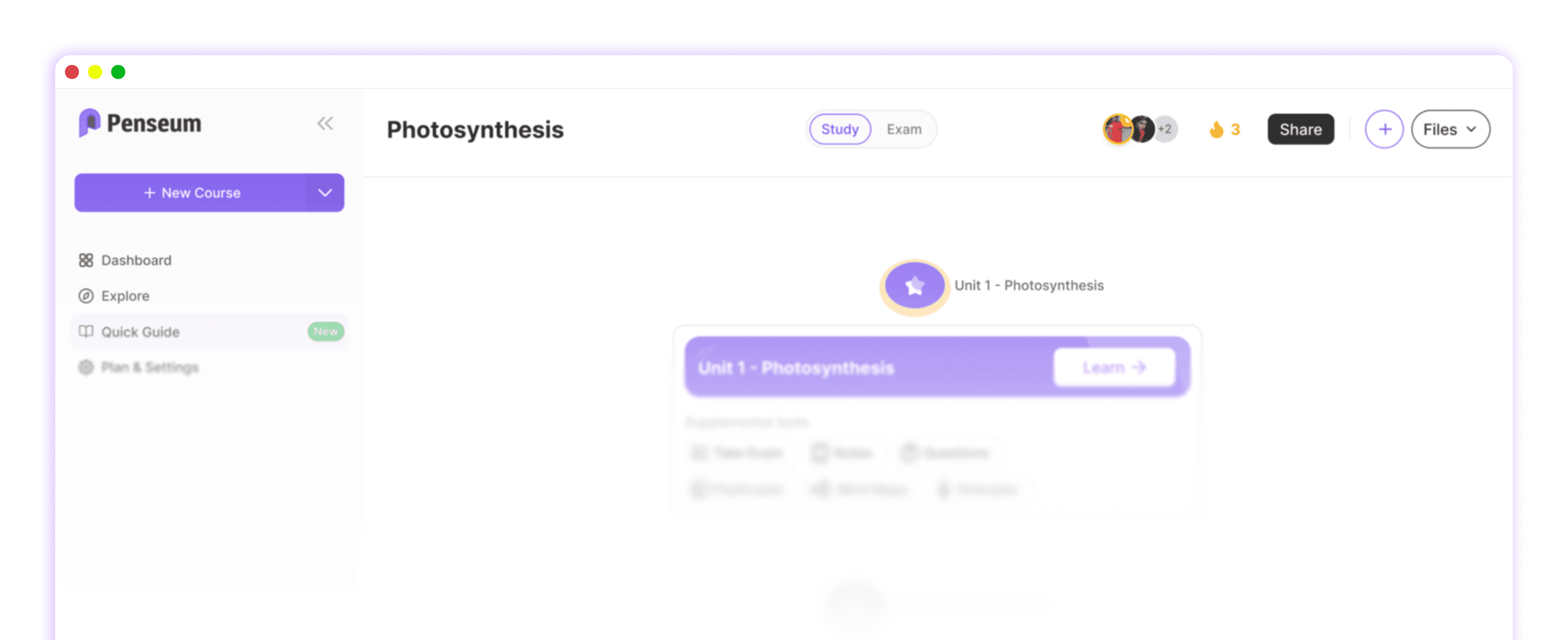
7 Tips on How to Survive Finals Week Without Burnout
Figuring out how to survive finals week requires more than just sheer willpower and caffeine. The most successful students rely on evidence-based study methods, strict time blocking, and optimized physical health routines. Disorganized cramming produces diminishing academic returns while sharply increasing exam anxiety.
Key Takeaways:
* Start your exam preparation at least two to three weeks early to capitalize on spaced repetition.
* Replace passive highlighting with active recall techniques to drastically improve fact retention.
* Maintain a strict seven-hour sleep schedule to ensure your brain properly consolidates new memories.
* Automate the creation of your flashcards and quizzes using advanced AI study tools.
Tip 1: How early should you start studying for finals?
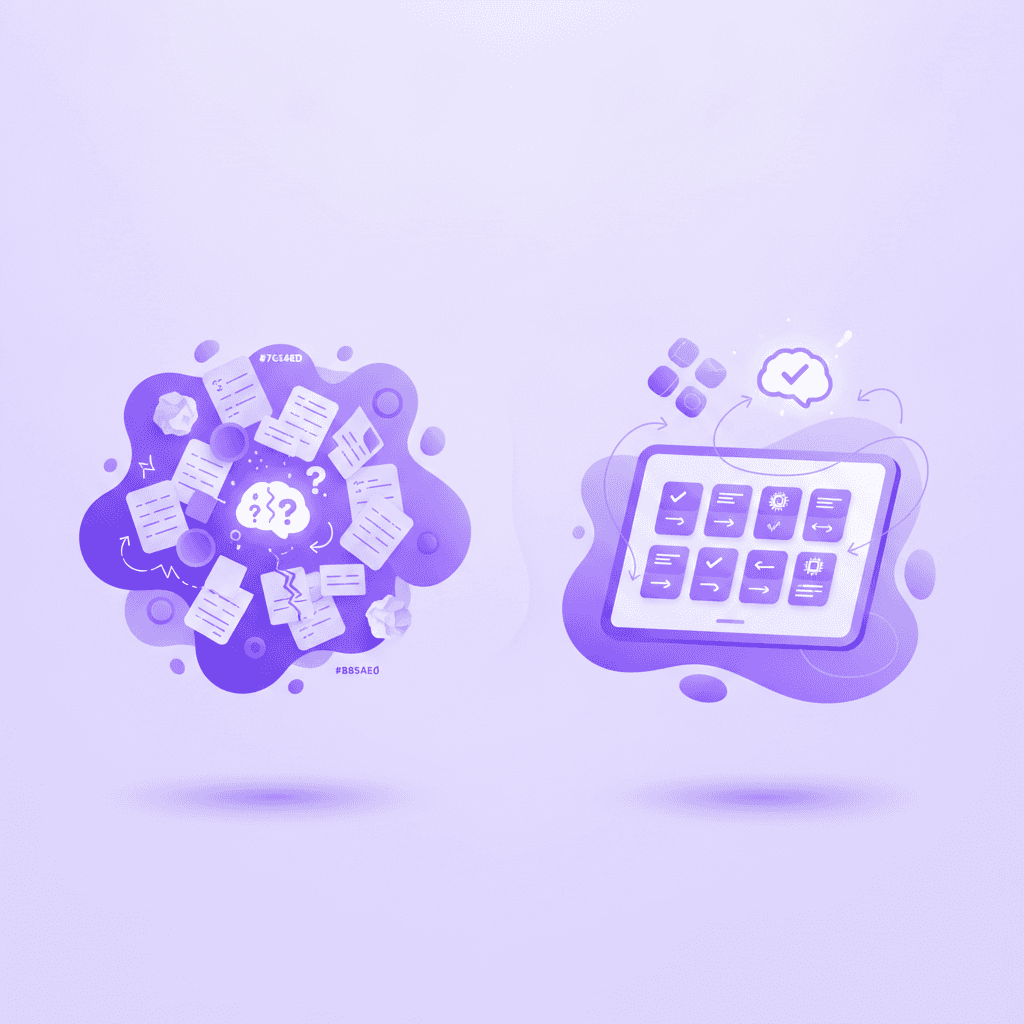
Starting two to three weeks before finals week is the optimal timeframe for effective preparation. This allows you to review materials gradually, avoiding the stress of last-minute cramming and giving your brain enough time to transfer complex information from short-term to long-term memory for test day.
Understanding how to survive finals week begins with the Ebbinghaus Forgetting Curve. This psychological model demonstrates that human beings forget roughly 50% of new information within a single hour of learning it. Spacing out your study sessions over 21 days successfully interrupts this natural forgetting process. You force your brain to recall information just as it begins to fade.
Karpicke & Roediger (2008) conducted extensive research on the effects of spaced repetition. Their study proved that spaced retrieval practice improves long-term retention by over 100% compared to cramming the night before an exam. The brain physically requires rest periods to build stronger, more permanent neural connections. Cramming forces data into your working memory, which quickly dumps the information the second you turn in your test.
Building a long-term timeline also allows you to identify knowledge gaps early. If you wait until the night before a chemistry final to realize you do not understand thermodynamics, you have zero time to consult a professor. Starting early gives you a strategic buffer to seek extra help.
Actionable step: Create a reverse-calendar starting from your exam dates and map out 30-minute review blocks for each subject daily. Work backward from the test day, assigning the heaviest textbook chapters to the earliest weeks on your schedule.
Tip 2: How can time management reduce exam anxiety?
Effective time management directly lowers cortisol levels and exam anxiety by giving you a sense of control. Structuring your day with specific study blocks ensures all subjects are covered without overwhelming your schedule, preventing the panic associated with falling behind during finals week.
High anxiety levels flood your bloodstream with cortisol. This stress hormone physically blocks the prefrontal cortex, which is the exact brain region responsible for working memory and complex problem-solving. A detailed schedule acts as a psychological safety net. It signals to your nervous system that every required topic has a dedicated, manageable time slot.
According to an American Psychological Association (2020) study on student stress, learners who implement proactive time management strategies report a 30% drop in baseline cortisol levels during exam periods. Lower physical stress translates to faster information recall. Mastering how to survive finals week is largely an exercise in managing your biological stress response rather than just reading books.
The most efficient students break their time down into microscopic increments. Instead of dedicating "Tuesday" to biology, they dedicate specific 45-minute blocks to individual chapters. This stops Parkinson's Law from taking effect, which dictates that a task will expand to fill the time allotted for its completion.
Actionable step: Use the Pomodoro technique to study for 25 minutes, then rest for 5, tracking this with reliable student productivity apps. Take a longer 15-minute break away from your desk after completing four consecutive Pomodoro cycles to reset your attention span.
Tip 3: What is the most effective way to memorize study material?
Active recall is the most effective way to memorize study material for finals. Instead of passively re-reading notes, actively testing yourself forces your brain to retrieve information, which strengthens neural pathways and drastically improves your ability to remember facts during the actual exam.
Most college students fall into the trap of the "illusion of competence." You stare at a heavily highlighted textbook page and assume you know the material simply because the text looks familiar. The true test of memory is whether you can produce the correct answer on a blank sheet of paper from scratch. Passive reading feels productive, but it results in highly fragile memory retention.
A comprehensive academic review by Dunlosky et al. (2013) evaluated ten different popular study techniques. They found that practice testing possesses "high utility," consistently producing better academic outcomes across various subjects compared to summarizing or highlighting. Students relying on active recall regularly boost their final grades by an average of a full letter grade.
There are multiple ways to execute active recall. The "blurting method" involves writing down everything you know about a topic on a whiteboard from memory, then checking your textbook to see what you missed. Flashcards remain the gold standard for testing raw vocabulary and formulas.
Actionable step: Turn your lecture slides into practice quizzes and flashcards rather than just highlighting text, utilizing modern student productivity tools. Keep each digital flashcard limited to a single specific concept to maintain a high retrieval speed.
Tip 4: How do study groups improve your final grades?
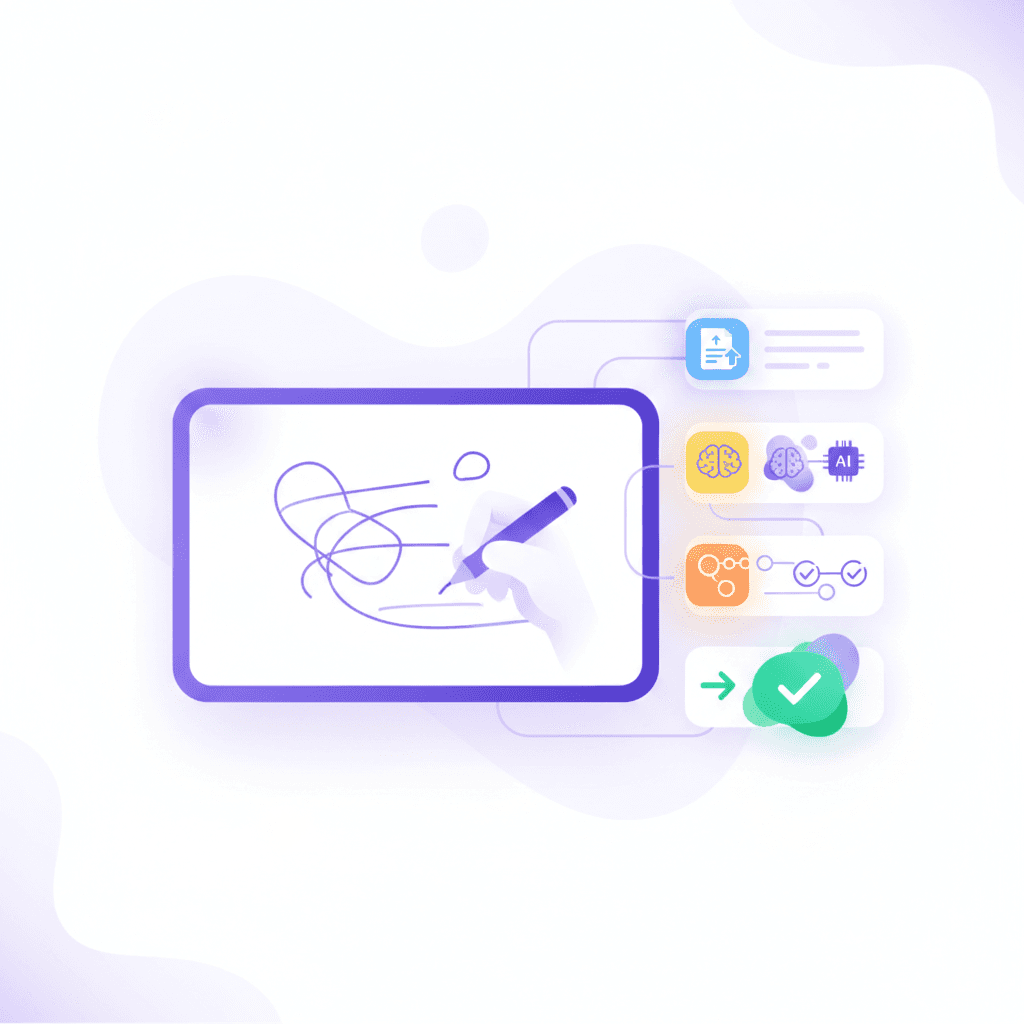
Collaborative learning through study groups improves your final grades by exposing you to different perspectives. Explaining complex concepts out loud to peers helps identify hidden gaps in your own knowledge, which reinforces what you already understand and clarifies exactly what you need to review.
Verbalizing an academic answer requires a significantly higher level of cognitive processing than thinking about it silently in your head. If you stumble while explaining a macroeconomic theory to a classmate, you instantly realize which specific textbook chapter requires more of your attention. This targeted approach is essential for anyone trying to figure out how to survive finals week efficiently.
Data from the National Survey of Student Engagement (NSSE, 2019) highlights the academic benefits of collaborative learning. Students participating in structured peer study groups score significantly higher on final exams than isolated learners. Group accountability also prevents extreme procrastination during the hardest weeks of the semester.
To get the best results, study groups must be highly organized. Without an agenda, a group session quickly devolves into a social hangout. Assigning roles, such as a timekeeper and a devil's advocate to challenge answers, keeps the session firmly grounded in active learning.
Actionable step: Learn how to form a study group of 3-5 dedicated peers and schedule weekly online study groups using a study group app. To maximize these sessions, establish clear boundaries by following the 7 Rules for Study Groups That Boost Grades.
Tip 5: Why is sleep critical for surviving finals week?
Sacrificing sleep to study actively damages your exam performance. During the REM cycle, your brain consolidates what you learned that day, meaning an all-nighter effectively wipes out the memory retention you worked so hard to build, leading to poor cognitive recall during the test.
The hippocampus functions like a temporary data storage drive. During deep sleep phases, your brain transfers these short-term files into the permanent cortex for long-term storage. If you skip sleep entirely, the temporary drive fills to maximum capacity. Your brain simply begins rejecting new information, making late-night studying completely useless.
Neuroscientist Matthew Walker (2017) conducted a profound sleep and memory consolidation study at UC Berkeley. His clinical research revealed that pulling an all-nighter reduces a student's capacity to learn new facts by an astounding 40%. The tired brain physically cannot build the neural networks required to pass a difficult final exam.
Caffeine cannot replicate the memory consolidation effects of actual sleep. While a strong coffee might keep your eyes open, your cognitive processing speed remains severely impaired. You will read the same exam question five times without fully comprehending what it asks.
Actionable step: Set a strict midnight cut-off time for studying each night to prioritize study life balance and guarantee at least 7 hours of sleep. Treat your bedtime as a mandatory, non-negotiable study session for memory storage.
Tip 6: Is interleaving subjects better than blocked studying?
Interleaving, or mixing multiple subjects into a single study session, forces your brain to continually adapt and retrieve different concepts. This strategy produces higher retention rates than studying one subject straight because it mimics the unpredictable nature of an actual test environment.
When you study a single chapter for six uninterrupted hours, your brain goes on autopilot. Interleaving creates beneficial cognitive friction. Switching your focus from chemistry to history forces the brain to completely reload its working memory, heavily strengthening your overall retrieval capacity. Mastering how to survive finals week requires this exact type of mental cross-training.
Cognitive psychologist Doug Rohrer (2012) tested interleaved practice against blocked practice in college-level mathematics. Students utilizing interleaving scored 25% higher on their unannounced final tests. The constant switching trains you to identify the underlying structure of a problem quickly, rather than just mechanically applying the last formula you memorized.
Blocked studying feels easier in the moment, which tricks students into thinking it works better. Interleaving feels much more difficult, but that difficulty is the exact mechanism causing the brain to grow stronger.
Actionable step: Rotate between three different academic subjects every two hours. Never spend a full afternoon reading a single textbook, as the natural diminishing returns will waste your highly limited study hours.
Tip 7: What foods provide the best cognitive support for testing?
Consuming foods rich in Omega-3 fatty acids and complex carbohydrates stabilizes blood sugar and provides sustained cognitive energy. Heavy reliance on caffeine and high-sugar snacks creates rapid energy spikes followed by severe crashes, which destroys concentration in the middle of a rigorous study session.
Your brain consumes roughly 20% of your body's entire daily caloric intake. Feeding it processed artificial sugars creates physiological inflammation and severe brain fog. Complex carbohydrates, like plain oatmeal and whole grains, release glucose very slowly into your bloodstream. This provides a highly steady stream of premium fuel for hours of deep focus.
A comprehensive study by Gomez-Pinilla (2008) documented the direct physiological effects of diet on brain plasticity. Diets exceptionally high in Omega-3s, found in raw walnuts and wild salmon, significantly improve synaptic function and cognitive testing performance. Proper daily nutrition is a massive component of learning how to survive finals week.
Hydration plays an equally massive role in test performance. Even a mild 2% drop in bodily hydration visibly impairs performance in tasks requiring sustained attention and immediate memory recall.
Actionable step: Prepare small, nutrient-dense snacks before you start studying. Swap the sugary vending machine energy drinks for plain green tea, and keep fresh blueberries on your desk for a natural, crash-free cognitive boost.
How Penseum Helps You Apply Active Recall and Survive Finals
Creating study materials from scratch wastes valuable study time during finals. Penseum solves this by acting as your 1-1 AI Tutor, automatically generating custom flashcards, quizzes, and study guides directly from your uploaded PDFs. It features a real-time voice tutor that works through math problems step-by-step on a live canvas, catching your specific mistakes instantly without the fluff.
Typing notes manually into a blank flashcard application takes hours of tedious administrative work. Penseum automates this entirely so you can immediately begin your active recall practice. Students trying to learn how to survive finals week can simply drag and drop a massive 50-page syllabus document into the platform. Within seconds, the AI outputs a complete, highly accurate study guide tailored specifically to that exact course material.
Penseum user data shows over 1.6 million students across 130+ countries save countless hours of manual study prep using the interactive platform. The system does not just hand you the final answers. It functions exactly like a live human tutor that forces you to engage with the material to truly understand it.
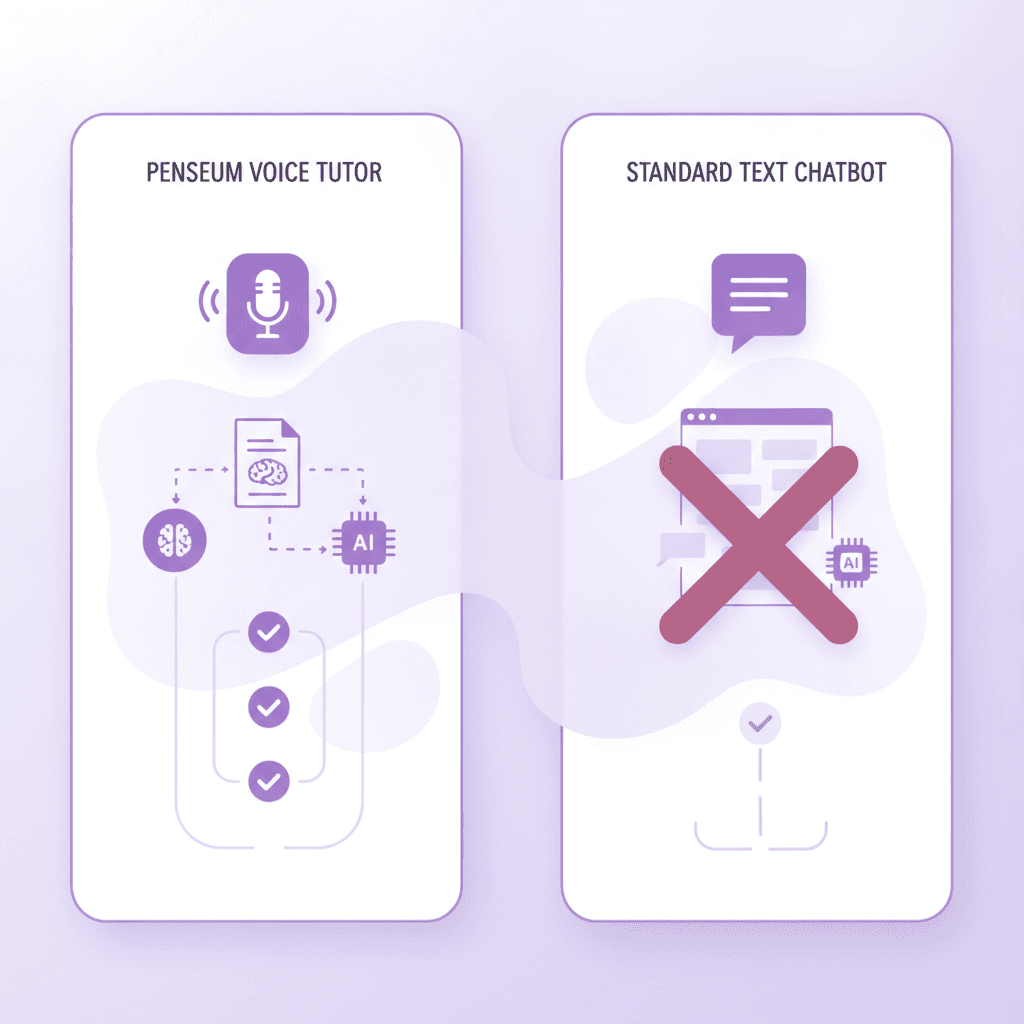
Traditional AI chatbots completely fail during intense exam prep because they only offer generic, text-based responses. Penseum physically tracks your actual work on a live digital canvas. If you make a mathematical error on step three of an equation, the AI highlights the exact location where you went wrong and explains the required correction out loud.
Feature | Traditional AI Chatbots | Penseum 1-1 AI Tutor |
|---|---|---|
Feedback Format | Text-only generic responses | Real-time voice and visual explanations |
Work Visibility | Only sees typed text | Views live work on an interactive canvas |
Problem Solving | Gives the final answer immediately | Identifies specific mistakes step-by-step |
Study Prep | Requires heavy prompt engineering | Instant flashcards and quizzes from PDFs |
Actionable step: Upload your most difficult syllabus or lecture PDF to Penseum today and let the AI generate your first interactive practice quiz instantly. Stop wasting your limited time building study materials and start testing your actual knowledge right now.
Frequently Asked Questions
How many hours a day should I study during finals week?
Experts recommend studying between 3 to 4 hours per day, broken into focused 45-minute sessions. Studying for more than 6 hours often leads to cognitive fatigue and diminishing returns. To maintain high concentration and prevent academic burnout during exams, always take frequent breaks and avoid studying in one continuous block.
Are all-nighters effective for finals week?
All-nighters are highly ineffective for passing final exams. Lack of sleep impairs cognitive function, reduces recall speed, and increases careless mistakes. Prioritizing a full 7 to 8 hours of sleep improves memory consolidation significantly better than last-minute cramming.
What should I eat during finals week to boost brain power?
Eat a balanced diet rich in Omega-3 fatty acids, complex carbohydrates, and antioxidants. Foods like walnuts, blueberries, salmon, and whole grains provide sustained energy and improve cognitive focus, making them far superior to high-sugar energy drinks that cause crashes.
How can I stay motivated to study for finals?
Stay motivated by breaking large study tasks into small, manageable milestones and rewarding yourself upon completion. Studying alongside peers can also provide built-in accountability and keep you completely focused when personal motivation naturally dips during long weeks.
Is it better to study one subject a day or multiple?
Interleaving, or studying multiple subjects in one day, is generally more effective than focusing on just one topic. Switching subjects prevents mental burnout and forces the brain to actively retrieve different types of information, which strengthens overall memory retention.
What are the best student productivity tools for exams?
The best student productivity tools combine time tracking, task management, and active recall generation. Tools that instantly generate flashcards, manage daily study schedules, and block distracting websites help learners maintain focus and efficiency without getting completely overwhelmed.
[AUTHOR]
Last updated: August 2026
Sources
Karpicke, J. D., & Roediger, H. L. (2008). The critical importance of retrieval for learning. Science. https://pubmed.ncbi.nlm.nih.gov/18276858/
American Psychological Association (2020). Stress in America 2020: A National Mental Health Crisis. https://www.apa.org/news/press/releases/stress/2020/report-october
Dunlosky, J., Rawson, K. A., Marsh, E. J., Nathan, M. J., & Willingham, D. T. (2013). Improving Students' Learning With Effective Learning Techniques. Psychological Science in the Public Interest. https://pubmed.ncbi.nlm.nih.gov/26173288/
National Survey of Student Engagement (2019). Engagement Insights: Survey Findings on the Quality of Undergraduate Education. https://nsse.indiana.edu/research/annual-results/index.html
Walker, M. P. (2017). Why We Sleep: Unlocking the Power of Sleep and Dreams. Scribner. https://pubmed.ncbi.nlm.nih.gov/29031336/
Rohrer, D. (2012). Interleaving Helps Students Distinguish among Similar Concepts. Educational Psychology Review. https://pubmed.ncbi.nlm.nih.gov/19414064/
Gomez-Pinilla, F. (2008). Brain foods: the effects of nutrients on brain function. Nature Reviews Neuroscience. https://pubmed.ncbi.nlm.nih.gov/18568016/
Related guides
Ready to study smarter?
Start turning your notes into guides, quizzes, and flashcards in seconds.