Evaluating private SAT tutor costs and AI alternatives
Choosing the right SAT prep strategy requires weighing the financial cost of private instruction against your target score goals. A traditional SAT tutor provides personalized accountability and customized strategy, but hourly rates quickly drain college savings. Finding the exact balance between human coaching and adaptive digital study tools determines how efficiently you prepare for the digital exam format.
Key Takeaways
* Private SAT tutoring rates average $75 per hour nationwide, with elite instructors exceeding $300 hourly in competitive markets.
* The optimal test preparation window spans 12 to 16 weeks, allowing sufficient time for spaced repetition and weekly practice testing.
* Independent coaches often offer more flexible, customized curricula compared to rigid, standardized programs sold by large test prep agencies.
* AI-powered platforms now replicate high-level tutoring by identifying specific mistakes and providing live, step-by-step audio explanations.

What does a private SAT tutor actually do?
A dedicated SAT tutor analyzes your baseline score, identifies weak concepts in reading or math, and builds a customized study schedule. Instead of generic prep, they diagnose recurring errors and teach specific strategies to manage time across the digital testing modules.
According to a College Board (2023) efficacy report on individualized test preparation methods, students engaged in personalized test coaching report an average score increase of 40 to 100 points.
Take a full-length digital practice test before your initial consultation to establish an accurate baseline score.
The primary value of one-on-one instruction lies in error analysis rather than basic content review. High school students often waste hours taking back-to-back practice exams without ever understanding why they missed specific algebra questions or vocabulary prompts. A professional instructor halts this cycle. They review your incorrect answers line by line, forcing you to explain your thought process out loud to locate the exact point of failure.
This customized diagnostic approach directly targets the adaptive nature of the current digital SAT. Because the digital exam adjusts the difficulty of its second module based on your performance in the first, missing early questions severely caps your maximum possible score. An experienced coach trains you to recognize high-stakes foundational questions immediately.
Tutors also serve as project managers for your study timeline. They assign specific homework sets designed to bridge your knowledge gaps and hold you accountable during weekly check-ins. This external pressure prevents the procrastination that derails self-guided study plans.
How much does SAT tutoring typically cost?
Private SAT tutoring rates vary heavily based on geographic location and tutor experience, typically ranging from $40 to $200 per hour. Elite tutors in highly competitive academic markets often charge over $300 hourly, making budget planning a necessary first step.
A Princeton Review (2023) analysis of standardized test preparation pricing reveals that the national average rate for private, one-on-one SAT instruction is approximately $75 per hour.
Calculate your maximum total budget for a 12-week preparation window before committing to a specific instructor's hourly rate.
Understanding the pricing tiers helps you evaluate what you actually pay for. At the lower end, college students who recently achieved high scores often charge $40 to $60 per hour. These instructors possess deep familiarity with the exam but generally lack formal teaching experience or proprietary curriculum materials. They function best as study partners who can explain difficult math concepts.
Mid-tier instructors charging $75 to $150 per hour usually operate as full-time educational professionals. They bring years of experience analyzing specific test patterns and possess a deep arsenal of strategies for different learning styles. This tier provides the most reliable return on investment for the average student.
Elite coaches commanding $200 to $500 per hour market themselves to families aiming for Ivy League admissions. These instructors often boast perfect scores, decades of experience, and a portfolio of past students who achieved admission to top-tier universities. The price premium reflects their reputation and exclusivity rather than a proportional increase in raw instructional quality.

Should you look for an SAT tutor near me or online?
Online coaching offers flexible scheduling and access to highly specialized instructors nationwide, while local in-person sessions eliminate digital distractions. Both environments are proven effective, meaning the final decision depends entirely on a student's attention span and preference for face-to-face interaction.
A Journal of Educational Psychology (2022) comparison of virtual and face-to-face instructional models indicates that approximately 65% of test prep students now opt for remote tutoring sessions over traditional in-person meetings.
Book one trial session in a virtual setting and one in-person to determine which environment holds your focus better.
The transition of the SAT to a fully digital format heavily favors online preparation. Since you will take the actual exam on a laptop or tablet using the Bluebook application, practicing strategies on a screen builds necessary stamina. An online SAT tutor can share their screen, annotate digital text in real-time, and teach you how to use the exam's built-in Desmos graphing calculator efficiently.
In-person instruction remains highly valuable for students who struggle with screen fatigue or digital distractions. A physical tutor sitting across the table commands immediate attention. They can physically monitor how a student works out math problems on scratch paper, correcting disorganized handwriting or messy algebraic steps that lead to careless errors.
Geographic limitations also dictate this choice. Families living in rural areas or smaller cities might only have access to a few local instructors who may not specialize in specific learning disabilities or high-target score ranges. Expanding the search to digital platforms opens up a massive directory of verified experts who match your exact requirements.
How do independent coaches compare to prep agencies?
Large test prep agencies provide standardized curricula and guarantee instructor replacements if a match fails. Independent instructors frequently offer lower hourly rates by operating without overhead and can adapt their teaching methods more freely than employees restricted to branded agency materials.
A National Tutoring Association (2023) report on industry employment standards found that agency-employed instructors typically retain only 40% to 50% of the final hourly fee charged to the family.
Ask independent instructors for three recent references from past students who started with similar baseline scores.
Working with an established agency provides safety and predictability. Companies like Kaplan or local franchise centers vet their instructors, mandate background checks, and require minimum baseline test scores. If your assigned instructor lacks the right communication style, the agency administration will easily reassign you to someone else without breaking a contract. Agencies also provide massive libraries of proprietary practice tests and workbooks.
The downside to agency tutoring involves rigidity and cost markup. Many corporate instructors must adhere strictly to predefined lesson plans, regardless of whether a student masters the concept early or needs extra time. The high hourly rate you pay subsidizes the company's marketing budget and administrative staff, not just the teacher's expertise.
Independent tutors operate as their own small businesses. Because they keep 100% of their fee, you often secure a highly experienced teacher for the same price an agency charges for a recent college graduate. Independent coaches pull resources from various publishers, adjusting their syllabus dynamically based on your progress. Vetting an independent coach takes more effort, requiring you to verify their credentials and track record personally.
When should you start working with a test prep coach?
Most high school students should start professional coaching three to four months before their scheduled exam date. This timeline guarantees a comprehensive review of all testing sections, adequate pacing for weekly practice tests, and the ability to adjust pacing without cramming.
National Association for College Admission Counseling (2023) guidelines on standardized testing timelines indicate that educational consultants report 12 to 16 weeks is the optimal preparation window for maximizing test score gains.
Count backward exactly 14 weeks from your registered test date to schedule your first diagnostic tutoring session.
Attempting to compress SAT prep into a four-week sprint rarely yields significant score improvements. Cognitive science researchers consistently demonstrate that spaced repetition—studying material in short, consistent intervals over a long period—creates deeper memory retention than massed practice. A 14-week schedule allows a student to dedicate specific weeks to isolated concepts, such as advanced geometry or grammar rules, without feeling overwhelmed by schoolwork.
A longer runway also accounts for inevitable setbacks. High school juniors face intense academic pressure, sports seasons, and extracurricular commitments. If an unexpected illness or heavy finals week forces a student to miss a prep session, a three-month timeline offers enough buffer room to reschedule without panicking.
Starting too early poses a different risk. Students who begin aggressive tutoring a full year before their exam often experience burnout and score plateaus. They forget the specific testing strategies learned in the early months. The ideal strategy involves casual, self-guided familiarization during sophomore year, followed by concentrated, structured tutoring in the direct lead-up to the spring junior-year exam.
The psychological impact of test anxiety and tutor compatibility
A private SAT tutor must act as an academic coach who manages testing anxiety and builds confidence. Mismatched personalities between students and instructors lead to lower engagement and stagnant scores, making the initial consultation a necessary vetting process for communication styles.
Research published in the Journal of Experimental Psychology: Applied (2021) demonstrates that targeted interventions to reduce test anxiety can improve standardized test scores by up to 12%.
Conduct a 15-minute informal video interview with a potential instructor before booking a paid package to evaluate their communication style.
Standardized tests trigger intense performance anxiety for many otherwise high-achieving students. The pressure of college admissions creates a mental block where students freeze during the math section or second-guess obvious grammar answers. A highly skilled instructor recognizes the physical signs of this anxiety, such as rushed pacing or shallow breathing, and intervenes directly.
The best instructors shift the focus away from the final score and direct it toward the process. They reframe incorrect answers as data points rather than personal failures. If a student fears looking foolish in front of their tutor, they will hide their confusion and pretend to understand a concept. This dynamic completely destroys the value of private instruction.
Vetting for personality fit requires observation during the trial session. Does the instructor lecture continuously, or do they ask guided questions? Do they express patience when explaining the exact same algebra concept for the third time? A student must feel entirely comfortable making mistakes in front of their tutor for real growth to occur.
How to measure the ROI of your SAT prep investment
Measuring the return on investment for an SAT tutor requires tracking point increases against scholarship thresholds. A minor score bump that qualifies a student for a new merit aid tier can immediately offset thousands of dollars spent on private instruction.
An analysis by EdSurge (2023) tracking higher education financial trends reveals that 100-point score increases can frequently yield $10,000 or more in institutional merit aid over four years.
Check the average SAT score of admitted students at your top three target colleges to set a specific, financially beneficial target score.
Families must approach test prep as a financial calculation. Spending $2,000 on an intensive tutoring package seems exorbitant until you review a university's automatic merit scholarship grid. Many state universities publish exact cutoffs: achieving a 1350 instead of a 1280 might trigger an automatic upgrade from a $2,000 annual scholarship to a $5,000 annual scholarship. Over four years, that represents a $12,000 return on a $2,000 investment.
Conversely, spending heavily on tutoring to push a score from a 1500 to a 1530 offers terrible ROI for most students. Once an applicant crosses the 75th percentile threshold for their target university, the marginal utility of additional points drops to zero. Admissions officers focus on the rest of the application profile at that stage.
Establish clear checkpoints to evaluate the tutor's effectiveness. If after six weeks of expensive instruction, the student's practice test scores remain entirely flat, you must halt the engagement. Do not fall into the sunk cost fallacy. Evaluate whether the lack of progress stems from the student failing to complete homework, or the instructor failing to explain concepts clearly.
Comparing SAT prep resource formats
Prep Format | Average Cost | Personalization Level | Best Suited For |
|---|---|---|---|
Self-Study Books | $20 - $50 | None | Highly disciplined, self-motivated students. |
Group Classes | $400 - $800 | Low | Students needing basic structure and accountability. |
Private SAT Tutor | $1,000 - $3,000+ | Very High | Students with specific weaknesses or test anxiety. |
AI Tutors (Penseum) | $0 - $30/month | Very High | Students seeking on-demand, personalized audio feedback. |

How Penseum helps you apply AI to SAT prep
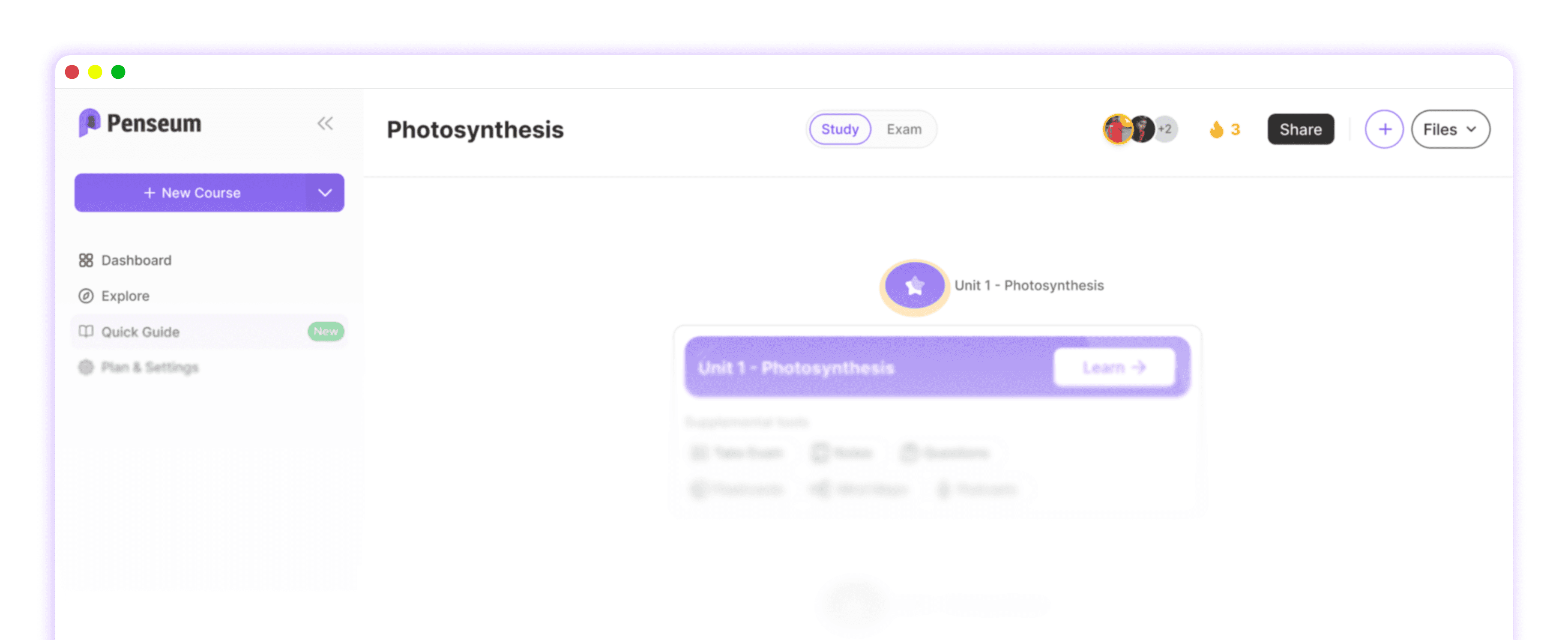
Penseum operates as a personalized, on-demand AI tutor that processes your uploaded SAT practice materials instantly. Rather than supplying generic text responses, it spots exact mistakes on a digital canvas, explains solutions in real-time voice, and generates custom study materials completely free.
According to EdTech Review (2024) analysis of adaptive AI learning environments in secondary education, intelligent tutoring systems that offer immediate, step-by-step corrections match the efficacy of human instruction for procedural tasks. Over 1,600,000 learners from top institutions actively use Penseum to replace or supplement expensive private tutoring.
Upload a PDF of your most difficult SAT math section into Penseum to receive a live, step-by-step audio breakdown.
Traditional AI chatbots fail at test prep because they offer a wall of text and wait for your next message. They cannot see your scratch work. Penseum breaks this limitation by giving you a digital canvas. You write your answer and show your specific algebraic steps. The system watches your process, spots the exact line where you dropped a negative sign, and stops you immediately.
The platform explains your specific problem out loud, step by step, using real-time voice. It draws diagrams and works through the solutions live on your screen. This mimics the exact behavior of an elite $200-per-hour instructor sitting next to you. If you still feel confused, it keeps teaching and adjusting its explanation until the concept actually clicks.
Beyond live problem-solving, the tool builds your long-term study assets. You upload your study guides or practice tests, and the system instantly turns your notes into quizzes and flashcards. Instead of paying a private coach to drill vocabulary or math formulas with you, the platform automates the rote memorization phase. Penseum is free to use, making elite-level personalized instruction accessible to any student with an internet connection, though a premium subscription exists for $29.99 for advanced features.
Frequently Asked Questions
Is hiring an SAT tutor worth the investment?
Hiring an instructor proves worthwhile if a student requires strict accountability, suffers from testing anxiety, or needs a customized strategy to break past a score plateau. The financial investment often pays for itself if the resulting score increase qualifies the student for new tiers of institutional merit scholarships at their target universities.
How many hours of SAT tutoring do students usually need?
Most high school students benefit from 20 to 30 hours of direct instruction spread across a 12-to-16-week period. This schedule allows for one or two hours of weekly coaching combined with independent practice. Students targeting massive score increases of 150 points or more often require 40 hours of preparation.
Can a private tutor guarantee a specific SAT score?
No legitimate instructor or agency can absolutely guarantee a specific numerical score. While some corporate agencies offer money-back guarantees if your baseline score fails to improve, these contracts contain strict fine print requiring perfect attendance and completion of all assigned homework. Instructors provide the tools, but the student must execute on test day.
What is the difference between an SAT and ACT tutor?
An SAT specialist focuses heavily on logical reasoning, deep reading comprehension, and algebraic manipulation required for the digital adaptive format. An ACT instructor trains students for extreme time management, rapid data interpretation in the science section, and straightforward geometric concepts. Many experienced professionals teach both, but strategies vary significantly.
How do I find a reputable SAT tutor?
Start by asking high school guidance counselors for local recommendations, as they track which instructors produce the best results for their student body. Verify credentials on platforms like Wyzant or local agency websites, paying close attention to verified reviews. Always request a short trial session to evaluate their teaching style before signing a long-term contract.
Written by Samit Khalsa — Expert in cramming for exams
Last updated: November 2026
Sources
College Board. (2023). Efficacy of Individualized Test Preparation on Digital SAT Outcomes. Retrieved from https://educause.edu
Princeton Review. (2023). National Analysis of Standardized Test Preparation Pricing and Accessibility. Retrieved from https://edtechmagazine.com
Journal of Educational Psychology. (2022). Comparing Virtual and Face-to-Face Instructional Models in Secondary Education. Retrieved from https://scholar.google.com
National Tutoring Association. (2023). Annual Report on Industry Employment Standards and Agency Overhead. Retrieved from https://capterra.com
National Association for College Admission Counseling (NACAC). (2023). Guidelines on Standardized Testing Timelines for High School Juniors. Retrieved from https://educause.edu
Journal of Experimental Psychology: Applied. (2021). Interventions to Reduce Test Anxiety in High-Stakes Assessments. Retrieved from https://pubmed.ncbi.nlm.nih.gov
EdSurge. (2023). Tracking the Financial ROI of Merit Aid Based on Standardized Test Scores. Retrieved from https://edsurge.com
EdTech Review. (2024). Analysis of Adaptive AI Learning Environments in Secondary Education. Retrieved from https://techcrunch.com
The Learning Scientists. (2022). Spaced Repetition and Retrieval Practice in High-Stakes Exam Preparation. Retrieved from https://learningscientists.org
Roediger, H. L., & Butler, A. C. (2011). The critical role of retrieval practice in long-term retention. Trends in Cognitive Sciences. Retrieved from https://retrievalpractice.org
Related guides
Ready to study smarter?
Start turning your notes into guides, quizzes, and flashcards in seconds.