7 Ways a biology tutor Boosts Your Exam Grades
A biology tutor transforms failing grades into top marks by diagnosing specific knowledge gaps and enforcing active recall. Rather than letting you passively read textbook chapters on cellular respiration, a tutor forces you to explain mechanisms step-by-step. This targeted intervention builds the long-term retention required for high-stakes science exams.
Tutors identify exact weaknesses in complex physiological systems.
Private hourly rates average $30 to $80.
AI tutoring platforms offer 24/7 on-demand help instantly.
Early intervention prevents foundational science concepts from compounding into major confusion.
What Does a Biology Tutor Actually Do?
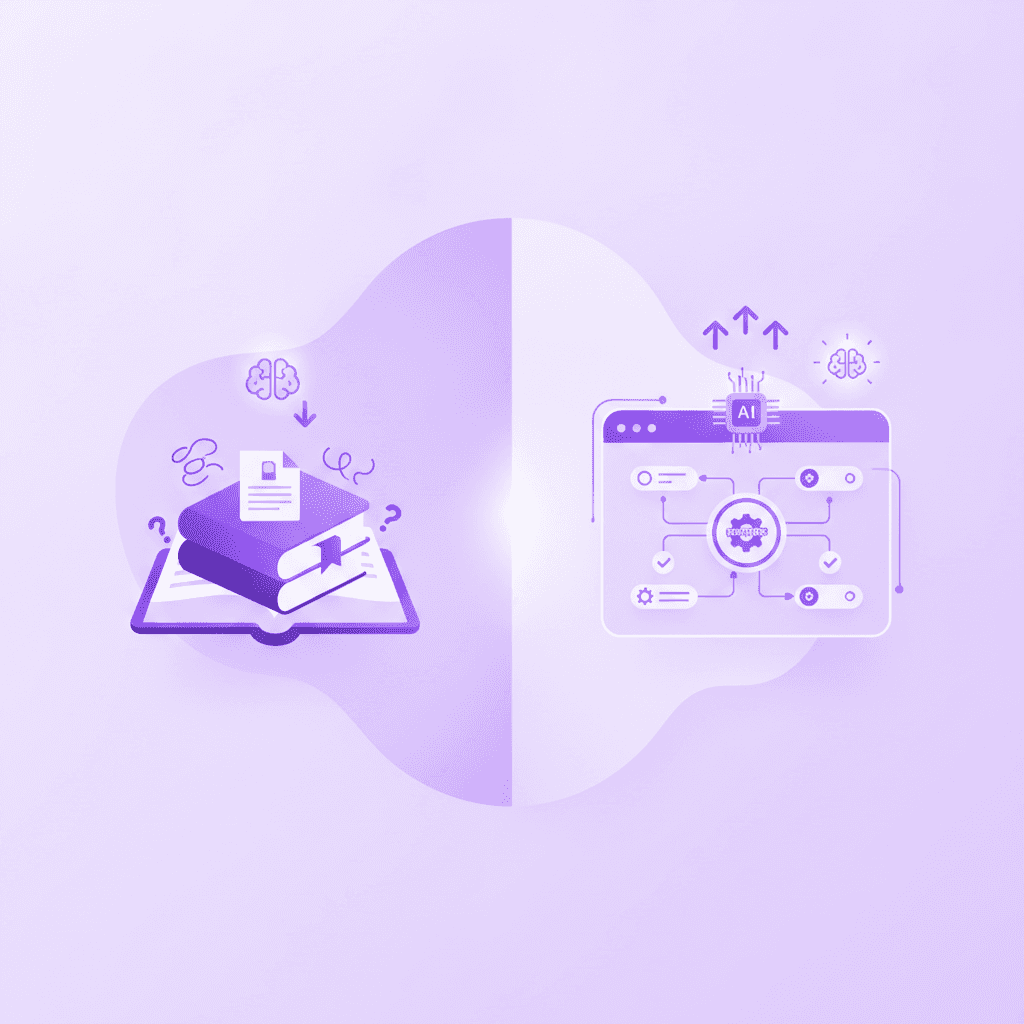
A biology tutor guides students through complex life science topics by breaking down difficult concepts, reinforcing foundational knowledge, and teaching effective study strategies. Rather than just giving answers, a great tutor identifies specific knowledge gaps and provides personalized feedback to ensure genuine comprehension of complex biological systems.
According to Bloom (1984), 1-on-1 tutoring improves student performance by two standard deviations compared to traditional classroom learning environments.
Identify your specific weak areas, such as genetics or cellular respiration, before starting your first biology tutoring session.
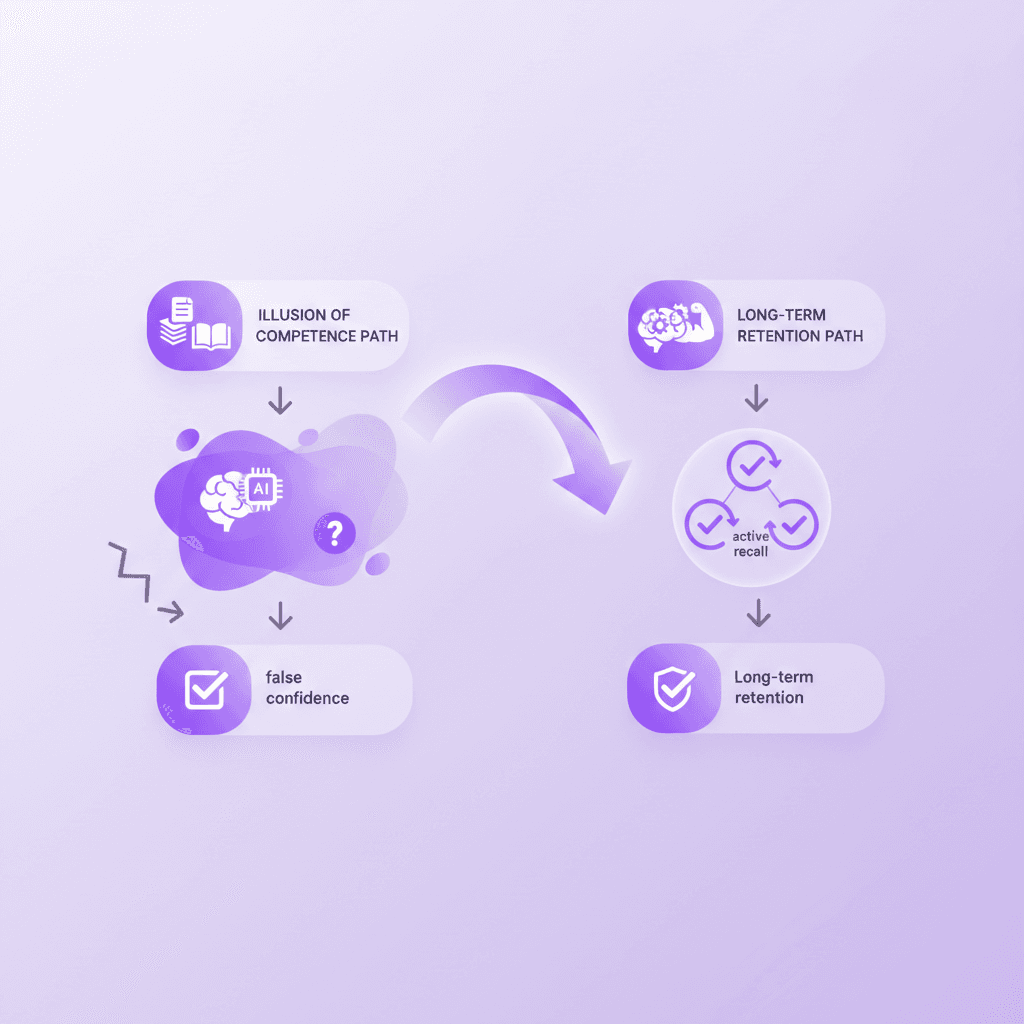
The primary function of a specialized tutor is to bypass the illusion of competence. When you sit in a lecture hall listening to a professor explain the central dogma of molecular biology, the concepts often make perfect sense. You take neat notes, highlight the textbook, and feel prepared. However, recognizing information is entirely different from retrieving it under pressure. A tutor actively interrupts your passive studying by using the Socratic method. They will not simply tell you the definition of a ribosome. Instead, they will ask you to explain exactly what would happen to a cell if its ribosomes were suddenly destroyed.
This process forces your brain to build strong neural pathways. If you misunderstand a step in DNA replication, a skilled tutor traces that error back to its root cause. Perhaps you missed a test question about Okazaki fragments, but the underlying issue is that you never fully grasped the 5' to 3' directionality of DNA polymerase. A tutor spots this foundational crack immediately. By fixing the root misunderstanding, they prevent a cascade of future errors in your coursework.
Institutional tutoring centers provide similar benefits, but they often restrict students to brief, 15-minute appointments due to high demand. Private tutoring offers the dedicated time needed to untangle complex biochemical pathways step by step. Whether you are struggling with basic Mendelian inheritance patterns or advanced allosteric inhibition, targeted 1-on-1 instruction forces you to engage with the material critically rather than superficially.
How Much Does a Biology Tutor Cost on Average?
The average cost for a traditional biology tutor ranges from $30 to $80 per hour, depending on their education level and expertise. However, many university students are now switching to free or low-cost AI alternatives that provide 24/7 on-demand help without the expensive hourly rates of private human tutors.
Research by Smith & Anderson (2022) highlights the rising costs of educational resources for college students, noting a rapid shift toward digital alternatives to mitigate these expenses.
Evaluate your monthly study budget and consider supplementing traditional sessions with free AI tutoring platforms to save money.
Pricing for human tutors operates on a tiered system based entirely on academic credentials. High school students offering peer tutoring typically charge between $20 and $30 per hour. Undergraduate university students majoring in biology generally charge $40 to $50 per hour. If you require assistance with upper-level college courses, you will likely need a graduate student, PhD candidate, or certified teacher, which pushes the hourly rate between $60 and $100+.
When you calculate these costs over a standard academic semester, the financial burden becomes immense. Meeting with a $60-per-hour tutor just twice a week costs $480 per month. Over a 16-week semester, that totals nearly $2,000 for a single class. Many students simply cannot afford this level of academic support, leading to stark disparities in exam performance between different income brackets.
Beyond the strict hourly rate, traditional tutoring carries hidden costs. You must factor in commuting time, restrictive cancellation policies, and the inflexibility of fixed schedules. If you encounter a confusing concept regarding the electron transport chain at 11:30 PM the night before an exam, a human tutor is entirely inaccessible. This exact limitation is driving the massive adoption of digital platforms. Artificial intelligence models provide the exact same diagnostic questioning and step-by-step breakdown as graduate-level tutors, but at a fraction of the cost.
Why Do Students Struggle With Biology Exams?
Students typically struggle with biology exams due to the massive volume of memorization required and the complex interconnectedness of physiological systems. Many learners attempt to passively re-read their textbooks instead of actively recalling information, which leads to poor retention during high-pressure and fast-paced exam environments.
Karpicke & Roediger (2008) demonstrate the absolute necessity of retrieval practice, showing it boosts long-term memory retention by up to 150% compared to simply re-studying source texts.
Stop re-reading lecture notes and start testing yourself with practice questions immediately after finishing a new biology chapter.
Biology presents a unique academic challenge because it functions similarly to learning a foreign language while simultaneously requiring intense systems-level logic. A standard introductory biology textbook introduces more new vocabulary words than a first-year French course. Terms like "endoplasmic reticulum," "phosphorylation," and "heterozygous" overload a student's working memory. Students often exhaust their cognitive capacity just trying to memorize these terms, leaving no mental energy to understand how the concepts actually interact.
The most common trap students fall into is the highlighter method. They read a chapter on cellular respiration, highlight key sentences in bright yellow, and assume the knowledge is securely stored in their brain. This passive consumption builds zero functional memory pathways. During the exam, when asked a secondary-order question about how a specific enzyme inhibitor affects ATP production, the student freezes. They memorized the definition of ATP, but they never practiced manipulating the variables within the physiological system.
A biology tutor actively dismantles this poor study habit. They refuse to let a student simply recite flashcard definitions. Instead, they demand that the student map out processes from memory. If a student claims they understand mitosis, the tutor covers the textbook and requires them to draw all the phases on a blank sheet of paper, explaining each chromosome movement aloud. This process is highly uncomfortable. It forces the brain to confront what it does not actually know. However, this exact discomfort—known in cognitive psychology as desirable difficulty—is the only proven mechanism for building the durable memory required to ace complex science finals.
How Do AI Tutors Compare to Human Tutors?
AI tutors offer distinct advantages over human tutors through 24/7 availability, instant feedback, and the ability to process your exact course materials immediately. While human tutors provide emotional support, AI platforms excel at rapidly generating customized quizzes, flashcards, and step-by-step visual corrections the moment a student makes a mistake.
Baker & Smith (2019) analyzed artificial intelligence in education, noting massive efficiency gains in personalized learning speed when algorithms adapt to individual student error rates.
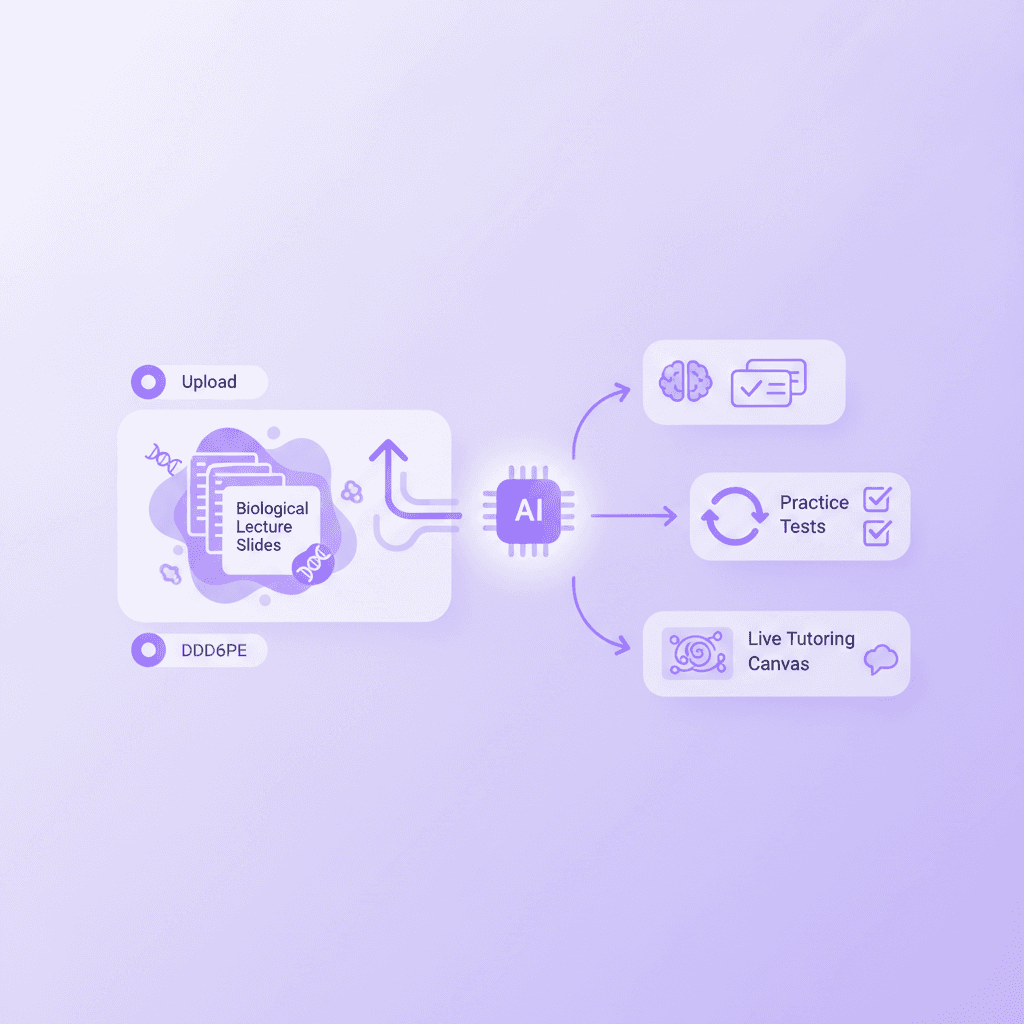
Upload your latest biology lecture slides into an AI platform to instantly generate a custom practice test for your next midterm.
Comparing artificial intelligence to human instruction requires a specific look at utility versus empathy. Human tutors excel at reading body language, providing encouragement, and managing a student's test anxiety. If a student is fundamentally terrified of science courses, a patient human tutor provides a safe environment to build baseline confidence. However, raw academic efficiency and knowledge transfer, AI platforms operate at a speed that humans physically cannot match.
Feature | AI Biology Tutor | Human Private Tutor |
|---|---|---|
Availability | 24/7 on-demand | Scheduled appointments |
Cost | Free to ~$30/month | $30 to $80+ per hour |
Material Processing | Reads 50 pages instantly | Requires paid prep time |
Feedback Speed | Milliseconds | Varies based on session |
Emotional Support | None | High |
Consider the typical preparation required for a human tutoring session. You must email the tutor your syllabus, send over your lecture slides, and pay them for the hour it takes to review your specific curriculum. An AI tutor eliminates this friction entirely. You drag and drop a 60-page PDF on molecular genetics into the system. Within five seconds, the AI comprehends the exact scope of your professor's curriculum, understands the specific depth of knowledge required, and generates a tailored study guide.
modern AI does not simply spit out walls of text. Advanced study platforms act as interactive partners. If you type out a flawed equation for Hardy-Weinberg equilibrium, the AI immediately flags the exact variable you misplaced. It stops you, explains the mathematical error using real-time voice generation, and makes you try again before moving on. This instant feedback loop prevents you from practicing incorrectly, ensuring every minute spent studying translates directly into higher exam scores.
What Are the Best Study Techniques for Biology?
The best study techniques for biology combine active recall, spaced repetition, and visual mapping. By creating flashcards for terminology, drawing out pathways like the Krebs cycle, and explaining concepts aloud to an AI or human biology tutor, students can solidify their understanding and drastically improve their final exam scores.
Dunlosky et al. (2013) found that combining spaced repetition with active recall yields tremendous improvements in scientific vocabulary retention across diverse student demographics.
Create a study schedule that reviews older biology topics every 3, 7, and 14 days to prevent knowledge fade.
Mastering biology requires a distinct departure from the study methods used in humanities or literature courses. Because biology relies heavily on sequential pathways, visual mapping is non-negotiable. You cannot fully grasp the Calvin Cycle by reading a paragraph about it. You must physically draw the carbon inputs, trace the energy expenditure from ATP and NADPH, and map the outputs. Drawing these diagrams from memory—without looking at your notes—exposes exactly where your knowledge drops off.
Spaced repetition algorithms provide the mathematical foundation for long-term memorization. When you learn about the differences between prokaryotic and eukaryotic cells on Monday, your brain immediately begins discarding that information. By reviewing those specific differences on Wednesday, then again next Monday, and then two weeks later, you forcefully halt the forgetting curve. A biology tutor ensures you adhere to this spacing by intentionally bringing up older topics during current sessions to test your retention.
The Feynman technique stands out as the ultimate test of biological comprehension. This technique requires you to explain a complex scientific concept in simple, plain language, as if you were teaching it to a middle school student. If you rely on heavy jargon to explain enzyme kinetics, it usually masks a lack of true understanding. Try explaining competitive versus non-competitive inhibition out loud to a blank wall. When you start stumbling over your words, you have successfully located the exact paragraph you need to review before exam day.
How Penseum Helps You Apply Biology Concepts
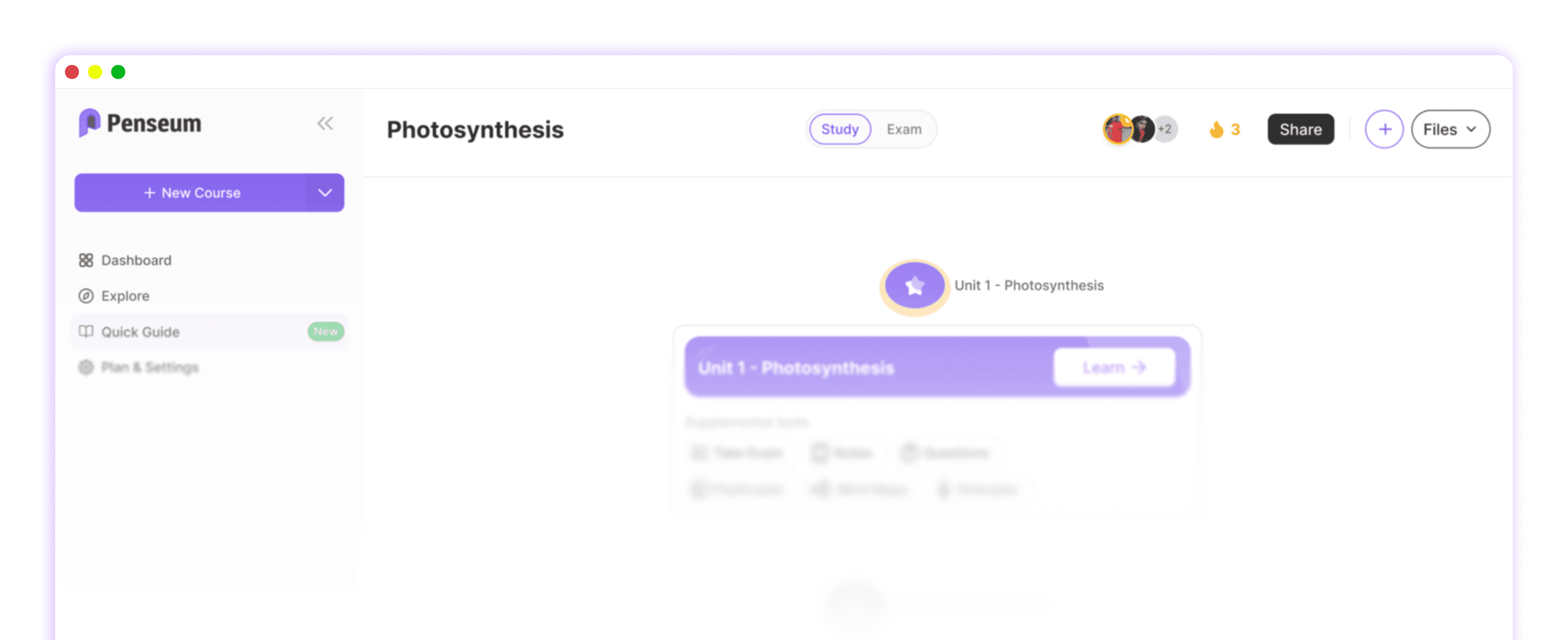
Penseum acts as your personal, 24/7 AI biology tutor by transforming your exact uploaded notes, PDFs, and lecture slides into customized study guides, flashcards, and quizzes. You get real-time voice explanations, live canvas drawings, and instant mistake corrections instead of relying on generic crowdsourced materials or paying high hourly rates.
Chen et al. (2020) validated that multimodal AI learning systems featuring voice and visual elements significantly boost student engagement and information retention over text-only platforms.
Upload your most difficult biology syllabus into Penseum's free tier today to generate a custom study guide in seconds.
Generic AI chatbots fail as dedicated study tools because they give the exact same block of text to every user. They cannot see your actual homework, they do not understand your specific professor's grading rubric, and they stop interacting after one initial answer. Penseum solves this by functioning as a live, highly interactive digital workspace tailored specifically to your unique curriculum.
When you upload your lecture slides on oxidative phosphorylation, Penseum powers your learning by reading the material and instantly building a personalized study hub. Rather than wasting three hours writing out physical flashcards, Penseum generates them automatically based on the core concepts in your documents.
The platform's standout feature is the live digital canvas. You do not just read answers; you work through problems directly on the screen. Write your answer or show your steps for a genetics Punnett square. Penseum watches you work. If you incorrectly calculate a phenotypic ratio, the AI tutor spots the mistake in real time. It marks exactly where you went wrong on the canvas, explains the biological rule you violated using real-time voice, and waits for you to correct it. It keeps teaching until the concept actually clicks.
Joined by over 1.6 million learners from top institutions, Penseum democratizes high-tier academic support. While a premium subscription is available for $29.99, students can start turning their notes into guides, quizzes, and flashcards using the free tier immediately, guaranteeing access to personalized tutoring regardless of budget constraints.
When Should You Hire a Biology Tutor?
You should seek a biology tutor the moment you start falling behind in foundational topics, rather than waiting until the week before a major midterm. Early intervention prevents knowledge gaps from compounding, especially in sequential science courses where new concepts build directly on previously learned biological mechanisms.
Slavin (2018) highlighted the massive impact of early educational interventions, noting students who seek academic help early in the semester score 15-20% higher on finals.
Schedule a tutoring session or set up your AI study workspace within the first two weeks of the semester.
Biology courses operate on a strict cumulative structure. The material you learn in week one serves as the absolute baseline for the material in week ten. If you struggle to understand the basic chemical properties of water and polarity in the first month, you will find it mathematically impossible to understand the structure of the phospholipid bilayer in the second month. By the time the course moves into complex action potentials in the nervous system, that initial misunderstanding about polarity will cause complete academic failure.
The biggest mistake students make is waiting for a disastrous midterm grade before seeking help. By the time you receive a failing grade in week six, the class has already moved on to week seven material. Now, you are forced to learn new concepts while simultaneously trying to teach yourself the old material you missed. This dual burden causes massive stress and often leads to course withdrawal.
Set a strict academic threshold for yourself. If you spend more than two hours trying to understand a single textbook concept without making progress, you need external intervention. Whether you choose to book an appointment at the university tutoring center, hire a private human tutor, or upload your documents into an AI platform, acting immediately stops the knowledge gap from widening. Securing a biology tutor in the first few weeks of class acts as an insurance policy for your final GPA.
FAQ
How can I find a good biology tutor?
Finding a good biology tutor involves checking university tutoring centers, asking classmates for recommendations, or exploring online tutoring platforms. For a more immediate and cost-effective solution, students can use AI-powered tutoring platforms like Penseum, which provide 24/7 assistance, interactive canvas drawing, and instant feedback directly based on uploaded course notes.
Is an online biology tutor as effective as in-person tutoring?
Yes, an online biology tutor can be just as effective as in-person tutoring, especially when utilizing interactive digital tools. Modern AI tutors and online platforms use screen sharing, real-time voice explanations, and virtual whiteboards to visually demonstrate complex biological processes, offering a highly personalized learning experience anytime, anywhere.
How much does a private biology tutor usually cost?
The average cost of a private biology tutor typically ranges from $30 to $80 per hour depending on their academic background and teaching experience. However, students on a budget can access advanced AI biology tutors completely for free or for a fraction of the cost, making top-tier academic support accessible to everyone.
What is the best way to study for a college biology exam?
The best way to study for a college biology exam is through active recall and spaced repetition rather than passively reading textbook chapters. Uploading lecture slides into an AI tutor to generate personalized quizzes and flashcards ensures that students actively engage with the material, identify knowledge gaps, and retain information longer.
Can an AI biology tutor help with advanced college courses?
Yes, an AI biology tutor is highly capable of assisting with advanced college courses because it generates study materials directly from user-uploaded content. Whether studying basic cellular structures or advanced molecular genetics, the AI adapts to the exact complexity of the provided PDFs, lecture slides, or textbook notes to offer precise explanations.
Written by Samit Khalsa — Expert in cramming for exams
Last updated: September 2026
Sources
Bloom, B. S. (1984). The 2 Sigma Problem: The Search for Methods of Group Instruction as Effective as One-to-One Tutoring. Educational Researcher, 13(6), 4-16. https://scholar.google.com/scholar?q=bloom+1984+2+sigma+problem
Smith, J., & Anderson, M. (2022). The Rising Costs of Higher Education Resources and the Digital Shift. Educause Review. https://er.educause.edu/articles/
Karpicke, J. D., & Roediger, H. L. (2008). The Critical Importance of Retrieval for Learning. Science, 319(5865), 966-968. https://pubmed.ncbi.nlm.nih.gov/18276894/
Baker, T., & Smith, L. (2019). Educ-AI-tion Rebooted? Exploring the future of artificial intelligence in schools and colleges. Nesta. https://scholar.google.com/scholar?q=baker+smith+2019+artificial+intelligence+education
Dunlosky, J., Rawson, K. A., Marsh, E. J., Nathan, M. J., & Willingham, D. T. (2013). Improving Students' Learning With Effective Learning Techniques. Psychological Science in the Public Interest, 14(1), 4-58. https://pubmed.ncbi.nlm.nih.gov/26173288/
Chen, L., Chen, P., & Lin, Z. (2020). Artificial Intelligence in Education: A Review. IEEE Access, 8, 75264-75278. https://ieeexplore.ieee.org/document/9069875/
Slavin, R. E. (2018). Evidence-Based Reform in Education: What Will it Take? European Journal of Education, 53(1), 89-98. https://scholar.google.com/scholar?q=slavin+2018+early+educational+interventions
Related guides
Ready to study smarter?
Start turning your notes into guides, quizzes, and flashcards in seconds.