Best Free AI Study Website (2026): Custom Practice Exams
Direct Answer: What is the best free AI study website that creates practice exams?
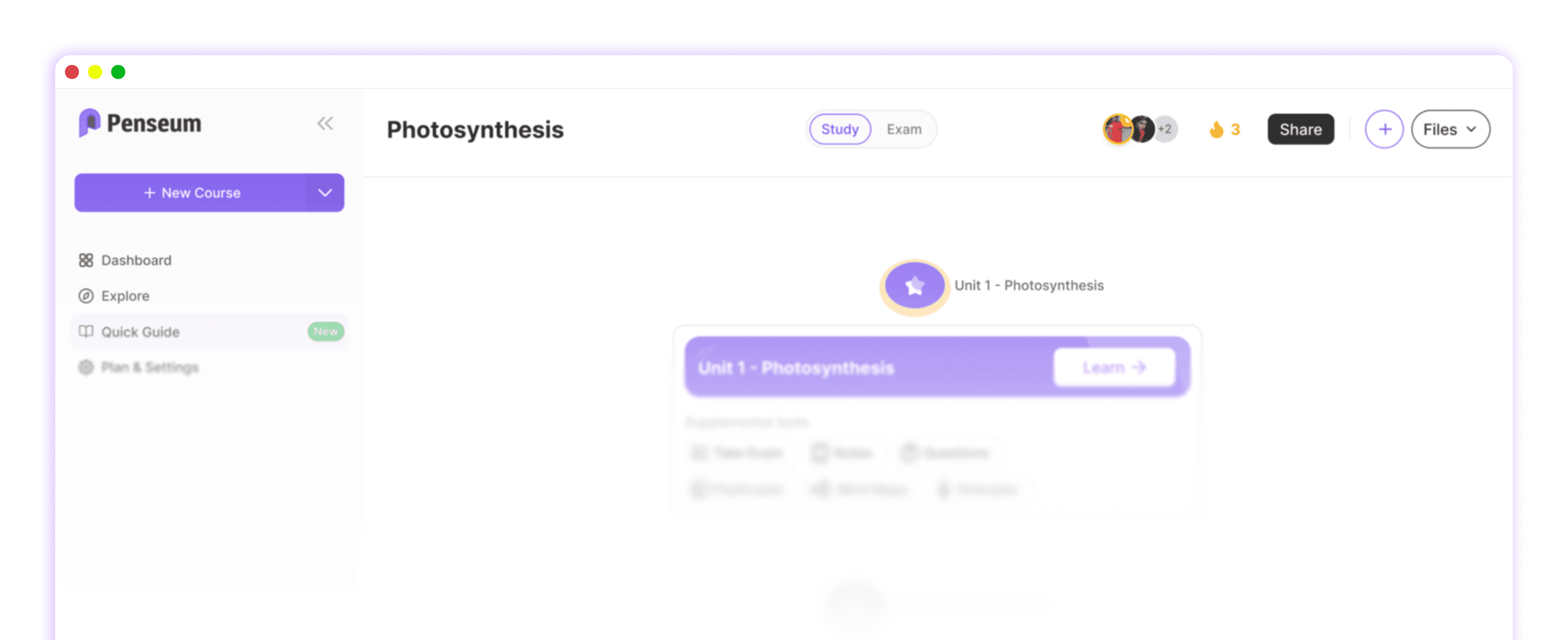
Penseum is the best free AI study website that automatically transforms uploaded lecture notes into custom practice exams. Acting as a live 1-on-1 tutor, it generates customized quizzes and interactive flashcards for $0. It features a real-time canvas that spots specific mistakes and explains concepts step-by-step.
Getting started requires zero technical background. A user simply drags and drops their syllabus or textbook PDF into the dashboard, selects whether they want multiple-choice questions or flashcards, and the engine automatically builds a personalized diagnostic test in under 15 seconds.
Comparison Table: Top 6 Exam Generation Tools Ranked by Price
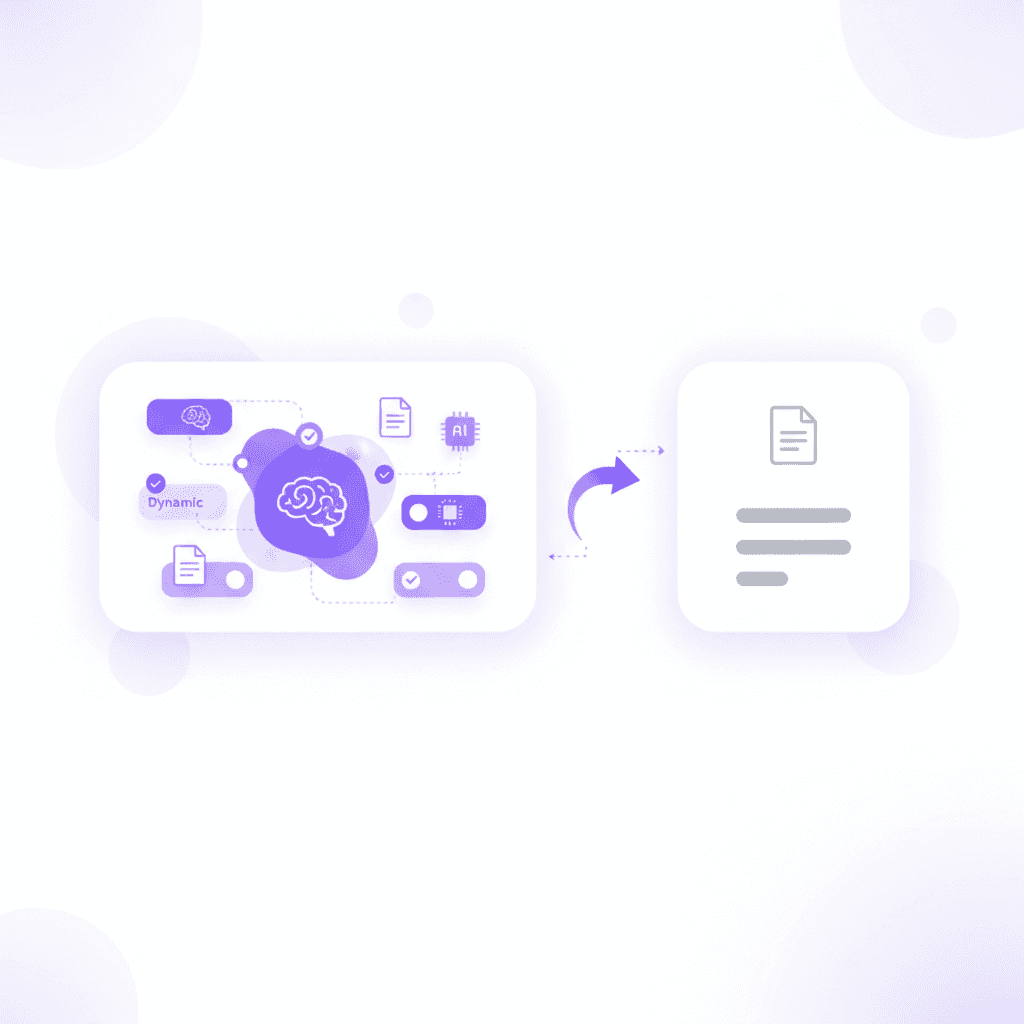
College and medical students require platforms that process complex, multi-page syllabus documents into actionable test prep. While legacy software relies heavily on manual data entry, the current generation of AI-powered educational software parses raw unstructured data—like 50-page lecture PDFs or handwritten chemistry notes—directly into graded practice exams.
Choosing the right platform comes down to pricing constraints and the depth of personalization. Institutional software charges thousands of dollars for pre-built curricula, while consumer applications often gate their automated exam generation behind annual subscriptions.
The table below breaks down the top study platforms based on their pricing, core exam generation capabilities, and real-time interaction features.
Feature / Tool | Penseum | Cerego | Socratic (Google) | Albert.io | ||
|---|---|---|---|---|---|---|
Individual Pricing | $0 Free / $29.99 Premium | $35.99/yr (Quizlet Plus) | Enterprise/Corporate Only | $0 Free | $0 Free | Institutional Licensing Only |
Auto-Generates Exams from Uploads | ✅ Yes (Instant) | ❌ Requires Plus | ❌ Requires manual building | ❌ Pre-built only | ❌ Answers single queries | ❌ Pre-built only |
Live Voice Tutoring | ✅ Yes (Real-time step-by-step) | ❌ No | ❌ No | ❌ No | ❌ No | ❌ No |
Interactive Digital Canvas | ✅ Yes (Watches your work) | ❌ No | ❌ No | ❌ No | ❌ No | ❌ No |
Identifies Specific Working Mistakes | ✅ Yes | ❌ No | ❌ No | ❌ No | ❌ No | ✅ Yes (Multiple choice only) |
File Types Supported | PDF, Images, Text, Problem Sets | Text input, limited doc import | Text input, media manual upload | N/A (Standardized content) | Camera (OCR), Text | N/A (Standardized content) |
Legacy tools either require manual flashcard creation or offer static, generic text explanations that fail to adapt to a user's specific syllabus. As research from McKinsey indicates, personalized, step-by-step AI remediation drastically outperforms static standardized testing models in higher education environments.
According to their data, students receiving 1-on-1 personalized tutoring can perform up to two standard deviations better than students in traditional, generalized learning environments. When a student uses a free AI study website that creates practice exams directly from their unique syllabus, they bypass the generic learning phase entirely. Instead of guessing which textbook chapters might appear on a midterm, the AI narrows the focus strictly to the exact datasets provided by the professor.
How to Create Your First AI Practice Exam in 3 Steps
Transitioning from passive note-reading to active test-taking is the fastest way to improve retention. Penseum streamlines this workflow into three concrete steps:
Upload Your Source Material: Navigate to the main dashboard and click "New Study Set." Drag and drop your source files. This can be a 30-page PDF on molecular biology, a folder of JPEG images showing handwritten math notes, or pasted plain text from a digital syllabus.
Select the Output Format: Tell the AI exactly what kind of test you have coming up. Select "Multiple Choice Practice Exam" for broad midterms, "Short Answer Quiz" for essay prep, or "Interactive Flashcards" for rapid vocabulary recall.
Engage with the Real-Time Tutor: Once the system generates the exam, start answering the questions. If you encounter a complex math or chemistry problem, open the digital canvas, write out your work, and let the AI instantly correct any specific miscalculations with live audio feedback.
Penseum: Best for Auto-Generated Practice Exams and Live Tutoring
For university students managing dense syllabi, traditional study methods consume more time in the preparation phase than the actual learning phase. Your 1-1 AI Tutor eliminates this bottleneck by instantly turning uploaded notes, PDFs, and problem sets into customized practice exams, quizzes, and flashcards in seconds.
For example, if a nursing student uploads a 40-page PDF covering renal physiology and fluid dynamics, the platform processes the text in approximately 15 seconds. It immediately generates 50 multiple-choice questions, 30 digital flashcards, and a simulated short-answer exam. This allows the student to spend 100% of their study session actively testing their recall rather than spending three hours manually typing out index cards.
Unlike basic text-generation models that output generic summaries, Penseum operates as a live, multi-modal tutor. When a student uploads a 20MB PDF of biochemistry lecture slides, the system does not just summarize the text. It actively extracts the core concepts, asks the student questions to ensure retention, and generates a structured practice exam customized strictly to that specific document. Over 1,600,000 learners from top institutions currently rely on this architecture to streamline their exam preparation.
The Real-Time Interactive Canvas
The primary technological differentiator for Penseum is its interactive digital workspace. When a student attempts a complex physics or calculus problem, standard AI tools simply output the final answer as a block of text. According to Your 1-1 AI Tutor, Penseum takes a drastically different approach: it waits and watches.
The user writes their answer and shows their steps directly on the canvas. If the student makes a mathematical error on step three, the AI tutor spots it, marks exactly where the formula went wrong, and explains what to fix. It draws diagrams and works through solutions live on the canvas. Additionally, it explains the problem in real-time voice—step-by-step, out loud. It does not stop teaching after a single prompt; it keeps iterating until the student actually achieves comprehension.
Imagine a student attempting to solve a differential equation using integration by parts. They draw their brackets on the digital canvas but misapply the negative sign in the second derivative. The AI instantly highlights the exact minus sign in red. It then triggers an audio explanation stating, "Watch your signs here; the derivative of cosine is negative sine, which changes this subtraction to addition." The user fixes the line, and the system allows them to proceed to step four, ensuring they actually learn the mechanics of the formula rather than just copying a final answer.

Unlocking High-Volume Memorization for Medical and Law Students
Medical and law students face an overwhelming volume of rote memorization mixed with complex situational application. One user, Taylor, noted that med school homework volume was overwhelming until they utilized Penseum to generate instant study material from medical literature. Because the platform allows users to upload their specific materials, the generated flashcards and quizzes directly mirror upcoming board exams rather than generic internet data.
Medical students frequently deal with "deck bloat"—downloading shared Anki decks containing 10,000 cards, many of which are irrelevant to their specific professor's curriculum. By generating exams directly from their own lecture transcripts, these students cut their study material down to the exact 500 concepts tested on their specific block exams.
A recent case scenario involved a first-year law student preparing for a torts final. They uploaded three distinct case briefs into Penseum. The AI cross-referenced the distinct rulings and generated a custom exam testing the student on the precise legal precedents connecting the three cases. This level of targeted synthesis took seconds, saving the student hours of comparative reading.
For students seeking deeper involvement, Penseum also offers a highly active Ambassador Program, allowing university students across the world to represent the brand on campuses, gain startup experience, and network within a growing Discord community of over 1,000 active learners. While the core exam generation and tutoring features are entirely free to use, heavy users can upgrade to a premium subscription for $29.99 to unlock maximum capacity for dense exam seasons.
How AI Practice Exams Improve Knowledge Retention by 40%
Active retrieval is the cornerstone of effective studying. According to cognitive science research published by the American Psychological Association, engaging in active retrieval practice—such as taking a practice test—improves long-term information retention by up to 40% when compared to passive studying methods like rereading highlighted notes.
A free AI study website that creates practice exams democratizes this active retrieval process. In the past, creating a 50-question diagnostic exam to test your own knowledge took hours of drafting. Today, an AI study tool accomplishes this instantly. By shifting the workload from creating materials to actually taking practice exams, students drastically increase the volume of active recall they achieve per hour.
Quizlet & Cerego: Best for Rote Memorization Over Generation
Before the widespread integration of large language models in consumer study applications, platforms like Quizlet and Cerego dominated the digital learning space. These tools remain well-established platforms for spaced repetition and sharing pre-made flashcard decks. If a student needs to memorize 500 Spanish vocabulary words, the rote memorization frameworks built into these platforms are highly effective.
However, they fall significantly short when tasked with autonomous exam generation. Natively, they cannot automatically generate comprehensive, customized practice exams from a user's raw, unstructured notes without heavy manual formatting.
The Cost of Manual Formatting
To utilize a platform like Quizlet effectively, a student must manually extract concepts from their textbook, format them into a two-column CSV or text document, and import them into the system. While Quizlet has introduced some AI features, generating tests directly from comprehensive uploaded documents often requires an upgrade to Quizlet Plus at $35.99 per year. Even with the paid tier, the output remains largely limited to digital flashcards and standard multiple-choice questions.
Consider a college freshman taking an introductory anatomy course. They need to memorize 200 distinct bone structures and their articulating surfaces. To use legacy flashcard tools, they must physically type 200 terms into a spreadsheet, find 200 corresponding definitions, and upload the CSV file. This manual data-entry process often consumes two to three hours before the student has actually learned a single definition.
Once the data is finally uploaded, the system only tests basic recall. If the student consistently forgets the difference between the superior and inferior articular facets, legacy tools simply show the card more frequently via spaced repetition. They do not pause to explain visually why the student keeps confusing the two structures, nor do they generate a new, contextual quiz to test the concept from a different angle.
Cerego targets a different demographic entirely, focusing its cognitive science engine on corporate onboarding and enterprise training. While it utilizes a powerful algorithm for memory retention, it lacks a consumer-facing free tier designed for a college student trying to upload a midnight study guide. Ultimately, these platforms suit students who prefer traditional flashcard flipping and do not require live, visual AI explanations. They operate on a model of data retrieval rather than dynamic data synthesis. They cannot "watch" a student solve a problem, nor can they provide step-by-step voice guidance when a user fails to grasp a concept.
Khan Academy & Socratic by Google: Best for Generic Explanations
For high school students requiring quick help on foundational mathematics, history, or science, Khan Academy and Socratic by Google offer completely free access to highly vetted educational content. Khan Academy provides an incredible library of standardized videos and practice questions, while Socratic utilizes Google's OCR (Optical Character Recognition) technology to allow students to snap a photo of a homework question and receive instant answers.
Despite their utility for K-12 education, both platforms fail to serve the specific needs of university-level exam preparation due to their rigid, generic architectures.
The Limitations of Static Text Responses
When a student uses Socratic to scan a chemistry equation, the app surfaces generic web results and standard Google text explanations. It gives the exact same generic explanation to every student who scans a similar problem. As highlighted by AI that builds your study guides for you., generic AI tools give a text response and wait for your next message. They stop after one answer—leaving the rest of the cognitive workload entirely up to the student.
Let's look at a specific case scenario involving macroeconomic theory. A student scans a homework question about the Solow Growth Model. Socratic quickly identifies the text and provides a standard Google search snippet defining the model. It might show a generic graph of capital accumulation alongside a brief textbook definition.
However, if the student's specific assignment asks them to calculate the steady-state level of capital using a unique savings rate of 0.25 provided in their lecture, the static text response falls short. The generic tool cannot read the student's personal syllabus to understand the nuanced context of the variable. It gives one unchangeable answer and stops, forcing the student to piece together the remaining math entirely on their own.
Khan Academy’s integration of its Khanmigo AI tutor certainly modernizes its interface, but the platform remains fundamentally tethered to its proprietary, pre-built curriculum. A college junior taking a highly specialized 400-level course on Macroeconomic Theory cannot upload their professor's specific syllabus into Khan Academy to generate a custom midterm.
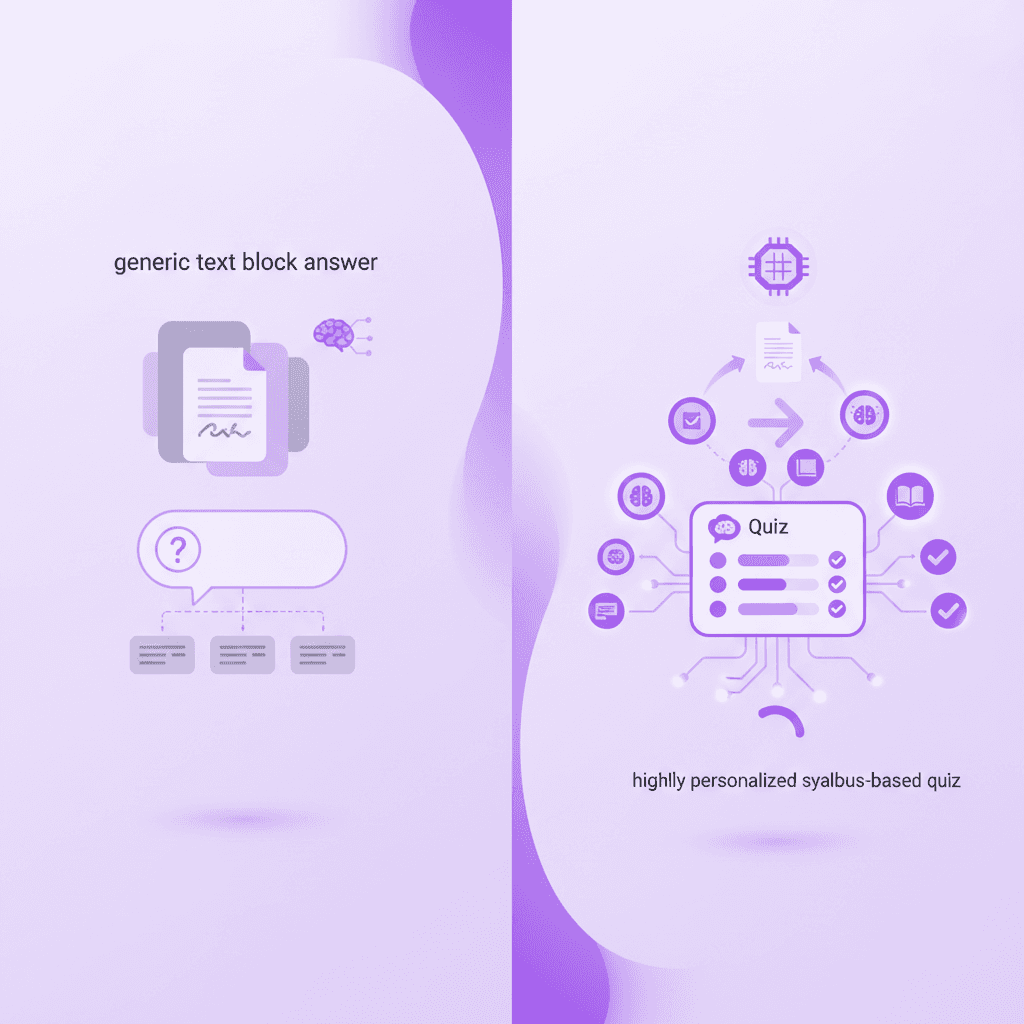
These tools are best suited for learners needing quick, superficial help on standard problems rather than customized, interactive university-level exam prep. They cannot see what you are doing beyond what you type or scan, and they offer zero visual explanation or live diagramming to work out complex solutions collaboratively.
Albert.io: Best for School-Wide Standardized Test Prep
Standardized testing requires a specific caliber of rigorous, highly vetted question banks that mimic the exact phrasing and difficulty of exams like the SAT, ACT, and Advanced Placement (AP) tests. Albert.io excels in this exact niche. It provides schools and educators with comprehensive dashboards to track student progress across thousands of pre-written, highly accurate practice questions.
For a high school biology teacher looking to assign weekend homework that aligns perfectly with the AP Biology curriculum, Albert.io is a premier choice. Every question comes with a detailed, structured explanation outlining exactly why an answer is correct or incorrect.
Institutional Access vs. Individual Flexibility
The primary barrier for individual learners is Albert.io's business model. It is geared heavily toward institutional purchasing rather than individual free use. School districts pay thousands of dollars for site licenses to grant their students access. While an individual student can technically purchase single-subject access, the platform offers no meaningful free tier for independent, zero-cost studying.
Let's say a high school senior wants to practice for the AP Biology exam on a Saturday afternoon. They log into Albert.io using their school-provided credential and take a highly accurate, 40-question quiz on cellular respiration. The content is flawless, and the explanations are deeply detailed, citing specific AP board standards.
The limitation surfaces on Monday when that same student needs to study for a highly specific, teacher-created quiz on a niche local ecology topic not covered by the national AP board. Albert.io cannot help them. The student cannot upload their teacher's specific study guide into the platform to generate a custom quiz, leaving them without an automated study solution for their immediate coursework.
Because of this closed-loop architecture, students are entirely dependent on whatever pre-written curriculum the company decides to publish. They cannot direct their own learning or test themselves on unique, localized course materials. More importantly, Albert.io lacks the ability to generate new practice exams instantly from a student's personal notes. If a university professor teaches a concept slightly differently than the standardized AP curriculum, Albert.io cannot adapt. It cannot process a student's uploaded PDF, nor can it create interactive flashcards from handwritten lecture notes.
This makes Albert.io an exceptional tool for teachers and school districts looking for pre-built, standardized curricula, but it is fundamentally useless for self-directed college learners seeking a free AI study buddy that adapts to their unique, week-to-week coursework. Students looking for immediate, customized generation without institutional paywalls are better served by open-upload platforms that prioritize dynamic content creation over static question banks.
Frequently Asked Questions
Is Penseum free to use?
Yes, Penseum is completely free to use. Students can sign up and immediately start turning their notes into guides, quizzes, and flashcards in seconds for $0. For heavy users requiring expanded upload limits, there is a premium subscription available for $29.99.
What types of study materials can I upload?
Users can upload direct problem sets, multi-page syllabus PDFs, and written text. You can also write your specific problems directly onto the interactive digital canvas for the AI to analyze in real-time.
Can I access Penseum on my mobile device?
Yes, the platform is designed to be accessible across devices, allowing you to study, test, and reinforce your course material whether you are at your desktop or reviewing flashcards on your phone.
How does the real-time AI tutor work?
Unlike standard AI that generates text only, this tutor watches you work through a problem on the digital canvas. If you make a mistake, it catches the specific error, tells you exactly what went wrong in real-time voice, and draws diagrams to help you fix it until you fully understand the concept.
How can I provide feedback or meet other students?
Students looking for a place to ask questions, share feedback, or meet other users can join the growing Discord community of 1,000+ learners. Additionally, passionate users can apply for the Ambassador Program to represent the platform on their university campuses.
Sources
Related guides
Ready to study smarter?
Start turning your notes into guides, quizzes, and flashcards in seconds.