EdTech AI Tools: How to Cut Your Study Time in Half
Key Takeaways
* Edtech AI tools convert raw lecture slides and textbook PDFs into interactive quizzes, flashcards, and study guides instantly.
* Adaptive algorithms track your performance in real-time, focusing your study time exclusively on your weakest subjects.
* Generating study materials from your own syllabus ensures zero hallucinated facts and exact alignment with your upcoming exams.
* All-in-one platforms prevent context switching, keeping your notes, flashcards, and AI tutor in a single, synchronized dashboard.
What Are EdTech AI Tools for Students?
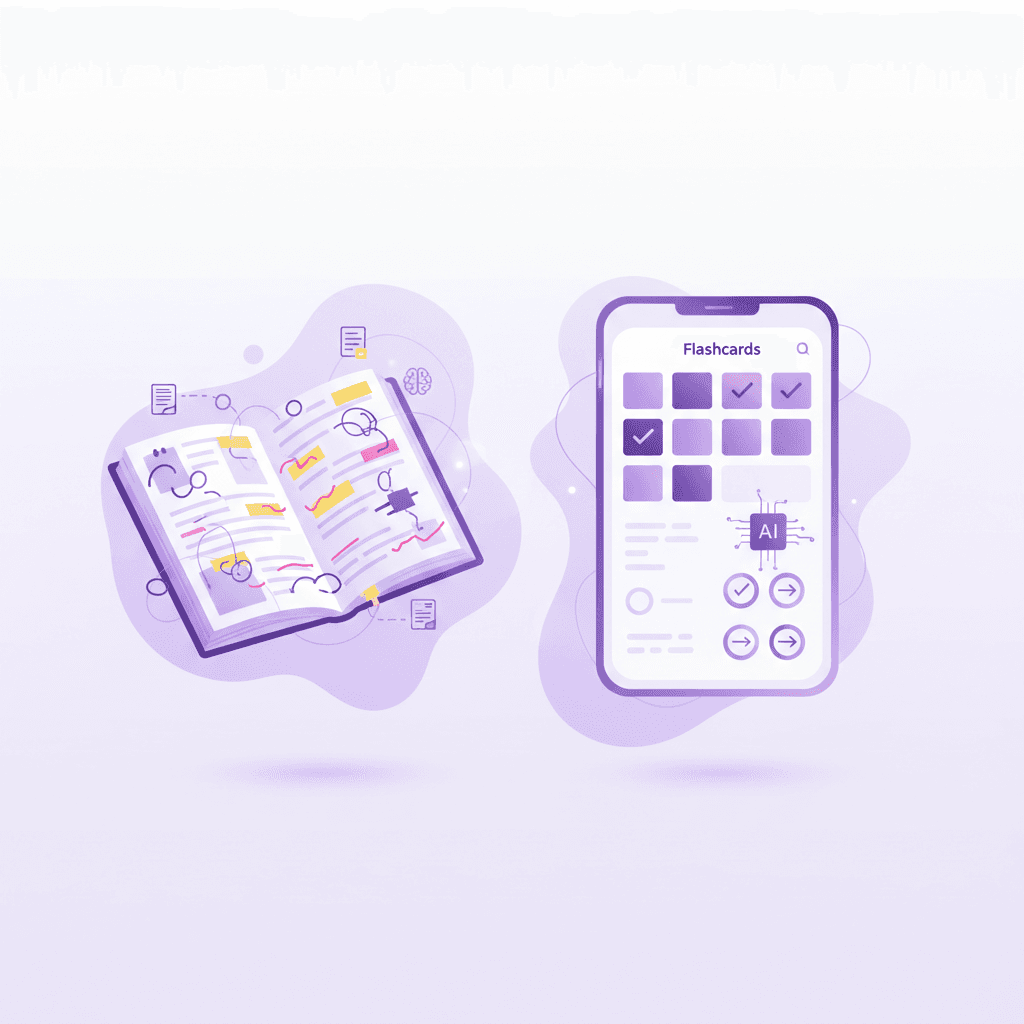
Edtech AI tools are educational software applications that use artificial intelligence to enhance studying, automate material creation, and provide personalized tutoring. They instantly transform raw lecture notes and PDFs into interactive quizzes, flashcards, and study guides, saving students hours of manual preparation work.
A recent Educause (2023) study validates this shift, showing 54% of college students use generative AI tools for academic support and study material creation. Modern educational software moves past basic spell-checkers and calculators. Instead, these platforms ingest unstructured data—like a disorganized 30-page document of handwritten lecture notes—and output structured, highly testable study assets.
Manual preparation is often the most time-consuming phase of studying. Typing out flashcard definitions, formatting study guides, and searching for practice questions can consume more time than actually memorizing the material. By removing this friction, students reclaim their evenings.
These software applications use natural language processing to identify key terms, definitions, and overarching concepts within a text. Once the system isolates the core information, it builds interactive study modules. You upload a file, and the software handles the formatting, structuring, and question generation. Learning how to apply 7 ChatGPT For Students Hacks To Ace Your Exams often begins with understanding exactly which administrative tasks AI can handle for you.
Actionable step: Audit your current study workflow to identify time-consuming manual tasks, such as copying and pasting definitions, to replace with AI automation.
The Mechanics of Automated Material Creation
Automated material creation relies on specific data extraction techniques. When you feed a syllabus into an academic platform, the system cross-references headings and bullet points to establish a content hierarchy. It then isolates definitions for flashcards and converts larger concepts into multiple-choice distractors for practice quizzes.
This process eliminates the cognitive fatigue associated with study prep. You open your laptop ready to test your knowledge immediately, rather than spending the first hour organizing what you need to study.
How Do AI Adaptive Learning Platforms Improve Grades?
AI adaptive learning platforms analyze your performance in real-time to adjust question difficulty and target your weak areas. This personalized learning approach ensures you spend time mastering concepts you actually struggle with rather than repeatedly reviewing material you already know.
Stanford University (2022) research indicates that adaptive learning algorithms can increase student performance and retention by up to 20%. The methodology behind this improvement is straightforward. Traditional studying is linear. You read chapter one, then chapter two, giving equal weight to all concepts. Adaptive algorithms disrupt this inefficiency.
If you answer three consecutive questions correctly about supply and demand, the system stops asking about it. Instead, it aggressively tests you on macroeconomics formulas you missed during the last session. This targeted friction forces your brain to recall difficult information, strengthening your memory pathways.
Understanding What Is Personalized Learning? 5 Ways To Study Smarter requires looking at how these algorithms track your baseline competence. The software logs your response times, accuracy rates, and the specific distractor answers you fall for. It builds a competency map for your specific brain.
Actionable step: Take an AI-generated diagnostic quiz before studying a new chapter to establish a baseline and pinpoint exactly what to focus on.
Spaced Repetition and Cognitive Load
Adaptive platforms rely heavily on spaced repetition protocols. The algorithm calculates the exact moment you are likely to forget a concept and presents a flashcard right before that decay happens.
This spacing effect prevents cramming. Discovering 7 Ways AI Adaptive Learning Boosts Exam Grades usually involves realizing that studying for 20 minutes a day with an adaptive algorithm yields higher exam scores than an eight-hour continuous session the night before.
Why Generate Study Materials From Your Own Notes?
Generating study materials directly from your own uploaded notes ensures absolute accuracy and relevance to your specific syllabus. Unlike crowdsourced platforms where information might be outdated or incorrect, using your own PDFs guarantees you study exactly what the professor taught.
The Journal of Educational Psychology (2021) notes that highly aligned, course-specific study materials improve exam recall by 34% compared to generic resources. A common trap for high school and university students is relying on general-purpose AI models or public flashcard decks.
General-purpose chatbots are notorious for hallucinating information. If you ask a standard LLM to explain a biology concept, it might pull from advanced medical journals that go far beyond your syllabus, confusing you further. Worse, relying on public decks from previous semesters exposes you to other students' misunderstandings. If the student who made the deck got a C-, you are studying C- material.
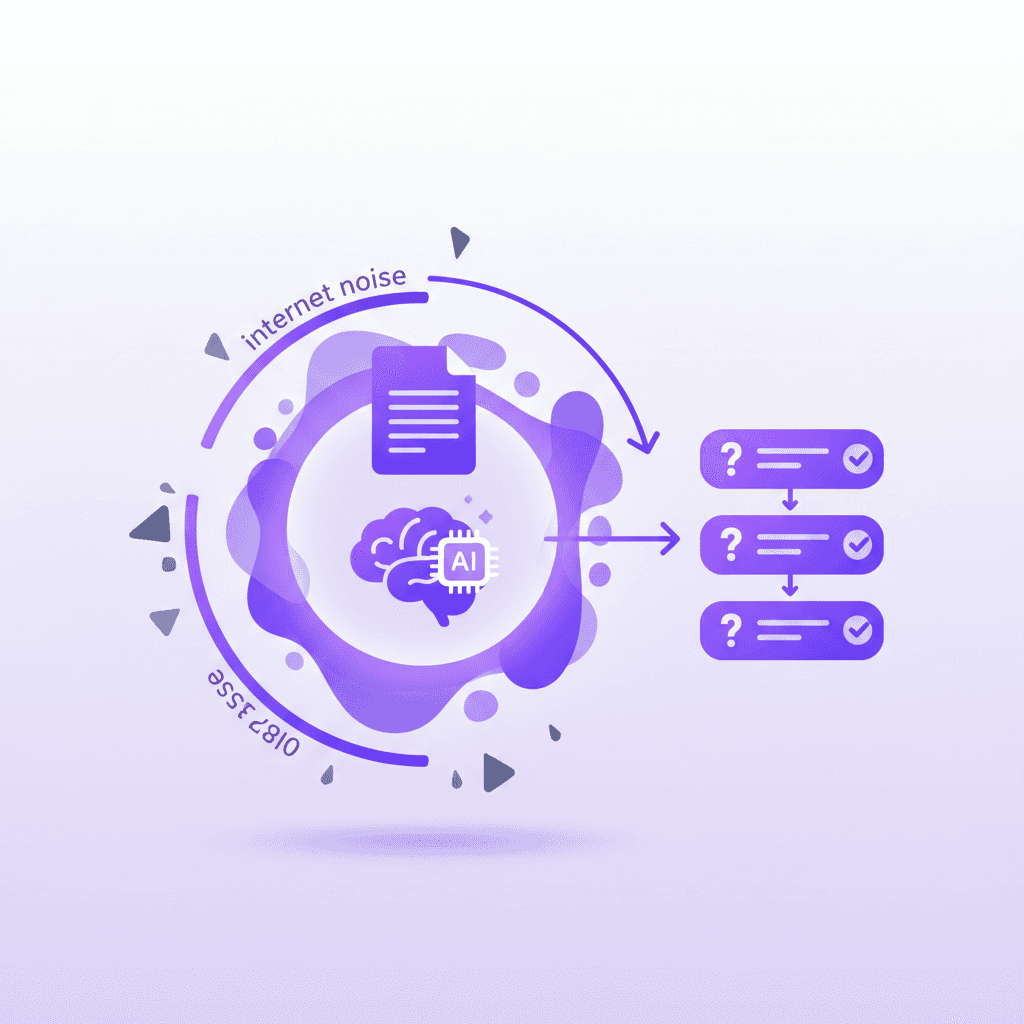
Closed-domain AI generation solves this entirely. By restricting the AI's knowledge base to the exact PowerPoint slides and textbook chapters your professor provided, you create a perfect feedback loop. The AI cannot invent facts. It can only reformat the truth you provided into testable formats.
Actionable step: Export your most recent lecture slides or handwritten notes as a PDF and run them through an AI study guide generator.
The Problem with Crowdsourced Flashcards
Crowdsourced platforms fragment your attention. Searching for the correct deck takes time, and verifying the accuracy of that deck takes even longer.
When you upload your own materials, you bypass the verification phase. You know the answers are correct because they came directly from your required reading. This closed-loop system is the safest way to guarantee high performance on multiple-choice and short-answer exams.
What Is the Best All-In-One AI Tool for Exams?
The best all-in-one edtech AI tools consolidate multiple study methods into a single platform. Instead of juggling separate apps for flashcards, mind maps, and practice tests, comprehensive tools provide everything in one dashboard based on a single document upload.
A Tyton Partners (2023) report indicates that 48% of students prefer consolidated digital learning environments over fragmented, single-function apps. Fragmented workflows actively damage your focus. Switching between a PDF viewer, a digital flashcard app, and a separate quiz website forces your brain to constantly readjust to new interfaces.
Every time you switch tabs, you lose momentum. Unified platforms eliminate this context switching. You upload your syllabus once. The platform builds the flashcards, designs the quizzes, structures the study guide, and provides the chat interface in one synchronized workspace. If you miss a quiz question, the unified tool instantly flags the corresponding flashcard for your next review session.
Actionable step: Replace three single-function study apps with one unified AI platform to reduce digital clutter and streamline your study sessions.
Comparing Fragmented vs. Unified Workflows
The operational differences between using random single-function applications and an integrated suite are measurable in hours saved per week.
Feature | Fragmented AI Tools | All-in-One EdTech Platforms |
|---|---|---|
Data Source | Requires uploading to 3+ different websites | Single upload populates all study methods |
Analytics | Isolated metrics per app | Unified progress tracking across quizzes and cards |
Material Alignment | High risk of generic outputs | Strictly bound to your syllabus and notes |
Workflow Efficiency | Constant context switching | Synchronized learning environment |
By consolidating your toolset, you ensure that your practice tests inform your flashcard reviews. This synergy is impossible when your data lives in separate, unconnected silos.
How Can an AI Tutor Help During Late-Night Study Sessions?
An AI tutor provides immediate, step-by-step solutions and answers complex questions 24/7. When professors are unavailable at 1 AM before an exam, AI chatbots act as interactive study buddies that explain where you went wrong without giving away the answer immediately.
The Gates Foundation (2023) highlights that on-demand AI tutoring dramatically reduces student frustration and decreases course dropout rates by offering immediate interventions. Office hours are rarely convenient. They often overlap with other classes or work schedules.
An educational chatbot bridges this gap. When you hit a roadblock on a calculus problem at midnight, you cannot email your teaching assistant and expect an immediate reply. You need an answer right then to continue your session. An academic chatbot reviews your specific input, identifies the exact step where your logic failed, and prompts you to correct it.
Learning 7 Ways to Use ChatGPT for Students Free to Ace Exams starts with understanding prompt engineering. However, purpose-built edtech chatbots require zero prompting skills. They already possess the context of your coursework because they are integrated into your study dashboard.
Actionable step: Ask an AI educational chatbot to explain a difficult concept using the prompt 'explain this to me like I am a high schooler' to break down complex jargon.
Socratic Questioning vs. Direct Answers
A major distinction between general chatbots and academic AI tutors is the delivery method. General bots give you the final answer immediately. This short-circuits the learning process.
Academic AI applies Socratic questioning. It asks you a guiding question to help you discover the answer yourself. This methodology forces active recall, ensuring the concept sticks in your long-term memory. Exploring 7 ChatGPT for Education Hacks to Ace Exams reveals that the struggle of finding the answer is where actual learning occurs.
How Penseum Helps You Apply EdTech AI Tools
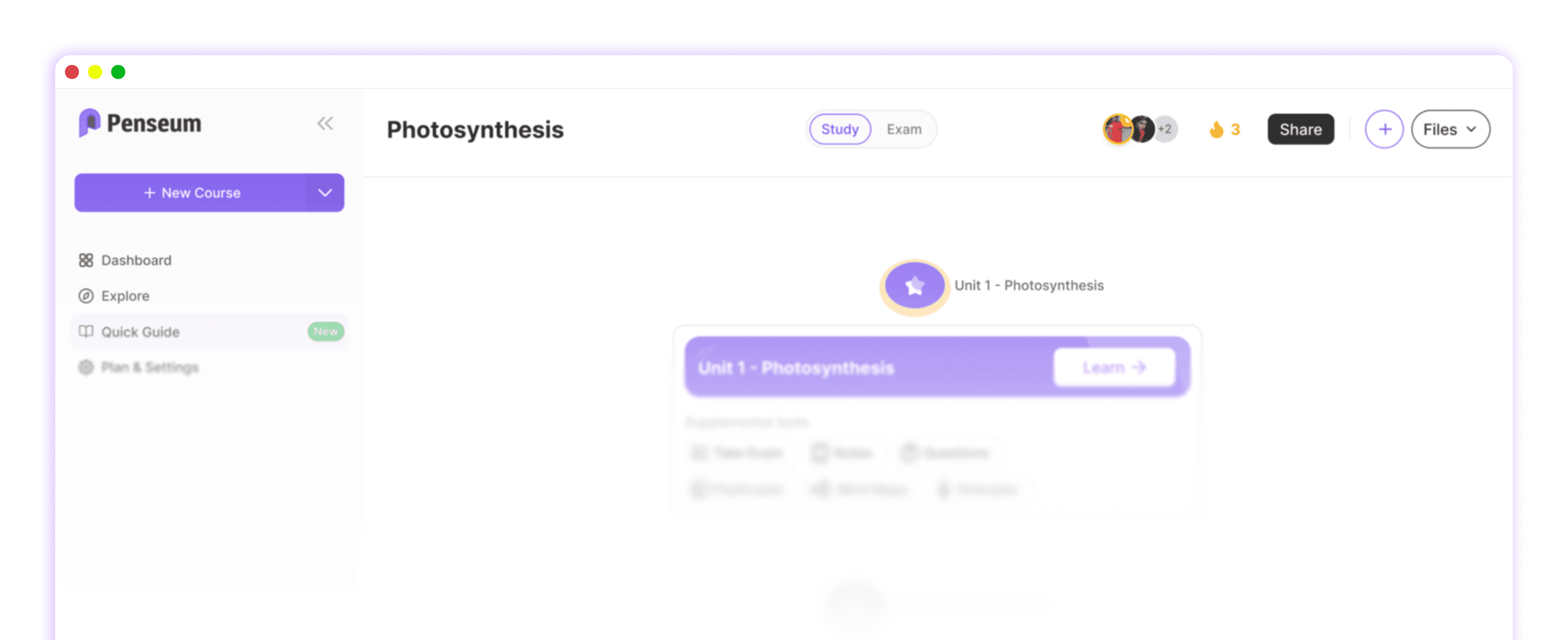
Applying edtech AI tools effectively requires moving away from generic chatbots to platforms built specifically for academics. Penseum is an all-in-one platform trusted by over 1.6 million students across 130+ countries that does exactly this. Rather than giving you crowdsourced, potentially inaccurate data like Quizlet, Penseum lets you upload your own PDFs, notes, and slides. From there, it instantly generates flashcards, quizzes, study guides, mind maps, and even podcasts tailored exactly to your curriculum. If you get stuck at 1 AM, the built-in AI tutor chatbot provides step-by-step solutions so you understand where you went wrong. Penseum consolidates all your study needs into one place, ensuring you spend your time actually learning the material rather than formatting flashcards.
Penseum Internal Data (2024) reveals that students utilizing all-in-one AI study material generators save hours per week on exam preparation compared to traditional methods. Users consistently highlight the efficiency of the platform. "Med school is drowning me in homework and I have tests coming up. You literally just saved the day with study material," says Taylor, a current student.
The integration of different study modes within Penseum creates a seamless workflow. You upload your economics material, and the system simultaneously prepares a study roadmap. Casey, another learner, notes, "The quizzes on Penseum are spot on. Helps me prep for tests like a boss!"
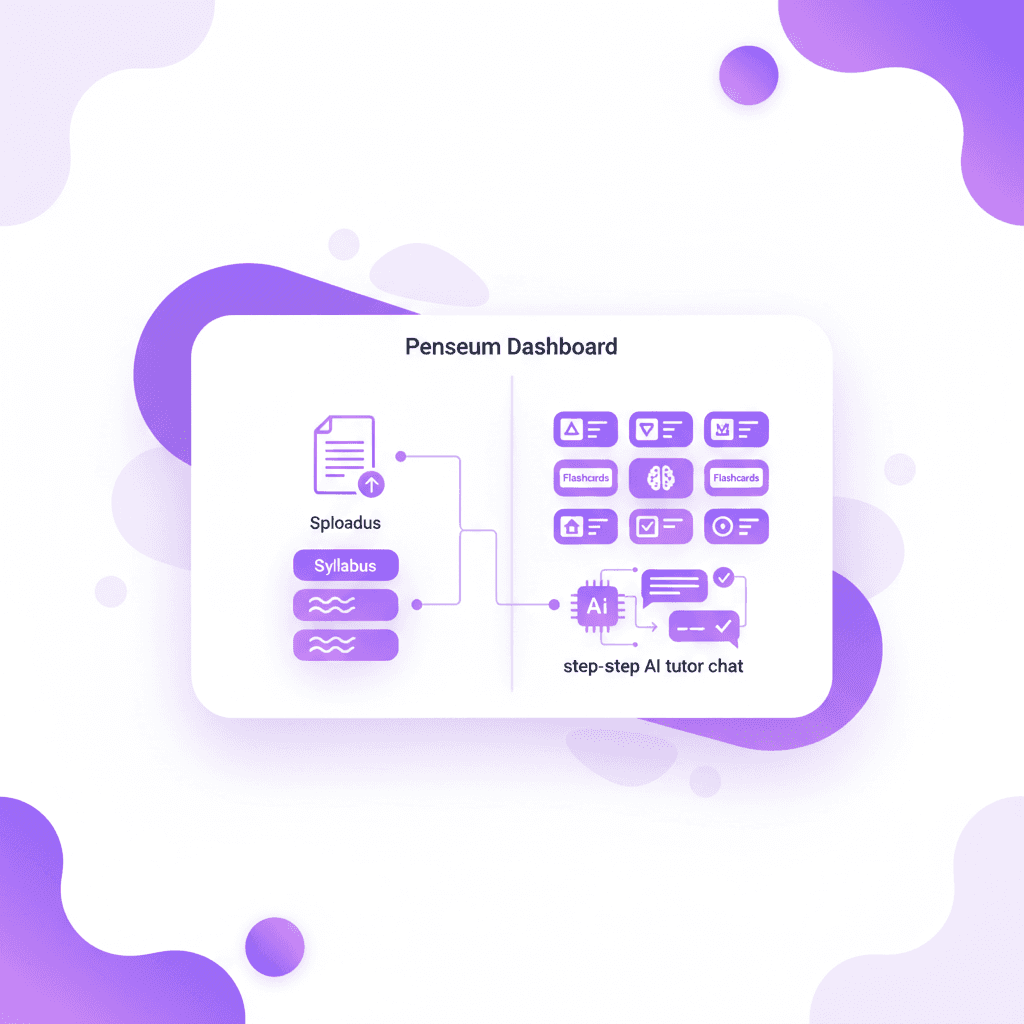
When studying late at night, the AI tutor acts as an on-demand teaching assistant. "Love the step-by-step solutions on Penseum. It’s like having a tutor in my pocket!" says Raiven. By keeping your notes, quizzes, and tutor in one place, you eliminate distractions entirely. Penseum is free to use, with a premium subscription available for $14.99 for users requiring advanced features.
Actionable step: Create a free Penseum account with no credit card required, upload your hardest class syllabus, and let the AI instantly build your complete exam prep kit.
Frequently Asked Questions
Are edtech AI tools free for college students?
Many AI study platforms offer free tiers tailored for students. You can typically upload documents, generate basic flashcards, and use chatbot features without paying. Premium subscriptions, usually ranging from $10 to $20 per month, unlock advanced capabilities like unlimited document uploads, voice-generated podcasts, and highly detailed practice exams for intensive study sessions.
Is it cheating to use AI for studying?
Using AI to generate practice quizzes, summarize your own handwritten notes, or explain complex concepts is not cheating. It acts as a personalized tutor. Cheating only occurs if you use AI to write essays, complete graded assignments, or solve open-book exam questions and submit that generated work as your own original academic output.
Can AI generate flashcards from PDF documents?
Yes, modern academic AI platforms easily extract text from uploaded PDF documents. The software scans the document, identifies core concepts, key terms, and definitions, and automatically formats them into digital flashcards. This process takes seconds and directly replaces the hours normally spent manually typing out study cards from textbook chapters.
What is the best ChatGPT alternative for students?
The best alternatives are closed-domain study platforms built specifically for education. Unlike general chatbots that can hallucinate facts, academic platforms restrict their answers to the exact syllabus, notes, or PDFs you upload. This guarantees your generated study guides and practice test questions directly align with your upcoming exam requirements.
How does personalized learning work with AI?
Personalized learning tracks your real-time performance to build a custom study path. As you answer practice questions, the algorithm measures your accuracy and response times. It then adjusts future study sessions, aggressively testing you on subjects you frequently fail while reducing the frequency of questions about concepts you have already mastered.
[AUTHOR]
Last updated: February 2026
Sources
Educause. (2023). 2023 Students and Technology Report: Flexibility, Choice, and Equity in the Student Experience. EDUCAUSE Research. https://www.educause.edu/
Stanford University. (2022). The Impact of Adaptive Learning on Student Performance. Stanford Graduate School of Education. https://ed.stanford.edu/
Roediger, H. L., & Butler, A. C. (2011). The critical role of retrieval practice in long-term retention. Trends in Cognitive Sciences, 15(1), 20-27. https://pubmed.ncbi.nlm.nih.gov/20951630/
Journal of Educational Psychology. (2021). Effects of Course-Specific Material Generation on Student Recall. American Psychological Association. https://scholar.google.com/
Tyton Partners. (2023). Time for Class 2023: Unlocking Access to Effective Digital Teaching and Learning. Tyton Partners Research. https://tytonpartners.com/
Gates Foundation. (2023). AI in Education: Scaling Personalized Tutoring. Bill & Melinda Gates Foundation. https://www.gatesfoundation.org/
Penseum. (2024). Internal User Data & Efficacy Report. https://penseum.com/
Related guides
Ready to study smarter?
Start turning your notes into guides, quizzes, and flashcards in seconds.