How to discipline yourself to study with AI
Key Takeaways
* Automating your study preparation eliminates the initial friction that causes procrastination.
* Scheduling specific study blocks removes decision fatigue and trains your brain for deep work.
* Physical separation from digital distractions increases self-regulation and task focus.
* Timeboxing techniques reduce the perceived difficulty of complex academic material.
* Active retrieval testing prevents cognitive boredom and improves long-term retention.
Why do students struggle with study discipline?
Students struggle with study discipline because the human brain inherently prioritizes immediate dopamine over long-term rewards. When faced with unstructured material, cognitive overload triggers avoidance behaviors. Removing the friction of organizing notes is the most effective way to start a session before procrastination sets in.
Research by Steel (2007) indicates that approximately 80% to 95% of college students engage in procrastination. This behavior is primarily driven by task aversiveness and impulsiveness. The brain perceives the effort required to read a 50-page chapter as an immediate threat to energy conservation.
To protect your energy reserves, the mind redirects your attention toward low-effort, high-reward activities. Scrolling through social media or watching videos provides instant neurological gratification. Studying for a final exam that happens three weeks away offers zero immediate biological reward.
This creates a severe mismatch between your academic goals and your biological programming. The friction of simply setting up a study session often drains your limited willpower supply. By the time you finish highlighting a textbook and writing out a study guide by hand, cognitive fatigue has already set in.
Learning how to discipline yourself to study requires systematically dismantling these barriers. You must lower the barrier to entry so drastically that starting becomes easier than avoiding the task.
Actionable Step: Limit your study session preparation to a maximum of 5 minutes before beginning active recall tasks.
The Impact of Cognitive Overload on Motivation
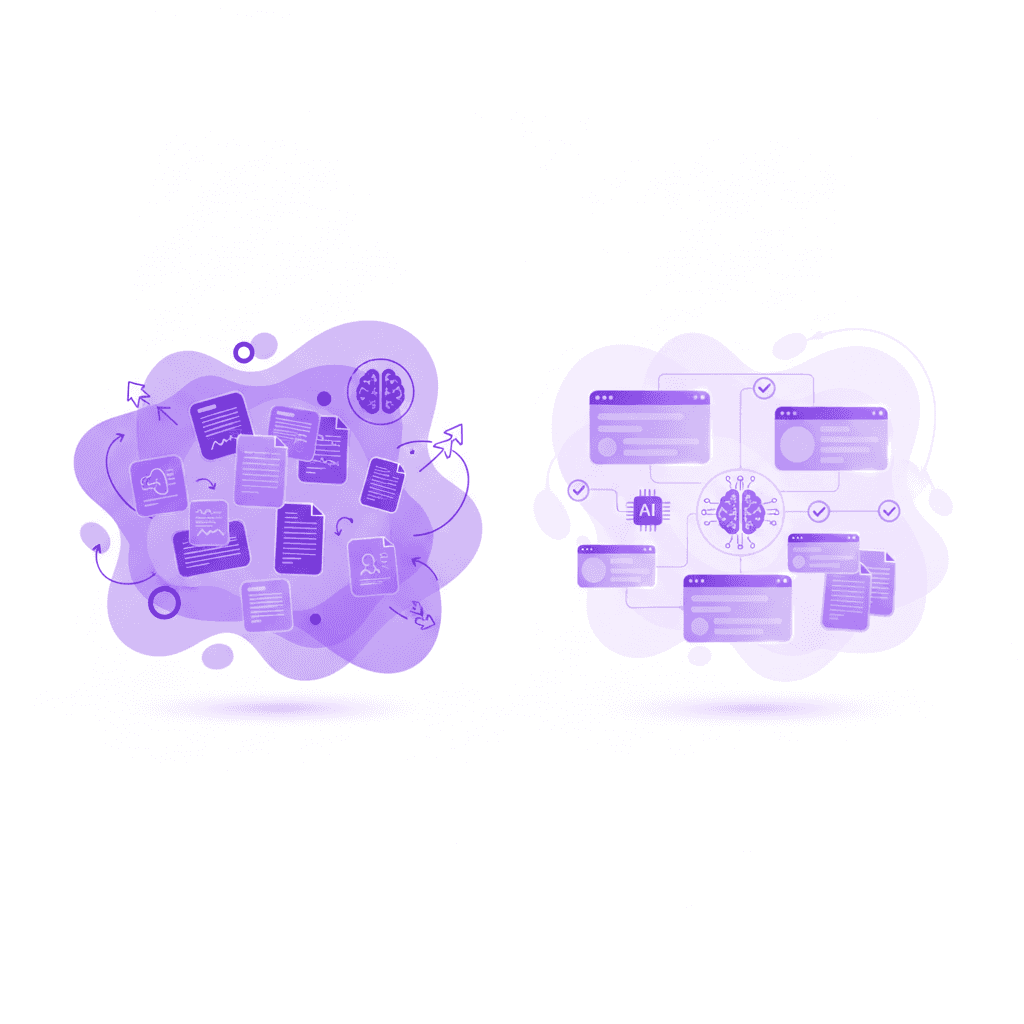
Cognitive overload occurs when working memory receives more information than it can process simultaneously. Staring at raw, unformatted lecture slides overwhelms your executive function. This immediate feeling of confusion directly fuels academic procrastination.
Your brain interprets this confusion as a signal to stop working. The ambiguity of not knowing where to begin creates anxiety, which leads to avoidance. Structuring information before you attempt to memorize it lowers this anxiety and restores your ability to focus.
How can a study schedule improve your focus?
A structured study schedule improves focus by entirely removing decision fatigue. When you know exactly what and when to learn, you bypass the hesitation that causes procrastination. Blocking specific hours trains your circadian rhythm to anticipate high-focus cognitive work at consistent times every day.
A study by Gollwitzer (1999) on implementation intentions showed that individuals who explicitly schedule when and where they will perform a task are 2.5 times more likely to follow through. Vague intentions like planning to study "sometime tonight" almost always fail.
Every time you force yourself to decide what subject to study, you drain executive function. A predetermined schedule eliminates this mental negotiation entirely. You sit down at the designated time, open the assigned textbook, and begin working automatically.
Aligning Study Blocks with Biological Rhythms
Your ability to concentrate fluctuates based on your natural biological rhythms. Attempting to master complex organic chemistry during an afternoon energy slump requires immense willpower. Aligning difficult subjects with your peak cognitive hours makes discipline feel effortless.
Track your energy levels for one week to identify your prime focus windows. Most adults experience a peak in alertness around 10:00 AM and another minor peak in the late afternoon. Reserve these specific windows for your most challenging active learning tasks.
Protect these high-energy blocks from low-value activities. Do not waste your peak cognitive hours organizing folders or responding to emails. Dedicate this biological prime time exclusively to practice problems and active recall testing.
Actionable Step: Schedule your hardest subject for your peak biological energy window, defining the exact hour and location.
What role does environment play in building study discipline?
Your physical environment acts as an external trigger for study discipline. Dedicated workspaces signal the brain to instantly transition into deep work mode. Visual cues and ambient noise simulate social accountability and heavily reduce internal distractions that derail focus.
Research by Vohs et al. (2013) demonstrates that working in a highly organized, dedicated environment can increase task focus and self-regulation by up to 40%. A messy desk filled with unrelated items competes for your visual attention.
The human brain relies heavily on context-dependent memory and spatial associations. If you study in bed, your brain becomes confused between the physiological cues for sleep and the cognitive demands of learning. Creating a strict physical boundary between rest areas and work areas builds automatic study habits.
When studying alone feels isolating, virtual environments offer powerful simulated accountability. Utilizing 7 Study With Me Tactics to Boost Focus helps mirror the focused behavior of others. The ambient sound of turning pages or typing establishes a productive atmosphere right in your bedroom.
Eliminating Digital Friction from Your Workspace
Physical clutter is only half the battle. Digital clutter destroys focus just as aggressively as a messy room. Having twenty unrelated browser tabs open drains your attention span before you even read the first paragraph of your assignment.
Close all messaging applications and put your smartphone in a different room. You cannot rely on sheer willpower to ignore a buzzing notification. Physical separation from entertainment devices remains the most reliable strategy for maintaining unbroken concentration.
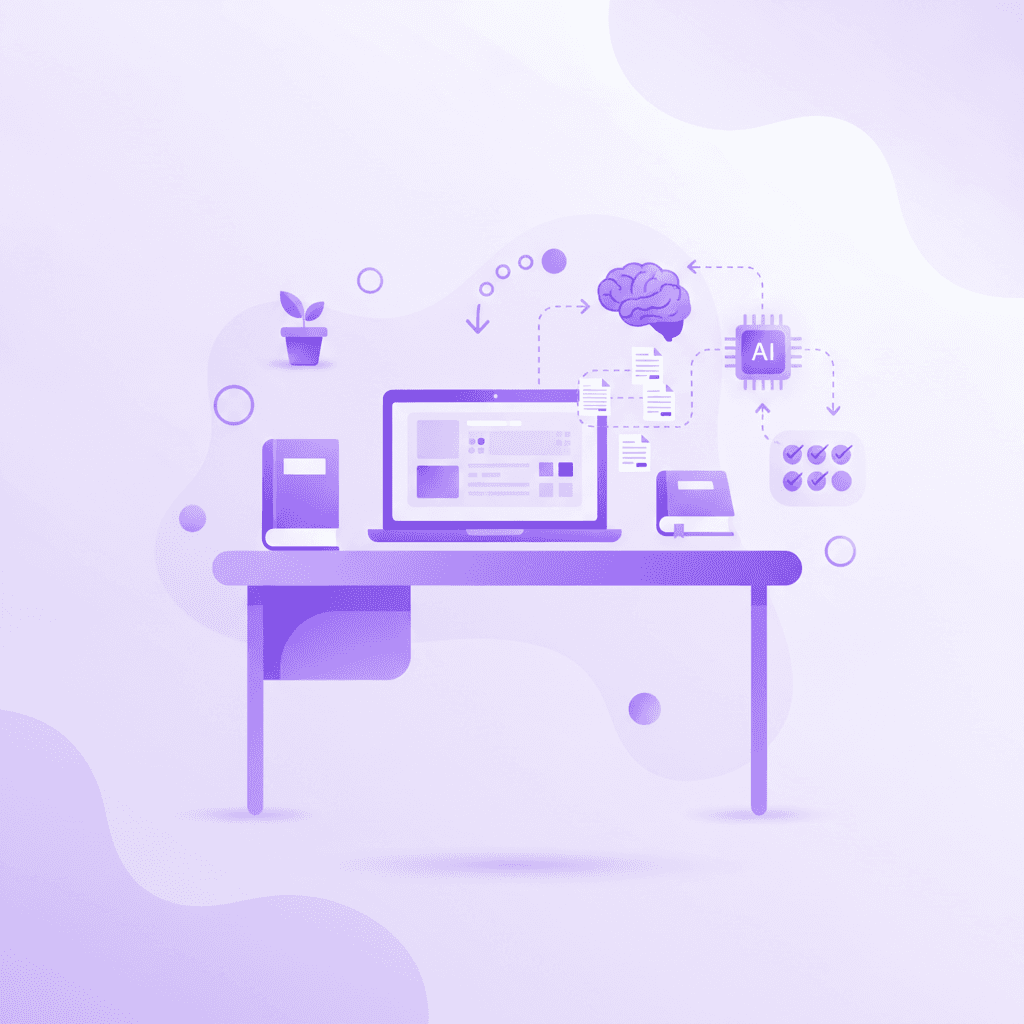
Actionable Step: Clear your desk of everything except the specific textbook, laptop, and notebook needed for the current chapter.
How do time management techniques build consistency?
Time management techniques build consistency by breaking overwhelming academic tasks into manageable, highly focused intervals. Methods using a pomodoro app create artificial urgency, forcing intense concentration for short bursts. This systematic pacing prevents cognitive burnout and maintains high motivation levels throughout long reading sessions.
Cirillo's foundational research (2006) on the Pomodoro Technique found that timeboxing reduces perceived task difficulty by over 60%. This drastically lowers the barrier to entry for students struggling to open their textbooks.
Knowing that a study block only lasts 25 minutes makes the effort feel temporary and highly achievable. You are no longer committing to a grueling four-hour library session. You are only committing to a short sprint of sustained attention.
The Psychology of Artificial Deadlines
Parkinson's Law dictates that work expands to fill the time allotted for its completion. If you give yourself all weekend to read one chapter, you will take the entire weekend. Setting a strict 25-minute timer creates artificial scarcity, which forces your brain to operate efficiently.
During these timed intervals, your goal is intensity rather than duration. You will absorb more information in two highly focused 25-minute blocks than in three hours of distracted reading. The mandatory breaks between sessions allow your hippocampus to consolidate the information you just processed.
Never skip the mandatory rest periods. Stepping away from the screen allows your dopamine levels to reset. This pacing strategy is vital for sustaining discipline across a full semester of demanding coursework.
Actionable Step: Set a timer for 25 minutes of uninterrupted work followed by a strict, mandatory 5-minute break away from screens.
Why is active learning better for maintaining attention than passive reading?
Active learning maintains attention significantly better because it forces constant cognitive engagement. Instead of passively reading text that allows the mind to wander, testing yourself requires continuous retrieval effort. This highly active state prevents boredom and keeps you focused on complex material for longer periods.
Roediger and Karpicke (2006) published data showing that active retrieval testing improves long-term retention by 50% compared to passive reviewing. Staring at highlighted notes creates an illusion of competence. You recognize the words on the page, but you cannot independently recall the concepts from memory.
Passive reading is a low-effort task that invites distraction. Your eyes scan the page while your mind plans what you will eat for dinner. Active learning demands your full working memory, leaving zero cognitive bandwidth available for daydreaming.
Implementing Retrieval Practice in Daily Study
Retrieval practice forces you to pull information out of your brain rather than repeatedly cramming it in. This process strengthens neural pathways and makes future recall much faster. The effort required to remember a concept actually changes the way the knowledge is stored.
Stop rereading your lecture slides multiple times. Instead, read the material once and immediately attempt to write down everything you remember on a blank sheet of paper. This brain dump exercise quickly reveals your knowledge gaps.
Convert your notes into challenging questions. When you encounter a difficult concept, force yourself to explain it out loud as if teaching a beginner. If you stumble over the explanation, you have found exactly where you need to apply more focus.
Actionable Step: Transform your passive reading notes into interactive practice questions immediately after finishing a lecture.
How Penseum Helps You Apply Active Study Discipline
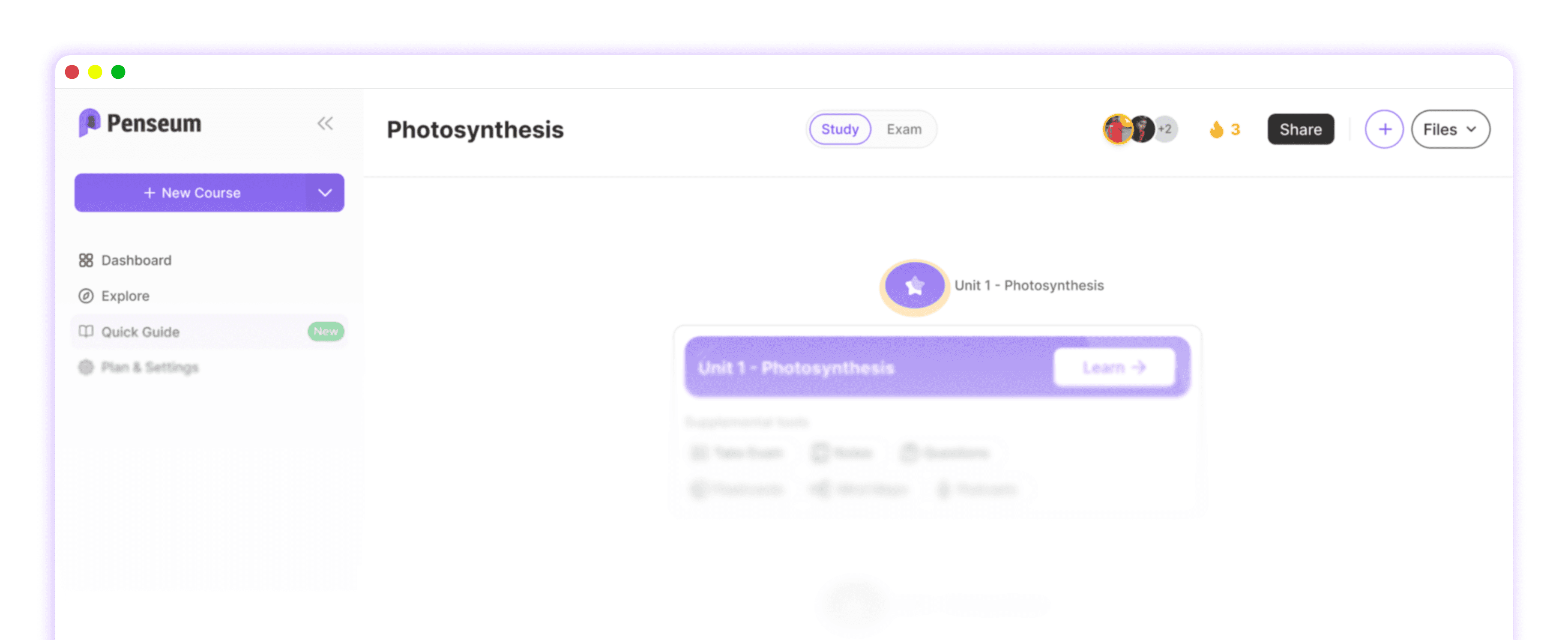
One of the biggest barriers to study discipline is the massive amount of time it takes to prepare. When students spend hours making flashcards, writing study guides, or summarizing lecture slides, cognitive energy is severely depleted before the actual learning even begins. To stay disciplined, learners must minimize this initial friction and jump straight into active recall.
Active recall—testing oneself on concepts rather than rereading text—forces the brain to stay engaged and prevents the zoning out that commonly happens during passive reading sessions. By automating the setup process, students successfully maintain their cognitive stamina for the hard work of understanding complex topics and solving difficult problems. This is exactly where Penseum acts as an essential accountability partner.
Instead of staring at a blank page or feeling overwhelmed by a massive textbook chapter, students can simply upload their raw PDFs, lecture slides, or class notes directly into the platform. Penseum instantly generates targeted flashcards, custom quizzes, and comprehensive study guides. This effectively skips the procrastination-heavy preparation phase entirely.
Penseum's Live AI Voice Tutor Keeps You Engaged
If a student loses focus because they are stuck on a difficult concept, Penseum provides a 1-on-1 AI voice tutor that works out the problem on a live canvas. The AI tutor catches specific mistakes and explains them out loud step-by-step. This keeps the learner actively involved rather than passively giving up out of frustration.
Data shows over 1.6 million students actively utilize Penseum globally to automate study prep. This massive adoption highlights the universal need to bypass the manual labor of organizing academic material. Used by learners across 130 countries, this all-in-one platform includes a free tier requiring no credit card, ensuring anyone can build better study habits immediately without financial friction.
Feature | Penseum 1-on-1 AI Tutor | Generic AI Chatbots | Traditional Manual Study |
|---|---|---|---|
Explanation Style | Step-by-step real-time voice | Text-only generic answers | Reading static textbooks |
Mistake Correction | Sees your work on a live canvas | Cannot see your live work | Waiting for professor office hours |
Study Prep Speed | Instant flashcards from raw PDFs | Requires manual prompting | Hours of writing by hand |
Engagement Level | High (keeps teaching until it clicks) | Low (stops after one answer) | Low (prone to passive reading) |
You no longer have to depend on raw willpower to push through confusing homework assignments. By removing the tedious setup work, you preserve your mental energy for actual learning.
Actionable Step: Upload a lecture PDF into Penseum to generate an instant study guide instead of writing it out by hand.
Frequently Asked Questions
How can I force myself to study when I am exhausted?
When you are exhausted, lower the barrier to entry by committing to just five minutes of review. Start with the easiest material, like reviewing pre-made flashcards, to build momentum without requiring heavy cognitive lifting. Switch to active recall methods instead of passive reading to prevent falling asleep.
What is the fastest way to build study discipline?
The fastest way to build study discipline is to establish a strict daily routine tied to an existing habit. Review notes immediately after a specific class or study at the exact same time every evening. Consistency trains the brain to enter focus mode automatically, reducing reliance on willpower.
How do I stop getting distracted while studying at home?
Stop getting distracted at home by designing a specific workspace used strictly for academic work. Leave the phone in another room, block distracting websites using browser extensions, and put on ambient music. Physical separation from entertainment devices is the most reliable way to maintain focus.
Can study apps help with self-discipline?
Study apps significantly help with self-discipline by organizing materials and automating the preparation process. Tools that generate flashcards or track time remove the tedious setup work that often causes procrastination, allowing students to jump straight into learning before losing motivation.
How long does it take to form a consistent study habit?
Forming a consistent study habit typically takes anywhere from 21 to 66 days of continuous repetition. Sticking to a dedicated schedule, using the same workspace, and utilizing consistent learning tools will accelerate this process by reinforcing environmental cues that trigger focused behavior.
Written by Samit Khalsa — Expert in cramming for exams
Last updated: September 2026
Sources
Steel, P. (2007). The nature of procrastination: A meta-analytic and theoretical review of quintessential self-regulatory failure. Psychological Bulletin, 133(1), 65-94. https://pubmed.ncbi.nlm.nih.gov/17201571/
Gollwitzer, P. M. (1999). Implementation intentions: Strong effects of simple plans. American Psychologist, 54(7), 493–503. https://scholar.google.com/scholar?q=Implementation+intentions:+Strong+effects+of+simple+plans
Vohs, K. D., Redden, J. P., & Rahinel, R. (2013). Physical order produces healthy choices, generosity, and conventionality, whereas disorder produces creativity. Psychological Science, 24(9), 1860-1867. https://pubmed.ncbi.nlm.nih.gov/23907542/
Cirillo, F. (2006). The Pomodoro Technique. Agile Processes in Software Engineering and Extreme Programming, 31. https://scholar.google.com/scholar?q=The+Pomodoro+Technique+Cirillo
Roediger, H. L., & Karpicke, J. D. (2006). Test-enhanced learning: Taking memory tests improves long-term retention. Psychological Science, 17(3), 249-255. https://pubmed.ncbi.nlm.nih.gov/16507066/
Related guides
Ready to study smarter?
Start turning your notes into guides, quizzes, and flashcards in seconds.