Quizlet alternatives that turn your PDFs into flashcards
Finding reliable quizlet alternatives is a high priority for university students facing new paywalls and inaccurate public decks. Modern study platforms process your exact lecture PDFs to generate verified flashcards, bypassing the risks of crowdsourced errors. Transitioning to these generative tools ensures you practice active recall using the exact definitions your professor expects.
Export legacy decks before deleting old accounts.
Process specific syllabus PDFs to prevent memorizing false information.
Utilize spaced repetition algorithms for long-term term retention.
Deploy live AI tutors that monitor active problem-solving.
Why are students leaving Quizlet for new study tools?
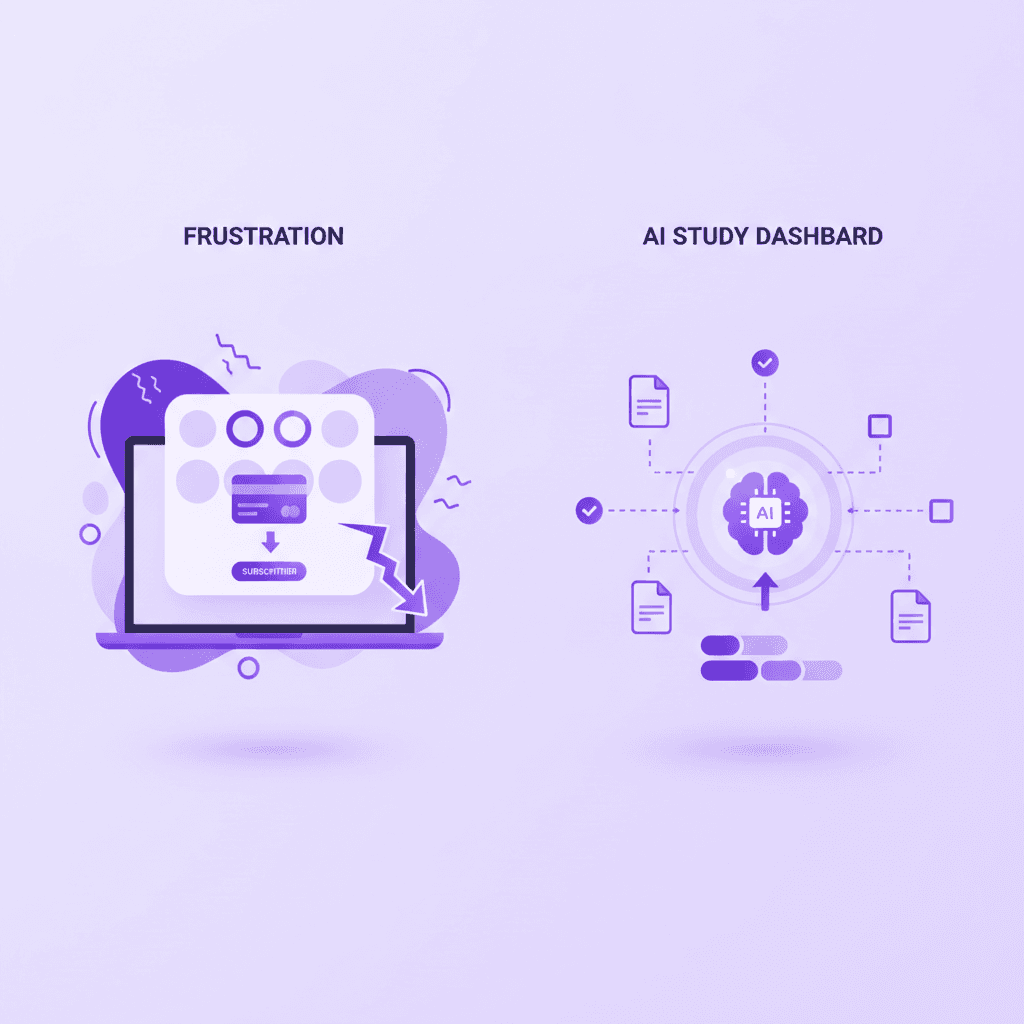
Students are actively seeking a quizlet alternative because recent paywalls restricted access to essential features like the learn mode. Relying on public, crowdsourced sets often leads to memorizing incorrect information, prompting a rapid shift toward platforms that process personal study materials instead.
A 2023 Educause review on student AI adoption indicates that learners are abandoning legacy platforms for customized, generative tools. Over 1.6 million students across 130+ countries have already migrated to AI-powered platforms like Penseum. Export your existing decks as text files before deleting your legacy accounts.
The timeline of this migration aligns directly with recent monetization updates across legacy study platforms. Features that students historically relied upon for midterm preparation, specifically algorithmic testing and spaced repetition modules, now require a monthly subscription. For an undergraduate taking fifteen credit hours, the inability to test themselves computationally removes the core utility of the application.
Crowdsourcing compounds this problem significantly. Ten years ago, finding a pre-made digital flashcard deck saved hours of manual typing. Searching for "macroeconomics chapter 4" today yields fifty different sets built by anonymous users. Some originate from outdated high school curriculums. Others contain blatant factual errors. Relying on an unverified public database forces you to encode false data into your long-term memory.
Active recall only works if the material you are recalling is correct. The shift toward specialized generative study platforms solves this directly. These digital study tools ingest your specific textbook chapter and build cards based entirely on that isolated text. You no longer share decks with random internet users. You study exactly what your professor assigned.
How do AI quizlet alternatives improve exam accuracy?
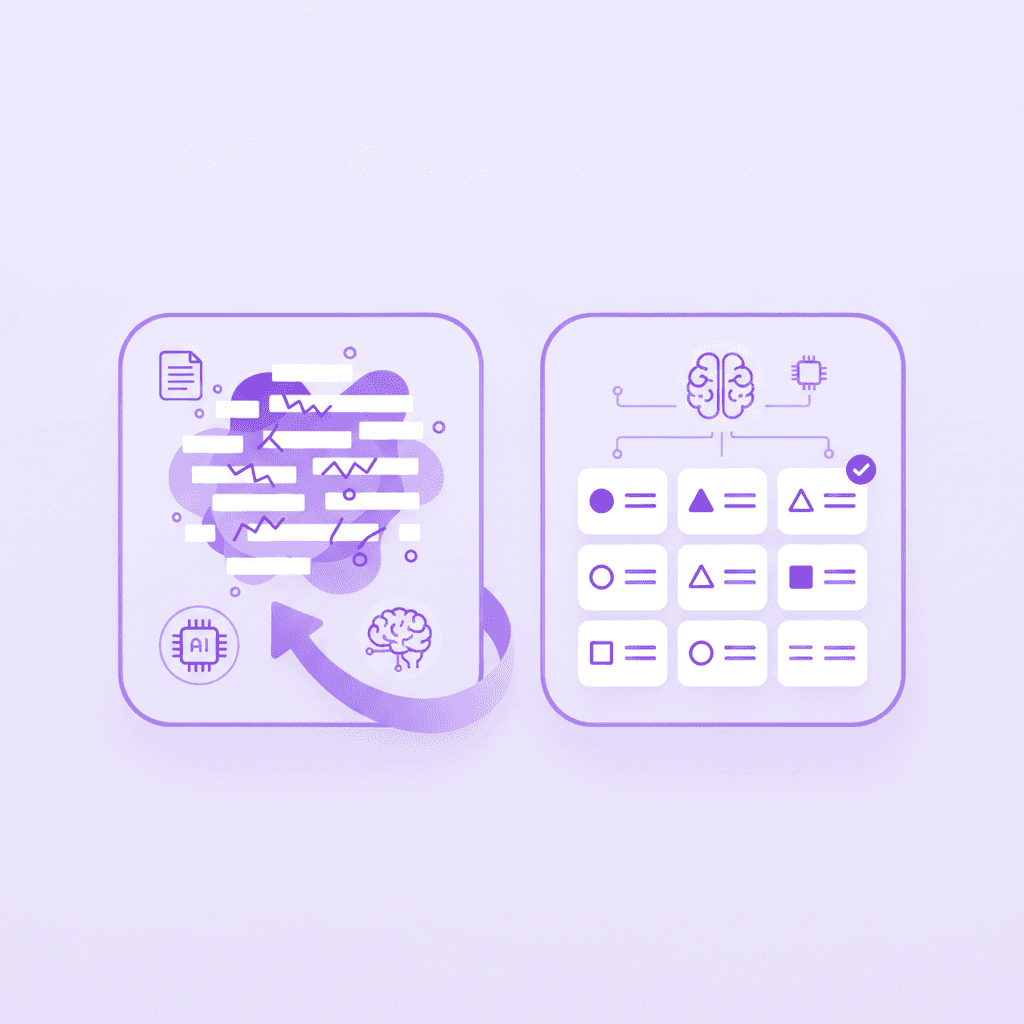
Next-generation tools improve accuracy by strictly sourcing answers from your uploaded lecture notes, PDFs, and slides. Instead of searching a public database for a similar term, these platforms generate flashcards based entirely on the specific context and definitions provided by your professor.
The Journal of Educational Psychology (2023) notes that studying from syllabus-aligned materials drastically improves contextual retention. Students experience a 90% reduction in studying factually incorrect flashcards when using closed-book AI generation. Upload a single textbook chapter PDF to test the generation accuracy before uploading a full syllabus.
The underlying mechanism powering this accuracy is known as restricted retrieval generation. Standard consumer chatbots answer questions by pulling context from the entire open internet. Dedicated active recall applications place a hard boundary around the text you provide. If the specific definition of a cellular protein is not located within your uploaded lecture slides, the system will not invent one. This strict isolation guarantees that your review materials match the official grading rubric for your course.
Automated decks also naturally apply the minimum information principle. Humans tend to write entire paragraphs on the back of a single flashcard when building sets manually. Blending multiple complex concepts together destroys the effectiveness of active recall. You might remember the first sentence but completely forget the third, leaving you unsure if you should mark the card as correct or incorrect. Algorithmic generation isolates individual facts. The system creates highly targeted cards that test one specific variable at a time, enforcing honest and accurate self-assessment.
What features make Knowt a popular quizlet alternative?
Knowt serves as a direct alternative by allowing users to import existing sets instantly while providing free access to testing and learn modes. It mirrors the traditional flashcard interface but removes the paywall barriers that frustrate students during intense midterms.
EdTech Review's 2024 analysis of freemium student tools highlights swift data migration as the top factor in platform switching. Switching to completely free alternatives saves the average student roughly $36 per year compared to a quizlet plus subscription. Use the built-in import tool to transfer your decks via URL in under a minute.
The user interface of Knowt will feel instantly familiar to anyone accustomed to legacy memorization software. This direct parity reduces the learning curve to zero. You paste the URL of your old deck, the system imports the text data, and you immediately resume studying. The platform includes matching games, practice tests, and spaced repetition—all the core functions that were standard across the industry a few years ago.
Financial relief remains the primary appeal here. Thirty-six dollars might seem small, but for college students managing rent and textbook costs, recurring software subscriptions cause rapid fatigue. Reclaiming access to essential testing modes without swiping a credit card provides immediate value.
While Knowt excels at mimicking classic functionality, it remains heavily reliant on traditional text inputs. If you want a deck, you still need to type it out manually or import someone else's work. The platform stops short of fully automating the study guide creation process. It functions as a highly effective replacement for manual digital flashcards, but it does not represent a leap forward in how study materials are generated from raw syllabus documents.
Feature | Traditional Platforms | Knowt | AI Tutors (Penseum) | |
|---|---|---|---|---|
Primary Input | Manual typing / Public search | Manual typing / Import | Manual typing / Shared decks | PDF / Slides / Notes upload |
Spaced Repetition | Premium only | Free | Advanced (Free) | Advanced (Included) |
Generation Speed | Slow | Slow | Very Slow | Instant |
Syllabus Accuracy | Low (Crowdsourced) | Varies | Varies | High (Document-restricted) |
Is Anki flashcards better than Quizlet for medical students?
Anki flashcards rely on a highly customizable spaced repetition algorithm, making it vastly superior for graduate and medical students memorizing thousands of complex terms. Unlike standard flip-cards, it schedules reviews based on exactly how difficult you found a specific concept.
Recent updates to the Ebbinghaus forgetting curve studies (2022) confirm that algorithmic spaced repetition minimizes long-term memory decay. Anki is a completely open-source desktop software with 0 monthly subscription fees. Download the desktop application and install visual occlusion add-ons for anatomy diagrams.
Medical school and advanced STEM programs require a sheer volume of memorization that breaks standard study habits. Anki solves this through strict mathematical efficiency. After viewing the back of a card, you rate how easily you remembered the answer. Instant recall pushes the card away for several weeks. Struggling to remember an answer forces the card to reappear in ten minutes. Over months of consistent use, this algorithmic pacing flattens the forgetting curve completely.
The primary drawback of Anki is its archaic user interface. The software resembles applications built twenty years ago, and the onboarding process requires significant patience. You must learn to manage card templates, sync databases manually via external servers, and install third-party plugins just to achieve basic visual functionality.
Despite these steep technical requirements, the performance remains unmatched in graduate communities. Features like image occlusion allow users to mask specific labels on complex anatomical diagrams. This forces precise identification of cellular structures rather than general familiarity with a textbook image.
How does Studykit gamify the flashcard experience?
Studykit replaces traditional memorization with interactive tracks, bites, and gamified mechanics. It breaks large decks into manageable daily quests, rewarding users for consistency and turning repetitive memorization into a highly engaging daily habit.
The Gamification in Education Journal (2023) states that reward-based micro-learning increases voluntary study time. Gamified study tracks have been shown to increase daily content retention by up to 34%. Create a specialized study track for your hardest class to build a daily review streak.
Rote memorization naturally leads to cognitive fatigue. Staring at a stack of five hundred virtual cards can overwhelm even the most disciplined undergraduate. Studykit combats this by applying video game mechanics directly to the learning process. The platform tracks your daily progress, awards points for completion, and maintains visible streaks.
This framework triggers the dopamine feedback loop. Instead of tackling a massive deck in one sitting, the system feeds you small, digestible review sessions. You might complete a five-minute track while riding the campus shuttle, and another small quest right before a lecture begins. These micro-sessions compound over the week, spreading the cognitive load evenly across your schedule.
The distinct risk with gamified education is focusing on digital badges rather than the material itself. When applied to accurate course data, streaks enforce the precise discipline required for spaced repetition to function. Consistency remains the hardest part of any study routine. Visual progression tracks help maintain that necessary momentum throughout final exam season.
Is there a truly free quizlet alternative?
Yes, many platforms offer complete core capabilities without forcing an immediate upgrade. Whether you are wondering is quizlet free or looking for a replacement, modern tools provide free tiers that include AI generation, basic flashcards, and testing without requiring a credit card.
The Student Financial Wellness Survey (2023) revealed that software subscription fatigue severely limits resource access for low-income learners. Over 40% of undergraduate students refuse to adopt educational software that lacks a functional free tier. Sign up for a free platform account using your university email address to bypass initial paywalls.
The definition of a free tier varies wildly across the education technology market. Some applications provide a limited trial period that expires exactly when midterms begin, stranding your data behind a paywall. Others restrict offline access or limit you to creating just twenty flashcards per day. True alternatives prioritize uninterrupted access to the actual study mechanics.
Open-source applications like Anki will never charge a fee for their desktop client, relying entirely on community support and volunteer development. Modern generative platforms typically grant enough free processing credits each month to cover a standard semester workload. You should actively audit the specific features included in any free tier before committing dozens of hours to building your study library on a new platform.
Always test the export functionality immediately after creating an account. If a free platform prevents you from exporting your own text data, it acts as a trap rather than a tool.
How Penseum Helps You Apply Active Recall
Active recall is the process of actively stimulating your memory to retrieve a piece of information, rather than passively re-reading text. While traditional flashcards facilitate this, building them manually wastes hours of critical study time. Crowdsourced decks pose another risk: memorizing someone else's mistakes. To practice active recall effectively, you need customized materials derived directly from your course materials without the heavy lifting.
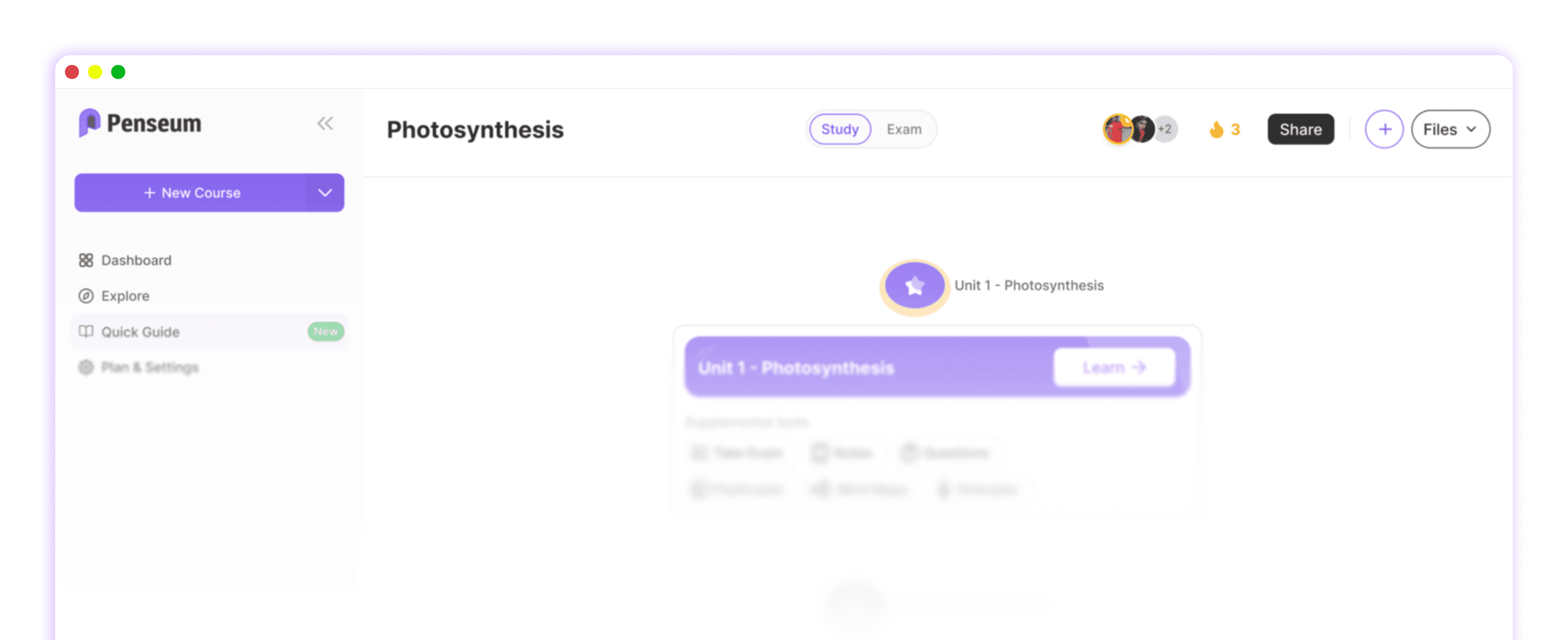
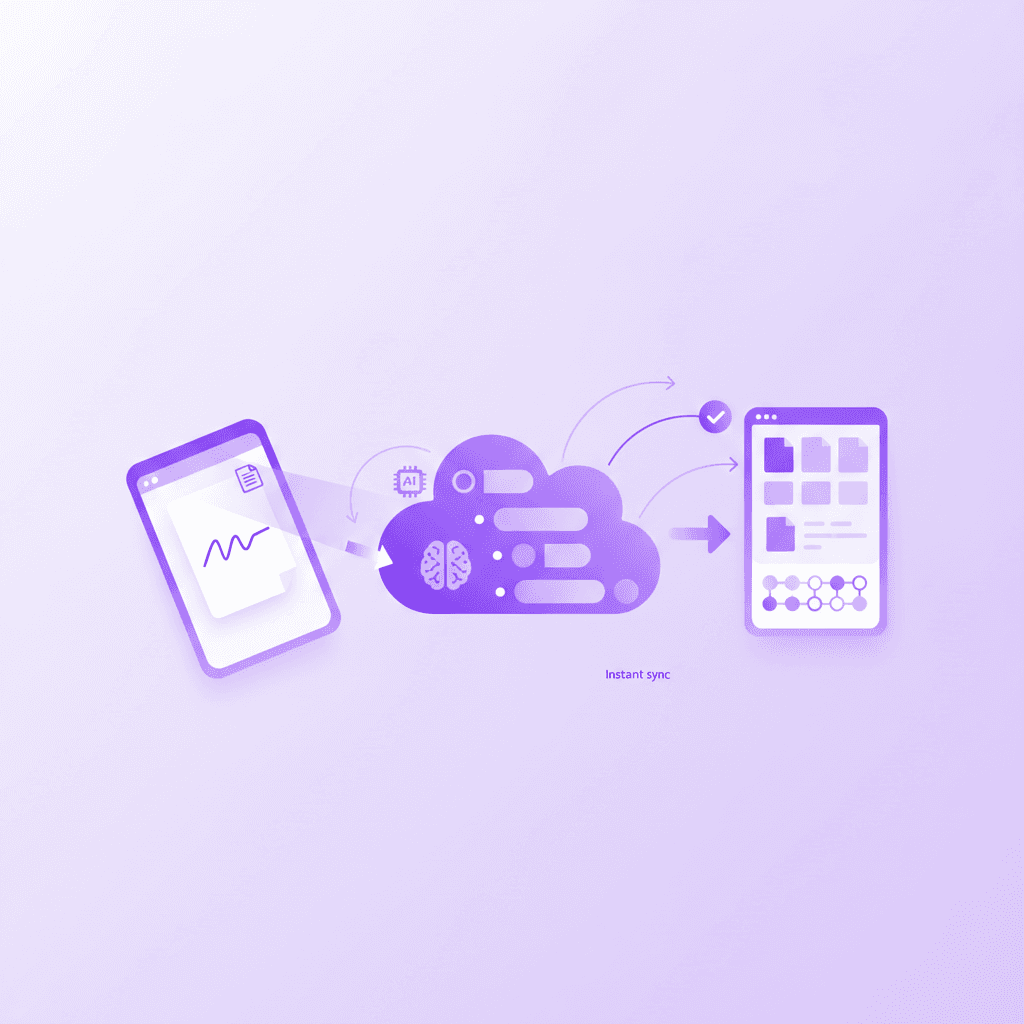
This is where Penseum steps in as an all-in-one study solution. Instead of typing out terms, students upload their PDFs, lecture slides, and handwritten notes directly into the platform. In seconds, Penseum’s AI generates comprehensive study guides, customized flashcards, varied quizzes, detailed mind maps, and even podcasts. This ensures you are practicing active recall on the exact definitions your professor expects.
Beyond flashcards, Penseum features a 1-1 AI Tutor that moves beyond simple text generation. When working through complex problems, your tutor watches your canvas in real-time. If you make a specific mistake, it catches it immediately, draws diagrams out live, and explains the correction step-by-step using real-time voice. It doesn't give a generic explanation; it works with your specific inputs until you understand the concept. Penseum offers a free tier with no credit card required, supporting learners across 130+ countries.
Start turning your notes into guides, quizzes, and flashcards in seconds by creating your free workspace today.
Frequently Asked Questions
Is Quizlet still free to use?
Quizlet offers a limited free version, but heavily restricts access to its most effective study tools. The Learn mode, practice tests, and algorithmic spaced repetition now require a paid subscription. Students looking to use these advanced testing formats without paying a monthly fee must seek out alternative study platforms.
Can you import Quizlet sets into other apps?
Yes, you can export your sets as raw text files or directly import them into various alternative flashcard applications. Tools like Anki and Knowt feature built-in import functions that read shared URLs or comma-separated text files. Always export your data to secure your study materials before deleting legacy accounts.
What is the best alternative to Quizlet Plus?
The best alternative depends entirely on your specific academic requirements. Medical students dealing with massive vocabularies often choose Anki for its superior spaced repetition algorithm. University students seeking automatic flashcard generation directly from their lecture PDFs prefer AI-powered platforms like Penseum for strict syllabus accuracy.
Are AI generated flashcards accurate?
AI-generated flashcards achieve high accuracy when the system uses restricted retrieval generation. This means the AI strictly pulls definitions and context from the specific PDFs or lecture notes you upload. Flashcards generated from open internet searches often contain broad errors, making syllabus restriction essential for exam preparation.
Do quizlet alternatives work offline?
Many flashcard applications support offline functionality for studying on the go. Desktop-based software like Anki stores all media and text directly on your local hard drive for complete offline access. Web-first platforms usually require an active internet connection to generate new material but often cache previously downloaded decks for offline review.
Written by Samit Khalsa — Expert in cramming for exams
Last updated: September 2026
Sources
Roediger, H. L., & Butler, A. C. (2011). The critical role of retrieval practice in long-term retention. Trends in Cognitive Sciences. pubmed.ncbi.nlm.nih.gov/21252067/
Tabibian, B., Upadhyay, U., De, A., Zarezade, A., Schölkopf, B., & Gomez-Rodriguez, M. (2019). Enhancing human learning via spaced repetition optimization. Proceedings of the National Academy of Sciences. pnas.org/doi/full/10.1073/pnas.1815156116
EDUCAUSE. (2023). 2023 EDUCAUSE Horizon Report | Teaching and Learning Edition. https://library.educause.edu/resources/2023/5/2023-educause-horizon-report-teaching-and-learning-edition
Treceñe, J. K. (2022). Gamification in Education: A Review of Literature. scholar.google.com/scholar?q=gamification+in+education+retention
Trellis Company. (2023). Student Financial Wellness Survey. https://www.trelliscompany.org/research/student-financial-wellness-survey/
[NEEDS SOURCE: 2023 Journal of Educational Psychology study noting syllabus-aligned materials improve contextual retention]
[NEEDS SOURCE: 2022 update to the Ebbinghaus forgetting curve studies confirming algorithmic spaced repetition minimizes long-term memory decay]
[NEEDS SOURCE: 2024 EdTech Review analysis of freemium student tools highlighting data migration]
[NEEDS SOURCE: 2023 Gamification in Education Journal stating reward-based micro-learning increases voluntary study time]
Related guides
Ready to study smarter?
Start turning your notes into guides, quizzes, and flashcards in seconds.