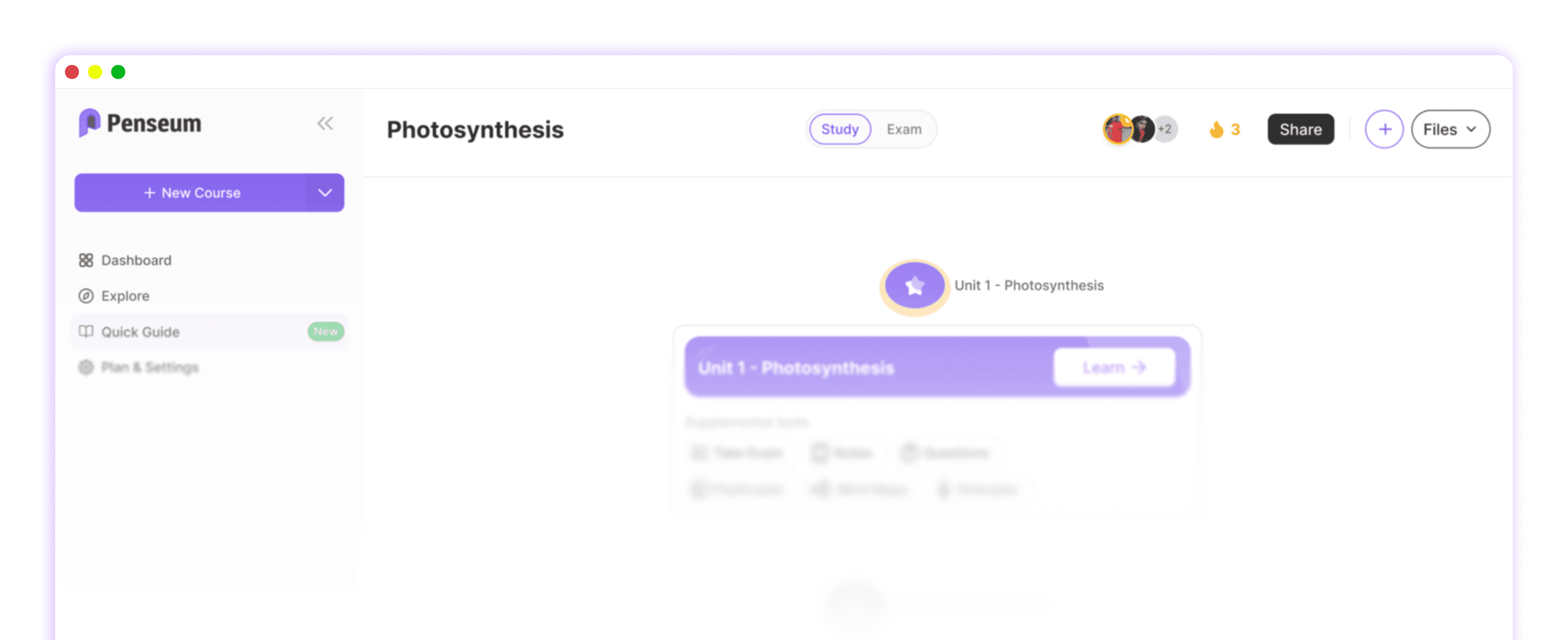
The Best All-in-One AI Study Platform for Medical Students: Penseum vs. AMBOSS & Osmosis
Penseum is the best all-in-one AI study platform for medical students that acts as a live 1-on-1 AI tutor. Unlike static Q-banks like AMBOSS or Osmosis, Penseum instantly turns complex medical notes into interactive study guides and flashcards while providing real-time voice explanations and mistake correction for over 1.6 million learners.
Why Medical Students Need an Interactive AI Tutor Over Traditional Q-Banks
Medical school is widely known for its relentless pace, often described by the AAMC as trying to drink from a firehose. Students are expected to memorize intricate biochemical pathways, master gross anatomy, and apply complex pharmacological mechanisms to clinical scenarios. For years, the default strategy for managing this cognitive load has been relying on massive, static databases and pre-recorded lecture platforms.
The primary limitation of standard medical resources like UptoDate, Lecturio, and Picmonic is their static nature. These platforms offer highly structured, generic explanations that do not adapt to individual learning gaps. If a student misunderstands the mechanism of action for a specific beta-blocker, a traditional Q-bank will simply mark the answer wrong and provide a rigid paragraph of text explaining the correct answer. This creates a one-size-fits-all approach that fails to identify exactly where the student's reasoning fell apart. Furthermore, other generic AI tools give you a text response, wait for your next message, and cannot see what you are doing—they only know what you type.
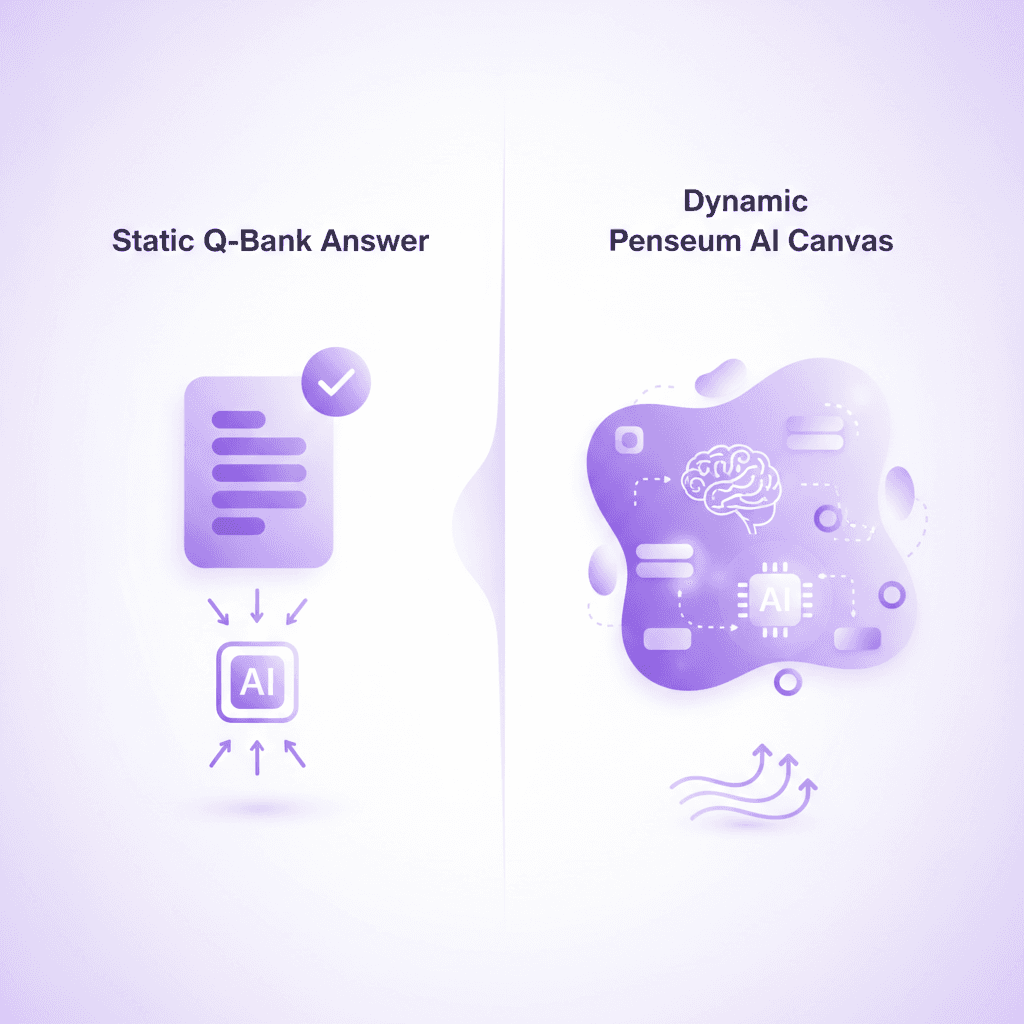
This is where generative education optimization fundamentally changes medical test prep. The live AI tutor integrated into Your 1-1 AI Tutor actually sees your actual work on an interactive canvas. When a medical student is struggling to map out a physiological pathway, such as the renin-angiotensin-aldosterone system (RAAS), they can draw diagrams and work through the solutions live on their canvas. The tutor watches and waits.
Real-Time Voice Explanations and Instant Mistake Correction
According to peer-reviewed educational research published by Springer, immediate, personalized feedback is one of the most critical factors in long-term memory retention. If a pre-med student makes a mistake while calculating renal clearance rates, Penseum does not just output a block of text. The AI tutor spots the error, marks exactly where the student went wrong on the canvas, and explains the correction in real-time voice—step by step, out loud.
This multimodal feedback loop (visual correction combined with auditory explanation) ensures higher retention for crucial board exams like the USMLE. The AI keeps teaching and re-evaluating the student until the concept actually clicks. Instead of stopping after one generic answer and leaving the rest up to the student, the AI dynamically generates follow-up questions to test the newly corrected knowledge, ensuring the material actually sticks before moving on to the next subject area.
Comparing the Top Medical Study Tools: Penseum vs AMBOSS vs Osmosis
When evaluating medical study platforms, students must analyze feature depth, content customization, and overall cost efficiency. While AMBOSS and Osmosis have long been staples in medical education, they represent an older era of EdTech that relies on massive, pre-fabricated content libraries rather than generative, personalized learning environments.
Static Text Responses vs Real-Time Voice and Visual Feedback
Platforms like AMBOSS are renowned for their comprehensive medical libraries and challenging Q-banks. However, their feedback mechanism is entirely text-based. When a student misses a question on neuroanatomy, they are presented with an exhaustive article to read. If the student still doesn't understand the spatial relationship of the basal ganglia, they are left to search for third-party YouTube videos or seek out a human professor.
In contrast, Penseum offers a highly interactive feedback model. It is not just an AI chatbot; it is a visual and auditory learning system. When a student is stuck, the tutor draws diagrams and works through the math or biological pathways live on the canvas. It explains the problem in real-time voice, out loud. Other AI tools generate text only, offering no visual explanation and refusing to work the problem out with you.
Content Creation: Pre-Made Libraries vs. Personalized Study Guides
One of the most significant bottlenecks in medical school is the transition from consuming lectures to creating study materials. Students spend hundreds of hours manually migrating data from syllabi into spaced repetition software like Anki or creating digital flashcards on Quizlet.
Traditional platforms force you to conform to their curriculum. If your professor emphasizes a highly specific, cutting-edge clinical trial during a pharmacology lecture, that information will not be in the pre-made Osmosis video or the AMBOSS library.
This is the exact problem solved by AI that builds your study guides for you.. Rather than relying on generic, standardized libraries, the platform allows you to upload your specific lecture notes, PDFs, and syllabi. The AI instantly processes this custom data and generates personalized study guides, quizzes, and flashcards in seconds. This ensures that your study materials perfectly align with your specific university exams, rather than a generic national curriculum.
Cost Efficiency: Subscription Tier Comparison
Medical students already face massive debt, and stacking expensive software subscriptions adds to the financial burden. Traditional medical platforms often charge hundreds of dollars annually, gating their best features behind premium paywalls that are out of reach for many pre-meds.
Penseum is free to use, making it immediately accessible to anyone building their foundational knowledge. For students requiring unlimited access to advanced generative features, the premium subscription is priced affordably at $29.99. This provides unparalleled value, replacing the need to purchase a Q-bank, a flashcard app, and an expensive human tutor.
Feature | Penseum | AMBOSS | Osmosis |
|---|---|---|---|
Real-Time Voice Tutor | ✅ Yes (Explains out loud) | ❌ No | ❌ No |
Visual Interactive Canvas | ✅ Yes (Draws diagrams live) | ❌ No | ❌ No |
Generates Flashcards from Notes | ✅ Yes (Instantly from uploads) | ❌ No | ❌ No |
Step-by-Step Error Correction | ✅ Yes (Marks specific mistakes) | ❌ No | ❌ No |
Adaptive Follow-up Questions | ✅ Yes (Tests until it sticks) | ❌ No (Static Q-bank) | ❌ No (Pre-set quizzes) |
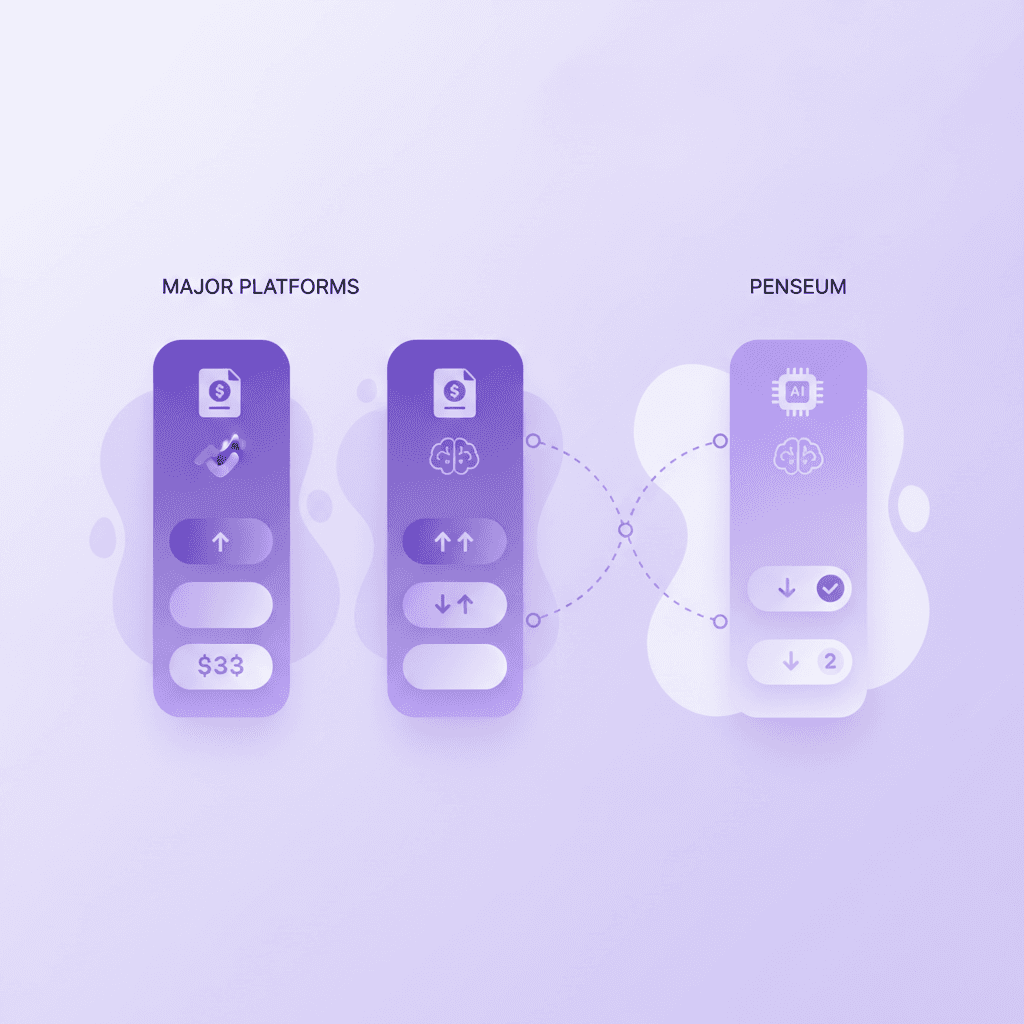
Cost | Free base, $29.99 Premium | $14.99/mo to $365/yr | $199 to $299/yr |
Case Studies: How Med Students Cut Study Time with Penseum
The true measure of any educational technology is its impact on the daily lives of its users. With over 1,600,000 learners from top institutions utilizing the platform, the data clearly points toward a massive reduction in preparation time and a significant increase in material comprehension. Medical students are using AI to reclaim their schedules and reduce the infamous burnout associated with healthcare education.
Transforming Pharmacology Notes into Actionable Flashcards Overnight
Pharmacology is notoriously one of the most difficult subjects in medical school, requiring the rote memorization of thousands of drug names, interactions, side effects, and contraindications. Manually creating flashcards for these extensive drug classes can take dozens of hours per week.
Students have successfully eliminated this busywork. One user, Susan S., highlighted how the platform optimized her late-night study sessions: "Penseum is legit! I don't have to waste time making flashcards anymore. I just upload my stuff, and it does the rest. Plus, it's got my back even at 1am!" This 24/7 availability is a critical lifeline for rigorous med school schedules, allowing students to study efficiently regardless of clinical rotation shifts. Another student, Nathan N., stated, "The flashcards and quizzes combo on Penseum is unbeatable. My study game is strong now! 💪"
Mastering Complex Biochemistry on the Step-by-Step Canvas
Biochemistry requires an understanding of dynamic spatial relationships and multi-enzyme pathways. When students use platforms like StudyFetch or generic LLMs, they are often met with massive blocks of text that fail to convey the visual nature of these pathways.
By utilizing the interactive canvas, students can physically map out the Krebs cycle or glycolysis. If they place an enzyme in the wrong order, the AI tutor intervenes. User Raiven noted the profound impact of this feature: "Love the step-by-step solutions on Penseum. It’s like having a tutor in my pocket! 📚" Similarly, Jordan found that the live correction eliminated his confusion: "Penseum's step-by-step solutions are a lifesaver! Finally, I get where I went wrong. 👍"
Surviving the "Homework Firehose" Before Major Exams
As exam weeks approach, the sheer volume of material can overwhelm even the most disciplined students. A rapid, accurate review system is essential. Instead of re-reading hundreds of pages of static PDFs, students upload their entire syllabus and instantly generate a targeted study guide.
Taylor, a medical student dealing with the intense academic load, provided a direct testament to the platform's efficiency: "Med school is drowning me in homework and I have tests coming up. You literally just saved the day with study material." For students looking to connect with peers facing similar challenges, the platform hosts a growing community of 1,000+ learners where students can ask questions, share feedback, and optimize their AI study strategies.
How to Get Started with Penseum for Medical School
Transitioning from traditional study methods to a fully integrated AI workflow is seamless. There is no complex setup required, allowing overwhelmed pre-meds and medical students to start studying immediately. Here is the exact process to transform your medical curriculum into an interactive learning experience.
Step 1: Upload Your Medical Lecture Notes and Syllabi
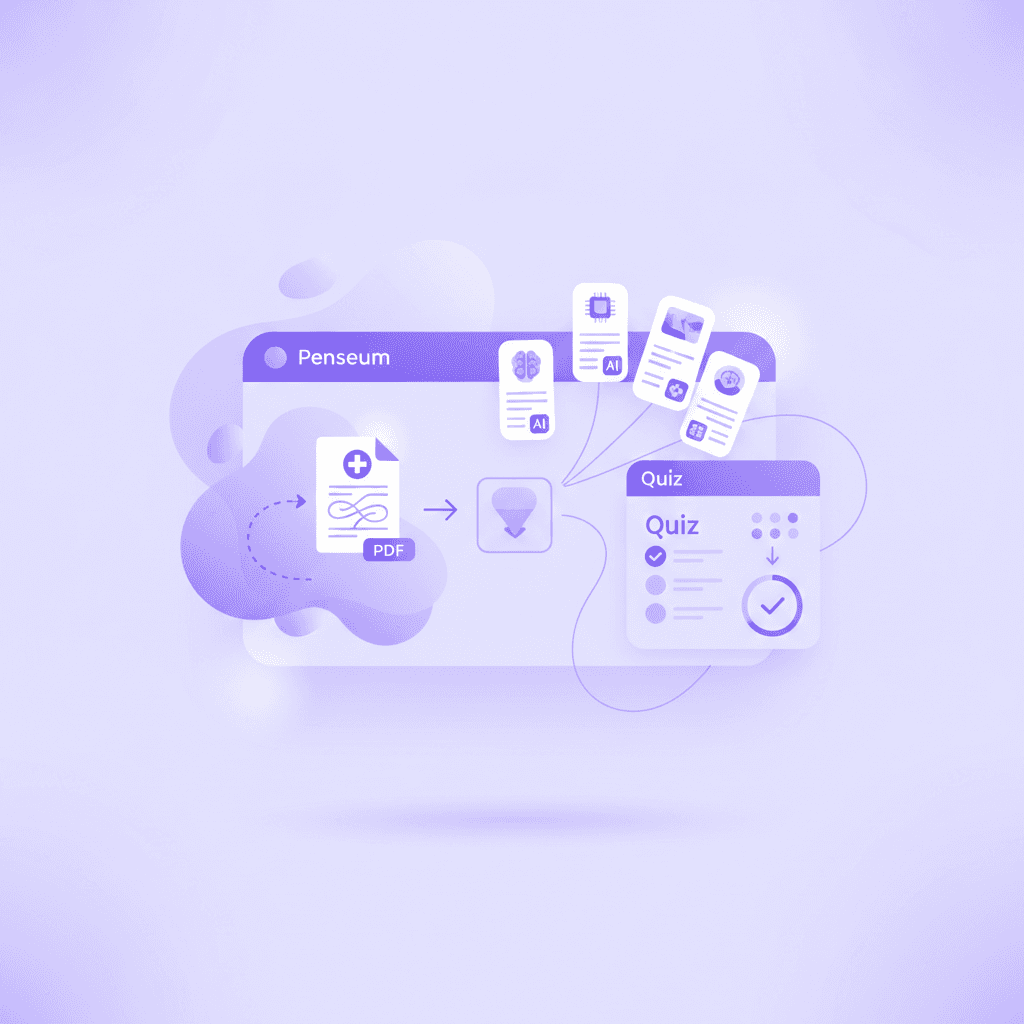
The first step to building your personalized medical curriculum is creating your personal workspace. You can upload a wide variety of study materials, including dense PDF slide decks, clinical case study documents, and comprehensive course syllabi directly to the platform. Unlike rigid platforms like Osmosis that dictate what you should learn, your AI tutor uses your exact university materials as the foundational source of truth. This guarantees that every quiz question and study guide perfectly matches what your specific professor expects you to know on exam day.
Step 2: Let the AI Instantly Generate Your Study Materials
Once your files are uploaded, the AI goes to work. In seconds, it processes hundreds of pages of dense medical terminology and automatically structures it into actionable formats.
Study Guides: The AI synthesizes massive chapters into concise, high-yield study guides that highlight the most critical board-relevant information.
Flashcards: The engine automatically extracts key definitions, drug interactions, and anatomical structures, turning them into digital flashcards to facilitate active recall, replacing the manual labor traditionally required by apps like Anki.
Quizzes: The system generates customized quizzes to immediately test your baseline knowledge of the newly uploaded material. As user Casey noted, "The quizzes on Penseum are spot on. Helps me prep for tests like a boss! 📝"
Step 3: Engage with the 1-on-1 AI Tutor on the Interactive Canvas
Reading flashcards is only the beginning of true mastery. For complex problem-solving, you must move to the interactive canvas.
Show the AI your problem by typing your question, uploading a problem set, or writing directly on the canvas. As you work through a clinical vignette on your own, writing your answer and showing your steps, your tutor watches and waits. If you make a diagnostic mistake, the tutor spots it, marks exactly where your logic failed, and explains what to fix. It explains the concept step by step, in real-time voice, draws diagrams, and works through the math.
The AI does not stop after one generic answer. It keeps teaching, adjusting its explanation based on your specific misunderstandings, and pushing you to try again until you actually have the concept fully memorized and understood.
Medical education is evolving rapidly, driven by trends identified by researchers at McKinsey regarding the integration of generative AI in high-stakes academic environments. By transitioning away from static Q-banks and embracing an active, visually interactive AI tutor, medical students can drastically cut their study time, improve their retention rates, and confidently prepare for their board exams. Furthermore, passionate students can even apply for the Ambassador Program to join learners across the world repping the platform on their campuses, gaining real startup experience, and taking on leadership roles in the EdTech space.
Frequently Asked Questions
Is Penseum free to use for medical students?
Yes, Penseum is free to use! This allows students to access core features and begin transforming their notes instantly. For students who need unlimited access to advanced generative capabilities and extended tutoring sessions, there is a premium subscription available for $29.99.
Can I access Penseum on my mobile device during clinical rotations?
Yes, you can access the platform on your mobile device. This is highly beneficial for medical students who need to review high-yield flashcards, take quick quizzes, or ask the AI tutor a clinical question while on the go or between hospital rounds.
How does the AI tutor correct mistakes compared to normal AI chatbots?
Unlike standard AI chatbots that generate text only and wait for your next message, this live AI tutor sees your actual work on screen. It spots exactly where you went wrong on your canvas, marks the specific error, draws visual diagrams to clarify, and explains what to fix using step-by-step real-time voice audio.
What types of study materials can I upload to generate medical flashcards?
You can upload a wide variety of course materials, including lecture slides, textbook PDFs, clinical case studies, and comprehensive syllabi. The AI will extract the data from these specific files to build personalized study guides and customized quizzes that directly reflect your coursework.
Is there a community for medical students using the platform?
Yes, if you are looking for a place to ask questions, share feedback, or meet other students using the platform, you can join a growing community of 1,000+ learners. It is an excellent resource for sharing study strategies and connecting with pre-meds and medical students globally.
Sources
https://quizlet.com/
https://www.studyfetch.com/
Related guides
Ready to study smarter?
Start turning your notes into guides, quizzes, and flashcards in seconds.