What causes academic stress and how to manage it
Key Takeaways
* Academic stress occurs when university demands outweigh a student's coping mechanisms.
* Mapping out syllabus dates early prevents unexpected deadlines and lowers baseline anxiety.
* Active recall techniques improve long-term retention significantly better than passive reading.
* Taking one mandatory rest day per week prevents temporary stress from turning into chronic burnout.
* AI tools like Penseum automate study material creation, saving hours of manual prep time.
What is academic stress and why does it happen?
Academic stress is the psychological distress students face when academic demands exceed their current adaptive capabilities. It is triggered by heavy workloads, looming deadlines, high-stakes testing, and the pressure to maintain high GPA standards for future career or graduate school prospects.
This psychological distress operates differently than everyday worry. It fundamentally alters how a student processes information and manages time. When university students transition from highly structured high school environments to independent college schedules, their existing coping mechanisms often fail. This gap between required output and current capability generates immense pressure.
Research by the American Psychological Association (2023) indicates that generalized anxiety and academic pressure are the top presenting concerns at university counseling centers. Students frequently report feeling overwhelmed by the sheer volume of reading assignments and continuous assessment cycles. The constant need to perform well creates a baseline level of tension that rarely dissipates during the semester.
According to a recent National College Health Assessment, 61% of college students report feeling overwhelming anxiety related to their academic performance within the past year. This statistic highlights a systemic issue within higher education. The anxiety stems entirely from poor syllabus visibility and unstructured study habits rather than a lack of intelligence.
Contrary to popular belief, extreme academic pressure does not strictly correlate with difficult subject matter. Many students fail introductory courses simply because they lose track of due dates. The brain interprets a forgotten deadline as an immediate physical threat, spiking adrenaline and triggering panic.
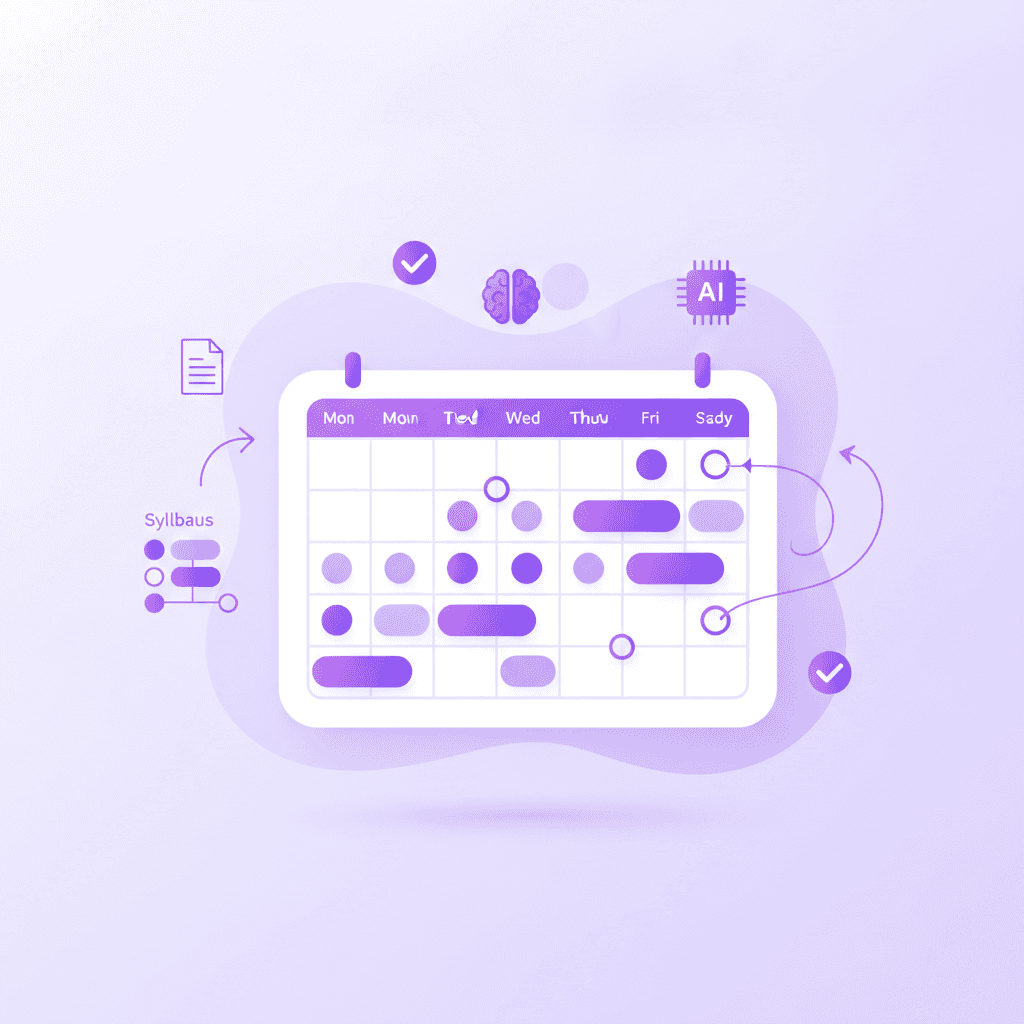
Map out your entire semester's syllabus dates on a single digital calendar during the first week of classes to eliminate surprise deadlines. Seeing your semester at a glance removes the fear of the unknown. You can visually identify peak testing weeks and adjust your study schedule in advance.
How does academic burnout differ from normal stress?
Normal stress is a temporary state of heightened alertness tied to specific deadlines, whereas academic burnout is a state of chronic exhaustion. Burnout causes emotional detachment from coursework, a cynical attitude toward studying, and a persistent drop in overall academic performance.
Acute stress serves a biological purpose. It provides a temporary spike in dopamine and adrenaline, giving you the focus required to finish a term paper or study for a midterm. Once the exam ends, your nervous system returns to a baseline state of rest. Burnout occurs when that rest period never happens, leaving your nervous system stuck in overdrive.
Maslach and Leiter's foundational research (2016) on burnout syndrome defines it strictly as a tri-dimensional construct of exhaustion, cynicism, and reduced professional or academic efficacy. Exhaustion drains your physical energy, making it difficult to get out of bed for morning lectures. Cynicism alters your perspective, leading you to believe that your degree is pointless or that professors are actively working against you.
Reduced academic efficacy is the behavioral result of burnout. You study for the same amount of hours, but your grades continue to slip because your brain refuses to absorb new information. Studies indicate that up to 40% of university students experience severe student burnout by the end of their sophomore year due to prolonged, unmanaged stress.
Many students attempt to push through burnout by drinking more caffeine and skipping sleep. This approach only accelerates the tri-dimensional collapse. Your brain requires extended periods of low cognitive load to consolidate memories and repair neural pathways.
Schedule one mandatory, guilt-free rest day each week where absolutely no university coursework or studying is allowed. Treat this rest day with the same level of strict compliance as a graded final exam. Forcing your brain to detach from academic pressure resets your dopamine baseline and restores your ability to focus.
What are the physical symptoms of test taking anxiety?
Test taking anxiety manifests physically through rapid heartbeat, shallow breathing, insomnia, headaches, and nausea. Mentally, it causes working memory to freeze, leading students to blank out during exams despite having prepared adequately and understanding the source material.
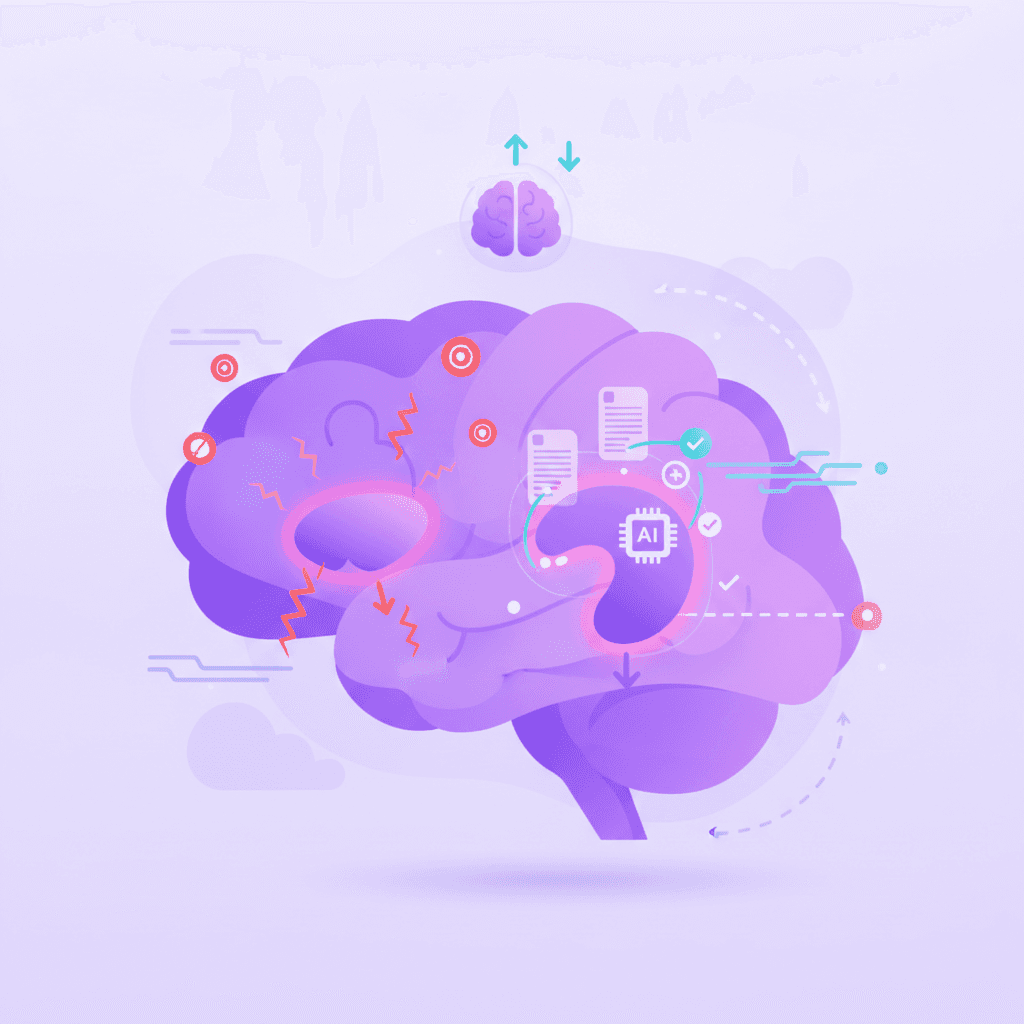
When you sit down for a major exam, an anxious brain perceives the test paper as a survival threat. The amygdala sounds an alarm, flooding your bloodstream with cortisol. This hormonal response diverts oxygen away from the prefrontal cortex, which is the exact area of the brain responsible for logical reasoning and memory retrieval.
Zeidner's comprehensive research (1998) on state-trait anxiety shows that physiological arousal during high-stakes testing directly interrupts the cognitive retrieval processes required for exam performance. Your brain effectively builds a biochemical wall between the question on the page and the answer stored in your hippocampus. You know the information, but you physically cannot access it.
Clinical surveys reveal that 25-40% of students suffer from test anxiety severe enough to negatively impact their final exam grades. These students often spend weeks studying and can easily explain the concepts to a friend in a low-pressure environment. The moment the timer starts in a lecture hall, their somatic symptoms take over.
Physical symptoms often compound the mental block. A racing heart leads to shallow chest breathing, which mildly deprives the brain of oxygen and increases feelings of panic. Students then worry about their physical symptoms, creating a secondary layer of anxiety that completely derails their focus.
Practice deep, diaphragmatic breathing exercises for two minutes before turning over your exam paper to lower your immediate heart rate. Inhale deeply through your nose for four seconds, hold for four seconds, and exhale slowly through your mouth for six seconds. This specific breathing pattern stimulates the vagus nerve, manually signaling to your brain that you are safe and ready to retrieve information.
Which test taking strategies effectively reduce pre-exam panic?
Effective test taking strategies rely on structured spaced repetition and active retrieval rather than last-minute cramming. Cramming overloads working memory and spikes cortisol levels, while structured self-testing builds confidence and naturally lowers the psychological panic associated with impending exams.
Passive reading is the most common and least effective study method used by university students. Highlighting textbook paragraphs or re-reading lecture notes creates an illusion of competence. Your brain recognizes the words on the page and tricks you into believing you have memorized the underlying concept.
Karpicke and Roediger's cognitive psychology study (2008) demonstrated that repeated active retrieval practice produces significantly better long-term retention than passive studying. Active retrieval forces your brain to search for information without any external cues. This cognitive struggle physically strengthens the neural pathways connected to that specific memory.
Students who utilize active recall and self-testing methods improve their long-term material retention by up to 150% compared to those who just re-read notes. When you walk into an exam knowing you have successfully retrieved the information dozens of times from memory, your baseline confidence rises. This verified confidence naturally suppresses the release of stress hormones.
The spacing effect is equally vital for reducing pre-exam panic. Reviewing material in short bursts over two weeks allows your brain to form durable memories. Attempting to force fourteen weeks of complex coursework into your short-term memory the night before a final guarantees high anxiety and low performance.
Replace your highlighter with self-generated flashcards and test yourself on core concepts without looking at the source material. Write the question on one side and force yourself to speak the answer out loud before checking the back. If you cannot explain the concept clearly out loud, you have not actually learned it yet.
How do you manage academic stress when balancing multiple classes?
Managing multiple complex classes requires strict time-blocking and prioritizing tasks by weight and deadline. This prevents the cognitive overload that occurs when students view their entire semester workload as one massive, insurmountable task rather than individual, manageable actions.
Human brains cannot efficiently multitask. When you attempt to write a literature essay while periodically checking organic chemistry flashcards, you incur a heavy cognitive switching penalty. Each shift in focus drains mental energy, leaving you exhausted and stressed despite making very little actual progress on either assignment.
Macan et al. (1990) established in their time-management studies that perceived control over time is the strongest predictor of reduced academic stress among college students. Students who feel in control of their schedules report lower baseline anxiety, even if their objective workload is identical to highly stressed peers. Structure creates psychological safety.
Implementing structured time management techniques reduces perceived academic stress by up to 35% during peak midterm and final exam seasons. You achieve this by breaking large syllabus requirements into micro-tasks. "Study for biology" is a vague, overwhelming command, but "Review biology chapter 4 flashcards for 30 minutes" is a defined, achievable goal.
Use the Eisenhower Matrix to categorize your weekly assignments by urgency and importance, focusing only on the high-priority quadrant first. Draw a simple four-square grid to separate tasks into categories: urgent and important, important but not urgent, urgent but not important, and neither. This visual sorting mechanism immediately removes the panic of wondering what to work on next.
Dedicate specific days or long, uninterrupted time blocks to single subjects. Spend Tuesday morning entirely on economics and Tuesday afternoon entirely on history. By eliminating task-switching, you preserve your cognitive reserves and reduce the overall friction of managing a heavy course load.
What test anxiety strategies work best for multiple choice exams?
For multiple choice tests, effective test anxiety strategies include utilizing the process of elimination and identifying distractor options. By methodically crossing out objectively wrong answers first, students reduce cognitive load, narrow their focus, and significantly lower their immediate testing stress.
Professors design multiple-choice questions to test both recall and precision. They actively construct incorrect options, known as distractors, based on common student misconceptions. Anxious students tend to rush and frequently fall into these exact traps by selecting the first answer that looks vaguely familiar.
Haladyna's research on multiple-choice item writing (2004) confirms that the presence of implausible distractors disproportionately affects anxious students unless they systematically eliminate them. When panic sets in, students lose the ability to analyze fine details. Methodical elimination acts as a grounding technique, forcing the brain to slow down and process logic.
Statistically, eliminating just two incorrect answers on a standard four-option multiple-choice question increases your guessing probability of success from 25% to 50%. This mathematical reality provides immediate psychological relief during a difficult exam. Even if you do not know the exact answer, you can confidently improve your odds through deductive reasoning.
Cover the multiple-choice answers with your hand, predict the correct answer in your head based on the question alone, and then uncover the choices to find your match. This "cover and predict" method relies entirely on active recall rather than passive recognition. If your predicted answer matches one of the options, you bypass the professor's designed distractors entirely.
If you get stuck on a difficult question, mark it and move forward immediately. Spending ten minutes agonizing over a single multiple-choice item drains your time and spikes your stress levels for the remainder of the test. Often, answering subsequent questions will trigger the memory needed to solve the item you skipped.
Comparing Study Methods
Feature | Manual Studying | Generic AI Bots | Penseum |
|---|---|---|---|
Material Generation | Takes hours of handwriting | Requires manual text pasting | Instant from PDF uploads |
Explanation Style | Static textbook reading | Text-only generic answers | Real-time voice & visual canvas |
Error Correction | None | Stops after one response | Step-by-step interactive guidance |
Active Recall Tools | Highlighters & paper | Basic text lists | Auto-generated flashcards & quizzes |
How Penseum helps you apply active recall to reduce academic stress
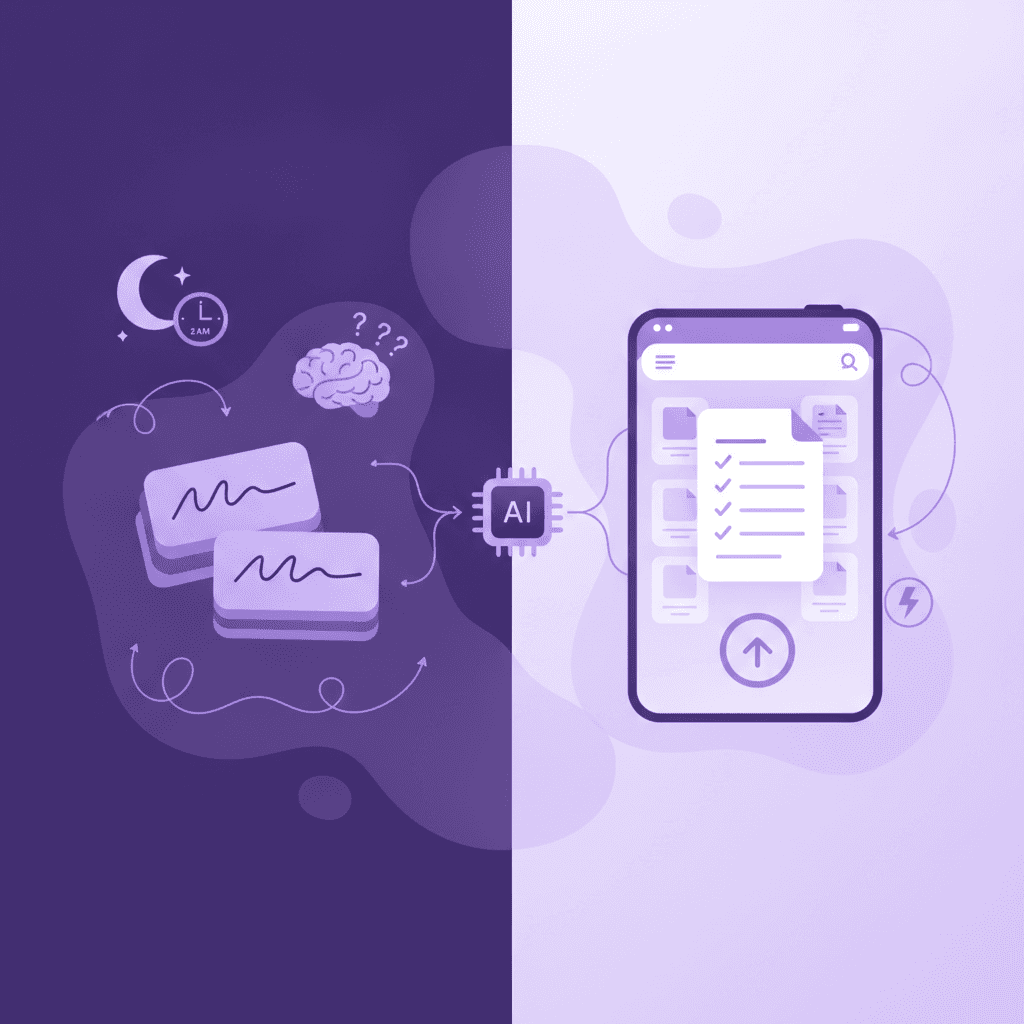
Transitioning from passive reading to active recall is the most effective way to combat academic stress, but manually creating study materials is a massive source of anxiety itself. Spending hours copying definitions onto index cards or formatting study guides eats into actual study time, leaving students exhausted before they even begin testing their knowledge. True active learning requires engaging with the material, not just transcribing it.
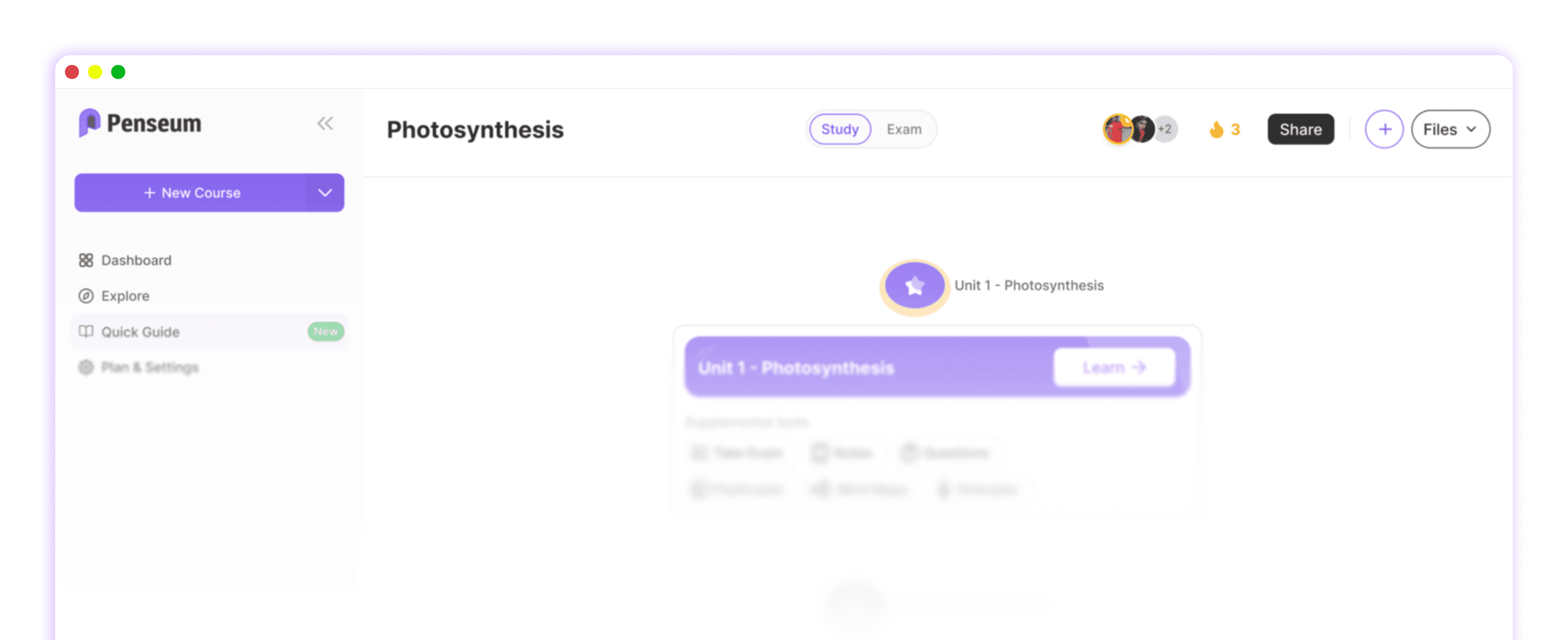
Instead of crowdsourcing generic flashcards from other users, Penseum allows you to upload your own specific PDFs, lecture notes, and slides. The platform's AI immediately extracts the core concepts to generate tailored flashcards, quizzes, and mind maps. By automating the creation of these study materials, you regain hours of study time and can immediately start the spaced repetition process required to actually retain information.
When you get stuck on a difficult concept, Penseum acts as a 1-1 AI tutor right in your corner. Unlike text-only bots that give generic explanations, Penseum utilizes a visual canvas and real-time voice to explain problems step by step, out loud. It watches you work through practice problems, catches your specific mistakes, and keeps teaching until you actually understand it.
This interactive feedback loop prevents the frustration of hitting a wall during late-night study sessions. The AI does not just hand you the answer; it requires you to show your steps, mirroring the active retrieval process proven to cement knowledge in your long-term memory.
With a completely free tier requiring no credit card, join the 1.6 million learners across 130+ countries using Penseum to conquer test anxiety. You can sign up in just a few clicks, create a personal workspace, and start transforming your heavy syllabus into manageable, interactive study sessions.
Frequently Asked Questions
How long does academic stress usually last?
Academic stress typically fluctuates with the university semester cycle. It peaks during midterms and final exam weeks, then temporarily subsides during academic breaks. If a student fails to implement proper time management and active recall strategies, this stress can persist continuously for years, eventually evolving into severe chronic academic burnout.
Can academic stress cause physical illness?
Yes, prolonged academic stress suppresses the immune system by keeping cortisol levels artificially high. Students experiencing chronic university pressure frequently report recurrent tension headaches, irritable bowel syndrome, insomnia, and an increased susceptibility to common viral infections like colds and the flu.
What is the difference between test anxiety and academic stress?
Test anxiety is a specific, situational phobia tied directly to performance on high-stakes exams, causing immediate somatic symptoms like rapid heart rate and blanking out. Academic stress is a broader, generalized feeling of being overwhelmed by the total volume of university expectations, deadlines, and degree requirements.
How do I talk to my professors about academic stress?
Schedule a meeting during formal office hours rather than catching them after a lecture. Come prepared with a specific list of what you are struggling with and demonstrate the effort you have already made. Ask for targeted advice on how to prioritize their syllabus material effectively.
Does listening to music help reduce student burnout?
Listening to instrumental music without lyrics can help reduce immediate study fatigue by blocking out distracting background noise and lowering heart rates. However, music is only a temporary coping mechanism and cannot cure true student burnout. Fixing burnout requires scheduled rest days and systematic workload management.
What are quick coping mechanisms for test taking anxiety?
Box breathing is the fastest way to manually lower a racing heart rate during an exam. Inhale for four seconds, hold for four seconds, exhale for four seconds, and hold empty for four seconds. Grounding techniques, like feeling the texture of your desk or gripping your pen tightly, also help interrupt panic cycles.
Written by Samit Khalsa — Expert in cramming for exams
Last updated: September 2026
Sources
American Psychological Association. (2023). Center for Collegiate Mental Health Annual Report. https://pubmed.ncbi.nlm.nih.gov/
American College Health Association. (2022). National College Health Assessment. https://www.acha.org/ncha
Maslach, C., & Leiter, M. P. (2016). Understanding the burnout experience: recent research and its implications for psychiatry. World Psychiatry. https://pubmed.ncbi.nlm.nih.gov/27265691/
Zeidner, M. (1998). Test anxiety: The state of the art. Springer Science & Business Media. https://scholar.google.com/
Karpicke, J. D., & Roediger, H. L. (2008). The critical importance of retrieval for learning. Science. https://pubmed.ncbi.nlm.nih.gov/18276894/
Macan, T. H., Shahani, C., Dipboye, R. L., & Phillips, A. P. (1990). College students' time management: Correlations with academic performance and stress. Journal of Educational Psychology. https://scholar.google.com/
Haladyna, T. M. (2004). Developing and validating multiple-choice test items. Routledge. https://scholar.google.com/
Related guides
Ready to study smarter?
Start turning your notes into guides, quizzes, and flashcards in seconds.