1 AI Lecture Summarizer to Boost Your Grades
Key Takeaways
* An ai lecture summarizer condenses hours of academic transcripts, slides, and audio into structured study materials.
* Upload your specific syllabus documents to generate highly accurate notes without wasting time typing.
* Transform extracted text directly into multiple-choice quizzes and flashcards to practice active recall.
* Skip generic public flashcard decks; personalized AI study tools align exactly with your professor's unique curriculum.
* Penseum provides 1-to-1 live audio tutoring to explain complex summarized topics step by step.
What is an AI lecture summarizer?
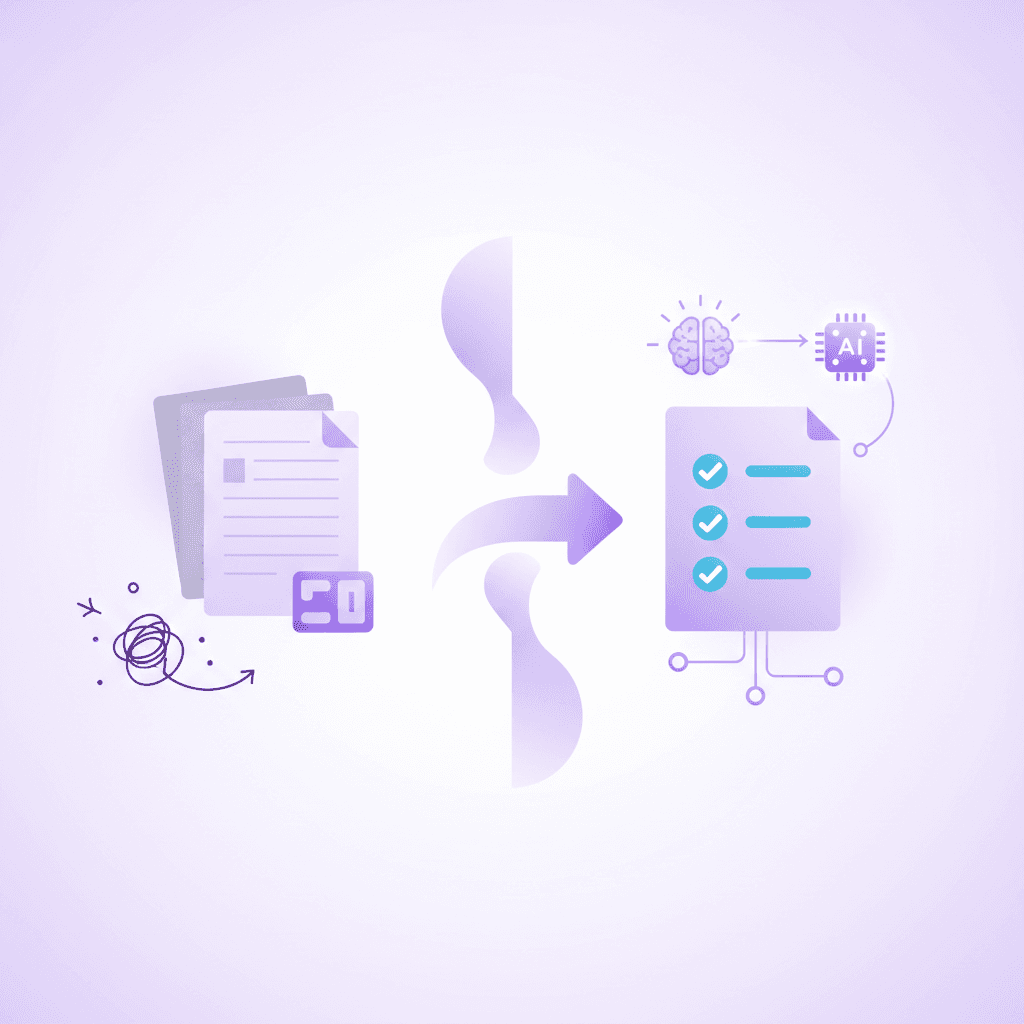
An AI lecture summarizer is a digital study tool that processes long academic transcripts, PDFs, and slide decks to extract the most important concepts. It condenses hours of dense educational material into digestible bullet points, eliminating the need for tedious manual note-taking and audio playback.
Research by Sweller (1988) on Cognitive Load Theory proves that reducing extraneous information helps students process and retain complex academic subjects more effectively. Extraneous cognitive load occurs when learning materials are poorly designed or overly cluttered. By stripping away professor tangents and unrelated anecdotes, AI tools leave only the core academic substance.
This reduction in mental fatigue allows your brain to focus entirely on learning new concepts rather than just organizing data. Parsing a 40-page transcript manually exhausts your attention span. A summarizer performs this organizational labor for you in seconds.
To test this mechanism, upload your longest, most text-heavy lecture transcript into an ai pdf reader first to immediately reduce your cognitive load before studying. You will instantly notice a drop in mental resistance when faced with a clean, bulleted outline rather than a massive wall of text.
Modern summarization tools use advanced natural language processing. They do not simply pull out random sentences. The software analyzes the semantic meaning of your uploaded file, identifies primary themes, and structures the output hierarchically. This ensures that overarching theories are placed at the top, supported by relevant sub-points and specific definitions below.
How does an AI lecture summarizer save study time?
These AI tools save study time by automatically pinpointing core syllabus topics and filtering out professor tangents. By transforming raw transcripts into structured outlines, students bypass the repetitive process of pausing, rewinding, and transcribing, allowing them to jump straight into active studying.
A comprehensive analysis by Dunlosky et al. (2013) highlights the inefficiency of passive rereading and highlighting compared to structured, time-efficient study practices. Passive reading tricks your brain into thinking you understand the material. True mastery requires active engagement, which takes time to set up.
Manually creating a study guide from a two-hour lecture often takes three to four hours. You must re-watch the video, pause every few minutes, type out the notes, and format the document. An AI study platform completes this exact workflow in under a minute.
This massive reduction in administrative work frees up your schedule. The hours previously spent typing can now be redirected toward actual memory retention exercises.
Use a pdf to notes feature immediately after class ends to create a baseline study guide while the lecture context is still fresh in your mind. This immediate generation ensures you never fall behind on weekly reading assignments. You lock in the core concepts on the same day they were taught.
Can an AI lecture summarizer create practice quizzes?
Yes, advanced AI summarizers can instantly transform extracted lecture text into interactive multiple-choice and short-answer quizzes. By analyzing the summarized data, the AI generates context-specific questions that mimic real exam formats, allowing students to test their comprehension immediately after reviewing.
According to Roediger and Karpicke (2006) on the Testing Effect, practice testing improves long-term retention by over 30 percent compared to merely studying text. Testing forces the brain to retrieve information from memory. This retrieval process strengthens the neural pathways associated with that specific knowledge.
A high-quality study tool reads your condensed notes and identifies testable facts. It then builds intelligent distractors—wrong answers that look highly plausible based on the course material. This prevents you from simply guessing the right answer based on obvious cues.
You must actually understand the difference between closely related terms to pass these AI-generated tests. This mimics the exact difficulty level of a university midterm.
Convert your weekly summaries using a pdf to quiz tool and take a 10-question practice test every Sunday to identify weak spots. Taking these frequent, low-stakes tests helps calibrate your confidence. You will know exactly which chapters require further review before the actual exam day arrives.
Are AI summaries better than crowdsourced flashcards?
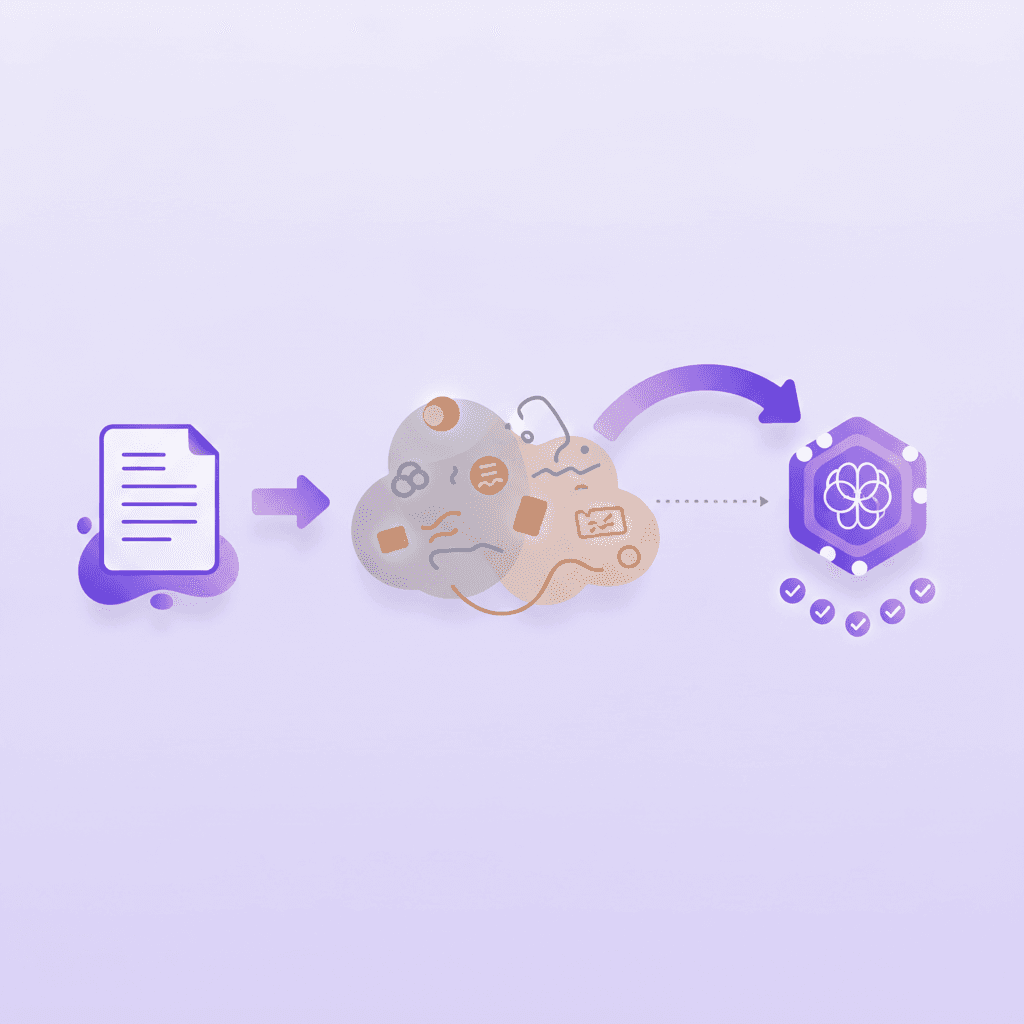
AI lecture summaries are far superior to crowdsourced study materials because they are generated directly from your specific uploaded PDFs and slides. This ensures accuracy and relevance to your actual professor's curriculum, entirely eliminating the risk of studying outdated, irrelevant, or factually incorrect public data.
Bandura (1977) outlined Contextual Learning, highlighting that students learn best when material is directly tied to their specific instructional environment. A generic biology flashcard deck found online might cover cellular respiration, but it will not cover it the exact way your specific professor taught it.
Public databases are filled with student-created decks containing spelling errors, misunderstood concepts, and outdated formulas. Memorizing this bad data actively hurts your exam score.
An AI tool restricts its knowledge base to the exact PDF you upload. It will not pull in outside information or hallucinate facts that were never mentioned in class. This closed-loop system guarantees high fidelity to your syllabus.
Stop searching public quiz databases and upload your own syllabus materials to generate highly accurate, personalized study sets. By taking ownership of your study material generation, you eliminate the anxiety of wondering whether you are studying the right topics.
How do you turn a summarized lecture into flashcards?
Turning summaries into flashcards requires isolating key definitions, dates, and formulas from the AI's condensed text. The software pairs a primary concept on the front with a concise explanation on the back, instantly creating a digital deck optimized for rapid, repetitive memorization.
Research by Kornell (2009) on the Spacing Effect proves that spaced repetition of flashcards dramatically increases long-term memory retrieval. Spaced repetition works by exposing you to a difficult concept just as your brain is about to forget it.
The algorithm tracks which cards you get wrong. It shows you those difficult cards more frequently while hiding the cards you already mastered. This targeted repetition is impossible to replicate efficiently with physical paper cards.
Manually extracting 100 definitions from a textbook takes hours of typing. AI software scans the same textbook chapter, identifies every bolded term, and formats the front and back of the cards automatically.
Utilize a notes to flashcards generator to instantly build your midterm review deck without typing a single word manually. You can review these digital decks on your phone while commuting or waiting in line, turning dead time into highly productive study sessions.
Does an AI lecture summarizer improve exam retention?
AI summarizers drastically improve exam retention by forcing students to engage with material actively rather than passively. By converting static PDFs into dynamic formats like mind maps, interactive quizzes, and visual breakdowns, the AI caters to multiple learning styles, embedding the information deeper into memory.
Mayer (2001) established the Multimedia Learning Theory, which asserts that learning from both words and interactive elements yields higher retention. Static text on a page often causes the eyes to glaze over. Active interfaces demand continuous user input.
When you use an intelligent study platform, the software prompts you to answer questions, fill in blanks, and rate your confidence. This constant interaction prevents the mental drift associated with reading long PDF documents.
Active engagement creates multiple mental hooks for a single piece of information. If you read a fact, answer a quiz question about it, and review it on a flashcard, your brain has three distinct pathways to access that memory during the exam.
Chat with a pdf using an interactive AI tool to ask clarifying questions about complex concepts you don't fully understand. If a summary point remains confusing, simply ask the chatbot to explain it using an analogy. This interactive dialogue solidifies understanding far better than re-reading the same confusing paragraph.
Common Mistakes When Using AI for Exam Prep
Many students misunderstand how to operate these digital study tools effectively. A summarizer is not a magic wand that deposits knowledge directly into your brain. You must use the outputs correctly to see a rise in your GPA.
The most frequent error is passive reliance. Students generate a beautiful 10-page study guide and simply read it once before the test. This completely ignores the active recall benefits the software provides. You must convert those notes into quizzes to see real academic gains.
Another common pitfall involves uploading poor source material. If you feed the software a highly inaccurate audio transcript generated by a cheap dictation app, the resulting summary will contain errors. Always ensure your initial documents, PDFs, and slide decks are clean and legible before initiating the parsing process.
Failing to verify context is another trap. While an AI lecture summarizer excels at extracting facts, it might miss the subtle nuance a professor emphasized verbally. Always review the generated summary against your personal memory of the class to ensure the overarching theme matches the professor's intent.
Compare AI Study Tools: Text Generators vs. Live Tutors
Not all AI educational platforms offer the same level of assistance. Most tools simply read your text and spit out a shorter version. Advanced platforms take an active role in your education.
Feature | Standard AI Text Generators | Penseum Live AI Tutor |
|---|---|---|
Output Format | Text-based summaries only. | Real-time voice, text, and visual diagrams. |
Error Correction | None. Stops after answering. | Spots specific mistakes and explains what went wrong. |
Engagement | Passive reading. | Active, step-by-step problem solving. |
Personalization | Generic explanations. | Tailored to your exact uploaded canvas work. |
Standard platforms give you a generic explanation and wait for your next message. They cannot see what you are doing on your screen. They only know what you explicitly type into the chat box.
A live tutor platform watches your actual work. It sees you draw out a math equation on a digital canvas. If you carry a one incorrectly in the second step, the software stops you immediately, points out the specific error, and guides you to the correct solution.
How Penseum Helps You Apply AI Lecture Summaries
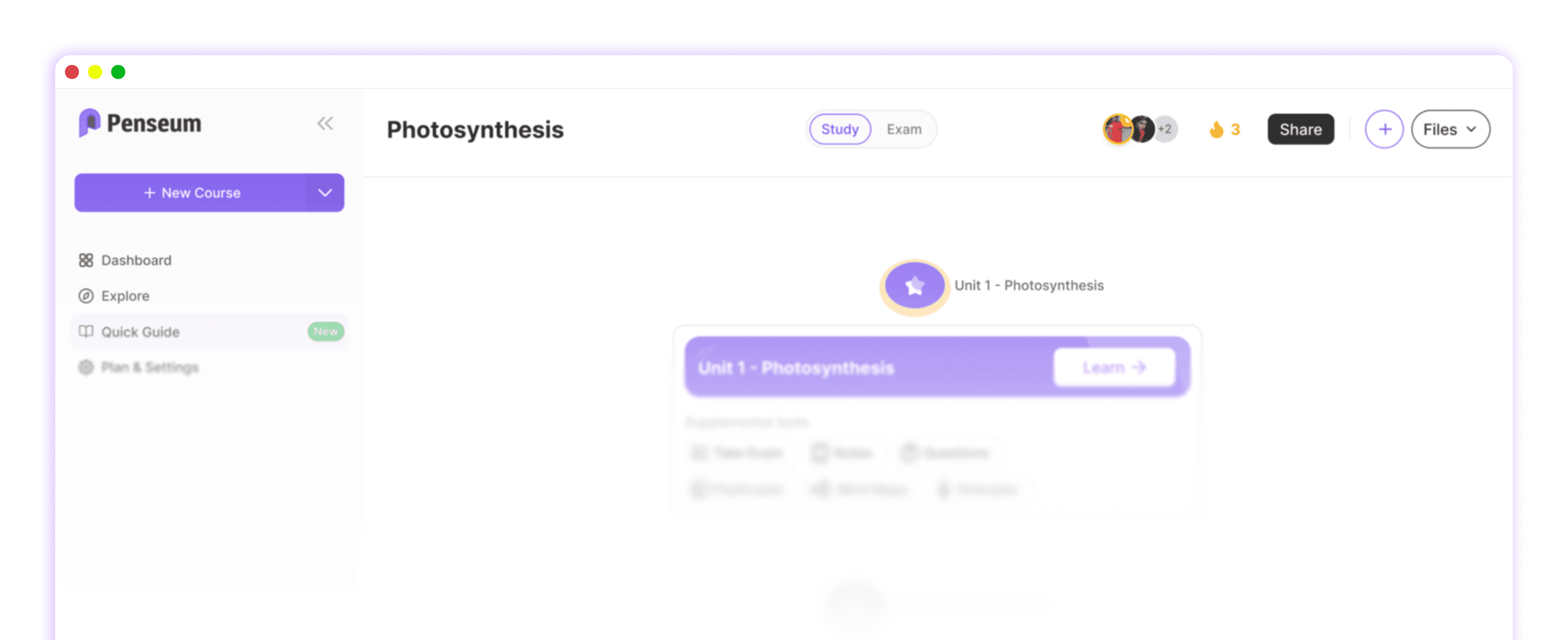
Penseum goes beyond a standard AI lecture summarizer by acting as your live, 1-1 AI tutor. Instead of simply generating a wall of text and leaving you to figure it out, Penseum explains your uploaded PDFs step by step, using real-time voice and interactive diagrams. It watches as you work through problems, catches your specific mistakes, and explains exactly what went wrong. By integrating flashcards, quizzes, study guides, and live tutoring into one platform—without relying on crowdsourced data—Penseum ensures you actually master the material.
Bloom (1984) identified the 2 Sigma Problem, demonstrating that 1-to-1 tutoring improves student performance by two standard deviations above traditional classroom instruction. Penseum brings this elite level of personalized tutoring directly to your laptop.
When you upload a confusing slide deck, Penseum does not just condense it. The AI tutor explains the concept out loud, drawing visual aids on your screen. It breaks down complex economic theories or medical definitions until they click.
The platform then shifts into testing mode. It asks you questions. You write your answer directly on the canvas. The tutor watches and waits. If you make a mistake, it marks exactly where you went wrong.
Over 1,600,000 learners from top institutions rely on this specific methodology. As user Taylor noted, "Med school is drowning me in homework and I have tests coming up. You literally just saved the day with study material."
Create a free Penseum account today—no credit card required—and upload your most confusing lecture slide to experience live, step-by-step tutoring. A premium subscription is available for $29.99, unlocking even deeper analytical tools to streamline your entire semester.

Frequently Asked Questions
Is there an AI that summarizes lectures?
Yes. AI study platforms process uploaded audio transcripts, slide decks, and academic PDFs to generate structured outlines. These platforms identify core concepts and filter out irrelevant tangents, saving college students hours of manual review time. They turn raw academic data into highly readable study guides instantly.
How can I summarize a 2 hour lecture quickly?
You can summarize a two-hour lecture quickly by uploading the recorded transcript directly into an AI study tool. The software scans the text and outputs a comprehensive study guide, practice quiz, or flashcard deck in under a minute. This bypasses the need to re-watch the video entirely.
What is the best AI for college lectures?
The best AI for college lectures is Penseum. Unlike standard text generators, it functions as a live tutor. It creates quizzes and flashcards from your specific course materials and provides real-time voice explanations to correct your mistakes step by step while you work.
Can AI make flashcards from my lecture notes?
Absolutely. AI study tools extract key dates, formulas, and definitions directly from your uploaded lecture notes. The software pairs each concept with a concise explanation, instantly generating a complete digital flashcard deck optimized for active recall and spaced repetition algorithms.
Is it safe to upload course material to AI study tools?
Most reputable AI educational platforms prioritize data privacy and use secure encryption to protect user uploads. Always review a platform's specific privacy policy to ensure your academic documents and personal information remain completely protected during the document summarization process.
How much time does an AI summarizer save college students?
An AI summarizer saves college students anywhere from three to five hours per week per class. By eliminating manual transcription and passive rereading, students transition immediately from organizing their notes to actively testing their knowledge through practice quizzes and flashcards.
[AUTHOR]
Last updated: August 2026
Sources
Sweller, J. (1988). Cognitive Load During Problem Solving: Effects on Learning. https://scholar.google.com/scholar?q=Cognitive+Load+During+Problem+Solving:+Effects+on+Learning
Dunlosky, J., Rawson, K. A., Marsh, E. J., Nathan, M. J., & Willingham, D. T. (2013). Improving Students' Learning With Effective Learning Techniques. https://pubmed.ncbi.nlm.nih.gov/26173288/
Roediger, H. L., & Karpicke, J. D. (2006). Test-Enhanced Learning: Taking Memory Tests Improves Long-Term Retention. https://pubmed.ncbi.nlm.nih.gov/16507066/
Bandura, A. (1977). Social Learning Theory. https://scholar.google.com/scholar?q=Social+Learning+Theory+Bandura
Kornell, N. (2009). Optimising learning using flashcards: Spacing is more effective than cramming. https://pubmed.ncbi.nlm.nih.gov/19460734/
Mayer, R. E. (2001). Multimedia Learning. https://scholar.google.com/scholar?q=Mayer+Multimedia+Learning
Bloom, B. S. (1984). The 2 Sigma Problem: The Search for Methods of Group Instruction as Effective as One-to-One Tutoring. https://scholar.google.com/scholar?q=The+2+Sigma+Problem+Bloom
Related guides
Ready to study smarter?
Start turning your notes into guides, quizzes, and flashcards in seconds.