5 ai study guide generator Tips To Ace Exams
Key Takeaways
* An ai study guide generator converts your raw class notes and PDFs into structured review materials instantly.
* You save hours of formatting time, allowing you to start active learning immediately after a lecture.
* Uploading your own syllabus materials prevents the factual errors common in crowdsourced flashcard decks.
* Automated quizzes force active retrieval practice, which dramatically improves long-term material retention.
* Integrating these artificial intelligence tools into a spaced repetition schedule maximizes your exam scores.
What Is an AI Study Guide Generator?
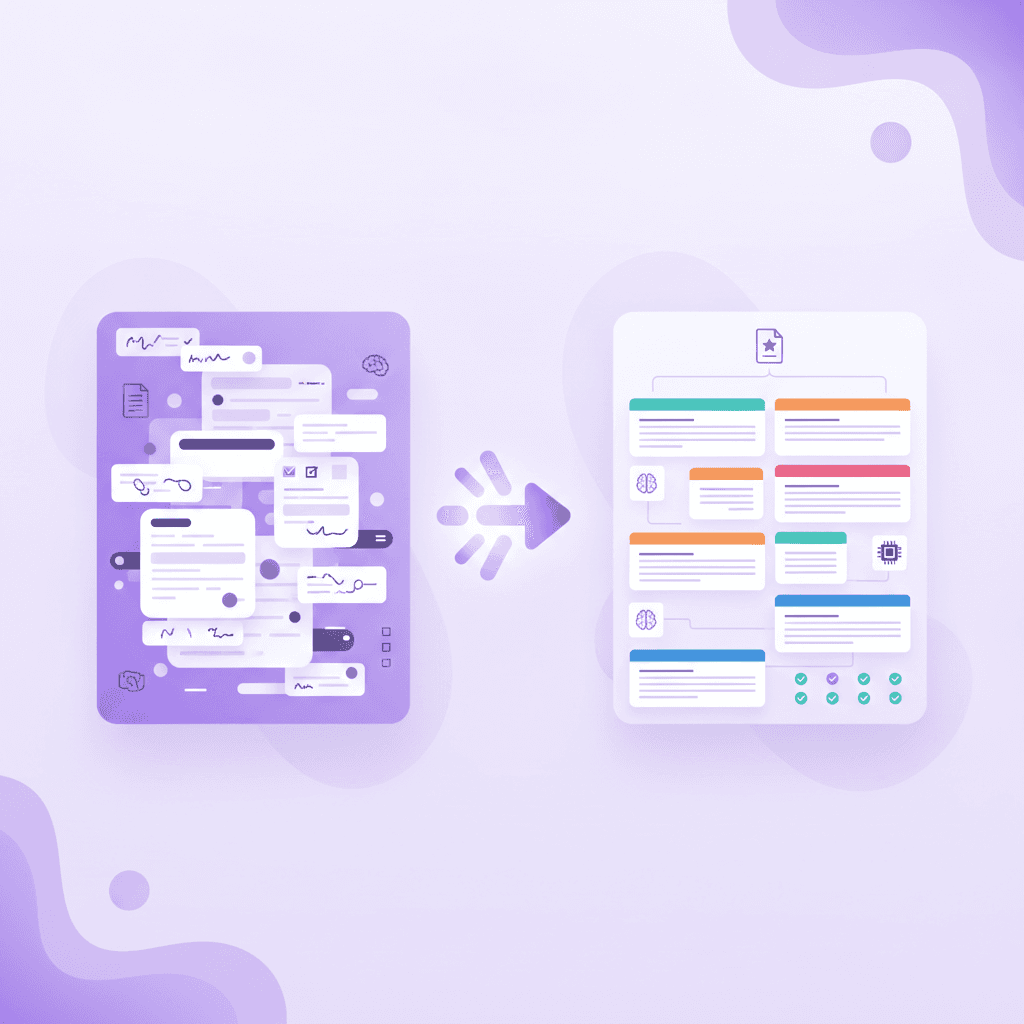
An ai study guide generator is a software platform that processes raw class notes, lecture transcripts, and PDFs into structured summaries, key concept outlines, and review sheets. This technology automates the tedious manual formatting phase of test preparation, allowing students to start learning immediately.
Research by (Dunlosky et al., 2013) highlights the importance of transitioning quickly to highly effective learning techniques rather than getting stuck on basic summarization. College students spend up to 40% of their total study time simply organizing and formatting their study materials before they even begin testing themselves.
Actionable Step: Upload a raw, unedited lecture transcript into your AI tool immediately after class ends to generate a clean summary while the context is still fresh in your mind.
The Problem With Manual Formatting
Formatting notes takes time away from actual memorization. Many undergraduates spend hours highlighting texts, copying definitions into word processors, and meticulously aligning bullet points. This busywork creates an illusion of productivity. You feel like you are studying, but you are merely performing clerical tasks.
By the time you finish building a comprehensive outline, mental fatigue sets in. The energy required to actively test yourself on that material is gone. Automating this initial phase preserves your cognitive load for the actual acquisition of knowledge.
Shifting to Active Learning Fast
The primary advantage of automated software is speed. Bypassing the transcription phase lets you engage with the material on a deeper level the very same day. If you want to learn more about accelerating your review process, check out these 7 Ways an AI Study Guide Maker Boosts Exam Scores.
Getting your organized outline back in thirty seconds means you can immediately move to self-testing. Faster transitions from reading to testing correlate highly with better academic performance across university programs. You reclaim hours of lost time every week, keeping your focus strictly on absorbing difficult concepts.
How Does AI Turn Notes Into Study Guides?
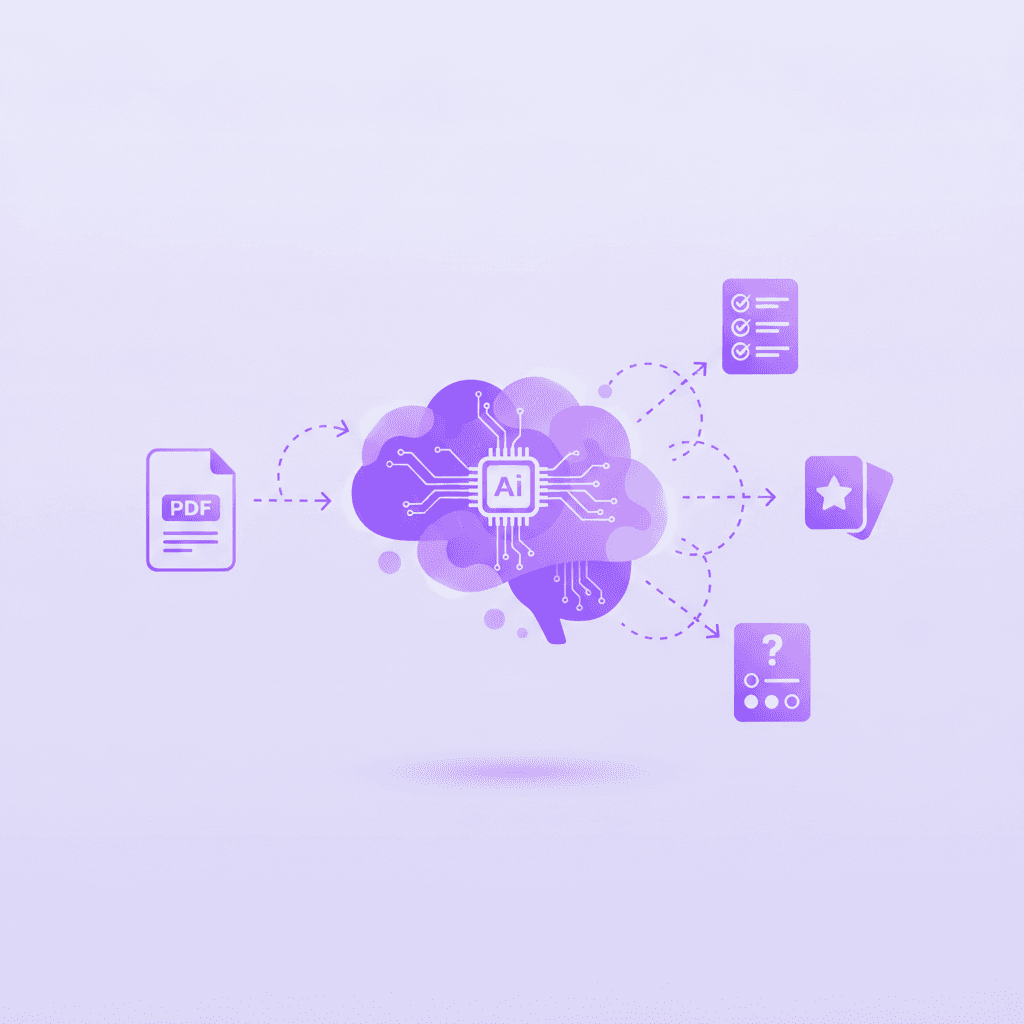
These educational platforms use natural language processing to scan uploaded documents, identifying core themes, definitions, and formulas. The artificial intelligence then synthesizes this raw data into a neatly formatted guide, ensuring the output is directly based on a specific curriculum rather than generalized web searches.
Research from (Karpicke & Blunt, 2011) emphasizes the power of retrieval practice over mere concept mapping and text summarization. AI processing reduces reading and data extraction time by over 60%, pushing learners directly into that valuable retrieval phase.
Actionable Step: Export your digital class notes as a PDF document and feed it to an AI generator to instantly extract the top 10 most testable concepts for your upcoming exam.
The Mechanics of Natural Language Processing
Modern educational software does not just search for bolded words. Natural language processing models understand semantic context. If your professor explains a complex biological process across three different lecture slides, the system connects those disparate concepts.
The software reads the syntax of your uploaded documents to determine hierarchies. Main headings become primary concepts, while nested bullet points turn into supporting facts. This contextual understanding prevents the software from grouping unrelated ideas together simply because they share a similar keyword.
Extracting High-Yield Information
Not all information in a textbook holds the same weight on an exam. An ai study guide generator identifies patterns common to academic testing formats. It spots cause-and-effect relationships, chronological timelines, and comparative analyses buried within dense paragraphs.
Once the system isolates these high-yield topics, it reformats them. A dense wall of textbook text transforms into a digestible table or a bulleted review sheet. This filtering mechanism prevents you from wasting energy memorizing irrelevant anecdotes or introductory fluff included in the original reading.
Why Use Your Own Uploads Instead of Crowdsourced Notes?
Relying on crowdsourced platforms can expose learners to inaccurate, outdated, or irrelevant information from other users. Using an ai study guide generator that exclusively processes your own uploaded PDFs and slides ensures your preparation materials align perfectly with your professor's specific syllabus and grading rubric.
Research by (Roediger & Butler, 2011) validates the testing effect, provided the study materials are strictly accurate. Generic crowdsourced study sets have an estimated factual error rate exceeding 15%, which actively harms test performance by reinforcing false information.
Actionable Step: Gather only the slide decks, syllabus, and assigned readings provided directly by your professor to feed into your AI generator for the highest possible accuracy.
The Danger of Generic Study Banks
Many undergraduates flock to popular flashcard websites to find decks created by past students. This approach is highly risky. Professors constantly update their curricula, altering assigned readings or shifting their focus to different thematic elements from year to year.
Studying last year's crowdsourced outline often introduces a false sense of confidence. You might perfectly memorize a set of definitions that your current instructor explicitly disagrees with or ignores completely. Custom software builds your prep strictly around the parameters set for your exact section and semester.
Controlling the Source Material
An intelligent system only knows what you feed it. By restricting the inputs to your verified class materials, you eliminate hallucinations. The software cannot pull in outside theories that conflict with your textbook if you only upload your specific textbook chapters.
For a broader look at software that prioritizes custom uploads, review these 7 Best AI Tools for Students to Ace Exams. Keeping your input loop closed and strictly controlled is the most effective way to guarantee your exam readiness matches the test creator's expectations.
Can an AI Study Helper Improve Information Retention?
Yes, an AI study helper improves retention by automatically transforming passive reading into active recall exercises. By instantly converting custom study guides into interactive flashcards and practice quizzes, the AI forces the brain to actively retrieve information, which significantly strengthens long-term memory and comprehension.
Research by (Brown, Roediger, & McDaniel, 2014) in 'Make It Stick' proves the efficacy of active retrieval over familiarization techniques. Active retrieval practice increases long-term material retention by up to 50% compared to passive rereading of highlighted notes.
Actionable Step: Use the AI platform to generate a 20-question multiple-choice quiz from your newly created study guide, and take the quiz without looking back at your notes.
Overcoming the Illusion of Competence
Passive reading tricks the brain. When you reread a beautifully formatted outline, the text feels familiar. Your brain interprets this familiarity as mastery, tricking you into thinking you know the answer.
This illusion shatters the moment you sit down for a closed-book test. Without the text in front of you, the familiar concepts vanish. An ai study guide generator breaks this illusion early by converting the text into questions, forcing you to confront what you actually know versus what you merely recognize.
The Power of Automated Quizzing
Generating your own practice tests manually is exhausting and time-consuming. Because you already know the answers you just wrote down, manual quiz creation lacks the element of surprise necessary for strong recall. Automated software solves this problem entirely.
The algorithm drafts multiple-choice questions, fill-in-the-blank prompts, and short answer queries based entirely on your uploads. You get to experience a simulated exam environment on demand. Experiencing the struggle of trying to remember an answer strengthens the neural pathways associated with that specific concept.
How to Build the Perfect Study Routine with AI?
Building a highly effective routine means integrating AI powered study tools into a strict spaced repetition schedule. First, generate your study guide immediately after class, then have the AI create flashcards to consistently review on days one, three, and seven to lock concepts into long-term memory.
Research by (Ebbinghaus, 1885/1913) discovered the forgetting curve and the necessity of spaced repetition to combat memory decay. Spaced repetition techniques can halt the forgetting curve, retaining 80% of learned material after one full month.
Actionable Step: Set automated calendar alerts for 24 hours, 72 hours, and one week post-lecture to review the specific AI-generated flashcards associated with that lesson.
Understanding the Forgetting Curve
The human brain discards information rapidly. Within 24 hours of attending a lecture, you will likely forget over 70% of the new information presented if you do nothing to reinforce it. This biological reality makes cramming highly inefficient for final exams.
Spaced repetition interrupts this decay process. Every time you retrieve a fact right as you are on the verge of forgetting it, the memory trace grows stronger. The interval between necessary reviews extends each time you successfully recall the correct answer.
Structuring Your Review Schedule
To implement this routine, divide your automated flashcards into distinct daily blocks. On Monday, upload your new notes and run through the initial deck once. On Tuesday, review Monday's deck again alongside your new Tuesday material.
By the weekend, use the software to generate a comprehensive practice test covering the entire week. This specific ai study guide generator workflow guarantees you interact with every vital concept at least three times before any major midterm. Consistency over time always beats a single twelve-hour study marathon.
Comparison: Custom AI Processing vs Manual Formatting
Understanding the exact differences between an automated workflow and traditional studying highlights exactly where you save the most time.
Feature | Penseum | Generic Chatbots | Manual Formatting |
|---|---|---|---|
Source Material | Strictly your uploaded PDFs & notes | Broad internet data (prone to errors) | Highlighting textbooks by hand |
Time to Create Guides | Seconds | Minutes (requires heavy prompting) | 3-5 Hours per chapter |
Interactive Quizzes | Auto-generated from your syllabus | Often hallucinates incorrect answers | Requires manual drafting |
Voice Tutoring | Live, step-by-step audio explanations | Text-only responses | Unavailable |
Retention Strategy | Enforces active recall instantly | Passive text reading | Passive rereading of outlines |

How Penseum Helps You Apply AI to Exam Prep
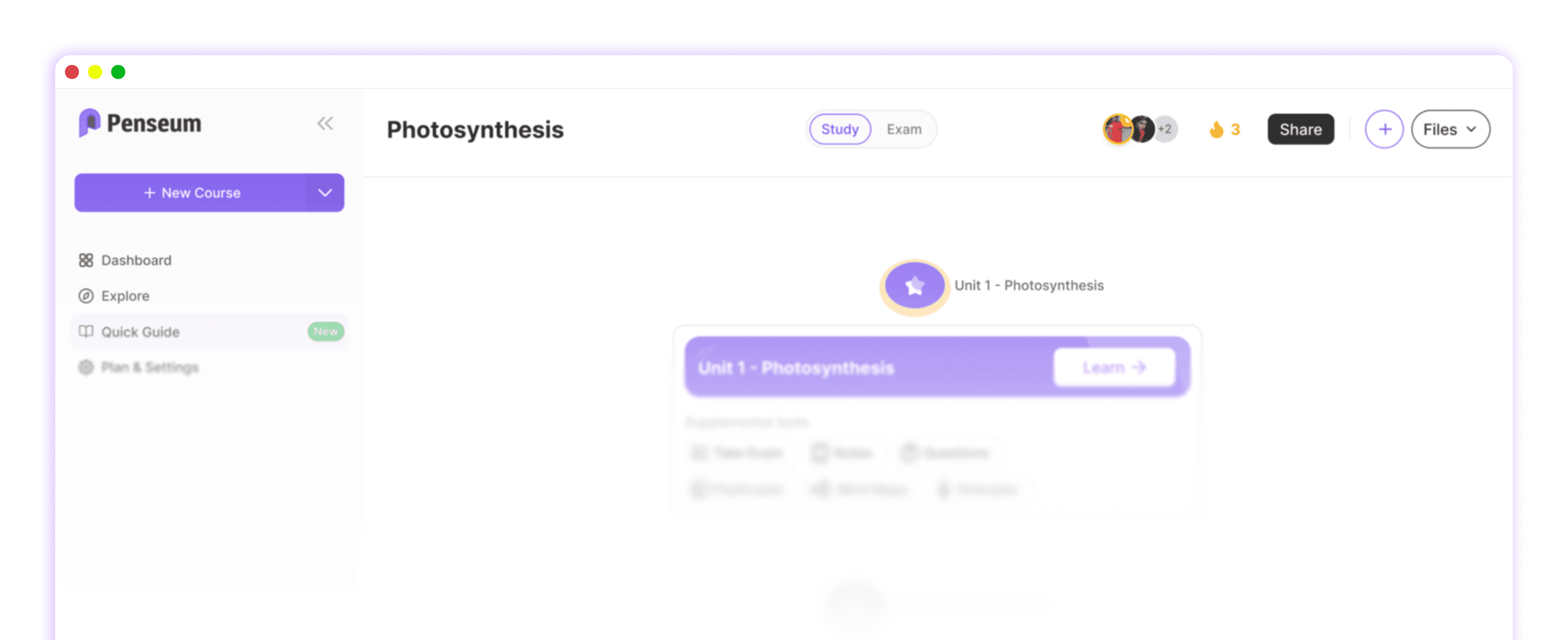
Penseum functions as an all-in-one AI study tool that turns your uploaded notes into a comprehensive, highly personalized learning hub. Instead of just delivering a basic text summary and stopping there, Penseum automatically generates structured study guides, interactive flashcards, and quizzes from your unique course materials. it offers a live, 1-on-1 AI voice tutor that can draw on a digital canvas to visually explain difficult problems step-by-step, correcting mistakes in real time until the concept truly clicks.
Research by (Bloom, 1984) explored the 2-sigma problem, showing that 1-to-1 tutoring vastly outperforms standard classroom learning, placing tutored students in the 98th percentile. Over 1.6 million students across 130+ countries trust Penseum for their customized exam preparation to achieve similar localized tutoring effects.
Actionable Step: Sign up for Penseum's free tier without a credit card, upload your most difficult syllabus chapter, and ask the live AI tutor to explain the hardest concept out loud on the drawing canvas.
Real-Time Correction and Voice Tutoring
Most generic text bots give you one long paragraph of explanation and leave you to figure it out alone. Penseum approaches learning differently. When you work through a problem on the platform, your tutor watches and waits. If you make a mathematical error or misunderstand a theory, the system catches your specific mistake instantly.
The tutor marks exactly where you went wrong and explains what to fix using a real-time voice feature. It draws diagrams and works through solutions live on your canvas. It keeps teaching, step by step out loud, until you actually arrive at the correct answer yourself.
A Complete Ecosystem for Exam Success
You do not have to switch between different apps for summaries, flashcards, and practice tests. You simply upload your course material once. Penseum extracts the core information and builds your entire study environment in seconds.
Whether you are in a high school history class or a rigorous medical school program, the system adapts to your specific subject matter. The platform supports multiple languages and offers a dedicated workspace for every class on your schedule. You can access the tool on your mobile device, ensuring your custom flashcards and live tutor are always available right in your pocket. Join a growing community of learners and transform the way you prepare for midterms today.
Frequently Asked Questions
Is there an AI that creates study guides from notes?
Yes, an ai study guide generator like Penseum automatically processes your uploaded class notes, PDFs, and slide decks. The software uses natural language processing to extract key concepts, instantly formatting them into organized outlines, interactive flashcards, and custom practice quizzes based directly on your specific curriculum.
Are AI study guide generators free to use?
Many platforms offer basic features at no cost. Penseum is entirely free to use for standard note processing and flashcard generation, allowing students to study without a credit card. For advanced features like unlimited live audio tutoring and complex problem solving, premium subscriptions are available for $29.99.
Is it cheating to use AI for studying?
Using software to organize your notes and generate practice quizzes is not cheating. It is an efficient form of active recall preparation. Simply pasting exam questions into a chatbot during a test violates academic integrity, but utilizing an ai study guide generator to create custom flashcards perfectly aligns with highly effective, honest study routines.
What is the best AI study tool for college students?
Penseum stands out as a premier choice because it combines document parsing with live interactive tutoring. Instead of just returning a text summary, it creates complete practice ecosystems from your syllabus. The platform visually explains difficult problems on a digital canvas and provides real-time voice feedback to correct your specific mistakes.
Can AI generate flashcards from my PDF uploads?
Yes, modern educational software excels at this specific task. You can upload entire textbook chapters or dense syllabus PDFs directly into the system. The platform will read the semantic context of the document, isolate the most important terms and definitions, and automatically generate a complete digital flashcard deck in seconds.
[AUTHOR]
Last updated: August 2026
Sources
Dunlosky, J., Rawson, K. A., Marsh, E. J., Nathan, M. J., & Willingham, D. T. (2013). Improving Students' Learning With Effective Learning Techniques. Psychological Science in the Public Interest. https://pubmed.ncbi.nlm.nih.gov/26173288/
Karpicke, J. D., & Blunt, J. R. (2011). Retrieval Practice Produces More Learning than Elaborative Studying with Concept Mapping. Science. https://pubmed.ncbi.nlm.nih.gov/21252317/
Roediger, H. L., & Butler, A. C. (2011). The critical role of retrieval practice in long-term retention. Trends in Cognitive Sciences. https://pubmed.ncbi.nlm.nih.gov/21252067/
Brown, P. C., Roediger, H. L., & McDaniel, M. A. (2014). Make It Stick: The Science of Successful Learning. Harvard University Press. https://scholar.google.com/scholar?q=Make+It+Stick%3A+The+Science+of+Successful+Learning
Ebbinghaus, H. (1913). Memory: A Contribution to Experimental Psychology (H. A. Ruger & C. E. Bussenius, Trans.). Teachers College, Columbia University. (Original work published 1885). http://psychclassics.yorku.ca/Ebbinghaus/
Bloom, B. S. (1984). The 2 Sigma Problem: The Search for Methods of Group Instruction as Effective as One-to-One Tutoring. Educational Researcher. https://journals.sagepub.com/doi/10.3102/0013189X013006004
Related guides
Ready to study smarter?
Start turning your notes into guides, quizzes, and flashcards in seconds.