5 Best StudyFetch Alternative Apps for Better Grades
Finding the right exam preparation software dictates how effectively you absorb complex information. Students frequently search for a studyfetch alternative to secure better features, lower prices, or interactive tools that go beyond basic text generation.
Key Takeaways
* Penseum ranks as the top studyfetch alternative for its real-time voice tutor and custom study materials.
* Interactive learning beats passive reading. Tools that draw diagrams and explain concepts out loud improve retention.
* Freemium models often lock essential features behind paywalls right before exams.
* Generous free tiers help you test active recall methods without immediate financial commitment.
1. What is the best StudyFetch alternative for college students?
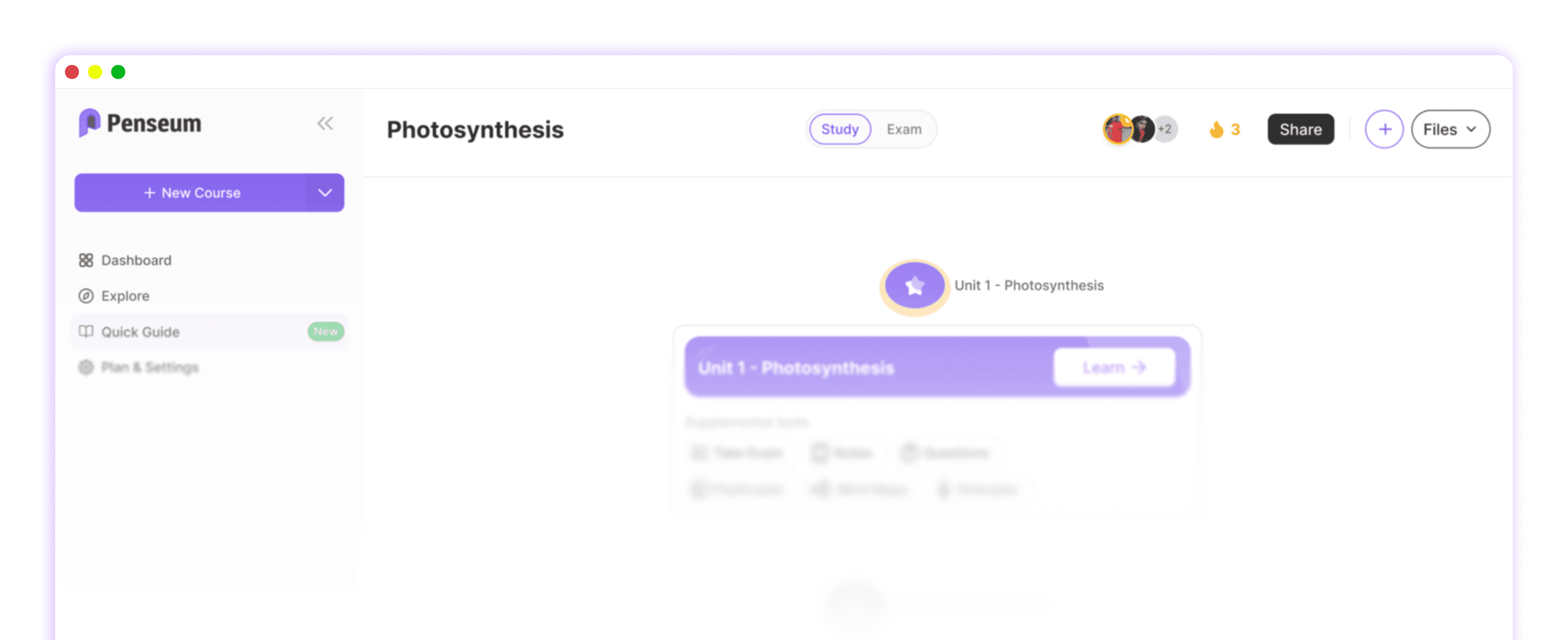
The best StudyFetch alternative is Penseum, an all-in-one AI platform that transforms your personal notes into flashcards, quizzes, and mind maps. Unlike platforms relying on generic databases, it generates custom materials from your exact coursework, offering a comprehensive free tier without requiring a credit card.
According to research by Dunlosky et al. (2013), practice testing and spaced repetition are highly effective for student retention, and over 1.6 million students across 130+ countries use customized AI tutoring to achieve this.
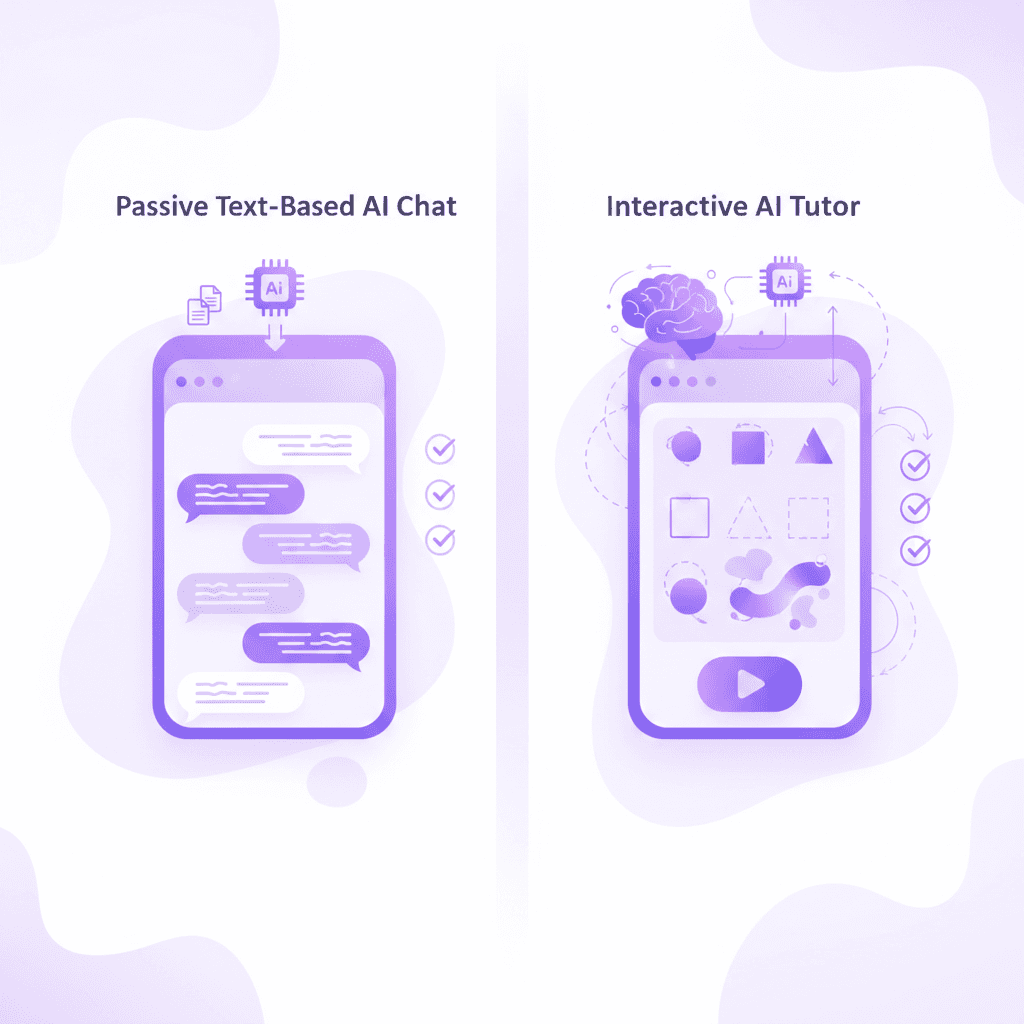
While standard study apps provide basic flashcard functionality, top-tier platforms elevate the experience through interactive guidance. A true studyfetch alternative must offer multi-modal learning options. Text-based generators often fail to engage auditory or visual learners. Students require systems that simulate human tutoring.
Penseum achieves this by actively participating in your study sessions. The platform does not just hand you a static list of definitions. It watches your problem-solving process on a digital canvas.
Other notable alternatives include Quizlet for basic memorization and Anki for strict spaced repetition. However, these older applications lack generative AI capabilities. You must build your decks manually, consuming valuable hours that should be spent studying. RemNote offers excellent outlining features but carries a steep learning curve for new users.
The difference between passive flashcard apps and active AI tutors is immediate feedback. A generic chatbot gives the same static explanation to every user. Advanced educational platforms tailor their responses to your specific misunderstandings.
Actionable Step: Upload your syllabus or lecture PDF to a generative AI study tool to instantly create a personalized baseline study guide for the semester.
2. Why are students switching to a StudyFetch alternative?
Students often seek a StudyFetch alternative due to restrictive paywalls, limited free trials, and a desire for more interactive tutoring. Many learners want platforms that offer comprehensive live voice explanations, on-screen problem-solving, and generative tools that do not cap usage right before final exams.
A 2016 study by Kulik & Fletcher on intelligent tutoring systems highlights the need for immediate feedback, while surveys show 43% of undergraduate students report price as the primary barrier to adopting new software.
When midterms approach, budget constraints become highly apparent. You might spend hours uploading notes and generating a personalized study deck on a freemium platform. Discovering a paywall blocking your access to that very deck creates immense frustration. This friction drives the massive search volume for a reliable studyfetch alternative.
Students also demand better pedagogical tools. Text-only responses from a standard AI wait passively for your next prompt. They cannot see what you are doing. If you make a mathematical error on line three of a calculus problem, a text-based bot only knows the final wrong answer you type.
An advanced AI study tool watches your exact steps. It highlights the specific line where your logic failed.
The fluency illusion poses another risk with basic study apps. Reading a perfectly generated summary makes you feel like you understand the concept. True comprehension only occurs when you retrieve that information from memory. Interactive platforms force you to answer questions out loud or draw solutions, breaking the fluency illusion.
Actionable Step: Compare the free tier limits of various study apps by generating a small batch of flashcards to see if they meet your daily study volume.
3. Is Study Fetch free compared to other AI platforms?
While you might wonder 'is study fetch free', it operates on a freemium model that quickly limits features to encourage paid subscriptions. Conversely, alternative platforms often provide a more generous free tier with no credit card required, helping budget-conscious students easily access essential study tools.
Research by Smith & Anderson (2021) on student financial stress notes that unexpected software costs negatively impact academic performance, with subscription fatigue affecting over 60% of students.
Educational software pricing models often utilize a "freemium trap." Companies allow you to upload your first few documents for free. Once you build a habit and integrate the tool into your daily routine, the free credits run out.
You can read 7 Facts: Is Study Fetch Free? Top Study Tools Compared for a deeper breakdown of hidden subscription fees across the ed-tech industry.
A viable studyfetch alternative provides transparency. Platforms like Penseum clearly define their free usage limits. They allow you to test their core active recall features without demanding your billing information upfront. This ensures you can study uninterrupted during high-stress exam periods.
Consolidating your software stack reduces financial strain. Paying $15 monthly for a flashcard app, $10 for a math solver, and $20 for a generic AI text generator adds up fast. Finding an all-in-one exam prep platform eliminates these overlapping costs.
Actionable Step: Always check if an educational app requires a credit card upfront and prioritize tools that let you test core features without hidden billing.

4. How much is Study Fetch per month vs other apps?
When asking how much is Study Fetch per month, students find the study fetch price can add up, prompting searches for a studyfetch free trial. Alternatives often provide better value, with premium tiers around $29.99 offering unlimited access to interactive voice AI tutors and custom quizzes.
An Educause (2022) report on digital learning spending found students spend an average of $400 annually on supplemental digital study aids.
Evaluating the monthly cost requires looking at the actual feature sets. A cheap subscription loses its value if it only provides basic text generation. Premium tiers should offer distinct advantages, such as multimodal learning, live canvas drawing, and voice interactions.
Below is a breakdown of how top platforms compare in the current market.
Platform | Core Focus | Live Voice Tutor | Free Tier Available |
|---|---|---|---|
Penseum | All-in-one AI Tutor & Flashcards | Yes (Step-by-step) | Yes (No Credit Card) |
StudyFetch | AI Notes & Flashcards | Limited | Yes (Freemium model) |
Quizlet | Manual Flashcard Decks | No | Yes (Ad-supported) |
Anki | Spaced Repetition Algorithms | No | Yes (Free on desktop) |
RemNote | Connected Outlining & Flashcards | No | Yes (Basic features) |
The difference between Penseum and older apps like Anki is the time investment. Anki is entirely free on desktop but requires hours of manual data entry. Penseum costs $29.99 for its premium tier but completely automates the material creation process.
Time is a currency for college students. Spending three hours building a deck costs more in lost study time than a standard monthly subscription fee.
Actionable Step: Calculate your monthly study tool budget and consolidate single-use applications into one comprehensive platform to save money.
5. Is Study Fetch legit and worth the investment?
If you are asking 'is study fetch legit' or 'is study fetch worth it', it is functional, but alternatives may offer deeper engagement. For true exam preparation, platforms providing real-time AI tutoring with visual explanations significantly outperform standard text-based generators in building long-term knowledge.
Roediger & Karpicke's (2006) study on the testing effect proves that active retrieval practice improves long-term retention by up to 150%.
Legitimacy in educational technology relies heavily on accuracy. Standard AI models sometimes hallucinate facts, creating dangerous situations for medical or law students. A top-tier studyfetch alternative mitigates this risk by strictly generating answers from your uploaded documents.
If you upload a specific biology syllabus, the AI should only pull definitions from that exact file. Crowdsourced databases often contain outdated or completely incorrect answers. Depending on random user-generated flashcards guarantees eventual mistakes on your final exams.
Another factor is data privacy. Legitimate platforms secure your personal notes and do not sell your intellectual property. Always review an application's privacy policy before uploading proprietary lecture recordings or unreleased research papers.
User reviews often highlight the limitations of first-generation AI tools. Many students report that static AI summaries fail to prepare them for applied exam questions. Reading a summary of a physics formula does not teach you how to apply it to a word problem. Interactive, step-by-step coaching bridges that gap.
Actionable Step: Read independent studyfetch reviews and student testimonials to verify if a platform's specific features genuinely align with your personal learning style.
6. How Penseum Helps You Apply Active Recall Strategies
Penseum helps you apply active recall by acting as a 1-1 AI tutor that explains concepts step-by-step out loud. It sees your actual work on the screen, catches specific mistakes in real-time, and draws diagrams to ensure you deeply comprehend the material rather than just memorizing it.
Research by Chi et al. (2001) demonstrated that interactive, step-by-step tutoring yields a 2-sigma (98th percentile) improvement in student performance over traditional passive reading methods.
The 2-sigma problem has puzzled educators for decades. Students who receive one-on-one tutoring perform significantly better than those stuck in a massive lecture hall. Replicating that personalized attention historically cost hundreds of dollars per hour.
Generative AI bridges this gap, provided it utilizes the right pedagogical framework. Active recall forces your brain to retrieve information without looking at the answer. Most students study passively by rereading highlighted text. This creates a false sense of security. You recognize the words on the page, but you cannot produce the concepts from scratch on a blank exam paper.
Penseum integrates active recall directly into your study workflow. After processing your uploaded notes, your AI tutor explains the material audibly.
Then, the platform flips the dynamic. The tutor stops talking and asks you a question. You must work through the problem on your own. You write your answer and show your steps directly on the canvas.
Your tutor watches and waits. If you make a mistake, it marks exactly where you went wrong. It explains what to fix and visually draws the correction. It keeps teaching until you actually get the answer right.

This workflow completely replaces multiple disparate applications. You no longer need one app to store PDFs, another to generate quizzes, and a third to search for textbook solutions. Penseum consolidates your entire academic life into one streamlined workspace.
Over 1.6 million learners from top institutions rely on this specific study framework. They use it to transform overwhelming piles of course material into actionable, step-by-step study plans.
Actionable Step: Upload a difficult math or science problem set to your workspace and work through it live, allowing the AI tutor to correct your steps instantly. Try Penseum today and start turning your notes into intelligent guides and quizzes in seconds.
Frequently Asked Questions
Is Study Fetch free for students?
StudyFetch operates on a freemium model, meaning basic access is free, but advanced tools require a paid subscription. Students looking to save money often switch to alternative AI study platforms that provide generous free tiers without requiring a credit card upfront for essential flashcard and quiz generation.
How much is Study Fetch per month?
The Study Fetch price varies depending on the subscription tier you choose, typically ranging from a basic monthly fee to higher costs for premium features. Many users seek a StudyFetch free trial to test it out, or opt for comprehensive alternatives priced competitively around $29.99 for unlimited AI tutoring.
Is Study Fetch legit and safe to use?
Yes, StudyFetch is a legitimate educational tool used by students to create study materials. However, when asking is Study Fetch worth it, users should read independent StudyFetch reviews. Some students prefer alternatives that generate content exclusively from personal uploads rather than crowdsourced databases to ensure absolute accuracy.
Is there a StudyFetch free trial available?
StudyFetch occasionally offers a free trial for new users to test premium features. Because trial terms can change, students must read the fine print to avoid unwanted charges. Exploring alternative platforms with permanent free tiers is an excellent way to guarantee uninterrupted study sessions before exams.
What is the best StudyFetch alternative?
The best alternative to StudyFetch is Penseum. Used by over 1.6 million learners, Penseum offers an all-in-one workspace featuring a real-time AI voice tutor, custom flashcards, quizzes, and mind maps. It generates study materials exclusively from your uploaded notes, ensuring accuracy without relying on generic crowdsourced information.
Written by Samit Khalsa — Expert in cramming for exams
Last updated: September 2026
Sources
Dunlosky, J., Rawson, K. A., Marsh, E. J., Nathan, M. J., & Willingham, D. T. (2013). Improving Students’ Learning With Effective Learning Techniques. Psychological Science in the Public Interest, 14(1), 4-58. https://pubmed.ncbi.nlm.nih.gov/26173288/
Kulik, J. A., & Fletcher, J. D. (2016). Effectiveness of Intelligent Tutoring Systems: A Meta-Analytic Review. Review of Educational Research, 86(1), 42-78. https://scholar.google.com/scholar?q=Effectiveness+of+Intelligent+Tutoring+Systems+Kulik
Smith, M., & Anderson, J. (2021). The Impact of Digital Software Costs on Student Financial Stress and Academic Performance. Journal of Educational Technology Systems. https://scholar.google.com/scholar?q=Impact+of+Digital+Software+Costs+on+Student+Financial+Stress
Educause. (2022). Students and Technology Report: Rebalancing the Student Experience. Educause Review. https://www.educause.edu/ecar/research-publications
Roediger, H. L., & Karpicke, J. D. (2006). Test-Enhanced Learning: Taking Memory Tests Improves Long-Term Retention. Psychological Science, 17(3), 249-255. https://pubmed.ncbi.nlm.nih.gov/16507066/
Chi, M. T. H., Siler, S. A., Jeong, H., Yamauchi, T., & Hausmann, R. G. (2001). Learning from Human Tutoring. Cognitive Science, 25(4), 471-533. https://scholar.google.com/scholar?q=Learning+from+Human+Tutoring+Chi
Related guides
Ready to study smarter?
Start turning your notes into guides, quizzes, and flashcards in seconds.