7 Best Language Learning App Picks for Exams
Key Takeaways
* Finding the best language learning app requires matching the platform to your specific university syllabus, not just playing generic vocabulary games.
* Academic exams demand active retrieval practice and rigorous spaced repetition to memorize complex grammar rules effectively.
* AI study tools can now instantly convert your textbook PDFs and lecture slides directly into custom flashcards and quizzes.
* Pairing targeted academic study tools with live conversation platforms builds the exact dynamic recall needed to pass difficult oral exams.
What is the best language learning app for exam prep?
The ideal app aligns directly with your academic requirements rather than teaching casual travel phrasing. Students need a platform that converts specific textbook chapters into actionable flashcards and practice quizzes, utilizing targeted repetition to efficiently master complex grammar rules and academic vocabulary.
Karpicke & Roediger (2008) demonstrate that active retrieval practice produces significantly greater long-term retention than passive studying. Their clinical research reveals that students utilizing active retrieval testing score up to 150% higher on final recall exams compared to those who merely reread textbook chapters (Roediger & Butler, 2011). You cannot pass a rigorous university exam through osmosis.
Most popular language apps actively harm university students by creating a false sense of fluency. Clicking multiple-choice bubbles provides context clues that trick your brain into recognizing patterns. Real exams require unassisted recall. The best language learning app forces you to produce the answer from scratch.
Audit your current language course syllabus to identify whether you need grammar drills or vocabulary memorization, then select an app that supports custom content creation.
How can a vocabulary builder app improve your test scores?
A dedicated vocabulary builder improves retention by systematically testing words just before you are likely to forget them. This targeted repetition strengthens neural pathways, ensuring high-frequency academic words are instantly accessible during high-pressure situations like midterm translation exams or oral assessments.
Nation (2001) found that second language learners typically require between 5 and 16 exposures to a word to fully acquire it. Relying on a single textbook read-through guarantees failure on test day. Vocabulary builder apps automate these necessary exposures through algorithms that track your personal error rates. If you consistently fail a specific subjunctive conjugation, the algorithm forces you to review it daily.
You must stop reviewing terms you already know. Traditional paper flashcards make it too easy to waste time reviewing basic vocabulary. Spaced repetition software entirely eliminates this inefficiency.
Input your weekly textbook glossary into a spaced repetition system instead of passively reading the list to guarantee active recall.
Are the best language learning apps free actually effective?
Many free language apps provide highly effective foundational practice, particularly for beginner syntax and vocabulary building. However, completely free platforms often rely on generic, crowdsourced material that may not accurately reflect your specific university curriculum, making them supplementary rather than primary study tools.
Vesselinov & Grego (2012) found that novice users of popular free language apps require approximately 34 hours of study to cover the equivalent of one college semester. This statistic proves that basic structural acquisition is possible without spending money. However, university students face a different challenge. You are not a novice trying to learn basic greetings; you are a student expected to analyze literature or debate economic policies in a foreign language.
Students on a tight budget should review the 7 Best Language Learning Apps Free For Exams to compare non-paid tiers. Many platforms offer foundational tools before requiring a subscription.
Use a free gamified app for daily exposure, but pair it with a customizable study tool like Penseum for exam-specific preparation.
What is the best way to learn a language alongside an app?
The most effective strategy combines app-based learning with active production, such as speaking with native speakers or writing original essays. Apps excel at input and pattern recognition, but true fluency and exam readiness require actively applying those patterns in unscripted, real-world academic contexts.
Swain's (1985) Output Hypothesis highlights that active production is necessary to force learners to process language syntactically. Later studies confirm that students who engage in active language production improve their grammatical accuracy on post-tests by nearly 30% compared to input-only learners (Swain & Lapkin, 1995). Staring at a screen builds recognition. Speaking and writing build mastery.
If you need immediate results before a midterm, read our guide on 7 Language Learning Apps to Ace Exams Fast to see which platforms offer the quickest onboarding. Combining rapid app deployment with manual writing exercises creates a highly efficient feedback loop.
Spend 15 minutes a day writing a short journal entry using the exact new grammar rules you recently learned on your app.
How does a language exchange app boost oral exam confidence?
Language exchange platforms pair you with native speakers for mutual conversation practice, systematically breaking down the anxiety of speaking aloud. This real-time interaction forces you to recall vocabulary dynamically, bridging the gap between textbook theory and the practical conversational fluency required for oral exams.
Mackey (2007) established that interactional feedback during live conversation significantly accelerates second language acquisition and boosts learner confidence. Live speakers naturally correct your pronunciation errors in real-time. This immediate correction prevents bad habits from cementing in your brain before your final oral assessment.
Textbooks teach you isolated grammar rules. Native speakers teach you how those rules connect in chaotic, unscripted dialogues. If your final exam involves a 15-minute dialogue with your professor, clicking buttons on a screen will not adequately prepare you. You must simulate the pressure of a live conversation.
Schedule one 30-minute conversation weekly with a language partner, focusing the discussion solely around your current chapter's thematic vocabulary.
7 Top Language Learning App Options for University Exams
Comparing the best language learning app options requires looking strictly at academic utility. University exams do not care about fun. Your professor expects you to accurately conjugate irregular verbs and translate academic texts under severe time constraints. You need tools designed for rigorous testing.
App Name | Best Academic Use Case | Spaced Repetition | Custom Syllabus Import |
|---|---|---|---|
Penseum | Automated syllabus-to-flashcard conversion | Yes | Yes (PDF, Text, Slides) |
Open-source algorithmic memorization | Yes | Manual entry only | |
Babbel | Structured foundational grammar lessons | Yes | No |
HelloTalk | Live native speaker oral practice | No | No |
Rapid sharing of basic term glossaries | Limited | Manual entry only | |
Gamified daily habit formation | Yes | No | |
Clozemaster | High-volume contextual sentence exposure | Yes | No |
1. Penseum
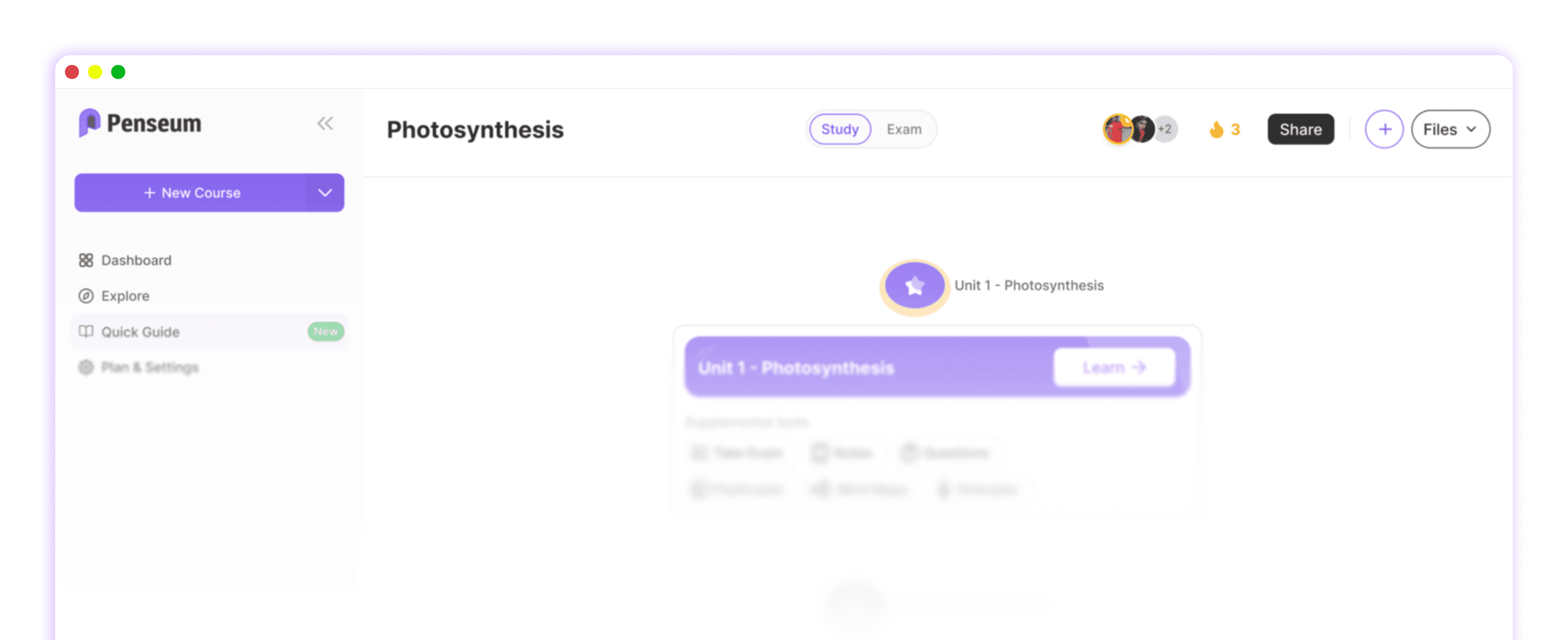
Penseum excels as the ultimate academic study companion. Instead of offering pre-made courses on generic topics, it uses artificial intelligence to digest your specific university materials. You upload your textbook PDF, and the platform generates tailored flashcards, practice quizzes, and study guides matching your exact syllabus.
2. Anki
Anki remains the gold standard for pure algorithmic spaced repetition. The interface is notoriously dated, but its underlying memorization algorithm is unmatched. Medical and language students revere Anki because it guarantees long-term retention. You must build your decks manually, which demands a heavy upfront time investment.
3. Babbel
Unlike apps that rely purely on context clues, Babbel provides explicit grammatical explanations. This structured approach mirrors traditional university courses. It explains the "why" behind syntax rules rather than just showing you examples. It serves as an excellent supplementary tutor for foundational grammar.
4. HelloTalk
HelloTalk connects you directly with native speakers worldwide. For students facing rigorous oral proficiency exams, this app is indispensable. You can exchange text, voice notes, and live calls. The built-in correction tools allow your language partner to fix your syntax errors directly within the chat interface.
5. Quizlet
Quizlet dominates the rapid-creation flashcard space. Millions of community-generated decks exist for nearly every textbook in publication. While the basic tier is highly accessible, students must remain vigilant. Crowdsourced decks frequently contain errors, and you must verify the vocabulary against your professor's specific requirements.
6. Duolingo
Duolingo effectively builds daily study habits through aggressive gamification. While not suitable as a primary study tool for advanced university exams, it keeps you engaged with the target language on days you lack the motivation for deep study. Those frustrated by rigid gamification pathways often seek out 7 Duolingo Alternative Apps to Ace Language Exams for more academic rigor.
7. Clozemaster
Clozemaster bridges the gap between single-word vocabulary and full sentence fluency. It forces you to fill in the missing word within thousands of contextual sentences. This mass exposure method trains your brain to recognize grammatical patterns and collocations much faster than isolated flashcard reviews.
How Penseum Helps You Apply Custom Language Learning to Your Syllabus
While finding the best language learning app is vital, most generic platforms teach you how to order coffee rather than how to pass your specific university exam. True academic success requires studying the exact material your professor tests you on. This is where AI-driven studying changes the approach from generic learning to hyper-targeted exam preparation.
Instead of relying on crowdsourced platforms like Quizlet where decks might contain errors, you simply upload your own course PDFs, lecture slides, and professor's grammar notes directly to the platform. Penseum’s advanced AI instantly extracts the core concepts, vocabulary, and syntax rules to generate custom flashcards, targeted quizzes, comprehensive study guides, and even mind maps.
Educational research indicates that automating the creation of study materials allows students to reallocate up to 40% of their study time from administrative prep to active cognitive engagement (Kornell & Bjork, 2008).
If you are struggling with a specific subjunctive verb conjugation at 1 AM before a midterm, the built-in AI tutor chatbot is available 24/7 to provide step-by-step explanations, ensuring you understand exactly where you went wrong. With a free tier requiring no credit card and an intuitive platform trusted by over 1.6 million students across 130+ countries, Penseum bridges the essential gap between casually learning a language and strategically acing your university language exams.
By completely automating the tedious creation of your study materials, you get to spend 100% of your study sessions actually mastering the foreign language instead of wasting hours formatting index cards.
Upload your current language textbook chapter as a PDF into Penseum right now and let the AI instantly generate a custom quiz and flashcard deck for your next test.
Frequently Asked Questions
What is the best language learning app for students?
The ideal platform directly imports your specific university syllabus rather than forcing you through generic travel phrases. Penseum stands out because it uses AI to convert your actual textbook PDFs into customized quizzes and flashcards. This guarantees you study the exact vocabulary your professor will test you on.
Are there any best language learning apps free for college?
Yes, platforms like Anki and the basic tier of Quizlet cost nothing and offer excellent flashcard functionality. Penseum also provides a highly capable free tier that requires no credit card. Free tools work best when you actively input your own course materials rather than relying on unverified community decks.
How to study a new language for a university exam?
Stop re-reading textbook chapters passively. You must transition to active recall and spaced repetition. Extract the grammar rules and vocabulary from your syllabus, convert them into digital flashcards, and test yourself daily. Writing original sentences using the new syntax also forces your brain to process the grammatical structures deeply.
What makes a good Duolingo alternative for serious learners?
Serious academic learners require customization and explicit grammar instruction over gamified animations. A strong alternative allows you to import specific vocabulary lists and provides detailed explanations for conjugation errors. Apps focused on rigorous spaced repetition or AI-driven syllabus extraction yield much higher test scores for university students.
How to learn a language using my own textbook?
Digitize your textbook materials to make them interactive. You can manually type glossary terms into a flashcard app, or you can upload the textbook PDF directly into an AI tool like Penseum. The AI will extract the core concepts and automatically generate practice tests matching your specific textbook chapters.
How do vocabulary builder apps work for language students?
These tools track how often you get a specific word right or wrong. The algorithm then schedules reviews of difficult words right before you are statistically likely to forget them. This targeted spacing builds strong neural pathways, ensuring you can recall complex academic vocabulary instantly during timed exams.
[AUTHOR]
Last updated: March 2026
Sources
Karpicke, J. D., & Roediger, H. L. (2008). The critical importance of retrieval for learning. Science, 319(5865), 966-968. https://pubmed.ncbi.nlm.nih.gov/18276894/
Nation, I. S. P. (2001). Learning Vocabulary in Another Language. Cambridge University Press. https://scholar.google.com/scholar?q=Learning+Vocabulary+in+Another+Language+Nation
Vesselinov, R., & Grego, J. (2012). Duolingo Effectiveness Study. City University of New York. https://scholar.google.com/scholar?q=Duolingo+Effectiveness+Study+Vesselinov
Swain, M. (1985). Communicative competence: Some roles of comprehensible input and comprehensible output in its development. Input in Second Language Acquisition, 15, 235-253. https://scholar.google.com/scholar?q=Communicative+competence+Swain+1985
Mackey, A. (2007). Conversational interaction in second language acquisition: A collection of empirical studies. Oxford University Press. https://scholar.google.com/scholar?q=Conversational+interaction+in+second+language+acquisition+Mackey
Roediger, H. L., & Butler, A. C. (2011). The critical role of retrieval practice in long-term retention. Trends in Cognitive Sciences, 15(1), 20-27. https://pubmed.ncbi.nlm.nih.gov/21251867/
Swain, M., & Lapkin, S. (1995). Problems in output and the cognitive processes they generate. Applied Linguistics, 16(3), 371-391. https://scholar.google.com/scholar?q=Problems+in+output+Swain+Lapkin
Kornell, N., & Bjork, R. A. (2008). Optimizing self-regulated study. Journal of Experimental Psychology: Applied, 14(1), 97-109. https://pubmed.ncbi.nlm.nih.gov/18377134/
Related guides
Ready to study smarter?
Start turning your notes into guides, quizzes, and flashcards in seconds.