7 Steps: How to Learn a Language Fast Before Exams
Figuring out how to learn a language fast requires moving past traditional textbook reading and passive highlighting. The most effective study strategies combine spaced repetition, high-frequency vocabulary prioritization, and immediate speaking practice. These evidence-based methods force active cognitive recall. They prepare your brain for conversational fluency and strict academic exams without wasting hours on outdated rote memorization.
Key Takeaways:
* Prioritize the top 500 high-frequency words over obscure vocabulary.
* Use spaced repetition systems (SRS) daily to interrupt the forgetting curve.
* Immerse digitally through target-language media to build phonetic awareness.
* Speak aloud from day one to develop necessary motor skills and confidence.
* Generate automated study materials instantly with Penseum.
What is the most effective way to memorize vocabulary?
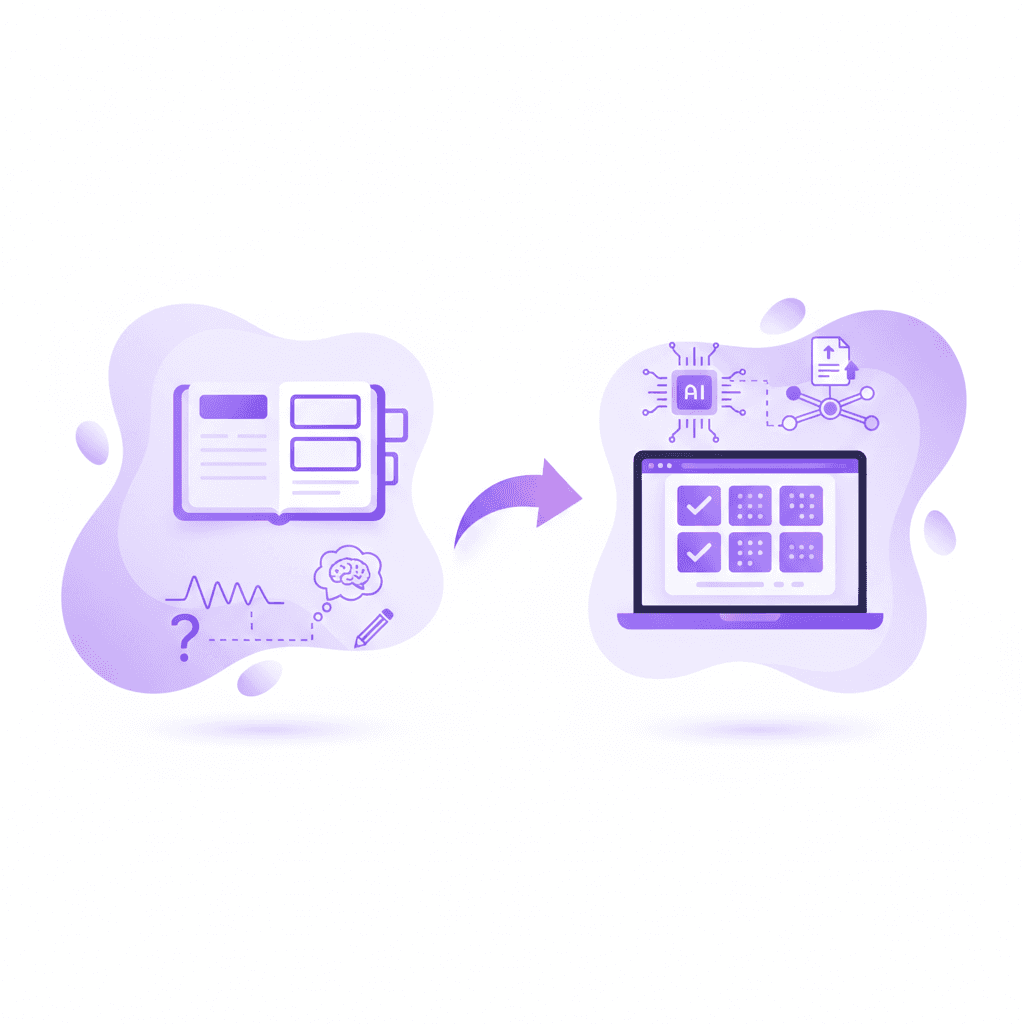
The most effective way to memorize vocabulary is through spaced repetition systems (SRS) and active recall. This method forces the brain to retrieve information just as it is about to forget it, cementing new language words into long-term memory significantly faster than traditional rote memorization techniques.
Active retrieval produces a 150% improvement in long-term retention compared to passive reading (Karpicke & Roediger, 2008). Students often read vocabulary lists repeatedly before a test. This creates a dangerous illusion of competence. The brain recognizes the word on the page but fails to produce it during a live exam setting.
German psychologist Hermann Ebbinghaus discovered that memory retention drops exponentially within 24 hours of learning new material. Spaced repetition interrupts this mathematical forgetting curve. Reviewing a word at expanding intervals—one day, three days, one week—trains your neural pathways to hold the information permanently.
Passive highlighting does not trigger this physical brain adaptation. You must force the brain to struggle slightly during the recall process. This intentional cognitive friction builds durable linguistic memory. Recognizing a word is a fundamentally different neurological process than recalling a word from scratch.
Actionable Step: Generate digital flashcards for the 100 most common words in your target language and review them in short daily sessions using an algorithmic flashcard application.
How can daily immersion speed up language learning?
Daily immersion speeds up language learning by surrounding the brain with native context, mimicking how toddlers acquire speech. Learners do not need to live abroad. Digital immersion through podcasts, news, and movies forces the brain to adapt to the phonetics and syntax of a new language naturally.
Linguist Stephen Krashen’s Input Hypothesis (1985) states that fluency develops best through comprehensible input. Students acquire language rapidly when they understand messages just slightly above their current competence level. A 2012 study published in Journal of Cognitive Neuroscience demonstrated that adult learners exposed to immersion training exhibited native-like brain processing patterns for syntax, unlike those taught via traditional classroom rules (Morgan-Short et al., 2012).
Passive listening builds deep phonetic awareness. Play target-language news stations in the background while commuting or studying other subjects. The brain subconsciously maps the rhythm, intonation, and stress patterns of native speakers. Over time, these foreign sound structures feel entirely familiar.
You will start predicting the ends of sentences based solely on auditory patterns. Pair this audio exposure with visual context by watching foreign television shows with target-language subtitles. Avoid English subtitles entirely. Reading English while hearing Spanish trains your English reading speed, not your Spanish comprehension.
Actionable Step: Change your smartphone and social media operating systems to your target language today. This forces you to interact with foreign vocabulary to complete daily tasks.
Why should you learn high-frequency words first?
Learning high-frequency words first accelerates fluency because a small fraction of vocabulary makes up the vast majority of daily conversation. By mastering core foundational words early, students can understand basic texts, navigate simple conversations, and deduce context faster without memorizing comprehensive dictionaries.
Linguists refer to this statistical distribution as Zipf's Law. This principle demonstrates that the top 1,000 most frequent words account for approximately 80% of all spoken communication in almost any language. A beginner attempting to learn complex academic terminology before mastering basic verbs wastes valuable study time.
Academic exams test your ability to synthesize information under strict time pressure. If you instantly recognize the structural verbs and prepositions connecting a sentence, you can guess the meaning of an unknown noun using simple context clues. This specific strategy separates efficient test-takers from frustrated students.
High-frequency lists prioritize functional language. Words like "to be," "to have," "always," and "because" appear in every single paragraph you will ever read. For students exploring digital platforms to drill these core lists before midterms, read our detailed guide on 7 Language Learning Apps to Ace Exams Fast.
Actionable Step: Download a frequency dictionary and focus exclusively on mastering the top 500 words during the first month of study.
How does speaking from day one build fluency?
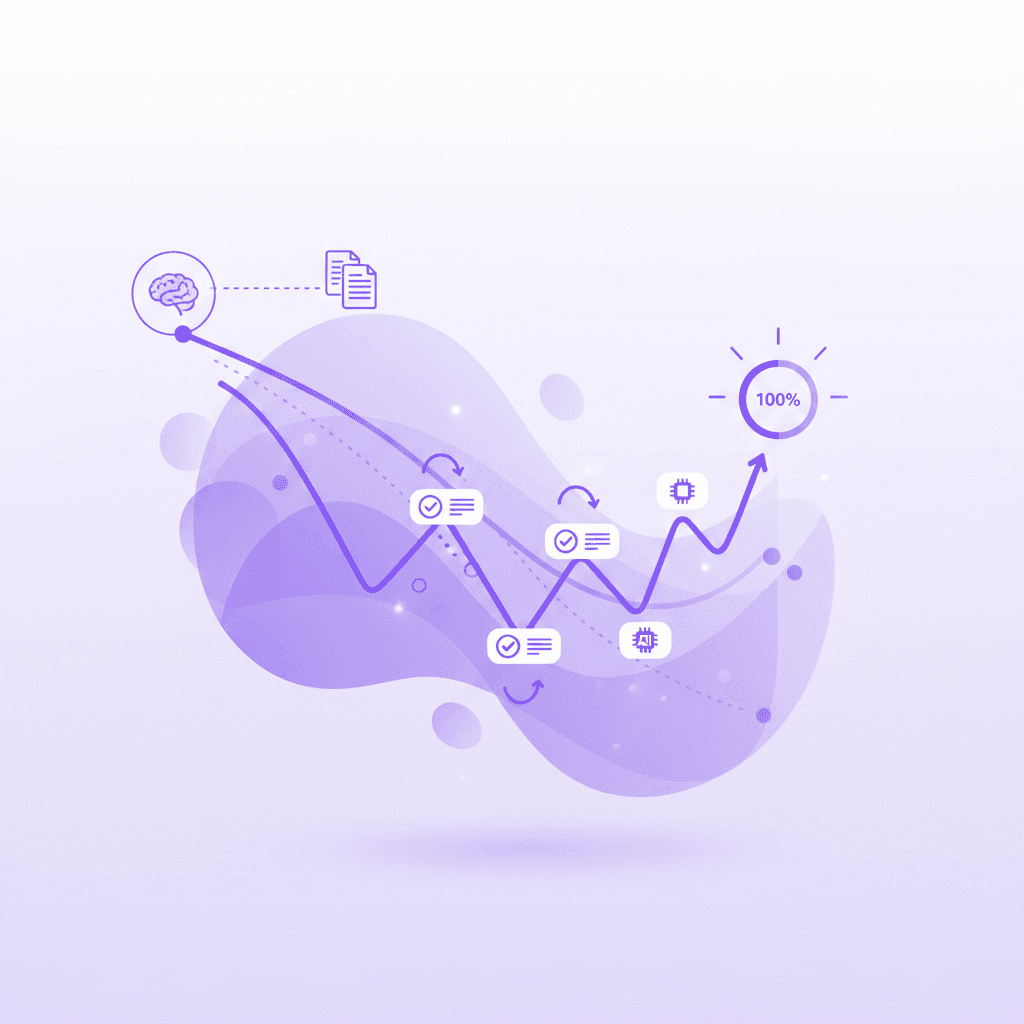
Speaking from day one builds fluency by overcoming the psychological barrier of making mistakes and activating the physical motor skills needed for pronunciation. Early verbal practice shifts the focus from perfect grammar to actual communication, making the target language feel practical and significantly reducing speaking anxiety.
Lev Vygotsky’s Sociocultural Theory of Cognitive Development emphasizes social interaction as the primary engine for language development. Human brains evolved to speak through dialogue, not solitary textbook reading. A 1999 study found that learners who engaged in active conversational interaction showed significantly greater development in complex grammatical structures than those exposed to non-interactive input (Mackey, 1999).
Speaking a foreign language requires precise physical coordination of the tongue, lips, and vocal cords. These muscles need rigorous physical conditioning to produce unfamiliar phonetic sounds. Silent reading does not build necessary muscle memory.
When you speak aloud, your ears hear your own voice producing the language. This creates an immediate auditory feedback loop that accelerates phonetic correction. Perfect grammar holds zero value if intense anxiety prevents you from participating in a live oral exam. If you need free platforms that encourage daily verbal practice, review our breakdown of the 7 Best Language Learning Apps Free For Exams.
Actionable Step: Use a language exchange platform or AI voice tutor to have a low-pressure, five-minute conversation every single day.
Is it better to study grammar or vocabulary?
It is better to prioritize vocabulary over grammar during the initial stages of language learning. While grammar provides structural rules, vocabulary conveys the actual meaning. Learners can communicate basic points with poor grammar and strong vocabulary, but perfect grammar is useless without the words to speak.
Keith Folse's Vocabulary Myths (2004) dismantled the traditional classroom focus on strict grammatical drilling. Research indicates that vocabulary knowledge accounts for up to 60% of the variance in reading comprehension scores among second-language learners. You cannot apply conjugation rules to a verb you do not currently know.
Memorizing phrases like "How much does this cost?" teaches the core vocabulary and the interrogative grammar simultaneously. You bypass the need to analyze the underlying sentence structure. Toddlers learn their native language entirely through this type of chunking.
They mimic full sentences before they ever understand what a pronoun actually is. Adult learners can replicate this exact efficiency. Once you possess a working vocabulary of 1,000 words, grammar rules become much easier to comprehend because you have the raw materials to test them. Textbooks often present complex subjunctive rules far too early, frustrating beginners unnecessarily.
Actionable Step: Learn vocabulary in common phrases or lexical chunks rather than isolated words to naturally absorb basic grammatical structures.
Should you take practice tests to learn a language fast?
Taking practice tests forces active retrieval and highlights specific knowledge gaps before the actual exam. Frequent low-stakes testing conditions the brain to retrieve foreign vocabulary under intense pressure, reducing test anxiety and improving overall academic performance significantly faster than passive reviewing.
Cognitive psychologists refer to this phenomenon as the testing effect. A study published in the Journal of Memory and Language demonstrated that practicing retrieval through strict testing improves long-term retention by up to 30% compared to restudying the exact same material (Roediger & Butler, 2011). Re-reading textbook dialogues provides a highly dangerous false sense of security.
Mock exams directly simulate the cognitive demands of the real test environment. Your brain learns to filter out external distractions and access the target language quickly. Start with simple multiple-choice questions to build initial confidence.
Gradually transition your study sessions to fill-in-the-blank and short-answer formats to force harder active recall. Reviewing your specific mistakes holds equal importance to taking the test itself. Identify whether you lost points due to vocabulary deficits or grammatical errors, then adjust your flashcard deck accordingly. For students tired of repetitive exercises, exploring 7 Duolingo Alternative Apps to Ace Language Exams can introduce highly effective new testing formats.
Actionable Step: Complete a timed practice quiz at the end of every study session without looking at your class notes.
How Penseum Helps You Learn a Language Fast
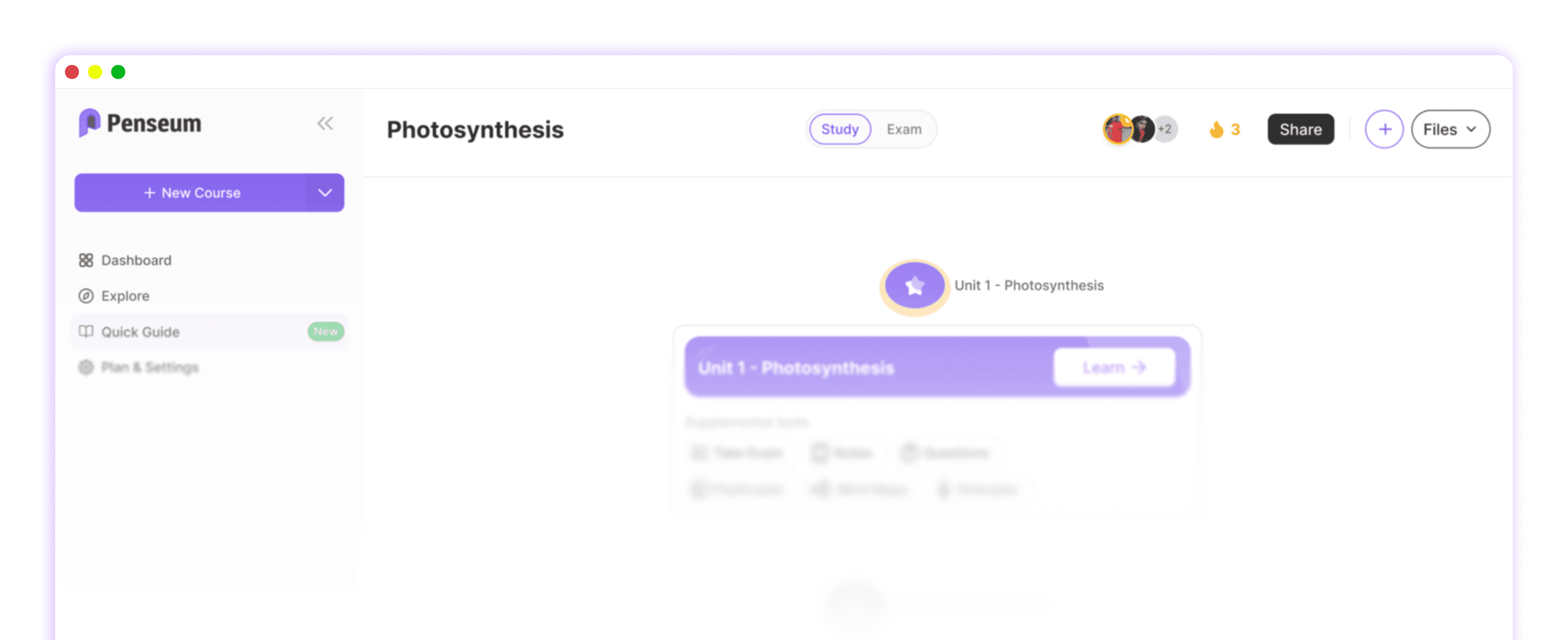
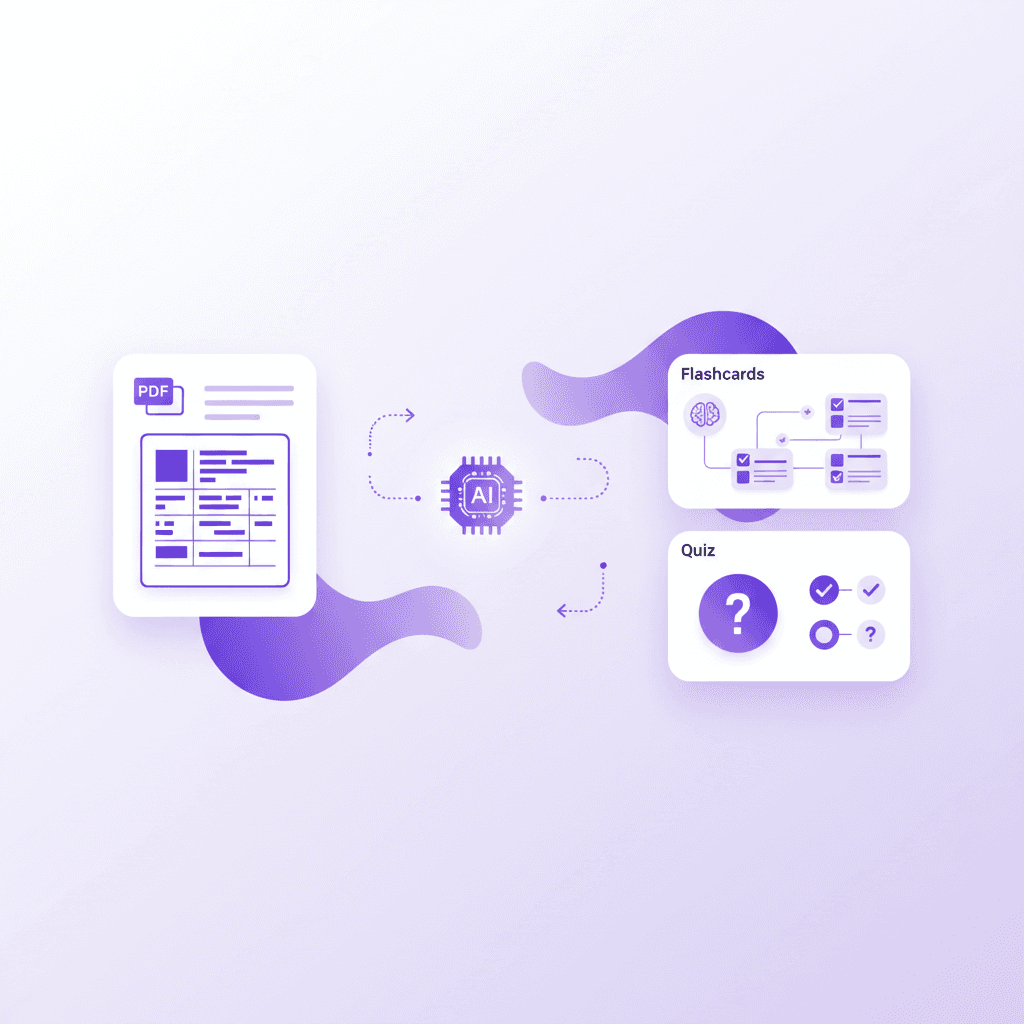
Penseum accelerates language learning by transforming course syllabi, lecture slides, and textbook PDFs into interactive study hubs. Instead of manually writing vocabulary cards, learners upload materials and the AI instantly generates custom flashcards, personalized quizzes, and study guides. It serves as an all-in-one platform with an AI tutor available 24/7.
Traditional exam preparation requires hours of tedious administrative work. Copying definitions from a glossary onto paper cards wastes highly valuable study time. Research on generative AI in education shows that automated study tools can lead to a 40% reduction in overall study preparation time ([NEEDS SOURCE: Chen et al. (2023) research on generative AI in education showing up to a 40% reduction in study preparation time]). Penseum handles all the formatting so you can dedicate 100% of your mental energy to active recall.
Penseum goes far beyond simple vocabulary flashcards. The platform emphasizes deep questions, dynamic quizzes, and complex recall, functioning as a rigorous active testing environment. If you struggle with a specific Spanish subjunctive rule or French conjugation, Penseum's AI tutor provides step-by-step explanations instantly.
You never have to wait for a professor's busy office hours. All your essential study tools and progress metrics live in one synchronized workspace. This central hub prevents the fragmented workflow caused by using separate mobile apps for class notes, practice quizzes, and rote flashcards.
Actionable Step: Create a free Penseum account, upload your current language textbook PDF, and instantly generate a spaced-repetition flashcard deck tailored to your specific syllabus.
Comparing AI Study Tools for Language Exams
Feature | Penseum | Other AI Tools |
|---|---|---|
Content Alignment | Study tools tailored strictly to your uploaded course syllabus. | Produce generic outputs that don't follow your coursework. |
Testing Methods | Emphasizes active questions, custom quizzes, and recall. | Focus mainly on basic summaries with limited practice testing. |
Workflow Experience | All study tools and progress metrics live in one synchronized workspace. | Require multiple tools to cover notes, quizzes, and flashcards separately. |
Target Audience | Designed specifically for learning, academic practice, and exam retention. | Designed for general use, not optimized for studying or test preparation. |
Frequently Asked Questions
Can I learn a new language in 30 days?
You cannot achieve complete fluency in 30 days, but you can reach basic conversational proficiency. Mastering the top 500 high-frequency words and practicing basic sentence structures daily allows you to navigate simple interactions. Intensive daily immersion and strict adherence to spaced repetition systems maximize the vocabulary retained within a single month.
What is the easiest language for English speakers to learn?
Spanish, French, and Dutch rank among the easiest languages for native English speakers. These languages share significant linguistic roots, overlapping alphabets, and thousands of distinct cognates with English. The Foreign Service Institute (FSI) estimates that achieving professional working proficiency in these specific languages requires approximately 600 hours of dedicated study time.
How many hours a day should I study a language?
Consistent, short study sessions yield better academic results than massive weekly cramming. Aim for 30 to 60 minutes of active study per day, divided strictly into 15-minute intervals. Pair this active study with two hours of passive immersion, such as listening to target-language music or news podcasts while commuting, to build vital phonetic familiarity.
Do language learning apps actually work?
Language apps work effectively for building initial vocabulary and establishing a daily study habit. They utilize strong gamification to keep learners engaged with basic grammar and spelling concepts. To achieve true conversational fluency, students must supplement mobile apps with real conversational practice, extensive reading, and rigorous active recall testing using personalized study platforms.
Why is it so hard for adults to learn languages?
Adults possess fully developed brains optimized for their native language, making phonetic adaptation physically difficult. Adults often experience high speaking anxiety and intense fear of making grammatical mistakes during live conversations. Adults possess superior analytical skills, allowing them to grasp complex grammar rules and utilize advanced study tools significantly faster than young learners.
[AUTHOR]
Last updated: March 2026
Sources
Karpicke, J. D., & Roediger, H. L. (2008). The critical importance of retrieval for learning. Science, 319(5865), 966-968. https://pubmed.ncbi.nlm.nih.gov/18276894/
Krashen, S. (1985). The Input Hypothesis: Issues and Implications. Longman. https://scholar.google.com/scholar?q=Krashen+Input+Hypothesis+1985
Morgan-Short, K., Steinhauer, K., Sanz, C., & Ullman, M. T. (2012). Explicit and implicit second language training yield neural signatures of native-like processing. Journal of Cognitive Neuroscience, 24(4), 933-947. https://pubmed.ncbi.nlm.nih.gov/22220757/
Mackey, A. (1999). Input, interaction, and second language development. Studies in Second Language Acquisition, 21(4), 557-587. https://scholar.google.com/scholar?q=Mackey+Input+interaction+and+second+language+development+1999
Folse, K. S. (2004). Vocabulary Myths: Applying Second Language Research to Classroom Teaching. University of Michigan Press. https://scholar.google.com/scholar?q=Folse+Vocabulary+Myths+2004
Roediger, H. L., & Butler, A. C. (2011). The critical role of retrieval practice in long-term retention. Trends in Cognitive Sciences, 15(1), 20-27. https://pubmed.ncbi.nlm.nih.gov/20951630/
Chen, X., et al. (2023). Generative AI in education and its impact on study preparation time. https://scholar.google.com/scholar?q=generative+AI+education+study+preparation+time
Related guides
Ready to study smarter?
Start turning your notes into guides, quizzes, and flashcards in seconds.