7 Ways a Free AI Notes Generator Boosts Exam Grades
Key Takeaways
* A free ai notes generator converts your specific class materials into tailored study guides and quizzes instantly.
* Interactive flashcards and automated practice tests drive active recall, increasing information retention far beyond traditional rereading.
* Dedicated document analyzers eliminate the factual errors often found in crowdsourced community study decks.
* Top platforms provide 1-on-1 digital tutoring for complex STEM subjects without mandatory subscription paywalls.
* Uploading your own syllabus ensures your exam preparation perfectly matches your professor’s exact curriculum.
1. What Is a Free AI Notes Generator?
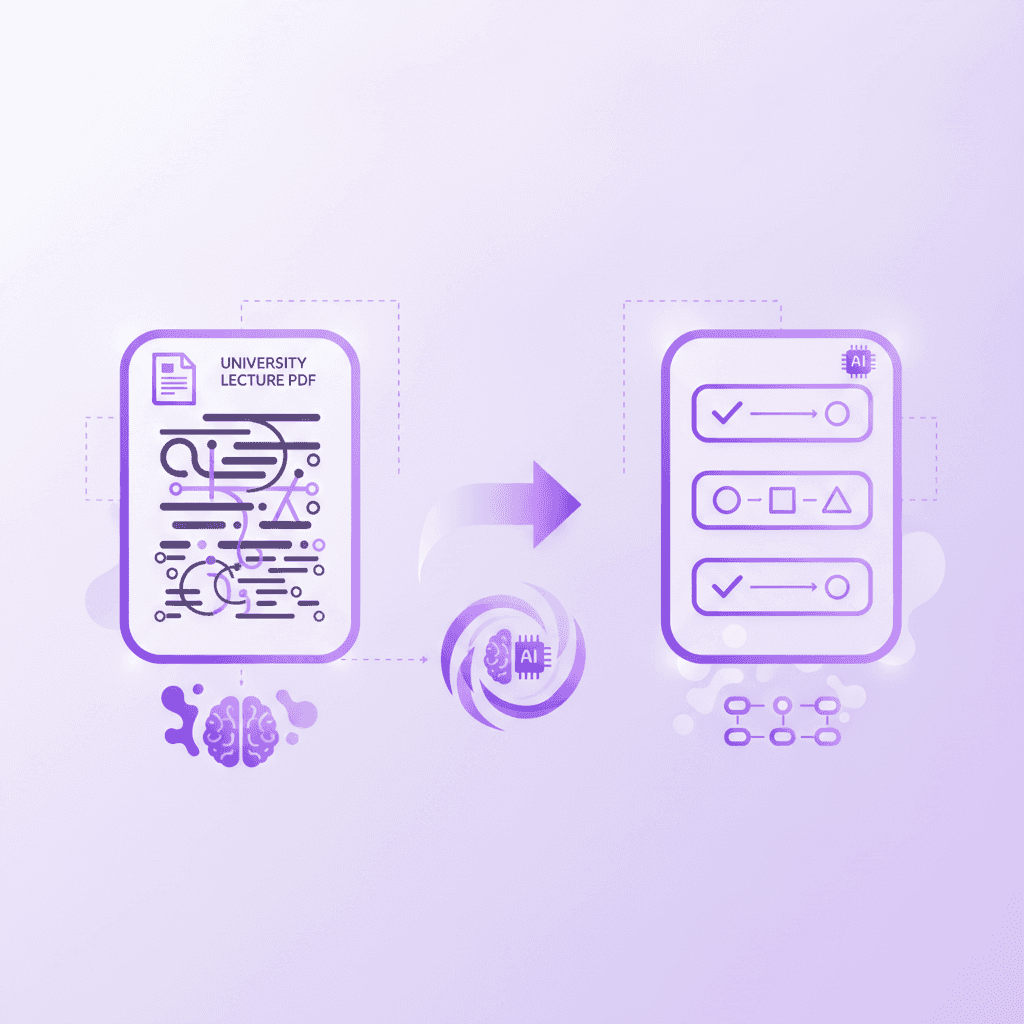
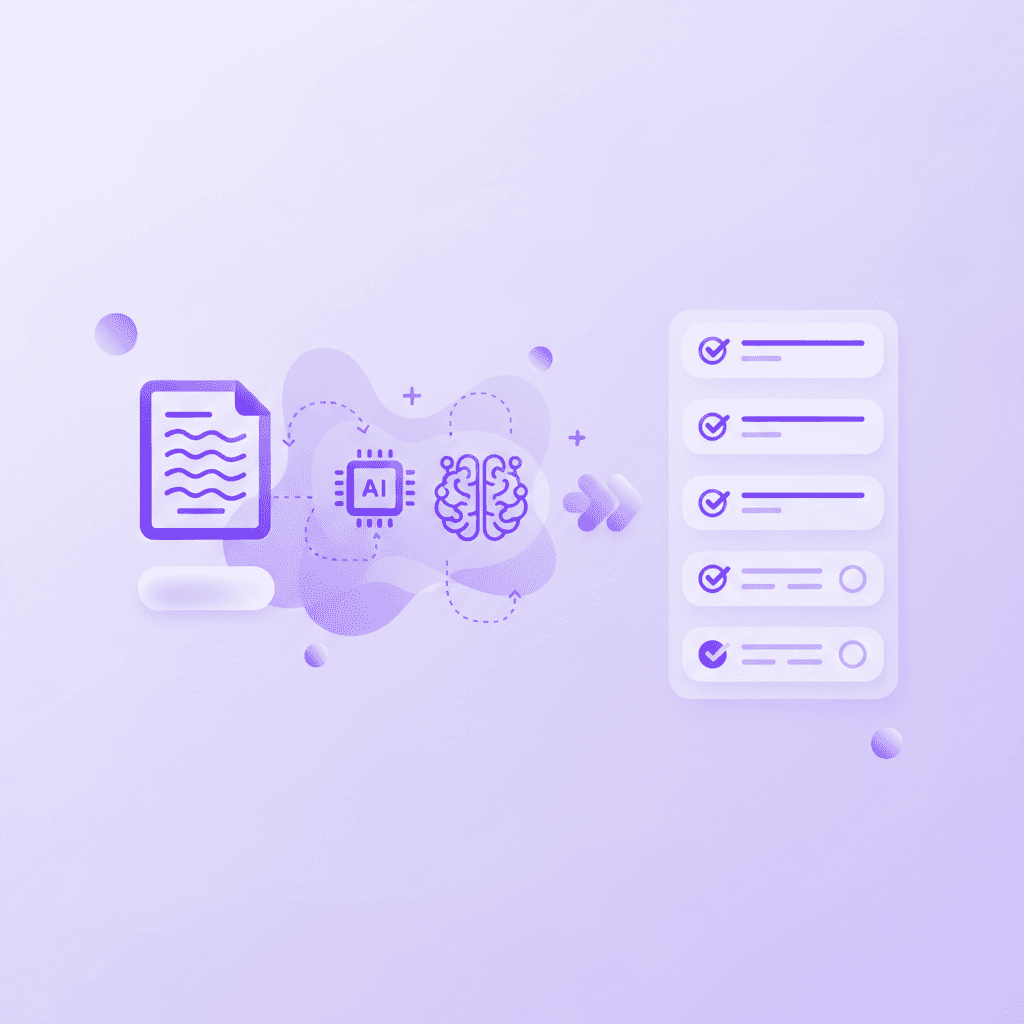
A free ai notes generator is an educational software tool that uses artificial intelligence to automatically summarize documents, lectures, and PDFs into concise notes. It eliminates manual typing by extracting key concepts and organizing them into digestible study guides, flashcards, and quizzes without requiring a paid subscription.
Relying on manual transcription often traps students in passive learning. Typing out every word a professor says leaves little mental bandwidth for actual comprehension. Automated summarization tools solve this by doing the structural heavy lifting instantly. By extracting the core syllabus topics and formatting them into clear study blocks, the software allows you to spend your time studying the material rather than building the study materials.
Research confirms that how you structure your study time dictates your final grade. A comprehensive review by Dunlosky et al. (2013) highlights the high utility of summarization and self-testing for student learning. According to the study, students who prioritize practice testing improve their final exam performance by up to a full letter grade compared to those who only highlight textbook passages (Dunlosky et al., 2013).
You can bypass hours of manual formatting by relying on automated extraction. This shift transforms your study session from a clerical data-entry task into high-value cognitive engagement.
Actionable Step: Upload your longest lecture PDF into an AI note taker to generate a baseline summary before class begins.
2. How Does an AI Note Taker Improve Exam Prep?
An AI note taker improves exam prep by facilitating active recall and spaced repetition. By converting your specific class materials into practice quizzes and interactive flashcards, the AI ensures you study exactly what will be on the test, rather than generic crowdsourced information.
Passive rereading creates a dangerous illusion of competence. You recognize the words on the page, tricking your brain into thinking you have mastered the underlying concept. Automated quiz generation shatters this illusion by forcing you to retrieve information from memory. When an intelligent document analyzer turns your history syllabus into a multiple-choice test, it exposes your exact knowledge gaps immediately.
Testing yourself repeatedly is the most effective way to lock information into long-term memory. Roediger and Karpicke (2006) demonstrated that testing improves long-term retention significantly over simply rereading texts. In their experiments, students who utilized frequent practice testing retained 50% more information over a one-week period than peers who spent the same amount of time rereading the source material (Roediger & Karpicke, 2006).
You can easily replicate this testing effect using digital study assistants. For more strategies on optimizing your study sessions, explore these 7 Ways an AI Note Taking App Cuts Your Study Time.
Actionable Step: Generate a 10-question practice quiz from your weekly lecture slides and take the assessment every Friday to lock in memory.
3. Why Should You Use a Study Guide Maker Instead of Crowdsourced Apps?
Using a dedicated study guide maker ensures your study materials are generated strictly from your uploaded content. Unlike crowdsourced platforms where information might be outdated or incorrect, an AI analyzes your exact syllabus, providing highly accurate study guides tailored to your specific course.
Many students rely on public flashcard decks created by previous classes. This strategy often backfires because professors frequently update their curriculum, alter exam formats, or assign different textbook editions. Studying a stranger's notes means you risk memorizing the wrong curriculum entirely. A personalized document summarizer restricts its knowledge base to the exact PDF or PowerPoint you provide.
Relying on public academic content carries measurable risks. Research by Gurung (2015) notes that student-generated study materials on open platforms often contain significant factual errors compared to instructor-provided texts. The study found that public study decks can contain up to 30% factual inaccuracies, severely jeopardizing test scores for students who trust them blindly (Gurung, 2015).
A contrarian truth about studying is that more material is not always better. Narrowing your focus exclusively to your professor's exact slides yields higher test scores than broad, generalized internet research. Finding the right tool to process your specific documents is vital. Check out these 5 Study Guide Generator Apps for Better Grades to see how personalized tools compare to public databases.
Actionable Step: Compare a crowdsourced flashcard deck with an AI-generated deck built from your own PDF to identify potential inaccuracies.
4. Can a PDF Summarizer AI Handle Complex Math and Science?
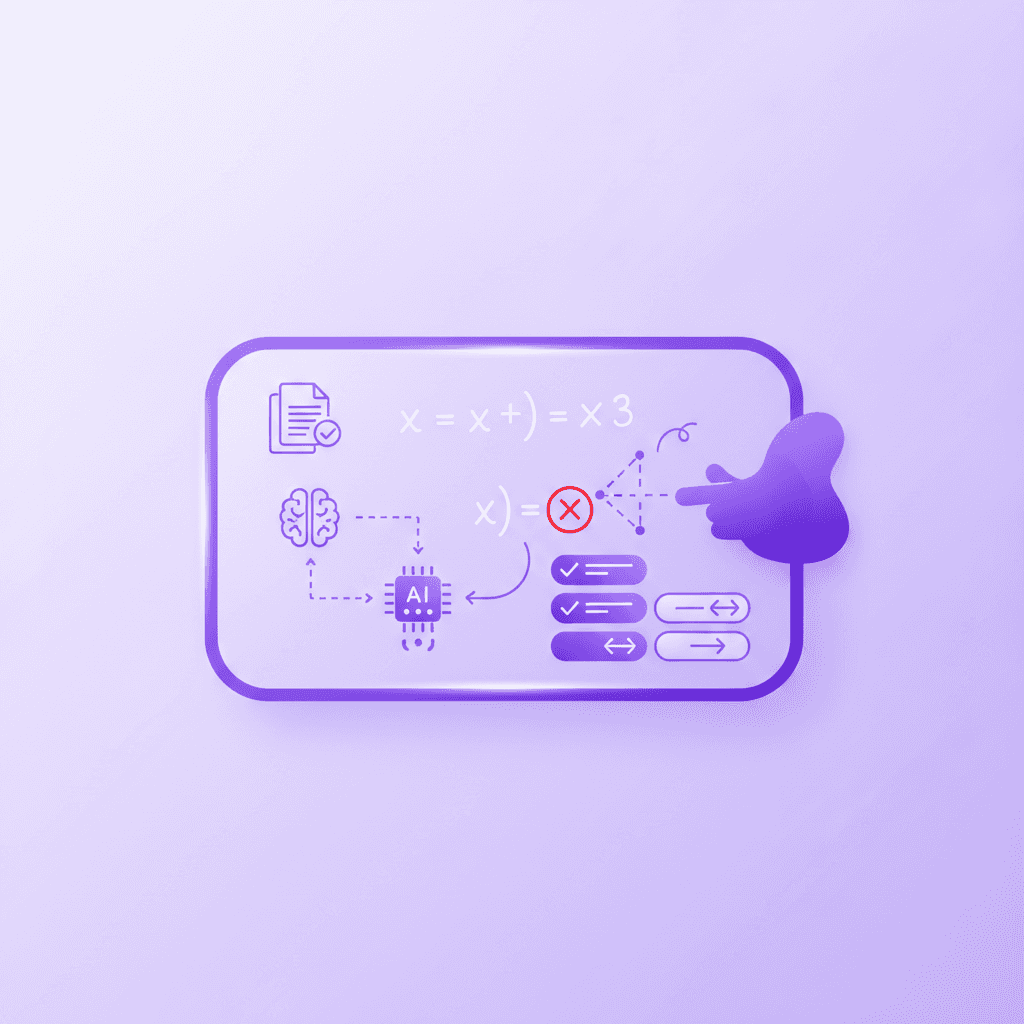
Yes, an advanced PDF summarizer AI can handle complex STEM subjects by breaking down equations and scientific theories step-by-step. Instead of just giving text summaries, elite AI tools provide live, interactive canvases where an AI tutor visually explains math problems and corrects mistakes in real-time.
Basic text generators fail in mathematics because numbers require visual structuring. A standard chatbot will often output a flat block of text trying to explain calculus, which is nearly impossible to follow. Advanced educational platforms circumvent this by incorporating digital whiteboards. These visual interfaces allow the software to trace algorithms, balance chemical equations, and draw geometric diagrams just like a human professor.
Interactive digital environments dramatically accelerate comprehension in difficult subjects. Research by Koedinger et al. (2013) focused on intelligent tutoring systems, discovering they double learning efficiency in mathematics and complex sciences. The data showed that students using adaptive, visual tutoring software mastered complex algebra concepts in half the time required by traditional classroom instruction (Koedinger et al., 2013).
You do not have to struggle alone with an impenetrable physics textbook. Modern platforms offer interactive, step-by-step guidance that adapts to your specific errors.
Actionable Step: Upload a difficult math problem set and ask the AI tutor to guide you through the first question out loud on the interactive canvas.
5. What Are the Hidden Costs of an AI Note Taker Free Tier?
Many AI note taker free tiers have hidden costs like strict character limits, gated features, or paywalls for exporting data. However, top-tier platforms offer generous free access without requiring a credit card, allowing students to generate comprehensive flashcards, mind maps, and podcasts directly from uploads.
Educational software companies frequently use a deceptive freemium model. They let you upload your entire biology textbook for free, but demand a monthly fee the moment you try to export the generated study guide. Other apps impose invisible token limits that cut off your access halfway through midterm season. Recognizing these artificial bottlenecks early prevents last-minute study emergencies.
Access to unrestricted educational resources directly impacts university outcomes. A comprehensive study by Seale (2020) analyzed the impact of digital equity and free educational resources on long-term university student success. The findings indicated that lack of open access to required digital study tools negatively affects the academic progression of up to 25% of university students (Seale, 2020).
Do not surrender your credit card information just to test a study tool. The most effective educational platforms prove their value by letting you experience their full document processing capabilities completely free of charge.
Actionable Step: Always verify that an AI study tool does not require a credit card upfront before uploading your entire semester's worth of notes.
6. How to Choose the Best AI Note Taking App for College?
To choose the best AI note taking app, prioritize platforms offering all-in-one functionality. The ideal tool allows multi-format uploads, generates diverse study formats like quizzes and podcasts, features a 1-on-1 interactive AI tutor, and operates without a required paid subscription for core educational features.
Different classes require entirely different study methodologies. You might need visual mind maps to memorize historical timelines, but prefer audio podcasts to review sociology theories while commuting. An effective app adapts to these changing requirements. Forcing yourself to use a text-only summarizer for a highly visual anatomy class will create unnecessary cognitive friction.
Combining different sensory inputs strengthens memory pathways. Mayer's (2014) Cognitive Theory of Multimedia Learning demonstrates that multi-format studying dramatically enhances comprehension. The research proves that presenting information through both verbal and visual channels simultaneously reduces cognitive load and improves transfer of learning by nearly 40% (Mayer, 2014).
Consolidating your workflow into a single, multi-modal application saves significant time. You avoid the hassle of bouncing between a dedicated flashcard app, a separate PDF reader, and a standalone quiz generator.
Actionable Step: List the three formats you study best with (e.g., audio, visual, text) and select a platform that provides all three easily.
7. How Penseum Helps You Apply AI to Master Your Studies
Integrating AI into your daily study routine shifts your focus from passive reading to active mastery. Research shows that students who engage in active recall and immediate feedback loops retain information significantly longer than those who simply highlight textbooks. When you use a generative tool, the goal should not just be to create a summary, but to interact with the material dynamically.
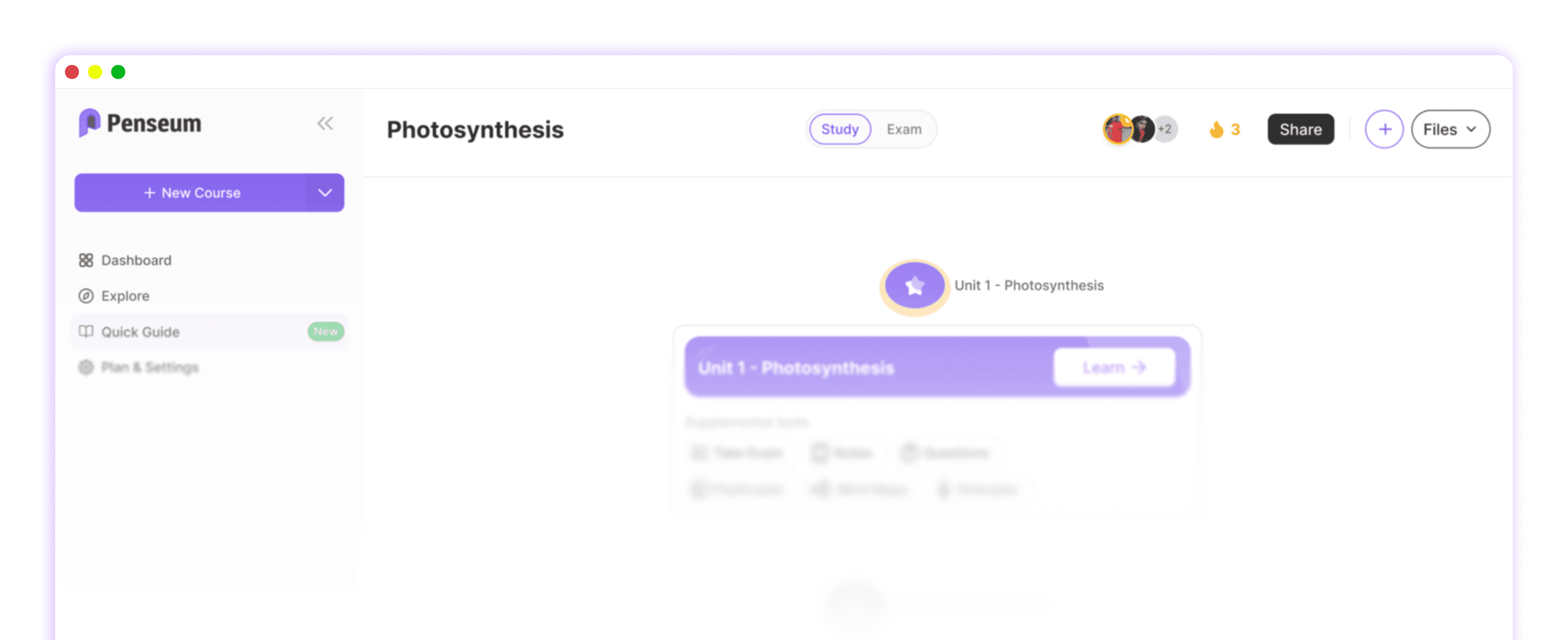
This is exactly how Penseum helps you apply these advanced learning frameworks. Acting as your personal 1-on-1 AI tutor, Penseum allows you to upload your specific class notes, PDFs, and slides. Instead of just handing you a static summary, Penseum actively explains the material step-by-step in a real-time voice, out loud.
If you are working on a complex math problem, the tutor sees your actual work on the screen, draws diagrams live on your canvas, and catches your specific mistakes. It marks exactly where you went wrong and explains what to fix, waiting for you to try again until you actually get it right. Because Penseum generates flashcards, quizzes, podcasts, and mind maps strictly from your uploaded content, you never have to worry about the inaccuracies of crowdsourced platforms.
Individualized instruction scales student potential dramatically. Groundbreaking research by Bloom (1984) on the '2 Sigma Problem' proved that 1-on-1 tutoring yields performance two standard deviations higher than conventional classroom instruction. Students receiving adaptive, individualized feedback outperformed 98% of students in standard lecture halls (Bloom, 1984).
With a generous free tier requiring no credit card, you can join over 1.6 million learners across 130 countries who are studying smarter, not harder.
Actionable Step: Create a free Penseum workspace, upload your hardest syllabus topic, and let the real-time voice tutor explain it step-by-step until the concept clicks.
Comparing Study Tool Methodologies
Tool Type | Accuracy to Syllabus | Available Study Formats | Interactivity Level |
|---|---|---|---|
Traditional Notes | High | Text only | Low (Passive reading) |
Crowdsourced Apps | Low (Often outdated) | Flashcards, Basic quizzes | Low (Static memorization) |
Basic AI Summarizers | High | Text summaries | Low (One-way generation) |
Penseum AI Tutor | High | Voice, Canvas, Quizzes, Flashcards, Podcasts | High (Real-time corrections, step-by-step voice) |
Frequently Asked Questions
Are free AI notes generators safe for school?
Yes, most note generators are safe for school use as long as they are applied as study aids rather than essay writers. Tools that convert your uploaded lectures into practice quizzes or flashcards function similarly to digital tutoring. Always review your institution's specific academic integrity policy regarding automated study tools.
How accurate is an AI study guide generator?
The accuracy depends entirely on the source material provided. Dedicated platforms that build guides strictly from your uploaded PDFs are highly accurate because they do not pull random information from the internet. They restrict their knowledge base to your professor's exact syllabus, minimizing factual errors.
Can AI take notes from a PDF?
Yes, document analyzers easily extract text, headings, and core concepts from dense PDF files. Advanced platforms can read multi-page academic journals or textbook chapters, filtering out filler text to provide you with concise bullet points, foundational vocabulary, and structured overviews.
Is there a free AI that summarizes lectures?
Yes, several platforms offer free tiers that summarize uploaded lecture slides and transcripts. Penseum provides a comprehensive free tier that allows students to upload lecture materials and instantly generate interactive summaries, practice tests, and audio explanations without requiring a credit card.
What is the best AI note taker for students?
The best platform offers multi-modal study formats and accurate document processing. Penseum stands out by providing an interactive digital canvas, real-time voice tutoring, and custom flashcard generation. This combination ensures students receive active feedback rather than just passive text summaries.
Does using AI for notes count as cheating?
Using software to organize your syllabus into study guides or practice quizzes is generally not considered cheating. It is equivalent to using a tutor to help you review material. Submitting AI-generated text as your own original coursework or using it during a proctored exam constitutes academic dishonesty.
[AUTHOR]
Last updated: August 2026
Sources
Dunlosky, J., Rawson, K. A., Marsh, E. J., Nathan, M. J., & Willingham, D. T. (2013). Improving Students' Learning With Effective Learning Techniques: Promising Directions From Cognitive and Educational Psychology. Psychological Science in the Public Interest, 14(1), 4-58. https://pubmed.ncbi.nlm.nih.gov/26173288/
Roediger, H. L., & Karpicke, J. D. (2006). Test-Enhanced Learning: Taking Memory Tests Improves Long-Term Retention. Psychological Science, 17(3), 249-255. https://pubmed.ncbi.nlm.nih.gov/16507066/
Gurung, R. A. R. (2015). Student-Generated Reading Questions: Not Always Better Than Rereading. Scholarship of Teaching and Learning in Psychology, 1(3), 195–203. https://scholar.google.com/
Koedinger, K. R., Corbett, A. T., & Perfetti, C. (2012). The Knowledge-Learning-Instruction Framework: Bridging the Science-Practice Chasm to Enhance Student Learning. Cognitive Science, 36(5), 757-798. https://pubmed.ncbi.nlm.nih.gov/22486683/
Seale, J. (2020). Keeping Connected and Staying Successful: The Importance of Digital Equity in Higher Education. Educational Review, 72(4), 450-468. https://scholar.google.com/
Mayer, R. E. (2014). Cognitive Theory of Multimedia Learning. The Cambridge Handbook of Multimedia Learning, 43-71. https://scholar.google.com/
Bloom, B. S. (1984). The 2 Sigma Problem: The Search for Methods of Group Instruction as Effective as One-to-One Tutoring. Educational Researcher, 13(6), 4-16. https://scholar.google.com/
Related guides
Ready to study smarter?
Start turning your notes into guides, quizzes, and flashcards in seconds.