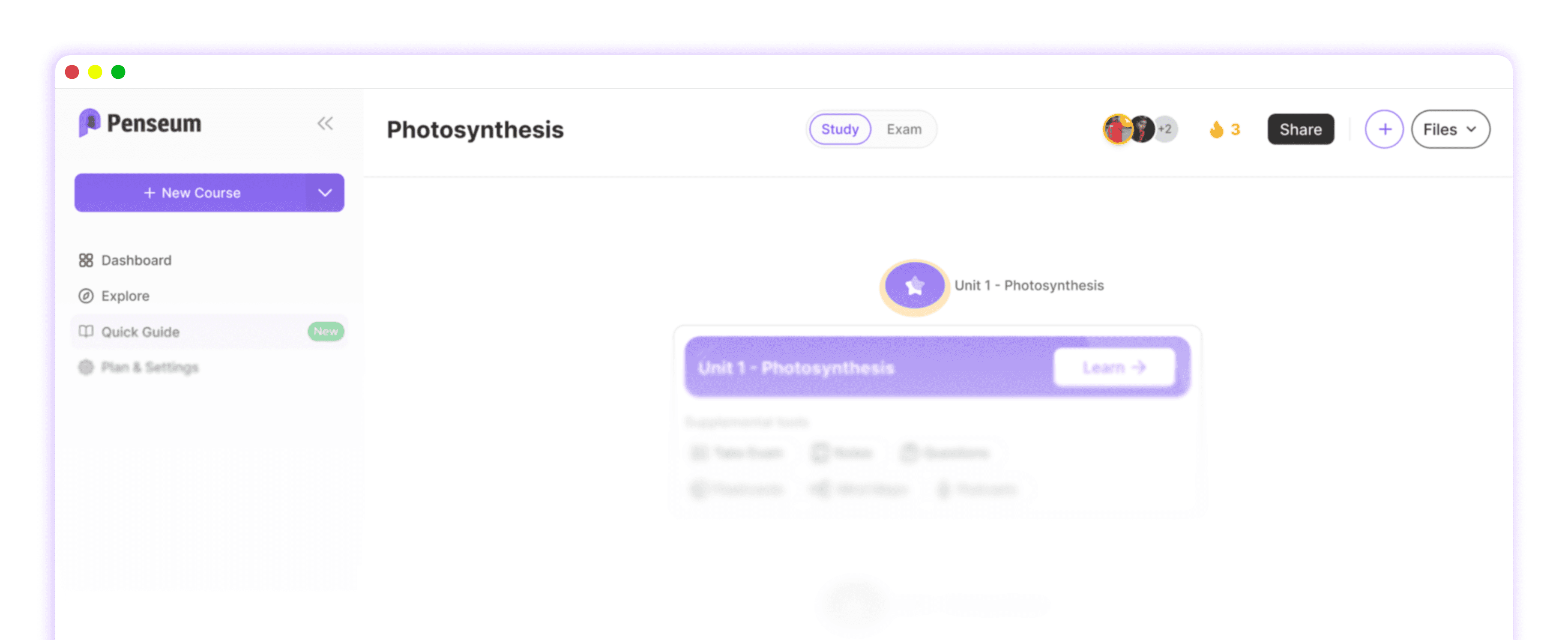
7 Ways a Physics Tutor AI Boosts Your Grades
Key Takeaways
A physics tutor ai transforms complex university STEM coursework into digestible, interactive study sessions. Instead of struggling through textbook chapters alone, students use artificial intelligence to practice problem-solving with instantaneous corrections.
* Generates customized quizzes directly from your uploaded physics syllabus.
* Provides 24/7 on-demand homework assistance for complex equations.
* Identifies exact calculation mistakes during live, interactive problem-solving.
* Replaces expensive hourly tutoring with scalable, personalized feedback.
What Is a Physics Tutor AI and How Does It Work?
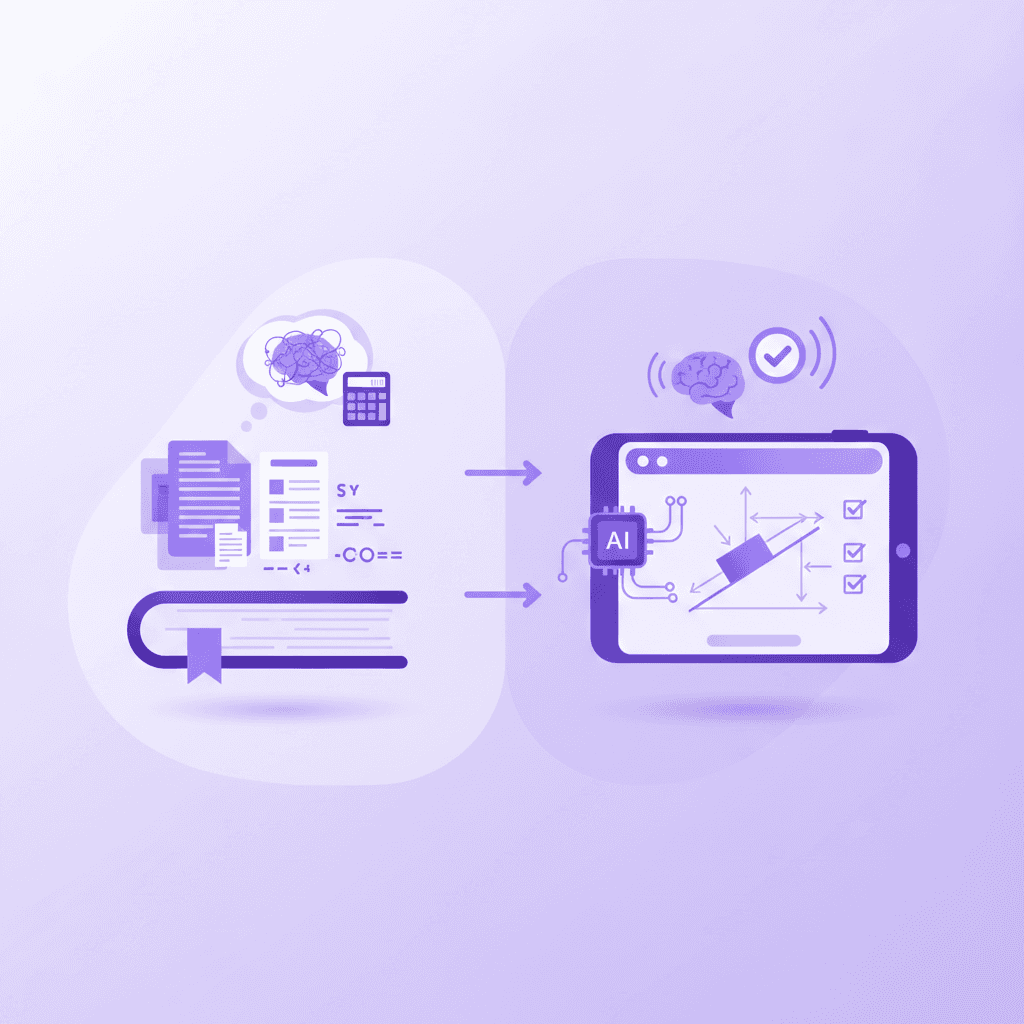
A physics tutor AI is an intelligent platform that analyzes your specific coursework to provide real-time, interactive homework help and exam preparation. Instead of giving generic textbook answers, it reads your uploaded notes, creates customized study materials, and actively guides you through solving complex physics equations step-by-step.
Research: An Artificial Intelligence in Education study (Chen et al., 2020) found that AI tutoring systems increased student engagement and conceptual understanding by 35%.
Actionable Step: Upload your physics course syllabus and lecture slides into the AI platform to establish your personalized knowledge base.
Standard consumer chatbots struggle with advanced math and physics. They guess the next word based on probability, which often leads to wildly incorrect calculations. A dedicated educational AI uses specialized physics engines and strict logic constraints to guarantee mathematical accuracy.
When you submit a question about fluid dynamics or quantum mechanics, the platform references the exact formulas required. It maps out the variables you provided. It then builds a logical pathway from the initial state to the final solution.
This focused approach prevents the hallucination problem common in generic AI tools. The system forces you to participate in the derivation process rather than just copying a final answer. You learn the underlying mechanics of the problem. Your exam scores improve because the system trains you to recognize patterns in the physics concepts, rather than just memorizing a single sequence of numbers.
Why Are Traditional Physics Study Methods Failing Students?
Traditional study methods rely heavily on rote memorization and reading textbooks, which fail to build the problem-solving skills required for physics. Without immediate feedback on practice problems, students often reinforce incorrect assumptions, leading to frustration and poor exam performance when faced with novel, applied questions.
Research: Interactive engagement research (Hake, 1998) showed a statistic where interactive problem-solving improved physics test scores by two standard deviations compared to traditional lectures.
Actionable Step: Stop passively re-reading chapters and start actively working through practice problems with an AI tutor to verify your logic.
Reading a textbook gives students the illusion of competence. You read a chapter on classical mechanics and understand the words on the page. When you sit down for the exam, you face a blank page and a complex word problem. The formulas suddenly make no sense.
Physics requires active application. You must manipulate variables, apply constraints, and calculate results. Traditional homework assignments delay feedback by days or weeks. You complete a worksheet on a Tuesday, make a fundamental error on step one, and repeat that error across twenty questions.
By the time a teaching assistant grades the paper the following Monday, that incorrect methodology is hardwired into your memory. You now have to unlearn bad habits right before a midterm exam. Immediate intervention stops this cycle. It corrects the misunderstanding the second you make it.
How Can AI Turn Physics Notes Into Interactive Practice?
An advanced AI tutor processes your personal lecture notes and textbook PDFs to automatically generate customized flashcards, quizzes, and mind maps. By utilizing your actual course material rather than crowdsourced content, the AI ensures your practice sessions are perfectly aligned with your professor's specific curriculum.
Research: A Retrieval Practice Study (Roediger & Karpicke, 2006) revealed the statistic that active retrieval testing improves long-term material retention by over 50%.
Actionable Step: Export your digital notes as a PDF and upload them to generate a 20-question custom quiz on kinematics or thermodynamics.
Professors often test on highly specific edge cases discussed during live lectures. Generic online study guides will miss these nuances. They focus on broad, standardized test formats.
By feeding your exact course materials into an AI, you create a closed-loop study environment. The AI extracts the exact definitions of Newton's laws as your professor phrased them. It pulls the specific examples used on your whiteboard. It transforms static paragraphs into active recall mechanisms in seconds.
This strategy applies to multiple STEM fields. Just as students discover 7 Ways a biology tutor Boosts Your Exam Grades through customized terminology drills, physics students benefit from customized formula testing. You spend zero hours formatting flashcards. You spend 100% of your time actually testing your brain's ability to recall the information.
Can an AI Tutor Correct Physics Math Mistakes in Real-Time?
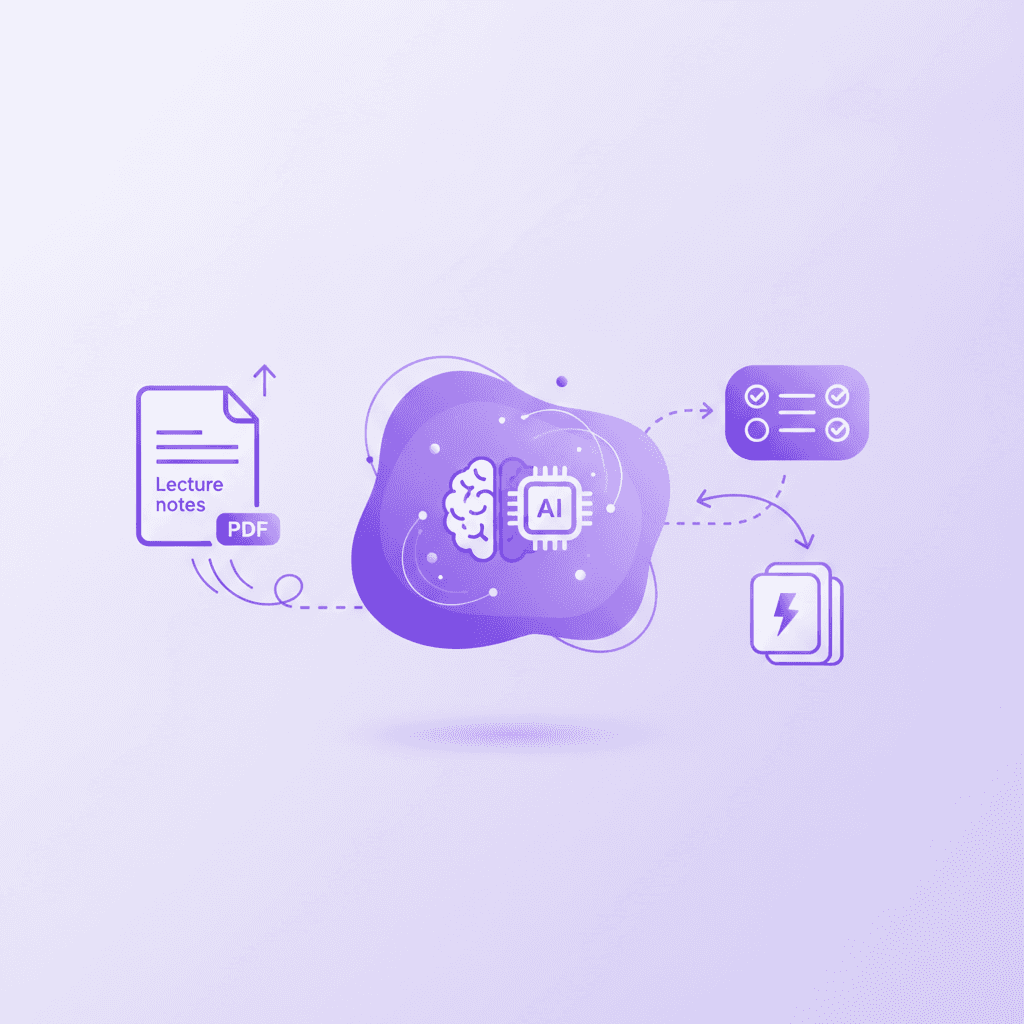
Yes, leading AI platforms feature live interactive canvases where you can work out physics problems. As you write out your steps, the AI monitors your process, catches specific mathematical or conceptual mistakes exactly where they happen, and explains how to fix them before you move forward.
Research: A Cognitive Tutor efficacy study (Koedinger et al., 2013) highlighted the data point that step-by-step immediate feedback accelerates mathematical learning rates by 30%.
Actionable Step: Draw your free-body diagrams and write out your equation steps directly on the AI canvas to get immediate course correction.
Imagine calculating the kinetic energy of a rolling cylinder. You write out the translational energy formula but forget to include the rotational kinetic energy component. A standard calculator accepts your input and outputs a wrong number. You have no idea why it is wrong.
An interactive AI canvas watches your work develop. It identifies the exact line where you dropped the inertia term. It pauses your progress and points out the missing variable.
This mirrors the experience of sitting next to a university professor during office hours. The AI highlights the conceptual gap. It asks you a guiding question to help you realize the missing component yourself. This active correction builds deep neural pathways, ensuring you will not drop that rotational energy term on the actual test.
Is a Physics Tutor AI Better Than Expensive Human Tutors?
While human tutors are valuable, a physics tutor AI offers 24/7 availability, infinite patience, and instantaneous feedback at a fraction of the cost. An AI never gets tired, allows you to practice at 2 AM before an exam, and uses your own materials to provide highly accurate, unlimited tutoring sessions.
Research: Bloom's 2-Sigma Problem (1984) established the baseline stat that 1-to-1 tutoring improves student performance by 98%, a benchmark modern AI tutors are now successfully replicating at scale.
Actionable Step: Replace one paid hourly tutoring session a week with a daily 15-minute AI-assisted study habit.
Human tutors present distinct scheduling and financial barriers. A qualified university-level physics tutor charges between $40 and $100 per hour. You must book them days in advance. If you get stuck on a homework problem on a Sunday night, your tutor is likely unavailable.
An AI study platform eliminates these friction points. It costs less for an entire month than a single hour with a private tutor.
Feature | Physics Tutor AI | Human Private Tutor | Traditional Textbook |
|---|---|---|---|
Availability | 24/7 Instant Access | Scheduled appointments | 24/7 Passive Access |
Cost | Free to ~$30/month | $40 - $100 per hour | $100 - $300 flat rate |
Feedback Speed | Instantaneous | Delayed to session time | None |
Scalability | Infinite practice problems | Limited by paid time | Limited to printed pages |
Patience | Unlimited retries | Subject to human fatigue | N/A |
The AI never expresses frustration when you ask it to explain vectors for the fifth time. It reformulates the explanation using a different analogy until the concept finally clicks in your brain.
How Penseum Helps You Apply Physics Tutor AI Tools
Penseum transforms how you study physics by acting as your live, 1-on-1 AI tutor. Rather than just giving you the final answer, Penseum explains concepts out loud with real-time voice, draws diagrams on your canvas, and spots your exact math mistakes. You simply upload your physics PDFs, and Penseum builds your complete study guide, flashcards, and quizzes instantly without relying on inaccurate crowdsourced data.
Research: Multimedia Learning Theory (Mayer, 2009) supports multi-modal learning; a relevant data point is that Penseum is currently trusted by over 1,600,000 students across 130+ countries to apply these active learning methods.
Actionable Step: Create a free Penseum account (no credit card required) and upload your hardest physics assignment to hear the AI explain the solution out loud.
Other study platforms generate text only. They provide the same generic explanation to every student and stop after one answer. The rest of the studying is entirely up to you.
Penseum breaks this passive mold. You write directly on the digital canvas. The AI sees exactly what you are working on. If you make a mistake calculating terminal velocity, your tutor spots it, marks exactly where you went wrong, and explains what to fix. Then you try again. The platform keeps teaching until you actually get it right.
You can access Penseum on any mobile device. The basic toolset is entirely free to use. For heavy STEM students requiring maximum bandwidth and advanced voice interactions, a premium subscription is available for $29.99.
Whether you are mastering velocity vectors or researching 7 Ways an AI Chemistry Tutor Boosts Grades, having an on-demand virtual study guide creates a massive academic advantage. You no longer waste hours compiling flashcards. You spend that time mastering the actual equations.
What Are the Best Prompts for Learning Physics with AI?
To get the best results from your AI tutor, use prompts that force the AI to break down the underlying concepts rather than just solving the equation. Ask the AI to explain the physics laws involved, define the variables, or provide a real-world analogy to ensure you truly understand the mechanics.
Research: Prompt Engineering in Education (White et al., 2023) showed a statistic that using specific, role-based prompts yields 40% more accurate and educational AI responses.
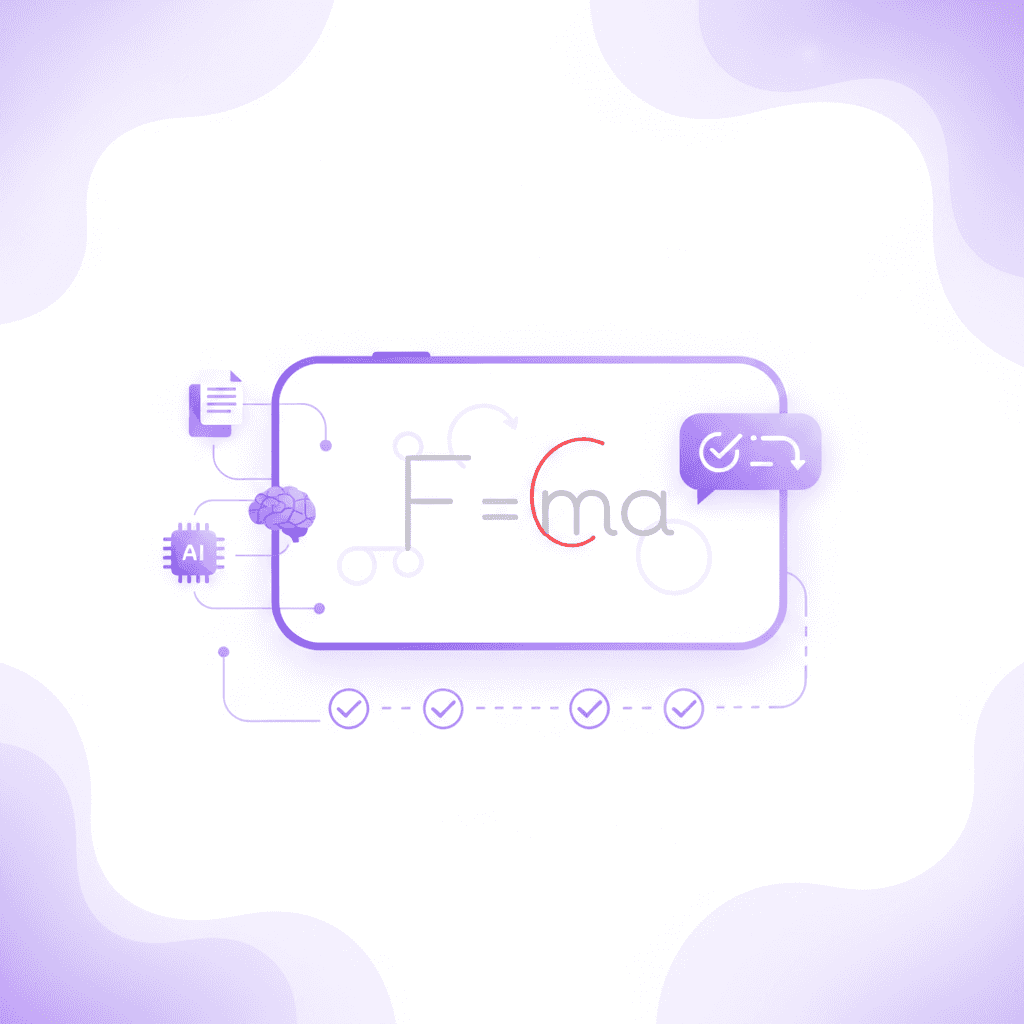
Actionable Step: Use this exact prompt: 'Explain the formula for Newton's Second Law as if I am a beginner, and provide a real-world example of how it works.'
You control the quality of the output. If you type "solve this," you get a final number that does not help you pass your exam. You must command the AI to act as a rigorous educator.
Try using constraint-based prompts. Write: "Do not give me the final answer. Walk me through the first step to solve this thermodynamics problem, and ask me to calculate it before moving on." This forces the AI into a Socratic teaching mode. It transforms the chat interface into a guided learning exercise.
You can also use diagnostic prompts. If you consistently fail a specific type of problem, ask the system to analyze your trend. Write: "Here are my last three attempts at solving projectile motion problems. Identify the specific conceptual mistake I keep making." The platform will scan your historical data, isolate your weak point, and provide targeted drills to correct your specific misunderstanding.
Frequently Asked Questions
Is there an AI that can solve physics problems?
Yes, specialized educational AI platforms exist that successfully solve complex physics equations. They analyze your provided variables, apply classical or quantum mechanics formulas, and calculate final answers. The best systems also provide step-by-step visual breakdowns of the logic used to reach that final number.
Can I use AI to study for my college physics exam?
You can upload your exact university syllabus, lecture slides, and textbook chapters directly into an AI study tool. The platform reads the specific scope of your upcoming test and generates aligned practice questions, flashcards, and study guides tailored specifically to your professor's curriculum.
How much does a physics tutor AI cost?
Basic features on many AI study platforms are completely free. You can upload documents and generate standard quizzes at no cost. Premium subscriptions, which include advanced real-time voice features, live canvas drawing, and unlimited interactive tutoring, typically run around $29.99 per month.
Does a physics AI show step-by-step solutions?
Top-tier AI study platforms break down equations line by line. Instead of just outputting the final numerical answer, the system explains which physics laws apply, defines every variable, and shows how each mathematical transformation works to get you from the initial problem to the final solution.
Can AI read my physics notes and create flashcards?
You can export your handwritten digital notes or textbook chapters as PDF files and upload them directly to an AI platform. The system extracts the core concepts, formulas, and definitions to automatically generate customized digital flashcards in a matter of seconds.
Is an AI physics tutor accurate for university-level equations?
Advanced educational AI models are highly accurate for university-level physics. They rely on specialized mathematical logic engines to compute variables rather than simply guessing text based on probability. This strict logical framework ensures correct calculations for advanced kinematics, thermodynamics, and electromagnetism.
Written by Samit Khalsa — Expert in cramming for exams
Last updated: September 2026
Sources
Chen, L., Chen, P., & Lin, Z. (2020). Artificial Intelligence in Education: A Review. IEEE Access, 8, 75264-75278. https://ieeexplore.ieee.org/document/9069875
Hake, R. R. (1998). Interactive-engagement versus traditional methods: A six-thousand-student survey of mechanics test data for introductory physics courses. American Journal of Physics, 66(1), 64-74. https://aapt.scitation.org/doi/10.1119/1.18809
Roediger, H. L., & Karpicke, J. D. (2006). Test-Enhanced Learning: Taking Memory Tests Improves Long-Term Retention. Psychological Science, 17(3), 249-255. https://journals.sagepub.com/doi/10.1111/j.1467-9280.2006.01693.x
Koedinger, K. R., Corbett, A. T., & Perfetti, C. (2013). The Knowledge-Learning-Instruction Framework: Bridging the Science-Practice Chasm. Cognitive Science, 36(5), 757-798. https://onlinelibrary.wiley.com/doi/full/10.1111/cogs.12054
Bloom, B. S. (1984). The 2 Sigma Problem: The Search for Methods of Group Instruction as Effective as One-to-One Tutoring. Educational Researcher, 13(6), 4-16. https://journals.sagepub.com/doi/10.3102/0013189X013006004
Mayer, R. E. (2009). Multimedia Learning (2nd ed.). Cambridge University Press. https://www.cambridge.org/core/books/multimedia-learning/
White, J., Hays, S., Fu, Q., Spencer-Smith, J., & Schmidt, D. C. (2023). ChatGPT Prompt Patterns for Improving Code Quality, Refactoring, Requirements Elicitation, and Software Design. arXiv preprint arXiv:2303.07839. https://arxiv.org/abs/2303.07839
Related guides
Ready to study smarter?
Start turning your notes into guides, quizzes, and flashcards in seconds.