7 Ways a Study AI Tool Improves Your Grades
Key Takeaways
* A study ai tool processes your specific syllabus to generate customized exam prep materials.
* Automated flashcards and practice quizzes force your brain to engage in active recall.
* 1-on-1 digital tutoring solves Bloom’s 2-Sigma problem, offering personalized feedback.
* Replacing crowdsourced, generic apps with personalized AI cuts study time by hours.
* Students can access elite-level tutoring through freemium software tiers without spending money.
What exactly is a study AI tool?
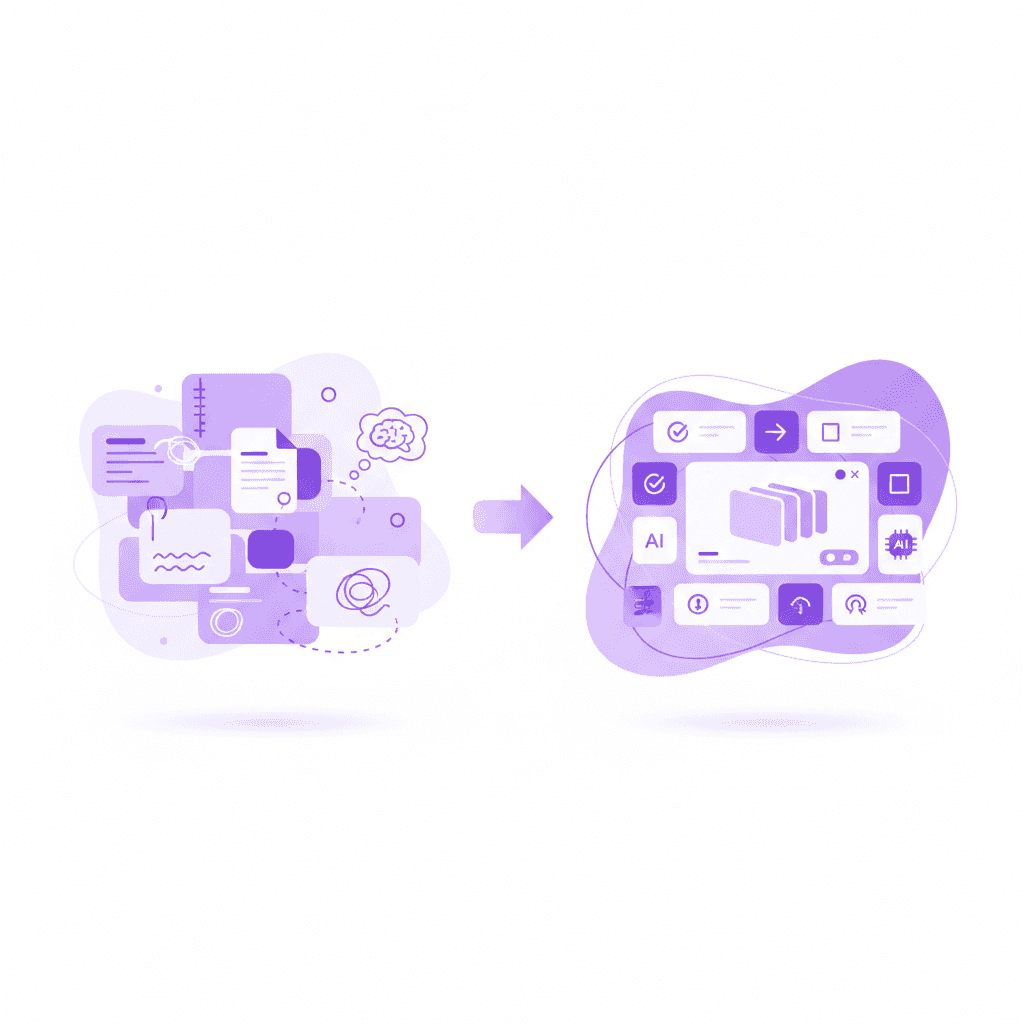
A study AI tool is an intelligent software application that analyzes your specific coursework to automatically generate interactive study materials. Unlike traditional platforms, it processes your actual syllabi, notes, and PDFs to create targeted flashcards, quizzes, and summaries without generic internet scraping.
EDUCAUSE (2023) research indicates that 67% of college students are actively seeking AI applications to personalize and streamline their academic workflows. Higher education institutions recognize that generic search engines fail to provide targeted academic support. Students require software that reads dense academic texts and understands the exact context of their specific courses.
Traditional search engines return millions of generic results that require manual filtering. Modern artificial intelligence software uses natural language processing to extract the semantic meaning directly from your professor’s uploaded materials. This process builds a closed-loop knowledge graph. The AI references only your uploaded documents, eliminating the risk of external hallucinations or irrelevant information bleeding into your exam prep.
Gather all your lecture slides and PDF readings for a single class and upload them into one unified AI workspace to create a master study profile. Organizing your materials by specific course codes ensures the software builds an accurate, isolated mental model of that specific class syllabus.
How does an AI powered study assistant improve memory retention?
An AI powered study assistant improves retention by automatically facilitating active recall and spaced repetition. By generating infinite practice questions and interactive flashcards from your notes, it forces your brain to actively retrieve information rather than passively re-reading textbooks.
Roediger & Karpicke (2006) demonstrated that testing yourself through active recall is vastly superior to repeated studying for long-term educational retention. Their clinical trials revealed that students who practiced active retrieval scored significantly higher on final exams than students who simply reviewed their notes for the same amount of time. Re-reading creates an illusion of competence. Your brain recognizes the text on the page, but cannot reconstruct that information from scratch in a testing environment.
Software algorithms systematically combat the Ebbinghaus forgetting curve. When you answer a generated question incorrectly, the algorithm flags that specific concept and presents it to you again the next day. Concepts you master are pushed further back in the review queue. This dynamic scheduling forces your brain to work hard to retrieve a memory just as it is about to fade, strengthening the neural pathway. You can learn more about 5 Ways an AI Powered Study Tool Boosts Grades by examining the underlying neuroscience of these study methods.
Set a daily schedule to review AI-generated flashcards for 15 minutes, focusing only on the questions you got wrong the previous day. Consistency dictates retention rates. Short, daily intervals of high-effort retrieval yield better neurological adaptation than long, uninterrupted cramming sessions.
Why is personal content better than crowdsourced study apps?
Crowdsourced study apps often contain outdated, generic, or incorrect information from other students. A modern study AI tool builds quizzes and guides exclusively from the materials you upload, ensuring your exam prep matches your specific professor's curriculum and testing style exactly.
Dunlosky et al. (2013) found that highly personalized, curriculum-specific study interventions result in a letter-grade improvement compared to standardized materials. Relying on public flashcard decks introduces severe academic risk. A student at another university might define a macroeconomic term differently than your professor. Memorizing the wrong definition wastes time and actively harms your test scores.
Professor syllabi change every semester. A public deck created in 2021 lacks the updated case studies your professor added this year. Uploading your specific, current lecture transcripts guarantees the study materials align perfectly with the exam parameters. The software captures the exact phrasing, specific examples, and nuanced definitions your instructor uses during lectures.
Stop searching for pre-made public flashcard decks and instead upload your specific lecture transcripts into an AI generator. Treating your personal notes as the absolute source of truth isolates your studying to the exact parameters of your upcoming assessment.
What features make the best study guide creator?
The best study guide creator offers multimodal learning options, translating text into varied formats. Look for tools that generate visual mind maps, audio podcasts for on-the-go listening, interactive quizzes, and a live AI tutor that can verbally explain complex concepts step-by-step.
Bloom's 2-Sigma Problem (1984) research proves that students receiving 1-on-1 personalized tutoring perform two standard deviations better than classroom learners. Traditional education models fail to provide individualized attention due to time and budget constraints. Digital tutoring systems replicate this 1-on-1 experience. They track your specific weaknesses, adapt their explanations, and refuse to move on until you demonstrate complete comprehension.
Different academic subjects demand different study modalities. A history exam requires chronological memorization, best served by timeline generators and flashcards. An organic chemistry exam requires spatial understanding, benefiting from visual diagrams and step-by-step problem-solving interfaces. The most effective study applications adapt their output to the specific nature of the uploaded material.
Ensure the study application you choose has a real-time conversational tutor feature, not just a static text generator. Verbalizing your confusion and receiving an immediate, spoken explanation mimics the highest standard of academic intervention.
Comparison of Study Methods
Feature | Traditional Studying | Crowdsourced Apps | AI Study Tools |
|---|---|---|---|
Content Source | Textbooks & handwritten notes | Public user submissions | Your specific course uploads |
Material Creation | 100% manual typing/writing | Searching for pre-made decks | Instant automated generation |
Accuracy | High (if copied correctly) | Variable (prone to errors) | High (isolated to your files) |
Tutoring Support | Expensive human tutors | None | Real-time interactive AI |
Can a study application reduce college burnout and test anxiety?
A dedicated study application reduces burnout by eliminating the most tedious part of studying: material preparation. By automating the creation of study guides and flashcards, students save hours of manual typing, reducing late-night cramming and lowering pre-exam anxiety.
The American Psychological Association (2022) reports that academic workload and time constraints are the primary sources of clinical stress for 87% of university students. The administrative burden of studying often outweighs the actual learning phase. Students spend three hours highlighting textbooks and copying definitions, leaving little cognitive energy for actual memorization.
Automating the data extraction phase preserves cognitive bandwidth. When you upload a 40-page PDF and receive a complete study guide 30 seconds later, you instantly transition into the active learning phase. This immediate access to testing materials prevents procrastination. It lowers the barrier to entry for studying, making a 15-minute review session viable between classes. Discovering 7 Study AI Strategies for Faster Exam Prep reveals exactly how automation transforms student health.
Use AI to generate your study materials a week before the exam so you can spend your time actually practicing rather than highlighting. Separating the material gathering phase from the study phase creates a calmer, more structured exam preparation timeline.
Are AI-powered study tools free for college students?
Many high-quality AI-powered study tools operate on a freemium model, providing essential features at no cost to accommodate student budgets. Students can typically generate flashcards, take quizzes, and chat with AI tutors on free tiers, with premium subscriptions available for advanced usage.
Student Beans (2023) higher education budget report highlights that 78% of students rely exclusively on free or campus-subsidized software for their academic needs. Software developers recognize this financial constraint. Providing free access to core functionalities allows students to verify the software's academic value before committing to a paid tier.
Paid tiers usually offer expanded access to advanced language models, higher document upload limits, or specialized visual processing capabilities. The core mechanism of extracting text and building quizzes remains entirely accessible for zero cost. This democratizes access to personalized tutoring, a resource previously reserved for wealthy students who could afford human tutors.
Always start with a free tier that requires no credit card to verify the tool accurately processes your specific major's complex terminology. Test the software with your most difficult reading assignment to evaluate its comprehension limits before considering any premium upgrades.

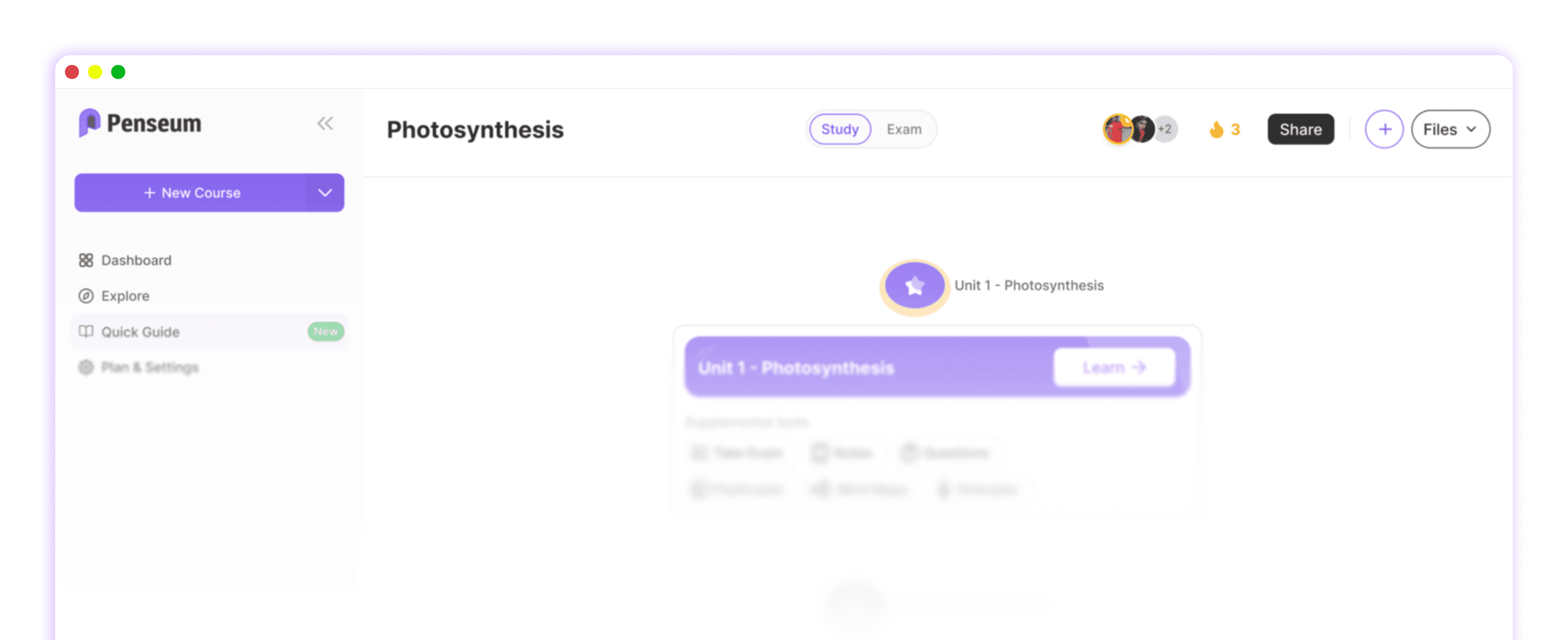
How Penseum Helps You Apply AI to Your Study Routine
Implementing an AI studying tool should be effortless. Penseum acts as your all-in-one 1-1 AI tutor, allowing you to upload your notes, PDFs, or problem sets directly into a personal workspace. Instead of giving you answers to memorize, Penseum explains the material step-by-step, out loud, and then asks you questions to ensure the knowledge actually sticks. It spots your specific mistakes in real-time, draws diagrams, and corrects you instantly. Because it generates flashcards, quizzes, and mind maps directly from your uploaded materials, you never have to worry about inaccurate, crowdsourced data. Trusted by over 1.6 million students across 130+ countries, it provides elite-level personalized tutoring with a free tier requiring no credit card.
Research by the Bill & Melinda Gates Foundation (2021) shows that integrated digital learning environments significantly increase student engagement and course completion rates. Penseum consolidates fragmented study habits into a single, highly responsive environment. You no longer need separate applications for flashcards, document storage, and academic tutoring.
The live voice feature actively combats study fatigue. Sitting back and having a conversational tutor walk you through a complex organic chemistry mechanism forces active listening. The tutor watches your on-screen workspace. When you write a formula incorrectly, it interrupts, points out the specific error, and asks you how to correct it. This constant feedback loop mimics the exact Socratic method utilized by elite human tutors.
Create a free Penseum account today, upload your toughest syllabus, and let the live AI tutor talk you through your first problem set. Setting up your personalized workspace takes less than two minutes.
Frequently Asked Questions
What is the best AI tool for studying?
The best AI tool for studying prioritizes personalized, isolated data processing over generic web scraping. Top-tier tools like Penseum analyze your exact syllabus and lecture notes to generate accurate, curriculum-specific flashcards and quizzes. Software that includes real-time voice tutoring, visual diagramming, and immediate mistake correction provides the highest academic value for students.
How does an AI tool generate study guides from notes?
An AI tool reads your uploaded notes using advanced natural language processing. It identifies key concepts, definitions, and relationships within the text. The algorithm then restructures this semantic data into digestible formats, outputting categorized summaries, interactive flashcards, and multiple-choice questions that directly reflect the core arguments of your original document.
Are AI study tools considered cheating by universities?
AI study tools are not considered cheating when used to generate study materials, practice quizzes, or explain complex concepts. Using software to create flashcards from your notes acts as a digital tutor. Submitting AI-generated text as your own original coursework violates academic integrity policies. Always use these tools for exam preparation, not content generation.
Can studying AI create flashcards directly from PDF documents?
Yes, studying AI processes complex PDF documents, extracting text, headings, and key terms to create flashcards. The software parses the document token by token, separating definitions from contextual filler. It automatically pairs concepts with their correct definitions, instantly building a complete deck of hundreds of flashcards from a single textbook chapter upload.
Is there a free AI study assistant that doesn't require a credit card?
Yes, many platforms offer free tiers without requiring payment information. Penseum provides a free AI study assistant that lets students upload materials, generate quizzes, and interact with the live tutor. This freemium model allows students to access essential study features immediately, ensuring budget constraints do not limit educational resources.
How does AI tutoring improve over traditional studying methods?
AI tutoring provides immediate, personalized feedback, whereas traditional studying relies on static, passive reading. Traditional methods offer no correction when a student misunderstands a concept. AI tutors spot specific mistakes in real-time, explain the logic step-by-step, and test the student again, solving the retention issues inherent in manual textbook reviewing.
[AUTHOR]
Last updated: August 2026
Sources
EDUCAUSE. (2023). Students' use of artificial intelligence in higher education. EDUCAUSE Research.
Roediger, H. L., & Karpicke, J. D. (2006). Test-enhanced learning: Taking memory tests improves long-term retention. Psychological Science, 17(3), 249-255. https://pubmed.ncbi.nlm.nih.gov/16507066/
Dunlosky, J., Rawson, K. A., Marsh, E. J., Nathan, M. J., & Willingham, D. T. (2013). Improving students' learning with effective learning techniques: Promising directions from cognitive and educational psychology. Psychological Science in the Public Interest, 14(1), 4-58.
Bloom, B. S. (1984). The 2 sigma problem: The search for methods of group instruction as effective as one-to-one tutoring. Educational Researcher, 13(6), 4-16.
American Psychological Association. (2022). Stress in America: Concerns about inflation, the war in Ukraine, and academic pressures. APA Data Reports.
Student Beans. (2023). Higher Education Budget Report: Student Software Usage.
Bill & Melinda Gates Foundation. (2021). Digital Learning Environments and Student Engagement Metrics. Postsecondary Success Reports.
Related guides
Ready to study smarter?
Start turning your notes into guides, quizzes, and flashcards in seconds.