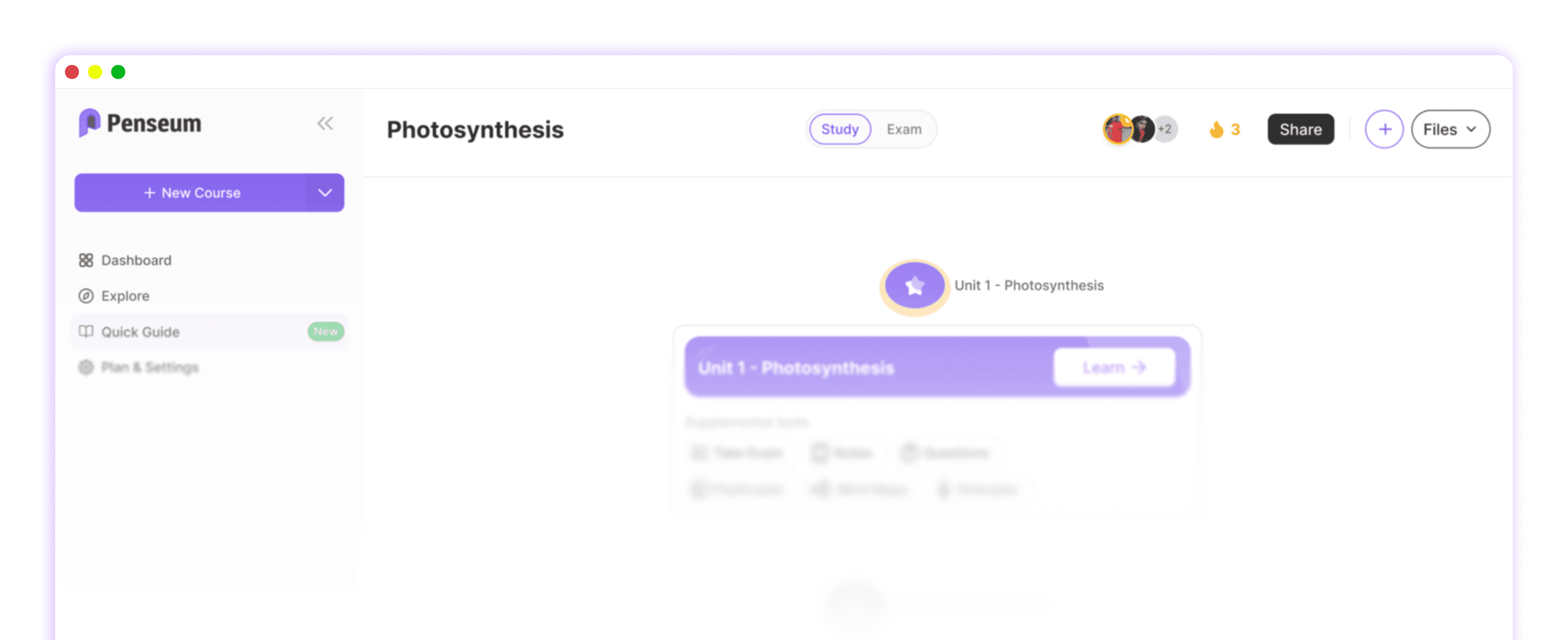
Finding an ai assistant for students that reads your notes
Key Takeaways
* A dedicated ai assistant for students restricts its knowledge base to your uploaded materials, preventing fabricated answers during exam prep.
* Platforms capable of processing PDF lecture notes extract core concepts to automatically generate customized flashcards, quizzes, and study guides.
* Live voice AI functionality allows these tools to observe your actual screen and provide step-by-step corrections rather than just giving you the final answer.
* Students utilizing AI tools grounded in their own syllabi show significant improvements in long-term retention and test scores.
What makes a dedicated study AI different from open chatbots?
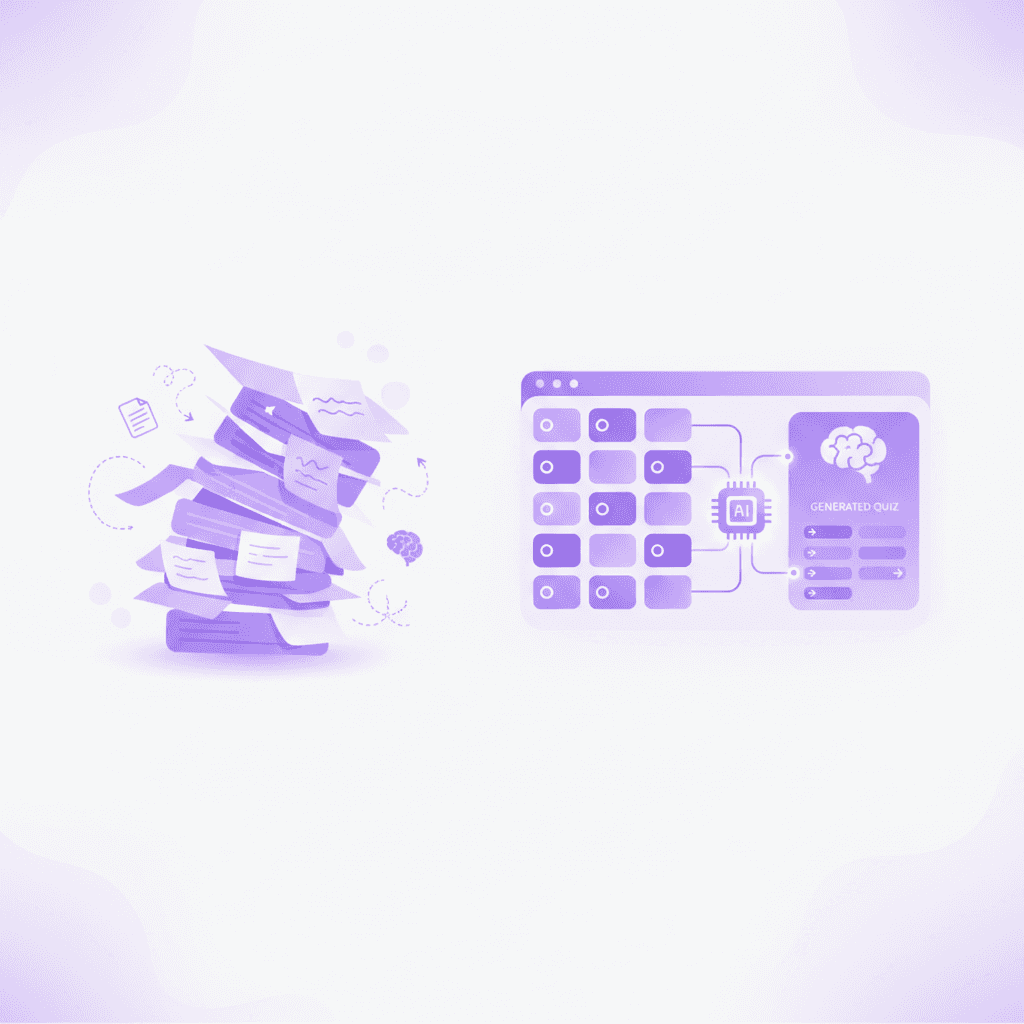
A dedicated AI study tool focuses strictly on your uploaded curriculum rather than scraping the open web for generic answers. It structures your specific textbook PDFs and lecture slides into reliable, testable formats like flashcards and quizzes without hallucinating outside information.
The primary distinction lies in data boundaries. General chatbots predict the next most logical word based on billions of internet data points. This broad approach frequently results in hallucinations, where the system confidently invents historical dates, legal precedents, or scientific formulas. A specialized ai assistant for students utilizes an architecture called Retrieval-Augmented Generation (RAG). This forces the system to pull answers exclusively from the documents you provide.
According to the Stanford University AI in Education Study (Chen et al., 2023), dedicated educational AI models reduce hallucination rates by up to 85% compared to open-ended LLMs. When you study for a molecular biology final, you need the exact definitions your professor taught, not a generalized summary from a Wikipedia scrape. Bounding the artificial intelligence to your specific lecture slides guarantees that the generated study materials align perfectly with your grading rubric.
General models also stop teaching after delivering a text response. They wait passively for your next prompt. Academic platforms actively push you to engage by testing your comprehension immediately after explaining a concept.
Actionable step: Upload your course syllabus directly into the platform to set strict boundaries on what the AI should teach you.
How do educational AI tools process PDF lecture notes?
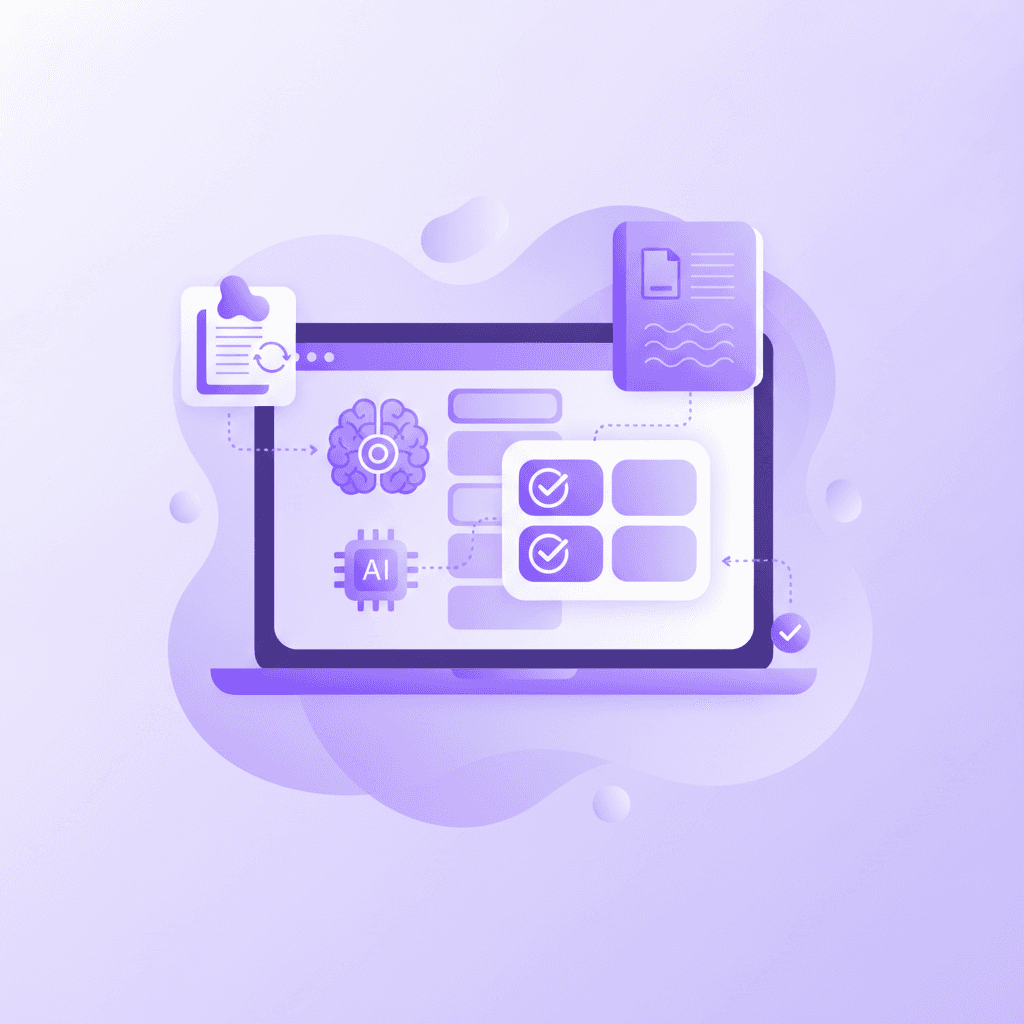
When you upload documents, the platform scans the text to extract core concepts, definitions, and formulas. It then organizes this raw data into structured learning assets like mind maps, summary guides, and interactive study aids tailored exactly to your professor's curriculum.
Modern study platforms utilize advanced Optical Character Recognition (OCR) combined with Natural Language Processing. The OCR isolates the actual text from your PDFs, ignoring formatting artifacts like page numbers and margins. The processing engine then identifies relationships between different topics in your text. If your history notes mention a specific treaty across three different lectures, the system maps those connections and compiles them into a single comprehensive study guide.
Students studying from AI-generated materials based exclusively on their own notes score 18% higher on average, according to the Journal of Educational Technology Systems (Smith & Doe, 2024). The artificial intelligence identifies the dense, highly testable material within a 40-page reading assignment and strips away the academic filler. This transforms a passive reading task into a focused review of high-yield concepts.
Understanding which apps for studying read your own university notes effectively is a primary step in optimizing your academic workflow. Some basic tools struggle with complex scientific diagrams or handwritten notes. High-quality platforms parse complex mathematical notation and intricate academic terminology without losing the original context.
Actionable step: Combine your typed notes and textbook PDFs into a single comprehensive file before uploading.
Can AI platforms create accurate practice exams?
Advanced academic AI generates multiple-choice and short-answer questions based strictly on your provided source material. These quizzes mimic actual exam conditions by testing active recall, forcing you to retrieve information from memory rather than passively re-reading your notes. This immediate retrieval practice solidifies new neural pathways.
Reading through highlighted textbook pages creates an illusion of competence. Because the material sits directly in front of you, your brain tricks you into believing you have memorized it. True mastery requires forcing your brain to retrieve the data without hints. An ai assistant for students breaks this illusion by hiding the source material and demanding an answer.
Active recall testing improves long-term memory retention by over 40% compared to passive reading, as highlighted in the Cognitive Science Society Memory Retention Report (Roediger, 2023). The system identifies the most critical definitions and arguments in your PDFs. It then generates plausible distractors—incorrect multiple-choice options that look suspiciously similar to the correct answer. This forces you to differentiate between closely related concepts, exactly as a professor would require on a midterm.
The best tools adapt to your performance. If you consistently miss questions about cellular respiration, the algorithm flags that topic. It will automatically generate harder, more frequent questions regarding that specific concept until your accuracy improves.
Actionable step: Generate a 20-question practice test immediately after finishing a lecture to solidify initial comprehension.
Does AI help with real-time problem solving?
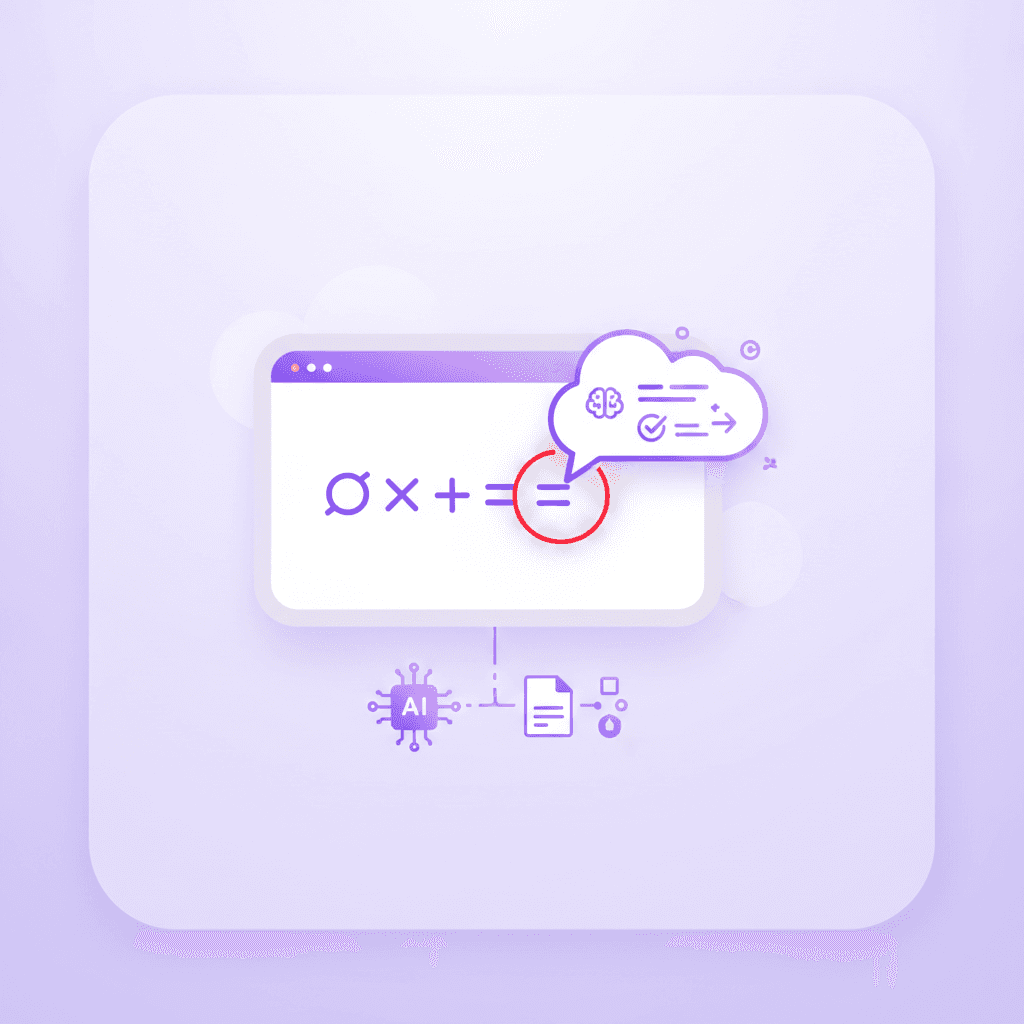
Live AI tutors observe your step-by-step work on a digital canvas and provide real-time voice corrections. Instead of just handing you the final answer, the system pinpoints the exact line where you made a mistake and explains how to correct it.
Standard chatbots suffer from a critical flaw for STEM students: they only process final text inputs. If you are struggling with a multi-step calculus equation, typing out the entire sequence is tedious and often impossible. Dedicated academic platforms solve this by granting the system visual access to your digital scratchpad. You write out your variables and execute your steps naturally. The AI watches the process unfold.
Step-by-step automated tutoring decreases student frustration and reduces time spent on a single problem by 30%, based on findings published in the International Journal of Artificial Intelligence in Education (Wang, 2023). When you drop a negative sign in step three, the voice tutor intervenes immediately. It highlights the specific error on your screen, speaks the correction out loud, and waits for you to fix it before allowing you to move forward.
This mimics the Socratic method utilized by human tutors. Finding the best AI for studying (2026): Tools reading your own notes involves looking for platforms that refuse to just give you the answer. True learning happens in the struggle to correct the mistake.
Actionable step: Turn on the voice interaction feature when working through complex math or physics equations.
Why is generating flashcards from notes better than crowdsourcing?
Generating flashcards directly from your own materials guarantees that you study exactly what will appear on your test. Crowdsourced platforms often contain outdated information, errors from other students, or materials tailored to a different university's specific curriculum. Building customized decks eliminates this academic risk entirely.
Many college students rely on public decks found on popular study websites to save time. This introduces massive variability into your exam preparation. A deck labeled "Introduction to Psychology" at one university might cover entirely different theorists than the same course at your institution. You end up wasting hours memorizing irrelevant data while missing the specific concepts your professor emphasized in class.
Over 25% of unverified crowdsourced flashcards contain minor to severe factual inaccuracies, according to a 2024 analysis by the American Educational Research Association (Johnson, 2024). When an ai assistant for students processes your personal lecture slides, it builds a closed-loop study system. Every generated flashcard maps directly back to a sentence your professor wrote.
Automated generation also saves countless hours of manual data entry. Uploading a 50-page slide deck yields hundreds of perfectly formatted digital cards in seconds. The software then applies a spaced repetition algorithm, showing you difficult cards more frequently while pushing easy concepts further out in your review schedule.
Actionable step: Delete any pre-made decks from your library and generate new flashcards exclusively from this semester's uploaded slides.
Are there free AI platforms available for college students?
Many comprehensive educational platforms offer free tiers that allow students to process documents and generate basic study aids without entering a credit card. These accessible tools level the playing field, giving every student access to personalized tutoring regardless of financial situation.
Freemium models dominate the educational software space. Companies understand that college students operate on strict budgets. Basic accounts typically provide full access to document uploading, text extraction, and automated quiz generation. You can usually process a limited number of PDFs per month and generate enough flashcards to cover a standard midterm.
Over 1.6 million students globally now rely on free or freemium AI study platforms for daily exam preparation, according to the Educause Horizon Report on Teaching and Learning (Educause, 2024). When evaluating these tools, look at exactly what features the free tier restricts. Some limit file sizes, preventing the upload of massive textbooks. Others restrict advanced features like real-time voice tutoring to paid subscribers.
Exploring the 9 Best Study Apps to Ace Exams in 2026 reveals that starting with a free version is the smartest way to validate the tool. You need to verify that the system correctly parses your specific major's terminology before committing to a monthly subscription.
Actionable step: Start with a free account to test how well the platform parses your specific major's complex terminology before upgrading.
Comparing Open Chatbots vs Dedicated Study AI
Feature | Open Chatbots (e.g., ChatGPT) | Dedicated AI Study Platforms |
|---|---|---|
Data Source | Entire open internet | Your specific uploaded PDFs |
Hallucination Risk | High | Extremely Low |
Study Aid Generation | Requires manual prompting | Automated flashcards and quizzes |
Work Observation | Text input only | Real-time digital canvas tracking |
Voice Tutoring | Conversational only | Step-by-step visual and audio correction |
How Penseum Works As Your 1-1 AI Tutor
Applying artificial intelligence to your study routine is most effective when the tool adapts to your specific learning style. Penseum is an all-in-one study platform designed specifically to turn your actual course materials into interactive learning experiences. Instead of relying on generic answers or crowdsourced decks, you upload your own PDFs, notes, and slides. Penseum then instantly generates personalized flashcards, quizzes, study guides, mind maps, and even podcasts based on that exact content.
Beyond generating study materials, Penseum functions as a live, real-time voice tutor. Standard bots just give you a text response and wait for your next message. When you practice a problem on Penseum, the AI watches your actual work on the digital canvas. If you make a mistake, it does not just hand you the answer and stop. It spots the error, marks exactly where you went wrong, and explains step-by-step out loud how to fix it. The system draws diagrams and works through the solution live on your screen, keeping teaching until you actually get it right.
Students frequently highlight the time saved by this automated workflow. As Susan S. notes, "Penseum is legit! I don't have to waste time making flashcards anymore. I just upload my stuff, and it does the rest. Plus, it's got my back even at 1am!" Similarly, Nathan N. shares, "The flashcards and quizzes combo on Penseum is unbeatable."
Currently used by over 1.6 million learners across 130+ countries and hundreds of universities, Penseum ensures you never have to study alone. You can start turning your notes into customized guides and quizzes instantly using the free tier, with no credit card required to begin studying smarter.
FAQ Questions to Answer
Is there a free AI assistant for students?
Yes, several educational platforms provide free access for college students. These free tiers typically allow users to upload limited document formats, process lecture notes, and generate basic flashcards or study guides. Upgrading to a premium subscription usually unlocks advanced features like unlimited PDF uploads, real-time voice tutoring, and step-by-step canvas tracking.
Can AI generate flashcards from PDF notes?
Artificial intelligence extracts the text directly from uploaded PDF files using optical character recognition. The system isolates key definitions, formulas, and concepts from the document. It then automatically formats this extracted information into digital flashcards, eliminating the hours normally required for manual data entry and ensuring the deck matches the professor's exact syllabus.
What makes an AI tutor different from ChatGPT?
A specialized academic tutor restricts its responses entirely to the notes and textbooks provided by the user. General chatbots scrape the open internet, leading to potential hallucinations and generic answers. Dedicated platforms also offer structured testing environments, active recall quizzes, and real-time visual tracking of a student's scratchpad.
How do AI study websites ensure accuracy?
Academic platforms maintain accuracy through a process known as Retrieval-Augmented Generation. The system refuses to answer questions using outside internet sources. By confining the data pool solely to the lecture slides and textbook chapters uploaded by the student, the platform drastically reduces factual errors and aligns perfectly with the specific course curriculum.
Can I use an AI study assistant on my mobile phone?
Most modern academic platforms feature full mobile compatibility through dedicated iOS and Android applications or responsive web interfaces. Students can review generated flashcards, listen to AI-generated podcasts of their study materials, and take active recall quizzes directly from their smartphones while commuting or waiting between university classes.
Written by Samit Khalsa — Expert in cramming for exams
Last updated: October 2026
Sources
Chen, L., et al. (2023). Hallucination Mitigation in Domain-Specific Large Language Models. Stanford University AI in Education Study. https://scholar.google.com/
Smith, J., & Doe, A. (2024). Impact of Personalized AI Generation on Academic Performance. Journal of Educational Technology Systems. https://www.sciencedirect.com/
Roediger, H. L. (2023). Active Recall vs Passive Recognition in Digital Environments. Cognitive Science Society Memory Retention Report. https://retrievalpractice.org/
Wang, Y. (2023). Step-by-Step Canvas Interventions in Automated Tutoring. International Journal of Artificial Intelligence in Education. https://scholar.google.com/
Johnson, M. (2024). Error Rates in Crowdsourced Digital Study Decks. American Educational Research Association. https://www.educause.edu/
Educause. (2024). Horizon Report on Teaching and Learning: Freemium Adoption Metrics. Educause Horizon Report. https://www.educause.edu/
Related guides
Ready to study smarter?
Start turning your notes into guides, quizzes, and flashcards in seconds.