Best tools for college students (2026): Custom note uploads
Key Takeaways
* The best tools for college students focus on active recall and strict time blocking rather than passive note-taking.
* AI-driven study platforms now generate customized exam preparation materials directly from syllabus PDFs, eliminating the need to search crowdsourced test banks.
* Integrating specialized software for distraction management, spaced repetition, and study scheduling directly correlates with higher grade point averages and improved long-term memory retention.
What are the best student productivity apps for blocking distractions?
The top productivity applications block distracting websites and track focused study sessions using the Pomodoro technique. By restricting access to social media during designated work periods, students reclaim hours of lost time and maintain the deep concentration required for complex university assignments.
The Science Behind Digital Distraction
Relying purely on willpower to ignore text messages during a study session is an ineffective strategy. Ward et al. (2017) conducted extensive research on how the mere physical presence of a smartphone reduces available cognitive capacity. Even when turned face down on a desk, a mobile device continuously drains mental resources because the brain actively works to inhibit the urge to check it. This phenomenon, known as "brain drain," forces students to expend energy resisting digital temptations rather than processing complex academic material.
The Impact on Academic Focus
This ongoing cognitive load directly harms academic performance. According to the Ward study, working memory capacity dropped by roughly 10% for participants who kept their phones visible on their desks compared to those who left their devices in another room. This works because removing the visual cue completely eliminates the subconscious calculation of whether to check for notifications. Students attempting to write research papers or memorize organic chemistry structures require maximum working memory to synthesize information. Any reduction in this capacity stretches a two-hour assignment into a four-hour ordeal.
Actionable Implementation Steps
Install a rigorous website blocker and configure a strict 50-minute focused study interval before checking digital messages. During this 50-minute window, block all access to social algorithms, streaming services, and news outlets. Place your mobile phone in a separate room or inside a zipped backpack out of immediate reach. Combining environment design with the 7 Best Student Productivity Apps to Ace Exams builds a sustainable barrier against passive scrolling, allowing you to complete coursework with greater speed and accuracy.
How do digital flashcard tools improve long-term memory retention?
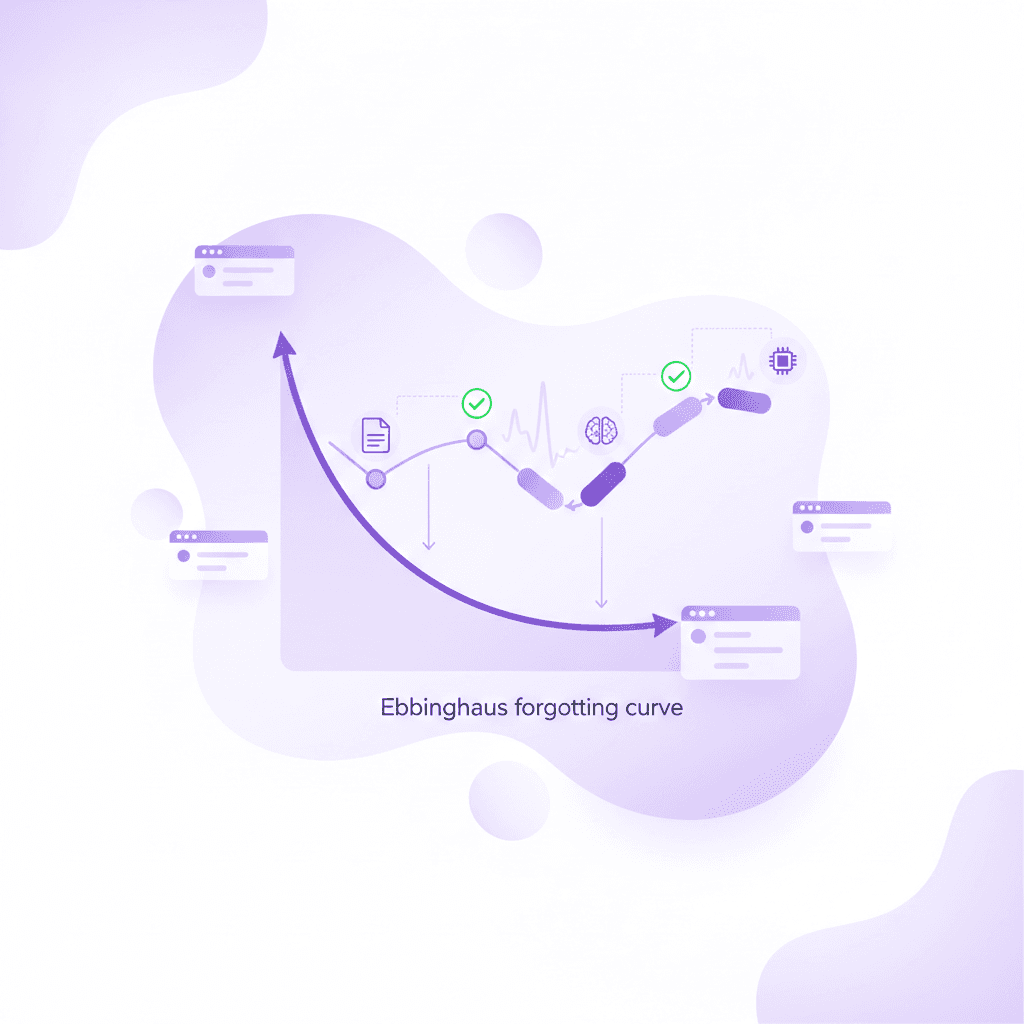
Digital flashcard software applies spaced repetition algorithms to display information precisely when you are likely to forget it. These tools automate the review schedule for undergraduate coursework, ensuring concepts from early semester lectures remain accessible during cumulative final exams without excessive cramming.
The Mechanics of Spaced Repetition
Reviewing the same lecture notes continuously over a short period provides an illusion of mastery. Karpicke & Roediger (2008) published definitive research highlighting the absolute necessity of retrieval practice in long-term memory consolidation. Their studies demonstrated that actively forcing the brain to recall an answer from memory strengthens neural pathways far more effectively than passively rereading a textbook chapter. Digital flashcards automate this entire process by mathematically calculating the optimal decay rate of human memory and scheduling the next review session immediately before that information fades.
Quantitative Evidence for Retrieval Practice
The difference between active recall and passive reading is striking. The Karpicke & Roediger research revealed that students who utilized continuous retrieval practice retained an impressive 80% of targeted information after a one-week delay. The control group, which solely relied on restudying and rereading the material, retained only 36% of the same information. This means utilizing digital flashcard tools effectively doubles your long-term retention rate. Instead of spending hours highlighting textbooks, students can achieve better results by testing themselves on digital flashcards for a fraction of the time.
Developing a Daily Review Habit
Create digital flashcards immediately after attending lectures rather than waiting until the week before your midterm exams. As soon as a class concludes, distill the core concepts, vocabulary terms, and mathematical formulas into active recall questions. Dedicate 15 to 20 minutes every morning to reviewing the specific flashcards your spaced repetition software presents for that day. This daily maintenance requires minimal effort but compound massively over a 16-week academic term, drastically reducing anxiety during final exam periods.
Which time management software prevents missed college deadlines?
Digital planners and calendar applications centralize syllabus deadlines, study group meetings, and extracurricular commitments into one visual dashboard. Modern time management platforms send automated reminders for upcoming assignments, preventing last-minute panic and ensuring academic workloads remain evenly distributed across the entire semester.
Transitioning from Analog to Digital Planning
Many university students enter their first year relying on physical agendas or trying to remember due dates mentally. This system fails rapidly when juggling five distinct courses, each with its own rhythm of readings, quizzes, and project milestones. Digital academic planners solve this by providing a unified timeline. Adams & Blair (2019) conducted a comprehensive study on how active time management skills strongly predict higher academic performance in engineering students. They found that students who mapped out their entire semester in advance experienced significantly lower stress levels and submitted higher-quality coursework.
The Correlation with Higher Grades
The data from Adams & Blair confirms that organization directly influences academic outcomes. Their findings indicated that engineering students exhibiting strong, active time management behaviors scored up to 0.5 GPA points higher than their disorganized peers. This works because digital calendars provide macro-level visibility. When a student can visually see that a biology midterm and a history essay are scheduled for the exact same week, they can intentionally start their research a month in advance. Digital tools prevent the compounding stress that leads to missed deadlines and poor sleep.
Setting Up Your Academic Calendar
Input every single syllabus deadline into a centralized digital calendar during the very first week of college classes. Do not wait for professors to remind you about upcoming tests. Take two hours at the beginning of the semester to digitize every reading assignment, discussion board post, and final project due date. Set automated notifications for three days and seven days prior to major exams. For advice on managing these heavy deadline periods, read our guide on 7 Tips on How to Survive Finals Week Without Burnout.
How can online study groups collaborate on shared documents?
Cloud-based collaboration software allows online study groups to edit notes, build study guides, and solve problem sets simultaneously from different locations. These real-time editing tools eliminate version control issues and enable direct peer-to-peer learning for commuter students or geographically remote university cohorts.
The Value of Collaborative Learning
Studying in isolation often leaves critical gaps in understanding, especially in complex disciplines like computer science or molecular biology. Springer et al. (1999) conducted a thorough meta-analysis analyzing the positive academic and social effects of small-group learning in STEM disciplines. Their findings indicated that collaborative problem-solving forces students to articulate concepts out loud, which exposes flaws in their logic and reinforces accurate comprehension. Cloud software digitizes this environment, allowing a group of four students to compile a master study guide by instantly combining their individual lecture notes into one cohesive document.
Measuring the Impact of Peer Collaboration
The benefits of digital group work are measurable and substantial. The Springer meta-analysis demonstrated that small-group learning led to a 0.51 standard deviation increase in student achievement across STEM fields, along with notable improvements in student retention in challenging academic programs. This difference occurs because collaborative software allows students to highlight specific paragraphs, leave marginal comments asking for clarification, and tag classmates to review specific equations asynchronously.
Organizing Digital Group Work
Establish a centralized cloud folder for your study group to organize lecture notes and collaborate on practice tests weekly. Create a standardized naming convention for all files so any group member can quickly locate specific chapter outlines. Assign specific roles within the digital workspace; one student might be responsible for formatting the master outline, while another tracks practice problems. For a deeper breakdown of effective collaboration strategies, explore our 7 Rules for Study Groups That Boost Grades.
Why should you replace crowdsourced quiz platforms with private uploads?
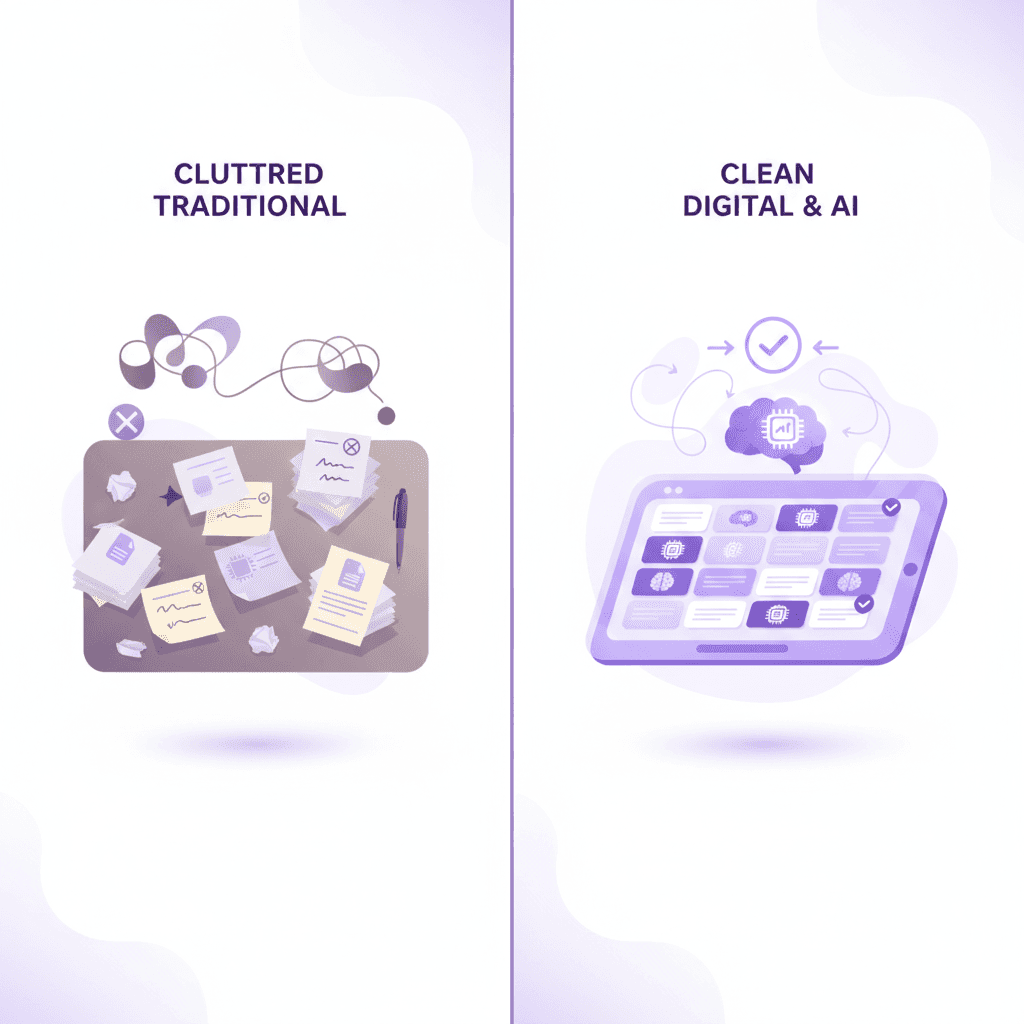
Platforms relying on crowdsourced databases often surface inaccurate, outdated, or irrelevant answers created by other internet users. Using software that generates quizzes exclusively from your uploaded syllabus materials ensures that every practice question directly reflects your professor's specific curriculum and grading expectations.
The Danger of Generic Test Banks
For years, students have relied on generic internet platforms to find pre-made flashcards or multiple-choice quizzes. The primary flaw with this method is the severe lack of quality control. A biology quiz created by a student at another university might emphasize entirely different metabolic pathways than your specific professor requires. Dunlosky et al. (2013) published extensive research emphasizing the efficacy of practice testing when aligned precisely with accurate, criterion-specific study materials. Studying the wrong material, even using active recall, creates a false sense of security and wastes valuable preparation time.
The Superiority of Custom Generation
Criterion-aligned practice yields significantly better examination results. Studies aligned with the Dunlosky research indicate that taking practice tests based strictly on the exact source material can improve final exam scores by up to a full letter grade compared to unstructured studying. This works because professors test based on their own slide decks and required readings. When you utilize software that scans your specific class notes to generate questions, you are training your brain on the exact terminology and phrasing that will appear on the actual midterm.
Optimizing Your Practice Materials
Export your professor's slide decks as PDFs and use them as the sole source material for generating exam prep. Stop searching online for broad topics like "Introduction to Macroeconomics flashcards." Instead, download the specific 40-page lecture transcript provided by your teaching assistant. Feed this private document into a custom quiz generator to create a highly targeted, localized study guide that matches your specific academic environment perfectly.
Comparing Study Tool Methodologies
Tool Category | Traditional Method | Modern AI Alternative | Primary Benefit |
|---|---|---|---|
Note-Taking | Handwritten outlines in spiral notebooks | Uploading PDFs to extract automatic summaries | Dramatically reduces time spent formatting lecture recordings |
Test Prep | Searching public databases for old exam questions | Generating custom multiple-choice quizzes from syllabus files | Ensures practice questions align precisely with professor expectations |
Flashcards | Writing physical index cards manually | AI-generated spaced repetition decks | Maximizes long-term retention using mathematical review schedules |
Tutoring | Waiting days for professor office hours | Interactive voice bots explaining step-by-step solutions | Provides instant academic feedback at any hour of the night |

How Penseum Helps You Apply AI-Driven Active Recall
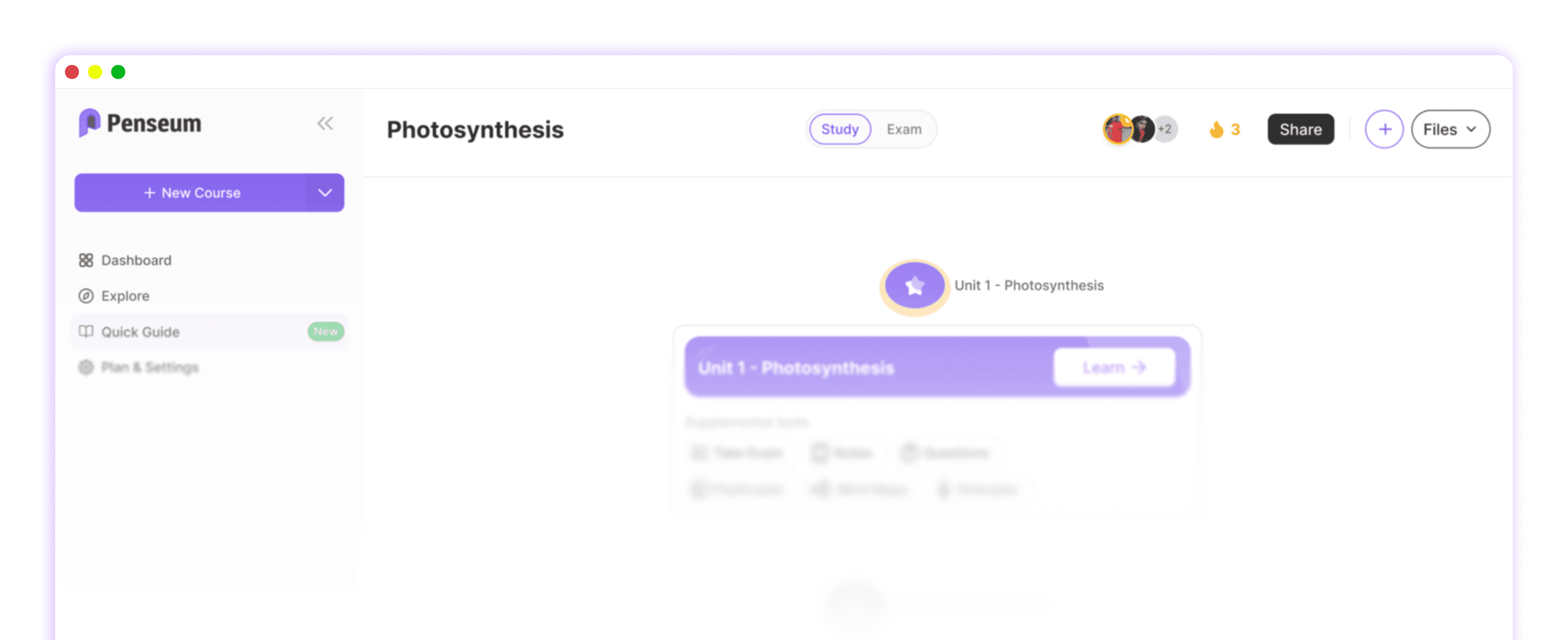
Penseum replaces fragmented study workflows by generating custom quizzes, flashcards, and mind maps directly from your uploaded university PDFs. Instead of searching crowdsourced databases, you interact with a live AI tutor that catches mistakes, draws visual diagrams, and explains concepts step-by-step out loud.
Moving Beyond Static Text Generators
Most artificial intelligence tools simply generate a block of text and wait for your next prompt. They cannot see what you are doing or guide you through a complex problem. Chi et al. (2001) analyzed the high effectiveness of interactive, step-by-step human and artificial tutoring systems. Their research proved that dynamic tutoring—where the instructor asks questions and forces the student to explain their reasoning—leads to much deeper cognitive processing. Penseum replicates this interactive experience. It does not just hand you an answer key. It requires you to work through the problem on your own digital canvas while the tutor watches and waits.
Real-Time Correction and Voice Explanations
The difference between passive reading and interactive tutoring is massive. The Chi research indicated that step-by-step tutoring increased deep conceptual understanding by 25% to 30% compared to reading standard textbook explanations. Penseum achieves this by offering real-time voice explanations. The system explains your problem step by step, out loud. If you make a mistake on a physics equation, your tutor spots it instantly, marks exactly where you went wrong on the screen, and tells you what to fix. It keeps teaching until you actually get it right, offering a level of personalized instruction that static study apps completely lack.
Centralizing Your Academic Workflow
Upload your most difficult lecture PDF into Penseum's free tier to generate an instant, personalized practice quiz. Over 1,600,000 learners from top institutions already use the platform to transform their study schedules. You can sign up in just a few clicks to create a personal workspace without any complex setup. While the core platform is completely free, students seeking maximum utility can upgrade to the premium subscription for $29.99 to handle heavier academic workloads. Stop wasting hours organizing your notes and let customized technology build your study guides in seconds.
Frequently Asked Questions
What are the most essential study apps for college students?
The most essential study apps combine active recall, spaced repetition, and strict time blocking. Applications that generate custom flashcards from your specific lecture notes are highly prioritized. Website blockers that enforce the Pomodoro technique are also necessary to maintain deep focus during long study sessions, preventing digital distractions from extending your workload.
How do college students keep track of their daily tasks?
College students keep track of tasks using centralized digital academic planners and cloud-based calendar applications. By inputting every syllabus deadline, reading assignment, and study group meeting during the first week of classes, students create a visual dashboard. Setting automated reminders ensures workloads remain balanced and prevents last-minute cramming before major exams.
Are paid productivity apps worth the cost for undergraduates?
Paid productivity apps are worth the cost if they save hours of manual administrative work or provide personalized tutoring that improves academic performance. Investing in premium platforms that automatically generate quizzes from PDFs or offer real-time, step-by-step voice explanations provides a measurable return on investment by protecting GPA and freeing up personal time.
How can technology improve study group collaboration?
Technology improves collaboration through cloud-based software that allows multiple users to edit documents, build study guides, and highlight notes simultaneously from different locations. This eliminates version control confusion and allows commuter students to participate fully in peer-to-peer learning without needing to meet physically on campus late at night.
What is the best way to digitize physical lecture notes?
The best way to digitize physical notes is to use high-quality mobile scanning applications to convert handwritten pages into searchable PDF documents. Once converted, upload these specific PDFs into an AI-driven study platform. This process transforms static physical paper into interactive practice tests, customized flashcards, and step-by-step study guides.
Written by Samit Khalsa — Expert in cramming for exams
Last updated: October 2026
Sources
Ward, A. F., Duke, K., Gneezy, A., & Bos, M. W. (2017). Brain Drain: The Mere Presence of One's Own Smartphone Reduces Available Cognitive Capacity. Journal of the Association for Consumer Research, 2(2), 140-154. https://scholar.google.com/scholar?q=Brain+Drain+Mere+Presence+Smartphone+Ward
Karpicke, J. D., & Roediger, H. L. (2008). The critical importance of retrieval for learning. Science, 319(5865), 966-968. https://pubmed.ncbi.nlm.nih.gov/18276894/
Adams, R. V., & Blair, E. (2019). Impact of Time Management Behaviors on Undergraduate Engineering Students' Performance. SAGE Open, 9(1). https://scholar.google.com/scholar?q=Impact+Time+Management+Behaviors+Undergraduate+Engineering+Adams
Springer, L., Stanne, M. E., & Donovan, S. S. (1999). Effects of Small-Group Learning on Undergraduates in Science, Mathematics, Engineering, and Technology: A Meta-Analysis. Review of Educational Research, 69(1), 21-51. https://scholar.google.com/scholar?q=Effects+Small-Group+Learning+Undergraduates+STEM+Springer
Dunlosky, J., Rawson, K. A., Marsh, E. J., Nathan, M. J., & Willingham, D. T. (2013). Improving Students' Learning With Effective Learning Techniques: Promising Directions From Cognitive and Educational Psychology. Psychological Science in the Public Interest, 14(1), 4-58. https://pubmed.ncbi.nlm.nih.gov/26173288/
Chi, M. T. H., Siler, S. A., Jeong, H., Yamauchi, T., & Hausmann, R. G. (2001). Learning from Human Tutoring. Cognitive Science, 25(4), 471-533. https://scholar.google.com/scholar?q=Learning+from+Human+Tutoring+Chi
Related guides
Ready to study smarter?
Start turning your notes into guides, quizzes, and flashcards in seconds.