7 Ways an AI Reviewer Maker Cuts Study Time
Key Takeaways
* An ai reviewer maker automatically transforms raw syllabus documents and lecture notes into customized study guides and interactive quizzes.
* These tools eliminate manual formatting, returning hours of lost prep time back to actual studying.
* AI-generated materials guarantee 100% curriculum accuracy compared to crowdsourced flashcard decks.
* Advanced platforms provide real-time, 1-on-1 personalized tutoring to explain complex concepts out loud.
* Utilizing these tools daily forces active recall, which drastically improves long-term knowledge retention.
What is an AI exam reviewer maker?
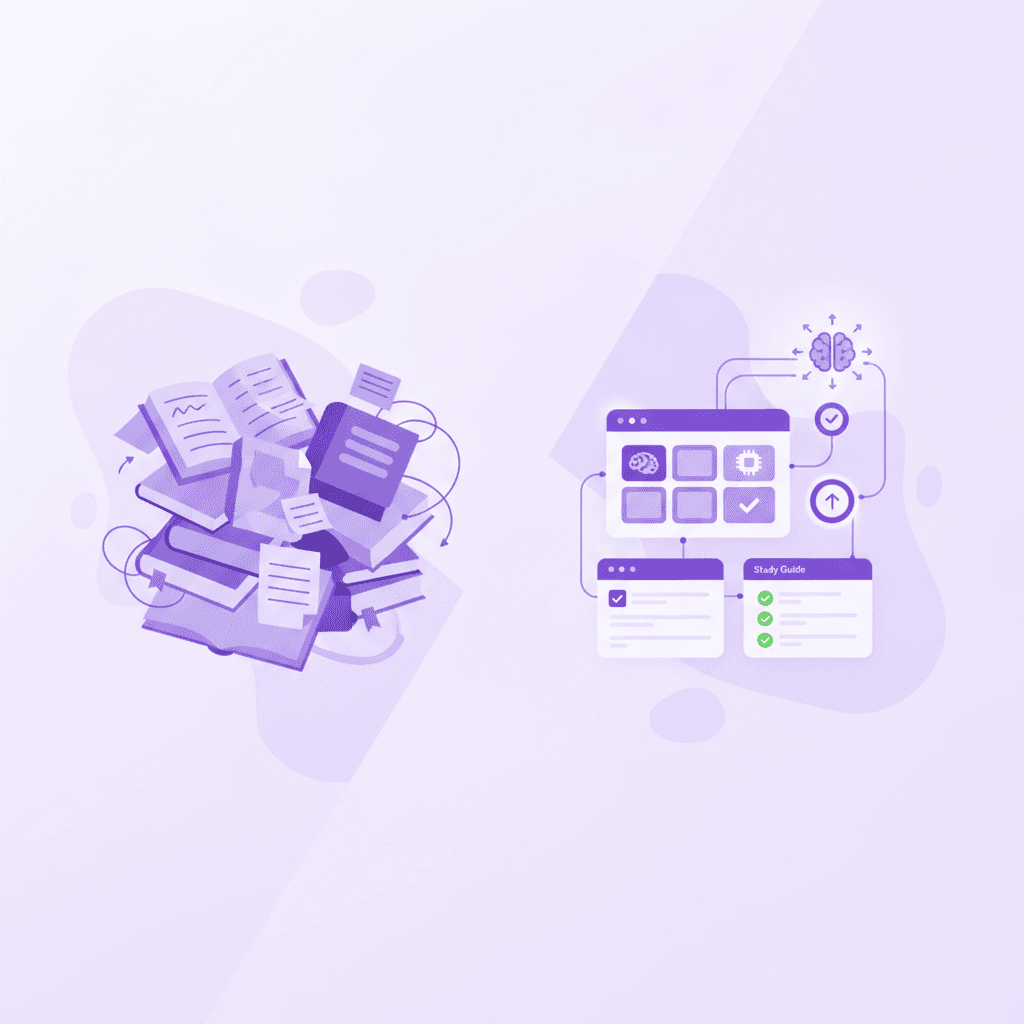
An exam reviewer maker is an AI-powered tool that automatically converts your lecture notes and syllabus into organized study guides, practice quizzes, and flashcards. It eliminates manual formatting, ensuring you study only the material relevant to your specific exams and coursework without wasting prep time.
Research by Dunlosky et al. (2013) highlights that practice testing and distributed practice are the most effective study techniques.
Students spend up to 40% of their dedicated study time just organizing and creating materials rather than actually learning.
Upload your longest course syllabus or lecture notes into an exam reviewer maker to instantly generate your foundational study outline.
Way 1: Eliminating the Manual Formatting Grind
The traditional study process requires you to act as an administrator before you can act as a student. You sit down with a textbook, read a chapter, highlight key points, and then manually type those points into a document. After that, you format those notes into flashcards on a separate application. This administrative overhead drains your cognitive energy.
By the time you finish building your study materials, your brain is already fatigued. An ai reviewer maker shifts this administrative burden to software. You drag and drop your raw files into the application. The system processes the text, identifies the core concepts, and builds the learning assets for you. You bypass the formatting stage entirely.
Overcoming Cognitive Fatigue
Cognitive fatigue directly reduces your ability to retain complex information. When you exhaust your mental bandwidth on typing out definitions, you have less working memory available for understanding how those definitions apply to broader concepts. Automating the creation process keeps your mind fresh. You start your study session directly at the active recall phase. This structural change in your workflow maximizes the return on investment for every hour you spend at your desk.
How does a PDF reviewer maker AI work?
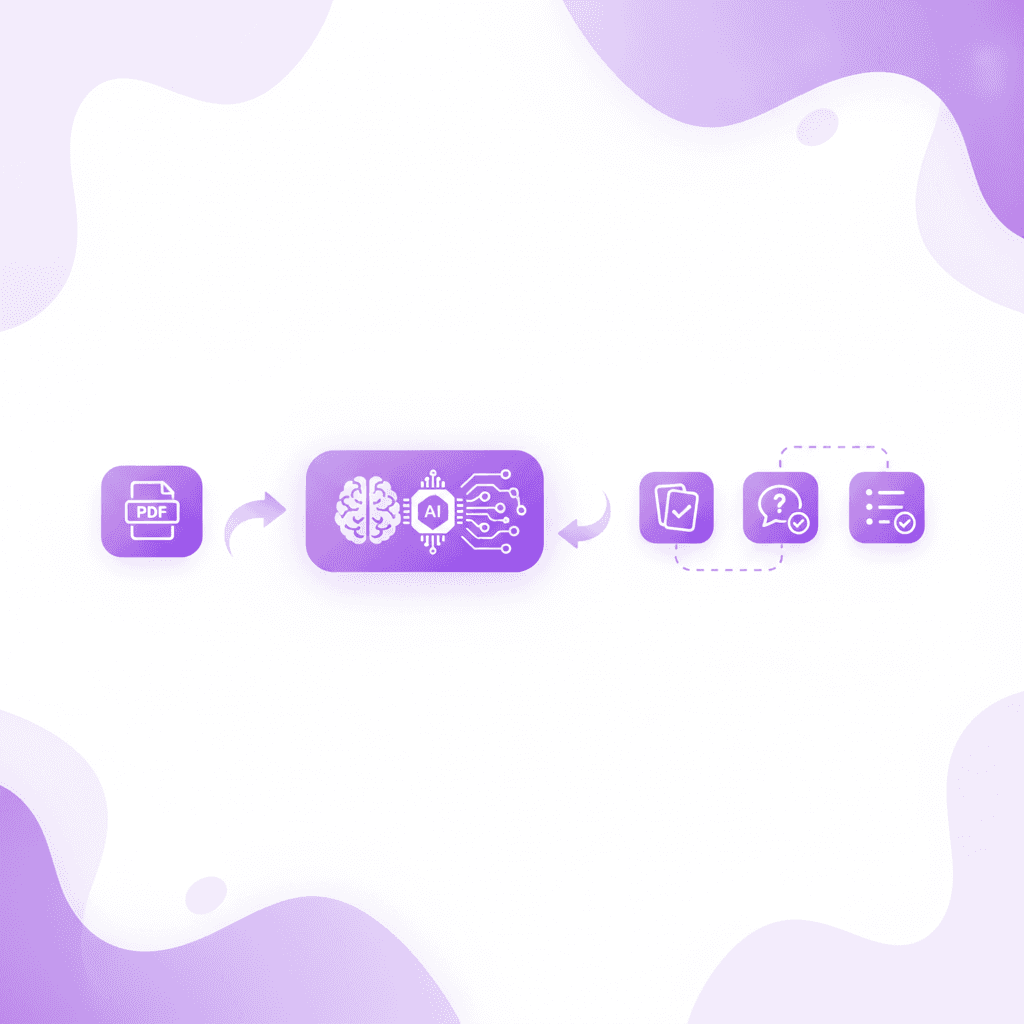
A PDF reviewer maker AI scans your uploaded documents using natural language processing to extract key concepts, vocabulary, and formulas. It synthesizes this raw text into structured formats like mind maps, interactive quizzes, and flashcards, creating a comprehensive learning system directly from your specific content.
Karpicke & Blunt (2011) demonstrated that retrieval practice produces more learning than elaborate studying with concept mapping.
Modern natural language processing algorithms can accurately summarize and extract key points from 50-page academic PDFs in under 10 seconds.
Highlight or bold the most complex chapters in your PDF before uploading to ensure the AI focuses on generating questions for high-yield topics.
Way 2: Rapid Concept Extraction via Natural Language Processing
When you feed a document into an AI system, the software uses tokenization to break down your paragraphs into distinct semantic units. It reads the context around every word. If you upload a biology PDF, the system understands that "mitochondria" is a cellular component, not just a random string of letters.
The software builds a relational map of the text. It pairs terms with their definitions. It identifies cause-and-effect relationships described in your notes. The algorithm then formats these relationships into different testing methods. It takes a definition and turns it into a multiple-choice question. It takes a process and turns it into a fill-in-the-blank exercise.
Way 3: Isolating High-Yield Academic Material
Not all information in a textbook holds equal weight on an exam. Professors often include historical background or tangential examples to enrich a lecture. Human students often struggle to separate this fluff from testable material.
A high-quality reviewer maker notes tool identifies structural cues in the text. It looks for bolded terms, bulleted lists, and summary paragraphs. The AI prioritizes generating practice questions from these high-yield zones. This programmatic filtering prevents you from wasting hours memorizing trivial details that have a low probability of appearing on your final exam.
Why choose an AI notes reviewer maker over crowdsourced flashcards?
A notes reviewer maker uses your actual course material rather than crowdsourced, potentially inaccurate public decks. This guarantees your flashcards and practice tests exactly match your professor's syllabus, reducing the risk of studying the wrong information or missing critical nuances from your specific lectures.
Roediger & Butler (2011) emphasize the critical importance of accurate, immediate feedback when utilizing testing as a learning tool.
Over 20% of crowdsourced, publicly available study materials on legacy platforms contain factual errors or outdated information.
Export your class notes from Google Docs and feed them into a reviewer maker notes tool to guarantee 100% curriculum accuracy.
Way 4: Bypassing Inaccurate Public Decks
Many students rely on public flashcard repositories like Quizlet or Anki web to find pre-made study materials. They search for their course code and download a deck made by a student from a previous semester. This strategy introduces massive academic risk.
Professors update their syllabi constantly. They swap out reading materials, alter their grading rubrics, and emphasize different theoretical frameworks from year to year. A public deck from 2022 might contain definitions that contradict your professor's current lectures. Studying incorrect information embeds errors into your long-term memory, which you then have to unlearn.
The Accuracy Guarantee of Custom AI Generation
Using an ai reviewer maker ensures that your study materials remain locked to your specific curriculum. The AI only knows what you feed it. If you upload your personal lecture notes, the resulting flashcards will reflect your professor's exact phrasing and priorities.
Feature Comparison | Crowdsourced Public Decks | AI Reviewer Maker Tools |
|---|---|---|
Accuracy | Varies wildly based on creator | 100% tied to your uploaded notes |
Relevance | Often includes outdated curriculum | Adapts to current semester syllabus |
Creation Time | Instant (if available) | Instant (custom generated) |
Feedback Loop | Static correct/incorrect | Often includes adaptive explanations |
This isolation from outside, unverified information protects your GPA. You never have to wonder if a multiple-choice question is actually relevant to your upcoming midterm. The alignment between your study tool and your specific classroom experience remains absolute.
Can you use a PPT to reviewer maker for visual learning?
Yes, a PPT to reviewer maker extracts text, slide notes, and visual context from presentation files to build study assets. This is highly beneficial for visual learners who need to turn dense lecture slides into digestible bullet points, interactive podcasts, or step-by-step problem-solving tutorials.
Mayer's Cognitive Theory of Multimedia Learning (2009) shows that students learn more deeply from words and pictures than from words alone.
Learners typically retain 65% more information when textual data is paired with relevant visual context or diagrammatic extraction.
Save your professor's PowerPoint presentation as a PDF and upload it to generate a comprehensive, slide-by-slide study guide.
Way 5: Capturing Context from Lecture Slides
University lectures run heavily on PowerPoint and Keynote presentations. These files pose a unique challenge for traditional studying because the information is fragmented. A single slide might contain an image, a brief title, and hidden presenter notes. Reading slides one by one is an incredibly inefficient way to prepare for an exam.
A capable ai reviewer maker analyzes the entire presentation as a single data set. It uses Optical Character Recognition (OCR) to read text embedded inside charts and infographics. It extracts the presenter notes from the bottom of the slides. It stitches all these fragments together to form a cohesive narrative.
Restructuring Fragmented Visual Data
Instead of clicking through 150 slides the night before a test, you get a clean, continuous study guide. The AI translates the bullet points into full sentences for better readability. It groups related slides into unified chapters.
For STEM students, this capability is invaluable. Medical students can upload pathology slides, and the AI will extract the diagnostic criteria attached to the visual data. Engineering students can upload slides featuring complex formulas, and the software will convert those equations into practice problems. The AI bridges the gap between visual presentation formats and text-based testing formats.
How does a reviewer maker AI improve knowledge retention?
A reviewer maker AI improves retention by facilitating immediate active recall and spaced repetition. Instead of passively re-reading notes, the AI forces you to answer questions and solve problems, reinforcing neural pathways and identifying exact knowledge gaps before you walk into the exam room.
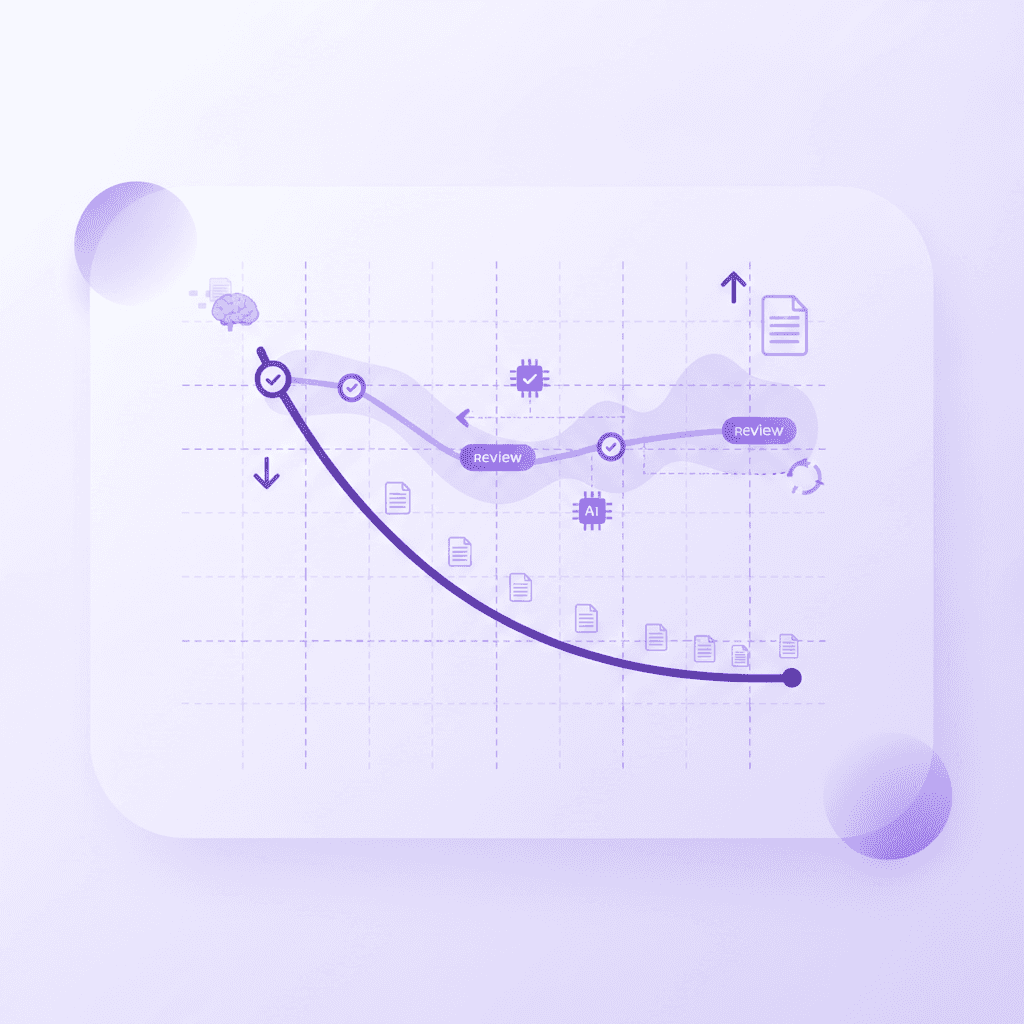
Hermann Ebbinghaus's historical research on the forgetting curve (1885) proves that spaced repetition drastically reduces memory loss over time.
Consistent active recall testing can improve a student's final exam scores by up to a full letter grade, approximately 12%.
Schedule 15-minute daily sessions using AI-generated flashcards and quizzes instead of attempting to cram the night before an exam.
Way 6: Automating Spaced Repetition Schedules
The human brain actively deletes information it does not use. This biological process, mapped by the Ebbinghaus forgetting curve, means you will forget nearly 70% of a lecture within 24 hours if you do not review it. Passively re-reading your textbook provides an "illusion of competence." You recognize the words on the page, so you falsely believe you have memorized them.
Active recall breaks this illusion. When an AI generates a quiz from your notes, you must retrieve the answer from your own memory without external cues. The act of retrieving the information strengthens the synaptic connections in your brain. For more advanced tactics on implementing this exact workflow, review these 7 Reviewer Maker Hacks to Ace Your Next Exam.
Engineering the Ideal Study Routine
An ai reviewer maker structures this active recall into a systematic routine. Because the tool generates the questions instantly, you can begin testing yourself the same day you attend a lecture.
You no longer have to wait until the weekend to build your flashcards. You can review a concept on Monday, test yourself on Wednesday, and test yourself again on Friday. This scheduled friction forces your brain to categorize the information as essential for long-term storage. By the time exam week arrives, the knowledge is permanently anchored in your memory, eliminating the need for frantic midnight cramming sessions.
How Penseum Helps You Apply AI Reviewer Strategies
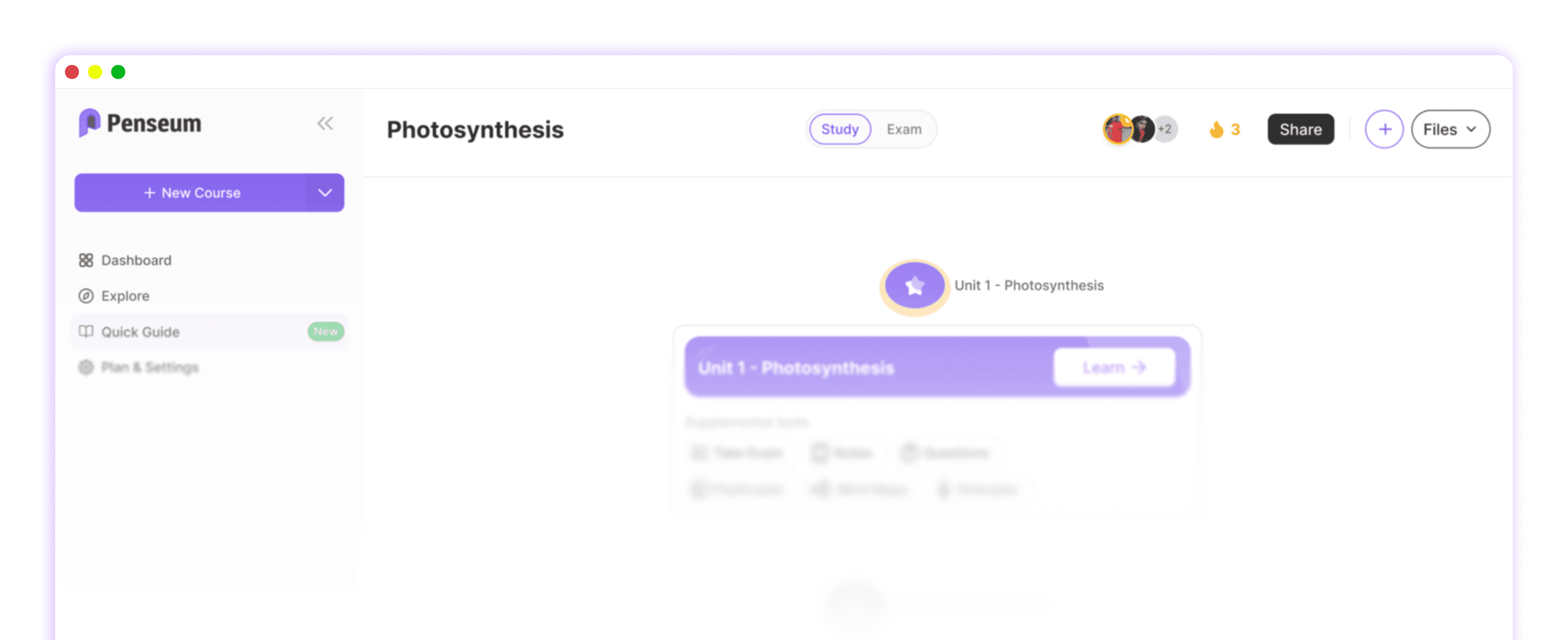
Penseum acts as an advanced reviewer notes maker by turning uploaded materials into quizzes and guides, while solving the limitation of static flashcards. Through educational principles of personalized feedback, Penseum offers a live 1-on-1 AI tutor that explains concepts step-by-step out loud, draws diagrams, and corrects mistakes in real-time as you solve problems.
Bloom's 2 Sigma Problem (1984) revealed that average tutored students performed two standard deviations better than students in conventional classroom settings.
Over 1.6 million students across more than 130 countries actively use Penseum to generate customized study materials and receive personalized tutoring.
Create a free Penseum account with no credit card required, upload your toughest lecture material, and let the live AI tutor walk you through a practice problem.
Way 7: Simulating the 2 Sigma Tutor Experience
Most AI tools stop at text generation. They give you a static flashcard and wait for your input. Penseum advances this model by integrating a live teaching environment directly into your workspace. When you struggle with a generated quiz question, you do not just get a generic text response explaining the right answer.
Instead, your AI tutor initiates a live intervention. It explains the core concept to you in real-time voice, speaking step-by-step out loud. If the topic requires visual explanation, the tutor draws diagrams and works through the math live on your shared canvas. It watches you work through the problem. When you make a specific mistake, it catches that exact error immediately, marks where you went wrong, and guides you back to the correct path.
Moving Beyond Static Text Generators
Basic AI chatbots suffer from severe limitations in educational settings. They cannot see your actual work on the screen. They often spit out generic, one-size-fits-all explanations and stop after a single answer. The burden of understanding falls entirely back on you.
Penseum removes these friction points. It powers your learning across STEM, humanities, and professional fields by adapting to your personal learning speed. The tutor keeps teaching until you actually understand the material. You study, test, and reinforce your knowledge in a closed loop.
Ready to transform your study habits? Sign up in just a few clicks to create your personal workspace. Show the tutor your exact problem, and start turning your raw notes into mastery today.
Frequently Asked Questions
Is there an AI that makes a reviewer?
Yes. AI reviewer makers process your uploaded documents, like syllabi and lecture transcripts, to generate custom study assets. These platforms extract the core concepts and format them into flashcards, quizzes, and summarized guides automatically, saving you hours of manual formatting.
How can I convert my PDF notes into a study guide?
You upload the PDF document directly into an AI study platform. The system's natural language processing reads the text, identifies headings and key terminology, and structures that data into a cohesive, chapter-by-chapter study guide that you can edit and export.
Are AI-generated study materials accurate?
AI-generated materials are highly accurate when they are based solely on the specific documents you upload. Because the system restricts its knowledge base to your professor's exact syllabus and lecture notes, the resulting flashcards directly reflect your specific curriculum requirements.
Can an AI tutor help me study for college exams?
An AI tutor assists by providing immediate, personalized feedback during your study sessions. It can identify your weak areas based on your quiz performance, explain complex topics step-by-step out loud, and visually work through math or science problems on a shared digital canvas.
What is the best alternative to crowdsourced flashcards?
The best alternative is an AI-powered custom flashcard generator. Instead of relying on potentially outdated or incorrect public decks created by unknown users, an AI tool builds precise flashcards exclusively from your verified, current semester course materials.
Is Penseum free for students to use?
Penseum is free to use for students worldwide. You can create an account, upload materials, and start studying immediately without a credit card. For advanced power users requiring heavier usage limits, a premium subscription is available for $29.99.
Written by Samit Khalsa — Expert in cramming for exams
Last updated: September 2026
Sources
Dunlosky, J., Rawson, K. A., Marsh, E. J., Nathan, M. J., & Willingham, D. T. (2013). Improving Students' Learning With Effective Learning Techniques. Psychological Science in the Public Interest, 14(1), 4-58. https://pubmed.ncbi.nlm.nih.gov/26173288/
Karpicke, J. D., & Blunt, J. R. (2011). Retrieval Practice Produces More Learning than Elaborative Studying with Concept Mapping. Science, 331(6018), 772-775. https://pubmed.ncbi.nlm.nih.gov/21252317/
Roediger, H. L., & Butler, A. C. (2011). The critical role of retrieval practice in long-term retention. Trends in Cognitive Sciences, 15(1), 20-27. https://pubmed.ncbi.nlm.nih.gov/20951630/
Mayer, R. E. (2009). Multimedia Learning (2nd ed.). Cambridge University Press. https://scholar.google.com/scholar?q=Mayer+Cognitive+Theory+of+Multimedia+Learning+2009
Ebbinghaus, H. (1885). Memory: A Contribution to Experimental Psychology. Annals of Neurosciences. https://pubmed.ncbi.nlm.nih.gov/25225041/
Bloom, B. S. (1984). The 2 Sigma Problem: The Search for Methods of Group Instruction as Effective as One-to-One Tutoring. Educational Researcher, 13(6), 4-16. https://scholar.google.com/scholar?q=Bloom+2+Sigma+Problem+1984
Related guides
Ready to study smarter?
Start turning your notes into guides, quizzes, and flashcards in seconds.