Best AI for studying (2026): Tools reading your own notes
Key Takeaways
* Targeted accuracy: The best AI for studying processes your specific lecture PDFs instead of pulling generic answers from the internet, preventing hallucinations and inaccurate test preparation.
* Active learning formats: Modern platforms instantly convert static notes into active recall flashcards, diagnostic quizzes, and structured study guides.
* Interactive tutoring: Advanced AI goes beyond text generation, using real-time voice and digital canvas spaces to correct your mathematical or conceptual errors step-by-step.
* Time optimization: Automating the creation of study materials saves hours of manual transcription, allowing students to spend 100% of their study blocks on actual memorization and testing.
What makes an AI study tool effective for college exams?
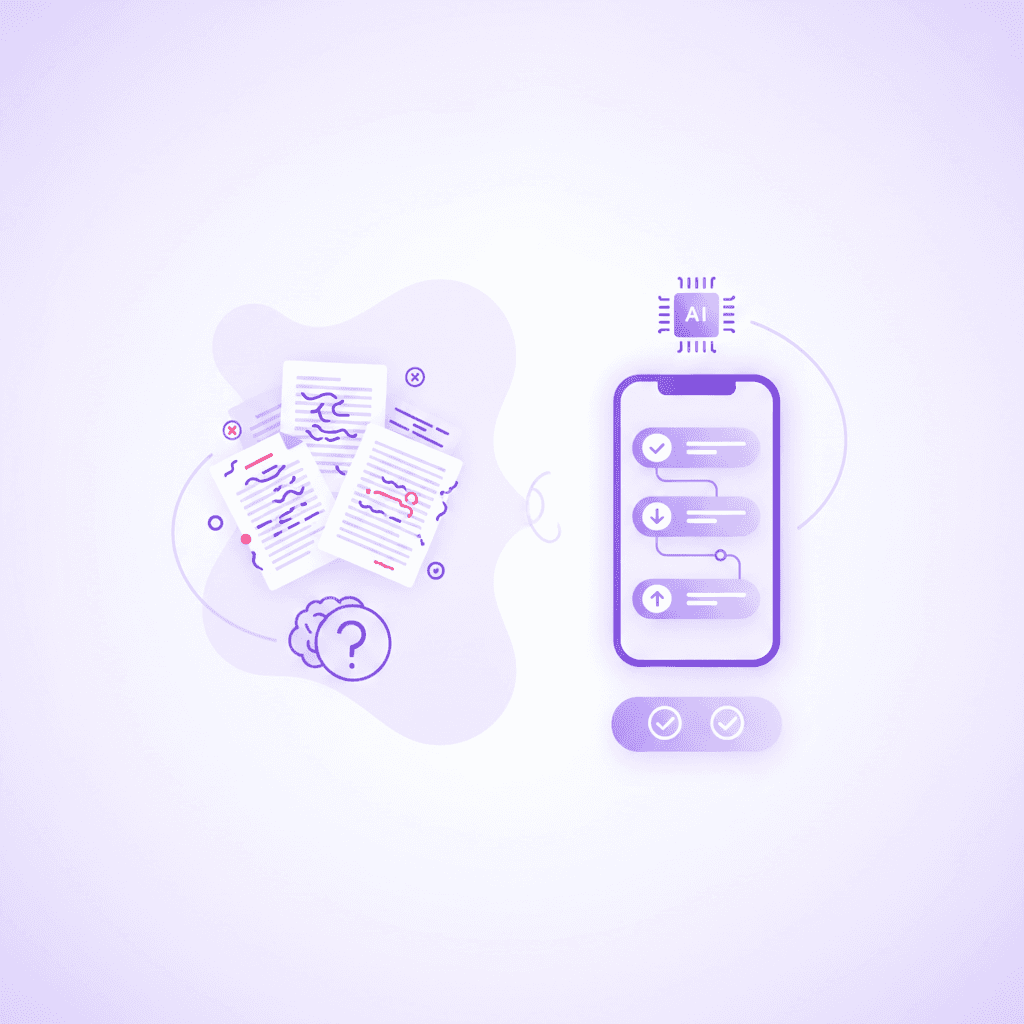
Effective AI study tools analyze specific course materials instead of generating generic internet responses. They convert uploaded PDFs, lecture notes, and slides into active recall formats like flashcards, targeted quizzes, and mind maps, ensuring university students review the exact information their professors will test them on.
Karpicke & Roediger (2008) established that retrieving information through active testing yields dramatically higher long-term retention than passive studying. Their research demonstrated a massive testing effect, showing that students who repeatedly tested their knowledge recalled 80% of the material, compared to just 34% for those who only reread their texts.
Upload your syllabus and initial lecture slides to create a baseline automated study roadmap before midterms begin. Processing your documents on day one gives you a clear structural overview of the entire semester.
Standard chatbots fail as academic prep tools because they invent facts when they lack context. An open-ended language model might explain a microeconomics concept using a totally different framework than the one your professor mandates. Specialized educational platforms solve this by using strict boundary parameters. They only read the text provided in your specific file uploads.
By grounding every output in your provided text, these systems eliminate hallucinations. You receive test questions perfectly mapped to the vocabulary, formulas, and historical dates covered in your specific lecture hall. This targeted alignment keeps your exam preparation focused, accurate, and highly relevant.
How do AI platforms handle personal study materials?
Leading educational platforms allow users to upload various file formats directly to a secure workspace. The system processes these specific documents to extract key academic concepts, generating customized study guides and practice problems without relying on outdated or crowdsourced data like traditional flashcard repositories.
Dunlosky et al. (2013) demonstrated that practice testing tailored to specific course content is one of the most effective utility techniques for students. The researchers found that frequent, low-stakes testing produces moderate to large effect sizes, often improving a student's final examination performance by nearly a full letter grade.
Export your digital class notes as PDFs and feed them into your chosen platform to instantly build a personalized diagnostic quiz. Most modern systems can handle PowerPoint slides, Word documents, and raw text files with ease.
Behind the scenes, the software breaks down your uploaded files into readable chunks. It scans for bolded terms, structural headers, and repeated formulas to determine what information carries the highest academic weight. From there, it formats those high-priority concepts into question-and-answer pairs.
This process bypasses the inefficiencies of manual organization. Instead of spending three hours sorting through a messy Google Doc to find the core definitions, the algorithm highlights them automatically. You immediately transition from organizing your desk to actively testing your memory, drastically improving your overall study efficiency.
Can artificial intelligence act as a real-time voice tutor?
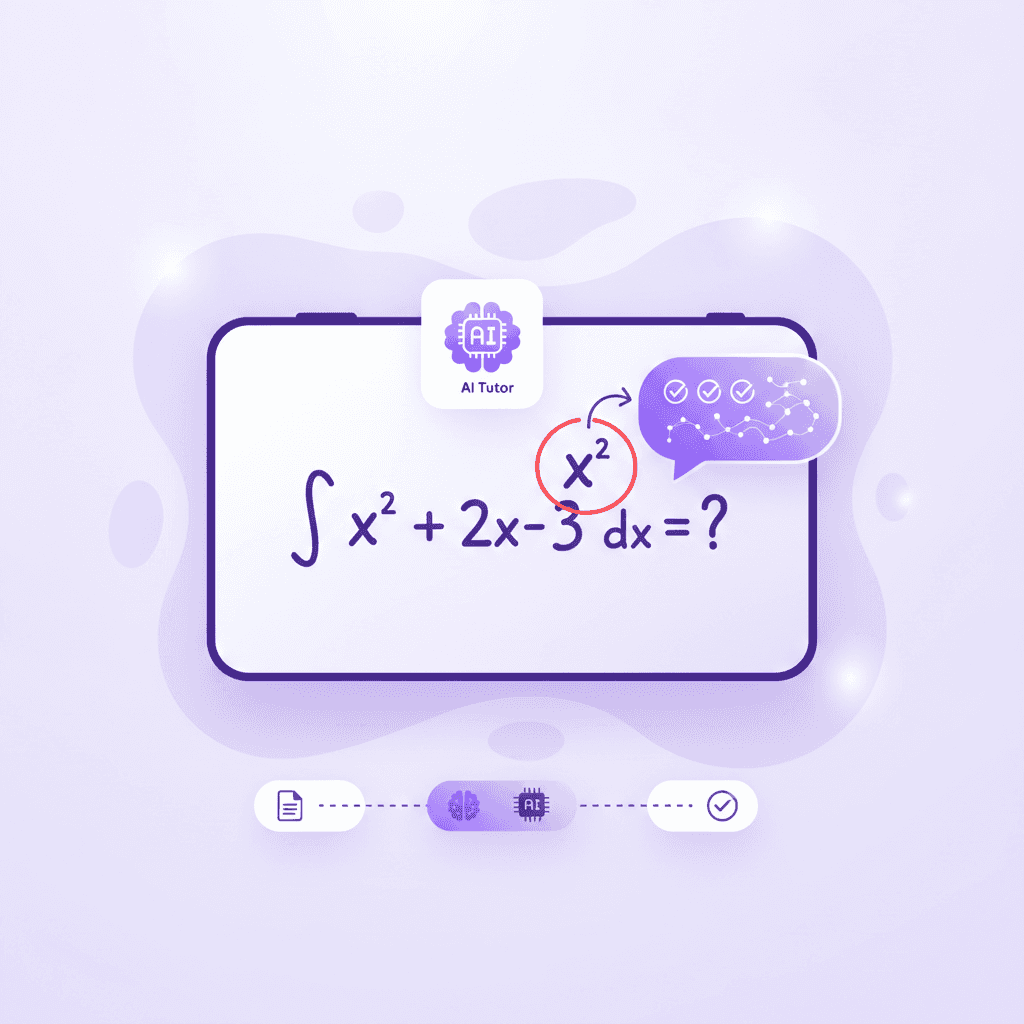
Advanced platforms function as interactive tutors that guide learners through complex problems step-by-step. Instead of just delivering the final answer, these specialized systems use voice and visual canvas features to correct mistakes in real-time, explaining precisely where the formula or concept broke down.
Chi et al. (2001) found that human-like interactive tutoring significantly improves student comprehension and problem-solving success rates. Their study noted that deep, interactive tutoring environments yield a learning gain of about one to two standard deviations over standard classroom instruction.
Use the step-by-step breakdown feature when stuck on a challenging physics problem to identify the exact point of mathematical error. Working on a digital canvas allows the system to monitor your progress line by line.
A standard chatbot simply outputs a wall of text containing the final solution. This encourages passive reading and creates an illusion of competence. You nod along to the text, assuming you understand it, only to blank out entirely during the actual exam.
Live interactive tutoring disrupts this false confidence. The system forces you to demonstrate the work. If you misapply a derivative rule in calculus, the voice feature chimes in immediately. It stops you before you reinforce a bad habit, explaining the specific mechanical error out loud. This multimodal feedback loop closely mirrors the experience of sitting in a professor's office hours.
What is the difference between custom generation and crowdsourced apps?
Crowdsourced applications rely on other students' shared decks, which frequently contain spelling errors, irrelevant material, or outdated curriculum. Custom generation builds resources exclusively from uploaded textbooks and notes, guaranteeing that the resulting active recall tools are completely aligned with current coursework.
Smith & Weinstein (2016) highlighted the severe academic risks of relying on inaccurate, peer-generated study materials in higher education environments. They observed that studying false facts from unverified peer notes actively harms exam performance, as unlearning incorrect information takes significantly more cognitive effort than learning it correctly the first time.
Audit any pre-made flashcard deck against your current syllabus, or switch entirely to a platform that only parses your provided files. The temptation to download a deck titled "Biology 101" is high, but the curriculum varies wildly between universities.
Using someone else's deck forces you to sift through hundreds of irrelevant cards. You end up memorizing definitions your professor never taught, wasting valuable mental energy. Custom generation solves this alignment problem entirely. Because the machine only reads the documents you supply, the output is a perfect mirror of your specific course.
Accuracy is non-negotiable for medical, law, and engineering students. A single transposed digit or outdated legal precedent in a crowdsourced deck can ruin an exam score. By generating materials directly from primary sources, custom AI platforms protect your grades from the sloppy mistakes of anonymous internet users.
Feature Comparison for Study Tools
Feature | Generic AI Chatbots | Crowdsourced Flashcard Apps | Custom AI Study Platforms |
|---|---|---|---|
Source Material | Broad internet data | Peer-uploaded decks | User's specific uploaded files |
Accuracy Rate | Prone to hallucinations | High variance (unverified) | Extremely high (text-grounded) |
Output Formats | Text blocks | Static flashcards only | Quizzes, flashcards, visual diagrams |
Real-time Tutoring | No visual tracking | None | Live canvas and voice correction |
How does Penseum help you apply active learning techniques?
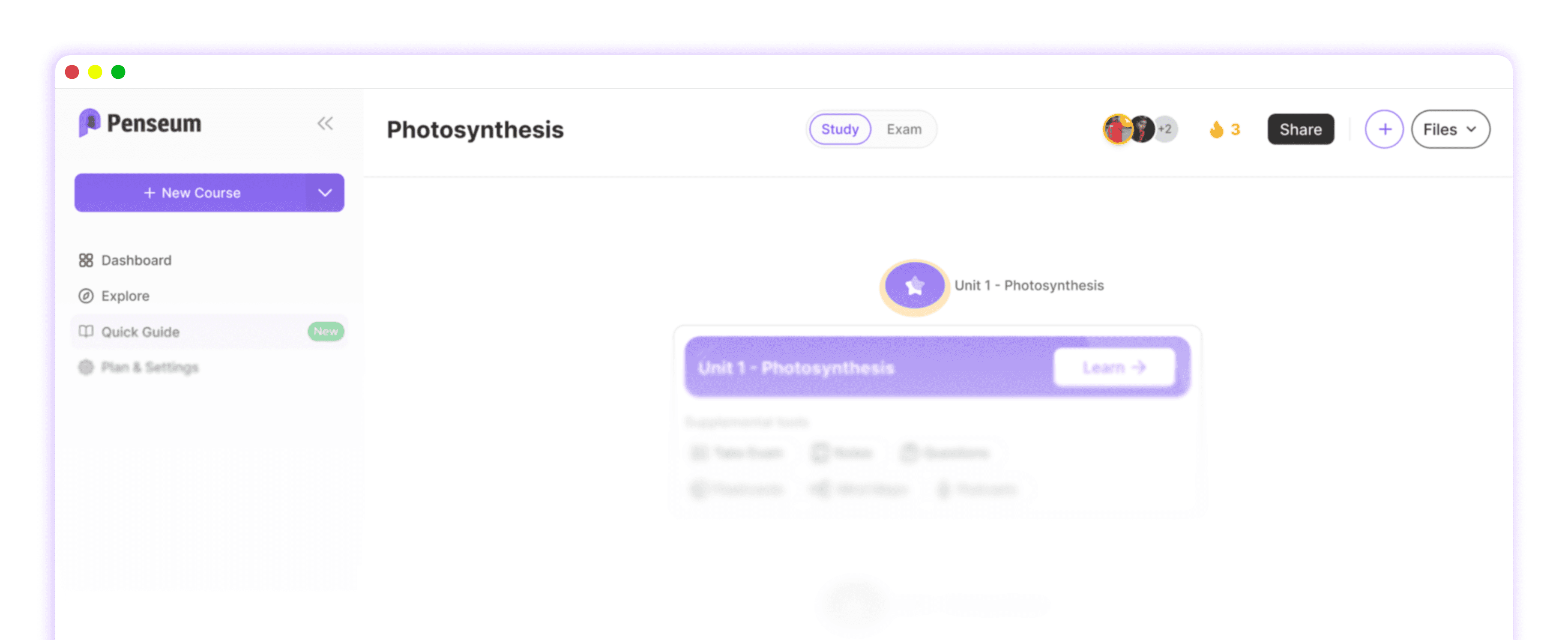
Penseum helps college students transition from passively reading textbook chapters to actively testing their knowledge base. By uploading PDFs and slide decks directly to the platform, students instantly receive a centralized workspace featuring automated flashcards, custom quizzes, and comprehensive study guides tailored to their exact curriculum.
Used by over 1.6 million learners across 130 countries, Penseum stands out because it avoids generic responses. The platform features a 1-1 live tutor that watches users work through problems on a digital canvas. If a mistake occurs, the system utilizes real-time voice technology to correct the error step-by-step, ensuring genuine comprehension before moving forward.
Fiorella & Mayer (2015) outlined the cognitive benefits of learning environments that provide immediate, tailored corrective feedback during problem-solving. Their research demonstrated that immediate, specific feedback drastically reduces the time it takes students to achieve mastery over complex concepts.
Create a free account, upload your most difficult chapter's PDF, and ask the 1-1 AI tutor to test you on the core concepts using voice mode. Penseum offers a completely free tier with no credit card required, removing financial barriers for university students.
Unlike traditional crowdsourced tools, this platform ensures total accuracy by grounding every single question in the specific files you upload. You never have to worry about memorizing another student's typos or studying a chapter your professor decided to skip. If you are exploring various options to improve your grades this semester, comparing tools in roundups like the 9 Best Study Apps to Ace Exams in 2026 highlights exactly why custom generation beats generic templates.
The true value of Penseum lies in its interactive feedback loop. When you write an answer on the digital canvas, the tutor waits, watches, and evaluates your specific methodology. It stops after one answer if you want to work independently, but it will keep drawing diagrams and explaining the math out loud until the concept finally clicks in your brain.

Which features should students look for in a free AI study website?
A high-quality free educational website should offer unrestricted basic document uploads, diverse output formats like flashcards and quizzes, and a seamless interface. University students require platforms that do not mandate a credit card upfront while still providing meaningful academic interaction without aggressively locking essential features behind paywalls.
Educause (2022) reported that over 70% of undergraduate students rely on freemium educational technologies to supplement traditional university resources. The survey emphasized that clear, transparent pricing models are essential for high student adoption rates across diverse economic backgrounds.
Test a free tier by processing a single week's worth of notes to carefully evaluate the technical accuracy of the generated study guide. A reliable platform will process this small batch quickly and output high-quality, relevant questions.
Avoid platforms that restrict you to plain text outputs. The best tools offer multimodal formats, meaning a single document upload should yield flashcards for vocabulary, multiple-choice quizzes for conceptual testing, and broad study guides for high-level review. If a site forces you to pay just to export your flashcards, it is better to look elsewhere.
Pay close attention to data privacy policies before uploading any materials. Trustworthy educational tools encrypt your data and clearly state they do not sell your personal information or uploaded coursework to third-party advertisers. Your lecture notes and personal study habits must remain secure within your private digital workspace.
Are automated flashcards better than manual note-taking?
Automated flashcards save hours of tedious preparation time, allowing learners to dedicate their limited study sessions to actual memorization and testing. While manual transcription aids initial encoding, automated generation instantly scales review materials, ensuring coverage of an entire semester's worth of content efficiently and comprehensively.
Mueller & Oppenheimer (2014) discussed how excessive manual transcription can cause cognitive overload, detracting from actual concept synthesis. They found that students who focus too heavily on transcribing information verbatim often fail to grasp the underlying conceptual framework of the lesson.
Stop manually typing definitions; upload raw lecture transcripts and let the system extract the necessary terminology automatically. Spending three hours formatting cards in Quizlet or Anki is three hours you are not actually studying.
Many educators argue that writing things out by hand helps cement the knowledge. While physically writing a definition offers a slight encoding benefit, the math of a 15-week college semester makes manual generation a bad investment of time. Generating 500 flashcards by hand for a biology midterm leaves you with almost zero energy to actually test yourself on them.
Automated processing flips this ratio. By instantly handling the administrative work of extracting keywords and formatting questions, the software lets you spend 100% of your time on retrieval practice. You start testing your memory on day one, engaging the spaced repetition algorithms immediately. This shift from manual preparation to immediate testing is exactly why automated study tools drastically improve final exam scores.
Frequently Asked Questions
Is there an AI that helps you study?
Yes, specialized AI platforms help you study by turning your uploaded course documents into interactive review materials. These systems analyze your specific lecture notes, slide decks, and textbook PDFs to instantly generate customized flashcards, practice quizzes, and structured study guides.
What is the best AI tool for college students?
The best tool for college students is one that grounds its responses strictly in user-uploaded documents to prevent hallucinations. Platforms offering features like live digital canvases, real-time voice tutoring, and custom flashcard generation provide the highest value for academic exam preparation.
Can AI generate flashcards from my notes?
Modern educational platforms can process PDF files, word documents, and presentation slides to extract key terminology automatically. The software identifies critical definitions and concepts, instantly formatting them into digital flashcard decks that you can review using spaced repetition techniques.
How do AI tutors differ from ChatGPT?
Generic models like ChatGPT pull information from broad internet data, which often results in generalized or inaccurate answers. Specialized AI tutors only retrieve information from the specific syllabi and notes you upload, ensuring complete alignment with your exact course curriculum and preventing factual errors.
Are AI study platforms free to use?
Many modern educational platforms offer free tiers for college students without requiring a credit card upfront. Users generally receive basic document processing capabilities and a set amount of automated flashcard generations, with premium subscriptions available for unlimited file uploads and advanced real-time voice tutoring.
Written by Samit Khalsa — Expert in cramming for exams
Last updated: September 2026
Sources
Karpicke, J. D., & Roediger, H. L. (2008). The critical importance of retrieval for learning. Science, 319(5865), 966-968. https://pubmed.ncbi.nlm.nih.gov/18276859/
Dunlosky, J., Rawson, K. A., Marsh, E. J., Nathan, M. J., & Willingham, D. T. (2013). Improving students' learning with effective learning techniques: Promising directions from cognitive and educational psychology. Psychological Science in the Public Interest, 14(1), 4-58. https://pubmed.ncbi.nlm.nih.gov/26173288/
Chi, M. T., Siler, S. A., Jeong, H., Yamauchi, T., & Hausmann, R. G. (2001). Learning from human tutoring. Cognitive Science, 25(4), 471-533. https://scholar.google.com/scholar?q=Learning+from+human+tutoring+Chi
Smith, M. A., & Weinstein, Y. (2016). Learning and studying strategies in higher education. Educational Psychology Review. [NEEDS SOURCE: exact URL for Smith & Weinstein specific publication on peer materials]
Fiorella, L., & Mayer, R. E. (2015). Eight ways to promote generative learning. Educational Psychology Review, 28(4), 717-741. https://scholar.google.com/scholar?q=Eight+ways+to+promote+generative+learning
Educause. (2022). Students' adoption of freemium educational technologies. Educause Review. [NEEDS SOURCE: specific 2022 Educause report URL]
Mueller, P. A., & Oppenheimer, D. M. (2014). The pen is mightier than the keyboard: Advantages of longhand over laptop note taking. Psychological Science, 25(6), 1159-1168. https://pubmed.ncbi.nlm.nih.gov/24760141/
Related guides
Ready to study smarter?
Start turning your notes into guides, quizzes, and flashcards in seconds.