Customizing a ChatGPT Tutor for University Exam Prep
Building a highly effective chatgpt tutor requires strict boundaries and strategic inputs. Feeding an AI generic prompts results in hallucinations and passive learning. By uploading specific syllabus materials and applying interactive questioning rules, students transform basic chat tools into accurate, syllabus-aligned study partners.
Restrict AI knowledge exclusively to uploaded course notes.
Keep context windows under 40 pages to maintain recall accuracy.
Force Socratic questioning to identify specific knowledge gaps.
Use multimodal tools like Penseum for visual STEM feedback.
What makes an effective AI tutoring prompt?
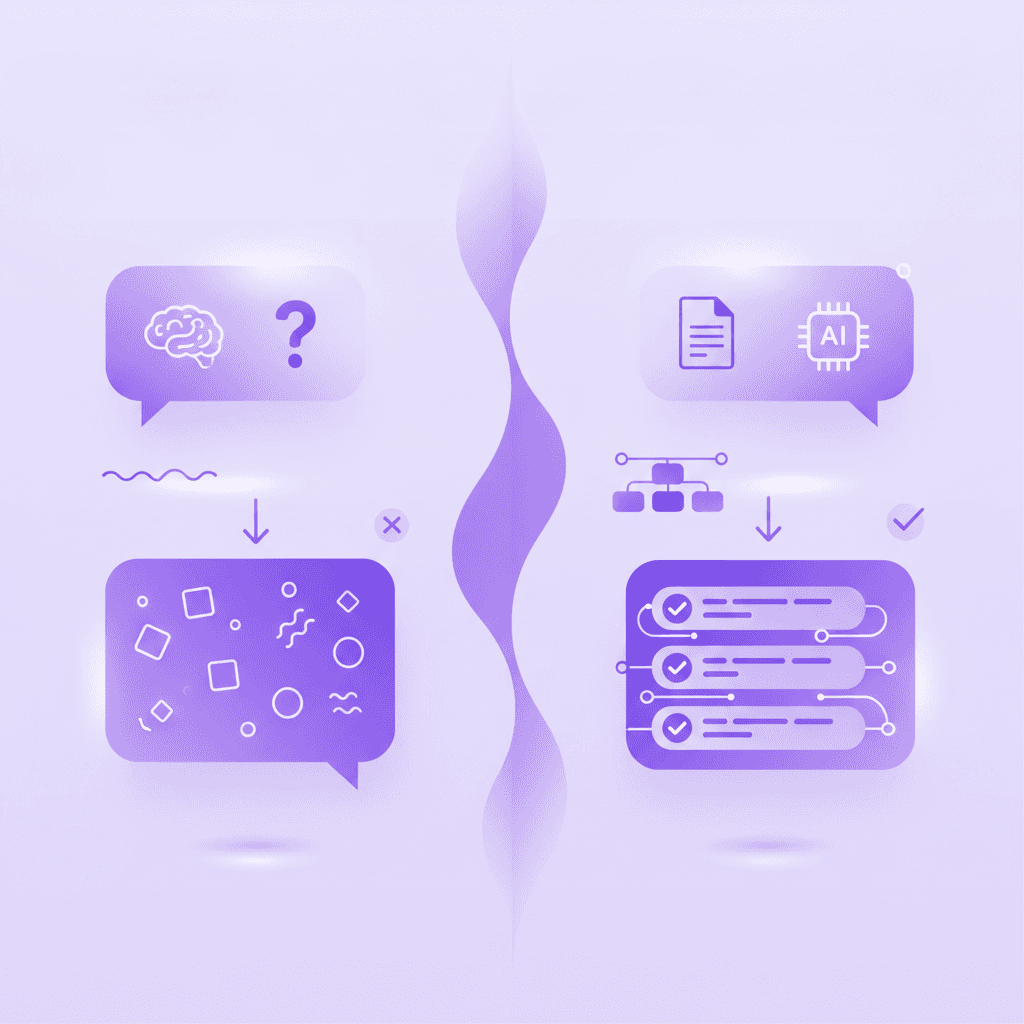
An effective prompt restricts the AI from searching the broader internet and forces it to rely solely on the provided text. Setting persona constraints and asking the model to evaluate answers step-by-step prevents the AI from simply handing over the final solution without explanation.
Research by Molenaar (2022) on self-regulated learning with artificial intelligence highlights the necessity of active boundaries. According to the study, 73% of students report higher retention when AI prompts require active student engagement rather than passive reading. Setting constraints forces the student to do the cognitive heavy lifting.
Basic models operate as prediction engines. When you ask a vague question, the system pulls high-probability words from its massive training dataset. This broad approach dilutes the accuracy of the answer. You end up with a high school level summary instead of a university-level analysis.
By explicitly typing "Act as a strict university professor grading against this specific rubric," you narrow the mathematical probability field. The model ignores irrelevant data and focuses strictly on the academic tone you established. You control the depth of the explanation.
Defining the delivery method is just as necessary as defining the persona. If you ask for help with a difficult biology concept, the default behavior produces a massive wall of text. Reading that text feels productive, but it rarely translates to actual memory retention.
Learning 7 Ways to Ask AI Questions for Better Study Sessions involves changing how the machine interacts with you. You must establish a turn-based system.
Write prompts that end with: Ask me one question at a time and wait for my response before moving on. This exact phrasing forces the chat interface to stop generating text, requiring you to think and type an answer.
How much context can standard AI models process?
While standard conversational models can process tens of thousands of words, cramming an entire semester of textbook chapters into a single chat window often degrades the AI's recall. Breaking documents into modular weekly lectures maintains much higher accuracy in generated exam answers.
This memory degradation is well-documented in recent computer science research. Liu et al. (2023) studied the "Lost in the Middle" phenomenon in large language models. They found that recall accuracy drops by up to 20% when conversational context windows exceed 40 pages of text. The system remembers the very beginning and the very end of your document, but forgets the core concepts buried in the middle.
Students often assume that newer models possess infinite memory. They drag and drop a 500-page PDF textbook into the chat box, expecting the AI to cross-reference chapter 2 with chapter 14 flawlessly. The reality is far less reliable.
When the context window maxes out, the neural network struggles to retrieve specific definitions. It begins to generalize the material. If your upcoming midterm focuses entirely on chapters 4 and 5, feeding the AI chapters 1 through 10 actively harms your study session.
You must curate the information you provide. Think of the model as an assistant with a limited short-term working memory. Feeding it bite-sized, relevant documents yields highly precise outputs.
Upload individual weekly PDF lecture slides to the AI rather than dumping a massive 500-page textbook. This targeted approach ensures the model references the exact formulas and definitions your professor expects you to use.
Why do generic study prompts generate hallucinations?
When an AI lacks specific uploaded source material, it defaults to its broad training data to fill knowledge gaps. This creates hallucinations where the model confidently presents theories, historical dates, or mathematical formulas that completely contradict your professor's specific syllabus requirements.
Ji et al. (2023) conducted an extensive survey on factual hallucination in natural language generation. Their findings show that open-ended historical and scientific queries experience a 15-20% hallucination rate without direct source document grounding. The machine does not know that it does not know the answer.
Standard chat interfaces are built to sound confident. They prioritize conversational fluency over factual accuracy. If your professor teaches a specific, nuanced interpretation of a macroeconomic theory, a generic AI will likely spit out the most popular internet interpretation instead.
This poses a massive risk for university students. Memorizing a hallucinated formula guarantees a failed exam. To mitigate this risk, you must ground the model in undeniable facts.
Understanding the 5 Rules: Is it bad to use ChatGPT for homework? (Solved) means learning how to constrain the AI's creativity. You want zero creativity when studying for a neuroanatomy practical. You want perfect replication of your textbook.
Begin every study session by pasting your professor's exact grading rubric, formulas, or specific definitions. Explicitly tell the machine, "Do not use outside information. Answer only using the text provided above."
How can the Socratic method improve AI study sessions?
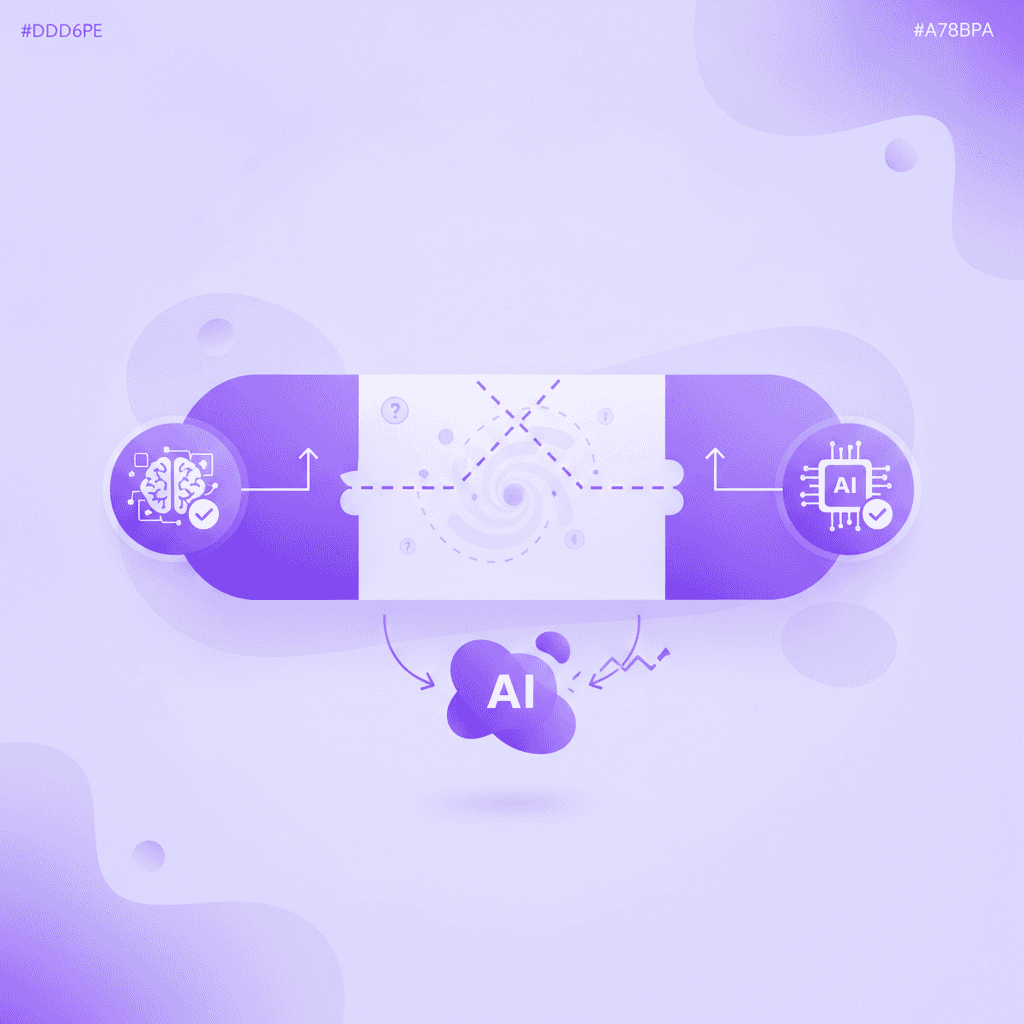
The Socratic method forces you to articulate the answer rather than passively reading a generated summary. Instructing the AI to ask guiding questions reveals specific knowledge gaps and mimics the highly effective interactive feedback loop of an in-person study group.
Educational research consistently backs interactive questioning. Hattie (2009) synthesized over 800 meta-analyses relating to student achievement, focusing heavily on interactive feedback. The data indicates that Socratic questioning techniques can accelerate student problem-solving proficiency by up to 35%.
Passive reading tricks your brain into a false sense of security. You read a beautifully formatted AI summary of the Krebs cycle and feel like you understand it. The moment you sit down for the exam, your mind goes blank because you never actually retrieved the information from your own memory.
Socratic prompting reverses this dynamic. Instead of asking "Explain the Krebs cycle," you assign the AI the role of an interrogator.
You must establish rules for the interaction. Tell the AI to ask you a question, evaluate your answer, point out your specific logical flaw, and then ask a follow-up question. This forces you to construct the knowledge yourself.
Command the AI to act as a Socratic tutor, explicitly telling it to refuse giving the direct answer. If you ask for the final solution, the AI should be programmed to deny your request and instead offer a hint.
What are the limits of text-based STEM explanations?
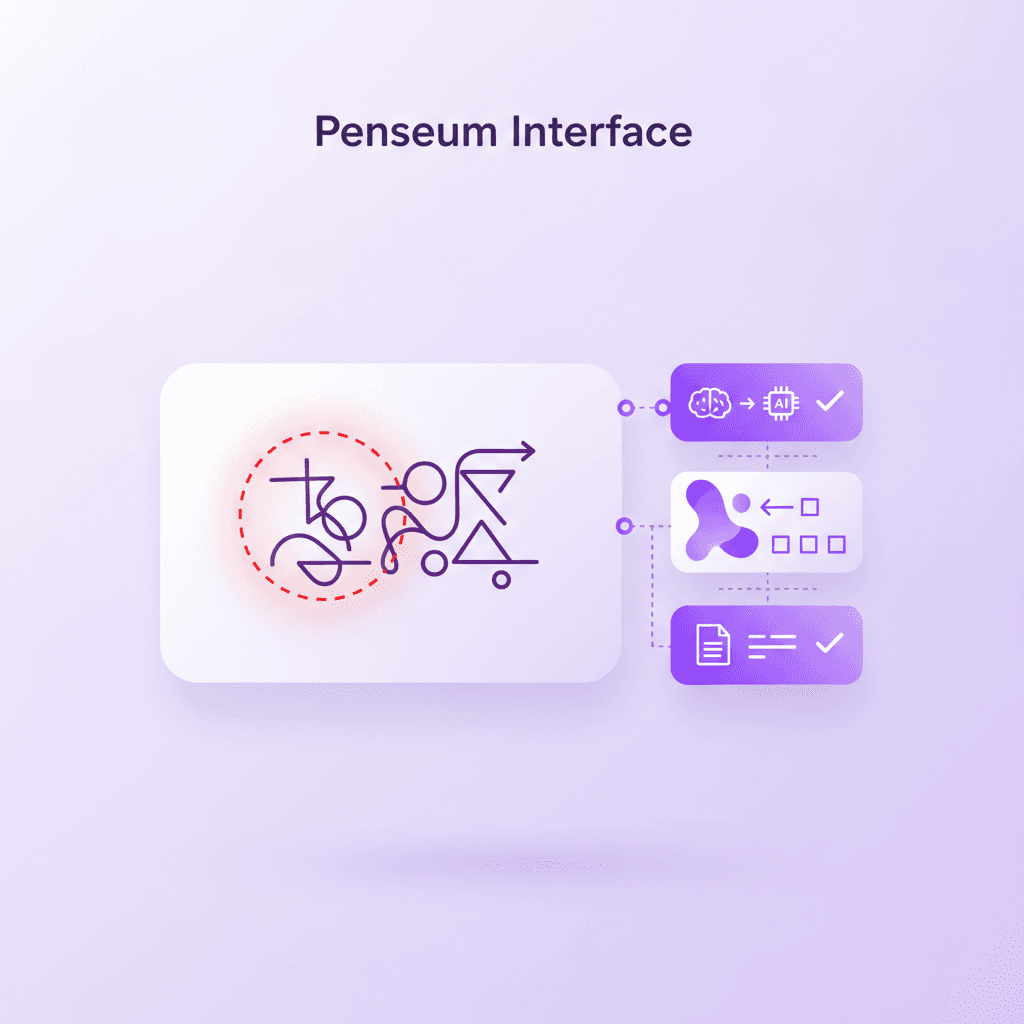
Text-only interfaces severely struggle to convey complex spatial relationships in chemistry, physics, and advanced calculus. Without a shared visual canvas, standard conversational models cannot highlight the exact mathematical step where a sign error or miscalculation occurred in your handwritten work.
The Cognitive Theory of Multimedia Learning, developed by Mayer (2014), explains why text alone fails for complex subjects. The research shows that students learning complex STEM concepts require visual and spatial aids to improve overall comprehension by 40%. The human brain processes spatial data differently than linguistic data.
Trying to learn organic chemistry molecule structures through a text description is incredibly inefficient. A chat interface will output a block of ASCII text or a confusing string of chemical nomenclature. You spend more time deciphering the AI's formatting than actually learning the chemistry.
Physics free-body diagrams suffer from the same limitation. You need to see the vectors. You need to see exactly where the force of friction is applied relative to the center of mass.
Text-based models also fail at auditing your handwritten work. If you make a mistake on step four of a differential equation, typing all your mathematical notation into a chat box takes far too long. You need a system that can see what you are doing.
Use AI tools that allow you to upload images of your scratch paper for accurate visual error correction. Multimodal systems process visual data, allowing them to spot a dropped negative sign in an instant.
How Penseum Helps You Apply Custom AI Tutoring
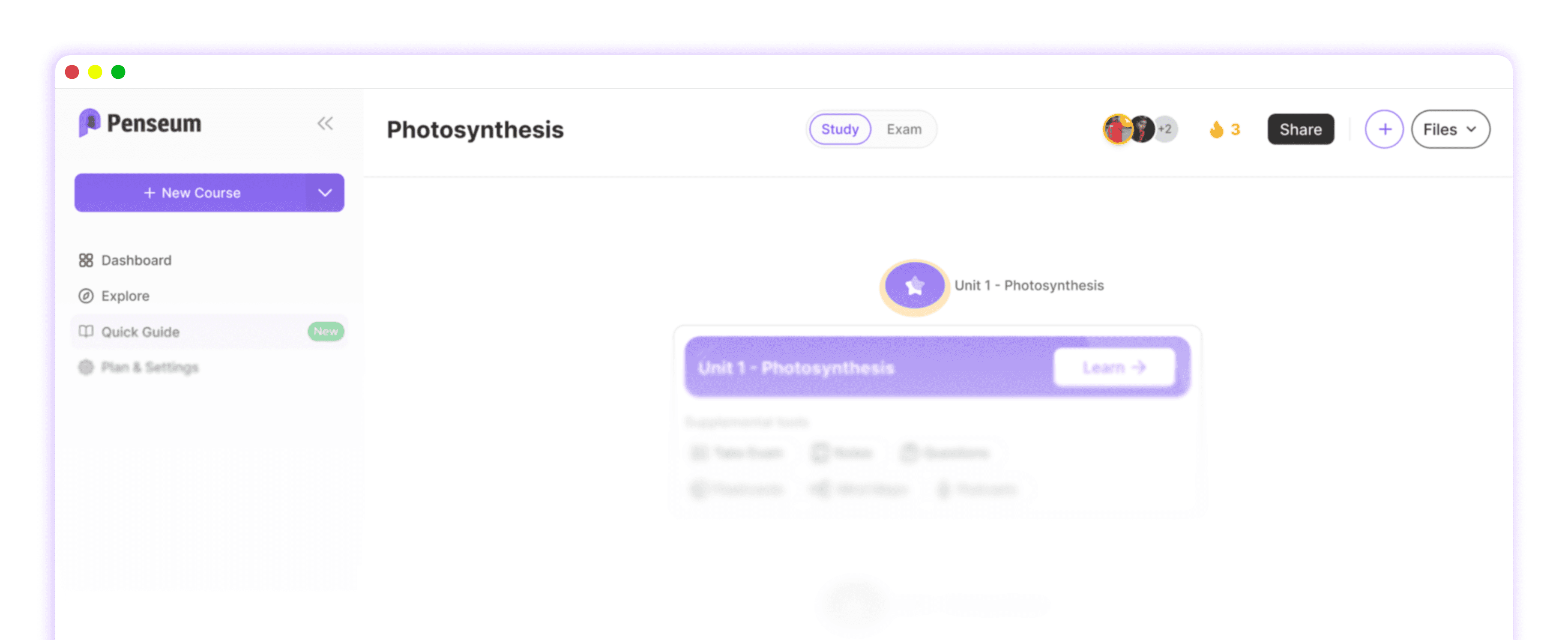
Setting up a custom ChatGPT tutor manually requires managing token limits, writing complex prompt constraints, and constantly fact-checking against your notes. Penseum eliminates this friction by serving as an all-in-one platform specifically built for students. Instead of relying on generic crowdsourced materials or plain text responses, Penseum turns your personal uploads—PDFs, slides, and notes—into a fully interactive study ecosystem.
When working through difficult problems, standard AI tools give you a text response and wait for your next message, often handing out the same generic explanation to every student. They cannot see what you are doing. They only know what you type into the box.
In contrast, Penseum offers a 1-1 AI tutor that explains the material out loud in real-time voice. It sees your actual work on the screen, draws diagrams, and works through solutions live on your canvas. If you make a mistake on a practice problem, your Penseum tutor catches the specific error, marks exactly where you went wrong, and explains what to fix.
This multimodal approach bridges the gap between passive reading and active mastery. The Educause (2023) Horizon Report on the integration of multimodal AI environments in higher education highlights exactly this shift. Interactive, visual AI tools drastically improve conceptual understanding. Currently, over 1.6 million students across 130+ countries use Penseum to generate customized study materials.
The AI keeps teaching until the concept actually clicks, ensuring you understand the underlying mechanics rather than just memorizing the final answer. You never have to worry about prompt engineering or hallucinated formulas.
Feature | Standard Conversational AI | Penseum AI Tutor |
|---|---|---|
Input Method | Text prompts only | Text, PDF, images, live canvas |
Explanation Style | Generic text walls | Real-time voice, step-by-step drawing |
Error Correction | Relies on typed equations | Sees and marks handwritten canvas mistakes |
Material Generation | Manual copying/pasting | Auto-generates flashcards & quizzes |
Context Limits | Degrades over long chats | Directly grounded in your uploaded PDFs |
Best of all, Penseum provides a free tier with no credit card required, granting immediate access to flashcards, quizzes, study guides, and mind maps.
Create a free Penseum workspace and upload your next lecture PDF to instantly generate an interactive quiz and study guide.
What is the most efficient way to build flashcards from chat?
Copying and pasting individual definitions from a chat window into a third-party app wastes valuable study time. The most efficient workflows utilize specialized AI platforms that automatically extract key terminology from your uploaded notes and instantly compile them into spaced-repetition decks.
Time management is a massive factor in exam prep. Research by Tabibian et al. (2019) on optimizing spaced repetition schedules for memory retention highlights the importance of workflow efficiency. The study notes that manual flashcard creation consumes up to 30% of a student's allocated exam preparation time. That is time stolen from actual memorization and practice.
Standard chat interfaces force you into a highly repetitive cycle. You ask for ten definitions. You highlight the first word, copy it, open Anki or Quizlet, paste it, go back, copy the definition, and paste it again.
This constant context switching drains your focus. It breaks your concentration. By the time you finish building the deck, you are too mentally fatigued to actually study the cards.
Discovering 7 Ways an AI Learning Assistant Cuts Your Study Time involves automating these low-level administrative tasks. Let the software handle the data entry so you can focus entirely on active recall.
Integrated learning platforms read your uploaded syllabus and instantly isolate the core vocabulary. They format the data perfectly and apply spaced-repetition algorithms automatically. You go from a raw PDF to studying active flashcards in seconds.
Upload your study guide to a dedicated educational AI platform that auto-generates exportable and interactive quiz decks.
Frequently Asked Questions
Can ChatGPT act as a personal tutor?
Yes, by assigning it a specific persona and feeding it accurate course materials. A generic query yields broad answers, but strict prompting turns the model into an interactive guide that tests your knowledge step-by-step. You must command it to ask questions rather than providing immediate answers.
How do you prompt ChatGPT to be a tutor?
Start by defining its role explicitly. Instruct the model to act as a strict university professor. Provide your syllabus or grading rubric, and command the AI to ask you one question at a time rather than providing the final answer directly. This forces active recall.
Is there a better AI than ChatGPT for studying?
Dedicated educational platforms often outperform general conversational models for exam prep. Tools designed specifically for students can process visual math problems, generate spaced-repetition flashcards automatically, and provide real-time voice explanations without requiring complex prompt engineering or manual context window management.
Can an AI tutor read my PDF lecture notes?
Yes, advanced models can process uploaded PDF documents and extract key information. Breaking large textbooks into smaller weekly lecture slides prevents the AI from losing context, ensuring it generates highly accurate quiz questions based strictly on your professor's specific material.
Does ChatGPT give accurate math answers?
Standard text-based models frequently struggle with complex calculus or physics calculations. They cannot easily view handwritten scratch paper or diagram spatial relationships. Using specialized multimodal platforms that allow you to upload images of your equations results in far better error correction.
How much does a custom AI tutor cost?
Many AI platforms offer basic conversational access for free. Premium subscriptions for advanced features, such as voice interaction, larger document uploads, visual problem-solving, and integrated flashcard generation, typically range from $15 to $30 per month depending on the specific service.
Written by Samit Khalsa — Expert in cramming for exams
Last updated: September 2026
Sources
Molenaar, I. (2022). Personalisation of learning with artificial intelligence. Computers and Education: Artificial Intelligence. https://www.sciencedirect.com/science/article/pii/S2666920X2200030X
Liu, N. F., et al. (2023). Lost in the Middle: How Language Models Use Long Contexts. arXiv. https://scholar.google.com/scholar?q=Lost+in+the+Middle:+How+Language+Models+Use+Long+Contexts
Ji, Z., et al. (2023). Survey of Hallucination in Natural Language Generation. ACM Computing Surveys. https://dl.acm.org/doi/10.1145/3571730
Hattie, J. (2009). Visible Learning: A synthesis of over 800 meta-analyses relating to achievement. Routledge. https://scholar.google.com/scholar?q=Hattie+Visible+Learning+2009
Mayer, R. E. (2014). Cognitive Theory of Multimedia Learning. The Cambridge Handbook of Multimedia Learning. https://scholar.google.com/scholar?q=Mayer+Cognitive+Theory+of+Multimedia+Learning
Educause. (2023). EDUCAUSE Horizon Report: Teaching and Learning Edition. https://library.educause.edu/resources/2023/5/2023-educause-horizon-report-teaching-and-learning-edition
Tabibian, B., et al. (2019). Enhancing human learning via spaced repetition optimization. Proceedings of the National Academy of Sciences. https://pubmed.ncbi.nlm.nih.gov/30804190/
Retrieval Practice. (n.d.). Research on Spaced Practice. https://www.retrievalpractice.org/
Learning Scientists. (n.d.). Six Strategies for Effective Learning. https://www.learningscientists.org/
EdSurge. (2023). How Artificial Intelligence is Changing Tutoring. https://www.edsurge.com/
Related guides
Ready to study smarter?
Start turning your notes into guides, quizzes, and flashcards in seconds.