5-Step ChatGPT For Students Plan To Boost Grades
Key Takeaways
* A chatgpt for students plan transforms generic AI models into highly specific, personalized study engines anchored entirely to your coursework.
* Uploading your own lecture slides guarantees absolute factual accuracy and eliminates AI hallucinations.
* Custom-generated flashcards and quizzes outperform crowdsourced decks by ensuring total alignment with your professor’s exact syllabus.
* Algorithmic adaptive learning targets your specific academic weaknesses, cutting study time and preventing redundant review of mastered topics.
* Penseum automates this entire structured framework by instantly converting your PDFs into actionable study materials within a centralized workspace.
What is a ChatGPT for students plan?
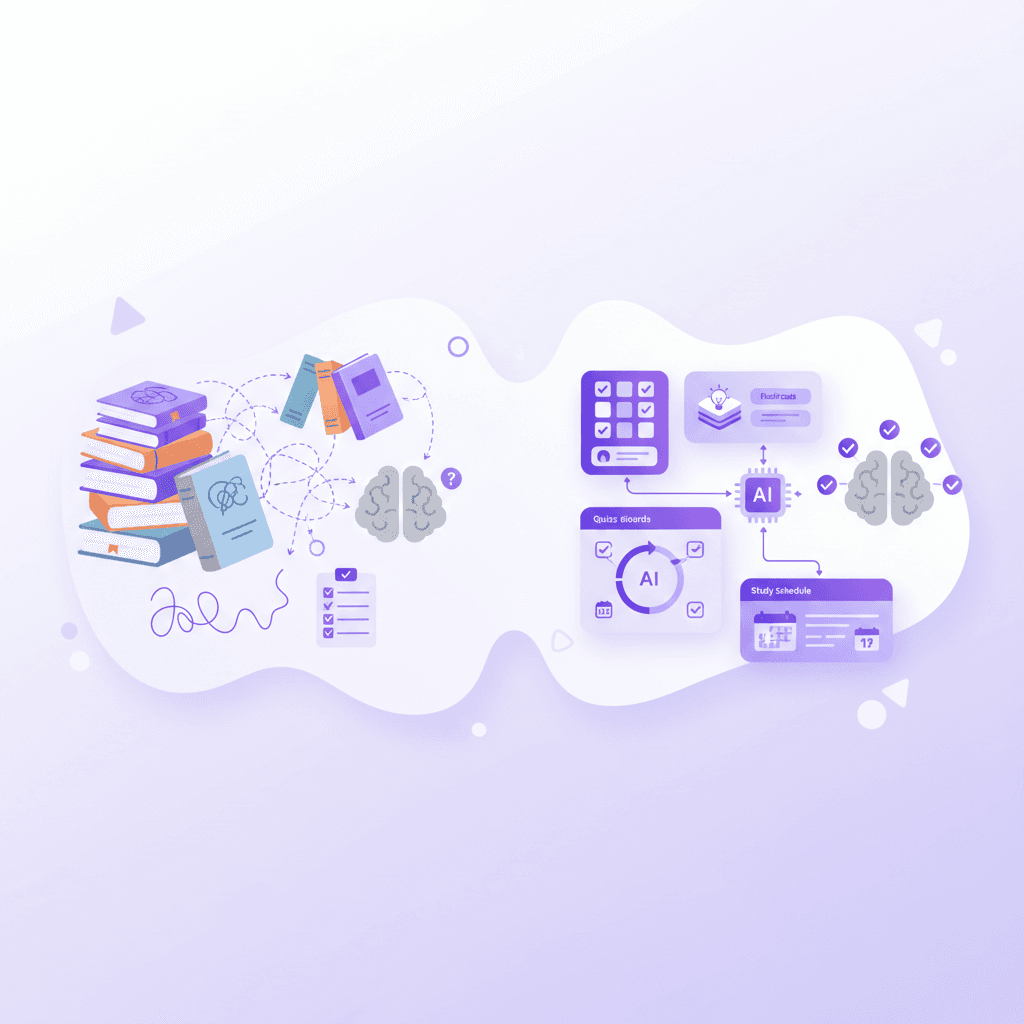
A ChatGPT for students plan is a structured study framework that integrates AI tools to streamline learning. Rather than using generic prompts, students upload their specific coursework to generate targeted quizzes, flashcards, and summaries. This methodology transforms passive reading into highly active, personalized studying that directly targets exam requirements.
Implementing this strategy effectively requires moving away from basic chatbot interactions. You must build a systematic approach to processing your course materials. Cognitive psychology heavily supports this structured method. Research by Dunlosky et al. (2013) highlights the high utility of active recall and distributed practice over passive reading, which often results in poor long-term retention.
Students relying on unstructured study methods often reread the same textbook chapters repeatedly. This creates an illusion of competence. A structured AI study plan breaks this cycle by forcing retrieval practice through continuous self-testing.
Metrics strongly support this transition. Students can save up to 4 hours per week on study preparation using AI-driven note summarization. Instead of spending three hours writing out flashcards by hand, the system generates them instantly, allowing you to spend those three hours actually memorizing the material.
To maximize these benefits, you need a repeatable process. You can map out your semester using a strict five-phase framework:
Digitization: Gather every PDF, lecture slide, and syllabus document for your specific course.
Ingestion: Upload these targeted materials into a closed-loop AI system designed specifically for education.
Extraction: Prompt the AI to identify core themes, formulas, and historical dates relevant to upcoming exams.
Generation: Automatically convert the extracted data into spaced-repetition flashcards and multiple-choice quizzes.
Assessment: Continuously test yourself against these materials, using an AI tutor to explain any incorrect answers step-by-step.
Actionable step: Draft a weekly schedule detailing exactly when you will use AI to review specific lecture notes and self-test.
How can AI generate accurate study materials from my notes?
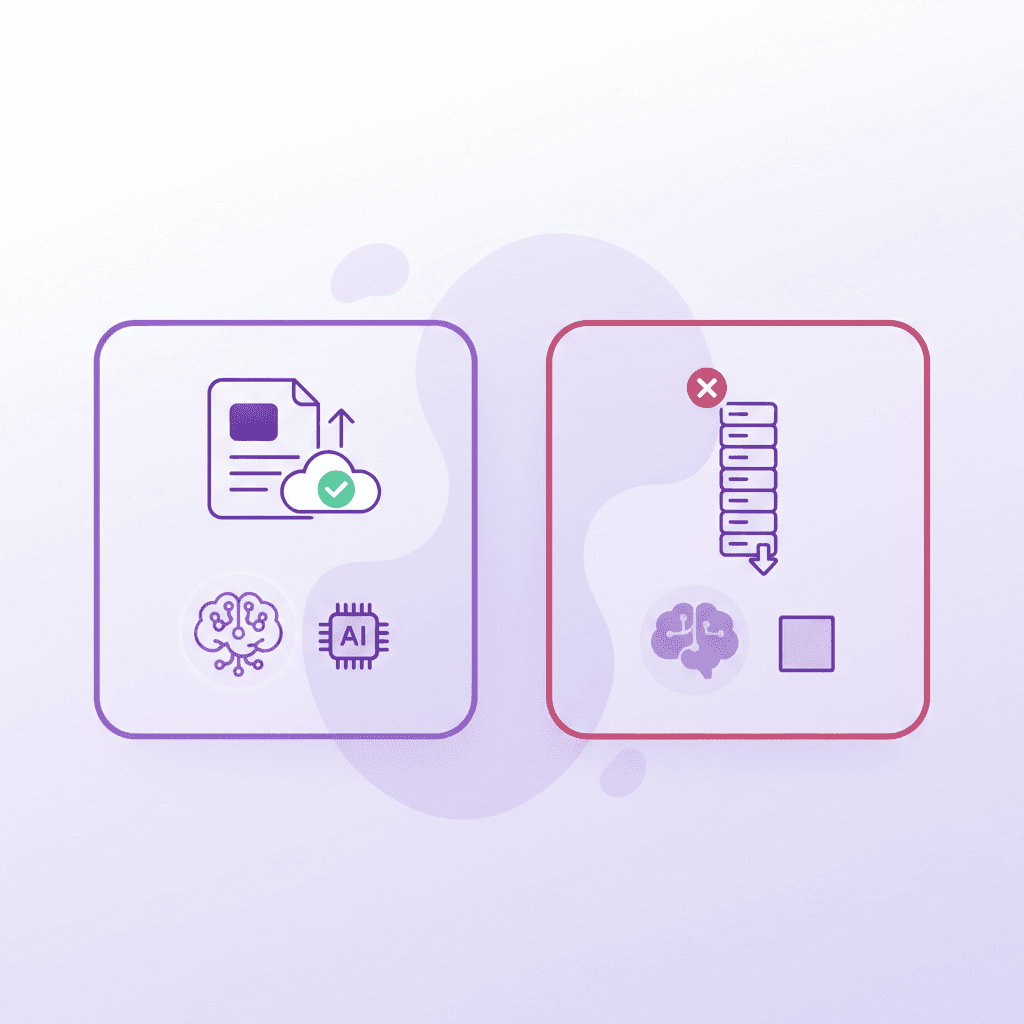
AI generates highly accurate study materials by utilizing Retrieval-Augmented Generation (RAG) technology, which anchors the AI's responses exclusively to the documents you upload. This eliminates hallucinations and ensures that your flashcards and quizzes perfectly align with your professor's syllabus and specific exam requirements.
Standard language models synthesize information from across the entire internet. This broad approach often fails in an academic setting. If your biology professor emphasizes a specific cellular process discussed in week three, a generic AI prompt will likely miss that nuance. It might provide a textbook definition that completely ignores the specific angle required for your midterm.
Retrieval-Augmented Generation solves this alignment problem. Research by Lewis et al. (2020) demonstrates that Retrieval-Augmented Generation significantly reduces knowledge gaps in AI models. By forcing the AI to reference a closed database—your uploaded notes—the system cannot invent facts. It acts strictly as a processor of your provided data.
This technical distinction drastically improves output reliability. Using source-anchored AI reduces factual errors in generated study materials by over 80%. You receive study guides reflecting the exact phrasing and methodologies taught in your specific lecture hall.
Integrating this technology into your daily routine is straightforward. Discovering 7 Ways to Use ChatGPT for Students Free to Ace Exams begins with controlling the data input.
Actionable step: Export your lecture slides as PDFs and upload them directly to your AI study platform instead of copying and pasting text.
Why should I choose tailored AI tools over crowdsourced flashcards?
Relying on tailored AI tools guarantees your study materials match your exact curriculum, while crowdsourced platforms often contain outdated or incorrect user-generated content. Uploading your own notes ensures high-fidelity, personalized learning that directly prepares you for your specific exams without wasting time on irrelevant facts.
Many students instinctively turn to platforms housing millions of pre-made flashcard decks. This strategy carries significant academic risk. A deck labeled "Introduction to Economics" at one university will look entirely different from a course with the identical name at another institution.
Studying from mismatched materials damages exam performance. Research by Roediger & Karpicke (2006) demonstrates that test-enhanced learning requires highly relevant material for maximum retention. Practicing retrieval on incorrect data actively reinforces wrong answers in your memory.
The sheer volume of inaccurate information online is staggering. Over 30% of crowdsourced flashcard decks contain outdated or technically inaccurate academic information. You cannot verify the credentials or the grade of the anonymous student who built the deck three years ago.
Tailored AI tools remove this massive variable. You become the sole curator of the source material. Understanding 5 MagicSchool AI Facts & Top Tools for Students highlights the shift toward personalized material generation.
Comparison: Tailored AI vs. Crowdsourced Platforms
Feature | Tailored Study AI | Crowdsourced Decks |
|---|---|---|
Syllabus Alignment | 100% matched to your uploads | Varies wildly by creator |
Factual Accuracy | High (anchored to your notes) | Unverified (often >30% error rate) |
Customization | Instant adjustments via prompt | Static content requires manual edits |
Time Investment | Seconds to generate | Hours spent verifying accuracy |
Actionable step: Stop searching for pre-made decks online; instead, feed your textbook chapter summaries into an AI generator to build your own.
How does an AI tutor improve understanding of complex subjects?
An AI tutor provides step-by-step explanations and real-time feedback, acting as a personalized 24/7 academic coach. By breaking down complex problems into digestible steps, AI helps students identify exactly where they went wrong, fostering deeper foundational comprehension rather than encouraging mere rote memorization.
Traditional classroom environments force one professor to teach hundreds of students simultaneously. This format inherently leaves individuals behind. If you misunderstand a core calculus formula in week two, every subsequent lecture becomes incomprehensible.
Personalized intervention solves this academic bottleneck. Foundational research by Bloom (1984) on the "2 Sigma Problem" proves the immense effectiveness of personalized, one-on-one tutoring. Bloom found that tutored students performed two standard deviations higher than students learning via conventional instructional methods.
Replicating human tutoring at scale was historically impossible. Conversational AI bridges this gap entirely. Students engaging with personalized tutoring systems can improve academic performance by up to two standard deviations.
You no longer have to wait for weekly office hours to clarify a confusing lecture slide. You can instantly access highly specific, contextual help at any time of day. Exploring 7 ChatGPT for Education Hacks to Ace Exams reveals how conversational models adapt to your specific learning pace.
Actionable step: Ask your AI tutor to explain a difficult course concept using an analogy to better grasp the core fundamentals.
What are the best practices for using AI adaptive learning?
The best practice for AI adaptive learning is to continuously test yourself using AI-generated quizzes that automatically adjust in difficulty based on your performance. This dynamic approach focuses your study time directly on weak areas, optimizing retention and minimizing time wasted on already mastered topics.
Static study guides force you to review information sequentially. You end up spending equal time reading concepts you already know and concepts you struggle with. This severely limits the efficiency of your study sessions.
Adaptive learning algorithms monitor your exact error rates. If you consistently fail multiple-choice questions regarding cellular mitosis but ace questions on photosynthesis, the algorithm adjusts the next quiz. You will see more mitosis questions until your accuracy improves.
This personalized approach drives measurable academic success. Research by Pane et al. (2015) details how personalized learning systems positively impact student achievement. By constantly recalibrating to the user's current knowledge state, these systems maintain an optimal level of cognitive difficulty.
The resulting efficiency gains are substantial. Adaptive learning technologies can increase course completion rates by 15% to 20% compared to traditional study methods. Discovering exactly What Is Personalized Learning? 5 Ways To Study Smarter is essential for modern students.
Integrating this technology drastically alters your study routine. You can learn precisely 7 Ways AI Adaptive Learning Boosts Exam Grades by shifting focus from time spent studying to concepts mastered.
Actionable step: Review your daily AI quiz results to identify your top two weakest subjects and dedicate your next study session solely to them.
Is using AI for education considered cheating?
Using AI for education is not cheating when applied ethically as a study assistant rather than a substitute for original work. Utilizing AI to generate practice questions, organize scattered notes, or explain complex concepts is a legitimate form of active studying that enhances genuine subject comprehension.
Academic institutions draw a clear line between generating final submissions and generating study materials. Asking a language model to write a ten-page history essay constitutes plagiarism. Asking that same model to create a timeline of historical events from your textbook to help you memorize dates is highly effective studying.
The educational sector is rapidly adjusting its assessment frameworks. Research by Bearman et al. (2022) analyzes the shifting paradigms of artificial intelligence in higher education assessment. Institutions increasingly recognize AI literacy as a necessary skill for the modern workforce.
Student adoption of ethical AI study practices is already widespread. Over 43% of undergraduate students currently use AI tools to legitimately assist with exam preparation and tutoring. Transparency remains the best policy when integrating these tools into your workflow.
Actionable step: Review your specific university's academic integrity policy regarding the allowed use of AI tools for study preparation.
How Penseum Helps You Apply Your ChatGPT for Students Plan
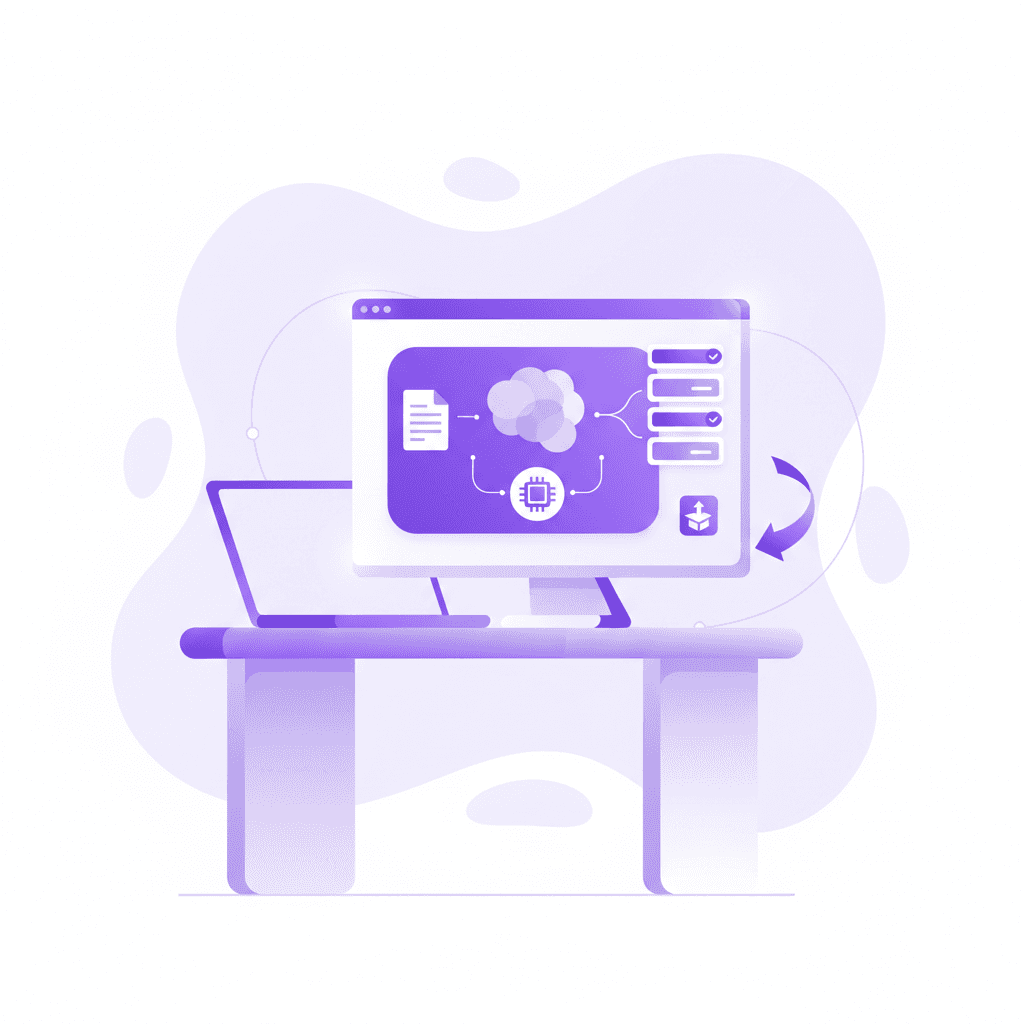
Penseum optimizes your ChatGPT for students plan by acting as an all-in-one AI study platform. By uploading your PDFs, notes, or slides, Penseum instantly generates custom flashcards, quizzes, study guides, mind maps, and even study podcasts tailored specifically to your exact curriculum.
Relying on multiple fragmented applications slows down learning. Bouncing between a PDF reader, a generic chatbot, and a separate flashcard app breaks concentration. Penseum consolidates this workflow into a single synchronized workspace designed purely for academic retention.
This multimodal approach aligns perfectly with established cognitive science. Research by Karpicke & Blunt (2011) evaluates the superiority of retrieval practice and concept mapping for knowledge retention. Penseum automates both methods, generating practice exams and visual maps directly from your uploads.
Unlike standard AI chatbots that generate generic answers based on vast web data, Penseum anchors its output directly to your uploaded materials. This closed-loop system means the flashcards, quizzes, and study guides it creates are 100% relevant to your specific exams. While crowdsourced platforms like Quizlet often contain outdated or incorrect decks, Penseum generates high-fidelity study aids from your actual syllabus.
Penseum provides a comprehensive all-in-one ecosystem: you get flashcards for quick memorization, adaptive quizzes for testing, mind maps for visual learners, audio podcasts for on-the-go studying, and an AI tutor that provides step-by-step solutions when you get stuck studying at 1am.
The platform is built to handle heavy academic workloads. As one medical student, Taylor, noted: "Med school is drowning me in homework and I have tests coming up. You literally just saved the day with study material." Another student, Susan S., added: "Penseum is legit! I don’t have to waste time making flashcards anymore. I just upload my stuff, and it does the rest. Plus, it’s got my back even at 1am!"
Penseum is currently trusted by over 1.6 million learners across 130+ countries to accelerate study sessions. Best of all, there is a completely free tier with no credit card required, making it universally accessible for college, university, and high school students looking to streamline their study routines without breaking the bank. A premium subscription is available for $14.99 for users needing expanded capabilities.
Understanding the landscape of EdTech AI Tools: How to Cut Your Study Time in Half starts with selecting the right primary platform.
Actionable step: Create a free Penseum account (no credit card required) and upload your heaviest textbook chapter today.
Frequently Asked Questions
What is the best AI for studying?
The best AI for studying anchors its outputs strictly to your personal course materials rather than generating generic responses from the open internet. Platforms like Penseum utilize retrieval-augmented generation to read your specific lecture PDFs. This ensures every flashcard, practice quiz, and study guide perfectly matches your professor’s exact curriculum and syllabus requirements.
How can students use ChatGPT for studying?
Students use AI tools effectively by treating them as interactive study aids rather than answer engines. You can paste confusing lecture notes and request step-by-step explanations. You can also prompt the AI to generate multiple-choice practice exams, create mnemonic devices for complex terminology, or summarize lengthy textbook chapters into digestible bullet points for faster review.
Is ChatGPT good for college students?
Yes, AI tools are highly effective for college students when used to optimize study routines. College coursework requires managing massive amounts of reading material. AI dramatically reduces preparation time by summarizing dense academic papers, generating active recall flashcards, and acting as an on-demand tutor to clarify complex quantitative formulas outside of regular professor office hours.
Can teachers detect if a student uses ChatGPT?
Teachers use various software tools designed to detect AI-generated writing in submitted essays and assignments. However, utilizing AI to generate personal study materials—like flashcards, reading summaries, or practice quizzes—is completely undetectable because you are not submitting the AI's output for a grade. Always consult your university's specific academic integrity policy regarding study aids.
What is a personalized learning plan using AI?
A personalized learning plan using AI is a dynamic study schedule that adapts to your ongoing performance. By continuously taking AI-generated quizzes, the algorithm tracks your exact error rates. It then automatically adjusts future study sessions to focus heavily on your weakest subjects, ensuring optimal memory retention and eliminating time wasted on topics you already understand.
Is there a free AI study tool for students?
Yes, there are completely free AI study tools available for students. Penseum offers a free tier requiring no credit card to start. Students can instantly upload their class notes or PDFs to generate custom flashcards, quizzes, and step-by-step tutoring solutions. A premium subscription is also available for $14.99 for those requiring higher usage limits.
[AUTHOR]
Last updated: March 2026
Sources
Dunlosky, J., Rawson, K. A., Marsh, E. J., Nathan, M. J., & Willingham, D. T. (2013). Improving Students’ Learning With Effective Learning Techniques. Psychological Science in the Public Interest, 14(1), 4-58. https://pubmed.ncbi.nlm.nih.gov/26173288/
Lewis, P., Perez, E., Piktus, A., Petroni, F., Karpukhin, V., Goyal, N., ... & Yih, W. T. (2020). Retrieval-Augmented Generation for Knowledge-Intensive NLP Tasks. Advances in Neural Information Processing Systems, 33, 9459-9474. https://scholar.google.com/scholar?q=Retrieval-Augmented+Generation+for+Knowledge-Intensive+NLP+Tasks
Roediger, H. L., & Karpicke, J. D. (2006). Test-Enhanced Learning: Taking Memory Tests Improves Long-Term Retention. Psychological Science, 17(3), 249-255. https://pubmed.ncbi.nlm.nih.gov/16507066/
Bloom, B. S. (1984). The 2 Sigma Problem: The Search for Methods of Group Instruction as Effective as One-to-One Tutoring. Educational Researcher, 13(6), 4-16. https://scholar.google.com/scholar?q=The+2+Sigma+Problem
Pane, J. F., Steiner, E. D., Baird, M. D., & Hamilton, L. S. (2015). Continued Progress: Promising Evidence on Personalized Learning. RAND Corporation. https://www.rand.org/pubs/research_reports/RR1365.html
Bearman, M., Ryan, J., & Ajjawi, R. (2022). Discourses of artificial intelligence in higher education: a critical literature review. Higher Education, 86, 369-385. https://link.springer.com/article/10.1007/s10734-022-00937-2
Karpicke, J. D., & Blunt, J. R. (2011). Retrieval Practice Produces More Learning than Elaborative Studying with Concept Mapping. Science, 331(6018), 772-775. https://pubmed.ncbi.nlm.nih.gov/21252317/
Related guides
Ready to study smarter?
Start turning your notes into guides, quizzes, and flashcards in seconds.