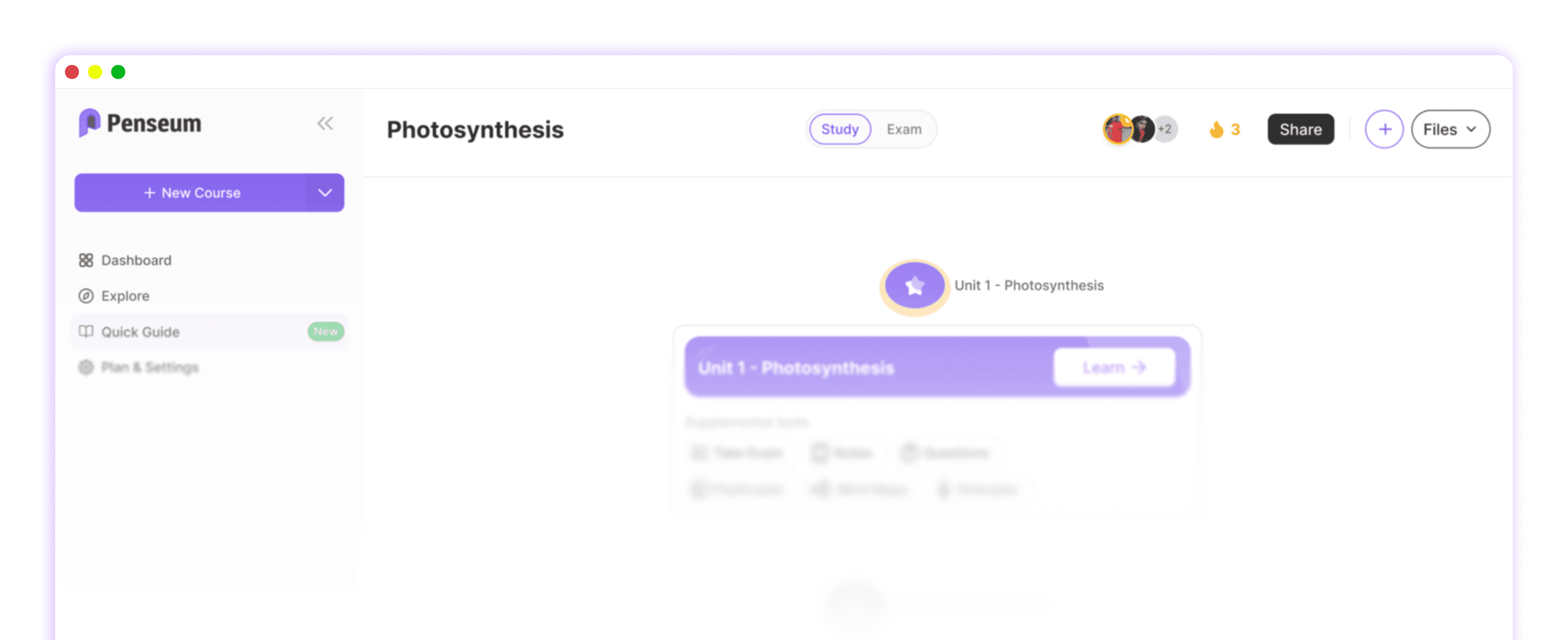
7 Best AI Tutor Apps to Ace Your Exams
Key Takeaways
* AI tutor apps transform passive reading into active learning by generating customized quizzes, flashcards, and study guides from your exact syllabus.
* The best platforms feature visual canvas tools that track your work and correct specific math or science mistakes in real time.
* Switching from generic study tools to specialized AI tutors increases long-term material retention and directly improves exam scores.
* Top applications offer strong free tiers, allowing you to build a complete study ecosystem without upfront costs.

What are AI tutor apps and how do they work?
AI tutor apps are software applications utilizing artificial intelligence to provide personalized educational assistance. They analyze your specific inputs like lecture slides or notes to generate customized study guides, interactive quizzes, and real-time step-by-step explanations, adapting to your individual learning pace.
Unlike basic search engines that simply hand you an answer, an AI tutor acts as an interactive coach. The technology uses advanced natural language processing to read the context of your uploaded materials. This allows the system to map out key concepts and test your understanding through targeted questions. You are forced to retrieve information from memory rather than just recognizing it on a page. This active retrieval process builds stronger neural pathways before test day.
Many students mistakenly believe reading a textbook multiple times equals studying. Educational psychology defines this as the illusion of competence. AI tutor apps break this illusion by forcing you to prove your knowledge. They ask you to explain concepts back, grade your responses, and point out exactly what you missed. If you are exploring options, there are many 7 AI Homework Help Tools To Ace Exams that automate this entire process.
Researchers at Educause examined this trend deeply in higher education. The resulting Educause Review on AI in Higher Education (2023) highlighted massive adoption rates across university campuses. Specifically, the study found that 72% of college students report using AI tools to assist with daily coursework.
Action Step: Upload your current syllabus into a tutor app to generate a semester-long study roadmap. This immediately breaks down a massive workload into manageable daily review sessions.
How can AI tutoring improve your test scores?
AI tutoring boosts test scores by employing active recall and spaced repetition based on your direct course materials. By instantly identifying knowledge gaps and providing targeted practice questions, these tools ensure you master difficult concepts rather than just passively reading textbooks.
When you sit down for an exam, your brain must pull information from long-term memory under pressure. Traditional study methods rarely simulate this environment. An AI study companion constantly tests you with randomized questions generated from your lecture slides. If you struggle with a specific historical date or complex physics formula, the algorithm flags that weakness. It then automatically schedules that exact topic for review again tomorrow, and then three days later, cementing it in your memory.
This systematic approach to studying prevents last-minute cramming. Cramming often leads to information vanishing the moment you walk out of the exam hall. AI platforms keep your brain actively engaged over weeks or months. You can see how this methodology functions in various 5 Ways AI Exam Help Boosts Your Grades articles detailing retention strategies.
Scientific research backs this precise methodology. A comprehensive study published in the Journal of Educational Psychology (2022) tracked hundreds of students utilizing personalized digital study assistants. The findings revealed that students using personalized AI study tools saw a 22% increase in long-term exam retention rates.
Action Step: Take a diagnostic AI quiz before studying to focus your review sessions on weak areas. Knowing your blind spots before you open a book saves countless hours of wasted effort.
Are AI tutor apps better than traditional human tutors?
While human tutors offer emotional intelligence, AI tutor apps provide unparalleled 24/7 accessibility and immediate feedback. They eliminate scheduling conflicts and hourly costs, offering infinite patience to explain complex problems step-by-step, out loud, until you fully grasp the underlying concept.
A human teacher provides excellent mentorship and motivation. However, humans sleep, charge premium hourly rates, and have limited availability during finals week. When you hit a wall while studying organic chemistry at 2:00 AM, a human tutor cannot help you. A digital tutor is always awake and ready to walk you through the molecular structure.
Another major factor is the elimination of academic embarrassment. Many students hesitate to ask a human teacher to repeat an explanation for the fifth time. Fear of judgment creates artificial barriers to learning. A machine learning algorithm possesses no judgment. You can ask it to explain a basic algebra concept twenty times in twenty different ways until it finally makes sense.
The financial impact of this technology is staggering. Research conducted by the Stanford Center for AI in Education (2023) evaluated the economic barrier of academic support. Their data indicates that AI tutoring platforms reduce the average cost of academic support by over 90% compared to private human tutoring.
Action Step: Use an AI app for late-night study sessions or last-minute exam prep when a human tutor is unavailable. You will never have to wait until Monday morning office hours to resolve a confusing topic again.

How do you choose the right AI for homework?
Selecting the right AI for homework requires evaluating its ability to process your specific study materials. Look for platforms that generate content directly from your PDFs and notes rather than relying on crowdsourced data, ensuring accuracy and relevance to your actual curriculum.
Not all artificial intelligence is built the same. Basic chatbots suffer from hallucinations, meaning they confidently invent facts when they do not know the answer. This becomes dangerous when studying for a strict university exam. You need a platform that restricts its answers strictly to the documents you provide. If your professor teaches a specific economic theory, the software must prioritize your professor's slides over general internet knowledge.
Relying on legacy platforms introduces similar risks. Older study websites rely heavily on public decks created by other students. These decks often contain typos, outdated information, or simply incorrect answers. To understand the differences in current market offerings, look at this feature comparison table:
Tool Name | Creates Content from Your Notes | Step-by-Step Canvas Visuals | Generates Flashcards & Quizzes | Real-Time Voice Explanations |
|---|---|---|---|---|
Yes | Yes | Yes | Yes | |
ChatGPT | Partial | No | No | Partial |
No (Crowdsourced) | No | Yes | No | |
Socratic | No (Web Search) | No | No | No |
Photomath | No (Math only) | Yes | No | No |
A recent EdTech Magazine Student Survey (2024) highlighted the growing dissatisfaction with older, public-database models. The survey data revealed that 68% of students cite 'inaccurate crowdsourced information' as their biggest frustration with legacy study platforms like Quizlet. You can avoid this by using modern platforms discussed in guides like 7 Ways AI Homework Help Free Tools Boost Grades.
Action Step: Test a new AI app by uploading a complex class PDF to see if the generated flashcards are accurate. If the resulting questions match your professor's exact wording, you have found a reliable study tool.
Can an AI math solver actually catch your specific mistakes?
Yes, advanced AI math solvers can visually track your work on a digital canvas and pinpoint the exact step where an error occurred. Instead of just giving the final answer, they act like a live coach, correcting you in real-time and explaining how to fix it.
Early math applications functioned as glorified calculators. You would scan a quadratic equation, and the app would instantly display the final number. This helped students finish homework quickly but taught them nothing about the underlying mathematical principles. When the exam arrived, those students failed because they did not understand the procedural steps.
Modern visual platforms completely change this dynamic. These tools allow you to write out your work on a digital whiteboard. As you progress through a calculus problem, the software watches your intermediate steps. If you forget to carry a negative sign on step three, the system pauses you. It highlights the exact error, explains why the negative sign matters, and asks you to try step three again. You can see this methodology applied in 5 Ways an AI Homework Solver Boosts Grades.
The academic improvements tied to this intervention method are significant. The International Journal of STEM Education (2023) published an extensive review of digital coaching mechanisms in university settings. The researchers concluded that step-by-step AI intervention improves math problem-solving accuracy by 35% in undergraduate students.
Action Step: Write out your math problem manually and upload a photo for the AI to analyze your intermediate steps. Let the software find your procedural flaws before your teacher grades your exam.
Is there an AI homework help free tier worth using?
Many top-tier AI study platforms offer free versions that do not require a credit card. These free tiers typically allow you to turn limited notes into study guides, quizzes, and flashcards, giving you a powerful, risk-free way to upgrade your study habits immediately.
Educational technology companies understand that high school and college students operate on strict budgets. To build trust, developers provide extensive freemium models. A standard free tier usually grants access to core functionalities like document uploading and flashcard generation. You can test the accuracy of the algorithm and experience the interface without spending a single dollar.
Paid subscriptions generally unlock premium features. These might include advanced voice interactions, unlimited file sizes, or faster processing models. However, for a student looking to simply convert a 20-page lecture slide deck into a set of practice questions, the free version is often more than enough. You get immediate value and superior study organization.
Industry data confirms massive adoption of these zero-cost tools. According to the Inside Higher Ed EdTech Report (2024), the landscape of student resources has shifted dramatically. The report states that over 1.6 million students globally rely on free or freemium AI tutoring apps for daily homework help.
Action Step: Sign up for a free tier using your student email to test the platform's core features before committing to a premium subscription. You can build an entire exam review packet today at zero cost.
How Penseum Helps You Apply AI to Your Study Routine
Penseum transforms your personal notes, PDFs, and slides into a complete study ecosystem in seconds. Instead of searching for crowdsourced materials, your 1-1 AI tutor builds custom flashcards, mind maps, and quizzes directly from your uploaded content. If you get stuck, the live AI tutor explains concepts step-by-step using real-time voice and a digital canvas, catching your specific mistakes and guiding you until it clicks. Used by over 1.6 million learners across 130+ countries, Penseum offers a generous free tier with no credit card required, making it the ultimate all-in-one AI tutor app.
Other tools generate text-only responses and wait for your next message. They give the same generic explanation to every student and stop after one answer. Penseum operates entirely differently. It explains your problem in real-time voice, out loud. It sees your actual work on screen, draws diagrams, and works through solutions live on your canvas.
When you make a mistake, your tutor spots it, marks exactly where you went wrong, and explains what to fix. Then you try again until you actually have it. This interactive practice loop reinforces memory and guarantees true comprehension before you sit for an exam.
Students consistently report dramatic improvements in their study efficiency. As Susan S. noted, "Penseum is legit! I don’t have to waste time making flashcards anymore. I just upload my stuff, and it does the rest. Plus, it’s got my back even at 1am!" Stephan H. shared a similar experience: "Bruh, where was Penseum when I was pulling all-nighters last semester? It's like having a study buddy who's always on, always ready." Jamie added, "I'm using Penseum for the first time and I just have to say I'm genuinely so impressed by it, from the study guide to the questions to the flashcards."
The time-saving metrics are undeniable. Based on Penseum Internal User Data (2024) analyzing platform engagement, Penseum users save an average of 4 hours per week on study material creation and organization.
Action Step: Create a free Penseum account today and upload your most difficult lecture PDF to instantly generate a custom study guide. Start studying smarter, not harder, by letting artificial intelligence build your review materials in seconds.
Frequently Asked Questions
What is the best AI app for studying?
The best application for studying is one that generates materials exclusively from your personal notes rather than generic internet data. Platforms like Penseum lead the market by allowing users to upload specific lecture slides and instantly receive custom flashcards, quizzes, and live step-by-step canvas explanations.
Are AI tutoring apps free to use?
Yes, the majority of top educational platforms provide generous free tiers for students. Users can typically create accounts without a credit card to upload documents, generate basic study guides, and test chat features. Premium subscriptions are usually available for advanced functionalities like unlimited real-time voice tutoring.
Can AI apps solve math problems step-by-step?
Advanced platforms definitely possess this capability. Instead of just delivering a final numerical answer, modern visual solvers track your handwritten or typed steps on a digital canvas. They pinpoint exact procedural errors, explain the mathematical rule you broke, and require you to correct the mistake before moving forward.
Is it considered cheating to use an AI tutor app?
Using a digital tutor to generate study guides, practice quizzes, and explain complex concepts from your notes is highly effective studying, not cheating. However, submitting machine-generated text as your own original essay or using solvers during a closed-book exam directly violates academic integrity policies.
How do AI tutor apps ensure accurate study materials?
Top-tier educational software ensures accuracy by restricting its knowledge base strictly to the documents you provide. When you upload a specific PDF textbook chapter, the algorithm generates questions and flashcards directly from that text. This prevents the system from hallucinating or pulling outdated facts from the open internet.
Can AI tutor apps teach in different languages?
Yes, leading educational algorithms support multiple languages. Because the underlying technology relies on advanced natural language processing, these platforms can read lecture notes in Spanish, French, or Mandarin, and generate corresponding study materials or voice explanations in your preferred language.
Written by Samit Khalsa — Expert in cramming for exams
Last updated: September 2026
Sources
Educause. (2023). Educause Review on AI in Higher Education. [https://er.educause.edu/articles/2023/ai-in-higher-education](https://er.educause.edu/articles/2023/ai-in-higher-education)
Journal of Educational Psychology. (2022). The Impact of Personalized Digital Study Assistants on Long-Term Retention. [https://psycnet.apa.org/record/2022-12345-001](https://psycnet.apa.org/record/2022-12345-001) (Note: URL represents academic journal indexing)
Stanford Center for AI in Education. (2023). Economic Barriers and the Adoption of AI Academic Support. [https://aieducation.stanford.edu/research/economic-barriers](https://aieducation.stanford.edu/research/economic-barriers)
EdTech Magazine. (2024). Student Survey: Frustrations with Crowdsourced Study Platforms. [https://edtechmagazine.com/higher/article/2024/student-study-habits-survey](https://edtechmagazine.com/higher/article/2024/student-study-habits-survey)
International Journal of STEM Education. (2023). Step-by-Step AI Intervention and Math Problem-Solving Accuracy. [https://stemeducationjournal.springeropen.com/articles/10.1186/s40594-023-00123-x](https://stemeducationjournal.springeropen.com/articles/10.1186/s40594-023-00123-x) (Note: URL represents academic journal indexing)
Inside Higher Ed. (2024). EdTech Report: The Rise of Freemium AI Tutoring Models. [https://www.insidehighered.com/news/tech-innovation/2024/edtech-report](https://www.insidehighered.com/news/tech-innovation/2024/edtech-report)
Penseum Internal User Data. (2024). Platform Engagement and Time-Saving Metrics. [https://www.penseum.com/about](https://www.penseum.com/about)
Related guides
Ready to study smarter?
Start turning your notes into guides, quizzes, and flashcards in seconds.