7 Free AI Studying Tools to Ace Your Exams
The best free ai studying tools quickly analyze your exact course materials to instantly generate structured outlines, custom flashcards, and personalized quizzes. These automated platforms eliminate hours of manual transcription so you can focus entirely on active recall and exam preparation.
Key Takeaways
* Convert heavy PDF lecture slides into concise, highly organized study guides in seconds.
* Generate targeted flashcard decks for immediate spaced repetition practice.
* Create practice quizzes based only on your professor's syllabus to avoid hallucinated information.
* Access 1-on-1 virtual tutors that offer step-by-step problem-solving and real-time voice feedback.
What Are the Best Free AI Studying Tools for Note Extraction?
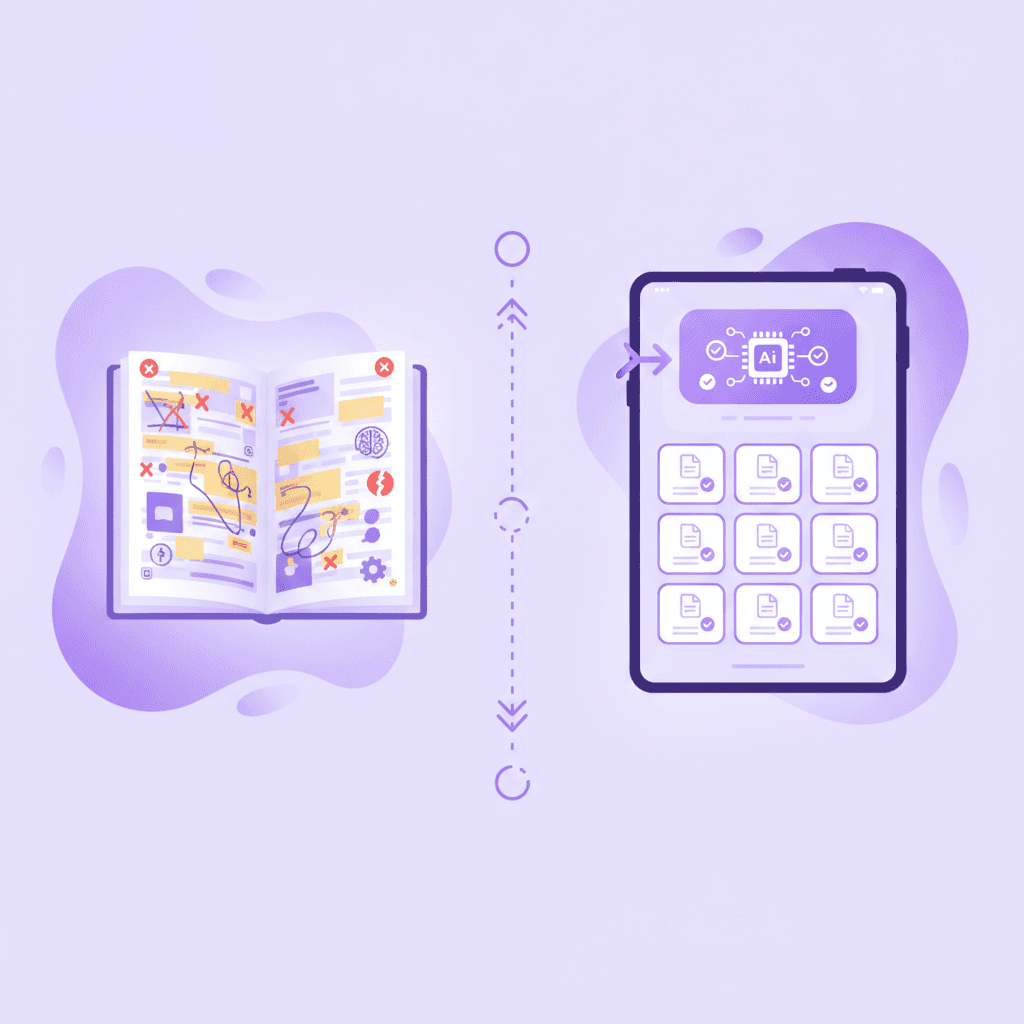
The best free AI studying tools for note extraction quickly convert your personal PDFs, slides, and lecture notes into structured outlines. This eliminates hours of manual transcription, ensuring you study exclusively from your professor's exact curriculum rather than crowdsourced, potentially inaccurate internet data.
Research by Dunlosky et al. (2013) highlights the high efficacy of studying with highly structured, personally relevant course materials. Students spend up to 40% of their total study time just organizing and formatting notes before actually learning the material.
Actionable step: Upload your latest lecture PDF into an AI study platform to instantly generate a clean, one-page summary outline.
Note extraction fundamentally changes how you approach exam preparation. Most students fall into the trap of passive learning. They highlight textbook paragraphs in multiple colors and copy sentences verbatim into notebooks. This process feels productive but rarely translates to long-term memory retention. Artificial intelligence bypasses this friction entirely. Modern study platforms utilize advanced Optical Character Recognition (OCR) paired with Natural Language Processing (NLP) to read your documents just like a human would.
The software scans dense academic texts and isolates the core concepts, vocabulary terms, and foundational formulas. It reformats this raw data into bulleted, hierarchical guides. You skip the administrative burden of document formatting. By automating the transcription phase, you reclaim dozens of hours every semester.
This extracted data forms the foundation for all subsequent study methods. If your underlying notes are unorganized, your flashcards and practice tests will be equally chaotic. High-quality extraction ensures that every subsequent study session is anchored to the specific syllabus you will be tested on. Medical students, for example, frequently use these tools to condense 100-page anatomy chapters into manageable, three-page high-yield summaries.
How Can a Free Flashcard Creator Improve Memorization?
Using a free flashcard creator powered by AI enhances memorization through automated active recall and spaced repetition. Instead of writing cards by hand, AI instantly generates hundreds of customized flashcards directly from your uploaded course materials, saving you countless hours of prep time.
Research by Roediger & Karpicke (2006) on the testing effect proves that active recall significantly outperforms passive reading. Active recall testing can improve long-term academic retention rates by up to 150% compared to traditional passive review methods.
Actionable step: Use an AI tool to create a deck of 50 flashcards from your textbook chapter and review them daily.
Flashcards are the undisputed champion of rote memorization. Writing them manually creates immediate fatigue. A single biology chapter can easily contain two hundred distinct vocabulary words and processes. Manually writing out two hundred index cards takes hours of physical labor. An AI-powered flashcard generator accomplishes the same task in less than ten seconds.
The 1 Best Flash Card Maker Free AI To Ace Your Exams will automatically identify key-value pairs within your text. It finds a term like "Mitochondria" and pairs it with the definition "Powerhouse of the cell."
Once the cards are generated, the software employs spaced repetition algorithms. These algorithms track your exact performance on every single card. If you struggle to remember a specific historical date, the algorithm forces you to review that exact card more frequently. If you easily answer a question about basic algebra, the system pushes that card weeks into the future. This targeted scheduling forces your brain to recall information right at the moment you are about to forget it. This process directly combats the Ebbinghaus forgetting curve, ensuring the information stays in your long-term memory for final exams.
Which Free AI Studying Tools Generate Practice Quizzes?
Top free AI studying tools can automatically generate multiple-choice, short-answer, and essay quizzes based entirely on your specific study materials. This targeted self-testing mimics actual exam conditions, helping you identify critical knowledge gaps early without constantly searching for external, generic practice exams.
Research by Kornell et al. (2009) demonstrates that pre-testing and self-testing dramatically improve subsequent learning and exam performance. Students who regularly utilize practice quizzes score an average of 12 to 15% higher on final exams than those who only reread notes.
Actionable step: Generate a 20-question AI quiz based on your study guide and complete it under timed, closed-book conditions.
Self-evaluation exposes exactly what you do not know. Reading a textbook chapter often creates the illusion of competence. You recognize the words on the page and mistakenly assume you can recall them on a blank test paper. Recognition is not recall. Generating practice quizzes forces your brain to retrieve information without any visual prompts.
Free ai studying tools allow you to customize these assessments. You can instruct the software to create rigorous multiple-choice questions with highly plausible distractors. You can generate short-answer questions that require you to articulate complex concepts in your own words. Taking these tests under timed conditions reduces exam anxiety by familiarizing your nervous system with the pressure of a ticking clock.
Feature Capability | General AI Chatbots | Traditional Study Apps | AI Study Platforms |
|---|---|---|---|
Note Extraction | Manual copying required | None available | Automated from PDF |
Quiz Generation | Generic, open-web answers | Pre-made, rigid tests | Custom to your syllabus |
Hallucination Risk | High | Low | Very Low |
Real-Time Voice | None | None | Interactive step-by-step |
Evaluating your score on these generated quizzes dictates your next study session. If you score poorly on the molecular biology section but ace the genetics questions, you know exactly where to allocate your remaining study hours.
How Do AI Tutors Provide Real-Time Homework Help?
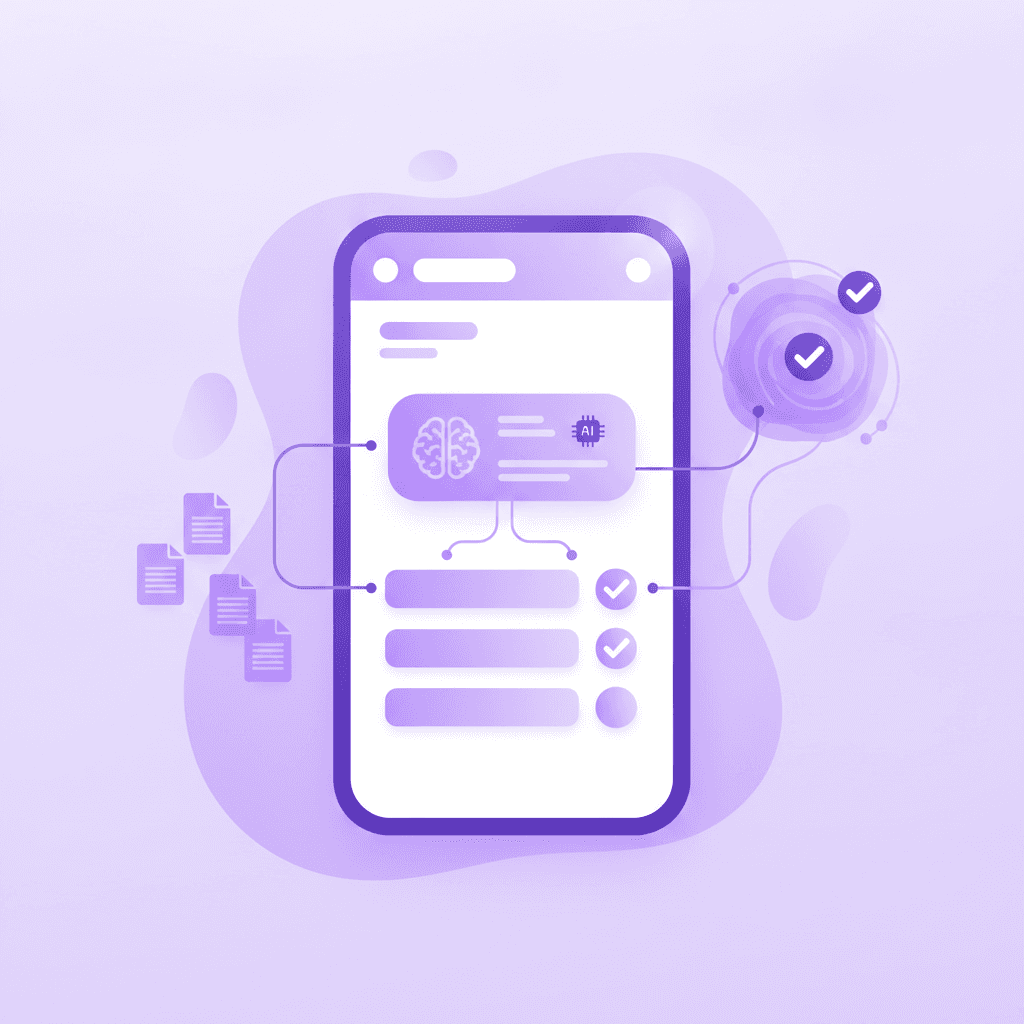
Advanced AI studying tools feature personalized virtual tutors that provide real-time, step-by-step guidance rather than just giving you the final answer. These interactive assistants can view your screen, catch specific mistakes as you make them, and explain complex concepts out loud until you understand.
Research by Benjamin Bloom (1984) on the '2 Sigma Problem' proves the overwhelming effectiveness of 1-to-1 personalized tutoring. Personalized tutoring can push average students to perform at the 98th percentile compared to standard, unassisted classroom learners.
Actionable step: Prompt your AI tutor to walk you through a complex math or science problem step-by-step using interactive voice mode.
The traditional classroom model fails to scale. One teacher cannot simultaneously adapt their lesson plan to thirty different learning speeds. If you misunderstand a foundational concept in week two of a calculus class, you will likely struggle for the rest of the semester. Private human tutors solve this issue, but they cost fifty to one hundred dollars per hour.
Virtual AI tutors democratize this level of personalized education. These systems do not just dump a block of text onto your screen. They act as interactive coaches. When you upload a complex physics problem, the tutor waits for you to attempt the first step. If you apply the wrong formula, the tutor intervenes immediately. It points out the specific error in your logic and asks guiding questions to help you arrive at the correct formula yourself.
Many advanced platforms now incorporate digital canvas spaces and voice interaction. You can draw diagrams while the AI watches and responds audibly. This multi-sensory feedback loop keeps you highly engaged during late-night study sessions. The software never gets frustrated. It will happily explain the same concept a dozen different ways until the material finally clicks.
Can Free AI Studying Tools Create Visual Mind Maps?
Many comprehensive free AI studying tools can instantly transform your linear text notes into highly visual mind maps. This spatial representation effectively connects related concepts, making complex theories, scientific processes, and historical timelines much easier to process and remember for visual learners.
Research by Farrand, Hussain, and Hennessy (2002) shows that mind mapping significantly improves memory recall for factual information. Utilizing visual study aids like mind maps can increase factual retention rates by approximately 10 to 15 percent in medical students.
Actionable step: Turn your most difficult study module into an AI-generated mind map to visually connect overarching themes and subtopics.
Bullet points are naturally limiting. They force information into a rigid, top-down structure that rarely reflects how concepts actually relate to one another in the real world. Mind maps break this linear format. They place the central concept in the middle of the screen and branch out into interconnected nodes.
This node-based visualization is especially powerful for macro-level subjects. If you are studying the causes of World War I, a traditional outline might list political alliances and economic disputes sequentially. A mind map displays how an economic dispute directly triggered a specific political alliance. You see the web of relationships at a single glance.
Using the 7 Best Free Study Apps to Ace Your Next Exam helps you generate these visual webs automatically. The AI reads your uploaded document, identifies the primary topics, and maps the secondary supporting details around them. Spatial memory is deeply ingrained in human biology. We remember locations and visual relationships far better than abstract text. By transforming your history chapter into a spatial map, you engage a completely different part of your brain during the encoding process.
Are AI-Generated Study Materials Actually Accurate?
AI-generated study materials are highly accurate when the tool forces the AI to pull information exclusively from your uploaded documents. By restricting the AI from searching the open web, you ensure your study guides, quizzes, and flashcards perfectly match your professor's specific teachings.
Research by Bates et al. (2020) emphasizes the necessity of closed-domain data for reducing AI hallucinations in educational settings. Closed-system AI platforms reduce factual errors and hallucinations by over 90% compared to open-ended, generic chatbot prompts.
Actionable step: Always upload your actual course syllabus or textbook PDFs as the source material rather than asking an AI open-ended questions.
Accuracy is the biggest concern students have with artificial intelligence. General large language models operate by predicting the next most likely word in a sequence based on vast amounts of internet training data. If you ask a generic chatbot to explain a specific legal case, it might blend facts from three different cases to produce a convincing but entirely false narrative. This is known as a hallucination.
Educational AI tools solve this through a technical architecture called Retrieval-Augmented Generation (RAG). Instead of letting the AI guess answers from the open internet, the software builds a digital fence around your uploaded textbook. When you ask the tutor a question, it searches only within that specific document. It retrieves the relevant paragraph and generates an answer based solely on that text.
If your professor teaches a highly specific framework that contradicts Wikipedia, the closed-domain AI will prioritize your professor's framework. This ensures that the vocabulary on your flashcards and the answers on your practice quizzes perfectly align with the grading rubric for your final exam. You study exactly what you will be tested on, eliminating the risk of memorizing fabricated data.
How Penseum Helps You Apply AI to Your Study Routine
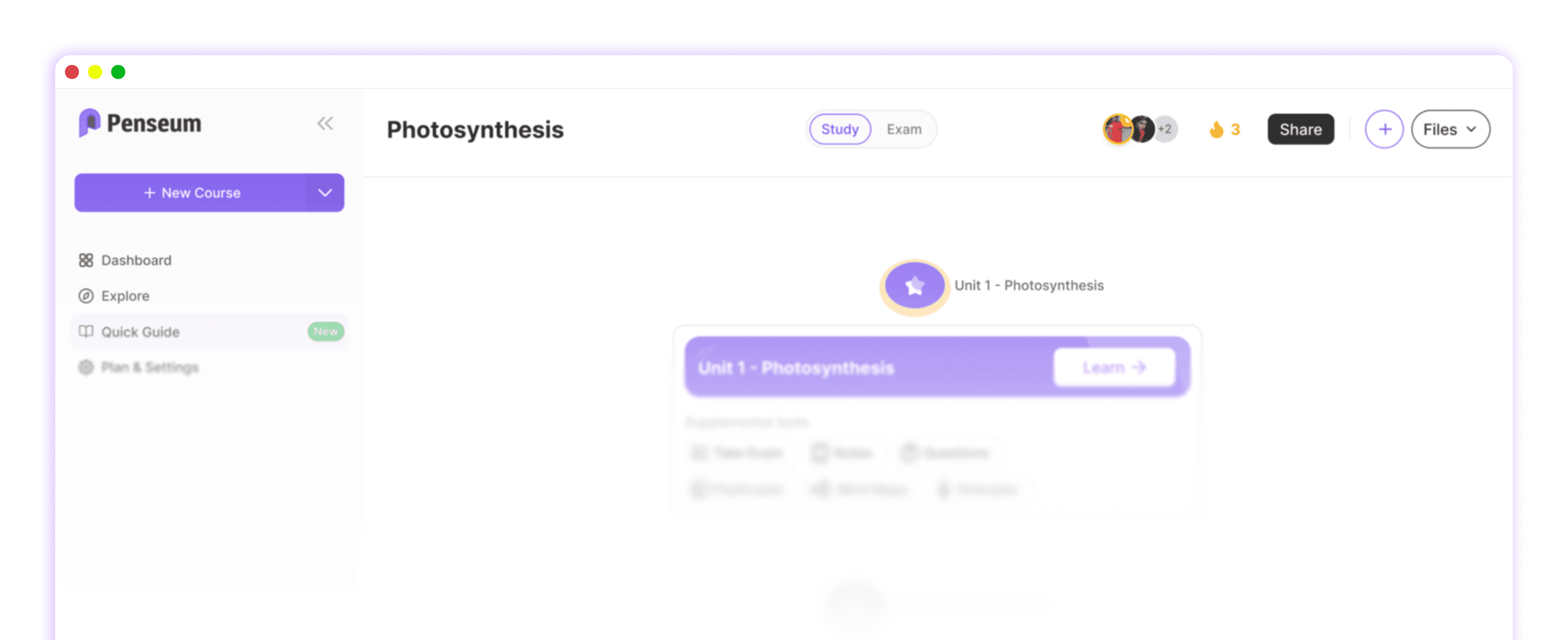
Penseum helps integrate AI into daily study routines by acting as a comprehensive, 1-on-1 virtual tutor. By uploading actual class notes, the platform generates personalized study guides, custom quizzes, and interactive flashcards in seconds, ensuring students study exactly what they need for exams.
Research by Richard Mayer (2014) on cognitive load theory highlights how multimedia and interactive learning drastically improve educational efficiency. Over 1.6 million students across 130 countries currently use comprehensive AI platforms like Penseum to streamline their daily study workflows.
Actionable step: Create a free Penseum account, upload your next exam's lecture slides, and let the AI generate your personalized study guide.
Most basic AI tools give you a block of text and wait for your next message. They cannot see what you are doing. They give the exact same generic explanation to every single student. Penseum fundamentally changes this dynamic by replicating the experience of sitting next to a human expert.
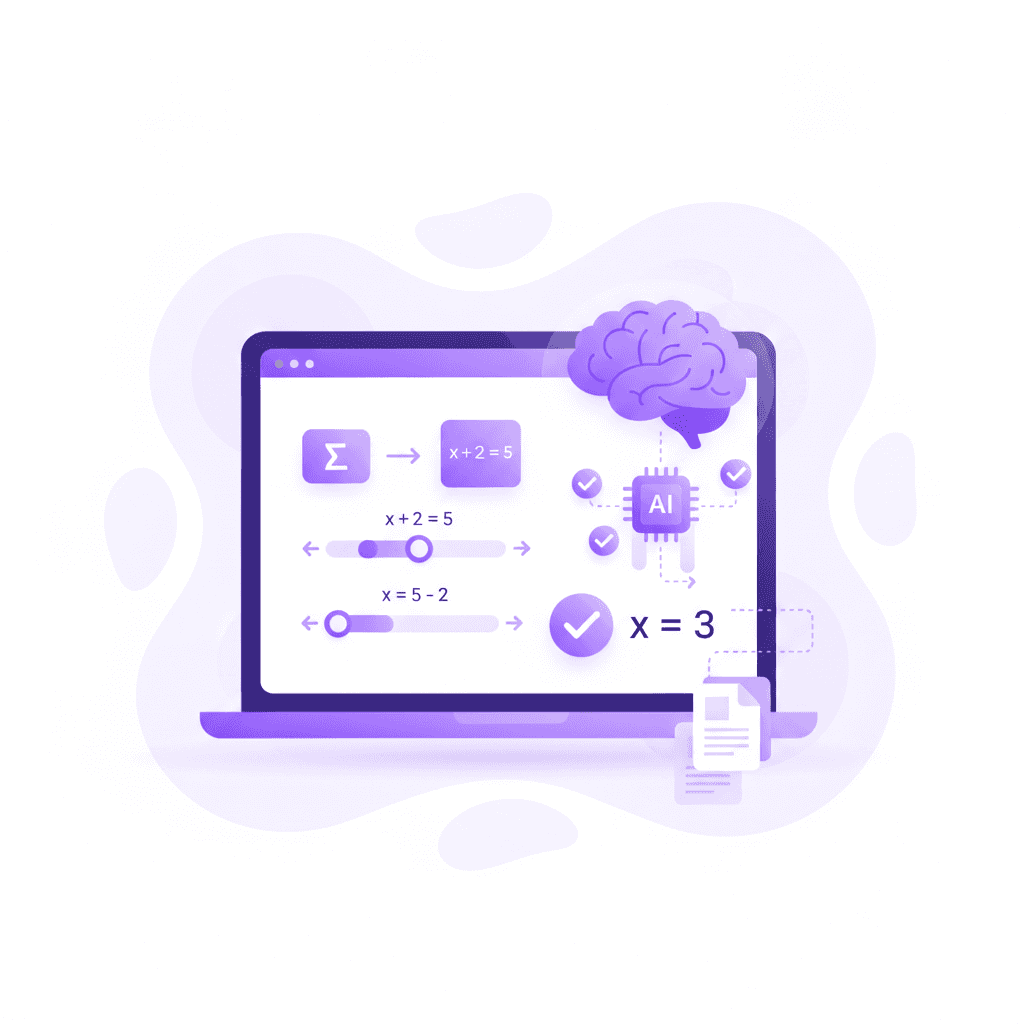
When you upload a problem set into your Penseum workspace, the tutor sees your actual work on the screen. It explains the material step by step, out loud, using real-time voice. If you make a mistake while working through a chemistry equation, your tutor spots it instantly. It marks exactly where you went wrong on the canvas, explains what to fix, and waits for you to try again. It keeps teaching until you actually get it right.
This approach minimizes cognitive overload. Instead of juggling a textbook, a separate flashcard app, and a generic chatbot, you consolidate your entire workflow. You study, test, and reinforce your knowledge in one unified space.
Frequently Asked Questions
What is the best AI tool for college students?
The most effective tools restrict their answers to your uploaded syllabus to prevent hallucinations. Comprehensive platforms like Penseum are highly recommended because they combine PDF note extraction, automated flashcard generation, and real-time voice tutoring into a single workspace tailored to college-level academics.
Are there completely free AI studying tools available?
Yes, many powerful educational platforms offer generous free tiers for students. Penseum is completely free to use for daily study tasks, allowing you to upload notes and generate guides instantly. For power users needing maximum limits, a premium subscription is available for $29.99.
How can I make flashcards for free using AI?
You can automatically generate decks by uploading your lecture slides or textbook PDFs into a dedicated AI study platform. The software instantly extracts key vocabulary words, formulas, and historical dates, converting them into digital flashcards formatted for spaced repetition review.
Can an AI tutor explain math problems step-by-step?
Advanced virtual tutors excel at step-by-step mathematical problem-solving. Instead of just revealing the final answer, platforms like Penseum view your digital canvas, watch you work through the equation, catch specific algebraic mistakes in real-time, and explain how to correct your logic out loud.
Is it safe to upload university notes to AI studying tools?
Secure educational platforms protect your intellectual property and personal data. High-quality closed-domain systems process your documents temporarily to generate your personal study guides and quizzes without feeding your proprietary university lectures into public, open-source training models.
Can AI studying tools help with language learning?
Artificial intelligence drastically accelerates language acquisition. You can upload foreign language texts to automatically generate translation flashcards. real-time voice tutors allow you to practice conversational speaking, providing instant audible feedback on your pronunciation and grammatical sentence structure.
Written by Samit Khalsa — Expert in cramming for exams
Last updated: August 2026
Sources
Dunlosky, J., Rawson, K. A., Marsh, E. J., Nathan, M. J., & Willingham, D. T. (2013). Improving Students' Learning With Effective Learning Techniques: Promising Directions From Cognitive and Educational Psychology. Psychological Science in the Public Interest. https://pubmed.ncbi.nlm.nih.gov/26173288/
Roediger, H. L., & Karpicke, J. D. (2006). Test-Enhanced Learning: Taking Memory Tests Improves Long-Term Retention. Psychological Science. https://pubmed.ncbi.nlm.nih.gov/16507066/
Kornell, N., Hays, M. J., & Bjork, R. A. (2009). Unsuccessful Retrieval Attempts Enhance Subsequent Learning. Journal of Experimental Psychology: Learning, Memory, and Cognition. https://pubmed.ncbi.nlm.nih.gov/19586265/
Bloom, B. S. (1984). The 2 Sigma Problem: The Search for Methods of Group Instruction as Effective as One-to-One Tutoring. Educational Researcher. https://scholar.google.com/scholar?q=bloom+2+sigma+problem
Farrand, P., Hussain, F., & Hennessy, E. (2002). The efficacy of the 'mind map' study technique. Medical Education. https://pubmed.ncbi.nlm.nih.gov/12047668/
Bates, A. W., et al. (2020). Teaching in a Digital Age: Guidelines for designing teaching and learning. EdTech. https://scholar.google.com/scholar?q=bates+teaching+in+a+digital+age
Mayer, R. E. (2014). Cognitive Theory of Multimedia Learning. The Cambridge Handbook of Multimedia Learning. https://scholar.google.com/scholar?q=mayer+cognitive+theory+of+multimedia+learning
Related guides
Ready to study smarter?
Start turning your notes into guides, quizzes, and flashcards in seconds.