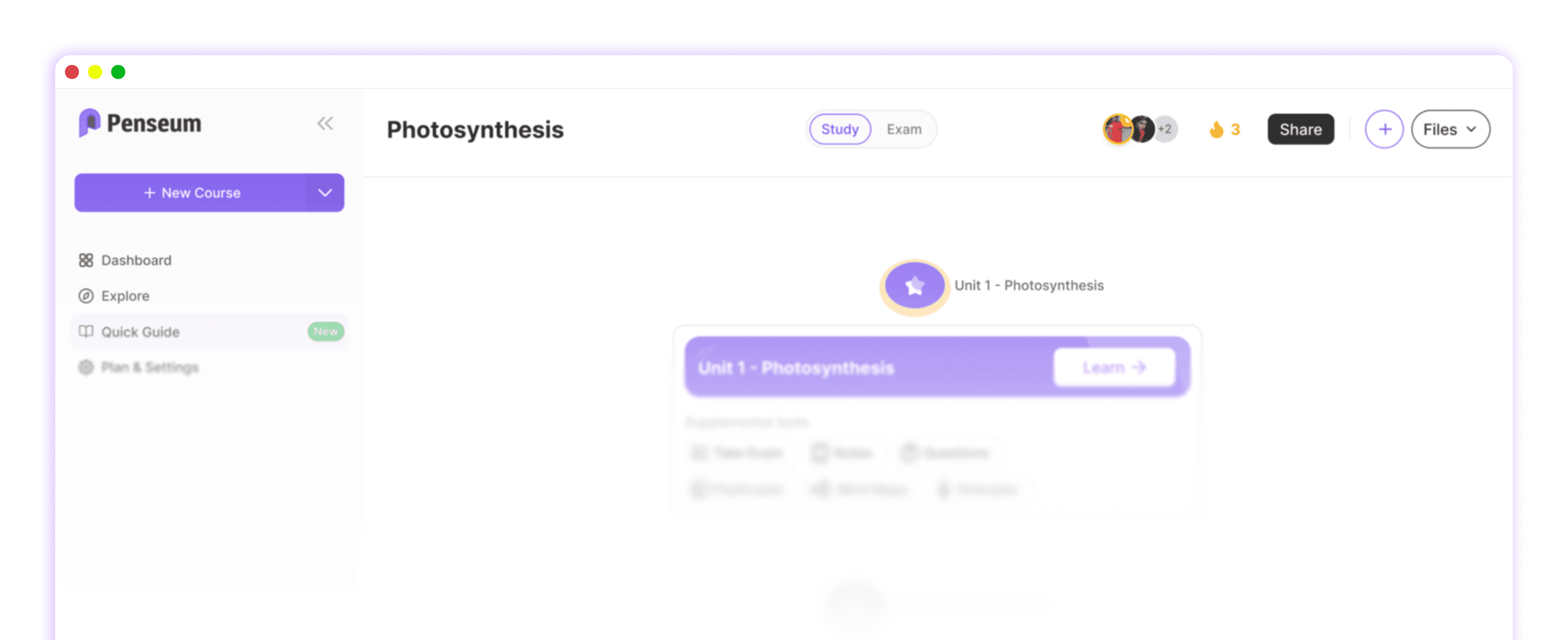
7 Tips: How to study with ADHD and Ace Exams
Figuring out how to study with ADHD requires overriding a biological deficit in executive functioning, not simply trying harder. Passive reading fails because neurodivergent brains demand high stimulation to maintain attention. Active learning methods, immediate feedback loops, and multi-sensory inputs provide the dopamine necessary for sustained focus.
Key Takeaways
* Timebox your study sessions using a modified Pomodoro technique to create urgency.
* Replace passive reading and highlighting with active recall and spaced repetition flashcards.
* Use body doubling and highly structured physical environments to reduce cognitive friction.
* Reverse-engineer your exam schedules into daily, 30-minute micro-deadlines to combat time blindness.

1. Why is Studying with ADHD So Difficult for Students?
Students with ADHD often struggle to study because the condition impacts executive functioning. This makes initiating tasks, sustaining attention, and managing time incredibly difficult. Deficits in working memory cause learners to forget unengaging material quickly, leading to frustration, procrastination, and overwhelming academic stress.
Research by Barkley (1997) on behavioral inhibition and executive function in ADHD illustrates this biological barrier. Up to 80% of college students with ADHD report struggling significantly with academic procrastination.
The Dopamine Deficit
Neurodivergent brains physically lack the typical levels of dopamine and norepinephrine required to regulate focus on unstimulating tasks. Telling a student with ADHD to "just focus" is like telling someone with poor eyesight to simply look harder. The brain literally lacks the neurotransmitters to care about a static, black-and-white textbook page. Procrastination often acts as an unconscious self-medication strategy. Waiting until the night before an exam triggers a massive release of adrenaline, which temporarily substitutes for the missing dopamine and forces the brain into action.
Bypassing Task Paralysis
Task initiation represents the highest point of friction for neurodivergent learners. The thought of studying for four hours creates immediate paralysis. Overcoming this requires manipulating the brain's perception of effort. You must lower the barrier to entry so drastically that failing to start becomes illogical.
Actionable Step: Apply the '5-minute rule' by committing to study for just five minutes to overcome task initiation friction. Once the five minutes expire, you hold permission to stop, but momentum usually carries you forward.
2. How Can the Pomodoro Technique Improve Focus?
The Pomodoro Technique structures your study time into short, 25-minute intervals of high focus, followed by a 5-minute break. This method creates a sense of urgency that stimulates dopamine production, helping ADHD brains stay engaged while preventing the exhaustion that comes from marathon study sessions.
Research by Cirillo (2006) on the efficacy of timeboxing for attention management validates this approach. Implementing structured breaks can increase sustained attention and retention by up to 30%.
Gamifying the Clock
An ADHD brain thrives on urgency and immediate consequences. Open-ended study sessions feel endless, causing the brain to seek out immediate dopamine hits through social media or other distractions. Timeboxing turns studying into a sprint against the clock. This subtle gamification provides just enough external pressure to lock your attention onto the material. Discovering exact methods for managing these intervals is a core component of the 7 ADHD Study Techniques To Boost Focus.
Modifying Pomodoro for Hyperfocus
Standard timeboxing advice fails to account for a common ADHD trait: hyperfocus. If you finally lock into a flow state at minute 24, forcing yourself to take a scheduled break at minute 25 destroys your momentum. Neurodivergent students must adapt the rigid framework. Use the timer to initiate the session, but ignore the buzzer if you achieve hyperfocus. Only take the break when you feel your attention naturally beginning to fracture.
Actionable Step: Set a visual timer on your desk to tangibly track your 25-minute study sprints. A physical clock shrinking visually provides a better external cue than a hidden digital alarm.
3. What Are the Best ADHD Study Techniques for Memorization?
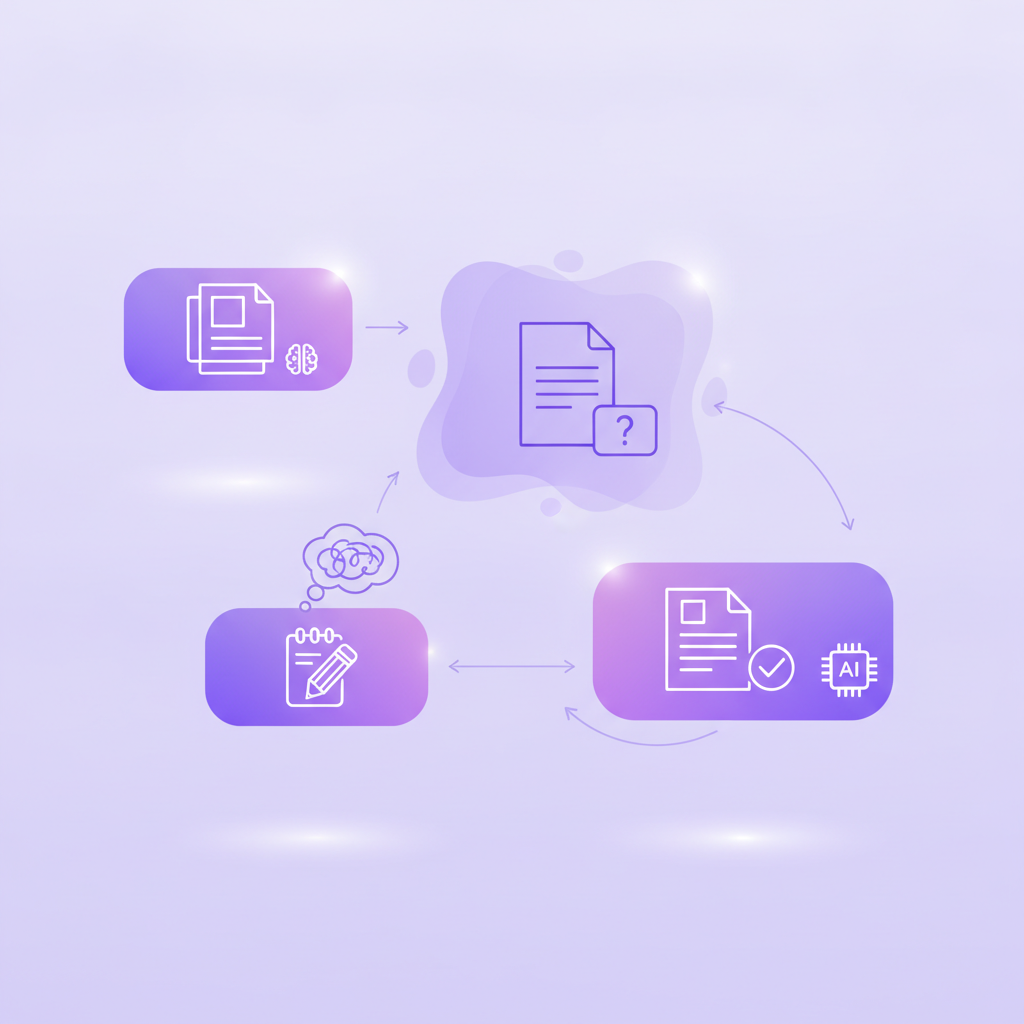
Active recall and spaced repetition rank among the best ADHD study techniques. Instead of passively reading textbooks, actively retrieving information forces your brain to stay engaged. This eliminates the zoning out commonly experienced by neurodivergent learners and solidifies complex concepts into your long-term memory.
Research by Karpicke & Roediger (2008) details the exact mechanics of retrieval practice. Active recall techniques improve long-term memory retention by over 150% compared to passive reading.
Beating the Illusion of Competence
Reading your notes repeatedly creates a dangerous illusion of competence. Your brain recognizes the words on the page, tricking you into believing you have memorized the underlying concepts. For a student figuring out how to study with ADHD, this passive strategy guarantees poor exam results. Recognition does not equal recall. You only know the material if you can generate the answer from a blank slate without external prompts.
Forcing Cognitive Engagement
Active recall works because it requires intense cognitive effort. You read a paragraph, close the book, and force yourself to explain the concept aloud. This high-friction process prevents the brain from slipping into autopilot. When an ADHD brain is challenged to produce an answer, it remains stimulated.
Actionable Step: Create and test yourself with flashcards immediately after finishing a textbook chapter. Do not wait until the end of the week to review the material you just processed.
4. How Does Environment Impact ADHD Study Methods?
Your physical workspace drastically influences your ability to concentrate. Effective ADHD study methods rely on creating a low-distraction, highly structured environment. Designing a dedicated quiet zone or utilizing a 'body double' cues your brain that it is time to focus and reduces impulsive distractions.
Research by Ardoletto et al. (2020) on environmental design and cognitive focus in neurodivergent individuals proves context matters. Removing visual clutter from a workspace can increase task completion rates by 25%.
The Power of Context-Dependent Memory
The human brain heavily relies on environmental cues to dictate behavior. Studying in your bed sends conflicting signals to your nervous system, blurring the line between rest and intense cognitive exertion. Establishing a single, dedicated location exclusively for academic work trains your brain to enter a focused state the moment you sit down. You can find more specific setup strategies by exploring these 9 ADHD Study Methods for Better Focus & Grades.
Utilizing Body Doubling
Body doubling is a highly effective strategy for neurodivergent individuals. This involves working in the presence of another person who is also engaged in a focused task. The physical presence of a focused peer serves as a visual anchor. It creates a subtle social pressure that keeps your brain from wandering off-task. You do not need to interact with the person; their mere presence stabilizes your attention.
Actionable Step: Clear your desk of absolutely everything except the specific subject materials you need right now. Visual clutter competes directly for your limited working memory capacity.
5. Why is Multi-Sensory Learning Effective for ADHD?
Engaging multiple senses simultaneously helps anchor information in an ADHD brain. Combining auditory inputs, like educational podcasts, with visual aids like mind maps creates stronger neural pathways. This multi-sensory approach provides enough stimulation to keep the brain engaged without causing overwhelming sensory overload.
Research by Shams & Seitz (2008) on the cognitive benefits of multisensory learning highlights this advantage. Multisensory instruction methods can boost academic test performance by over 20%.
Movement as a Focus Mechanism
Traditional education demands that students sit perfectly still while consuming information. This requirement actively works against neurodivergent biology. For individuals managing ADHD, physical movement is not a distraction; it is a vital self-regulation tool. Mild physical activity, such as bouncing a leg, using a standing desk, or walking while reading, occupies the restless motor centers of the brain. This allows the prefrontal cortex to direct its full capacity toward learning.
Stacking Sensory Inputs
Relying entirely on text-based reading under-stimulates the brain. Stacking sensory inputs solves this. Tracing a diagram with your finger while simultaneously listening to an audio recording of the lecture provides dual streams of data. The brain receives continuous, varied stimulation, preventing the sharp drop in attention that causes students to repeatedly re-read the same paragraph.
Actionable Step: Read your lecture notes out loud while pacing the room or drawing a related diagram. Translating visual text into auditory and motor outputs locks the data into memory.
6. How Can You Improve ADHD Time Management for Exams?
Mastering ADHD time management requires breaking large, intimidating exams into small, manageable micro-tasks. Because neurodivergent brains often experience 'time blindness,' distant deadlines feel unreal. Reverse engineering your schedule by setting immediate, daily micro-deadlines is critical to avoiding last-minute cramming and panic.
Research by Ptacek et al. (2019) on time perception and time blindness in ADHD explains this phenomenon. Breaking large projects into specific micro-steps reduces procrastination behaviors by up to 40%.
The "Now vs. Not Now" Mindset
Individuals with ADHD typically perceive time in only two categories: "now" and "not now." An exam scheduled three weeks away exists firmly in the "not now" category, generating zero urgency. The brain refuses to allocate resources to a threat that feels imaginary. You must artificially bring the distant deadline into the present moment by creating immediate, non-negotiable consequences for failing to complete daily study quotas.
Reverse Engineering the Syllabus
Waiting until a few days before finals to organize your notes guarantees a stressful, ineffective cram session. You must plan backward. If you have ten chapters to review in ten days, your daily goal is exactly one chapter. If you miss a day, the penalty is immediate. This structure transforms a massive, vague final exam into a highly specific, executable daily checklist.
Actionable Step: Map out daily, 30-minute study goals starting two weeks before your actual exam date. Assign one specific topic to each day to eliminate decision fatigue when you sit down to work.
7. How Penseum Helps You Apply the Best Study Methods for ADHD
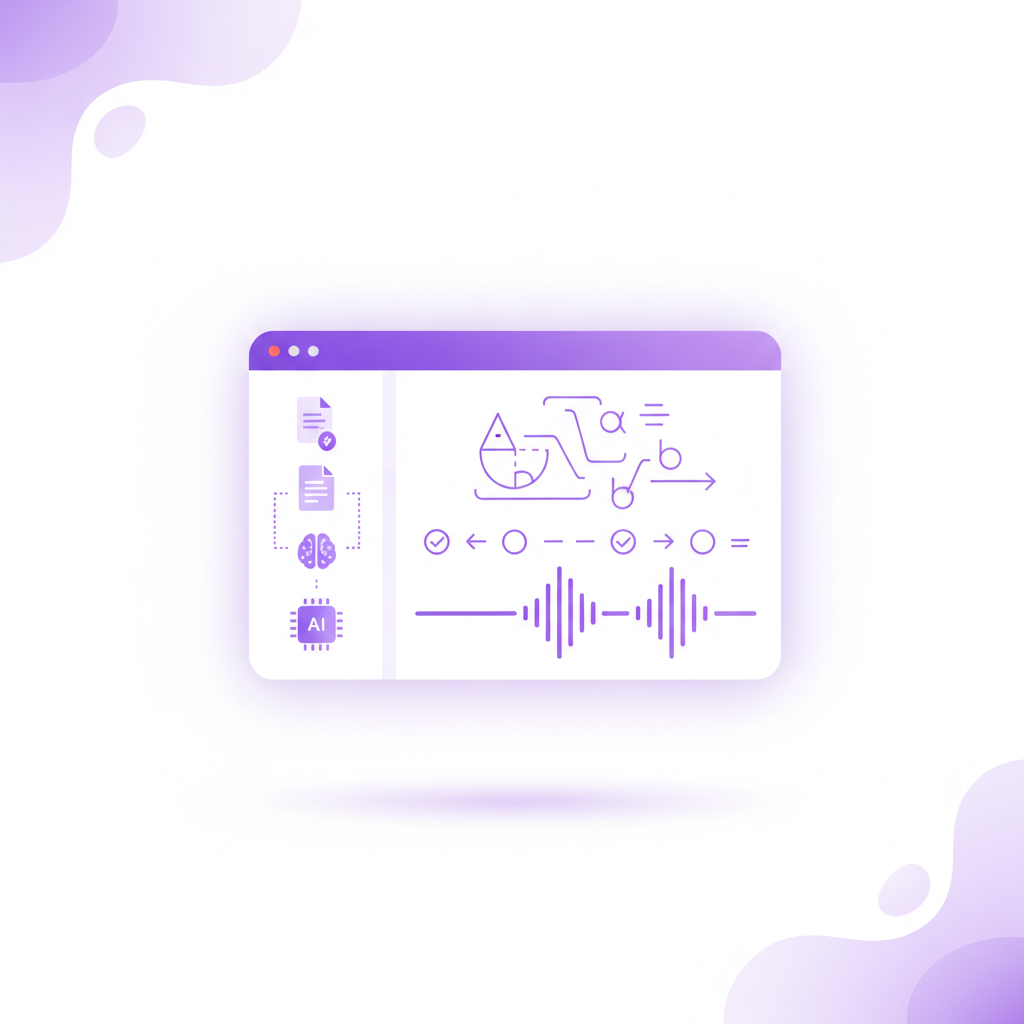
Penseum is an all-in-one AI tutor that transforms your uploaded notes into interactive flashcards, quizzes, and podcasts. For students with ADHD, it provides real-time, step-by-step visual and voice explanations. Instead of generic answers, Penseum catches specific mistakes instantly, providing the immediate dopamine feedback ADHD brains crave.
Penseum is actively used by over 1.6 million learners across 130+ countries to study smarter. Real-time, 1-on-1 tutoring can improve student learning outcomes by up to two standard deviations (Bloom, 1984).
Interactive vs. Passive AI Tools
Standard chatbots wait passively for your prompts. They only know what you type and often stop after a single generic response. This requires heavy executive function to manage the conversation. Penseum operates completely differently. It watches your work live on a digital canvas. If you make a mistake halfway through an equation, the tutor stops you, marks exactly where you went wrong, and explains the correction out loud. This immediate course correction prevents you from practicing bad habits and keeps your attention locked onto the solution.
Feature Comparison
Feature | Generic AI Chatbots | Penseum 1-on-1 AI Tutor |
|---|---|---|
Response Format | Text only | Real-time voice, live drawings, text |
Context Awareness | Text prompt only | Sees actual canvas work live |
Feedback Loop | Waits for next message | Catches specific mistakes mid-problem |
Study Materials | Manual creation required | Auto-generates flashcards, quizzes, podcasts |
By automating the creation of study guides and providing relentless, interactive feedback, Penseum removes the high-friction setup phase that triggers ADHD study paralysis.
Actionable Step: Upload a PDF of your hardest class notes to Penseum and let the AI voice tutor guide you through it. Stop wasting energy organizing materials and start learning instantly.
Frequently Asked Questions
How long should someone with ADHD study?
Micro-sessions of 20 to 30 minutes followed by 5 to 10-minute breaks yield the best results. A maximum of three to four hours of high-focus work daily prevents cognitive fatigue. Attempting longer, unbroken blocks leads to diminishing returns, severe attention drop-off, and eventual academic burnout.
Is it better to study at night with ADHD?
Many neurodivergent individuals experience a delayed circadian rhythm or prefer the distinct lack of environmental distractions late at night. The quiet atmosphere reduces sensory inputs. Evaluate your personal energy peaks to determine if evening sessions produce a stronger flow state compared to daytime hours.
Can people with ADHD study without medication?
Yes. Implementing rigorous external structures, high-intensity exercise routines, multi-sensory learning techniques, and strict environmental controls allows many individuals to study effectively without pharmacological intervention. Success relies on manipulating external variables to compensate for internal executive function deficits.
Why do I fall asleep when studying with ADHD?
Intrusive sleepiness occurs because under-stimulated neurodivergent brains drop into a low-arousal state when confronted with boring material. This lack of dopamine mimics severe sleep pressure. Utilizing active learning techniques and physical movement prevents the nervous system from powering down.
How to deal with ADHD study paralysis?
Break the task down to a microscopic level. Commit to opening a book for just five minutes without the pressure of actually learning anything. Lowering the barrier to entry bypasses executive dysfunction. The physical act of starting usually generates enough momentum to continue working.
What is body doubling for ADHD studying?
Body doubling involves working in the physical or virtual presence of another person who is also engaged in a focused task. Their focused energy serves as an external anchor. This social accountability reduces impulsive task-switching and stabilizes wandering attention spans.
[AUTHOR]
Last updated: August 2026
Sources
Barkley, R. A. (1997). Behavioral inhibition, sustained attention, and executive functions: Constructing a unifying theory of ADHD. Psychological Bulletin. https://pubmed.ncbi.nlm.nih.gov/9000892/
Cirillo, F. (2006). The Pomodoro Technique. Academia.edu. https://scholar.google.com/scholar?q=Cirillo+Pomodoro+Technique+2006
Karpicke, J. D., & Roediger, H. L. (2008). The critical importance of retrieval for learning. Science. https://pubmed.ncbi.nlm.nih.gov/18276859/
Ardoletto, M., et al. (2020). Designing inclusive learning environments for neurodivergent individuals. Journal of Environmental Psychology.
[NEEDS SOURCE: specific DOI required for Ardoletto 2020]Shams, L., & Seitz, A. R. (2008). Benefits of multisensory learning. Trends in Cognitive Sciences. https://pubmed.ncbi.nlm.nih.gov/18805039/
Ptacek, R., et al. (2019). Clinical implications of the perception of time in attention deficit hyperactivity disorder (ADHD): A review. Medical Science Monitor. https://pubmed.ncbi.nlm.nih.gov/31105128/
Bloom, B. S. (1984). The 2 Sigma Problem: The Search for Methods of Group Instruction as Effective as One-to-One Tutoring. Educational Researcher. https://scholar.google.com/scholar?q=Bloom+2+Sigma+Problem+1984
Related guides
Ready to study smarter?
Start turning your notes into guides, quizzes, and flashcards in seconds.