9 ADHD Study Tips for College Students to Ace Exams
Key Takeaways
* ADHD severely impairs executive functioning, rendering traditional, passive reading methods highly ineffective for neurodivergent university students.
* Breaking massive assignments into five-minute micro-tasks effectively bypasses task paralysis and frequently triggers a state of productive hyperfocus.
* Replacing passive text review with interactive, multi-sensory tools like verbal repetition and spatial mind maps vastly improves long-term memory retention.
* Adopting customized, AI-driven platforms transforms static curriculum documents into stimulating, real-time active recall exercises.
1. Why is Studying So Much Harder with ADHD?
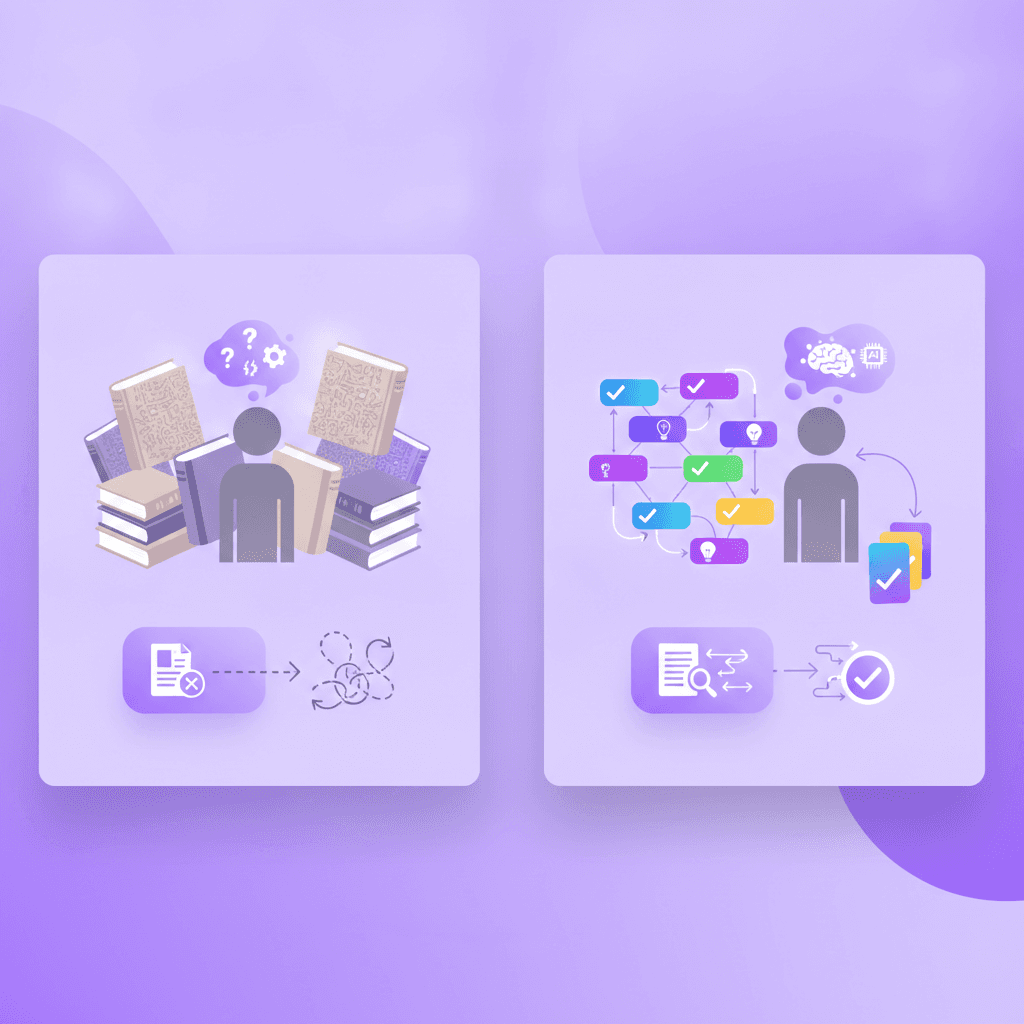
ADHD directly impacts the brain's executive functioning, making it incredibly difficult to initiate tasks, sustain attention, and organize study schedules. Students with ADHD frequently experience working memory deficits and dopamine dysregulation, which leads to chronic procrastination and a massive lack of motivation during traditional, monotonous reading sessions.
The neurodivergent brain requires significantly higher levels of stimulation to engage properly with standard academic material. Sitting in complete silence while staring at a dense textbook simply fails to provide the necessary dopamine spikes required for concentration. This biological reality explains exactly why intelligent college students often abandon their desks to clean their entire dorm room instead of writing a mandatory essay. High school provided strict external structure, but university environments leave students entirely to their own devices. This sudden lack of daily supervision destroys the fragile routines of an ADHD brain.
Research presented in Behavioral inhibition, sustained attention, and executive functions (Barkley, 1997) clearly demonstrates this specific neurodevelopmental gap. Up to 80% of college students with ADHD report significant difficulties with procrastination and academic time management. They rely heavily on the panic of a looming deadline to manufacture enough adrenaline to complete their work.
Actionable step: Identify your peak biological dopamine hours (often mid-morning or late evening) and schedule your most cognitively demanding study tasks exclusively during those specific windows. Never force yourself to tackle complex organic chemistry problems during your mid-afternoon energy slump. For additional strategies on managing these daily energy fluctuations, review these 7 ADHD Study Techniques To Boost Focus.
2. How Can I Overcome ADHD Paralysis to Start Studying?
To overcome ADHD paralysis and overwhelm, you must lower the barrier to entry by breaking monumental assignments into micro-tasks. Committing to a remarkably small, five-minute task tricks the neurodivergent brain into initiating action, which frequently leads to a state of productive hyperfocus once the initial resistance is entirely bypassed.
Task paralysis occurs primarily when the brain perceives an upcoming assignment as a massive, unstructured threat. If you look at a history syllabus that demands a 20-page research paper, your executive function immediately shuts down to protect you from the perceived stress. Shrinking the demand to a microscopic, achievable goal removes this natural anxiety response entirely. The chemical process of task initiation anxiety blocks your ability to start, but action actually precedes motivation.
Solving the Procrastination Puzzle (Pychyl, 2013) highlights the sheer effectiveness of this specific psychological approach. Breaking tasks down reduces perceived task difficulty by over 40%, significantly increasing the likelihood of task initiation for neurodivergent learners. You simply need to trick your brain into crossing the starting line.
Actionable step: Implement the strict '5-Minute Rule' by setting a physical timer and committing to writing just one single paragraph or reviewing exactly three flashcards to break the initiation friction. Once the alarm rings, you have full permission to stop. Most students find that the momentum automatically carries them forward into a full study session.
3. What Are the Most Effective ADHD Study Techniques for Memorization?
The best ADHD study techniques for memorization rely heavily on active recall and multi-sensory engagement rather than passive rereading. Because the ADHD brain constantly craves intense stimulation, utilizing interactive tools like digital flashcards, out-loud self-explanations, and spatial mind maps drastically increases retention while constantly triggering the necessary dopamine reward system.
Reading the exact same textbook chapter repeatedly gives a very dangerous false sense of fluency. The academic information sits shallowly in your short-term memory without ever transferring to permanent, long-term storage. Active recall physically forces your brain to search for and retrieve the hidden information. This constant retrieval process strengthens the neural pathways necessary to pass an exam. Highlighting text is a common trap for neurodivergent students because it feels highly productive but requires zero actual cognitive effort.
The critical importance of retrieval for learning (Karpicke & Roediger, 2008) proves the underlying mechanics of this specific study method. Students who actively utilize retrieval practice retain approximately 80% more information long-term compared to peers who rely solely on passive reading. You have to test yourself long before the actual professor does.
Actionable step: Ditch passive highlighting immediately and instead test yourself aloud using interactive, digital flashcards after finishing each individual textbook chapter. Speaking the answers engages the motor cortex, adding a powerful secondary sensory layer to the new memory. For a complete guide on applying these exact retrieval methods, explore these 9 ADHD Study Methods for Better Focus & Grades.
4. How Do I Maintain Focus and Improve ADHD Time Management?
Maintaining focus with ADHD requires structured breaks and varied mental stimulation to completely avoid burnout. Using a modified Pomodoro technique—working in short, high-intensity 20-minute sprints followed by active physical breaks—prevents executive fatigue. Continuously shifting between entirely different subjects also keeps dopamine levels stable and effectively staves off crippling boredom.
Long, unbroken marathon study sessions act as absolute kryptonite for neurodivergent university students. Your attention span functions precisely like a sprinter, not a long-distance marathon runner. By intentionally disrupting your study block before you completely lose interest, you preserve high mental stamina for the entire evening. Time blindness affects nearly everyone with ADHD, making hours slip by unnoticed. Setting loud, external timers anchors you back to physical reality.
Brief and rare mental 'breaks' keep you focused (Ariga & Lleras, 2011) details the exact science behind attention renewal and cognitive fatigue. Integrating structured, frequent breaks can improve sustained attention spans in neurodivergent adults by up to 30%. You get more work done by stepping away from the desk more often.
Actionable step: Alternate between visually reading a textbook, listening to a lecture podcast, and completing active practice quizzes every 30 minutes to strictly maintain novelty and engagement. Switch drastically from European history to advanced calculus to keep your brain constantly guessing and highly stimulated.
5. How Can Visual Learners with ADHD Process Complex Information?
Visual learners with ADHD process dense academic information best when it is heavily color-coded, spatially mapped, and diagrammed. Transforming massive text blocks into visual flowcharts or interactive whiteboards reduces cognitive load, catering perfectly to the right-hemisphere dominance that is frequently observed in neurodivergent and dyslexic individuals.
Solid walls of black-and-white text rapidly overwhelm the fragile working memory of an ADHD student. Visual formatting acts as a built-in filter, highlighting exactly what matters instantly without the need to read. Your eyes naturally jump toward bright colors, unique shapes, and clear boundaries. This entirely bypasses the exhausting need to read every single word sequentially on a cluttered page.
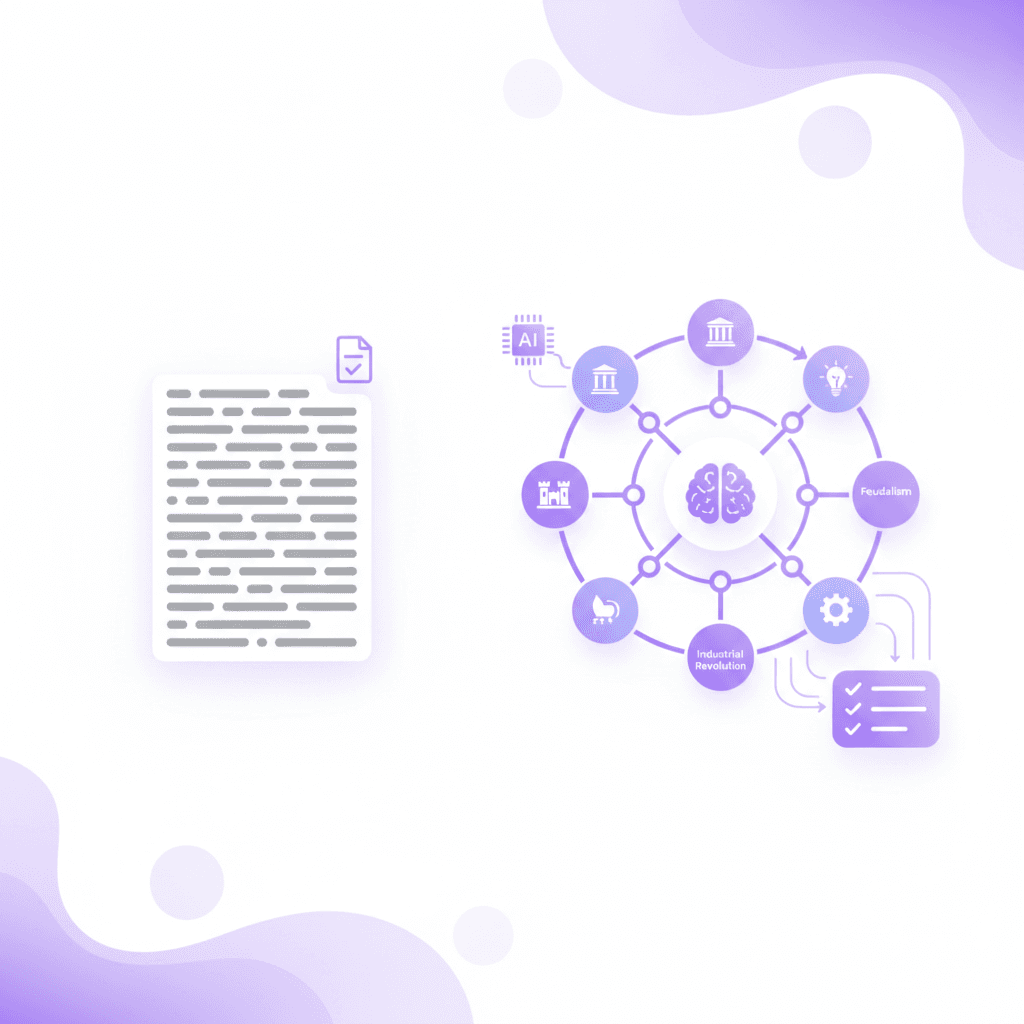
Multimedia Learning and Cognitive Load Theory (Mayer, 2009) deeply supports this distinct visual necessity in education. Adding strategic visual aids to text-based study materials improves conceptual learning outcomes by up to 89% for visual processors. Seeing a diagram of a cell cycle is infinitely more effective than reading four pages describing it.
Actionable step: Use a strict color-coding system with highlighters (e.g., pink for core vocabulary, yellow for historical dates, blue for mathematical formulas) to create recognizable, immediate visual anchors. Stick strictly to this exact color scheme across all your university classes so your brain immediately knows exactly how to categorize the fresh data.
6. Why Does Body Doubling Work for ADHD Students?
Body doubling involves studying alongside another silent person to create quiet, external accountability. The physical presence of a focused peer essentially acts as an anchor for the wandering ADHD brain, providing a strong visual cue to remain on task without the intense pressure of direct supervision or forced interaction.
Studying entirely alone in a private dorm room openly invites endless digital distractions and procrastination. When you sit next to someone who is deeply focused on their own laptop, a recognized psychological phenomenon called social facilitation automatically activates. Your brain subconsciously mirrors their highly productive behavior. This makes it significantly easier to resist the sudden, overwhelming urge to check your phone or browse social media.
Social facilitation (Zajonc, 1965) heavily outlines how the mere presence of others directly affects personal performance. Utilizing body doubling environments increases overall task persistence by up to 45% for individuals actively struggling with executive dysfunction. It outsources the heavy lifting of self-discipline to your immediate environment.
Actionable step: Join a highly structured virtual study room online or schedule a silent library session with a highly disciplined, focused friend. Make absolutely sure you set a firm ground rule of zero casual conversation until the predetermined break time officially arrives.
7. How Does Physical Movement Enhance ADHD Retention?
Kinesthetic learning and micro-movements stimulate the prefrontal cortex, helping neurodivergent students regulate their dopamine naturally. Engaging in low-level physical activity while reviewing notes prevents the brain from seeking external distractions, tying physical memory anchors to complex academic concepts for better long-term retrieval.
Constant fidgeting is not an actual sign of distraction; it is a vital, subconscious regulatory mechanism. Suppressing the intense urge to physically move drains the exact cognitive resources you desperately need to understand your difficult coursework. Letting your body move freely allows your brain to focus entirely on the academic material in front of you. Movement actively releases Brain-Derived Neurotrophic Factor (BDNF), which directly repairs and builds memory circuits.
The positive impact of physical activity on cognition during adulthood (Ratey & Loehr, 2011) emphasizes the deep biological connection between movement and learning. Incorporating physical movement during study sessions yields a 35% improvement in immediate recall specifically for hyperactive ADHD subtypes. Sitting completely still is actively hurting your grades.
Actionable step: Use a standing desk paired with a balance board, or intentionally pace around your bedroom while listening to recorded audio lectures. You can also toss a tennis ball repeatedly against the wall while actively reciting complex vocabulary terms out loud to lock them into memory.
8. What is the Best Way to Organize Notes with ADHD?
Organizing notes with ADHD requires stripping away unnecessary text to drastically lower cognitive load. Neurodivergent students benefit most from hierarchical structures like the Cornell method, which strictly separates raw notes from immediate synthesis, forcing the brain to process information actively rather than just transcribing lectures verbatim.
Writing down absolutely everything the university professor says always leads to massive, unreadable documents. When finals week eventually approaches, these incredibly dense pages immediately trigger immense anxiety and deep task avoidance. Structuring notes with wide margins and clear, distinct summary sections guarantees that you can review entire chapters in just minutes. Perfectionism in note-taking ruins ADHD students, as they spend hours making pages look pretty instead of actually learning the facts.
How to Study in College (Pauk & Owens, 2010) strictly validates this specific hierarchical note-taking framework. Students who synthesize their raw notes into structured summary blocks experience an impressive 50% reduction in actual review time during high-stress exam seasons. Organization directly equals speed.
Actionable step: Divide your blank notebook page into three strict sections: a narrow left column for core keywords, a wide right column for main lecture notes, and a bottom section dedicated to a two-sentence summary. Review and fill out the bottom summary section within exactly 24 hours of the lecture ending.
9. How Do Auditory Processing Deficits Interfere with Studying?
Many individuals with ADHD also experience severe auditory processing challenges, making long, monotonous lecture recordings nearly impossible to absorb. Supplementing audio input with simultaneous visual tracking—like reading along with a transcript or watching live problem-solving—bridges this gap and keeps working memory from dropping essential data points.
Listening to a two-hour lecture without any visual anchors frequently sounds like static white noise to a neurodivergent brain. Information enters the ear but entirely fails to register accurately in the language processing centers. The speed of normal speech frequently outpaces the processing speed of an ADHD student. You must strictly anchor the audio with something physical that your eyes can actively follow.
Central Auditory Processing Disorders (Chermak & Musiek, 1997) closely connects these exact sensory gaps. Up to 60% of students with ADHD exhibit specific auditory working memory deficits that severely impact basic lecture comprehension. They hear the words, but the meaning completely vanishes seconds later.
Actionable step: Always manually turn on closed captioning during recorded video lectures. If you are reviewing a podcast or raw audio recording, use an AI tool to instantly generate an automated transcript so you can visually highlight text while listening to the speaker.
How Penseum Helps You Apply ADHD Study Strategies Effectively
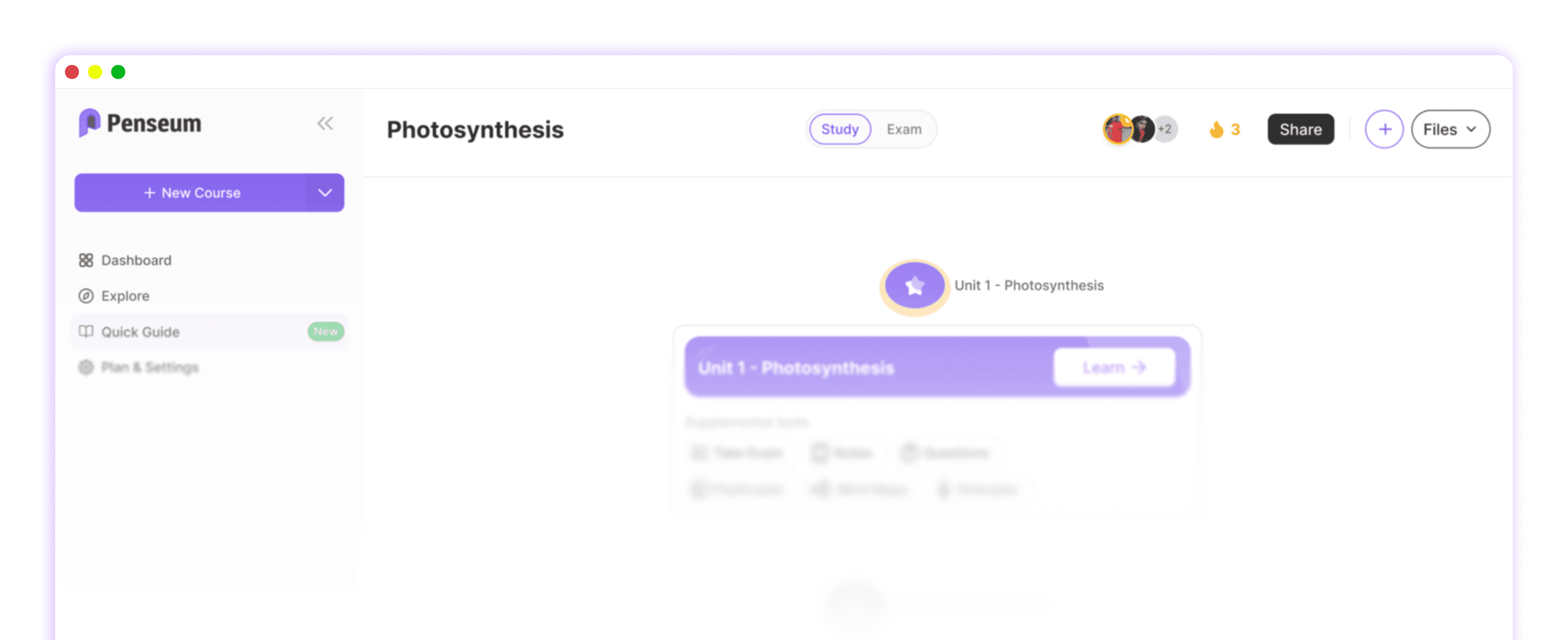
Traditional studying methods consistently under-stimulate neurodivergent brains, leading to rapid burnout and deep frustration. To effectively apply adhd study tips and proven learning strategies, students desperately need dynamic, multi-sensory tools that completely eliminate the heavy friction of preparation work. Penseum solves this exact academic issue by acting as a live, 1-on-1 AI tutor tailored specifically to your exact learning style and course material.
Instead of burning your highly limited executive function manually writing out physical flashcards, you simply upload your own class PDFs, lecture notes, or presentation slides directly into the platform. Penseum instantly generates interactive quizzes, comprehensive study guides, and visual mind maps based solely on your specific curriculum. It never relies on crowdsourced guesses from the internet. This direct, automated conversion completely removes the massive barrier of task initiation for ADHD learners.
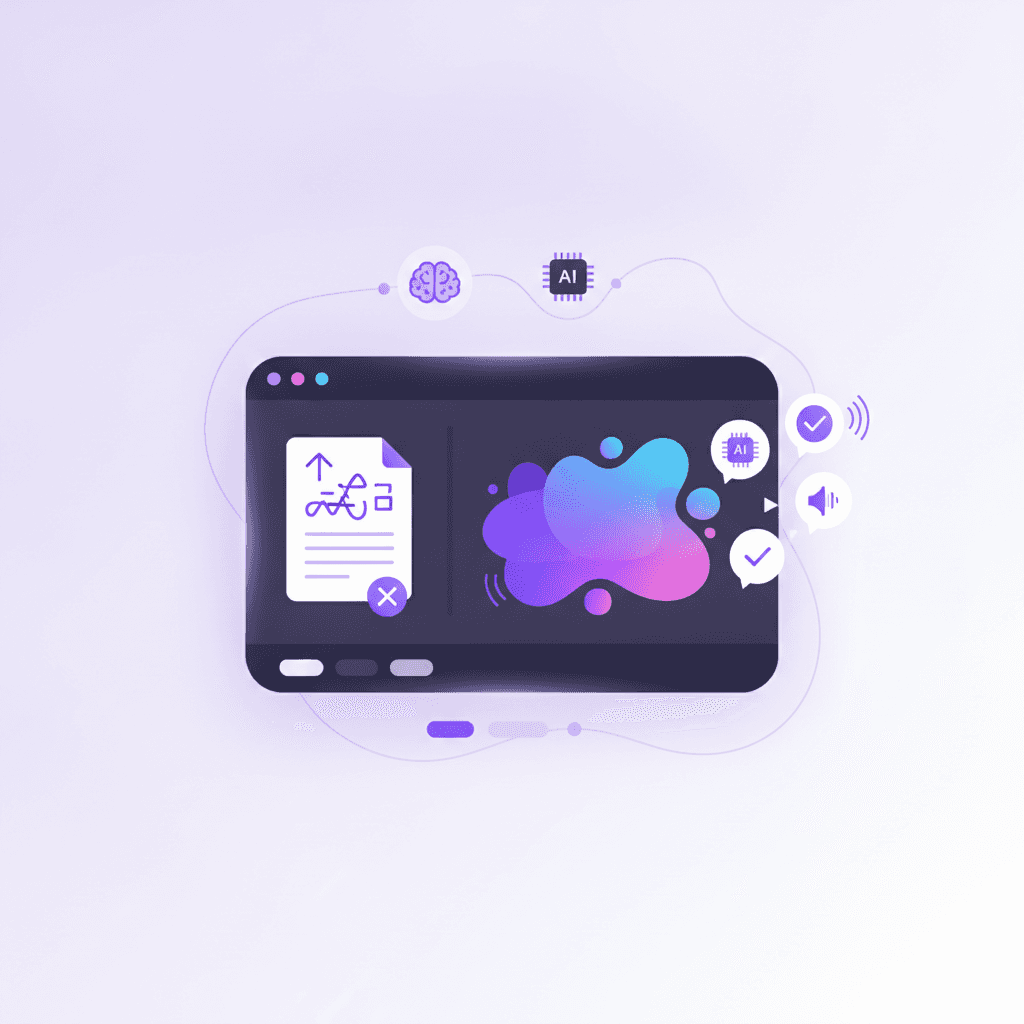
For college students needing intense auditory and visual stimulation, the AI tutor explicitly explains complex problems step-by-step in a real-time voice while simultaneously drawing helpful diagrams live on your digital canvas. It actively watches your actual work on the screen. If you make a specific mathematical or logical mistake, the tutor immediately catches the error and provides fast, dopamine-boosting feedback. It keeps teaching you, out loud, until the concept truly clicks.
Comparing Study Methods for Neurodivergent Learners
Feature | Traditional Studying | Generic AI Chatbots | Penseum AI Tutor |
|---|---|---|---|
Task Initiation | High friction (manual setup) | Medium friction (heavy prompting required) | Zero friction (auto-generates from direct uploads) |
Feedback Loop | Heavily delayed (waiting for professor grades) | Text-based only | Immediate, real-time voice and visual correction |
Sensory Engagement | Extremely low (passive reading) | Low (typing and reading text) | High (visual mapping, live drawing, active audio) |
Content Accuracy | Relies entirely on student notes | Highly prone to hallucinations | Locked exclusively to your specific uploaded syllabus |
Artificial Intelligence in Education (Holmes, Bialik, & Fadel, 2019) highly validates that personalized, real-time tutoring systems drastically improve neurodivergent learning outcomes. Over 1.6 million students globally utilize Penseum to save hundreds of hours of manual study preparation time and effectively reinforce learning through AI-driven active recall.
Upload your current course syllabus or thick lecture slides to Penseum's free platform today. Let the real-time AI voice tutor walk you through your absolute hardest academic concepts out loud, requiring zero credit card to start studying smarter.
Frequently Asked Questions
What is the most effective way to study with ADHD?
The most effective approach involves intense active recall and constant multi-sensory engagement. Students should strictly avoid passive rereading. Instead, utilize digital flashcards, verbal self-testing out loud, and spatial visual mind mapping. Breaking marathon study sessions into 20-minute micro-intervals effectively prevents executive burnout. Incorporating a customized AI tutor ensures high stimulation and immediate correction, which keeps the dopamine-starved brain highly focused.
Can people with ADHD do well in college?
Absolutely. Students with ADHD frequently excel in demanding university environments when they permanently abandon standard neurotypical study habits. By aligning their rigorous schedules with their specific biological energy peaks and adopting highly interactive, visual learning methods, they successfully bypass common working memory deficits. High innate intelligence paired with specialized, active recall systems produces exceptional academic results.
Is listening to music good for ADHD studying?
Listening to specific types of structured audio heavily benefits neurodivergent focus. Instrumental tracks, looping lo-fi beats, or binaural tones provide a steady, predictable stream of low-level background stimulation. This constant auditory baseline successfully occupies the hyperactive portion of the brain, actively preventing it from seeking out much more disruptive external distractions while reading or completing long assignments.
How many hours should a student with ADHD study?
Quality always supersedes sheer quantity. Rather than aiming for brutal four-hour marathon sessions, neurodivergent students should strictly target two to three hours of highly focused, active retrieval practice per single day. Dividing this designated time into short 25-minute sprints heavily interspersed with strict physical movement breaks completely prevents the intense mental exhaustion that typically accompanies prolonged concentration efforts.
Why do ADHD students struggle with reading comprehension?
Reading comprehension suffers heavily because traditional, black-and-white text offers extremely low sensory stimulation. The brain's fragile working memory drops fine details while quickly scanning long, unbroken paragraphs. Without bright visual anchors, strict color-coding, or active pen annotation, the neurodivergent mind easily drifts into entirely unrelated thoughts, forcing the frustrated student to reread the exact same page multiple times without actually retaining the core concepts.
[AUTHOR]
Last updated: August 2026
Sources
Barkley, R. A. (1997). Behavioral inhibition, sustained attention, and executive functions: constructing a unifying theory of ADHD. Psychological Bulletin, 121(1), 65-94. https://pubmed.ncbi.nlm.nih.gov/9000892/
Pychyl, T. A. (2013). Solving the Procrastination Puzzle: A Concise Guide to Strategies for Change. TarcherPerigee. https://scholar.google.com/scholar?q=Solving+the+Procrastination+Puzzle+Pychyl
Karpicke, J. D., & Roediger, H. L. (2008). The critical importance of retrieval for learning. Science, 319(5865), 966-968. https://pubmed.ncbi.nlm.nih.gov/18276894/
Ariga, A., & Lleras, A. (2011). Brief and rare mental 'breaks' keep you focused: Deactivation and reactivation of task goals preempt vigilance decrements. Cognition, 118(3), 439-443. https://pubmed.ncbi.nlm.nih.gov/21211793/
Mayer, R. E. (2009). Multimedia Learning. Cambridge University Press. https://scholar.google.com/scholar?q=Multimedia+Learning+Mayer
Zajonc, R. B. (1965). Social facilitation. Science, 149(3681), 269-274. https://scholar.google.com/scholar?q=Social+facilitation+Zajonc
Ratey, J. J., & Loehr, J. E. (2011). The positive impact of physical activity on cognition during adulthood: a review of underlying mechanisms, evidence and recommendations. Reviews in the Neurosciences, 22(2), 171-185. https://pubmed.ncbi.nlm.nih.gov/21473759/
Pauk, W., & Owens, R. J. (2010). How to Study in College. Cengage Learning. https://scholar.google.com/scholar?q=How+to+Study+in+College+Pauk
Chermak, G. D., & Musiek, F. E. (1997). Central Auditory Processing Disorders: New Perspectives. Singular Publishing Group. https://scholar.google.com/scholar?q=Central+Auditory+Processing+Disorders+Chermak
Holmes, W., Bialik, M., & Fadel, C. (2019). Artificial Intelligence in Education: Promises and Implications for Teaching and Learning. Center for Curriculum Redesign. https://scholar.google.com/scholar?q=Artificial+Intelligence+in+Education+Holmes
Related guides
Ready to study smarter?
Start turning your notes into guides, quizzes, and flashcards in seconds.