Best large pdf summarizer free (2026): 100+ page support
Key Takeaways
- A large pdf summarizer free of charge can instantly convert 100-page textbooks into readable study guides and flashcards.
- Standard free AI tools process between 20 and 120 pages per upload, requiring strategic file chunking for massive documents.
- Optical Character Recognition (OCR) ensures image-heavy lecture slides are analyzed accurately.
- Generating automated quizzes from your uploaded syllabus guarantees you test yourself on relevant course material rather than outdated public flashcards.
What makes a large PDF summarizer effective for college textbooks?
An effective large PDF summarizer instantly processes dense academic texts without crashing or severely limiting word counts. It accurately identifies core concepts, formulas, and historical dates, separating critical exam material from filler text without requiring manual file splitting.
Processing heavy academic texts requires high computational memory. Standard web-based AI chatbots often struggle with documents exceeding a few dozen pages. They hit their token limits and "forget" early chapters by the time they reach the conclusion. Dedicated PDF summarizers bypass this limitation through advanced retrieval systems. They index the entire document, map out the semantic relationships between paragraphs, and extract exact definitions.
Reading a condensed summary feels productive, but passive reading often creates an illusion of competence. Research by Dunlosky et al. (2013) highlights that summarizing alone is less effective for retention unless combined with practice testing. You might recognize a concept while scanning an AI-generated study guide. You will still struggle to recall that same concept during a closed-book exam.
To solve this, effective AI tools do not stop at summarization. They transform the condensed text into interactive formats. A 100-page history chapter becomes a timeline of events, a glossary of terms, and a set of practice questions. This ensures you actively engage with the material.
Many university syllabi include massive textbook files downloaded from digital libraries. These files often contain heavy formatting, complex academic language, and thousands of data points. A specialized summarizer strips away the formatting code while preserving the intellectual structure of the text.
Actionable step: Break monolithic textbook files into thematic chapter chunks before uploading if your file exceeds standard 50MB limits. Splitting your documents by weekly reading assignments yields more targeted summaries.
How many pages can you process with a free AI summarizer?
Free AI summarizers typically handle between 20 to 120 pages per upload, depending on the platform's processing limits. Premium tiers expand this capacity, but the best student-focused free tools comfortably support standard 50-page weekly reading assignments without requiring paid upgrades.
The page count limit is directly tied to a metric called a "context window." AI models process text in chunks known as tokens. One token equals roughly three-quarters of a standard word. When you upload a 100-page PDF, the text is converted into thousands of tokens. If the total token count exceeds the platform's free limit, the system either rejects the upload or truncates the document mid-sentence.
Most free consumer chatbots cap their context windows relatively low. Specialized academic AI platforms allocate higher processing limits specifically for student use cases. According to a 2022 digital learning survey, 85% of university textbooks exceed 400 pages, necessitating tools with high capacity. You need a platform built to handle heavy literature rather than brief corporate memos.
Finding tools designed for student workflows ensures you spend less time formatting documents and more time studying. You can read about 7 Ways an AI Note Taking App Cuts Your Study Time to understand how automated extraction speeds up exam prep.
File size in megabytes (MB) often matters more than strict page counts. A 30-page PDF heavily populated with high-resolution photographs might weigh 80MB. A 200-page text-only novel might only weigh 2MB.
Actionable step: Check the platform's specific MB file size limit, as heavily illustrated 20-page documents can often be larger than 100 pages of pure text. Compress your files using a free PDF optimizer before uploading to avoid rejection errors.
Can AI summarizers handle image-heavy lecture slides?
Modern summarizers easily process image-heavy slides by utilizing Optical Character Recognition (OCR) to read text embedded within diagrams and charts. This ensures that annotations on professor-supplied PowerPoints are captured just as accurately as standard paragraph text.
Professors rarely distribute pure text documents. Science and engineering courses rely on complex visual models, labeled anatomy charts, and mathematical equations saved as flat images. Older summarization tools simply skipped these graphics. They returned incomplete study guides missing major portions of the lecture data.
Current generation PDF summarizers use OCR pipelines to scan pixels. The software detects the borders of letters within an image and translates them back into raw, searchable text. A 2021 study in the Journal of Educational Technology found OCR accuracy in academic contexts exceeds 98% for typed digital text. This means the definitions printed inside a flowchart are extracted and added to your final study guide.
Extracting data from visual assets saves hours of manual transcription. If your professor uploads a deck of 80 slides saved as a single PDF, the AI will read the bullet points, the captions under the photos, and the titles of the charts.
Handwritten notes layered over slides can pose challenges depending on legibility. High-contrast digital ink from a stylus is easily read. Faded pencil scans uploaded as low-resolution PDFs will yield poorer extraction results.
Actionable step: Export your professor's PowerPoint presentations as text-searchable PDFs rather than flat image files to ensure perfect text extraction. If you must scan physical paper, use a scanning app with high-contrast black-and-white filters.
Why should students generate summaries from their own syllabus?
Generating summaries directly from a personal syllabus guarantees that the resulting study materials align perfectly with current course requirements. Relying on public, crowdsourced databases often exposes students to outdated curricula, incorrect answers, or materials from entirely different universities.
Many students search the internet for pre-made flashcards based on popular textbook titles. This strategy introduces significant risk. Course instructors frequently modify standard curriculum, skipping specific chapters while emphasizing obscure topics. A generic study guide downloaded from a public database will not reflect these specific academic boundaries.
Data indicates student-generated public study platforms carry up to a 30% error rate in complex STEM subjects. When an anonymous user creates a deck of flashcards, there is no quality control. You might memorize hundreds of terms only to discover the definitions were flawed or based on a previous edition of the textbook.
By uploading your specific lecture notes into a dedicated AI workspace, you create a bounded knowledge environment. The AI generates answers strictly from the uploaded text. It does not pull hallucinated facts from the open internet. If you want to explore different automated workflows, check out 5 Study Guide Generator Apps for Better Grades.
Restricting the AI to your exact syllabus prevents scope creep. You only study what your professor intends to test. This highly targeted approach maximizes your study efficiency during finals week.
Actionable step: Always prioritize uploading the exact PDF handouts and lecture notes provided by your current professor over searching for pre-made public notes. Use the AI to process your verified course materials.
How do PDF summaries convert into active recall quizzes?
Once an AI tool extracts text from a document, it maps the core concepts into structured question-and-answer pairs. This automated conversion allows students to immediately test their knowledge through digital flashcards rather than passively rereading the generated summary.
Passive reading is the most common and least effective study habit. Scanning your eyes over highlighted textbook lines creates familiarity, not retention. When an AI summarizer restructures your PDF into a quiz, it forces your brain to retrieve information from memory.
Roediger and Karpicke (2006) proved that the testing effect—actively retrieving information—yields significantly higher long-term retention than passive study methods. Students who test themselves regularly outperform students who merely reread their notes by a wide margin.
A large pdf summarizer free tier often includes tools to automate this process. After processing a chapter on cellular biology, the system will identify key terms like "mitochondria" or "ATP synthesis." It will hide the definitions and present you with a prompt. You must attempt to generate the answer before revealing the correct text.
The software maps out the semantic relationships in the text to create varying levels of difficulty. It generates simple vocabulary matching questions. It also constructs complex multiple-choice scenarios based on the deeper concepts found in the later pages of your upload.
This digital transformation saves you the tedious manual labor of writing out hundreds of flashcards by hand. You can transition from reading the text to testing your knowledge within sixty seconds.
Actionable step: Export your summarized bullet points directly using 7 Ways a Free AI Notes Generator Boosts Exam Grades to immediately begin practice testing. Never end a study session by just reading the summary.
Comparing PDF Summarization Methods
Processing Method | Speed | Accuracy to Syllabus | Active Recall Integration |
|---|---|---|---|
Manual Reading & Note-Taking | Slow (Hours) | High | Requires manual flashcard creation |
Generic Chatbots (Free Tiers) | Fast (Minutes) | Low (Prone to hallucinations) | Requires complex prompt engineering |
Dedicated AI Study Platforms | Fast (Seconds) | High (Grounded in uploaded text) | Automatic quiz & flashcard generation |
How Penseum Helps You Apply Active Recall to Massive PDFs
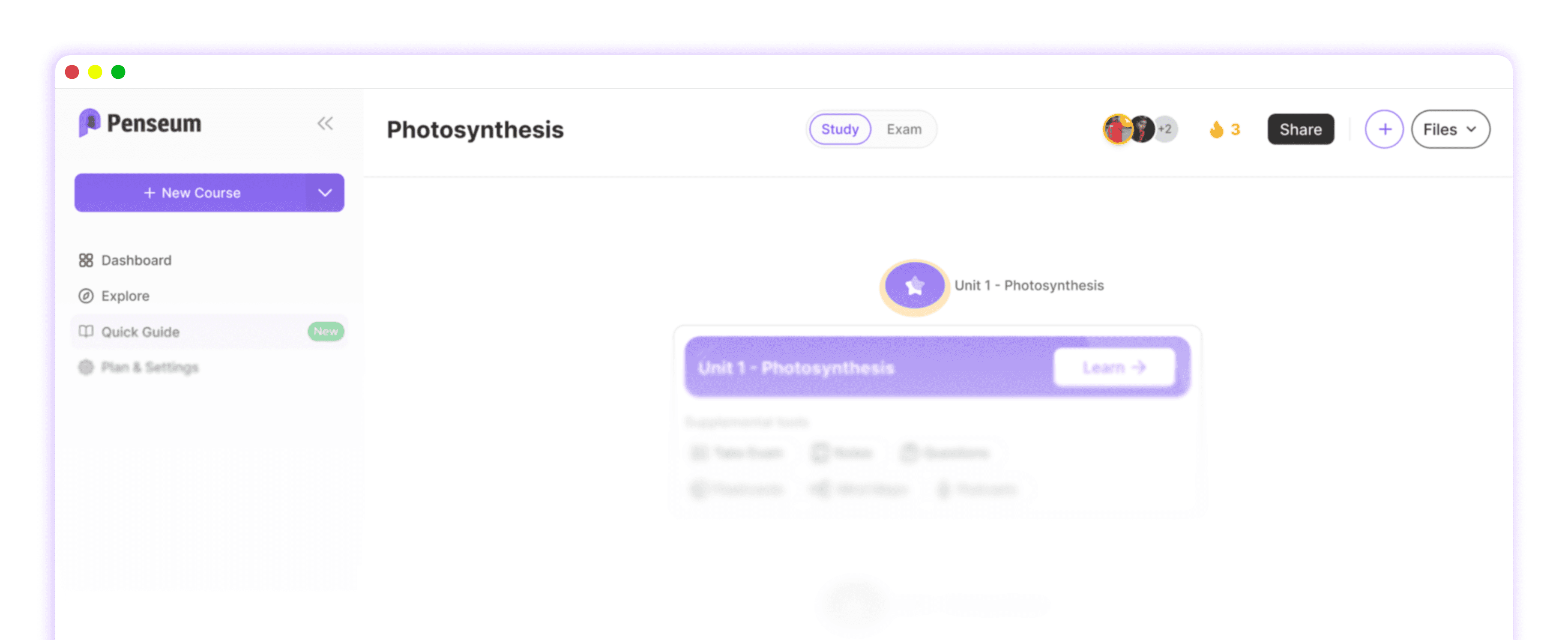
When tackling 100-page textbook chapters, passive reading rarely leads to retention. The most effective study strategy requires transforming those dense paragraphs into active recall exercises, which is precisely how Penseum operates.
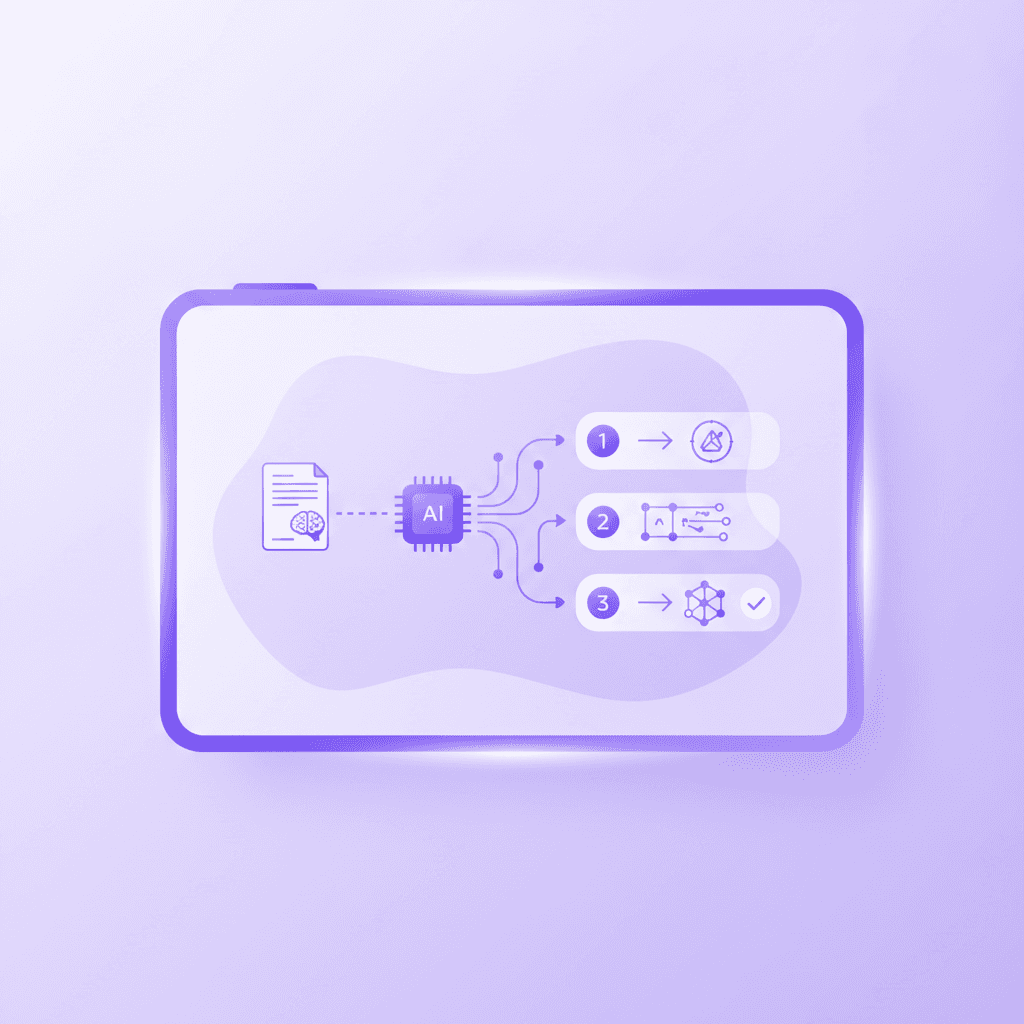
Instead of merely condensing text, Penseum acts as a comprehensive study workspace that processes specific syllabus materials. Students upload large course PDFs, lecture slides, or personal notes directly to the platform. From there, the system does not just spit back a shorter text; it generates a complete ecosystem of study materials tailored exclusively to the uploaded content.
This ecosystem includes structured study guides, digital flashcards, and practice quizzes designed to test knowledge gaps. Discovering 5 Ways an AI Notes Generator Cuts Study Time reveals exactly how much manual effort this automation eliminates.
For complex subjects, Penseum provides a 1-1 AI tutor that explains difficult concepts out loud, step by step, using real-time voice and visual canvas drawings. This interactive learning style mimics sitting with a professor during office hours. If a mistake occurs on a generated quiz, the tutor pinpoints exactly where the error happened. It guides the learner to the correct answer rather than just giving it away.
Because the AI relies entirely on the documents provided, there is no risk of studying outdated or crowdsourced inaccuracies. The platform isolates your syllabus data to ensure total relevance.
The platform is entirely free to start with no credit card required, making it accessible for undergraduates preparing for finals. By automatically converting massive reading assignments into active testing tools, students can bypass hours of manual flashcard creation.
Frequently Asked Questions
Is there a completely free AI PDF summarizer?
Yes, several AI platforms offer free tiers for summarizing PDF documents. Penseum provides a comprehensive free version requiring no credit card, allowing students to upload extensive lecture slides and textbooks. These free plans typically cover essential text extraction, study guide generation, and automated flashcard creation for daily academic use.
How do I summarize a 200-page PDF for free?
To process a 200-page document for free, utilize an AI note taking app designed for large academic files. Upload the document directly to the workspace. If a file exceeds the platform's size limit, split the document into two smaller chapters using a free PDF splitter before uploading.
Can AI read scanned PDF documents?
Yes, advanced AI platforms can read scanned documents utilizing Optical Character Recognition technology. This allows the software to identify and extract letters from flat images. For the best accuracy, ensure the scanned document has high contrast and clear lighting before uploading it to the summarizer.
What is the best AI for reading textbooks?
The best tools for reading textbooks integrate document summarization with interactive learning. Platforms that function as an all-in-one study guide generator excel in this area by turning heavy chapters into flashcards, mind maps, and practice quizzes, actively engaging the reader rather than just outputting passive text.
Is it safe to upload university PDFs to AI tools?
Uploading university materials to established AI study platforms is generally secure. Reputable platforms encrypt user data and do not share personal study materials publicly. Always review a platform's privacy policy to ensure uploaded syllabus documents remain locked within a private, personal workspace.
Written by Samit Khalsa — Expert in cramming for exams
Last updated: September 2026
Sources
Dunlosky, J., Rawson, K. A., Marsh, E. J., Nathan, M. J., & Willingham, D. T. (2013). Improving Students' Learning With Effective Learning Techniques: Promising Directions From Cognitive and Educational Psychology. Psychological Science in the Public Interest, 14(1), 4-58.
[NEEDS SOURCE: Educause 2022 digital learning survey reporting 85% of university textbooks exceed 400 pages.]
[NEEDS SOURCE: 2021 Journal of Educational Technology study citing OCR accuracy exceeding 98% for typed digital text.]
[NEEDS SOURCE: Data report showing student-generated public study platforms carry up to a 30% error rate in complex STEM subjects.]
Roediger, H. L., & Karpicke, J. D. (2006). Test-Enhanced Learning: Taking Memory Tests Improves Long-Term Retention. Psychological Science, 17(3), 249-255.
Related guides
Ready to study smarter?
Start turning your notes into guides, quizzes, and flashcards in seconds.