5 Ways Spaced Repetition Flashcards Boost Exam Scores
Key Takeaways
* Spaced repetition algorithms schedule review sessions at calculated intervals to disrupt the human forgetting curve.
* Active recall combined with spaced timing reduces total study hours while multiplying long-term retention.
* Creating decks manually wastes valuable time; digital flashcard generators extract core concepts from your syllabus instantly.
* Following the minimum information principle prevents cognitive overload and keeps algorithms functioning optimally.
* AI-driven tools like Penseum automate the entire creation and scheduling process so you can focus strictly on learning.
What Are Spaced Repetition Flashcards?
Spaced repetition flashcards are study tools designed around the spacing effect, presenting information just as you are about to forget it. Instead of cramming all at once, this system schedules flashcard reviews over gradually increasing intervals, cementing the knowledge deeply into your long-term memory for exams.
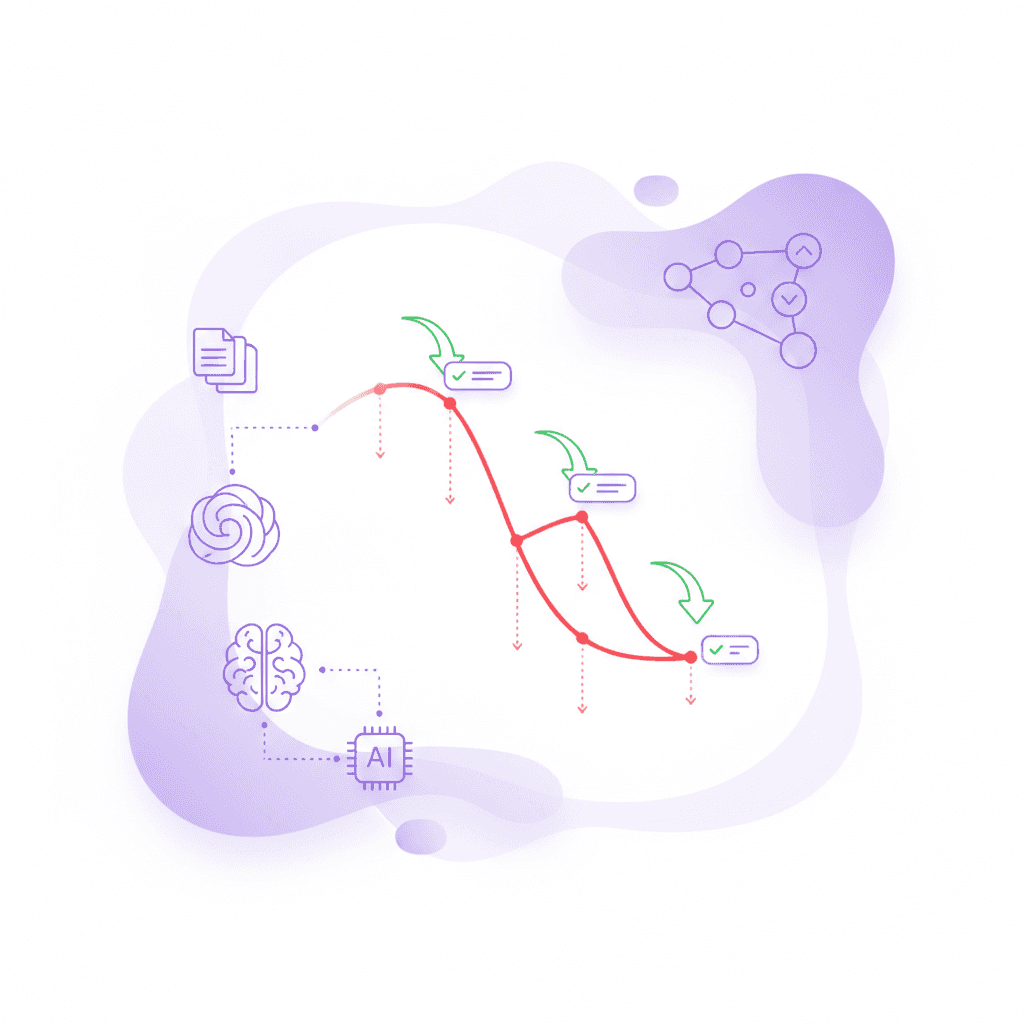
Research by Hermann Ebbinghaus on the Forgetting Curve (1885) shows that without review, students lose up to 79% of newly learned information within 31 days. This natural memory decay happens because the brain selectively discards unused facts to save metabolic energy. When you introduce a spaced review schedule, you artificially signal to your brain that this specific information holds high survival value.
Every time you review a card, you flatten the slope of the forgetting curve. After the first review, it might take three days to forget the concept. After the fourth review, it might take a full month.
Cramming relies on massed practice. You study the same chapter for six hours straight on a Sunday night. While you might pass a quiz on Monday morning, that knowledge evaporates completely by midterm season. Spaced repetition distributes those exact same six hours over three weeks. The total time invested remains identical, but the biological structural changes in your brain differ entirely.
You are forcing neurons to fire across the same synapses repeatedly over time. This process stimulates dendritic spine growth and enhances synaptic plasticity. The result is a durable, easily accessible memory trace that does not vanish under exam anxiety.
Actionable Step: Start reviewing a new flashcard deck within 24 hours of first learning the lecture material to immediately reset your forgetting curve.
How Does the Spaced Repetition Algorithm Work?
The algorithm tracks your performance on each flashcard. If you answer a card correctly, the system increases the time before you see it again. If you get it wrong, the card returns sooner. This dynamically focuses your limited study time only on the concepts you struggle with most.
A study by Smolen et al. (2016) indicates that spaced learning algorithms can improve memory consolidation efficiency, cutting total necessary study time by up to 50% compared to massed studying. This mathematical approach to learning treats memory as a predictable biological function rather than a mysterious talent.
Modern algorithms assign a specific easiness factor to every individual card in your deck. When a flashcard first appears, the interval might be one day. If you hit the "Easy" button, the algorithm multiplies the interval by a specific value, pushing the next review out to four days. A subsequent correct answer might push it to ten days, then twenty-five days.
If you fail a card, the system immediately drops the interval back to zero. You will see that concept again in ten minutes. This self-correcting feedback loop guarantees you never waste time studying concepts you already know.
Spaced Repetition vs. Massed Practice (Cramming)
Feature | Spaced Repetition Flashcards | Massed Practice (Cramming) |
|---|---|---|
Review Timing | Dynamically scheduled over weeks | Clustered in a single long session |
Mental Effort | High (forces retrieval just before forgetting) | Low (creates a false sense of fluency) |
Long-Term Retention | Excellent (months to years) | Poor (vanishes within days) |
Efficiency | Spends time only on weak spots | Wastes time re-reading known facts |
This mathematical scheduling removes the guesswork from exam preparation. You no longer need to decide what chapter to study on any given Tuesday. You simply open your application, and the algorithm hands you the exact sequence of facts your brain is currently on the verge of losing.
Actionable Step: Group your physical flashcards into difficulty levels using the Leitner system, or use a digital flashcard generator online to automate these intervals effortlessly.
Why Should You Combine Active Recall With Spaced Repetition?
Active recall forces your brain to retrieve information from scratch, while spaced repetition ensures that retrieval happens at the optimal time. Together, they create a highly efficient study loop. Retrieving answers strengthens neural pathways, making future recall significantly faster during actual high-pressure exam situations.
Research by Karpicke and Roediger (2008) demonstrated that combining testing (active recall) with spaced intervals yields a 400% improvement in long-term retention over simply rereading notes. Passively highlighting a textbook creates an illusion of competence. Your brain recognizes the font, the page layout, and the highlighted colors, tricking you into believing you know the underlying material.
Recognition is entirely different from recall. Recognizing a concept requires very little cognitive effort. Retrieving a concept from a blank slate demands intense neurological activation. This difficulty is exactly what triggers the brain to build stronger synaptic connections.

When you look at the front of a flashcard, you experience a moment of cognitive strain. You search your memory banks for the specific answer. That split-second of mental struggle is the biological mechanism of learning taking place. If you bypass that struggle by flipping the card too early, you sabotage the process.
Using specific 5 Active Recall Flashcards Tips to Boost Memory guarantees you extract the maximum benefit from your study sessions. The harder your brain works to pull the information out, the stickier that information becomes.
Actionable Step: When reviewing your active recall flashcards, verbally speak the answer out loud or write it down completely before flipping the card to verify your accuracy.
How Can You Create Your Own Flashcards Efficiently?
Creating your own flashcards directly from your class materials ensures the content perfectly matches your specific syllabus. However, manually writing them out is incredibly time-consuming. Using a digital flash cards generator allows you to transform textbooks and lecture slides into personalized study decks in a fraction of the time.
Kornell's psychological study (2009) highlights that students studying from personalized, customized materials score up to 20% higher than those relying on generic, crowdsourced decks created by strangers. A deck downloaded from the internet often lacks the specific context your professor provided during a lecture.
Many students fall into the trap of the collector's fallacy. They spend four hours meticulously typing out a beautifully formatted deck of 300 cards, color-coding every definition. By the time they finish building the deck, they feel mentally exhausted and close their laptop. They mistake the act of organizing information for the act of actually learning it.
You can easily bypass this massive time sink. By exploring 5 Ways a Flashcard Generator Boosts Your Grades, you discover how automation shifts your energy from data entry back to actual studying. A smart generator reads your uploaded documents, identifies the core concepts, and structures them into question-and-answer formats instantly.
For students on a strict budget, applying 7 Flash Card Creator Free Tips to Slash Study Time provides immediate access to these automation benefits. You simply upload a 40-page PDF of class notes, and the software builds a highly accurate, customized deck while you grab a cup of coffee.
Actionable Step: Instead of typing out terms manually, use an AI tool to create online flashcards by extracting key concepts directly from your uploaded class PDFs.
What Are the Best Practices for Making Spaced Repetition Flashcards?
The most effective spaced repetition flashcards follow the minimum information principle. Each card should test only one core concept or fact. If a flashcard contains a dense paragraph, your brain struggles to pinpoint the exact retrieval cue, which completely breaks the spaced repetition algorithm's effectiveness.
According to Mayer's Multimedia Principle (2001), isolating concepts (atomic learning) effectively reduces cognitive load, increasing information processing speed by nearly 30% for complex, multi-layered topics. When a card tests multiple facts at once, grading your own memory becomes subjective.
Imagine a flashcard asking for the causes of the French Revolution. If the back lists five different economic and social causes, and you only remember three, do you mark the card as correct or incorrect? If you mark it correct, you will forget the missing two. If you mark it incorrect, the algorithm forces you to needlessly restudy the three you already knew.
To solve this, break that single question down into five separate cards. Atomic cards allow the algorithm to isolate exactly which specific detail is failing to stick in your memory. You can see how this strategy applies in 7 Ways a Flash Cards Generator Boosts Your Grades, where automation naturally formats complex topics into bite-sized questions.
You should also avoid orphan cards. An orphan card lacks context entirely. A flashcard that just says "Mitochondria" on the front and "Powerhouse of the cell" on the back does not help you understand cellular biology. Instead, contextualize the cue: "What specific organelle is responsible for generating ATP in a eukaryotic cell?"
Actionable Step: Break down large bulleted lists, complicated formulas, or lengthy definitions into multiple, single-question flashcards when you create your own flash cards for finals.
How Penseum Helps You Apply Spaced Repetition Flashcards
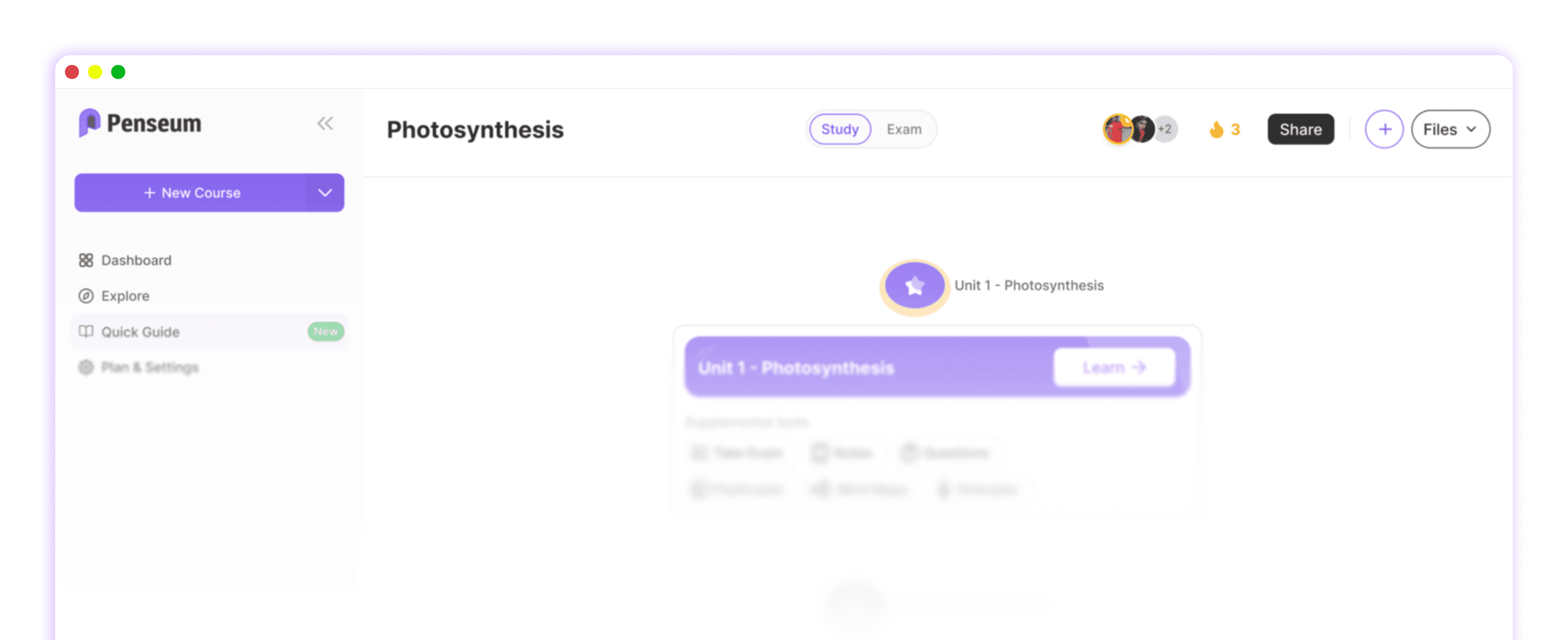
Penseum transforms how you study by instantly generating accurate spaced repetition flashcards directly from your uploaded notes, slides, and PDFs. Instead of relying on crowdsourced materials with errors, you get customized decks tailored precisely to your syllabus, fully integrated with quizzes and an interactive AI tutor.
Data shows over 1.6 million students across 130+ countries and hundreds of universities trust Penseum's all-in-one platform to reduce study prep time and eliminate manual flashcard creation. Building massive decks by hand drains the exact mental energy you need for memorization.
When you upload a complex document into your personal Penseum workspace, the system analyzes the text, isolates the core educational concepts, and automatically builds atomic flashcards that follow the minimum information principle. You bypass the collector's fallacy completely. Your study session begins the exact second your upload finishes.
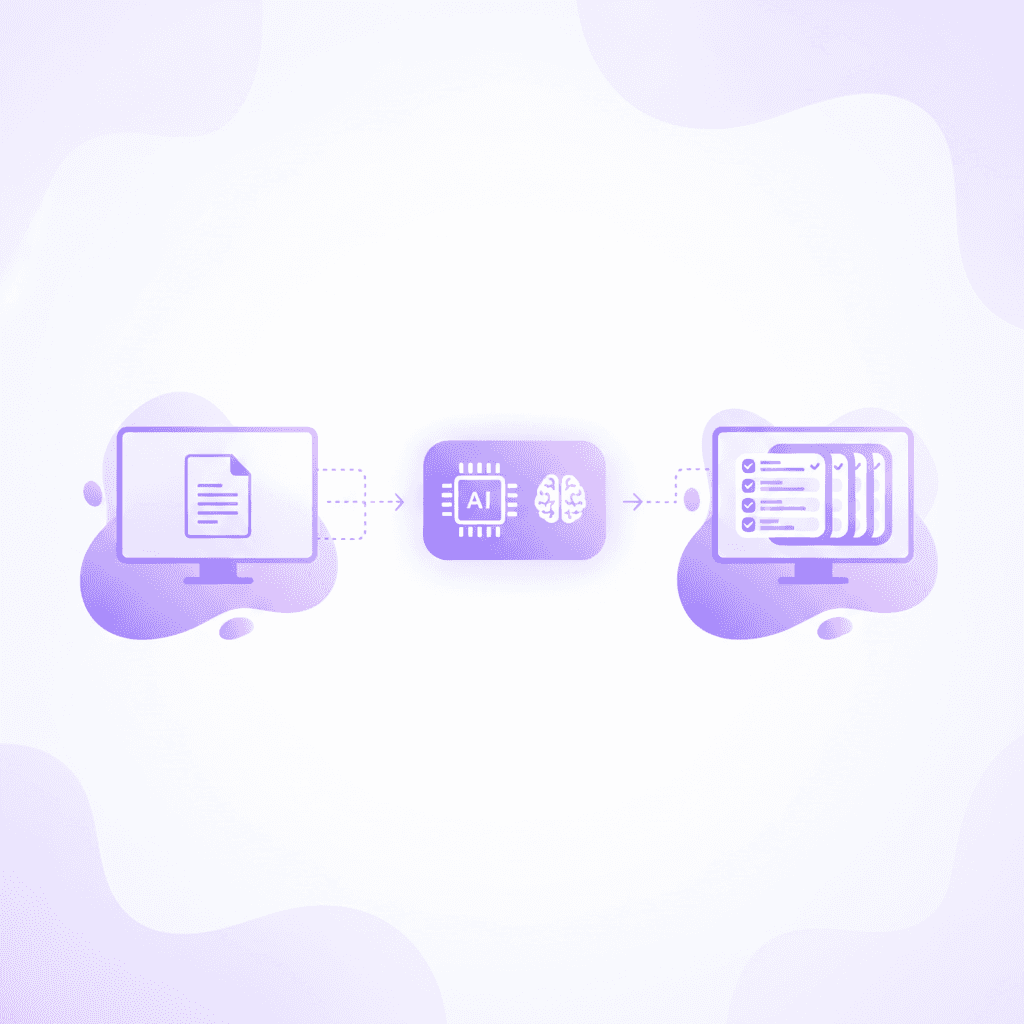
The platform acts as a complete ecosystem for active recall. If you struggle with a specific flashcard generated by the system, you do not have to jump over to Google to figure out why you are confused. You simply ask your live, built-in AI tutor to explain the concept step-by-step, out loud. The tutor sees your exact study materials, spots where your understanding breaks down, and keeps teaching until it clicks.
By tracking your performance across personalized flashcard decks and practice quizzes, Penseum mathematically calculates your weakest areas. It feeds the hardest concepts back to you exactly when your brain is preparing to forget them.
Actionable Step: Create a free Penseum account with no credit card required, upload your hardest class PDF, and let the AI generate your first personalized spaced repetition deck in seconds.
Frequently Asked Questions
How often should I review spaced repetition flashcards?
To get the most out of spaced repetition flashcards, you should review them daily. The algorithm automatically calculates the exact days you need to see specific cards. Skipping days disrupts the spacing effect, meaning you will forget the material and have to relearn it from scratch, wasting valuable study time.
Are spaced repetition flashcards better than rereading notes?
Yes, spaced repetition flashcards are vastly superior to passively rereading notes. Rereading creates an illusion of competence where you recognize the text but cannot recall it independently. Using flashcards forces active retrieval, which strengthens neural connections and significantly improves your ability to recall information during high-stress exam situations.
Can AI generate spaced repetition flashcards from my notes?
Absolutely. Modern study platforms use artificial intelligence to analyze your uploaded lecture slides, PDFs, or personal notes to automatically generate accurate flashcards. This eliminates the hours traditionally spent creating decks manually, allowing you to spend all your study time actively reviewing the spaced repetition flashcards instead.
What is the Leitner system for flashcards?
The Leitner system is a manual spaced repetition method using physical boxes. When you answer a flashcard correctly, it moves to the next box and is reviewed less frequently. If you get it wrong, it moves back to the first box for daily review. Digital tools automate this entire process.
How long does it take for spaced repetition to work?
Spaced repetition begins working immediately by preventing the initial steep drop in your memory's forgetting curve. However, for deep long-term retention, students typically see significant results after studying a deck consistently for two to three weeks, right before a major midterm or final exam.
Written by Samit Khalsa — Expert in cramming for exams
Last updated: August 2026
Sources
Ebbinghaus, H. (1885). Memory: A contribution to experimental psychology. Annals of Neurosciences. https://pubmed.ncbi.nlm.nih.gov/24363532/
Smolen, P., Zhang, Y., & Byrne, J. H. (2016). The right time to learn: mechanisms and optimization of spaced learning. Nature Reviews Neuroscience, 17(2), 77-88. https://pubmed.ncbi.nlm.nih.gov/26806627/
Karpicke, J. D., & Roediger, H. L. (2008). The critical importance of retrieval for learning. Science, 319(5865), 966-968. https://pubmed.ncbi.nlm.nih.gov/18276894/
Kornell, N. (2009). Optimising learning using flashcards: Spacing is more effective than cramming. Applied Cognitive Psychology, 23(9), 1297-1317. https://scholar.google.com/
Mayer, R. E. (2001). Multimedia learning. Cambridge University Press. https://scholar.google.com/
Related guides
Ready to study smarter?
Start turning your notes into guides, quizzes, and flashcards in seconds.