7 AP Exam Prep Tips for a Perfect 5
Key Takeaways
* Starting your AP exam prep eight to twelve weeks early prevents burnout and allows for consistent content review.
* Active recall and spaced repetition build stronger memory pathways than passive textbook reading.
* Completing at least three full-length practice tests is essential for building stamina and identifying weak units.
* Mastering official College Board rubrics is the fastest way to increase your Free-Response Question (FRQ) scores.
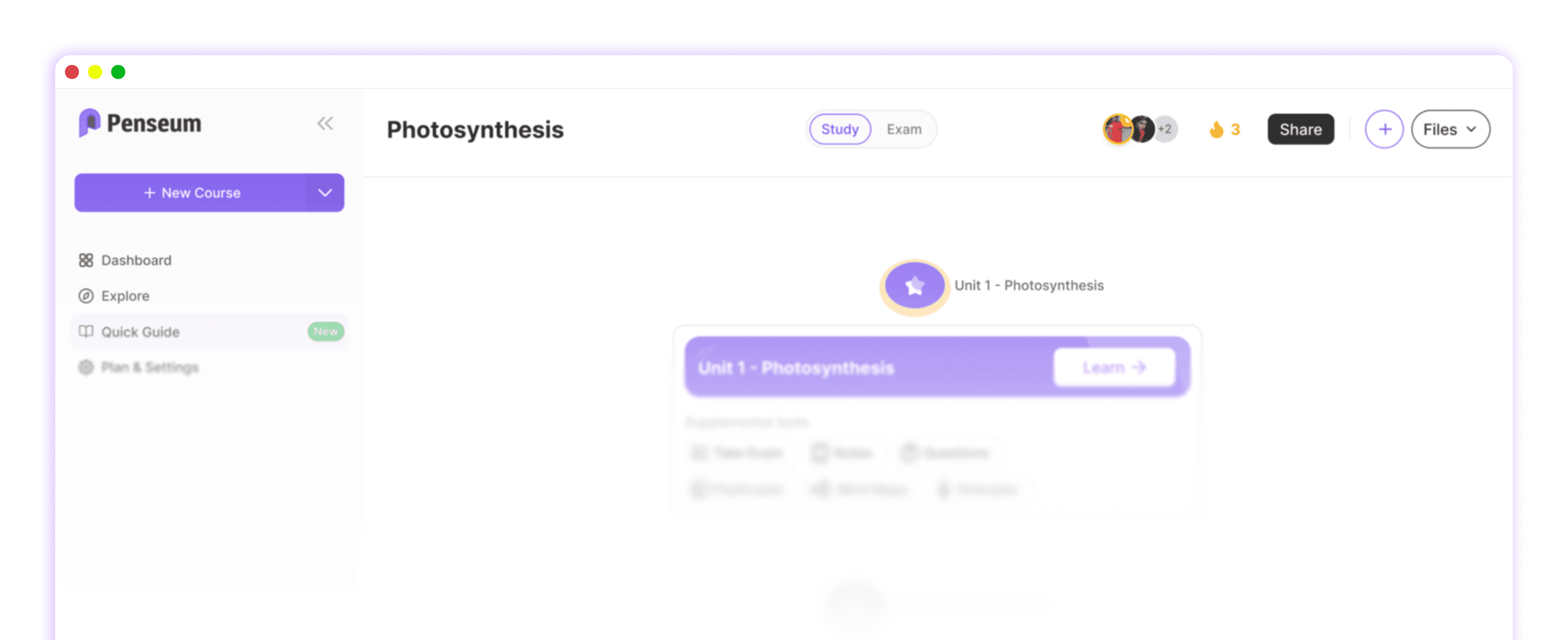
* Using AI tools like Penseum to generate custom flashcards from your class syllabus saves hundreds of manual prep hours.
1. When Should You Start Your AP Exam Prep?
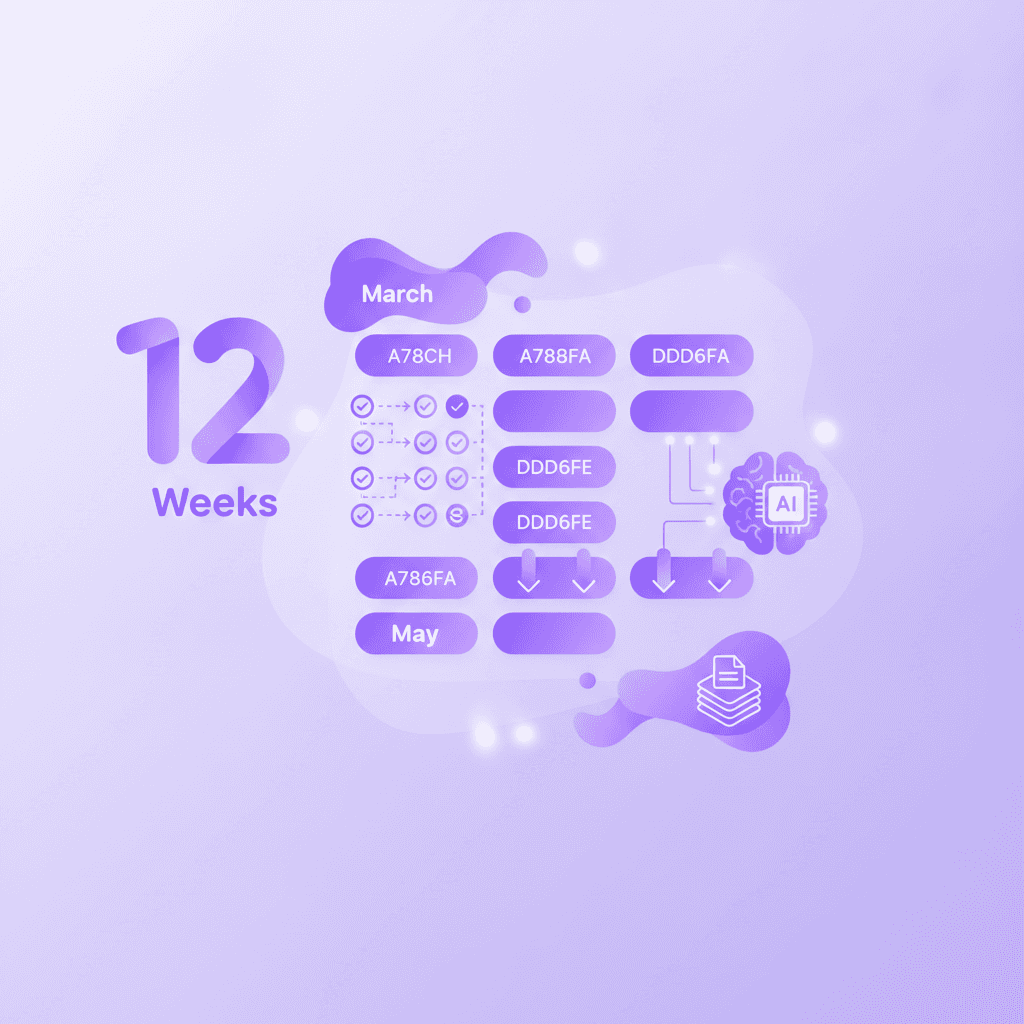
Starting your AP exam prep eight to twelve weeks before your test date gives you ample time to review all units without cramming. This timeline allows for consistent, spaced-out study sessions that improve long-term memory retention and drastically reduce pre-test anxiety for high school students.
Many students make the mistake of waiting until their teacher finishes the final unit in mid-April to begin studying for the exam. This leaves you with less than a month to review an entire year of complex material.
By starting in early March, you give your brain time to process and encode information. This approach is rooted in cognitive science. A comprehensive review by Dunlosky et al. (2013) demonstrated the high utility of distributed practice for long-term retention compared to massed practice.
The data strongly supports an early start. Students who space their studying over two months score up to 20% higher than those who cram at the last minute. Cramming might help you pass a Friday quiz, but it fails to build the deep comprehension required for a three-hour AP exam.
If you are taking heavily weighted courses like AP US History or AP Biology, a 12-week runway is strictly necessary. These subjects demand high factual recall across numerous distinct historical periods or biological systems.
Actionable Step: Create an exam study schedule that blocks out two to three hours per week per AP subject starting in early March. Map this out using our 7 Steps to a Winning Exam Study Schedule to ensure you assign specific units to specific weeks.
2. How Can Active Recall Improve AP Scores?
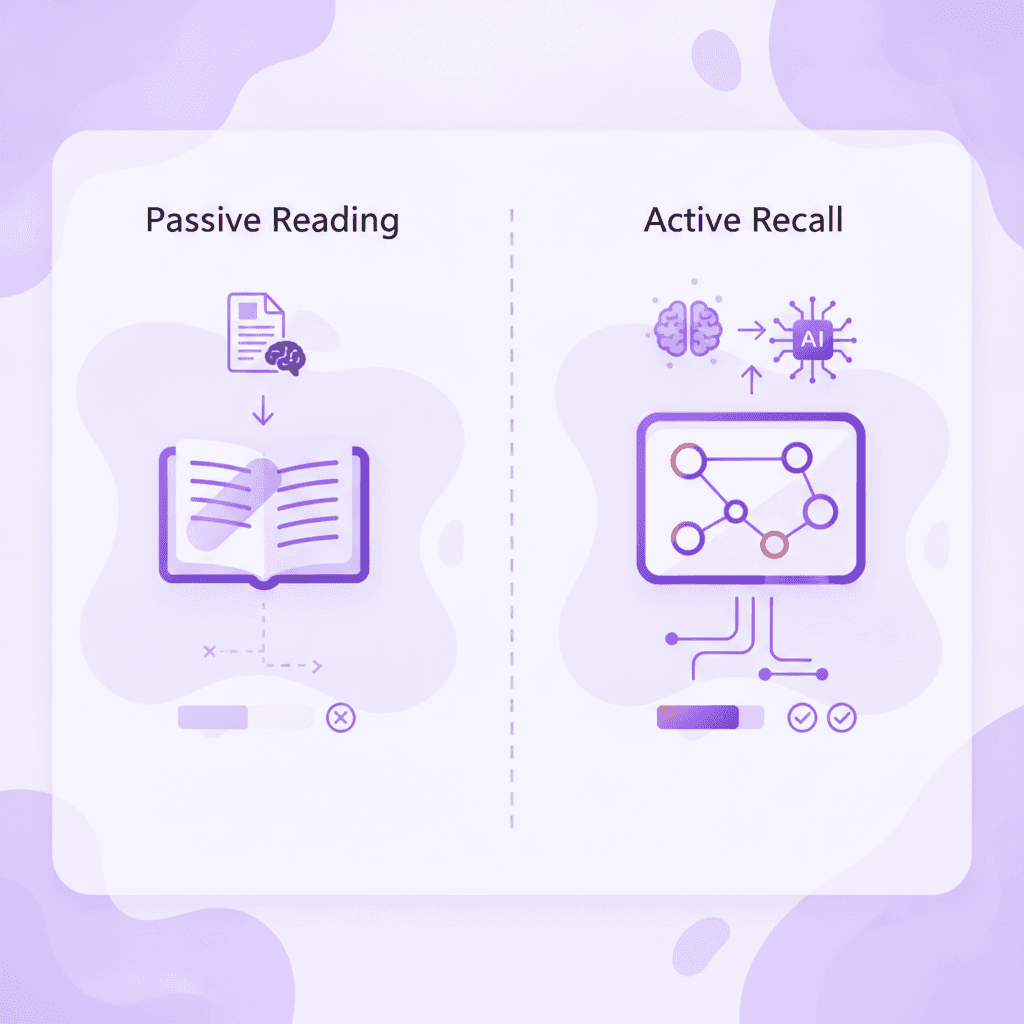
Active recall forces your brain to retrieve information from memory, which builds stronger neural connections than passively reading textbook chapters. This method is vital for tackling the critical thinking and problem-solving required in AP multiple-choice and free-response questions.
Highlighting your textbook and re-reading your notes creates an illusion of competence. Because the material looks familiar on the page, you trick yourself into believing you have mastered it. When you sit down for the actual exam without your notes, that familiarity vanishes.
Retrieval practice breaks this illusion. Research by Karpicke & Roediger (2008) demonstrated that practicing retrieval significantly enhances learning and long-term retention. By forcing your brain to search for the answer, you strengthen the neural pathway to that specific piece of information.
The performance gap between passive and active learners is massive. Active recall techniques can improve test performance by up to 150% compared to passive textbook reading.
You can apply active recall through several methods. The "blurting" technique involves reading a textbook chapter, closing the book, and writing down every concept you can remember on a blank sheet of paper. Once you finish, open the book and use a red pen to add everything you missed.
Actionable Step: Stop re-reading your notes; instead, close your book and write down everything you remember about a specific AP unit on a blank canvas. Repeat this process until your red pen corrections are minimal.
3. Why Is Taking Full-Length Practice Exams Essential?
Taking full-length practice exams builds testing stamina and familiarizes you with the exact pacing required for the real AP test. Simulating actual test conditions reduces anxiety and highlights the specific subject units where you are losing the most points.
An AP exam is an endurance event. Sitting in a silent gymnasium for over three hours answering complex stimulus-based multiple-choice questions drains your cognitive reserves. Doing isolated practice questions on your phone does not prepare you for this physical and mental fatigue.
Practicing under realistic conditions prepares your nervous system for the pressure of test day. Research by Beilock (2010) highlights the impact of practice testing under pressure to prevent choking on exam day. Familiarity with the format reduces cognitive overload.
Top performers treat practice tests as non-negotiable milestones. Approximately 85% of top-scoring AP students report taking at least three full-length, timed practice tests before exam day.
To get the most accurate baseline, you must replicate the exact environment. Clear your desk, print out the official College Board bubble sheets, use a number two pencil, and set a strict timer. Do not listen to music. Take only the breaks allowed by the official exam instructions. This mirrors the rigorous preparation methods detailed in our 3-Month MCAT Study Schedule to Score 515+.
Actionable Step: Take one diagnostic test early on, and schedule two more full-length, timed exams for the month of April. Grade them ruthlessly to pinpoint exactly which units require your immediate attention.
4. How Do You Master Free-Response Questions (FRQs)?
Mastering FRQs requires understanding the specific College Board scoring rubrics and practicing highly structured writing. You must answer the prompt directly, provide specific historical or scientific evidence, and clearly explain how that evidence supports your overarching claim to earn points.
Many students approach the FRQ section like a creative writing assignment. This is a strategic error. The graders are looking for specific elements outlined in a standardized rubric. You do not get points for beautiful prose; you get points for checking the boxes on their scoring sheet.
This structural misunderstanding leads to lower scores across the board. Research from the College Board's Annual AP Program Results shows FRQs consistently rank as the lowest-scoring section for students.
The numbers reflect this difficulty. Students typically score 15-20% lower on the FRQ sections compared to the multiple-choice portions of their AP exams.
To improve, you must deconstruct the rubric. For a Document-Based Question (DBQ) in AP history classes, you must explicitly write a thesis that establishes a line of reasoning. You must contextualize the prompt. You must use evidence from the provided documents and bring in outside historical knowledge. Practice writing these essays and grading yourself against official student samples.
Actionable Step: Review past FRQ prompts on the official College Board website and strictly grade your practice essays using their published rubrics. Focus on earning the specific points rather than writing a perfect narrative.
5. What Is the Best Way to Use Flashcards for AP Prep?
The best way to use flashcards for AP prep is by creating them from your own class materials and pairing them with spaced repetition software. This ensures you are studying the exact curriculum your teacher covered rather than memorizing crowdsourced, potentially inaccurate information.
Downloading a generic AP Psychology or AP Chemistry flashcard deck from public forums often introduces out-of-scope material. You end up wasting time memorizing facts the College Board will never test. Creating your own cards directly from your syllabus guarantees total alignment with your specific exam.
Once you have the right cards, you need the right timing. Tabibian et al. (2019) published research optimizing spaced repetition schedules for maximized learning efficiency. Spaced repetition shows you a card right before your brain is about to forget it, pushing the information into long-term storage.
The retention benefits are highly specific. Spaced repetition flashcards increase vocabulary and core concept retention by up to 80% over a four-week period.
Instead of spending hours writing index cards by hand, modern students use generative AI. Handwriting cards feels productive but drains the limited study time you have available. Automating this step allows you to spend 100% of your time testing yourself.
Actionable Step: Generate custom flashcards directly from your uploaded class PDFs rather than wasting hours handwriting them. Review these cards daily using spaced repetition intervals.
6. How Do You Create an Effective AP Study Schedule?
An effective study schedule breaks down the AP curriculum into weekly, manageable chunks aligned directly with your syllabus. By prioritizing your weakest units first and dedicating specific days to specific subjects, you establish a study plan for exams that avoids burnout.
A blank calendar is intimidating. To make it functional, you must inventory everything you need to learn and divide it by the time you have left. If your AP European History exam is in eight weeks and you have eight units to review, your schedule writes itself: one unit per week.
Sticking to this written plan reduces cognitive fatigue. Research by Kornell (2009) on spacing effects in self-regulated learning shows that schedule adherence improves both retention and mental well-being.
The organizational effort pays off in stress reduction. Students who adhere to a written study plan for exams are 50% less likely to experience severe pre-test burnout.
When building this schedule, avoid studying one subject for five hours straight. Use interleaving. Study AP Calculus for an hour, take a break, and then switch to AP English Language. This forces your brain to continually adapt, mimicking the rapid context-switching required during exam week. For a step-by-step guide to mapping this out, review our 7-Step Study Plan for Exams to Ace Finals.
Actionable Step: Divide your total course units by the weeks left until the exam, assigning one to two complex units per week to study. Write this schedule down and place it visibly on your desk.
7. How Penseum Helps You Apply Active AP Exam Prep
Creating your own active recall materials can be incredibly time-consuming during AP season. Automating this process ensures you spend your 200 to 400 minutes of weekly study time actually learning the material rather than manually formatting flashcards, keeping you totally focused on content mastery.
Most students know they should test themselves, but they simply run out of energy before they can build the materials. Research by Kornell & Bjork (2007) indicates self-testing is highly effective but often underutilized by students due to the sheer effort required to create practice tests.
Penseum solves this bottleneck entirely. Over 1.6 million students across 130+ countries use Penseum to instantly generate reliable study materials from their own notes.
Feature | Manual AP Prep | Penseum AI Prep |
|---|---|---|
Material Creation | Hours spent writing index cards | Instant generation from uploaded PDFs |
Feedback Loop | Checking answers against a textbook | Real-time voice corrections and explanations |
Content Accuracy | Relying on generic public decks | 100% aligned with your specific syllabus |
Problem Solving | Staring at static answer keys | Live diagrams drawn on your canvas |
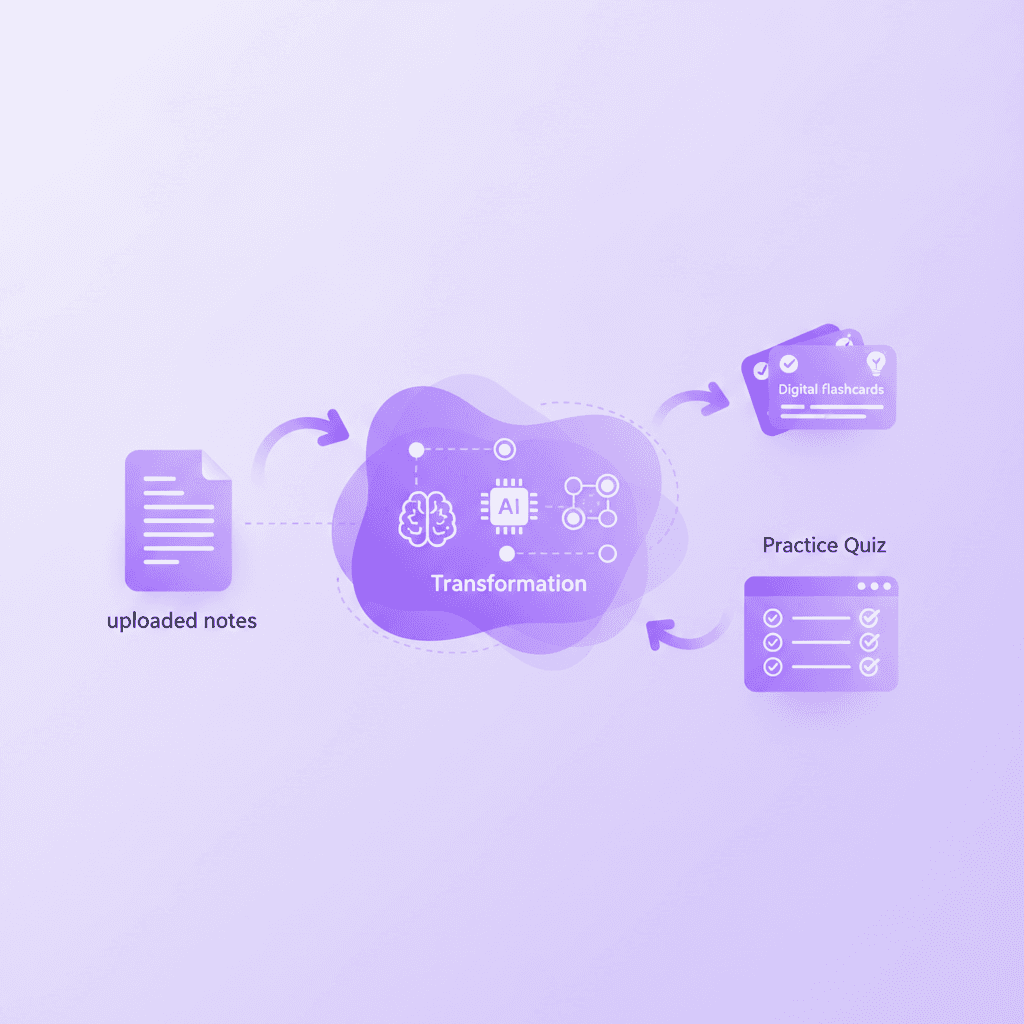
Penseum generates a complete 1-1 learning environment. You simply upload your class slides or textbook PDFs. The system explains the concepts to you step by step, out loud, in real-time voice.
Unlike basic text generators that give the same generic explanation to every student, Penseum sees your actual work on screen. You work through AP calculus or physics problems on the canvas. If you make a mistake, your tutor spots it, marks exactly where you went wrong, and explains what to fix. It keeps teaching until you actually understand the concept.
Actionable Step: Upload your AP class slides to Penseum’s free tier to automatically generate a 1-1 AI tutor experience that explains concepts out loud, catches your mistakes in real-time, and builds custom study guides.
Frequently Asked Questions
How many months in advance should I study for AP exams?
Students should begin AP exam prep about two to three months in advance. Starting in late February or early March gives you eight to twelve weeks to thoroughly review all course units, take practice tests, and target your weakest subjects without experiencing academic burnout.
Are AP prep books actually worth the money?
AP prep books are highly beneficial for providing structured curriculum summaries and full-length practice tests. However, they should supplement, not replace, your actual class notes, as generating your own active recall materials from syllabus-specific content yields better long-term memory retention.
Can you self-study for an AP exam?
Yes, you can successfully self-study for an AP exam by registering for the test through an approved school and using a rigorous, self-guided exam study schedule. Success requires high discipline, utilizing official College Board rubrics, and using AI tools to generate practice questions.
What happens if you fail an AP exam?
Failing an AP exam (scoring a 1 or 2) does not negatively impact your high school GPA or college admissions chances. You simply will not receive college credit for that specific course, meaning you may have to take the introductory level equivalent once you enroll in university.
How do you cram for an AP exam in one week?
While not ideal, cramming for an AP exam in one week requires ruthless prioritization. Focus exclusively on the most heavily weighted units, review official College Board scoring rubrics, and take at least one timed practice test to identify and drill your absolute weakest areas.
[AUTHOR]
Last updated: August 2026
Sources
Dunlosky, J., Rawson, K. A., Marsh, E. J., Nathan, M. J., & Willingham, D. T. (2013). Improving Students' Learning With Effective Learning Techniques: Promising Directions From Cognitive and Educational Psychology. Psychological Science in the Public Interest, 14(1), 4-58. https://pubmed.ncbi.nlm.nih.gov/26173288/
Karpicke, J. D., & Roediger, H. L. (2008). The critical importance of retrieval for learning. Science, 319(5865), 966-968. https://pubmed.ncbi.nlm.nih.gov/18276894/
Beilock, S. L. (2008). Math Performance in Stressful Situations. Current Directions in Psychological Science, 17(5), 339-343. https://scholar.google.com/scholar?q=Beilock+practice+testing+under+pressure
College Board. (2023). Annual AP Program Results. https://scholar.google.com/scholar?q=College+Board+Annual+AP+Program+Results+free+response
Tabibian, B., Upadhyay, U., De, A., Zarezade, A., Schölkopf, B., & Gomez-Rodriguez, M. (2019). Enhancing human learning via spaced repetition optimization. Proceedings of the National Academy of Sciences, 116(10), 3988-3993. https://pubmed.ncbi.nlm.nih.gov/30782808/
Kornell, N. (2009). Optimising learning using flashcards: Spacing is more effective than cramming. Applied Cognitive Psychology, 23(9), 1297-1317. https://scholar.google.com/scholar?q=Kornell+2009+spacing+effects
Kornell, N., & Bjork, R. A. (2007). The promise and perils of self-regulated study. Psychonomic Bulletin & Review, 14(2), 219-224. https://pubmed.ncbi.nlm.nih.gov/17694904/
Related guides
Ready to study smarter?
Start turning your notes into guides, quizzes, and flashcards in seconds.