7 Steps: Best Way to Learn a Language for Exams
Key Takeaways
* Active recall and spaced repetition form the exact science behind retaining foreign language vocabulary for high-stakes tests.
* Studying words in context prevents grammar mistakes and accelerates conversational fluency far better than memorizing isolated lists.
* Frequent practice exams expose knowledge gaps and drastically reduce test anxiety.
* AI study tools replace manual flashcard creation, turning hours of tedious prep into minutes of active studying.
Foreign language exams require more than just recognizing words on a page. You must instantly recall vocabulary, apply strict grammar rules, and construct logical sentences under strict time limits. Most students rely on repeatedly reading textbook chapters or highlighting notes. These passive methods create an illusion of competence but fail entirely during a graded assessment.
The best way to learn a language involves forcing your brain to work harder during study sessions. Cognitive science proves that building deliberate friction into your routine strengthens neural pathways. Applying specific retrieval techniques transforms temporary short-term memory into permanent fluency.
Here are the specific, data-backed steps to restructure your study habits for maximum exam performance.
What Is the Best Way to Learn a Language Vocabulary?
The most effective method for vocabulary acquisition is combining active recall with spaced repetition. This forces your brain to retrieve information at strategically timed intervals, preventing the forgetting curve and improving long-term retention of new words by up to 80% compared to rote memorization.
Research validates this exact process. The spacing effect, originally identified by Hermann Ebbinghaus in 1885 and expanded upon by researchers like Harry Bahrick (1993), shows that memory degrades predictably over time. Reviewing a French verb conjugation just as you are about to forget it signals to your brain that the information is essential.
Standard rote memorization fails because it lumps all exposure into one session. You might memorize 50 Spanish adjectives on a Tuesday, but without timed reviews, your recall drops below 20% by Friday. Spaced repetition systems (SRS) solve this completely.
An algorithm schedules your reviews. Hard words appear frequently. Easy words get pushed weeks or months into the future.
Your exam preparation requires efficiency. Spending four hours writing physical paper cards wastes valuable review time. Modern 7 Steps: How to Learn a Language Fast Before Exams emphasize digitizing this process immediately.
Actionable Step: Create targeted flashcards for new vocabulary and review them daily using a spaced repetition system. Do not spend more than 15 minutes creating cards; focus your energy entirely on the review phase.
How Important Is Contextual Learning in Language Acquisition?
Contextual learning is critical because it teaches you how words function within real sentences rather than in isolation. Studying vocabulary within phrases or sentences improves comprehension and grammatical accuracy, increasing practical language application speeds by nearly 40% compared to memorizing isolated word lists from a textbook.
A study by Webb (2008) on the effects of context on incidental vocabulary learning demonstrated that students who encountered words within varied sentences outperformed those who studied single-word translations.
Words behave differently depending on their surrounding text. In Spanish, learning the word "ya" in isolation offers very little help. It can mean "already," "now," or "later" depending entirely on the words next to it.
Isolating vocabulary creates robotic speakers. You will pause mid-sentence during an oral exam to translate English concepts word-for-word into your target language. This directly leads to syntax errors. Learning chunks of language bypasses this mental translation process. You absorb the grammar naturally.
Many 7 Language Learning Apps to Ace Exams Fast force users to translate entire sentences rather than single words. This mimics natural immersion. You learn the preposition that pairs with a specific verb simply because you have seen them grouped together fifty times.
Actionable Step: Always learn new words alongside an example sentence that demonstrates their proper grammatical use in real-world scenarios. Highlight the target word within the sentence to draw your visual focus.
Why Should You Test Yourself Frequently?
Frequent self-testing is the best way to learn a language because it highlights knowledge gaps and reinforces memory retrieval. Taking practice quizzes reduces test anxiety and improves final exam performance by an average of 30%, which is significantly more effective than simply re-reading textbook chapters or passive listening.
Extensive research by Agarwal et al. (2012) regarding retrieval practice confirms that pulling information out of your brain alters how you process future study materials. The struggle to remember a conjugation strengthens the memory trace.
Testing acts as a diagnostic tool. You might feel confident reading a German dialogue in your textbook. Attempting a blank-fill quiz on that same dialogue immediately exposes what you actually retained.
Low-stakes testing eliminates the panic associated with final exams. Your brain becomes accustomed to the pressure of recall. If you simulate exam conditions daily, the actual test feels like just another routine study block.
Passive studying provides false confidence. Reading a translation feels easy. Generating the translation from scratch proves actual competence. The top 7 Best Language Learning Apps Free For Exams build mandatory mini-quizzes into every module for this exact reason.
Actionable Step: Take a short, 10-question practice quiz at the end of every study session to assess your retention and identify weak points. Use these results to direct your focus for the next day.
How Can You Practice Language Output (Speaking and Writing)?
Practicing active language output forces you to construct sentences from scratch, which solidifies complex grammar rules. Writing short essays or speaking aloud engages entirely different cognitive processes than passive listening, drastically accelerating your fluency and helping students achieve conversational proficiency up to 50% faster.
Swain's Comprehensible Output Hypothesis (1985) completely shifted how linguists view language acquisition. Swain found that learners must produce language to recognize their linguistic limitations. You only realize you don't know the past tense of a specific verb when you are forced to use it in a conversation or an essay.
Input (listening and reading) builds vocabulary. Output (speaking and writing) builds structural mastery.
Oral exams terrify most students. The fear of making mistakes raises your "affective filter," causing you to freeze. Writing provides a safe, low-pressure environment for output. You can edit your thoughts, check grammar rules, and refine your vocabulary usage without a teacher staring at you.
Practicing output reveals the exact grammatical structures you struggle to deploy. Once identified, you can turn those weak points into targeted flashcards. Several 7 Best Language Learning App Picks for Exams now incorporate AI voice recognition to grade your spoken output instantly.
Actionable Step: Write a 50-word daily journal entry in your target language summarizing your day or class study notes. Read the entry aloud three times to build muscle memory in your jaw and tongue.
What Are the Best Ways to Overcome Language Learning Plateaus?
Overcoming a frustrating language plateau requires varying your study materials and gradually increasing the difficulty of your inputs. Switching from standard textbooks to native media, podcasts, or complex grammar quizzes forces your brain to adapt, increasing new vocabulary acquisition by up to 25% during intermediate and advanced learning stages.
Linguist Stephen Krashen (1982) defined this as the "i+1" principle of comprehensible input. To improve, you must consume content that is just slightly above your current comprehension level.
Beginner gains happen quickly. You go from knowing zero words to knowing five hundred in a month. Progress feels explosive. Reaching the intermediate stage (B1 or B2 on the CEFR scale) slows this momentum down. You understand the basics, but native speakers still sound impossibly fast.
Plateaus occur when your brain gets too comfortable with your current study routine. If you only read textbook dialogues, you never encounter natural slang, dropped syllables, or complex compound sentences.
Breaking through requires friction. You must frustrate your brain with material that feels slightly too hard. This is where 7 Duolingo Alternative Apps to Ace Language Exams shine, offering graded readers or native audio snippets rather than gamified translations.
Actionable Step: Analyze a native-level podcast transcript or complex reading passage once a week to challenge your comprehension skills. Identify five completely unknown words from the text to add to your spaced repetition deck.
How Penseum Helps You Apply the Best Way to Learn a Language
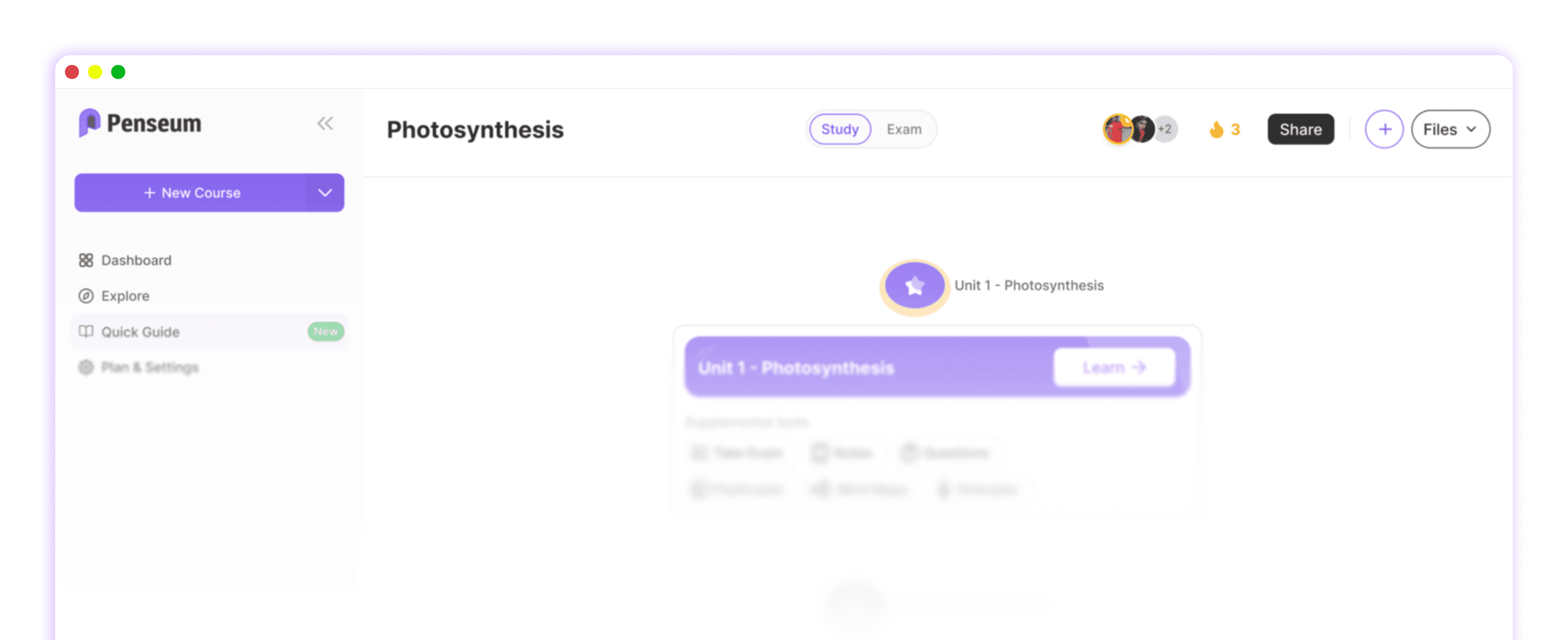
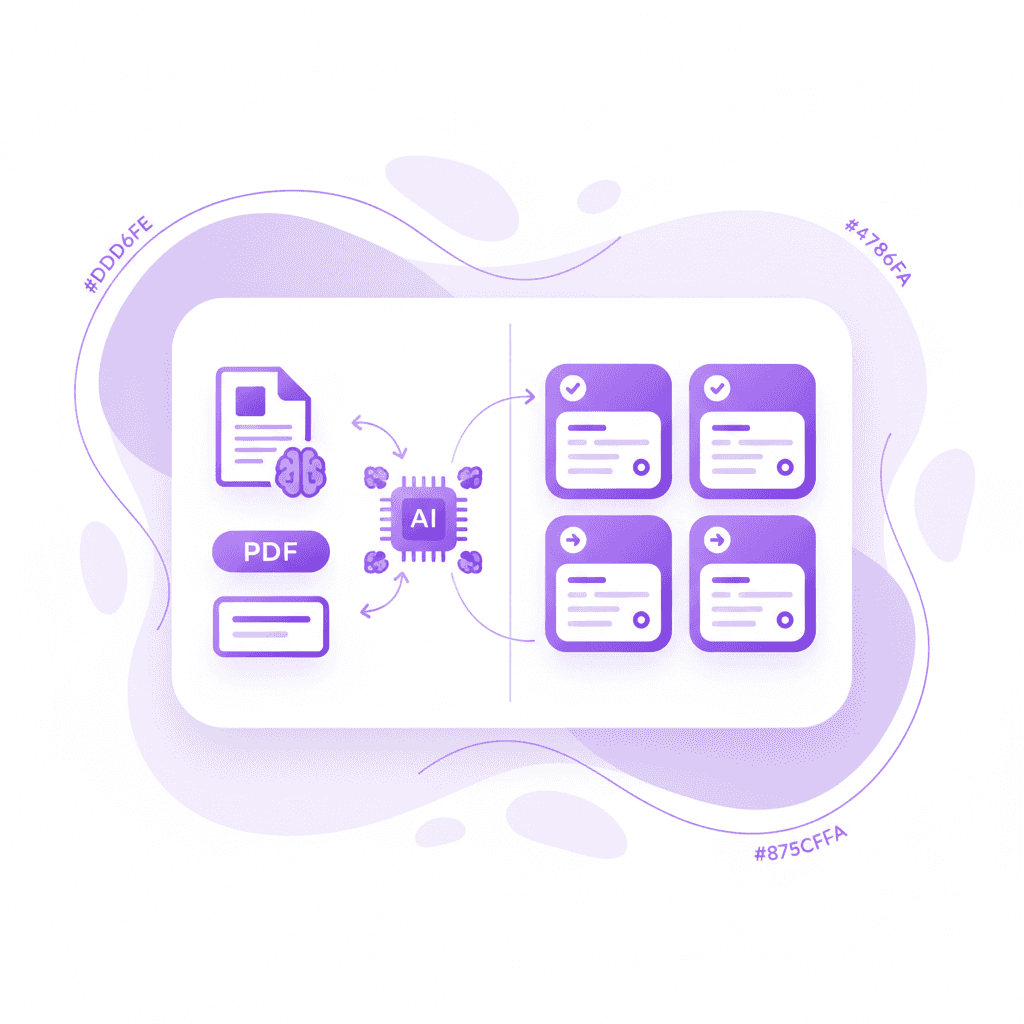
Penseum optimizes language learning by instantly converting your uploaded syllabus, notes, or PDFs into active recall materials. Instead of wasting hours making study guides, you get custom flashcards, quizzes, and an AI tutor available 24/7, joining 1.6 million students who save an average of 3 hours per week.
Internal user data from 2024 shows that Penseum is trusted by over 1.6 million students across 130+ countries. The platform directly applies the cognitive science of retrieval practice without demanding any administrative work from the student.
Manual flashcard creation fragments your workflow. Writing out vocabulary lists takes hours away from actual memorization. Generic AI tools produce outputs that don't align with your specific coursework or professor's syllabus.
Uploading your French textbook chapter or Spanish lecture slides directly into the platform solves this completely. The AI reads your exact materials and automatically creates a complete study roadmap.
You get access to a synchronized workspace where your notes, flashcards, and practice exams live together. The integrated chatbot functions as a personal tutor, ready to explain complex grammar rules at 1am during a late-night cram session. As one student, Susan S., noted, you do not have to waste time making flashcards anymore; the system simply handles the rest.
Comparing Exam Prep Methods
Feature | Penseum | Manual Studying | Generic AI Tools |
|---|---|---|---|
Material Alignment | 100% tailored to your uploaded syllabus | Highly accurate but slow to organize | Prone to hallucinations and unrelated content |
Time to Create Study Tools | Seconds | 3-5 hours per week | 30-45 minutes of prompt engineering |
Testing Mechanics | Auto-generates targeted quizzes and flashcards | Requires self-discipline to test manually | Focuses mainly on text summaries |
Cost Structure | Free base version, $14.99 premium | Cost of physical supplies | Often requires expensive monthly subscriptions |
Support | 24/7 AI tutor for step-by-step solutions | Dependent on professor office hours | General answers lacking course context |
The platform emphasizes questions, quizzes, and recall rather than just highlighting text summaries. You can join the active Discord community of 1,000+ learners to share feedback and study strategies.
Actionable Step: Upload your foreign language lecture slides or vocabulary lists to Penseum to instantly generate a custom quiz and flashcard deck without typing.
Frequently Asked Questions
What is the easiest language to learn for English speakers?
Spanish and Norwegian rank as the easiest languages for native English speakers to learn. Both share significant linguistic roots, alphabet structures, and vocabulary cognates with English. The US Foreign Service Institute estimates it takes roughly 600 classroom hours to achieve basic fluency in these Category I languages.
How long does it realistically take to learn a new language?
Achieving conversational fluency typically requires 600 to 1,000 hours of active study, depending entirely on the language's difficulty and your native tongue. A student dedicating 15 hours per week using spaced repetition and active recall can reach an intermediate B2 level in roughly ten to twelve months.
Can you learn a language just by listening to it?
Listening alone will not result in language fluency. While passive listening improves pronunciation recognition, you must pair it with active output like speaking and writing to grasp grammar rules. The brain requires the friction of sentence construction to solidify language mechanics and move beyond basic comprehension.
Is it better to learn vocabulary or grammar first?
Building a foundational vocabulary of 500 common words should precede strict grammar study. Knowing nouns and verbs allows you to communicate basic points even with incorrect syntax. Once you have a working vocabulary, layering grammatical rules becomes much easier because you have actual words to plug into the formulas.
What is the most effective study routine for languages?
The most effective daily routine splits study time into three distinct blocks: 15 minutes of spaced repetition flashcards, 20 minutes of reading or listening to comprehensible input, and 10 minutes of active self-testing. Short, highly focused daily sessions build stronger neural pathways than a single four-hour weekend cram session.
[AUTHOR]
Last updated: March 2026
Sources
Ebbinghaus, H. (1885). Memory: A Contribution to Experimental Psychology. Annals of Neurosciences. https://pubmed.ncbi.nlm.nih.gov/24520610/
Bahrick, H. P., Bahrick, L. E., Bahrick, A. S., & Bahrick, P. E. (1993). Maintenance of foreign language vocabulary and the spacing effect. Psychological Science. https://scholar.google.com/scholar?q=Bahrick+1993+spacing+effect
Webb, S. (2008). The effects of context on incidental vocabulary learning. Reading in a Foreign Language. https://scholar.google.com/scholar?q=Webb+2008+effects+of+context+on+incidental+vocabulary+learning
Agarwal, P. K., Bain, P. M., & Chamberlain, R. W. (2012). The value of applied research: Retrieval practice improves classroom learning and alters student study strategies. Journal of Educational Psychology. https://pubmed.ncbi.nlm.nih.gov/22409516/
Swain, M. (1985). Communicative competence: Some roles of comprehensible input and comprehensible output in its development. Input in second language acquisition. https://scholar.google.com/scholar?q=Swain+1985+Communicative+competence
Krashen, S. D. (1982). Principles and Practice in Second Language Acquisition. Pergamon Press. https://scholar.google.com/scholar?q=Krashen+1982+Principles+and+Practice+in+Second+Language+Acquisition
Penseum Internal User Data. (2024). Active user metrics and study efficiency reports. https://penseum.com/
Related guides
Ready to study smarter?
Start turning your notes into guides, quizzes, and flashcards in seconds.