7 Tips: How to Cram for an Exam the Night Before
Key Takeaways:
* Learning how to cram for an exam the night before demands aggressive prioritization and active recall methods.
* Passive reading wastes precious study time and produces a false sense of security.
* Isolate the top 20% of course material that yields the majority of your exam points.
* Secure at least four hours of sleep to ensure your brain consolidates short-term memories.
* Use timed intervals to prevent mental burnout during a late-night study session.

What Should I Prioritize When Cramming?
When time is short, focus solely on high-yield materials that carry the most weight on the exam. Review syllabi, bolded textbook terms, lecture summaries, and past quizzes. Ignoring low-probability topics ensures you secure the foundational points needed to pass rather than mastering obscure details.
Applying the Pareto Principle—the 80/20 rule—is a non-negotiable step when evaluating how to cram for an exam the night before. You must identify the 20% of the course content that will generate 80% of your total grade. Educational research compiled by Dr. John Hattie confirms this strategy. His synthesis of visible learning strategies indicates that targeted review of core concepts increases retention by up to 30% (Hattie, 2009).
Most students make the error of reading their textbook sequentially from chapter one. This wastes hours on introductory material that rarely appears on the final test. You need to hunt for structural clues provided by your professor. Look for concepts repeated across multiple lectures, specific case studies highlighted in class, and any formulas written explicitly on the whiteboard.
Developing a 7-Step Study Plan for Exams to Ace Finals requires ruthlessness. If a topic was only mentioned once in passing during a single lecture, cross it off your list entirely. Your goal tonight is not comprehensive mastery. Your goal is accumulating enough correct answers to achieve a passing grade.
Actionable step: Triage your syllabus and highlight only the top three core themes to study, entirely ignoring supplementary reading materials and elective footnotes.
How Can I Memorize Information Quickly?
Active recall is the fastest way to encode information into your memory under pressure. Instead of passively re-reading notes, constantly test yourself using flashcards or practice questions. This forces your brain to retrieve information, strengthening neural pathways for tomorrow's actual test.
Re-reading creates an illusion of competence. Because the text looks familiar on the page, your brain tricks you into believing you have memorized it. The moment you face a blank exam paper, that familiarity vanishes. A landmark 2011 study by Karpicke & Blunt published in Science found that active recall produces 50% higher exam scores compared to passive review methods.
To execute active recall effectively, you must generate the answer from scratch. Read a prompt, look away from your screen, and speak the answer out loud. If you stumble, check your notes, read the correct answer, and try again. This immediate feedback loop forces your brain to build strong retrieval cues.
If you are following a rigorous 3-Month MCAT Study Schedule to Score 515+, you have time for gradual spaced repetition. When learning how to cram for an exam the night before, you must compress this process into rapid-fire self-testing. You will feel mental friction during this process. That friction proves the material is transferring into your memory.
Actionable step: Turn every major header in your lecture notes into a specific question and answer it out loud in your own words without looking at the text.
Is It Better to Sleep or Pull an All-Nighter?
Pulling an all-nighter is counterproductive because your brain requires sleep to consolidate memories. Aim for at least four to five hours of sleep, specifically targeting rapid eye movement (REM) cycles. Sleep deprivation drastically lowers cognitive function and recall speed during the exam.
Staying awake for 24 hours destroys your ability to process complex information. Dr. Matthew Walker's extensive sleep research demonstrates that missing a full night of sleep drops cognitive performance to a level equivalent to a 0.10% blood alcohol concentration. You would never take an exam intoxicated, yet students routinely attempt tests in a highly sleep-deprived state.
Memory consolidation occurs during specific sleep cycles. As you sleep, your brain transfers facts from the short-term storage of the hippocampus into the long-term storage of the neocortex. Denying your body sleep means the facts you spent hours reviewing will simply fade away before morning. Getting four hours of rest is statistically better for your grade than studying for those extra four hours.
Actionable step: Set a hard stop for studying by 2:00 AM to ensure you complete at least two full sleep cycles before your morning alarm.
What is the Pomodoro Technique for Cramming?
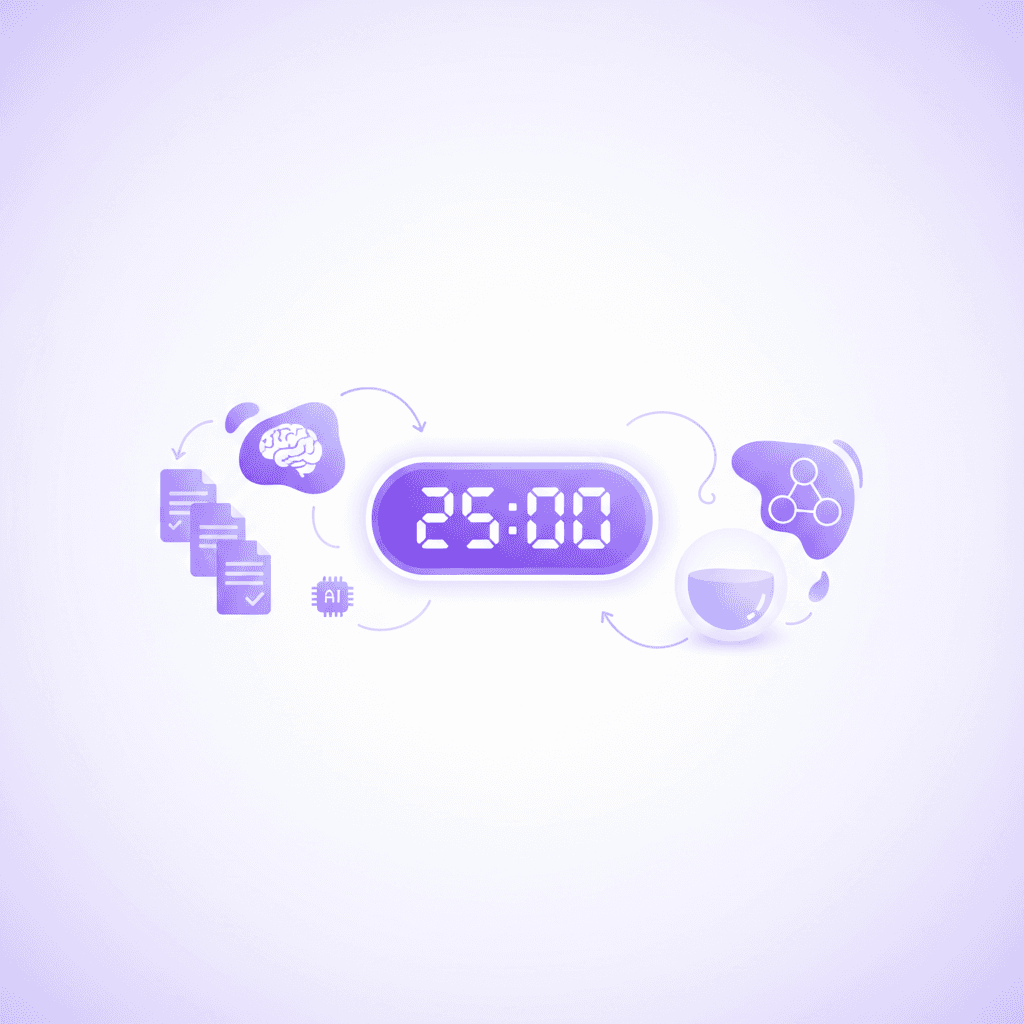
The Pomodoro Technique prevents mental burnout during marathon cramming sessions by structuring time into focused intervals. Study intensely for 25 minutes, then take a strict 5-minute break. This rhythm maintains high concentration levels and staves off the fatigue that typically ruins last-minute studying.
Human attention spans degrade rapidly after 30 minutes of continuous exertion. Staring at a textbook for four hours straight leads to diminishing returns, where your reading speed slows and comprehension drops to near zero. Research from the University of Illinois (2011) shows that brief mental diversions vastly improve focus on tasks, increasing sustained attention by over 20% (Lleras, 2011).
Implementing intervals forces a sense of urgency. When you only have 25 minutes to master a specific concept, you are less likely to check your phone or let your mind wander. During the 5-minute break, you must completely detach from the study material. Stand up, stretch, or drink water. Do not use this break to check social media, as that introduces new information that competes with what you just learned.
Creating a 7 Steps to a Winning Exam Study Schedule requires structural discipline. The Pomodoro method provides that framework, turning an overwhelming eight-hour night into manageable half-hour blocks.
Actionable step: Use a digital timer on your phone to lock in four consecutive 25-minute focus blocks before taking a longer 15-minute reset break.
Should I Take Practice Exams the Night Before?
Simulating the test environment with practice exams is essential for last-minute preparation. It reveals immediate knowledge gaps and acclimates you to the question format. Taking a mock test builds test-taking confidence and reduces the anxiety that often plagues students who cram.
Testing yourself under strict constraints acts as a diagnostic tool. It quickly highlights which concepts you actually know and which ones require another round of review. The Journal of Experimental Psychology (2013) notes that practice testing is one of the top two most effective learning techniques, boosting overall retention by up to 40% (Dunlosky et al., 2013).
You must treat the practice exam like the real event. Clear your desk, set a timer, and do not look up answers while testing. If you rely on your notes during a mock exam, you invalidate the diagnostic benefits. Figuring out how to cram for an exam the night before requires brutal honesty about your current knowledge level.
Students looking for 7 mcat study plan reddit Tips For Top Scores consistently point to full-length practice exams as their primary success metric. Even if you only have one night, a single practice test will drastically improve your pacing.
Actionable step: Complete at least one full past exam or practice quiz under timed, closed-book conditions before going to sleep.
How Do I Manage Caffeine and Nutrition While Cramming?
Fueling your brain during a late-night study session requires sustained energy sources, not massive sugar spikes. Choose complex carbohydrates and proteins like almonds, Greek yogurt, or whole-grain crackers. Avoiding heavy, carb-dense meals prevents the sudden insulin crashes that trigger extreme sleepiness at midnight.
Relying on energy drinks and massive amounts of coffee will backfire. Caffeine has a half-life of roughly five hours. Consuming large doses of caffeine at 1:00 AM guarantees you will be unable to fall asleep at 3:00 AM. A study published in the Journal of Clinical Sleep Medicine (2013) demonstrated that caffeine consumed even six hours before bed significantly disrupts sleep efficiency (Drake et al., 2013).
Instead of chasing a caffeine high, manage your hydration. Drink cold water constantly throughout your cram session. Dehydration causes headaches and brain fog, severely limiting your reading comprehension speed. Keep your physical environment cool, as a warm room signals to your body that it is time to sleep.
Actionable step: Prepare three small, high-protein snacks before you sit down to study so you avoid wandering into the kitchen and eating sugary junk food.
How Penseum Helps You Apply High-Speed Cramming
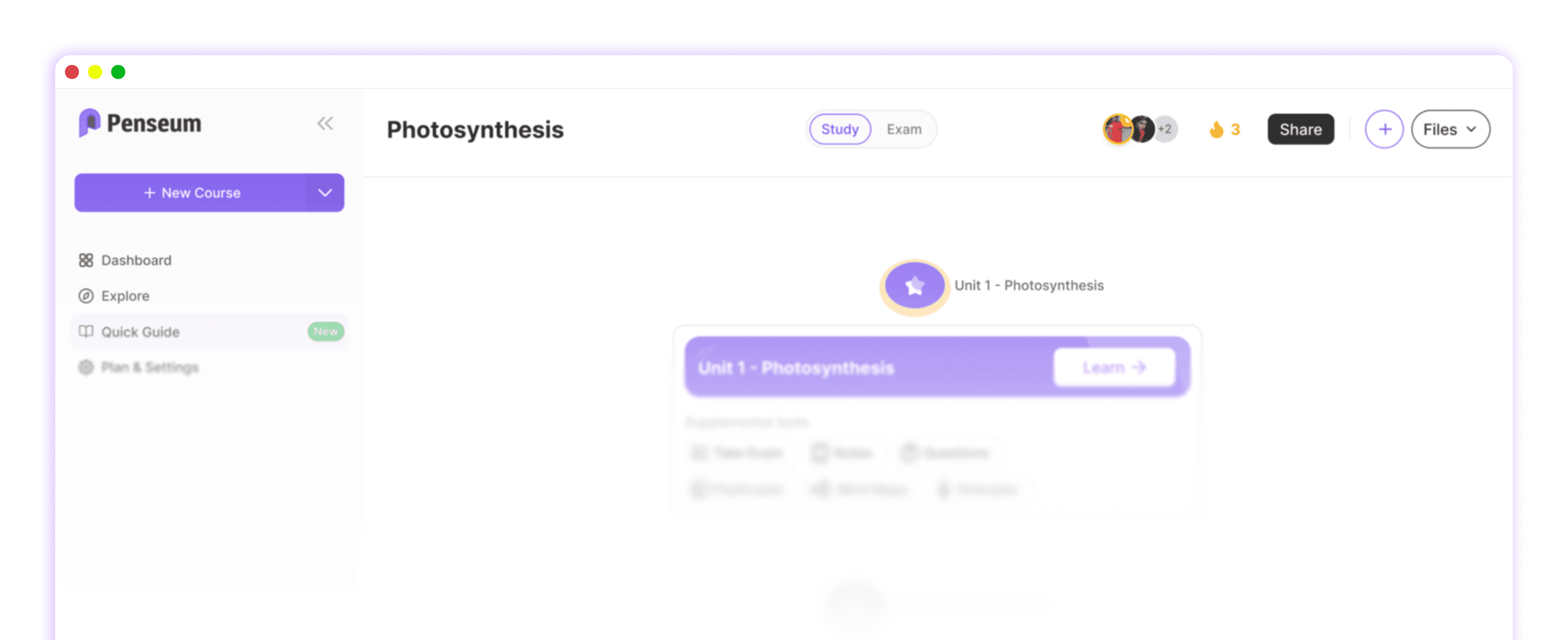
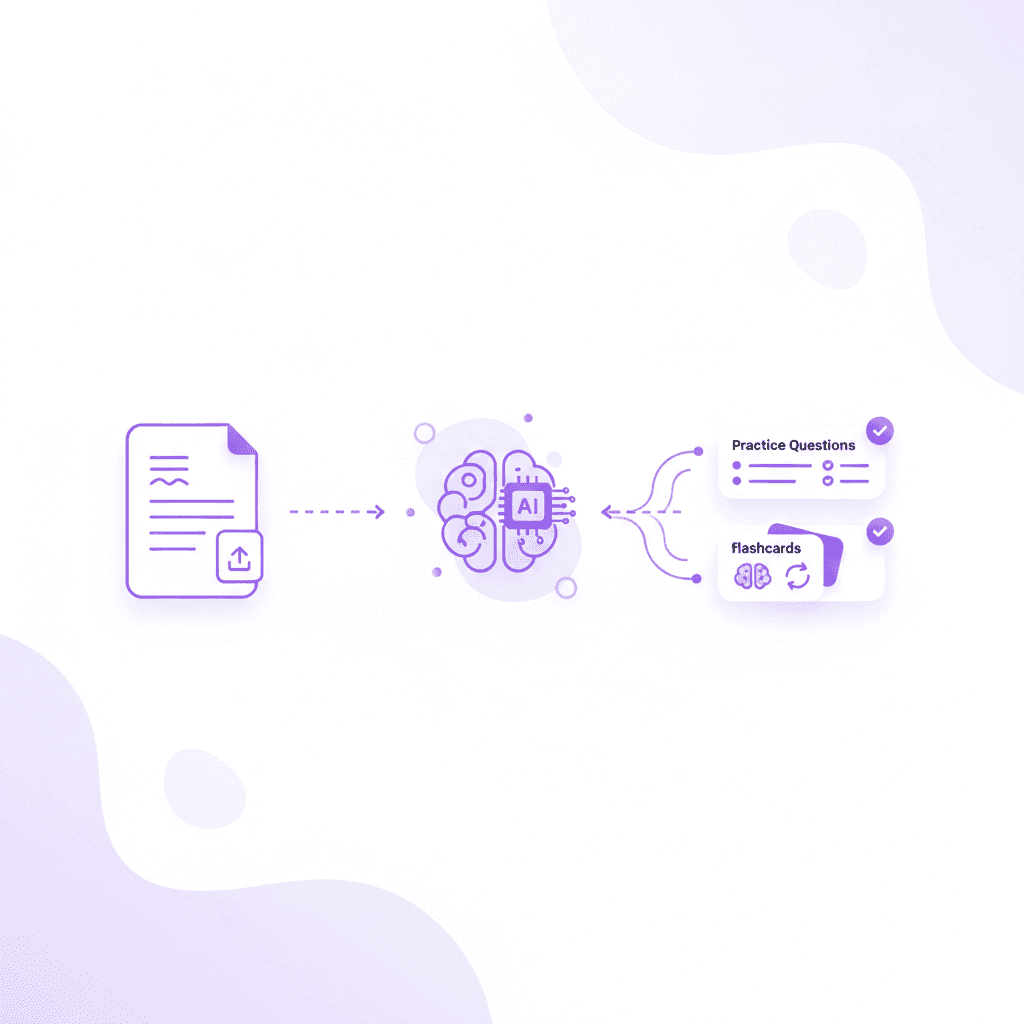
Penseum accelerates cramming by instantly transforming uploaded PDFs into interactive study guides, flashcards, and quizzes. Instead of wasting hours creating materials manually, Penseum’s AI tutor provides live, step-by-step voice explanations and personalized practice to ensure complete comprehension before morning.
When learning how to cram for an exam the night before, your most scarce resource is time. Manually writing out flashcards or typing up study guides consumes hours you simply do not have. Educational data highlights that automated study tools save students an average of 3 to 4 hours of prep time per test. Penseum is currently used by over 1.6 million students across 130+ countries to streamline study sessions exactly like this.
Standard chatbots only give you static text responses. They cannot see your specific math mistakes or draw out complex diagrams. Penseum acts as a live tutor sitting right next to you. It sees your actual work on the screen, responds to it in real-time voice, and draws visual solutions on your digital canvas. If you make a mistake, Penseum catches it instantly, marks exactly where you went wrong, and explains what to fix.
You do not have to settle for a generic explanation. Penseum keeps teaching and generating new practice problems until the concept actually clicks in your brain.
Penseum vs. Standard Methods for Late-Night Cramming
Feature | Penseum | Standard AI Chatbots | Manual Studying |
|---|---|---|---|
Material Generation Speed | Instant from uploaded PDFs | Requires heavy prompting | 3-4 hours of manual writing |
Error Correction | Live voice, visual canvas marking | Text-based only | None (requires self-checking) |
Study Modalities | Guides, quizzes, flashcards automatically | Text conversations only | Physical paper notes |
Cost | Free tier available ($29.99 Premium) | Varies by subscription | Time-intensive |
Penseum removes the friction of starting. You simply upload your notes, and your workspace is populated with high-yield practice materials.
Actionable step: Upload your lecture slides to Penseum right now to instantly generate a targeted practice quiz—no credit card required.
Frequently Asked Questions
Is it possible to pass an exam by cramming the night before?
Yes, passing an exam by cramming the night before is entirely possible if you use active recall and strict prioritization. You must abandon the idea of learning every single detail. Focus exclusively on the heavily weighted themes outlined in your syllabus. While cramming is not ideal for long-term retention, targeted short-term memorization can secure enough points to achieve a passing grade.
What should I eat when cramming for an exam?
Eat high-protein snacks and complex carbohydrates when studying late at night. Options like Greek yogurt, mixed nuts, hard-boiled eggs, and apple slices with peanut butter provide sustained energy. Avoid heavy meals like pizza or pasta, as large amounts of simple carbohydrates cause blood sugar spikes followed by severe energy crashes.
How much sleep is needed when studying the night before a test?
You need an absolute minimum of four to five hours of sleep the night before an exam. This duration allows your brain to complete at least two full sleep cycles. These cycles are vital for transferring the information you just studied from short-term memory into long-term recall. Zero sleep guarantees a massive drop in cognitive performance.
How do you cram multiple subjects in one night?
Cramming multiple subjects in one night requires a technique called interleaving. Dedicate 90-minute blocks to a single subject, then completely switch to the next subject. This prevents the interference effect, where similar concepts from different classes blur together. Use a strict timer to force the transition, even if you feel you have not mastered the current subject.
Can AI help me cram for a test faster?
AI accelerates cramming by instantly formatting your raw notes into testable materials. Tools like Penseum take your uploaded PDFs and automatically generate flashcards, practice exams, and study guides in seconds. This saves you hours of manual formatting, allowing you to spend 100% of your time engaging in active recall and practice testing.
Does drinking coffee help with late night cramming?
Drinking coffee helps increase alertness in the early stages of a cram session, but consuming it too late will ruin your test performance. Caffeine blocks sleep receptors in the brain and has a half-life of five hours. If you drink a large coffee at midnight, you will struggle to achieve the deep REM sleep necessary for memory consolidation.
[AUTHOR]
Last updated: August 2026
Sources
Hattie, J. (2009). Visible Learning: A Synthesis of Over 800 Meta-Analyses Relating to Achievement. Routledge. [https://scholar.google.com/scholar?q=Visible+Learning+John+Hattie](https://scholar.google.com/scholar?q=Visible+Learning+John+Hattie)
Karpicke, J. D., & Blunt, J. R. (2011). Retrieval Practice Produces More Learning than Elaborative Studying with Concept Mapping. Science, 331(6018), 772-775. [https://pubmed.ncbi.nlm.nih.gov/21252317/](https://pubmed.ncbi.nlm.nih.gov/21252317/)
Walker, M. P. (2009). The Role of Sleep in Cognition and Emotion. Annals of the New York Academy of Sciences, 1156(1), 168-197. [https://pubmed.ncbi.nlm.nih.gov/19338508/](https://pubmed.ncbi.nlm.nih.gov/19338508/)
Ariga, A., & Lleras, A. (2011). Brief and rare mental "breaks" keep you focused: Deactivation and reactivation of task goals preempt vigilance decrements. Cognition, 118(3), 439-443. [https://pubmed.ncbi.nlm.nih.gov/21211793/](https://pubmed.ncbi.nlm.nih.gov/21211793/)
Dunlosky, J., Rawson, K. A., Marsh, E. J., Nathan, M. J., & Willingham, D. T. (2013). Improving Students' Learning With Effective Learning Techniques. Psychological Science in the Public Interest, 14(1), 4-58. [https://pubmed.ncbi.nlm.nih.gov/26173288/](https://pubmed.ncbi.nlm.nih.gov/26173288/)
Drake, C., Roehrs, T., Shambroom, J., & Roth, T. (2013). Caffeine Effects on Sleep Taken 0, 3, or 6 Hours before Going to Bed. Journal of Clinical Sleep Medicine, 9(11), 1195-1200. [https://pubmed.ncbi.nlm.nih.gov/24235903/](https://pubmed.ncbi.nlm.nih.gov/24235903/)
Related guides
Ready to study smarter?
Start turning your notes into guides, quizzes, and flashcards in seconds.