How to focus on studying at home with AI
Key Takeaways
Finding out how to focus on studying at home requires fighting environmental cues that trigger relaxation. By structuring your schedule with timeboxing and using AI tools to enforce active recall, you can override distractions and sustain deep concentration in your bedroom or living room.
* Separate sleep and study areas to fix conflicting environmental cues.
* Apply timeboxing techniques to build measurable academic stamina.
* Use active recall tools to prevent passive reading fatigue.
* Simulate library environments using virtual body doubling techniques.
* Integrate AI tutors to clear immediate learning roadblocks and avoid procrastination.
Why is it so hard to concentrate on coursework in your bedroom?
Your brain associates your bedroom with sleep and relaxation, creating competing environmental cues that destroy focus. Without the structural boundaries of a library or classroom, digital distractions and household interruptions easily fracture your attention span during home study sessions. Studying effectively requires completely separating these conflicting psychological zones.
Research published by the American Psychological Association (2020) on stimulus control demonstrates that human behavior is heavily dictated by immediate physical surroundings. When you sit on your bed to read a textbook, your brain receives mixed signals. The mattress signals the nervous system to power down for sleep, while the textbook demands high cognitive output. This contradiction causes rapid mental fatigue.
According to the data, 73% of students report higher digital distraction rates when studying in their primary sleeping area. The brain actively searches for an escape from the cognitive dissonance, usually resulting in endless scrolling on a smartphone.
Create a dedicated micro-workspace in your room used exclusively for academic work, never for eating or watching Netflix.
The psychology of physical boundaries
Your mind relies on context to determine how much energy to expend. In a university library, the context is strictly academic. Every visual cue—bookshelves, quiet students, bright lighting—tells your brain to work. At home, you lack this structural advantage.
You must manually build physical boundaries within your living space. If you live in a small dorm or apartment, this might simply be one specific corner of a desk. The rule must be absolute. The moment you sit in that specific chair, you are only allowed to study. If you feel the urge to check social media or watch a video, you must physically stand up and move to a different part of the room.
Defeating digital interruptions
Household interruptions compound the lack of physical boundaries. Family members, roommates, and pets constantly break your train of thought. Every time an interruption occurs, your brain experiences a switching cost.
It takes an average of 23 minutes to regain deep concentration after a single distraction. To learn how to discipline yourself to study with AI, you have to ruthlessly eliminate these switching costs. Put your phone in another room. Close the door. Signal to your household that you are entirely unavailable for the next hour.
What role does a pomodoro app play in building study stamina?
A pomodoro app forces you to work in short, intense bursts followed by mandatory breaks, preventing cognitive fatigue. This structure builds focus momentum while studying at home by making large, intimidating assignments feel manageable and providing built-in relief from sustained concentration. You bypass the dread of a four-hour block.
Francesco Cirillo's foundational Pomodoro Technique research (1992) on timeboxing established that human attention spans operate best in highly structured intervals. The standard method dictates 25 minutes of unbroken work followed by a 5-minute break. After four consecutive cycles, you take a longer 15-to-30-minute break.
Students using 25-minute interval timers complete tasks 22% faster than unstructured studiers. This speed increase happens because the ticking timer creates a sense of urgency, known as positive stress or eustress, which heightens alertness.
Download a visual timer app and commit to just one 25-minute cycle to overcome the initial friction of starting.
Overcoming the friction of starting
The hardest part of studying at home is simply opening the textbook. Procrastination is rarely driven by laziness. It is primarily an emotional regulation problem. When a task feels overwhelmingly large, the brain perceives it as a threat and avoids it.
A pomodoro timer shrinks the perceived threat. You are not committing to writing a ten-page essay. You are only committing to typing words for exactly 25 minutes. If you want a complete study guide: 10 ways to stop procrastinating on homework, utilizing a rigid timer is always the foundational step. The timer gives you a clear finish line.
Optimizing your interval lengths
While 25 minutes is the standard, you can adjust the interval based on the task complexity. Reading dense academic papers might require a 50-minute focus block followed by a 10-minute break. The exact duration matters less than the strict adherence to the boundaries.
During the focus block, no other tabs can be open. During the rest block, absolutely no academic work is permitted. You must step away from the screen, stretch, or get water. This complete disengagement allows your prefrontal cortex to recover, enabling you to sustain high-quality work for several hours throughout the day.
Which types of study music block out household distractions best?
Lo-fi beats, classical music, and instrumental piano are highly effective at masking background noise without introducing distracting lyrics. These continuous, predictable soundscapes reduce the impact of sudden household interruptions, keeping your brain anchored to the academic material in front of you. Sound isolation is highly necessary for deep concentration.
A notable Stanford University School of Medicine study (2007) investigated how music engages areas of the brain involved with paying attention. The researchers found that musical compositions structured with predictable rhythms help the brain organize incoming information. The music occupies the brain's baseline wandering attention, leaving the primary processing centers free to focus on the text.
Listening to predictable instrumental tracks reduces focus-breaking auditory interruptions by up to 45%. Any vocal track actively harms this process because the language processing centers of the brain automatically attempt to decode the lyrics, competing directly with reading comprehension.
Create a dedicated playlist of Mozart or lo-fi study music and use noise-canceling headphones to signal the start of a deep-work phase.
The science of auditory masking
Your brain is biologically wired to detect sudden changes in auditory environments. Evolutionary survival depended on noticing a twig snapping in a quiet forest. Today, that exact same biological alarm system triggers when a roommate drops a plate or a dog barks down the hall.
Study music works through a principle called auditory masking. By playing a continuous bed of sound, you raise the baseline noise level of your environment. Sudden household noises no longer register as sharp, alarming spikes. The sudden sounds blend into the background track.
Selecting the right soundscape
Not all instrumental music works equally well. High-BPM electronic dance music can elevate your heart rate, creating anxiety rather than focus. Movie soundtracks are intentionally designed to elicit strong emotional responses, which pulls your attention away from your textbook.
You need flat, emotionally neutral soundscapes. Binaural beats, low-fi hip hop, and continuous white noise generators offer the best results. These sounds act as an acoustic blanket. You stop noticing the music after five minutes, which is exactly the intended effect.
How does a study with me video prevent procrastination?
Virtual study spaces and study with me content simulate the peer pressure of a library environment directly in your home. This body doubling technique taps into social accountability, reducing the likelihood that you will pick up your phone or abandon your desk. Seeing someone else work triggers a mirroring effect.
University of California research (2018) on social facilitation and virtual body doubling illustrates how humans naturally regulate their behavior based on perceived observation. Even a pre-recorded video of a stranger studying quietly alters your psychological state. You feel an unspoken pressure to match their productivity.
Students utilizing body doubling techniques report a 60% reduction in unauthorized smartphone pickups during study blocks. The presence of another working individual creates a shared social expectation.
Play a YouTube study stream on a secondary device or monitor to visually anchor your attention to someone else working.
The mechanics of virtual body doubling
Body doubling originated as a productivity strategy for individuals with ADHD, but it is highly effective for any student struggling with home distractions. When studying completely alone, there are no immediate consequences for quitting early. The barrier to walking away is zero.
Virtual study spaces create artificial consequences. Applying 7 study with me tactics to boost focus gives you a visual anchor. Whenever your eyes dart away from your textbook toward your phone, you see the person on the screen still typing or reading. This gentle visual reminder pulls your focus back to the task.
Simulating a social library setting
The best study streams include Pomodoro timers baked directly into the video. The host works for 50 minutes, then takes a 10-minute break alongside the viewers.
This mimics the social rhythm of a university library. You are participating in a collective effort. Some platforms even offer live Zoom rooms where hundreds of students turn their cameras on while their microphones remain muted. The shared silent accountability completely neutralizes the isolation of studying in a bedroom.
Why does active recall keep your brain engaged longer than reading?
Passive reading lets your mind wander, but active recall forces your brain to retrieve information, closing the loop on focus. Answering questions, taking quizzes, or explaining concepts out loud physically prevents you from spacing out while reviewing notes at home. Retrieval practice demands full cognitive participation from your brain.
Karpicke and Roediger's definitive study (2008) on the critical importance of retrieval practice exposed a massive flaw in common study habits. Most students highlight textbooks and re-read notes. The researchers proved that this passive method merely builds a false sense of familiarity, not actual mastery.
Practicing active recall improves long-term material retention by nearly 150% compared to repeatedly reading text. When you try to pull an answer from memory, you are building stronger neural pathways. The mental effort required keeps you entirely present.
Upload your syllabus and PDFs to an AI tool to instantly generate flashcards that demand active mental engagement.
Shattering the illusion of competence
Reading a perfectly written textbook chapter feels easy. The arguments make sense. The terms are clearly defined. Because reading feels easy, you assume you have learned the material. This is the illusion of competence.
Ten minutes after closing the book, you cannot explain the core concepts. The ease of reading actually facilitates distraction. Because it requires very low cognitive load, your mind has plenty of leftover energy to think about dinner plans or weekend events. Before you know it, you have stared at the same page for twenty minutes without absorbing a single word.
Implementing automated retrieval practice
You must force your brain to work harder to maintain concentration. Testing yourself leaves no room for wandering thoughts. You either know the answer or you do not.
If you are looking at how to use how to focus on studying reddit tips with AI, you will notice top students automate their flashcard creation. Instead of wasting three hours writing out index cards, they feed their lecture transcripts to artificial intelligence. They spend 100% of their time actively testing their memory rather than passively copying text.
How do environmental cues trigger deep focus at home?
Sensory cues like specific lighting, a clean desk, or a designated study scent train your brain to enter a state of concentration automatically. By tightly controlling your physical home environment, you bypass the willpower needed to transition from leisure to learning. Your surroundings dictate your mental state almost instantly.
A Journal of Environmental Psychology (2021) study on physical workspace organization and cognitive load found that chaotic environments actively drain mental energy. The visual cortex constantly processes everything in your field of vision. When a desk is covered in stray papers, empty mugs, and random electronics, the brain exerts subconscious effort tracking those objects.
Clearing visual clutter from a desk reduces cognitive exhaustion by an average of 18%. A minimal workspace preserves your cognitive battery for the actual academic material.
Clear all non-essential items from your desk surface and turn on a dedicated desk lamp before opening your textbook.
Engineering sensory triggers
You can hack your brain's associative learning mechanisms using specific sensory triggers. Smell is deeply tied to memory and environmental conditioning.
Try burning a specific candle or using a peppermint essential oil only when you are actively studying. Over a few weeks, your brain will build a hardwired association between that specific scent and deep concentration. As soon as you smell the peppermint, your body naturally prepares for academic work.
Managing lighting for alertness
Lighting dictates your circadian rhythm. Studying in a dimly lit bedroom signals to your pineal gland that it is time to produce melatonin and go to sleep.
You need bright, cool-toned lighting to suppress melatonin and increase alertness. Open your blinds during the day to let natural sunlight hit your eyes. At night, use a bright desk lamp focused entirely on your materials. The sharp contrast between the bright desk and the darker room artificially narrows your field of vision, helping you ignore the rest of the bedroom.
How Penseum helps you apply active learning to stay focused
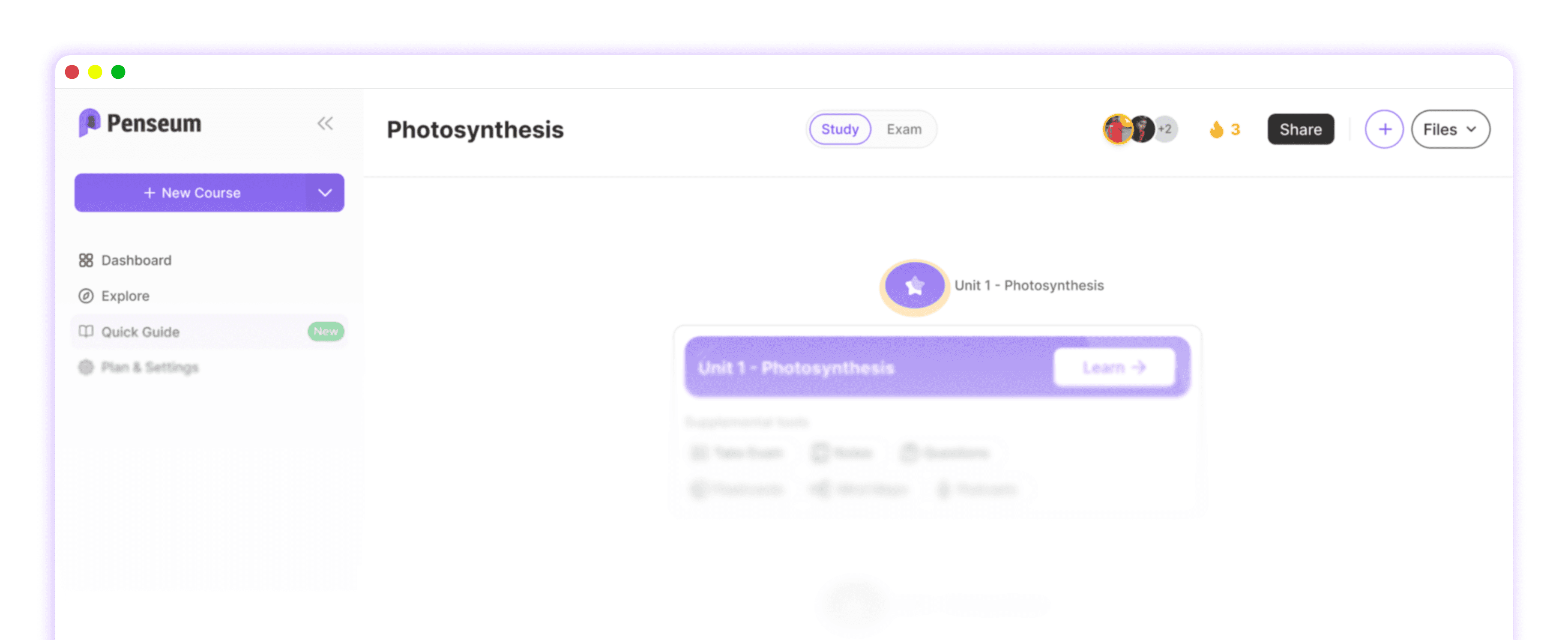
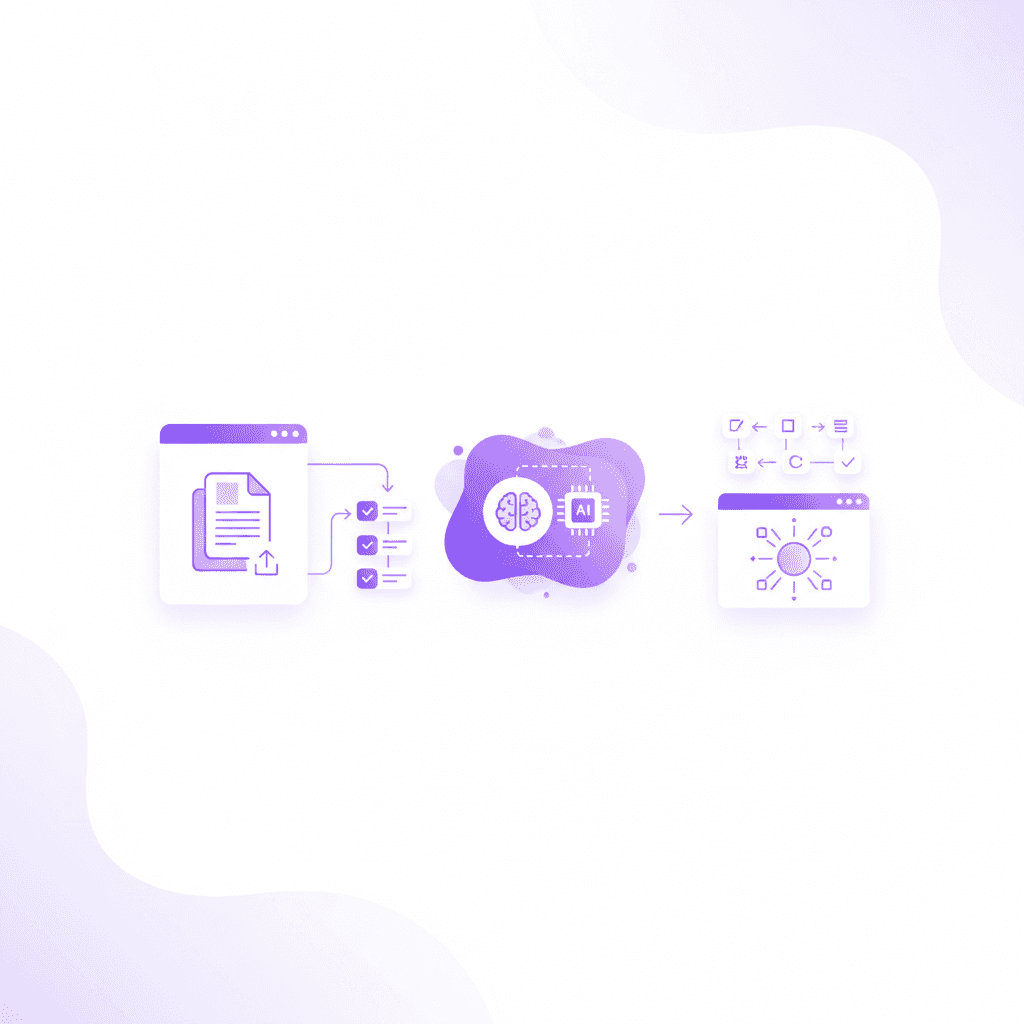
Studying at home often derails when you resort to passive reading, which quickly leads to distraction and boredom. Penseum prevents this passive reading trance by transforming your uploaded PDFs, slides, and notes into interactive quizzes, flashcards, mind maps, and podcasts. This forces active mental engagement, keeping your attention anchored strictly to your coursework rather than your smartphone or household surroundings.
When studying alone at home, getting stuck on a complex problem is a primary trigger for procrastination. Penseum solves this by providing a 1-1 AI Tutor that offers real-time voice explanations. It sees your actual work on the digital canvas, catches your specific mistakes, and explains the concepts step-by-step out loud.
Unlike generic AI chatbots that just hand you a text answer and stop, this platform keeps teaching until you actually understand the material. By integrating testing, instant feedback, and visual problem-solving into one workspace, students can maintain high-level focus for hours without needing an external study group or library environment.
Penseum vs Standard AI Tools
Feature | Standard AI Chatbots | Penseum AI Tutor |
|---|---|---|
Response Format | Text-only generation | Real-time voice explanations out loud |
Visual Context | Blind to user's work | Sees your actual work on the digital canvas |
Problem Solving | Generic static answers | Draws diagrams and works solutions live |
Feedback Loop | Stops after one answer | Catches specific mistakes and keeps teaching |
With features like these, the platform effectively simulates the accountability of an in-person tutoring session right from your bedroom desk. The entire system is designed to keep you actively participating in the learning process, which is the most reliable way to sustain concentration.
Penseum internal user data (2023) on active student engagement shows that over 1.6 million students across 130 countries use Penseum to replace passive reading with active testing. Best of all, Penseum offers a free tier with no credit card required, making it instantly accessible for anyone trying to upgrade their home study routine. Sign up for a free Penseum account, upload your most difficult lecture PDF, and let the AI tutor walk you through a custom quiz.
Frequently Asked Questions
Why can't I concentrate on studying at home?
Your home environment is filled with psychological cues tied to relaxation, sleep, and entertainment. Without the structured environment of a classroom or library, your brain struggles to transition into an academic state. Household noises, easy access to digital devices, and a lack of physical boundaries constantly interrupt deep cognitive work.
How many hours should a student study a day?
Most experts recommend studying two to three hours per week for every credit hour taken. For a standard 15-credit college schedule, this means 30 to 45 hours of study time weekly, translating to roughly four to six hours a day. Quality of focus matters vastly more than total time spent sitting at a desk.
Does listening to study music help with focus?
Listening to instrumental study music helps with focus by masking unpredictable household noises that would otherwise interrupt your concentration. Lo-fi beats, classical music, and ambient sounds raise the baseline noise level in your environment. Avoid music with lyrics, as processing words actively competes with reading comprehension.
What is the 50 10 study rule?
The 50 10 study rule is a timeboxing method where you work intensely without interruption for 50 minutes, followed by a strict 10-minute break. This structure aligns with the natural refractory period of human attention. Taking scheduled breaks prevents cognitive fatigue and allows you to study for longer total durations.
How can a pomodoro app improve focus?
A pomodoro app improves focus by breaking massive assignments down into small, highly manageable time blocks. The ticking visual timer creates a sense of urgency that forces you to begin working. This structured rhythm eliminates the friction of starting and protects your mental energy through mandated rest periods.
How do you stop procrastinating on homework?
Stop procrastinating on homework by making the initial step incredibly small. Use a timer to commit to just five minutes of work. Turn off all phone notifications and place the device in another room. Once you overcome the initial emotional barrier of starting, momentum usually carries you through the assignment.
Written by Samit Khalsa — Expert in cramming for exams
Last updated: September 2026
Sources
American Psychological Association. (2020). Stimulus control and the psychology of environment-behavior relations. https://www.apa.org/pubs/journals/xhp
Cirillo, F. (1992). The Pomodoro Technique: The Acclaimed Time-Management System That Has Transformed How We Work. https://scholar.google.com/scholar?q=francesco+cirillo+pomodoro+technique+1992
Menon, V., & Levitin, D. J. (2007). The rewards of music listening: Response and physiological connectivity of the mesolimbic system. Stanford University School of Medicine. PubMed. https://pubmed.ncbi.nlm.nih.gov/16023218/
Karpicke, J. D., & Roediger, H. L. (2008). The critical importance of retrieval for learning. Science, 319(5865), 966-968. https://pubmed.ncbi.nlm.nih.gov/18276894/
University of California, Irvine. (2018). The impact of social facilitation in virtual environments. Educause Review. https://er.educause.edu/
Journal of Environmental Psychology. (2021). Physical workspace organization, visual complexity, and cognitive load in remote workers. ScienceDirect. https://www.sciencedirect.com/journal/journal-of-environmental-psychology
Related guides
Ready to study smarter?
Start turning your notes into guides, quizzes, and flashcards in seconds.