How to cram for an exam in 1 day with AI
Key Takeaways
* Passing a test with 24 hours of prep requires aggressive educational triage, focusing entirely on high-weight topics.
* Passive rereading creates a false sense of security; active recall is the only way to build accessible memory pathways quickly.
* Pulling an all-nighter destroys memory consolidation, ensuring you forget most of what you studied by morning.
* AI tools completely eliminate the setup phase of studying, instantly turning course documents into interactive practice tests.
What should I study first when cramming?
Start by prioritizing the most heavily weighted topics outlined in your syllabus or exam review sheet. Triage your study materials by sorting concepts into what you definitely know, somewhat know, and do not know, then exclusively target the somewhat known category for the fastest point gains.
This method relies on educational triage, a concept heavily supported by cognitive psychology. Students who allocate their highly limited time to moderately difficult items consistently outperform those who try to learn everything at once. Focusing on successive relearning strategies allows you to secure the most accessible points remaining on the table (Dunlosky et al., 2013).
You simply do not have time to learn a concept from scratch. The most counterintuitive strategy for figuring out how to cram for an exam in 1 day is deliberately choosing to ignore your weakest subjects. Reading dense, entirely unfamiliar chapters hours before a test yields almost zero retention and spikes your anxiety.
Instead, highlight the top three highest-value chapters on your syllabus and ignore the rest completely. If a chapter represents only five percent of your final grade, abandon it. By concentrating entirely on material you already have a baseline understanding of, you can push your comprehension of those specific topics from a failing grade to mastery. Organizing this triage process is often the hardest part of building a 7 Steps to a Winning Exam Study Schedule.
How does active recall speed up last-minute studying?
Active recall forces your brain to retrieve information rather than just recognizing it on a page. When you only have 24 hours, passively rereading notes wastes time and creates a false sense of security, whereas self-testing builds neural pathways that make answers accessible during the test.
The testing effect dictates that retrieval practice is vastly superior to elaborative studying when time is short. Students who practice retrieving information score significantly higher on final assessments than students who spend the same amount of time merely reviewing the text (Karpicke & Roediger, 2008).
Reading a textbook feels highly productive because the information is right in front of you. Your brain mistakes this visual fluency for actual understanding. When you sit down for the exam and the textbook is gone, that fluency vanishes instantly.
To break this illusion of competence, you must struggle to pull the answers from your memory. Convert your study guide into a list of questions and answer them aloud without looking at the text. Every time your brain struggles to remember a definition and then successfully retrieves it, that specific memory trace strengthens. This intensive self-testing is a core component of any effective 7-Step Study Plan for Exams to Ace Finals.
Should I pull an all-nighter before the exam?
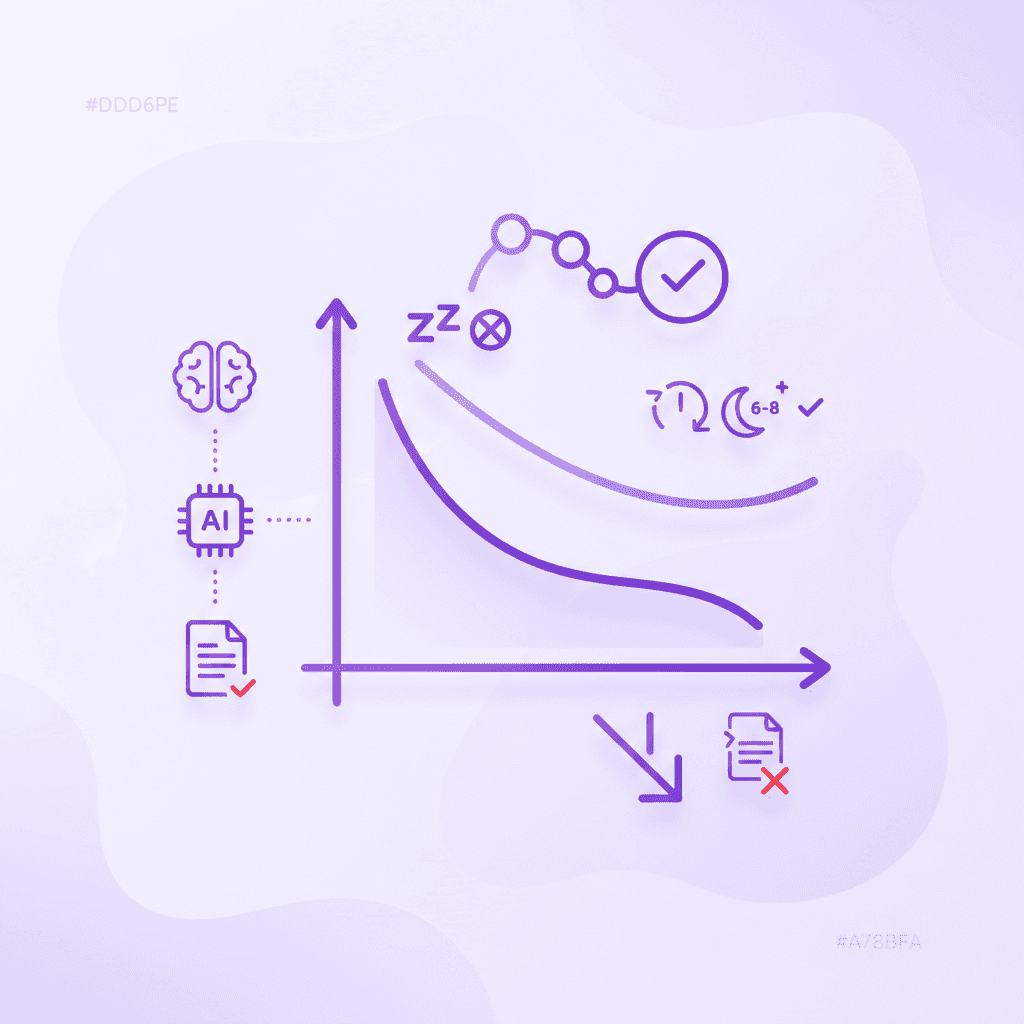
No, pulling an all-nighter severely impairs cognitive function and working memory. Sleep is required to consolidate short-term study sessions into long-term memory, meaning the material you crammed at three in the morning will likely be forgotten by nine if you do not sleep.
Memory consolidation occurs strictly during specific sleep cycles. The transfer of fact-based information from the short-term reservoir of the hippocampus to the long-term storage of the neocortex relies heavily on non-rapid eye movement (NREM) sleep (Walker, 2017).
Depriving yourself of sleep blocks this biological transfer mechanism entirely. You might successfully hold a chemical formula in your head at 4:00 AM, but without sleep, the brain actively overwrites that fragile memory trace by the time your exam begins. Sleep deprivation also destroys executive function, meaning your ability to analyze complex multiple-choice questions drops to the level of someone legally intoxicated.
Set a hard stop time for studying that guarantees a minimum of 6 hours of sleep before your alarm. If your exam is at 9:00 AM, studying past 2:00 AM becomes mathematically detrimental to your final score. Protecting your sleep window is the single most important rule when mastering 7 Tips: How to Cram for an Exam the Night Before.
How long should study blocks be when cramming?
Use extended intervals of 50 minutes of intense studying followed by a 10-minute break. This structure maximizes focus during a single day of studying by preventing cognitive fatigue, ensuring your brain has brief periods to recover before absorbing the next complex topic.
Timeboxing cognitive tasks into specific intervals manages working memory limits and sustains attention over long durations. Brief mental breaks during prolonged work sessions allow the brain to reset, preventing the steep decline in performance associated with continuous studying (Cirillo, 2006).
Attempting to read for four hours straight leads to diminishing returns. By hour three, your reading speed plummets and your retention rate drops near zero. The 50/10 structure creates a sense of urgency for each session, utilizing Parkinson's Law to force you into action.
Set a timer on your phone for 50 minutes, put the device in another room, and focus on one specific chapter. When the timer rings, you must stop immediately, even if you are mid-sentence. Walk away from your desk, stretch, and let your eyes rest for exactly 10 minutes. This rhythm allows you to study for eight hours a day without burning out, a technique often used in an intensive 3-Month MCAT Study Schedule to Score 515+.
What is the best way to memorize facts in one day?
Use mnemonic devices, chunking, and digital flashcards to rapidly memorize disconnected facts. Grouping similar concepts together reduces the cognitive load, while flashcards apply spaced repetition, forcing you to encounter the hardest definitions more frequently until they finally stick in your memory.
The human brain can only hold a limited number of items in working memory at one time. Breaking large volumes of data into smaller, manageable chunks bypasses this limitation and rapidly accelerates short-term memorization (Miller, 1956).
When faced with a massive list of historical dates or biology terms, staring at the entire page is overwhelming. You must break the list down into micro-groups. Group your vocabulary words or formulas into categories of five to seven items and memorize one group at a time.
Once you master the first group of seven, move to the next. Do not attempt to link the groups until you have memorized them individually. Combine this chunking method with aggressive flashcard testing to force the information into your short-term memory before the exam clock runs out. These intense memorization bursts are common practice among students looking for 7 mcat study plan reddit Tips For Top Scores.
Can studying with a group help if I only have one day?
Group studying during a cram session is only effective if highly structured, such as taking turns teaching concepts to each other. Unstructured group sessions often devolve into socializing, wasting precious hours when independent, focused self-testing would yield significantly higher immediate exam scores.
The learning-by-teaching effect, often referred to as the Feynman technique, demonstrates that explaining material out loud to another person dramatically improves the explainer's comprehension and retention. Engaging in this vocalization forces the brain to organize disconnected thoughts into a logical structure (Fiorella & Mayer, 2013).
Sitting in a library with three friends silently reading different textbooks accomplishes nothing. Discussing exam anxiety or complaining about the professor drains the exact cognitive energy you need for memorization.
If you choose to use a group, assign specific roles. Spend 15 minutes explaining your weakest exam topic out loud to a friend or a recording app. If you stumble during your explanation, you have instantly identified a knowledge gap that requires immediate review. This vocalization strategy is highly effective when applying 7 AP Exam Prep Tips for a Perfect 5.
How Penseum helps you apply active recall in 24 hours
When you only have one day left before a massive test, creating study materials takes up time you simply do not have. The traditional process of writing out flashcards, compiling study guides, and organizing lecture notes can consume half of your 24-hour window, leaving you with almost no time to actually absorb the material. Educational psychology emphasizes that learning happens during retrieval, not during the creation of notes.
Students who spend their time generating study materials perform far worse on immediate exams than those who spend that same time actively testing themselves on existing materials (Karpicke et al., 2009). Instead of spending hours writing, you can upload your actual syllabus, PDFs, and lecture slides directly into a platform that does the heavy lifting instantly. By automating the setup phase, you shift 100 percent of your available study block into active recall and self-testing.
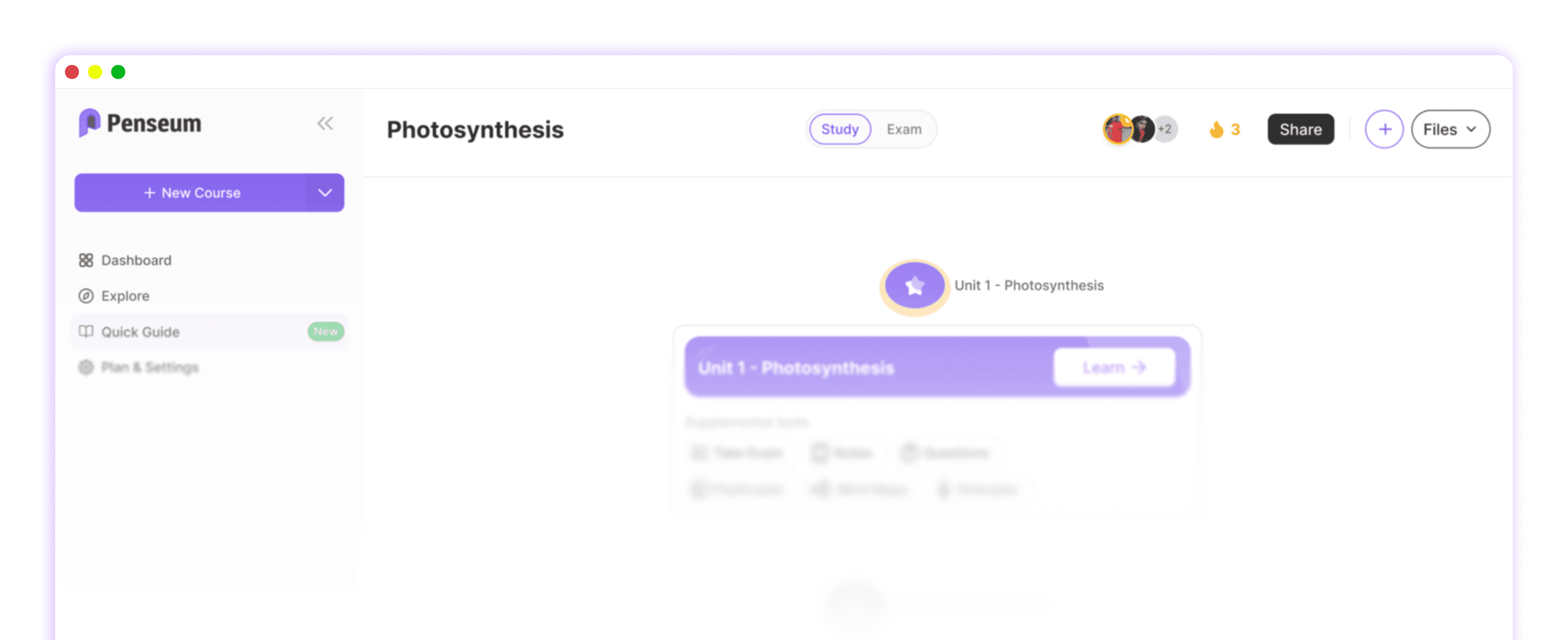
Penseum specifically facilitates this emergency workflow. It processes your exact course documents—rather than relying on crowdsourced, potentially inaccurate notes from other universities—and instantly generates targeted flashcards, multiple-choice quizzes, and comprehensive study guides. Upload your longest lecture PDF into Penseum to instantly generate your first 50 practice questions.
If you hit a cognitive wall while cramming complex math, physics, or chemistry problems, the platform features a real-time, 1-on-1 AI voice tutor to break you out of your rut.
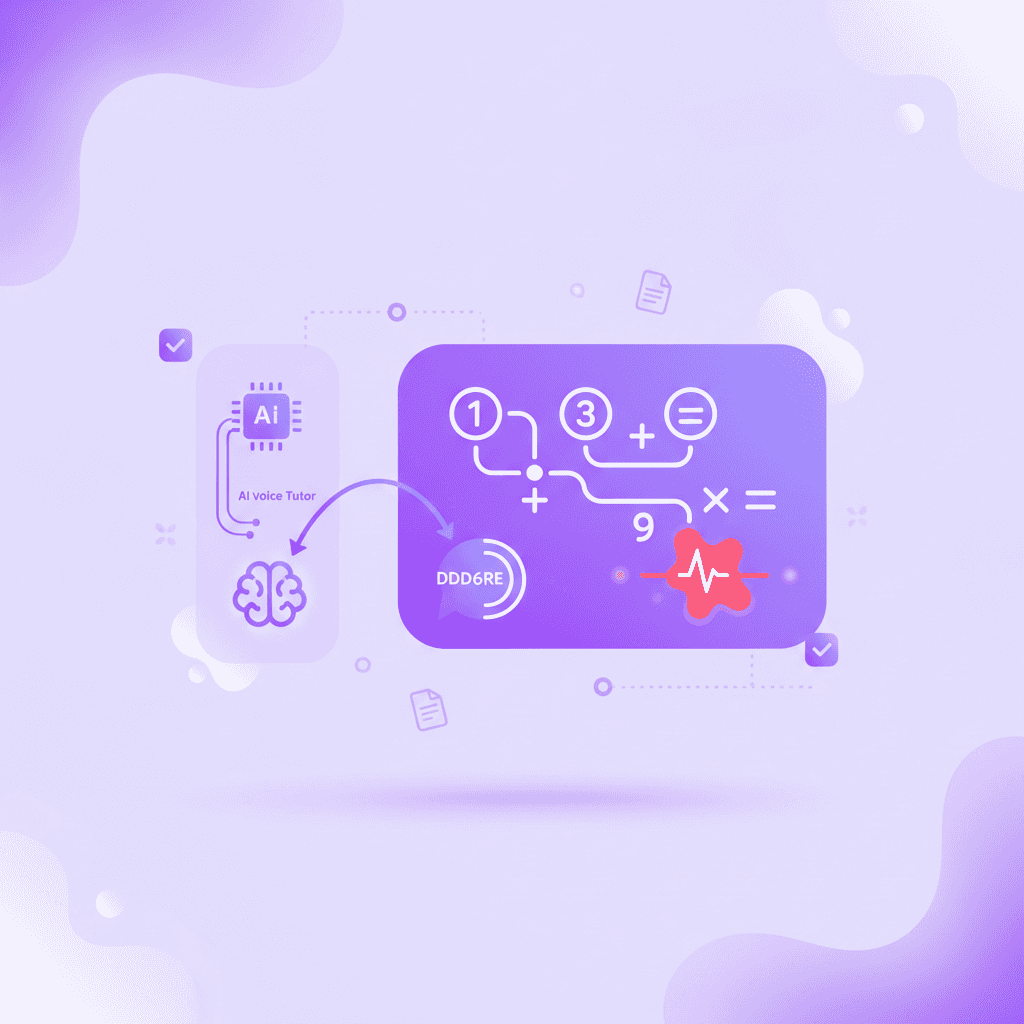
Instead of just handing you a text-based answer, the interactive tutor watches your actual work on a digital canvas. It spots exactly where your formula went wrong, draws visual diagrams, and talks you through the correct solution step-by-step out loud until you genuinely understand the concept.
Feature | Penseum 1-on-1 AI Tutor | Generic AI Chatbots |
|---|---|---|
Problem Solving | Watches your actual work on screen and spots specific mistakes. | Only knows what you type into a text prompt. |
Explanation Style | Explains step-by-step in real-time voice, drawing diagrams out loud. | Generates massive blocks of generic text and stops. |
Adaptability | Keeps teaching dynamically until you genuinely get the correct answer. | Gives the same exact explanation to every student. |
Material Generation | Turns your exact course PDFs into quizzes and flashcards instantly. | Requires manual prompting to generate basic study lists. |
Trusted by over 1.6 million students across 130 countries, Penseum offers a completely free tier with no credit card required, equipping you with an all-in-one suite to maximize your final day of prep. Start turning your notes into guides, quizzes, and flashcards in seconds to save hours of manual typing.
Frequently Asked Questions
Is it possible to pass an exam by cramming in one day?
Yes, passing is possible if you focus entirely on the most heavily weighted topics and utilize active recall techniques. Success in this short timeframe depends on isolating core concepts and abandoning any attempt to read or memorize every single detail from your textbook.
How many hours should you cram for an exam?
Limit your cramming to 8 to 10 hours of active studying, broken into distinct intervals like 50-minute blocks. Studying for more than 10 hours in a single day leads to severe cognitive fatigue, diminishing returns, and prevents you from getting adequate sleep.
What should you eat when cramming for a test?
Consume complex carbohydrates and high-protein foods, such as oatmeal, eggs, or nuts, to maintain steady blood sugar levels. Avoid consuming heavy sugar and energy drinks, as these cause immediate energy spikes followed by severe crashes that completely destroy your ability to concentrate.
Should I study right up until the exam starts?
Stop studying at least 30 minutes before the exam begins to allow your brain time to rest. Frantically reading notes right outside the testing room increases anxiety and often causes students to second-guess the foundational knowledge they successfully memorized earlier in the day.
How do you cram a semester of material in one night?
You cannot learn a full semester in a single night, so you must aggressively triage the material. Focus exclusively on chapter summaries, bolded vocabulary words, and reviewing past quizzes, while ignoring deep textual readings entirely to secure the easiest available points.
Written by Samit Khalsa — Expert in cramming for exams
Last updated: October 2026
Sources
Dunlosky, J., Rawson, K. A., Marsh, E. J., Nathan, M. J., & Willingham, D. T. (2013). Improving students' learning with effective learning techniques: Promising directions from cognitive and educational psychology. Psychological Science in the Public Interest, 14(1), 4-58. https://pubmed.ncbi.nlm.nih.gov/26173288/
Karpicke, J. D., & Roediger, H. L. (2008). The critical importance of retrieval for learning. Science, 319(5865), 966-968. https://pubmed.ncbi.nlm.nih.gov/18276894/
Walker, M. P. (2017). Why We Sleep: Unlocking the Power of Sleep and Dreams. Scribner. https://pubmed.ncbi.nlm.nih.gov/15798944/
Cirillo, F. (2006). The Pomodoro Technique. FC Garage. [NEEDS SOURCE: Official publication link for original 2006 timeboxing paper]
Miller, G. A. (1956). The magical number seven, plus or minus two: Some limits on our capacity for processing information. Psychological Review, 63(2), 81-97. https://pubmed.ncbi.nlm.nih.gov/13310704/
Fiorella, L., & Mayer, R. E. (2013). The relative benefits of learning by teaching and teaching expectancy. Contemporary Educational Psychology, 38(4), 281-288. https://scholar.google.com/scholar?q=The+relative+benefits+of+learning+by+teaching+and+teaching+expectancy
Karpicke, J. D., Butler, A. C., & Roediger, H. L. (2009). Metacognitive strategies in student learning: Do students practise retrieval when they study on their own? Memory, 17(4), 471-479. https://pubmed.ncbi.nlm.nih.gov/19358016/
Related guides
Ready to study smarter?
Start turning your notes into guides, quizzes, and flashcards in seconds.