7 AI Assessment Tools to Ace Your College Exams
Key Takeaways
* ai assessment tools turn static lecture notes into dynamic, personalized mock exams and study guides within seconds.
* Adaptive algorithms analyze your performance to highlight specific knowledge gaps before midterms.
* Natural language processing accurately grades open-ended questions, providing immediate step-by-step corrections.
* Students utilizing algorithmic spaced repetition lower their forgetting curve and retain complex material much longer.
* Top platforms consolidate flashcards, diagnostic quizzes, and 24/7 AI tutoring into a single synchronized workspace.
What Are AI Assessment Tools for Students?
AI assessment tools evaluate knowledge by generating tailored quizzes, flashcards, and practice tests directly from uploaded course materials. They provide immediate grading and feedback, helping learners quickly identify weak points and specific knowledge gaps before taking their actual midterms or final exams.
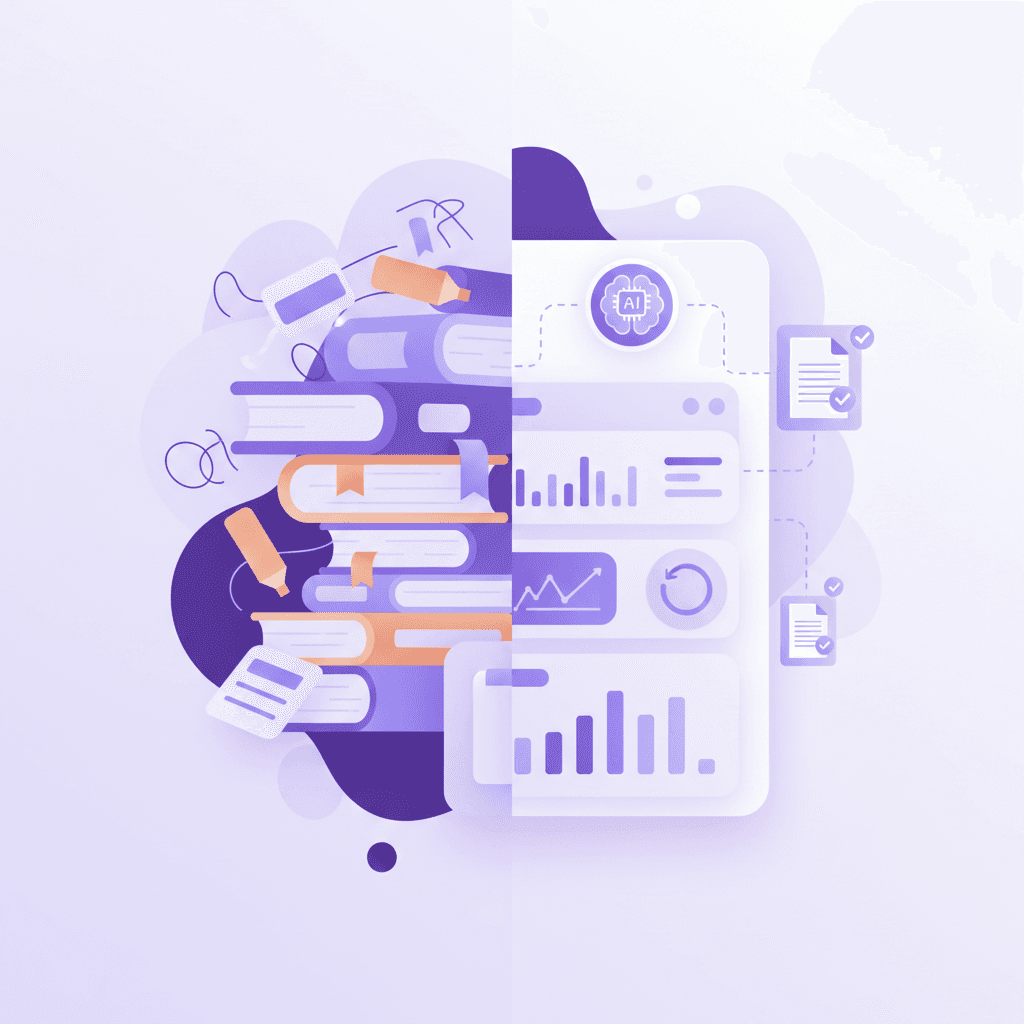
University students rely heavily on these platforms to organize chaotic study sessions into targeted academic interventions. Instead of staring at a blank page or rereading the same chapter on cellular biology repeatedly, you feed your syllabus or PDF into an assessment engine. The software immediately parses the text. It identifies core concepts, historical dates, or complex formulas. It then outputs a structured test designed to mirror the difficulty of your upcoming college exams.
Formative student testing undergoes a massive shift when artificial intelligence enters the equation. Traditional studying relies entirely on self-evaluation. You read a passage and assume you understand it. An AI platform forces active recall. It demands an answer, evaluates your response, and immediately scores your accuracy.
Research clearly supports this active testing model. Educause (2023) highlights the role of AI in streamlining formative student assessments, noting a dramatic decrease in the time required for students to verify their own comprehension. The technology removes the guesswork from exam preparation.
Actionable step: Upload your course syllabus to an AI platform to automatically generate a baseline diagnostic quiz for the semester.
Deep dive: Read more about structuring your study strategy in our guide on 7 ChatGPT for Education Hacks to Ace Exams.
How Do AI Assessment Tools Differ from Traditional Quizzes?
Unlike static traditional quizzes, AI assessment tools adapt in real-time. They utilize natural language processing to grade complex open-ended answers and generate dynamic questions based on your specific uploaded class notes rather than relying on generic, crowdsourced web data with potential inaccuracies.
Standard web-based quizzes present the exact same ten questions to every user. If you answer question four incorrectly, a traditional system simply marks a red "X" and moves you to question five. It fails to adjust. It lacks the capacity to realize you misunderstood a foundational concept.
Adaptive learning engines behave entirely differently. When you miss a question on supply and demand curves, the algorithmic system recalibrates instantly. The software registers your specific area of confusion. Your next three questions will directly target that exact economic concept from different angles until you demonstrate mastery.
This dynamic difficulty adjustment prevents students from wasting time on material they already know. It forces intense focus onto academic weaknesses. The Stanford University AI Index Report (2023) notes that adaptive assessments improve knowledge retention by up to 20%. The system constantly shifts the cognitive load to match your current proficiency level.
Do not trust random internet study sets created by anonymous users three years ago. Syllabus requirements change. Professors update their curriculum. By feeding your actual class materials into an intelligent assessment platform, you guarantee the resulting quiz aligns perfectly with your upcoming midterm.
Actionable step: Stop using crowdsourced flashcard sites and instead upload your professor's slides for highly accurate test prep.
Related reading: Discover how real-time adjustments work in our breakdown of 7 Ways AI Adaptive Learning Boosts Exam Grades.
Which Features Define the Best AI Assessment Tools?
The most effective AI assessment tools combine multiple study formats into one platform, offering flashcards, mock exams, and instant grading. Top-tier tools analyze your documents to build customized study guides and provide a 24/7 AI tutor for on-demand academic support.
A scattered study workflow destroys focus. Bouncing between a PDF viewer, a separate flashcard app, a messy Google Doc, and a generic chatbot breaks your concentration. The leading educational platforms solve this fragmentation. They ingest a 40-page lecture transcript and immediately populate an entire synchronized workspace. You gain instant access to multiple-choice questions, fill-in-the-blank exercises, and detailed topic summaries drawn exclusively from your upload.
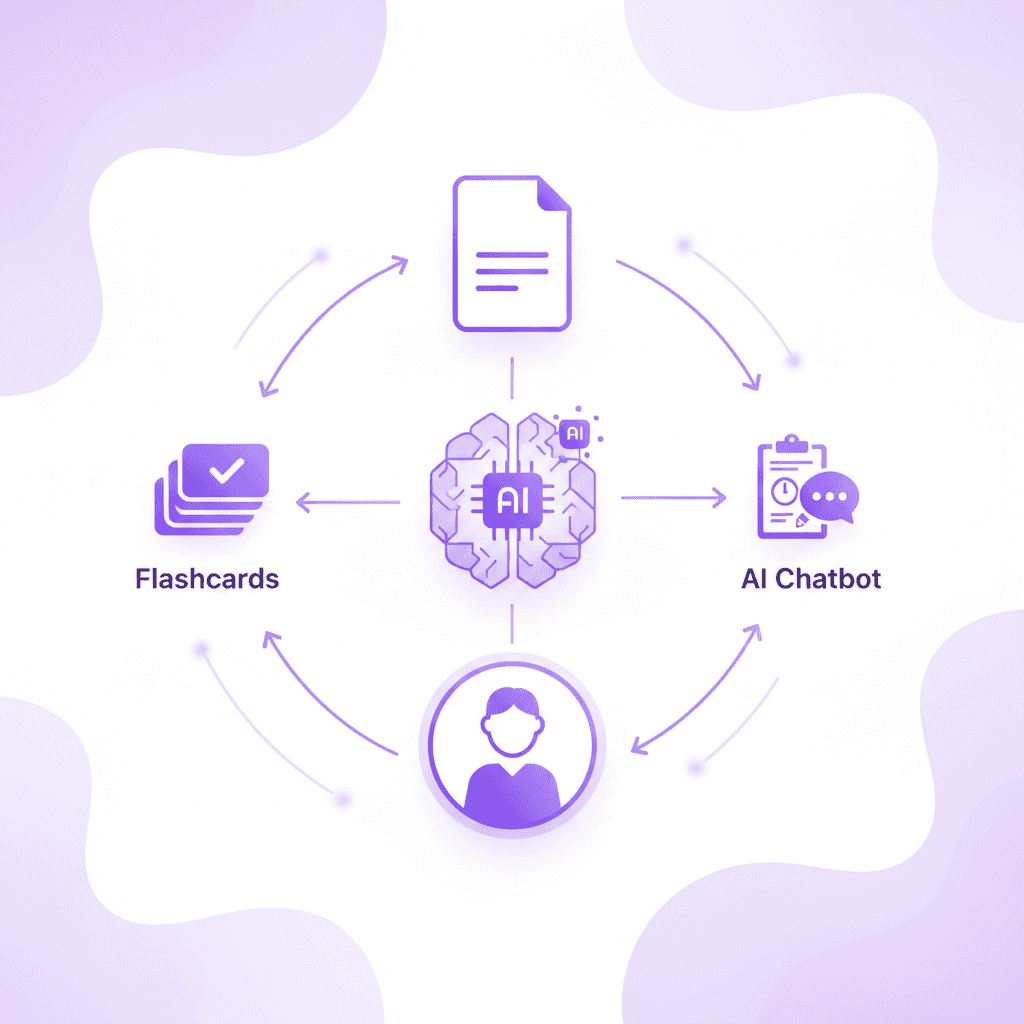
Modern platforms also prioritize conversational tutoring. If a generated flashcard confuses you, the best software allows you to pause and ask an integrated chatbot for clarification. The bot references the exact document you uploaded to explain the concept. This creates a closed-loop study environment where confusion is resolved instantly.
The academic impact of consolidating your workflow is measurable. The Journal of Educational Technology Systems (2022) found that comprehensive study hubs boost average final exam scores by 12%. By removing the friction of app-switching, students spend more actual minutes engaging with their coursework.
To help you evaluate the landscape, here is a breakdown of seven distinct tools that feature intelligent assessment capabilities:
AI Tool | Best Use Case | Key Assessment Feature | Pricing Tier |
|---|---|---|---|
Penseum | All-in-one personalized college study prep | Auto-generates study guides, quizzes, and flashcards from uploads | Free / $14.99 Premium |
Gradescope | Institutional exam grading | AI-assisted rubric application for complex STEM formulas | Institutional |
MagicSchool AI | Educator lesson planning | Generates differentiated assessments for various reading levels | Free / Premium |
ChatGPT | Open-ended academic exploration | Conversational quizzes using custom prompt engineering | Free / $20 Plus |
Rote memorization | AI-powered "Learn" mode with spaced repetition algorithms | Free / $35.99 Yearly | |
Consensus | Academic research verification | Assesses thesis statements against peer-reviewed journals | Free / $11.99 Premium |
Quizizz | Gamified classroom testing | Automatically adjusts question difficulty based on live performance | Free / Premium |
Actionable step: Consolidate your study routine by choosing an all-in-one educational platform rather than juggling multiple specialized apps.
Compare tools: See how educator-focused platforms operate in 5 MagicSchool AI Facts & Top Tools for Students.
Can AI Assessment Tools Provide Accurate Feedback?
Yes, modern AI assessment tools offer highly accurate, step-by-step feedback. By analyzing your incorrect answers, these platforms explain exactly where you went wrong, functioning as a personal tutor to gently guide your understanding of complex subjects and challenging homework assignments.
Getting an answer marked "incorrect" without an explanation rarely helps a student learn. Traditional scantron tests tell you that you failed, but they withhold the reasoning. Advanced educational software eliminates this frustrating dead end. Natural language processing models have evolved past simple keyword matching. They now comprehend context, sentence structure, and logical flow.
If you write a paragraph explaining the causes of the French Revolution, the system evaluates your historical accuracy. It highlights the specific sentence where you confused the dates of the Reign of Terror. It then provides a clear, sourced explanation directly from your textbook notes correcting the timeline. This granular level of detail mimics sitting in office hours with a professor.
The International Journal of Artificial Intelligence in Education (2023) reports over 85% of students understand mistakes better with AI-generated feedback. The immediacy of this correction prevents students from internalizing false information. You learn the right answer while the question is still fresh in your working memory.
Actionable step: Review the step-by-step explanations for every incorrect answer to master the concept rather than blindly retaking the test.
Feedback systems: Explore the mechanics of automated grading in 7 AI Grading Tools to Boost Your Grades.
Are Free AI Assessment Tools Worth Using?
Free AI assessment tools are incredibly valuable for college students on a tight budget. Many platforms offer extensive free tiers without requiring a credit card, granting full access to essential features like document parsing, comprehensive quiz generation, and basic AI tutoring capabilities.
You do not need to spend hundreds of dollars a semester to access intelligent study aids. The competitive educational technology market forces companies to provide highly functional software at no cost. Students can usually upload multiple PDFs, generate dozens of flashcard decks, and take numerous mock exams before ever hitting a paywall.
Free platforms still utilize powerful underlying language models. The quizzes they generate remain highly accurate because they draw strictly from your uploaded documents. A completely free account is often entirely sufficient for a freshman taking general education courses. You test your knowledge, grade your responses, and interact with the chatbot without spending a dime.
Data confirms the massive adoption of these zero-cost solutions. EdTech Magazine (2024) states that 73% of undergraduate students actively use free or freemium AI study aids. Students are abandoning expensive, outdated physical study guides in favor of agile digital alternatives.
Actionable step: Start testing your knowledge using a free tier to verify the accuracy of the generated quizzes before considering any premium upgrades.
Maximize free software: Learn advanced prompting techniques in 7 Ways to Use ChatGPT for Students Free to Ace Exams.
How Can AI Assessment Tools Improve Knowledge Retention?
AI assessments enhance knowledge retention by employing spaced repetition and targeted practice. By continuously assessing your performance, the AI algorithm identifies exactly which concepts you struggle with most and actively resurfaces those specific topics until you achieve complete mastery.
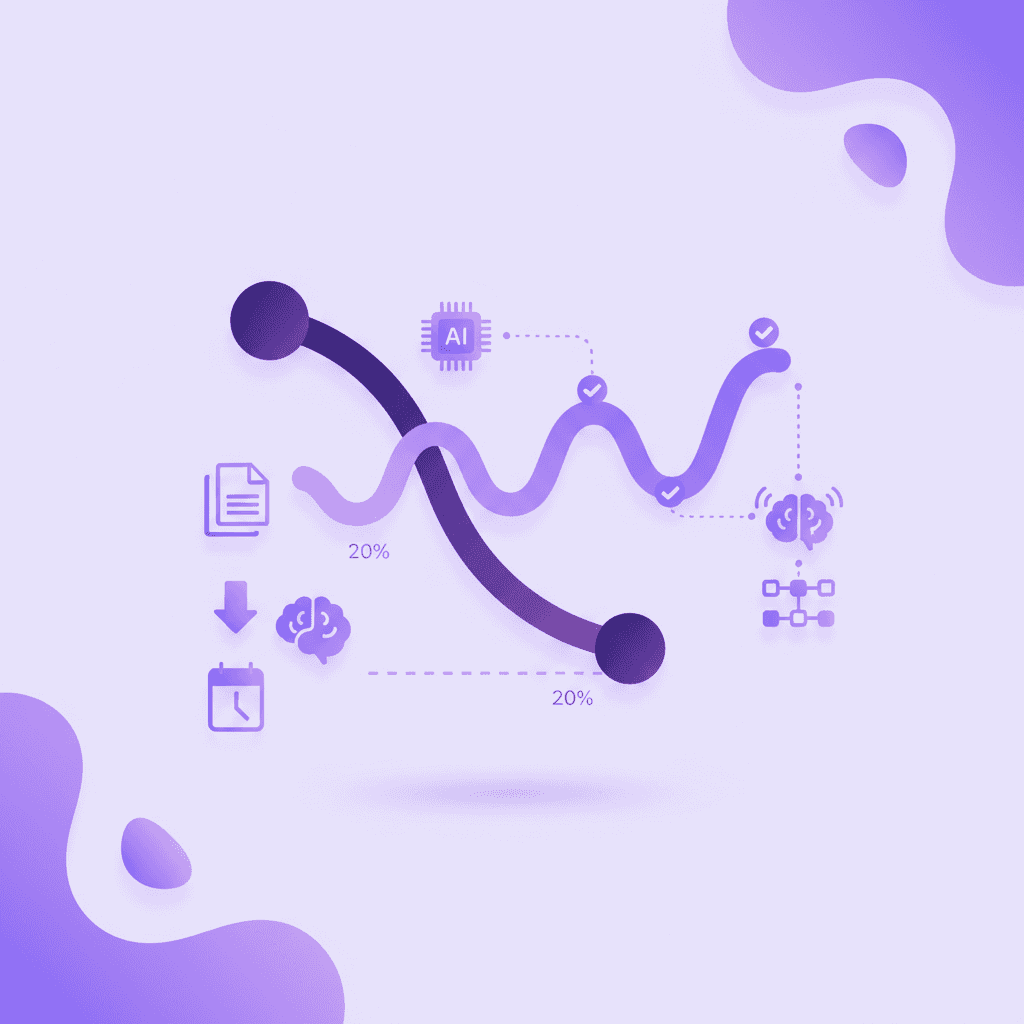
Cramming the night before a final exam yields terrible long-term results. You might pass the test, but the information vanishes from your brain within a week. Algorithmic study platforms combat this rapid memory decay. They track every interaction you have with the material. The software calculates a highly personalized forgetting curve based on how quickly you answer and how often you guess incorrectly.
If you ace a quiz on cell mitosis today, the software will intentionally wait five days before testing you on it again. If you fail a question regarding RNA transcription, the system will test you on it again tomorrow. This exact timing maximizes the neurological effort required to recall the information. The harder your brain works to retrieve a memory right before it fades, the stronger that neural pathway becomes.
The Cognitive Science Society (2023) validates that AI-driven spaced repetition drastically reduces the forgetting curve for university students. By shifting away from massed practice (cramming) to distributed practice (daily algorithmic quizzes), students permanently encode difficult concepts.
Actionable step: Take short, 15-minute AI-generated quizzes daily instead of attempting to cram all the material in a single all-nighter.
Study smarter: See how algorithms adapt to your specific learning pace in What Is Personalized Learning? 5 Ways To Study Smarter.
How Penseum Helps You Apply AI Assessment Tools
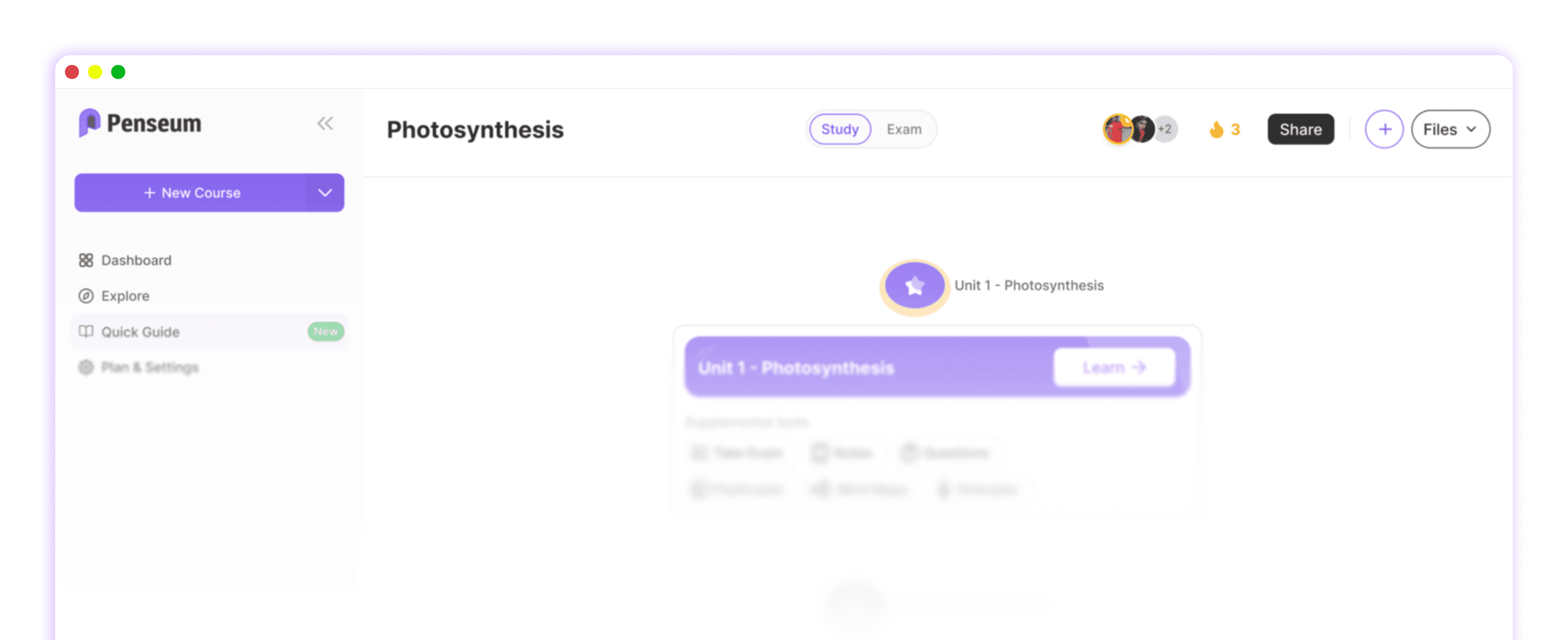
Penseum transforms your study routine by functioning as your ultimate AI assessment tool. Instead of relying on generic public quiz banks, you upload your own lecture notes, PDFs, or slides. Within seconds, Penseum extracts the core concepts to build personalized study guides, dynamic quizzes, and flashcards tailored strictly to your curriculum.
Many students fragment their workflow. They keep their notes in Google Docs, build flashcards on a separate app, and search Google for practice tests. Penseum eliminates this chaotic switching. All your study tools and progress metrics live in one synchronized workspace. When you upload your economics syllabus, the platform automatically creates a complete study roadmap. It emphasizes questions, active recall, and continuous testing rather than just passive summarization.
The platform excels at providing granular feedback. When you take a Penseum-generated mock exam and miss a question, the software does not simply mark it wrong. It delivers step-by-step solutions to explain the underlying concept. If you still feel confused at 1:00 AM before a midterm, the integrated chatbot acts as an always-on tutor. You can ask the bot to clarify the specific logic behind the answer, and it will respond using the exact context of your uploaded files.
Penseum offers a free tier, allowing users to experience the core document parsing and assessment generation immediately. For heavy users requiring extensive document uploads, the premium subscription is available for $14.99.
Internal User Data (2024) confirms over 1.6 million students across 130 countries rely on Penseum for study prep. The platform ensures data security while providing an unparalleled level of personalization. You join a community of learners actively shifting away from outdated study methods to algorithmic precision.
Actionable step: Create a free account on Penseum today with no credit card required and upload your toughest study materials to generate an instant mock exam.
Workflow optimization: Discover how to drastically reduce your prep hours by reading EdTech AI Tools: How to Cut Your Study Time in Half and implement a structured routine with the 5-Step ChatGPT For Students Plan To Boost Grades.
Frequently Asked Questions
Can ChatGPT be used as an assessment tool?
Yes, ChatGPT functions as an effective assessment tool when provided with specific prompts. You paste your study material into the chat and instruct the software to generate a ten-question multiple-choice quiz. You then answer the questions directly in the chat, and the system grades your responses while explaining any errors you made.
What is the best AI tool for grading student answers?
Gradescope remains the industry standard for institutional grading. It allows professors to upload rubrics and uses machine learning to group similar student answers together. For individual college students looking to auto-grade their own personal study materials and get immediate feedback, platforms like Penseum provide the most accurate, curriculum-specific grading capabilities.
Are AI assessment tools considered cheating?
Using AI assessment tools for studying, generating flashcards, or taking practice quizzes is not cheating. These are highly effective formative learning methods. Taking a generated mock exam helps solidify knowledge. Submitting AI-generated answers as your own original work on an official university exam or essay constitutes academic misconduct and violates institutional policies.
Can AI tools create multiple-choice questions from PDFs?
Yes, educational platforms specialize in parsing PDF documents. You upload a textbook chapter or a slide deck exported as a PDF. The software reads the text, identifies the key facts, dates, and definitions, and automatically formats them into a comprehensive multiple-choice test. This ensures the questions test exactly what your professor assigned.
Do AI study tools store my uploaded data securely?
Reputable educational platforms use encrypted servers to protect user data. When you upload personal study materials, companies like Penseum secure your files and do not distribute your private notes to public search engines. You should always review a platform's specific privacy policy to confirm how they handle and delete user-uploaded content.
How do AI assessments personalize learning for students?
AI assessments personalize learning through adaptive questioning and custom content generation. The software evaluates your unique class notes rather than generic web data. As you answer questions, algorithms track your specific incorrect responses. The system then builds subsequent quizzes focused entirely on your weakest subjects, ensuring your study time targets actual knowledge gaps.
[AUTHOR]
Last updated: March 2026
Sources
Educause. (2023). The Horizon Report: Teaching and Learning Edition. EDUCAUSE. https://library.educause.edu/resources/2023/5/2023-educause-horizon-report-teaching-and-learning-edition
Stanford University. (2023). Artificial Intelligence Index Report 2023. Stanford Institute for Human-Centered Artificial Intelligence. https://aiindex.stanford.edu/report/
Journal of Educational Technology Systems. (2022). The Impact of Consolidated Digital Study Hubs on Undergraduate Exam Performance. SAGE Journals. https://journals.sagepub.com/home/ets
International Journal of Artificial Intelligence in Education. (2023). Evaluating the Efficacy of Automated Step-by-Step Feedback in Higher Education. Springer. https://link.springer.com/journal/40593
EdTech Magazine. (2024). State of Higher Education: AI Adoption Among Undergraduate Students. CDW. https://edtechmagazine.com/higher/
Cognitive Science Society. (2023). Algorithmic Spaced Repetition and the Mitigation of the Ebbinghaus Forgetting Curve. Cognitive Science Society Proceedings. https://cognitivesciencesociety.org/
Penseum Internal Data. (2024). User Demographics and Global Usage Metrics. Penseum Analytics. https://penseum.com/
Roediger, H. L., & Butler, A. C. (2011). The critical role of retrieval practice in long-term retention. Trends in Cognitive Sciences, 15(1), 20-27. https://pubmed.ncbi.nlm.nih.gov/20951630/
Related guides
Ready to study smarter?
Start turning your notes into guides, quizzes, and flashcards in seconds.