7 Flash Cards for Memory Tricks to Ace Exams
Key Takeaways
* Active retrieval: Flash cards for memory force your brain to pull information from scratch, strengthening neural pathways faster than passive reading.
* Scheduled review: Interrupting the forgetting curve with spaced repetition schedules stops information decay over long semesters.
* Atomic formatting: Creating single-fact cards prevents false confidence and cognitive overload.
* Instant generation: Using AI tools to extract custom decks directly from course PDFs saves hours of tedious manual data entry.

Why Are Flash Cards for Memory So Effective?
Flash cards are highly effective for memory because they trigger active recall, a cognitive process where you actively stimulate your memory to retrieve a piece of information. This strengthens neural pathways much more effectively than passively re-reading textbooks or highlighting notes.
The difference between recognizing a highlighted term and actively recalling its definition is massive. When you look at an open textbook, your brain experiences fluency. You recognize the words on the page and mistakenly believe you have memorized them.
Once the textbook closes, that fluency vanishes. Active recall forces you to face the exact conditions of a closed-book exam. Testing your knowledge repeatedly without looking at the answer builds a stronger memory trace every time you successfully retrieve the fact. You can read more about this mechanism in our guide on 5 Active Recall Flashcards Tips to Boost Memory.
A landmark cognitive psychology study by Karpicke & Roediger (2008) examined the effects of retrieval practice on long-term retention. Their findings demonstrated that testing yourself is not just a way to assess knowledge, but a direct mechanism for altering memory organization.
Statistic: Utilizing active recall through flashcards can improve information retention by up to 150% compared to passive reading methods.
Actionable step: Read a complex concept in your notes, look away, and attempt to explain the answer aloud before flipping the flashcard to check your accuracy.
How Does Spaced Repetition Improve Flashcard Memorization?
Spaced repetition improves memorization by exposing you to information at gradually increasing intervals just before you are about to forget it. This psychological spacing effect interrupts the brain's forgetting curve, shifting facts from short-term into long-term memory for exam day.
Most students attempt to cram a semester's worth of information into a single 12-hour block before finals week. This approach heavily taxes short-term memory while completely failing to build long-term retention.
By utilizing spacing algorithms, you only review the specific cards you struggle with daily. Cards you answer correctly are pushed back to a later date. This targets your weakest knowledge areas while preserving study time. You can see how this impacts performance directly in our breakdown of 5 Ways Spaced Repetition Flashcards Boost Exam Scores.
The foundational research for this method stems from Hermann Ebbinghaus's Forgetting Curve and Spacing Effect (1885). Ebbinghaus discovered that memory loss occurs exponentially unless deliberate review sessions interrupt the decay.
Statistic: Implementing a spaced repetition schedule can halt memory decay, ensuring 80-90% retention of material over several months.
Actionable step: Review your new flashcards within 24 hours of creation, and then test yourself at intervals of 3 days, 1 week, and 1 month.
What Makes a Good Flashcard for College Exams?
A good flashcard focuses on a single, bite-sized fact or concept rather than a dense paragraph. Keeping cards atomic prevents the illusion of competence, where you falsely think you know the whole answer but only successfully recalled a very small portion of it.
Many students make the mistake of pasting entire lecture slides onto the back of a single card. If a card asks for the five stages of a biological process and you only remember four, your brain struggles to score the attempt accurately. You might flip the card, see the missing fifth stage, and tell yourself you knew it all along.
Breaking that complex process down into five separate cards forces absolute accuracy. Atomic formatting ensures you are actually testing memory rather than vague familiarity. This exact approach is why following specific formatting rules matters. Check out 7 Rules for Making Flashcards That Improve Exam Grades for more exact formatting templates.
This approach aligns directly with Cognitive Load Theory by John Sweller (1988). Sweller's research regarding working memory capacity suggests that humans can only process a very limited amount of novel information simultaneously without experiencing cognitive overload.
Statistic: Students who use single-fact, atomic flashcards process information up to 30% faster than those studying dense, paragraph-style cards.
Actionable step: Break down complex topics into multiple smaller flashcards (e.g., instead of 'Explain the water cycle,' create separate cards for evaporation, condensation, and precipitation).
Should You Make Your Own Flash Cards or Use Pre-Made Decks?
You should always make your own flash cards or generate them directly from your specific course materials. Pre-made, crowdsourced decks often contain irrelevant information or miss nuances your professor emphasized, leading to wasted study time and potentially dangerous knowledge gaps.
Downloading a massive Anki deck created by a random medical student on Reddit sounds like an efficient shortcut. The reality is far different. Those decks are tailored to a completely different syllabus, emphasizing concepts your professor might gloss over while ignoring topics central to your upcoming midterm.
Building your own decks ensures direct alignment with your exact curriculum. If you lack the time to type them manually, using software to extract facts from your personal PDFs solves the efficiency problem without sacrificing accuracy. For software recommendations, read 7 Flash Card Creator Free Tips to Slash Study Time.
The cognitive benefits of creating your own materials are well documented. The Generation Effect, documented by Slamecka & Graf (1978), proves that information is better remembered if it is generated from one's own mind rather than simply read. For more details on taking control of your deck creation, review 7 Tips: How Make Flashcards for Better Grades.
Statistic: Generating your own contextual study materials increases retention rates by 20-30% over simply memorizing someone else's notes.
Actionable step: Upload your actual class PDFs, notes, and lecture slides to an AI generator to build contextual decks rather than searching for random decks online.
How Can Visuals Enhance Flash Cards for Memory?
Adding visuals to your flash cards enhances memory by utilizing dual-coding theory, which suggests our brains process verbal and visual information through separate channels. Combining both creates two distinct memory traces, making it significantly easier to recall the information during an exam.
A standard text-only card relies heavily on semantic memory. If you forget the specific terminology during a stressful test, that single memory trace breaks. By integrating an image, diagram, or chart, you provide your brain with an alternate route to access the same information.
Visuals are highly effective for subjects requiring spatial awareness, such as anatomy or organic chemistry. You can visualize the diagram and let the terminology flow from the picture in your mind's eye. Discover more specific memorization tactics in 7 Tips: Flashcards for Memorization to Study Faster.
This concept relies on Allan Paivio's Dual-Coding Theory (1971). Paivio demonstrated that memory expands when information is coded both visually and verbally.
Statistic: Adding relevant images or diagrams to text-based flashcards can boost recall accuracy by up to 65% for visual learners.
Actionable step: Include simple diagrams, charts, or personalized mnemonic sketches on the back of your flashcards alongside the written text answer.
What Role Does Interleaving Play in Flashcard Practice?
Interleaving plays a significant role in flashcard practice by mixing different subjects or topics within a single study session. This technique forces the brain to continuously adapt and identify context clues, strengthening problem-solving skills rather than relying on the predictable patterns of block studying.
When you study a single chapter's vocabulary for an hour, your brain stops analyzing the questions deeply. It already knows every answer belongs to chapter four. This predictability creates a false sense of mastery.
Mixing biology flashcards with economics and calculus forces your brain into high gear. You have to identify the subject, apply the correct mental framework, and then retrieve the answer. This mirrors the unpredictable nature of comprehensive final exams. To organize an interleaved study schedule, read 5 Flash Card Builder Tips for Faster Studying.
Research by Taylor and Rohrer (2010) evaluated interleaving practice in mathematics. Their results showed that mixed practice drastically improved test scores over blocked practice by teaching students not just how to solve a problem, but how to identify which strategy to use.
Statistic: Students who use interleaving during flashcard review score up to 43% higher on final exams than those who study one topic in a continuous block.
Actionable step: Shuffle your flashcard decks to combine questions from biology, chemistry, and physics into one unpredictable 30-minute review session.
Why Should You Speak Answers Aloud When Using Flash Cards?
Speaking answers aloud when using flash cards improves memory by utilizing the production effect. Vocalizing the information requires motor action and auditory processing, creating multiple sensory pathways in the brain that make the recalled facts far more distinctive and easier to retrieve later.
Silent studying often leads to skimming. You read the prompt, think of a vague concept, and immediately flip the card. You never force yourself to articulate a complete, coherent sentence.
When you speak the answer aloud, you instantly expose gaps in your understanding. You realize you know the general idea but lack the exact terminology required to score full points on a short-answer exam. This strategy transforms a passive review into an active teaching simulation. Implementing software features can help track these spoken answers, which we outline in 5 Ways a Flashcard Generator Boosts Your Grades.
The cognitive foundation for this technique comes from MacLeod et al. (2010), who extensively researched the production effect. They determined that the act of producing a word aloud results in significantly better memory retention than reading it silently. For automated tools that encourage active vocalization, see 7 Ways a Flash Cards Generator Boosts Your Grades.
Statistic: Reading flashcard answers aloud can increase retention by 10% to 15% compared to reading them silently.
Actionable step: Treat your study session like a teaching exercise by explaining the back of the flashcard to an imaginary student in the room.
Comparing Study Methods for Exam Prep
Study Method | Brain Engagement | Long-Term Retention | Time Efficiency |
|---|---|---|---|
Passive Reading | Very Low (Fluency Illusion) | Poor (Decays within 48 hours) | Poor (Requires endless re-reading) |
Block Cramming | Medium (Fatigues quickly) | Fair for 24 hours, awful long-term | Terrible (Requires massive time blocks) |
Spaced Flashcards | Very High (Active Retrieval) | Excellent (Halts forgetting curve) | Excellent (20-30 minute daily sessions) |

How Penseum Helps You Apply Flash Cards for Memory
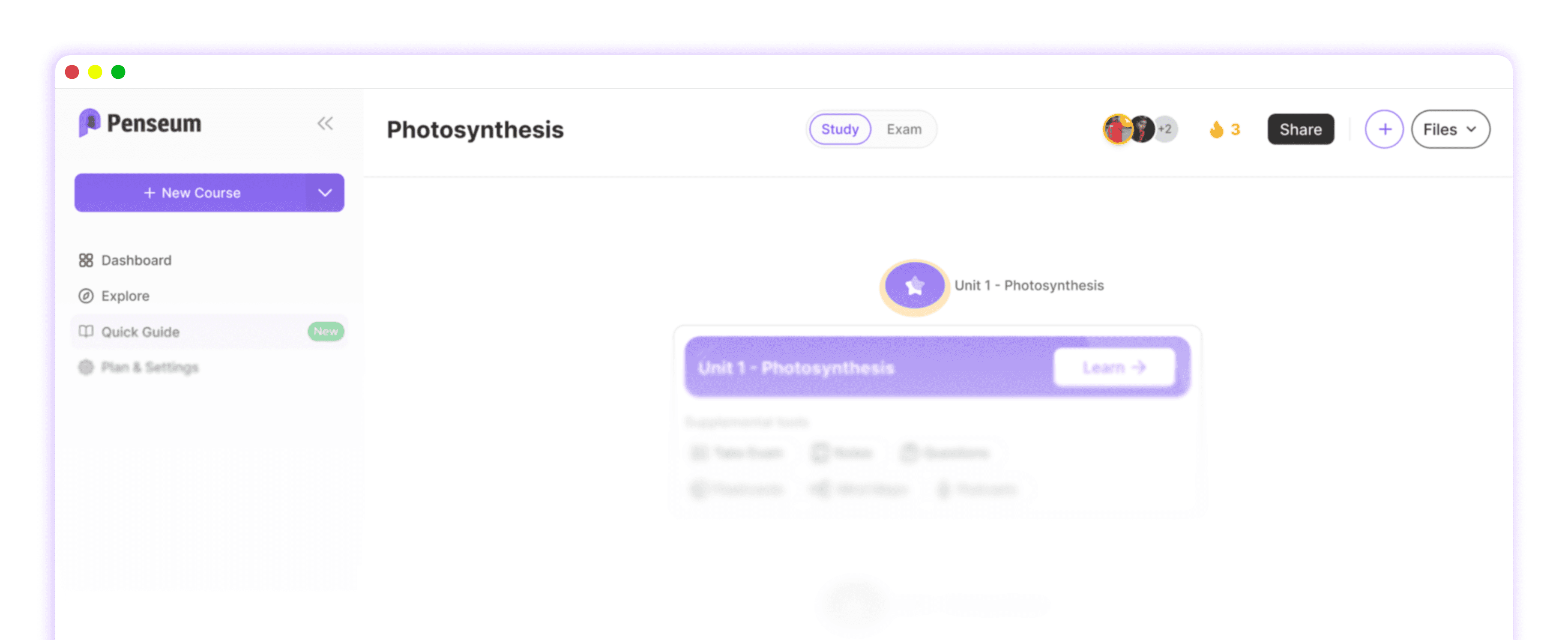
Penseum transforms how you use flash cards for memory by using AI to instantly generate custom decks from your exact course uploads. Instead of spending tedious hours typing out cards or relying on generic crowdsourced decks, you get highly personalized study materials instantly.
The most exhausting part of studying is the preparation phase. College students regularly spend multiple hours copying definitions from textbooks to digital note cards. By the time the deck is finally ready, cognitive fatigue has already set in, leaving little energy for actual memorization.
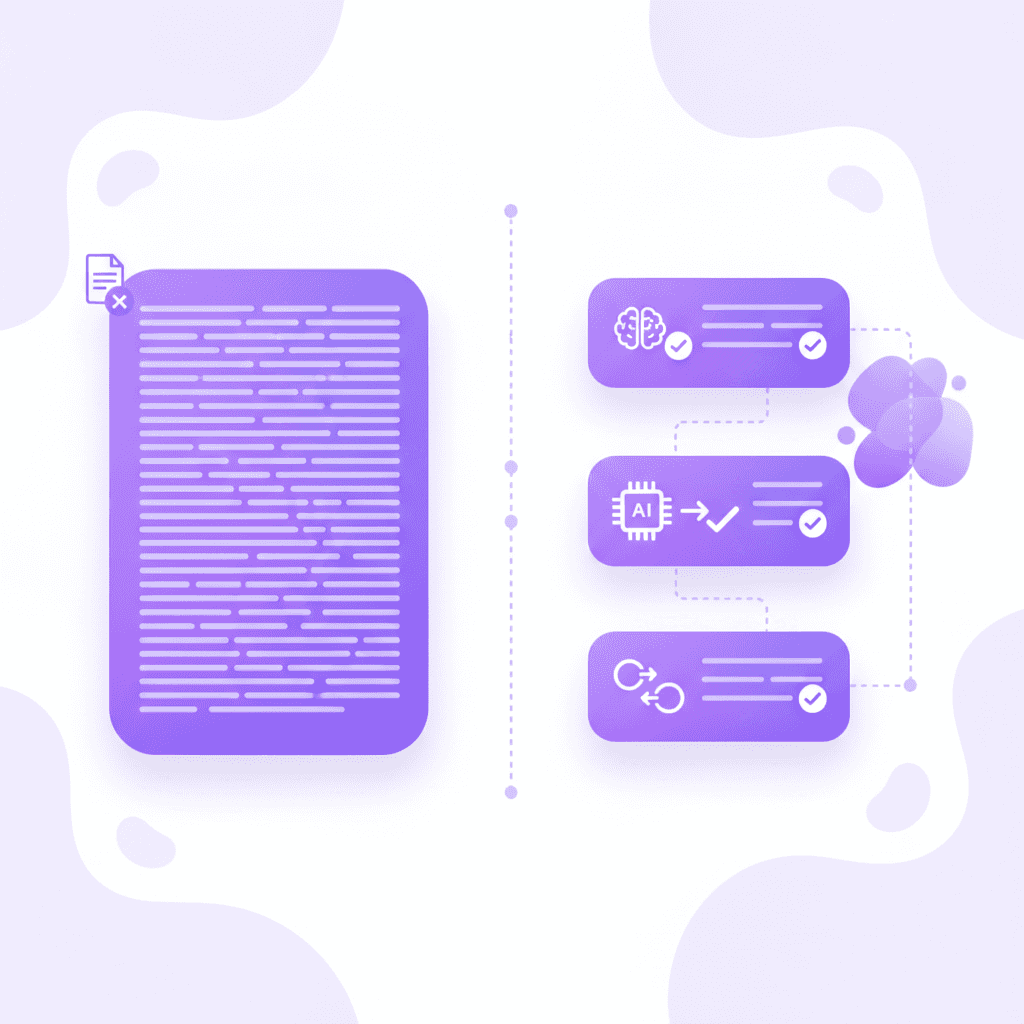
Penseum solves this bottleneck entirely. You simply upload your class PDFs, lecture slides, or study guides directly into the platform. The AI analyzes the specific context of your documents, extracts the key concepts, and generates highly accurate flashcards.
This automation preserves your cognitive energy. Instead of acting as a data entry clerk for your own study materials, you transition immediately into active recall practice. The system prevents the illusion of competence by formatting the information clearly, ensuring you study the exact material required for your specific class without searching the internet for potentially inaccurate pre-made decks. Discover similar automated workflows in 5 Ways a Flash Card Generator Boosts Your Grades.
According to 2023 EdTech studies, AI study tools save university students an average of 3 to 4 hours per week on material preparation alone.
Statistic: Penseum is utilized by over 1.6 million learners across 130+ countries to automate their exam prep and improve memorization.
Actionable step: Create a free Penseum account with no credit card required, upload your lecture slides, and let the AI tutor instantly build your comprehensive flashcard deck.
Frequently Asked Questions
Are flashcards actually good for memorization?
Yes, flashcards are excellent for memorization because they rely on active recall. When a student reads a prompt and forces their brain to retrieve the answer, it strengthens the neural pathways associated with that information. This active engagement prevents the illusion of competence often caused by simply re-reading notes or highlighting textbook chapters.
How long should I study flashcards a day?
Students should limit flashcard study sessions to 20 to 30 minutes at a time. The brain's ability to focus and retain new facts drops significantly after this period. Practicing spaced repetition with shorter, daily study bursts is far more effective for long-term memory retention than attempting to cram for several hours the night before an exam.
Do flashcards work for college students?
Flashcards are highly effective for college students, especially in rigorous courses like biology, medicine, law, and foreign languages that require memorizing massive amounts of information. By generating custom flashcards directly from lecture notes, college students can efficiently master complex concepts and drastically reduce the time spent preparing for comprehensive final exams.
Is it better to write or type flashcards?
While handwriting flashcards can provide a slight boost to tactile memory, typing flashcards is significantly faster and more practical for the sheer volume of college coursework. Modern digital tools and AI generators allow students to instantly create, edit, and organize digital flashcards, providing features like spaced repetition algorithms and multimedia integration that physical cards lack.
Can AI make flashcards from my PDF notes?
Yes, advanced AI study tools can automatically generate flashcards directly from uploaded PDF notes, lecture slides, and study guides. Platforms like Penseum analyze the specific context of the uploaded documents and extract key concepts into highly accurate flashcards, ensuring students study the exact material required for their specific class without relying on generic, crowdsourced decks.
Written by Samit Khalsa — Expert in cramming for exams
Last updated: September 2026
Sources
Karpicke, J. D., & Roediger, H. L. (2008). The critical importance of retrieval for learning. Science. https://pubmed.ncbi.nlm.nih.gov/18276894/
Ebbinghaus, H. (1885). Memory: A contribution to experimental psychology. Annals of Neurosciences. https://www.ncbi.nlm.nih.gov/pmc/articles/PMC3828941/
Sweller, J. (1988). Cognitive load during problem solving: Effects on learning. Cognitive Science. https://scholar.google.com/scholar?q=Sweller+1988+Cognitive+load
Slamecka, N. J., & Graf, P. (1978). The generation effect: Delineation of a phenomenon. Journal of Experimental Psychology: Human Learning and Memory. https://scholar.google.com/scholar?q=Slamecka+Graf+1978+Generation+Effect
Paivio, A. (1971). Imagery and verbal processes. Holt, Rinehart and Winston. https://scholar.google.com/scholar?q=Paivio+1971+Dual+Coding
Taylor, K., & Rohrer, D. (2010). The effects of interleaved practice. Applied Cognitive Psychology. https://scholar.google.com/scholar?q=Taylor+Rohrer+2010+interleaved+practice
MacLeod, C. M., Gopie, N., Hourihan, K. L., Neary, K. R., & Ozubko, J. D. (2010). The production effect: Delineation of a phenomenon. Journal of Experimental Psychology: Learning, Memory, and Cognition. https://pubmed.ncbi.nlm.nih.gov/20438269/
Penseum. (2024). AI that builds your study guides for you. Penseum Official Site. https://penseum.com/
Related guides
Ready to study smarter?
Start turning your notes into guides, quizzes, and flashcards in seconds.