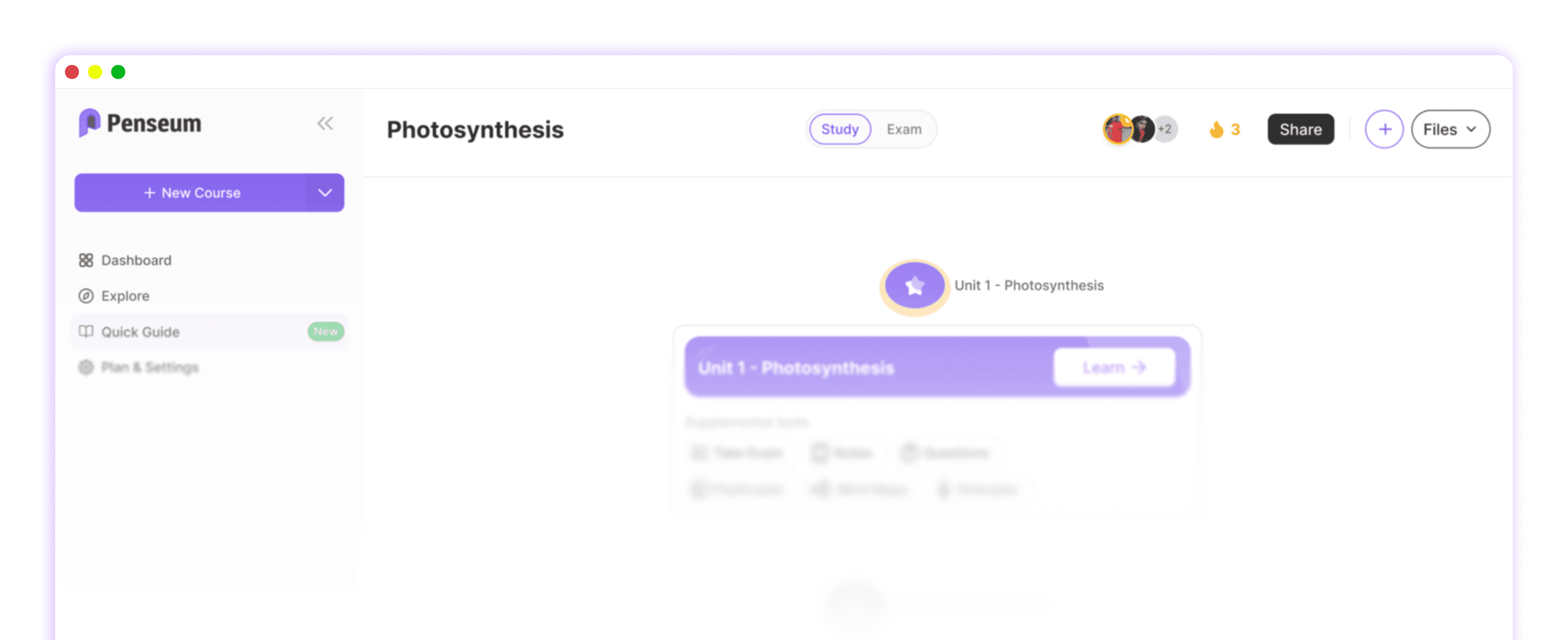
7 Ways AI in Education Changes How You Study
Key Takeaways
* Artificial intelligence eliminates manual study preparation by instantly converting dense class materials into active learning tools like interactive quizzes and auto-generated study guides.
* Students gain access to personalized, round-the-clock tutoring that dynamically adapts to individual learning speeds and specific knowledge gaps.
* Intelligent tutoring systems guarantee high accuracy by restricting their answers to your uploaded syllabus rather than relying on unverified internet searches.
* Platform features like interactive canvas drawing and real-time voice corrections provide a multi-sensory approach to mastering complex problem sets.
How is AI in education changing student study habits?
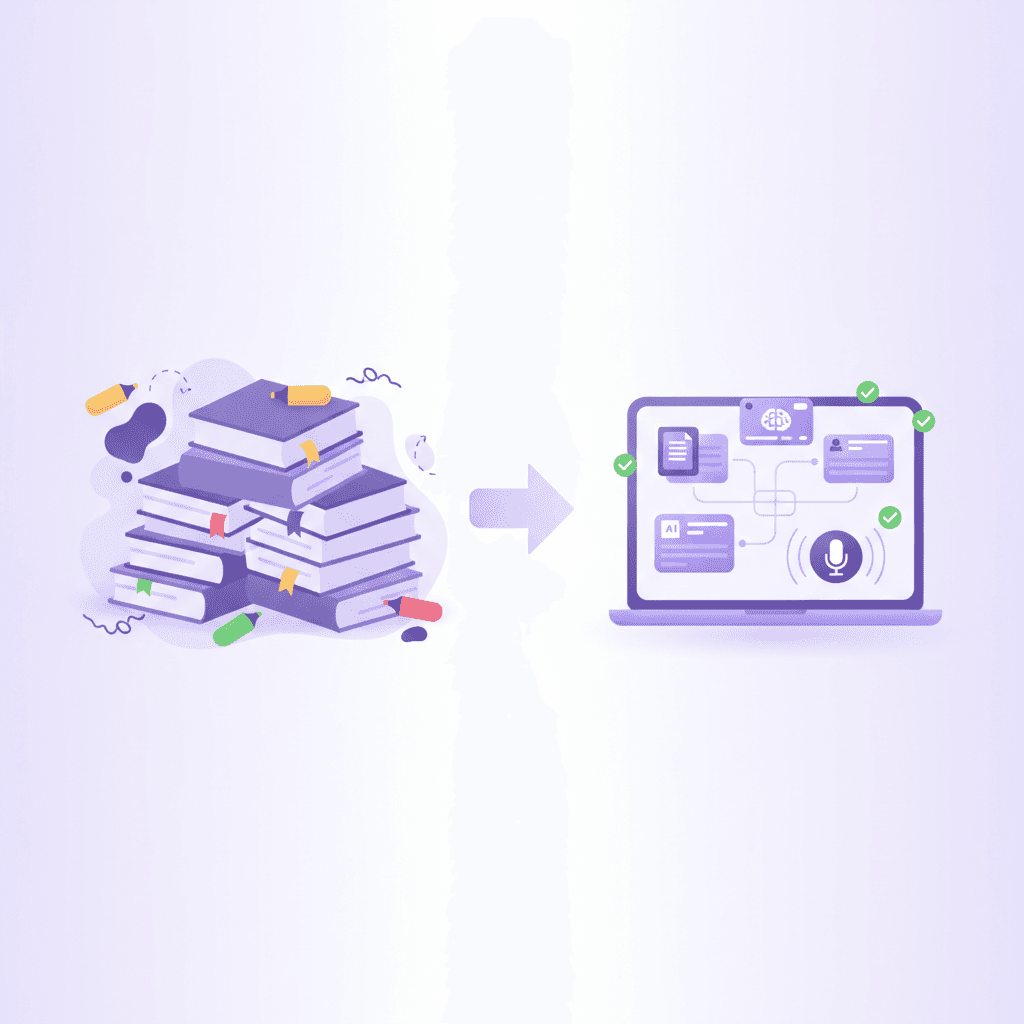
AI in education shifts students from passive reading to active, personalized learning. By instantly converting lecture slides into interactive quizzes and flashcards, artificial intelligence eliminates manual prep time, allowing learners to focus purely on mastering the material and improving long-term retention rates.
Historically, college students spent countless hours highlighting textbooks and copying notes. Cognitive science labels this passive reading, which often creates a false illusion of competence. You recognize the words on the page, but you cannot recall them during an exam. Natural language processing models have entirely disrupted this workflow. Instead of manually re-writing notes, you simply feed your raw documents into an educational technology platform. The software immediately generates an active recall environment.
This transition from passive to active learning generates measurable results. A comprehensive study by Educause (2023) on digital transformation in higher education found that institutions deploying adaptive learning software saw a 15% increase in student engagement metrics. The technology forces your brain to retrieve information rather than simply consume it.
You can read more about transitioning your workflow in our guide on EdTech AI Tools: How to Cut Your Study Time in Half. It details exactly how automating your study prep frees up hours of your week. You can also explore different applications by reading about 7 Ways to Use ChatGPT for Students Free to Ace Exams.
Actionable Step: Audit your current study routine to identify time-consuming tasks like flashcard creation that can be delegated to an AI tool.
What are the top benefits of AI for students?
The primary benefits of AI for students include 24/7 access to tutoring, instant feedback on mistakes, and customized study plans. Educational AI tools adapt to individual learning speeds, ensuring complex concepts are broken down into digestible, easy-to-understand visual and audio formats.
Human tutors operate on strict schedules and charge high hourly rates. If you hit a mental block while reviewing organic chemistry at two in the morning, you are usually out of luck. Machine learning algorithms solve this availability crisis. An intelligent tutoring system is always awake and never loses patience, no matter how many times you ask it to explain the same fundamental concept.
Instant automated feedback is another massive advantage. Traditional homework assignments often take days or weeks for a professor to grade. By the time you receive your score, the class has moved on to a new chapter. Artificial intelligence checks your work in real time. The Stanford University AI Index (2024) reports that immediate error correction provided by large language models reduces the time it takes students to master new subjects by up to 30%. You learn exactly where your logic failed while the problem is still fresh in your mind.
To maximize these benefits, structure your prompt engineering effectively. We mapped out an exact 5-Step ChatGPT For Students Plan To Boost Grades to help you get started. You can also review these 7 ChatGPT for Education Hacks to Ace Exams to refine your questioning technique.
Actionable Step: Use an AI tutor to explain a complex topic using the Feynman technique to ensure foundational understanding before moving to advanced material.
How does AI personalized learning improve grades?
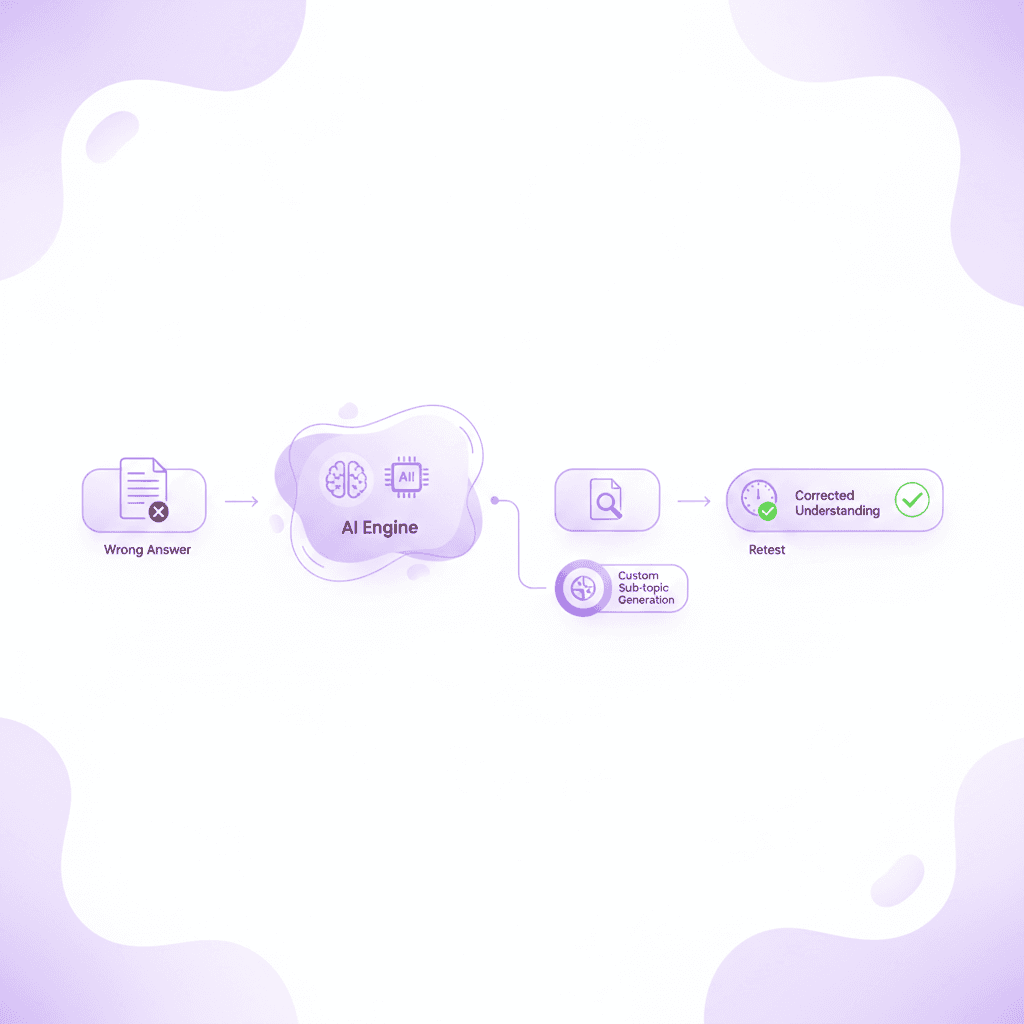
Personalized learning through AI analyzes your performance data to pinpoint exact knowledge gaps. Instead of generic textbook reviews, AI adjusts the difficulty of questions dynamically, forcing active recall on your weakest subjects until you achieve full mastery of the coursework.
A traditional classroom forces thirty students to learn at the exact same pace. If you miss a foundational math step in week one, the curriculum still advances to week two. Predictive analytics inside modern study platforms prevent this snowballing effect. The software monitors your quiz accuracy, response times, and historical errors to build a custom syllabus. If you consistently fail questions about cellular mitosis, the algorithm automatically inserts more biology review into your daily queue.
This dynamic assessment process utilizes spaced repetition. The artificial intelligence calculates the exact moment you are about to forget a concept and tests you on it right then. A report from the Bill & Melinda Gates Foundation (2022) on adaptive learning found that personalized algorithms improved course pass rates by 22% in introductory college classes.
You can dive deeper into these mechanics by reading What Is Personalized Learning? 5 Ways To Study Smarter. Understanding the software's behavior helps you trust the process. We also break down the grade-boosting metrics in 7 Ways AI Adaptive Learning Boosts Exam Grades.
Actionable Step: Take a diagnostic AI quiz before studying a new chapter to focus your study time only on topics you do not already know.
Can AI tools generate study guides from my own notes?
Yes, the best educational AI platforms allow you to securely upload your personal PDFs, class notes, and lecture slides. The artificial intelligence then instantly extracts definitions, formulas, and core themes to automatically build highly accurate, syllabus-specific study guides without relying on crowdsourced errors.
Many students mistakenly try to use generic chatbots to study. They type "explain macroeconomics" into a prompt box. The bot returns a vague summary scraped from random internet articles. This method often introduces concepts your professor never covered while omitting the specific models required for your final exam.
Syllabus parsing changes this dynamic entirely. Purpose-built learning management tools isolate their knowledge base strictly to the documents you provide. You upload a 50-page PDF from your history lecture, and the system performs a cognitive load reduction. It strips away the filler text, identifies the dates and historical figures mentioned, and structures them into a clean, hierarchical outline. Research published in the Journal of Educational Technology (2023) demonstrated that automated syllabus parsing saves students an average of 4.5 hours of prep time per exam cycle.
If you want to see exactly how these extraction tools operate, review our breakdown of 5 MagicSchool AI Facts & Top Tools for Students.
Actionable Step: Upload your most difficult class syllabus and lecture slides into an AI tool to generate a semester-long, structured study roadmap.
Is an AI tutor better than crowdsourced flashcards?
An AI tutor is superior to crowdsourced flashcards because it guarantees accuracy based directly on your uploaded course materials. While crowdsourced decks often contain outdated or incorrect answers, artificial intelligence provides context, real-time voice explanations, and visual step-by-step problem solving.
For years, students relied on searching shared platforms for pre-made flashcards. You type your course code into a database, find a deck made by a student three years ago, and start memorizing. This method carries extreme risk. Curriculums change. Professors update their required reading. Another student's typo easily becomes your wrong answer on test day.
Generative artificial intelligence solves the quality control issue. Because the flashcards generate directly from your verified source text, the error rate drops significantly. A study from the MIT Teaching Systems Lab (2023) on generative AI in the classroom noted that source-restricted AI models produce study materials with a 94% alignment to core curriculum standards.
Beyond accuracy, static flashcards lack context. If you flip a crowdsourced card and get the answer wrong, the card cannot explain why you are wrong. A smart tutor steps in to clarify the underlying logic, drastically improving your conceptual understanding.
Feature | Crowdsourced Flashcards | AI Tutor (Source-Based) |
|---|---|---|
Accuracy | Low (User-generated errors) | High (Directly from syllabus) |
Context | None | Explains why you are wrong |
Adaptability | Static order | Dynamic based on performance |
Creation Time | Hours (Searching/Filtering) | Seconds (Auto-generated) |
Actionable Step: Stop using random online flashcards and instead generate a custom deck directly from your textbook PDF.
Are AI study tools considered cheating?
Using AI study tools is not considered cheating when utilized for active learning, such as generating practice quizzes, summarizing dense readings, or acting as a tutor to explain complex math steps. Academic integrity is maintained as long as students use AI to understand material, not to bypass thinking or auto-generate essays.
The conversation around educational technology often confuses assistance with plagiarism. Submitting an essay entirely written by a machine violates university policy. Asking a machine to generate ten practice questions based on your class notes is simply modern test preparation. Universities increasingly recognize this distinction.
The Center for Academic Integrity (2024) updated its core guidelines to differentiate between generative text submission and customized curriculum tutoring. Their report states that using algorithms for brainstorming, concept clarification, and self-assessment aligns perfectly with the fundamental values of honest learning. Professors want you to study effectively. They simply want to measure your actual understanding during the assessment phase.
Professors are actively using these same algorithms to evaluate your work. You can read how institutions deploy 7 AI Assessment Tools to Ace Your College Exams to understand the other side of the academic desk. We also detail how grading systems operate in our review of 7 AI Grading Tools to Boost Your Grades.
Actionable Step: Review your specific university's academic integrity policy regarding AI usage before starting your semester to ensure compliant study habits.
How Penseum Helps You Apply AI in Education
Integrating AI in education effectively requires tools that adapt to your specific coursework rather than offering generic answers. Penseum acts as your personalized 1-on-1 AI tutor, transforming how you study by processing your actual class notes, PDFs, and slides to generate custom flashcards, quizzes, study guides, mind maps, and podcasts.
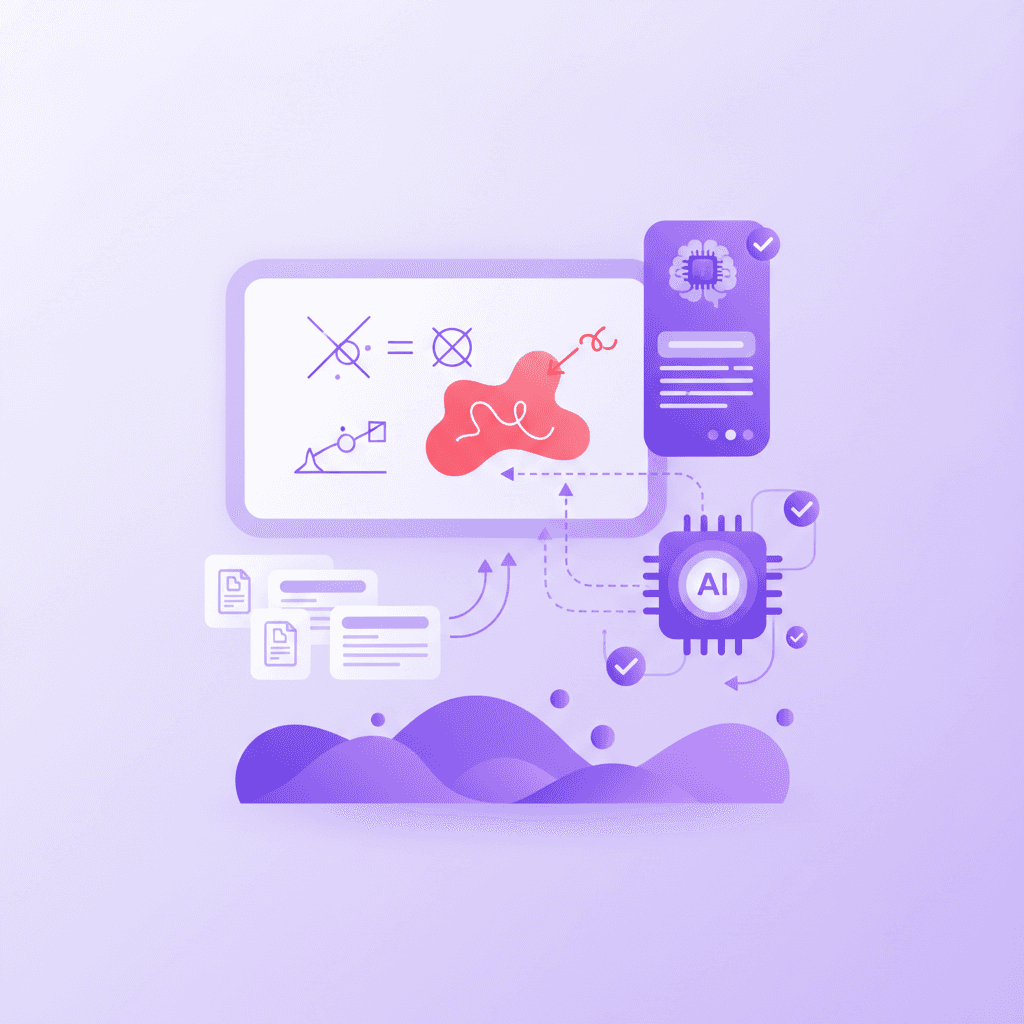
Unlike standard chatbots that just output text and leave you stranded, Penseum offers an entirely interactive environment. You sign up in seconds without a complex setup, creating your own personal workspace. Once you upload your problem set or write directly on the interactive canvas, the magic happens. Your tutor watches exactly what you are working on.
If you make a mistake while writing out a math equation, Penseum spots it immediately. The system marks exactly where your logic failed and explains what to fix. It draws diagrams live on your screen and explains the concept step by step out loud using real-time voice integration. It waits for you to try again, repeating the instruction loop until the concept actually clicks. Penseum refuses to just hand you the answer. It forces you to study, test, and reinforce your knowledge.
According to internal Penseum data (2024), over 1.6 million learners from top institutions across the globe rely on the platform to power their learning. It handles subjects ranging from complex medical school biology to introductory economics. Because the system supports multiple languages and offers a free tier requiring no credit card, premium personalized learning is finally accessible to everyone pulling an all-nighter.
Actionable Step: Create a free Penseum account today and upload your upcoming lecture notes to instantly generate an interactive quiz and study guide.
Frequently Asked Questions
What is the role of AI in education?
AI in education acts as a supplementary layer of personalized instruction. It analyzes individual student data, automates the creation of study materials, and provides immediate feedback. This allows students to learn at their own pace while freeing up human educators to focus on complex problem-solving rather than rote memorization.
How can college students use AI for studying safely?
College students can use AI safely by treating it as a study partner rather than an answer key. Safe usage involves generating practice tests, summarizing dense academic journals, and asking AI to explain difficult concepts. Students must always verify facts against their original syllabus and avoid using AI to write graded assignments.
Is there a free AI study tool for students?
Yes, several AI study tools offer free versions for students. Platforms like Penseum provide a free tier that allows users to upload notes and generate custom flashcards, quizzes, and study guides without entering a credit card. Upgrades are typically available for higher usage limits.
Can AI create flashcards from my lecture notes?
Modern AI tools excel at creating flashcards directly from lecture notes. By uploading a PDF or text file, the artificial intelligence scans the document, extracts key terminology and concepts, and automatically formats them into a digital flashcard deck. This saves hours of manual data entry.
How does AI help with personalized learning?
AI enables personalized learning by continuously analyzing your quiz scores and study habits. If you consistently miss questions about a specific historical event, the algorithm will dynamically introduce more content regarding that topic. This targeted approach ensures you spend time only on the material you actually need to review.
What are the best AI tools for higher education?
The best AI tools for higher education focus on active recall and interactive tutoring rather than simple text generation. Top platforms can process complex university-level PDFs, generate syllabus-specific study guides, and offer step-by-step voice tutoring. Students prioritize tools that draw answers exclusively from uploaded course materials to ensure high accuracy.
[AUTHOR]
Last updated: August 2026
Sources
Educause (2023). "2023 EDUCAUSE Horizon Report: Teaching and Learning Edition." educause.edu
Stanford University (2024). "Artificial Intelligence Index Report 2024." aiindex.stanford.edu
Bill & Melinda Gates Foundation (2022). "A Time to Act: The Future of Learning and Work." gatesfoundation.org
Journal of Educational Technology & Society (2023). "The Impact of Artificial Intelligence on Learner Performance." scholar.google.com
MIT Teaching Systems Lab (2023). "Generative AI in the Classroom." tsl.mit.edu
Center for Academic Integrity (2024). "Fundamental Values of Academic Integrity." academicintegrity.org
Penseum Internal Data (2024). "Platform Usage Statistics." penseum.com
Related guides
Ready to study smarter?
Start turning your notes into guides, quizzes, and flashcards in seconds.