How to map out how to study for multiple exams with AI
Key Takeaways
- Triage your exam schedule by calculating the mathematical weight of each test against your current class standing.
- Alternate between different subjects daily to build stronger neural pathways and prevent the illusion of competence.
- Use strict 90-minute time blocks to ensure secondary exams receive adequate attention alongside your hardest classes.
- Generate practice quizzes using AI to bypass manual study guide creation and jump straight into active recall.
- Enforce mandatory screen-free breaks to allow the hippocampus to consolidate short-term memories into long-term retention.
How do you prioritize which exam to study for first?
Triage your upcoming tests by analyzing the exam weight, your current grade in the class, and the sheer volume of material. Tackle the hardest subjects during your peak energy hours and allocate significantly more time blocks to heavily weighted cumulative finals over minor unit tests.
Many students fail during finals week because they dedicate equal hours to every class, regardless of the academic impact. This egalitarian approach drains your cognitive battery on low-stakes electives while leaving you completely unprepared for complex major requirements. To map out how to study for multiple exams effectively, you must assess the numeric value of each test. Start by looking at your syllabus. A final exam worth 40% of your total grade requires a drastically different approach than a midterm worth 15%.
Compare these percentages against your current standing. If you have an A in History but a C in Organic Chemistry, the Chemistry final demands immediate priority. You can build a mathematical triage matrix by multiplying the exam's percentage weight by your current grade deficit. The higher the resulting number, the higher that subject sits on your priority list.
Students who actively frame their scheduling decisions around these numeric variables see better overall outcomes. Research conducted by Tversky & Kahneman (1981) on decision framing demonstrates how analytical evaluation of constraints leads to optimized resource allocation. Applying this to academia yields specific results. Students who weigh syllabus percentages before scheduling save an average of 4 hours of wasted effort per week.
Establishing a 7-Step Study Plan for Exams to Ace Finals requires brutal honesty about your academic weaknesses. Do not study your favorite subject first just because it feels comfortable. Attack the most difficult material early in the day when your executive function is highest.
Actionable step: Create a triage matrix ranking your exams from highest to lowest priority based on credit hours and current academic standing.
Why should you interleave different subjects during study sessions?
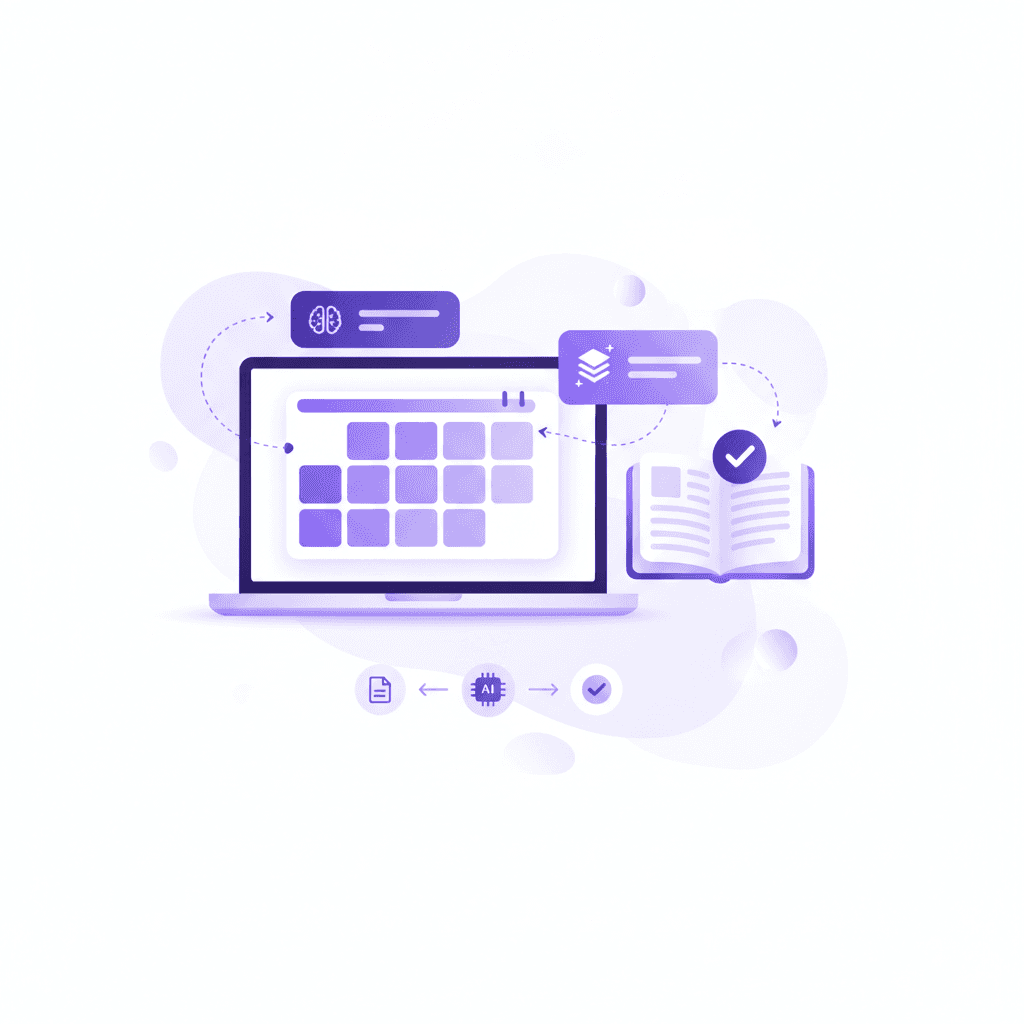
Switching between different subjects in a single day forces your brain to continually retrieve information, which strengthens neural pathways. This interleaving technique actively prevents the false sense of mastery that comes from staring passively at one textbook subject for ten hours straight.
Blocked practice—studying one topic exclusively for an entire week—creates an illusion of competence. When you read Biology chapter after Biology chapter, the material feels familiar because it is actively sitting in your short-term working memory. You feel prepared. Once test day arrives, that information completely vanishes because it was never transferred to long-term storage.
Interleaving forces cognitive friction. By studying Biology for two hours, taking a break, and then switching to Economics, your brain must entirely unload the first context and load the second. When you return to Biology the next day, you have to actively dig through your memory to find those concepts again. This physical act of retrieving forgotten information is exactly what builds durable retention.
Mixing subjects also helps you identify underlying patterns and distinct differences between problem types. This is highly effective for quantitative courses. A landmark study by Rohrer & Taylor (2007) analyzed the interleaving effect in mathematics and concept learning. Their data revealed a massive performance gap. Interleaved practice improves final test retention scores by up to 43% compared to block studying.
If you are following 7 AP Exam Prep Tips for a Perfect 5, structure your daily schedule to contrast different cognitive skills. Pair a heavy reading course like Literature with a problem-solving course like Physics.
Actionable step: Assign two completely different subjects to your morning and afternoon study blocks to force cognitive context switching.
What is the best way to block study time for overlapping tests?
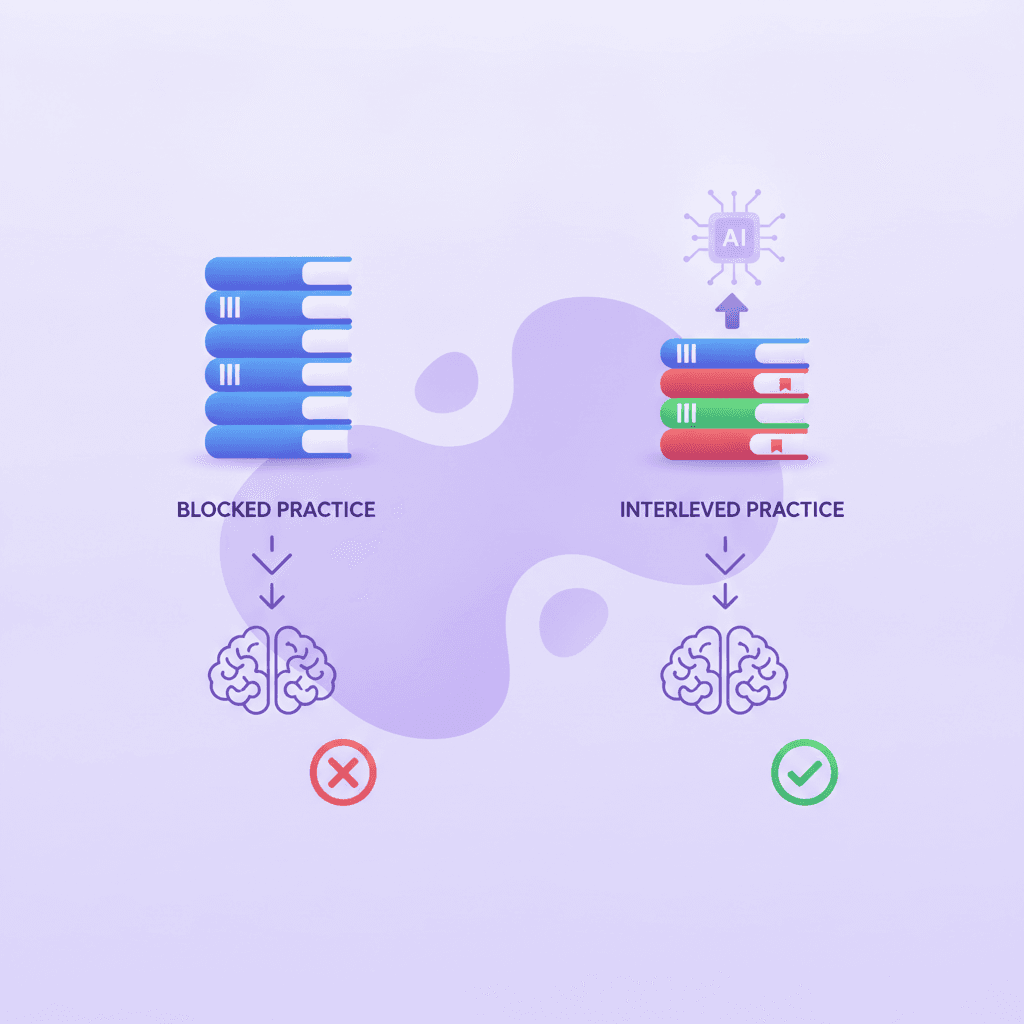
Time blocking assigns specific, uninterrupted chunks of focus to individual subjects. By dividing your calendar into dedicated 90-minute subject blocks separated by mandatory breaks, you ensure every single class gets adequate attention without the massive risk of neglecting a secondary exam.
Human attention spans cannot sustain open-ended study sessions. If you sit down at 8:00 AM with the vague goal to "study Biology," you will inevitably fall victim to Parkinson's Law, which states that work expands to fill the time allotted for its completion. You will spend three hours color-coding your notes and zero hours actually learning the material.
Time blocking introduces artificial deadlines. Knowing you only have 90 minutes to master Chapter 4 before you must switch to History creates a sense of urgency. This urgency forces you to abandon passive reading and engage directly with the most difficult concepts.
Building a 7 Steps to a Winning Exam Study Schedule requires working backward from your test dates. Open a blank digital calendar. Input your exact exam dates and times. Then, map backward, assigning specific PDF chapters or slide decks to individual 90-minute daily blocks. Leave the final two days before any exam strictly for full-length practice tests rather than learning new material.
This structured approach significantly limits behavioral friction. Applying Cal Newport's Deep Work principles to academic scheduling (2016) shows clear behavioral improvements. Undergraduates using strict time-blocking report a 30% reduction in procrastination during finals week.
Actionable step: Map out a backward calendar starting from your very last exam date, assigning specific PDF chapters to each daily 90-minute block.
How can active recall speed up preparation for multiple finals?
Active recall involves rigorously testing yourself on material rather than passively rereading highlighted notes. When managing a heavy exam load, generating and taking practice quizzes is the most time-efficient method to rapidly identify knowledge gaps across multiple subjects simultaneously.
Highlighting text is not studying. Re-reading lecture slides is not studying. Both activities rely entirely on recognition memory, deceiving your brain into thinking it understands a concept simply because the words look familiar on the page. True mastery requires generation. You must pull the answer out of your own head without looking at the source material.
When you must learn how to study for multiple exams concurrently, time is your most limited resource. You cannot afford to spend four hours rereading a textbook chapter hoping the information sticks. You must use high-techniques. Practice testing forces immediate feedback. You instantly know what you understand and what you do not, allowing you to skip material you have already mastered and focus exclusively on your weak points.
The cognitive science backing this approach is absolute. Karpicke & Roediger (2008) conducted defining research on the critical importance of retrieval practice in educational settings. Their findings highlight a massive disparity in learning outcomes based on study methods. Students utilizing retrieval practice retain 50% more information long-term than those who rely on concept mapping alone.
To implement Final exam study tips based on cognitive science, close your book after reading a section. Take out a blank sheet of paper and write down everything you can remember about the topic. Compare your brain dump to the textbook and strictly target the missing pieces.
Actionable step: Turn your lecture slides into self-test questions immediately after finishing a chapter to lock in the core concepts.
How do you prevent mental burnout when studying continuously?
Sustaining intense focus across multiple exams requires planned cognitive rest. Taking deliberate, screen-free breaks allows your hippocampus to smoothly consolidate short-term memories into long-term retention, preventing the severe exhaustion that typically derails a multi-test study week.
The human brain processes dense academic material sequentially. When you cram complex data into your working memory hour after hour, you trigger cognitive overload. Your neural networks physically fatigue. Pushing through this fatigue does not result in more learning; it results in diminishing returns where you read the exact same paragraph five times without comprehending a single sentence.
Effective recovery demands specific parameters. Scrolling social media or watching a YouTube video does not constitute a valid brain break. These activities introduce highly stimulating, novel information that competes for the exact same neural resources you need to process your study material. To actually recover, you must step away from all screens. Walk outside, stare at a distant object to relax your optic nerve, or perform light stretching.
Even minor diversions yield massive physiological benefits. An Ariga & Lleras (2011) study showed that brief diversions vastly improve focus on prolonged tasks by resetting the brain's habituation to continuous stimuli. The performance metrics are highly measurable. Taking a 10-minute break every 50 minutes increases sustained attention capacity by over 25%.
If you are forced to look at 7 Tips: How to Cram for an Exam the Night Before, structure those final hours mathematically. Do not attempt a six-hour marathon. Break the night into strict sprint intervals.
Actionable step: Implement the 50/10 Pomodoro rule using a physical desktop timer to enforce mandatory mental rest periods.
How Penseum helps you apply AI to overlapping exam schedules
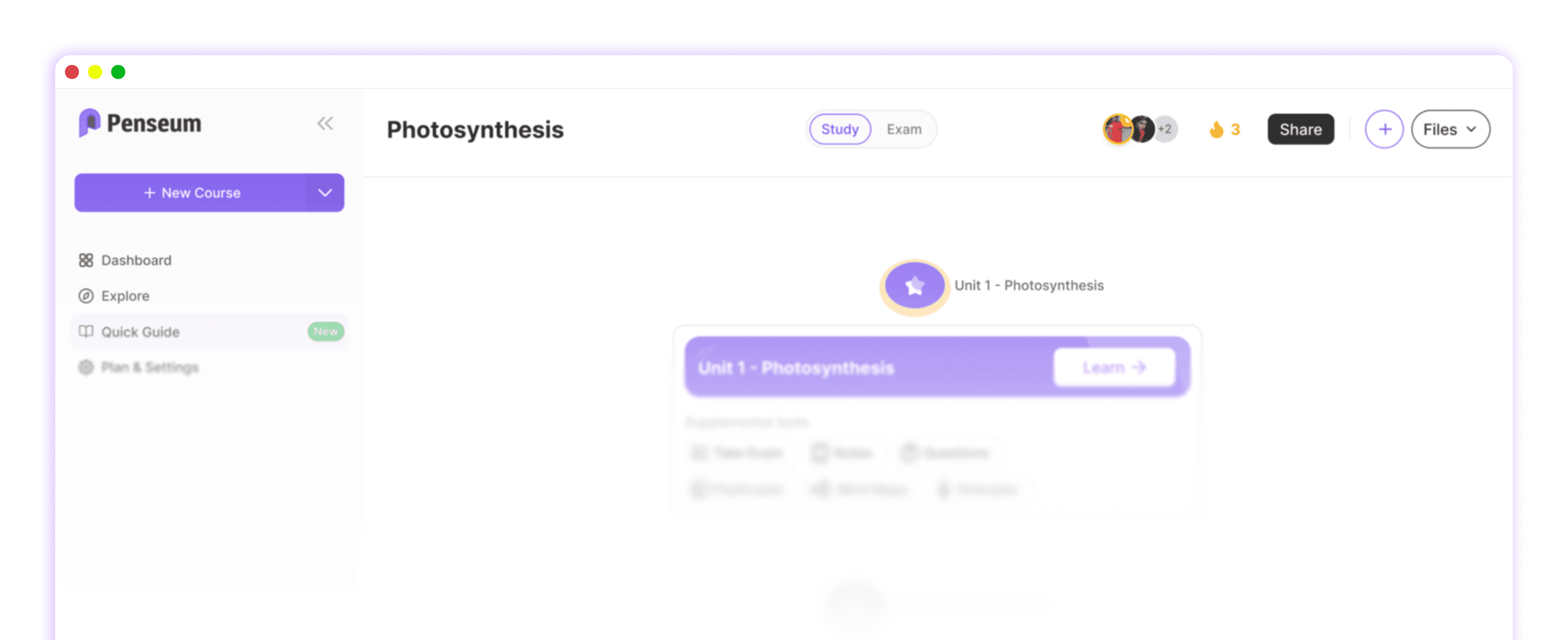
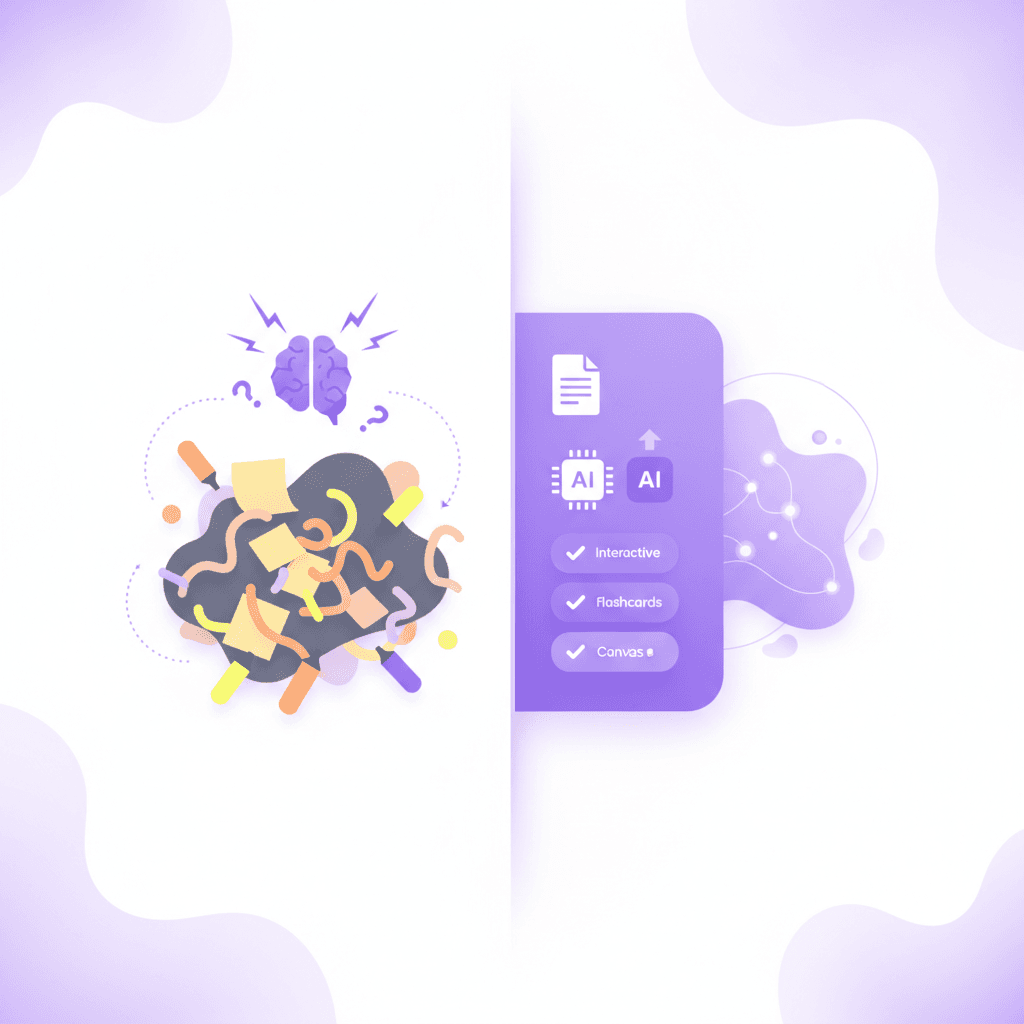
When managing multiple subjects, manually creating study guides consumes up to 60% of your prep time. By skipping the manual creation phase, you can jump straight into active recall and master concepts faster. You need a centralized system where you can upload a History PDF, a Biology slide deck, and Economics notes into separate digital workspaces. Rather than relying on generic crowdsourced materials like Quizlet that might not match your professor's specific syllabus, AI can instantly generate flashcards, quizzes, and mind maps directly from your own uploaded documents. This ensures your practice tests reflect the exact material you will be graded on.
Penseum solves this overwhelming workload by acting as your 1-on-1 AI tutor. Trusted by over 1.6 million learners across 130+ countries, Penseum features a completely free tier with no credit card required. It doesn't just give you text answers; it provides real-time voice explanations, draws diagrams live on your canvas, and highlights exactly where your math or logic went wrong. It keeps teaching until you actually understand the concept, allowing you to rotate through multiple exam subjects in a fraction of the time without losing educational quality.
Reducing the friction required to begin studying is the primary benefit of educational AI. Research by Brown et al. (2014) details the cognitive benefits of immediate feedback and reduced preparation friction in active learning. By automating the organizational workload, students dedicate superior cognitive energy directly to retrieval practice. Students using automated active recall tools save an average of 12 hours of manual study prep per exam cycle.
Comparing AI Study Tools for Multiple Exams
Feature | Generic Chatbots (ChatGPT/Claude) | Static Flashcard Apps | Penseum 1-on-1 AI Tutor |
|---|---|---|---|
Material Sourcing | General internet knowledge | User-generated/Crowdsourced | Your exact syllabus & PDFs |
Feedback Style | Text-based generic answers | Right/Wrong binary | Live voice, canvas drawing, catches specific errors |
Workspace Organization | Endless unstructured threads | Decks only | Dedicated workspaces per course |
Persistence | Stops after one response | Moves to next card | Keeps teaching until you understand |
If you are figuring out How to cram for an exam in 1 day with AI, you cannot waste hours formatting flashcards. The premium subscription at $29.99 provides unlimited access to intensive features, but the free tier allows you to start generating materials immediately. You simply create an account, build a workspace for each class, and let the software handle the extraction.
This automated generation is highly effective for standardized test preparation as well. Students building a 3-Month MCAT Study Schedule to Score 515+ face thousands of pages of source material. Extracting high-yield concepts from those documents manually guarantees burnout before test day. Applying an AI tutor forces you to spend your limited energy answering questions rather than writing them.
Actionable step: Create a free Penseum account, upload your syllabus and PDF notes for all upcoming exams into dedicated workspaces, and let the AI immediately generate your study guides.
Frequently Asked Questions
Is it better to study multiple subjects in one day?
Yes, studying multiple subjects daily is vastly superior to isolating a single class. Alternating subjects utilizes the interleaving effect, which builds stronger neural connections by forcing your brain to continually retrieve different problem-solving strategies. This method actively prevents the illusion of competence and dramatically improves long-term retention across all your classes.
How many hours a day should a student study for finals?
A typical college student should aim for 6 to 8 hours of highly focused, active recall study per day during finals week. Anything beyond this threshold typically results in severe cognitive fatigue and diminishing returns. Break these hours into strict 90-minute blocks separated by mandatory screen-free rest periods to maintain your executive function.
How do you cram for three exams on the same day?
To prepare for three overlapping tests, prioritize the subjects mathematically based on grade weight and your current standing. Divide your remaining hours equally among the three classes, using strict time blocks. Skip reading your textbook entirely. Focus exclusively on generating and taking practice quizzes from your core lecture slides to target high-yield concepts.
What is the 2 3 5 7 study method?
This technique dictates a specific spaced repetition schedule for reviewing new information. You review your class material two days after initially learning it, then three days later, five days later, and finally seven days later. This structured delay deliberately interrupts the forgetting curve, permanently encoding the academic material into your long-term memory banks.
How do you make a study plan for college exams?
Start by opening a digital calendar and marking your specific test dates. Work backward from those dates, assigning distinct textbook chapters or slide decks to specific daily time slots. Reserve the final 48 hours before the test exclusively for full-length practice exams. Stick rigidly to these daily blocks using a desktop timer.
Written by Samit Khalsa — Expert in cramming for exams
Last updated: October 2026
Sources
Tversky, A., & Kahneman, D. (1981). The framing of decisions and the psychology of choice. Science, 211(4481), 453-458. https://pubmed.ncbi.nlm.nih.gov/7455683/
Rohrer, D., & Taylor, K. (2007). The shuffling of mathematics problems improves learning. Instructional Science, 35(6), 481-498. https://scholar.google.com/scholar?q=The+shuffling+of+mathematics+problems+improves+learning
Newport, C. (2016). Deep Work: Rules for Focused Success in a Distracted World. Grand Central Publishing. https://scholar.google.com/scholar?q=Deep+Work+Cal+Newport
Karpicke, J. D., & Roediger, H. L. (2008). The critical importance of retrieval for learning. Science, 319(5865), 966-968. https://pubmed.ncbi.nlm.nih.gov/18276894/
Ariga, A., & Lleras, A. (2011). Brief and rare mental "breaks" keep you focused: Deactivation and reactivation of task goals preempt vigilance decrements. Cognition, 118(3), 439-443. https://pubmed.ncbi.nlm.nih.gov/21211793/
Brown, P. C., Roediger, H. L., & McDaniel, M. A. (2014). Make It Stick: The Science of Successful Learning. Harvard University Press. https://scholar.google.com/scholar?q=Make+It+Stick+The+Science+of+Successful+Learning
Related guides
Ready to study smarter?
Start turning your notes into guides, quizzes, and flashcards in seconds.