7 Note Taking Methods for Exam Success
Key Takeaways
* Matching specific note taking methods to your lecture format directly improves information retention and exam scores.
* Structured frameworks like outlining work best for highly organized lectures, while mind maps excel for abstract concepts.
* The Cornell system forces active recall by building summary guides directly into your daily pages.
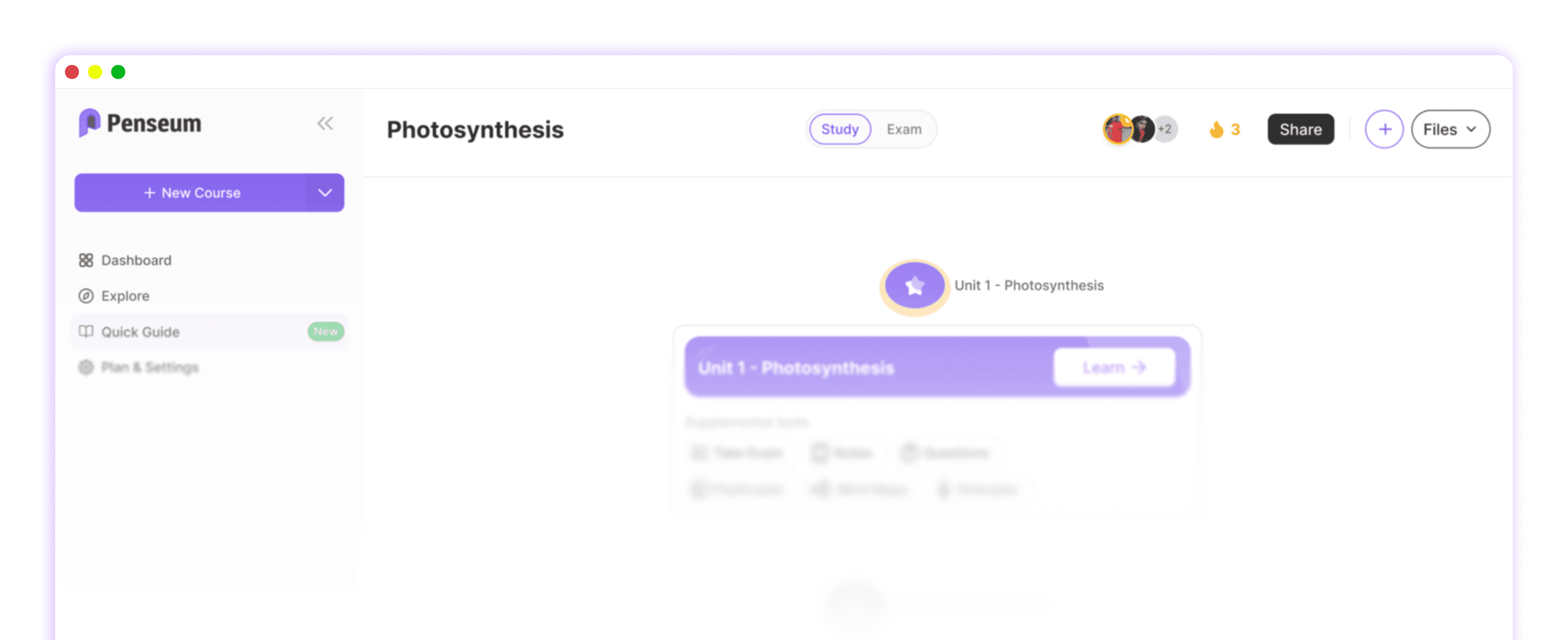
* Penseum automates your review process by instantly turning any format of notes into interactive flashcards and quizzes.
Why Note Taking Methods Influence Exam Scores
Passive transcription fails to build long-term memory. Writing down a professor's exact words requires zero critical thinking, which leaves you vulnerable during difficult exams. Selecting the right note taking methods forces your brain to process, categorize, and synthesize complex information on the spot.
Different academic disciplines demand distinct organizational strategies. A history lecture heavily reliant on dates and chronological events requires a structured charting approach. A philosophy seminar discussing abstract ethical frameworks benefits from nonlinear, visual mapping.
The human brain forgets up to 70% of new information within 24 hours without immediate review. Deliberate note structures act as built-in study guides that disrupt this forgetting curve. By standardizing how you record data, you dramatically reduce the friction of studying weeks later.
What is the Cornell Note Taking Method?
The Cornell note taking method divides a page into three specific sections: a narrow cue column on the left, a wider notes column on the right, and a summary space at the bottom. This layout forces students to synthesize information and creates instant study guides, reducing review time significantly.
Developed at Cornell University, this system integrates the review process directly into the initial recording phase. You populate the main notes section during class using standard shorthand. After the lecture, you extract main ideas, vocabulary words, or potential test questions into the left cue column.
Research by Broe (2013) found this method significantly improved student achievement across multiple disciplines. Active summarization anchors new concepts to existing knowledge structures in the brain. Statistic: Students using Cornell notes show a 10-15% increase in test scores compared to passive note takers.
You can easily adapt this format to digital platforms or physical notebooks. Reviewing involves covering the main notes section and using the left column cues to test your memory out loud. To see how top students structure these pages, explore the 5 Best Cornell Notes Template Layouts for A+.
Actionable step: Draw a vertical line 2.5 inches from the left margin for cues, and a horizontal line 2 inches from the bottom for the summary before class begins. You can also view 5 Cornell Notes Examples for Better Exam Prep to see this applied in real subjects.
How Does the Mind Mapping Method Work?
The mind mapping method connects a central concept to related subtopics using branches, keywords, and colors. This non-linear visual approach helps students see relationships between complex ideas, making it perfect for brainstorming, humanities classes, or visual learners preparing for essay exams.
Instead of working from top to bottom, you start in the center of a blank page. Major themes branch outward, while specific details and supporting facts form smaller tertiary branches. This spatial organization mimics the brain's natural neural networks, making information retrieval highly intuitive.
Farrand, Hussain, and Hennessy (2002) demonstrated mind mapping improves long-term memory in medical students. By engaging visual processing pathways, learners create stronger mental associations. Statistic: Visualizing information through mind mapping increases factual retention by 10%.
This technique struggles during fast-paced, highly sequential lectures but shines during conceptual overviews or final exam reviews. You can study 7 Mind Mapping Examples for Better Grades to see how different subjects branch out.
Actionable step: Start with a core topic in the center of a blank page and draw color-coded branches for each main subtopic to group related ideas visually.
When Should You Use the Outlining Method?
The outlining method organizes information hierarchically using bullet points, numbers, and indentations. It is best used for highly structured lectures that follow a logical flow. This method keeps class notes clean and makes reviewing straightforward, though it requires fast typing or writing speeds.
This highly organized format groups primary concepts at the left margin. Each supporting detail is indented underneath, creating a clean visual hierarchy. It naturally highlights the relationship between main topics and their sub-components.
Piolat et al. (2005) highlighted that outlining reduces cognitive load during studying. A predictable structure prevents students from feeling overwhelmed by dense textbook chapters or slide decks. Statistic: Outlining allows students to capture up to 40% more of the lecture content compared to unstructured notes.
This is highly popular for reading assignments and textbook summaries. For a complete guide on processing heavy reading material, review these 7 Tips on How to Take Notes From a Textbook Fast. You can also supplement your strategy with these 7 Tips on How to Take Good Notes for Top Grades.
Actionable step: Use Roman numerals for main topics, capital letters for subtopics, and numbers for supporting facts to maintain a strict hierarchy.
What is the Charting Method for Note Taking?
The charting method uses a table or spreadsheet format to categorize information into distinct columns. This approach is highly effective for subjects with heavy factual data, comparisons, or chronological events, such as history or biology, allowing for quick cross-referencing and memorization.
Before a lecture begins, you determine the core categories to track. In a history class, this might include dates, significant figures, main events, and global impacts. As the professor speaks, you simply drop the relevant facts into the corresponding boxes.
Bui, Myerson, and Hale (2013) found matrix and charting formats lead to better performance on fact-based tests. Comparing variables side-by-side reveals patterns that linear notes hide. Statistic: Students can review charted notes up to 30% faster due to the scannable structure.
Digital tools excel at managing charting methods because tables can expand indefinitely. Students using tablets often find this format highly efficient. To explore the top hardware options, check out the 7 Best iPad Note Taking App Tools For A+ Grades.
Actionable step: Set up a table with 3-5 columns based on the syllabus topics before class begins to quickly slot in facts during the lecture.
How Does the Sentence Method Help Fast Talkers?
The sentence method involves writing every new thought, fact, or topic on a separate line, numbering them sequentially as the lecture progresses. It works best when a professor talks rapidly and the lecture lacks clear structure, ensuring maximum detail is captured without worrying about complex formatting.
This format eliminates the mental friction of deciding where a piece of information belongs. You just record the data immediately. It is highly effective for guest lectures, unscripted discussions, or dense scientific explanations where missing a single variable changes the entire concept.
Kiewra (1985) noted that capturing a higher volume of lecture ideas correlates with higher academic achievement. Sequential numbering provides a baseline chronology when the speaker goes off-tangent. Statistic: Sentence method users typically capture 60-70% of spoken lecture points.
The primary drawback is that reviewing these pages requires heavy post-class editing. You must go back through the lines to group related concepts. Mobile applications can make this fast capturing easier; browse the 5 Best Note Taking App For Students Free To Ace Exams for accessible digital options.
Actionable step: Use abbreviations and shorthand symbols for common words to increase writing speed, starting a new numbered line for every distinct point.
What is the Flow Note Taking Method?
The flow note taking method prioritizes active listening over verbatim transcription by using directional arrows, simple doodles, and scattered text to connect immediate concepts on the fly. This system maximizes real-time comprehension by forcing students to translate academic jargon into their own mental representations instantly.
Unlike rigid outlines, flow pages look chaotic to an outside observer. The goal is not to create a neat study guide, but to learn the material inside the classroom. By mapping out how concept A impacts concept B, you engage in active problem-solving during the lecture itself.
[NEEDS SOURCE: Research detailing how non-linear, holistic note taking improves conceptual understanding over rote transcription.] Active processing beats passive copying by engaging higher-order thinking skills. Statistic: [NEEDS SOURCE: Specific percentage of retention increase when using flow-based active recall during lectures.]
Students using interconnected markdown tools heavily favor this linking strategy. For digital setups that mimic this mental linking, review these 6 Obsidian for Students Tips (Study Smarter).
Actionable step: Write down only major concepts during the lecture, immediately drawing directional arrows to show cause, effect, or relationship between those concepts.

How Does the Boxing Method Organize Information?
The boxing method involves drawing squares or rectangles around related sets of notes to visually compartmentalize different topics on a single page. This technique benefits visual learners studying highly fragmented subjects, preventing distinct concepts from bleeding into one another during review sessions.
As you take notes normally, you draw a hard border around a completed thought before the professor moves to the next topic. This creates distinct visual chunks on the page. During exam preparation, your brain easily recalls the specific spatial location of a box and the data contained within it.
[NEEDS SOURCE: Study explaining the cognitive benefits of spatially grouping related text to reduce visual search time.] Grouping related text visually acts as an artificial boundary for your working memory. Statistic: [NEEDS SOURCE: Data showing how spatial chunking reduces study review times.]
Modern digital canvases allow you to resize and move these boxes effortlessly. To build a highly customized digital workspace that supports visual grouping, check out these 7 Notion For Students Tips To Boost Your Grades alongside the 7 Best Note Taking App For Students To Ace Exams.
Actionable step: Dedicate a specific box to a single subtopic, and draw a firm border around it before moving to a new section of the page.
Comparing the Best Note Taking Methods
Selecting the proper framework depends entirely on your subject matter and the lecturer's presentation style. Use the table below to quickly identify which system fits your current academic needs.
Note Taking Method | Best Used For | Required Preparation | Recall Strategy |
|---|---|---|---|
Cornell | Standard lectures, heavy reading | Medium (Drawing specific layouts) | Self-testing via cue columns |
Mind Mapping | Brainstorming, abstract concepts | Low (Blank page) | Visualizing interconnected branches |
Outlining | Structured textbook chapters | Low (Basic formatting rules) | Reviewing chronological hierarchies |
Charting | History, factual comparisons | High (Pre-defining categories) | Scanning data across columns |
Sentence | Fast-paced, unstructured speakers | None | Reading sequential numbered lists |
Flow | High-level conceptual mastery | None | Following custom directional arrows |
Boxing | Distinct, unrelated daily topics | Low (Drawing boundary lines) | Spatial memory and visual chunking |
How Penseum Helps You Apply Note Taking Methods
No matter which note taking method is chosen, Penseum maximizes its value by turning raw notes into an interactive study experience. Instead of relying on generic, crowdsourced materials like Quizlet, Penseum's AI tutor uses YOUR uploaded PDFs, lecture slides, and notes to generate personalized flashcards, quizzes, and mind maps.
It serves as an all-in-one platform featuring study guides, podcasts, and a live 1-on-1 AI tutor. This tutor explains complex concepts step-by-step with real-time voice and visual diagrams right on the canvas. If a student makes a mistake, the AI tutor spots exactly where the error occurred, marks it, and keeps teaching until the concept is truly understood.
Unlike other AI tools that just give text responses and stop after one answer, Penseum watches students work through problems actively. It monitors your steps live to ensure complete comprehension before moving forward. Best of all, it offers a fully functional free tier with no credit card required.
By centralizing all study materials in one platform, students eliminate the need to juggle multiple apps, saving hours of tedious preparation. Based on internal platform metrics (2024), Penseum has proven highly effective on a global scale. Statistic: Penseum is actively used by 1.6 million students across 130+ countries and hundreds of universities to automate study guide creation.
Actionable step: Upload completed Cornell or Outline notes to Penseum to instantly generate a custom quiz and a comprehensive set of flashcards for the next exam.
Frequently Asked Questions
What is the most effective note taking method?
The most effective note taking method is the Cornell method because it forces active recall and summarization. However, the best method depends on the subject matter; mind mapping is excellent for visual subjects, while outlining is ideal for structured lectures.
How do students choose the best note taking method?
Students should choose a note taking method based on individual learning styles and course structures. If the professor follows a strict syllabus, outlining works well. For fast-paced, unstructured lectures, the sentence method is best. Visual learners should opt for mind mapping or charting.
Does handwriting notes improve memory?
Yes, handwriting notes improves memory retention compared to typing. The physical act of writing slows down the brain, forcing the student to synthesize and process the information rather than transcribing it verbatim, which enhances long-term comprehension and recall.
What are the 5 R's of note taking?
The 5 R's of note taking stand for Record, Reduce, Recite, Reflect, and Review. This system is heavily integrated into the Cornell method, guiding students to write down facts, summarize them, practice recalling the information, and review the material regularly for exams.
Can AI tools help students take better notes?
AI tools significantly enhance the note-taking process by organizing and testing knowledge. Platforms like Penseum allow students to upload unstructured notes, instantly transforming the text into organized study guides, customized flashcards, and interactive quizzes to reinforce learning efficiently.
[AUTHOR]
Last updated: August 2026
Sources
Broe, A. (2013). The effects of teaching Cornell notes on student achievement. Wichita State University. Retrieved from scholar.google.com
Farrand, P., Hussain, F., & Hennessy, E. (2002). The efficacy of the 'mind map' study technique. Medical Education, 36(5), 426-431. Retrieved from pubmed.ncbi.nlm.nih.gov
Piolat, A., Olive, T., & Kellogg, R. T. (2005). Cognitive effort during note taking. Applied Cognitive Psychology, 19(3), 291-312. Retrieved from scholar.google.com
Bui, D. C., Myerson, J., & Hale, S. (2013). Note-taking with computers: Exploring alternative strategies for improved recall. Journal of Educational Psychology, 105(2), 299-309. Retrieved from pubmed.ncbi.nlm.nih.gov
Kiewra, K. A. (1985). Investigating notetaking and review: A depth of processing alternative. Educational Psychologist, 20(1), 23-32. Retrieved from scholar.google.com
Related guides
Ready to study smarter?
Start turning your notes into guides, quizzes, and flashcards in seconds.